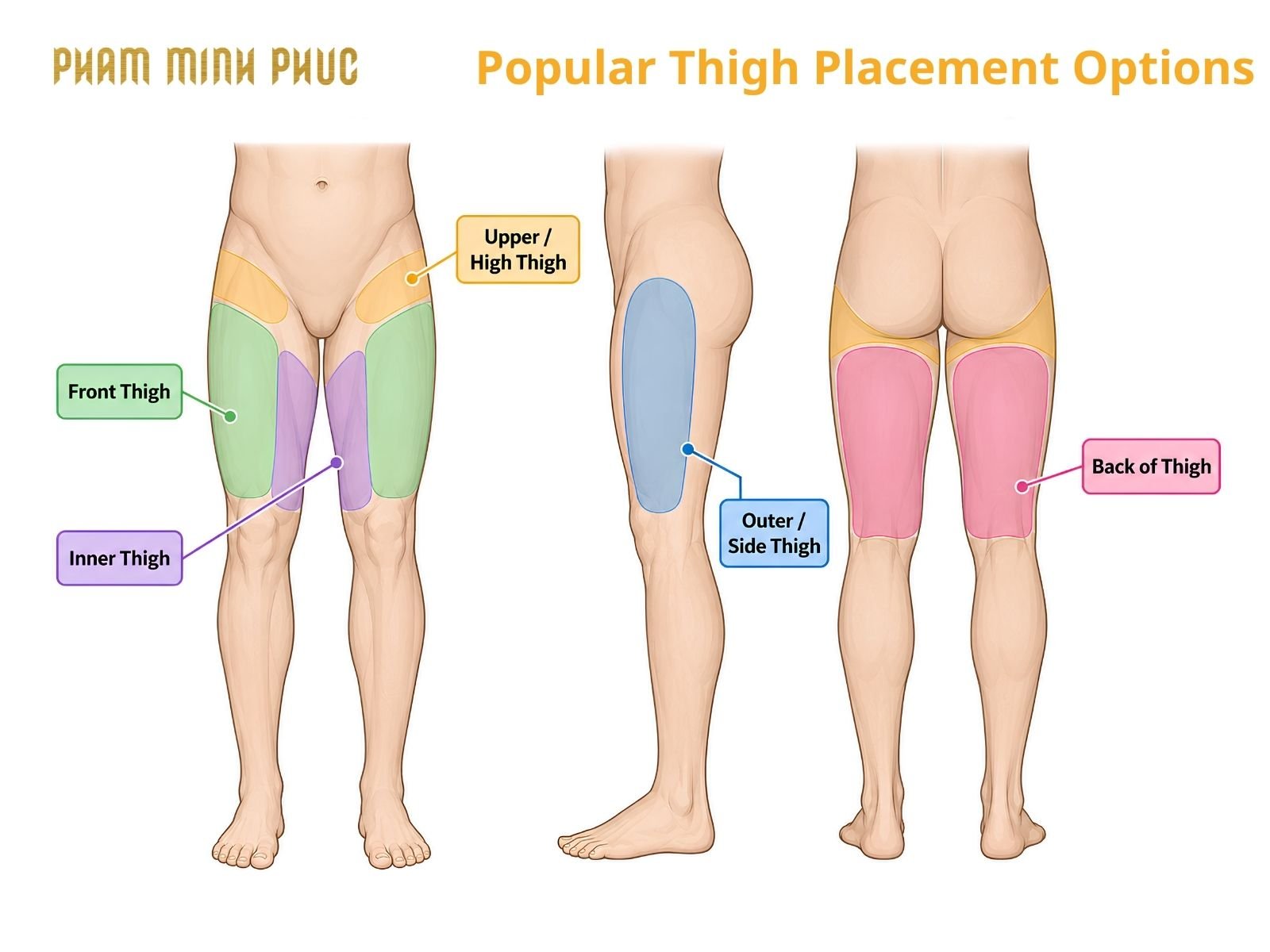
Thigh tattoo placement includes several distinct areas across the upper leg, including the front thigh, outer or side thigh, inner thigh, back of the thigh, and upper or high thigh near the hip. Each location gives a tattoo a different amount of space, visibility, body flow, and connection to the surrounding leg and hip.
The front and outer thigh provide broad surfaces for medium to large artwork, while the inner thigh offers more privacy. The back thigh creates a long vertical canvas along the hamstrings, and the upper thigh can support anything from a small concealed tattoo to a larger design that extends toward the hip.
Choosing between these areas is not only about appearance. The shape of the artwork, the amount of detail, clothing coverage, sensitivity, and any future plans for a larger leg piece can all affect where the tattoo should sit.
In this guide, I, Minh Pham, will break down the main thigh tattoo placements and explain how each area works with different tattoo sizes, designs, and long-term plans.

Table of Contents
Main Thigh Tattoo Placement
The main thigh tattoo placements are the front thigh, outer or side thigh, inner thigh, back of the thigh, and upper or high thigh.
These areas are not identical surfaces. The front thigh follows the quadriceps, the outer thigh follows the lateral curve of the leg, the inner thigh faces the opposite leg, and the back thigh sits over the hamstrings. The upper thigh describes the highest part of these surfaces near the hip or groin.
Front Thigh Tattoo Placement
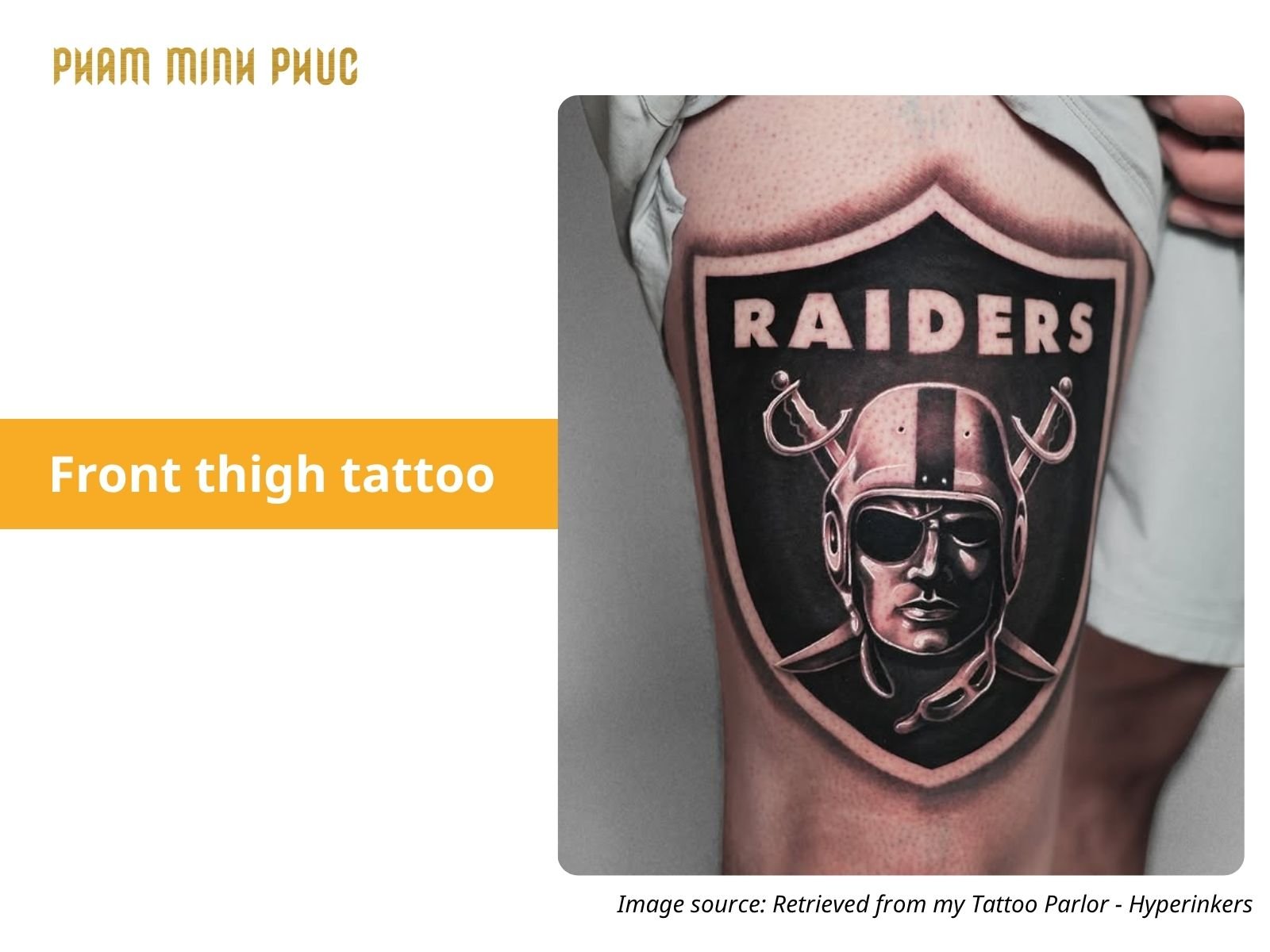
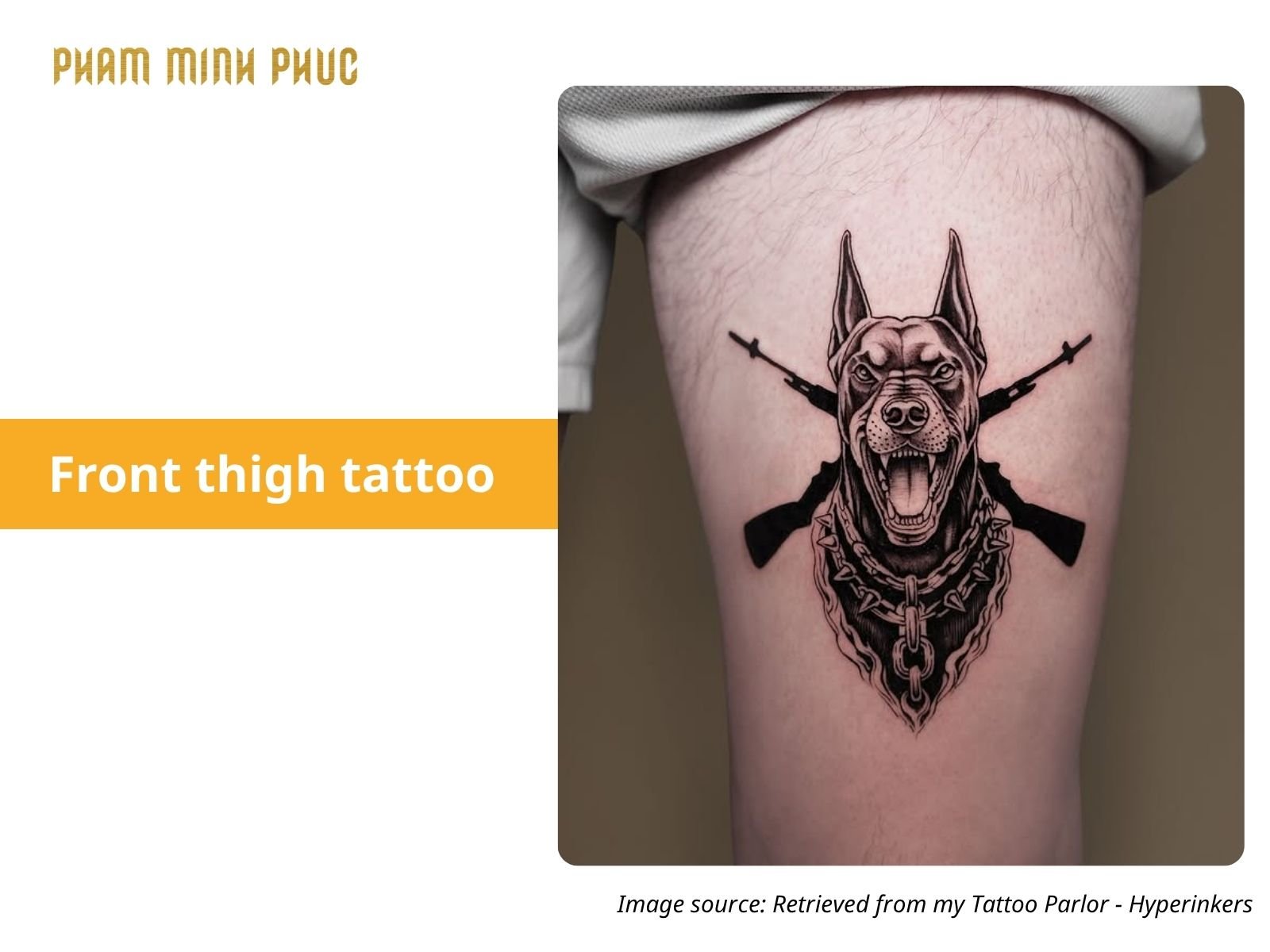
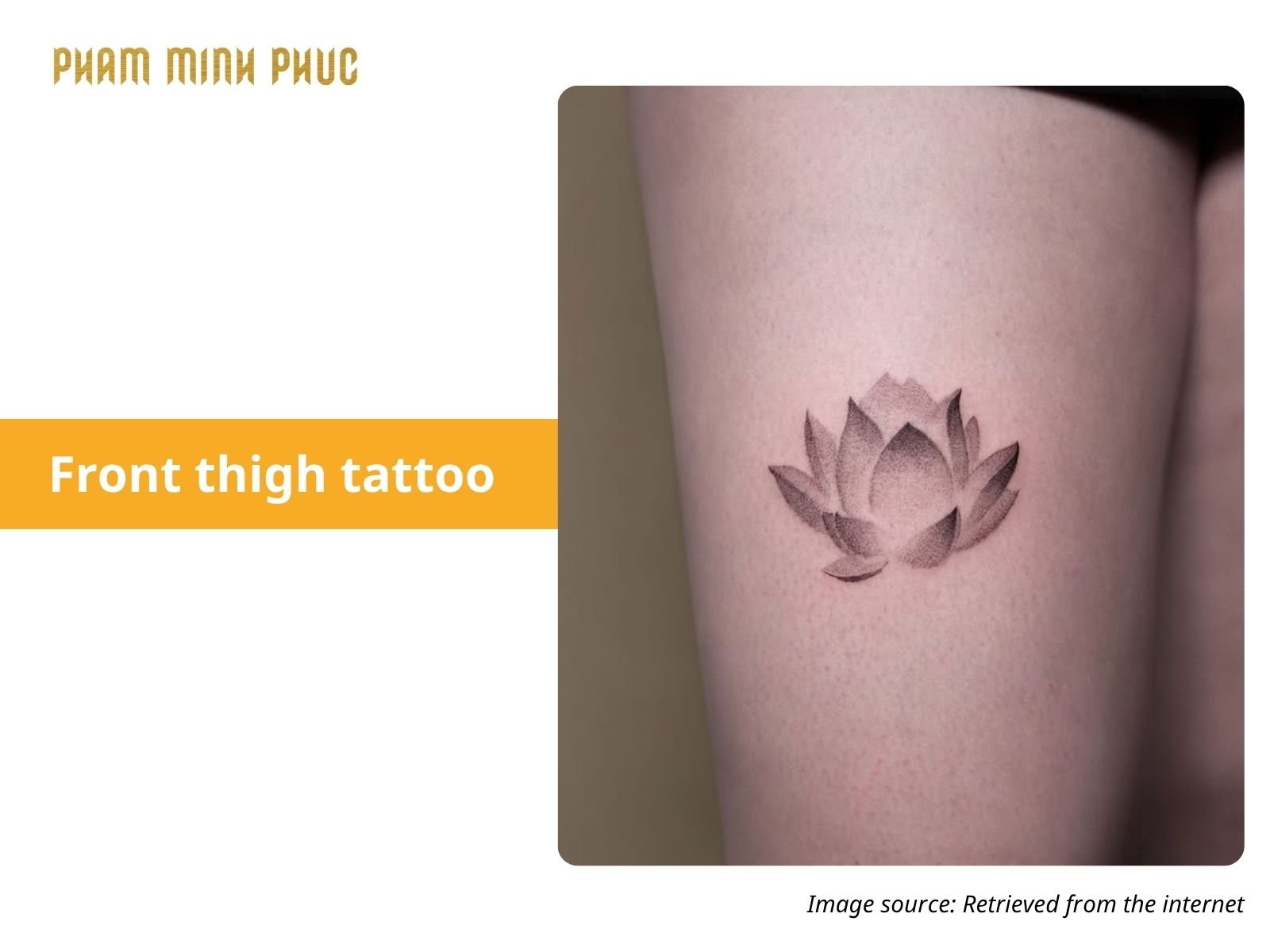
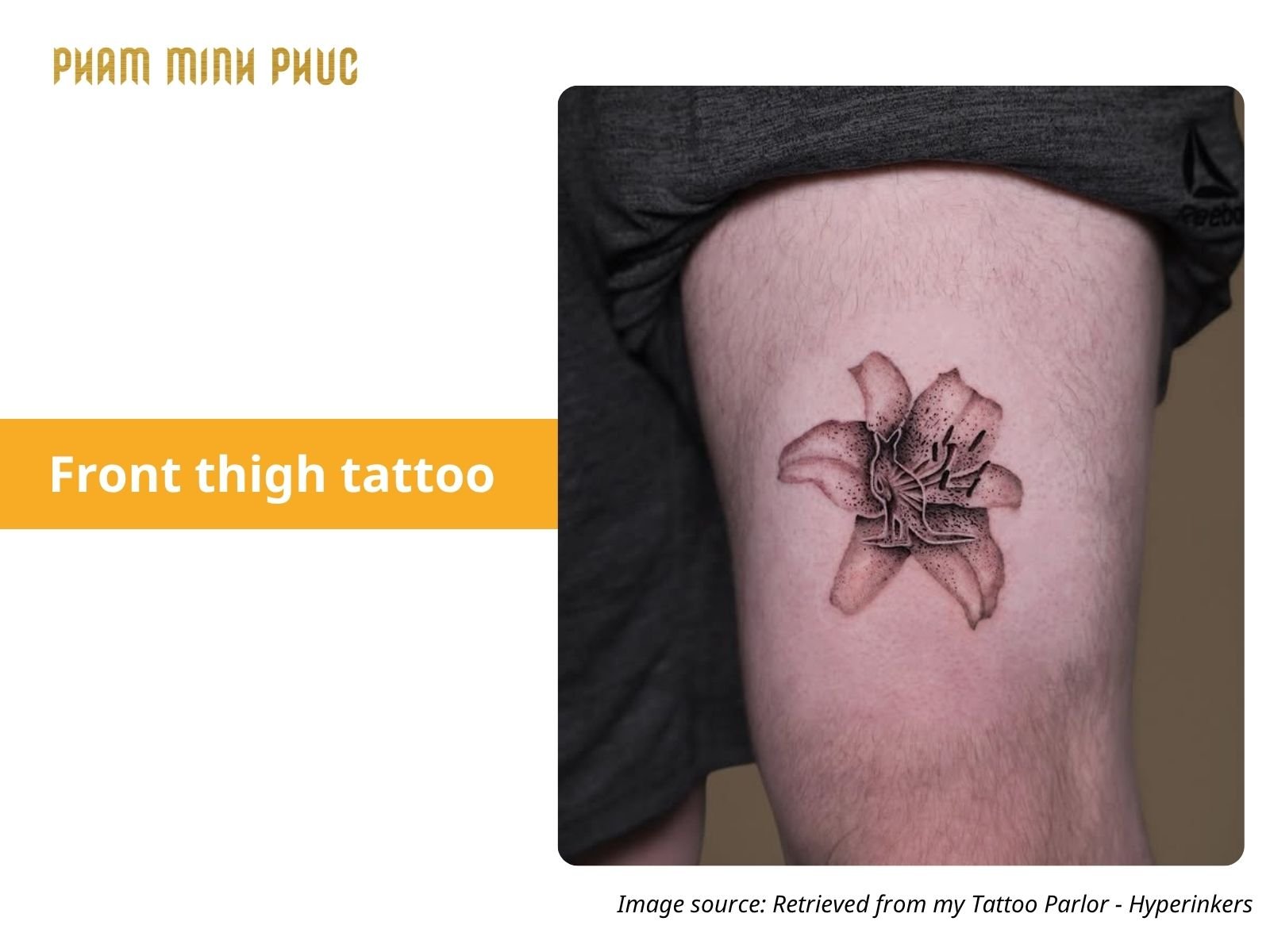
The front thigh placement utilizes the large, flat surface of the quadriceps muscle to display bold body art. This specific anatomical zone provides a highly visible canvas that easily balances striking public display with simple concealment under standard pants. The thick muscle mass effectively absorbs the needle impact to minimize overall physical discomfort during long tattoo sessions.
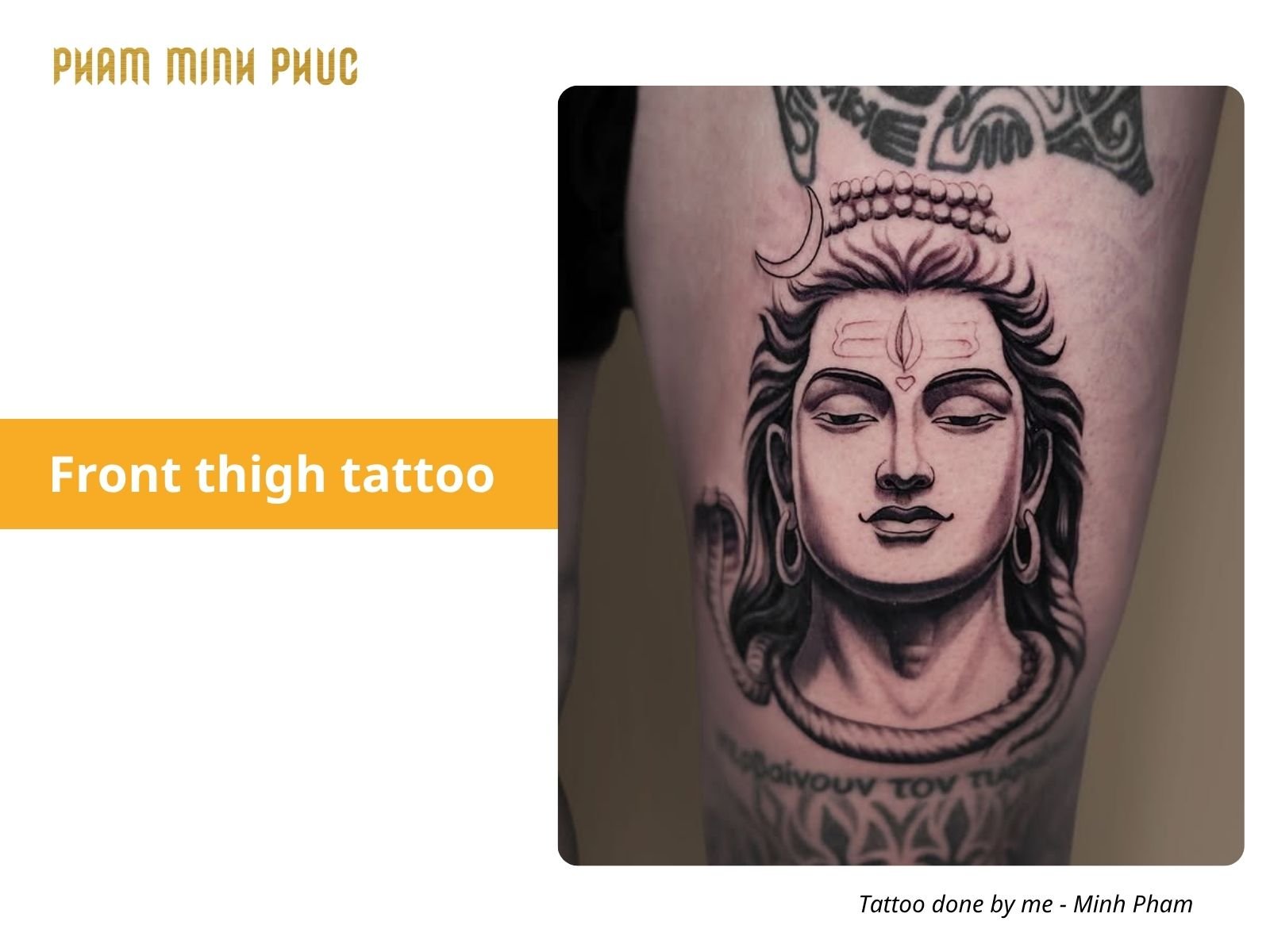
This specific placement requires your artist to navigate the thigh flattening distortion trap carefully when planning precise designs. The human leg operates as a rigid cylinder while you stand upright, but the muscle mass flattens and expands outward laterally the moment you sit down. You must actively collaborate with your artist by checking the printed stencil in the mirror while both standing and seated. This crucial verification ensures your chosen artwork maintains its perfect structural integrity across all daily postures without warping into an unnatural shape.
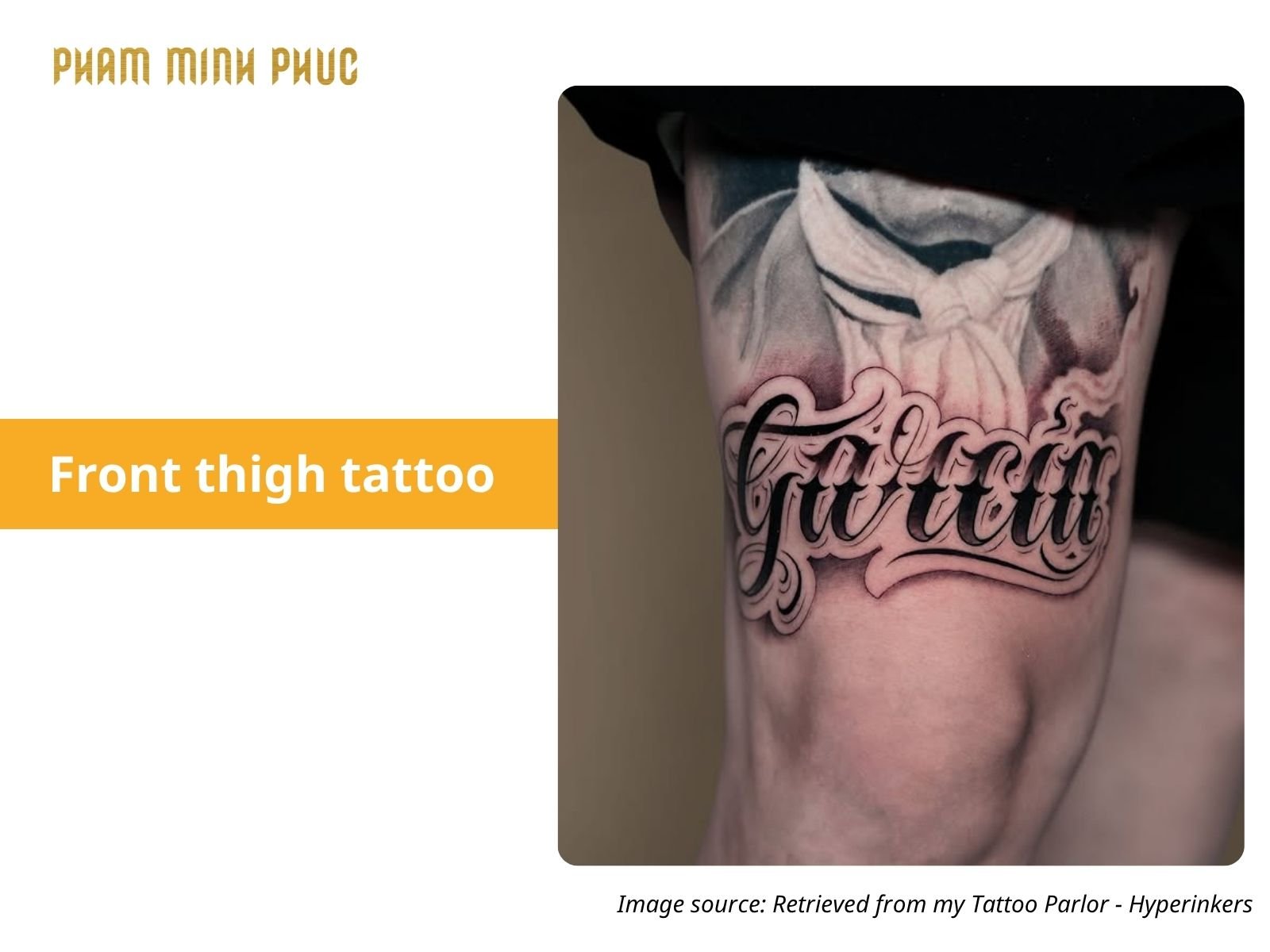
Portraits, animals, realism, ornamental artwork, mandalas, neo-traditional designs, and other detailed pieces can use this space effectively. The front thigh gives the artist enough space to separate important features instead of compressing them into a narrow area.
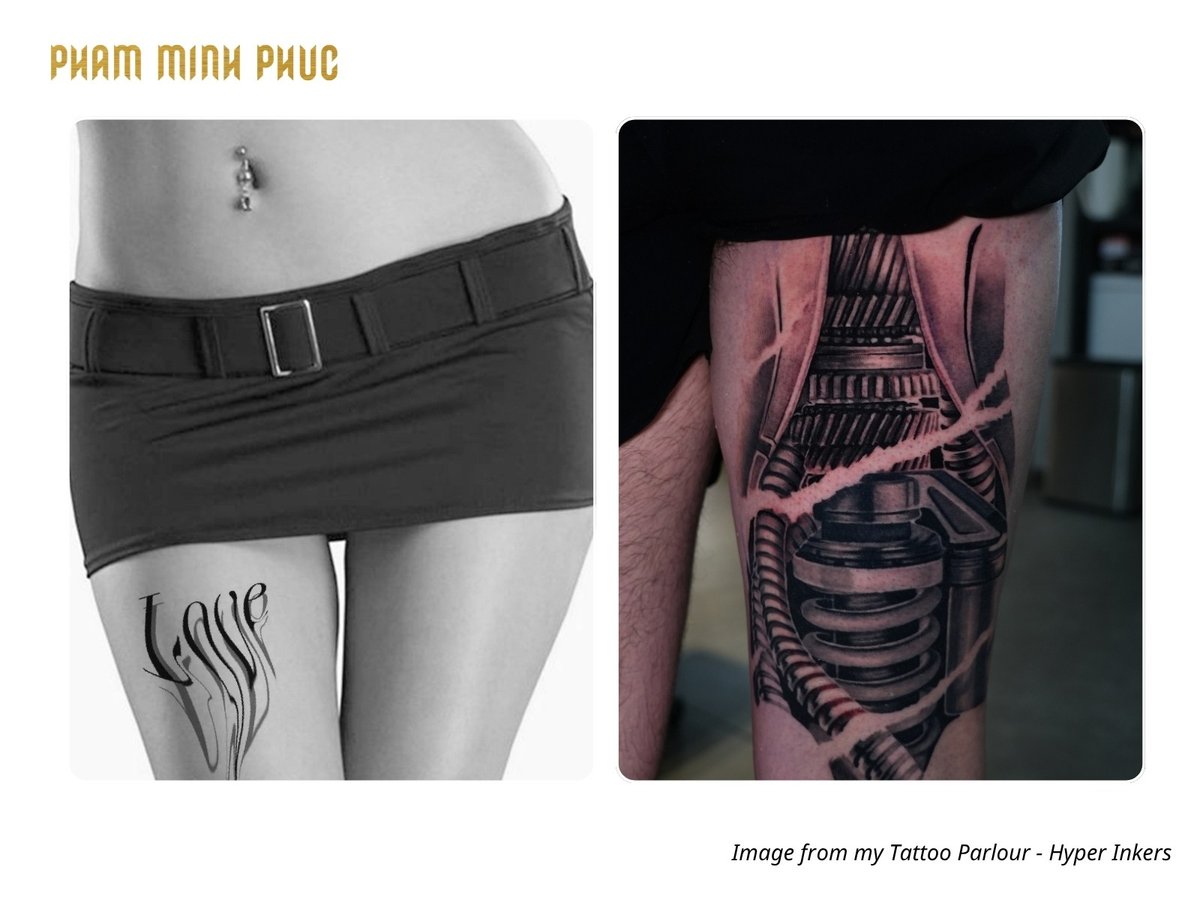
When I position a large front-thigh tattoo, I first check how the main subject reads while the client is standing naturally. I then look at the design with the leg bent so I can make sure the important focal areas still sit naturally with the shape of the thigh.
Outer / Side Thigh Tattoo Placement
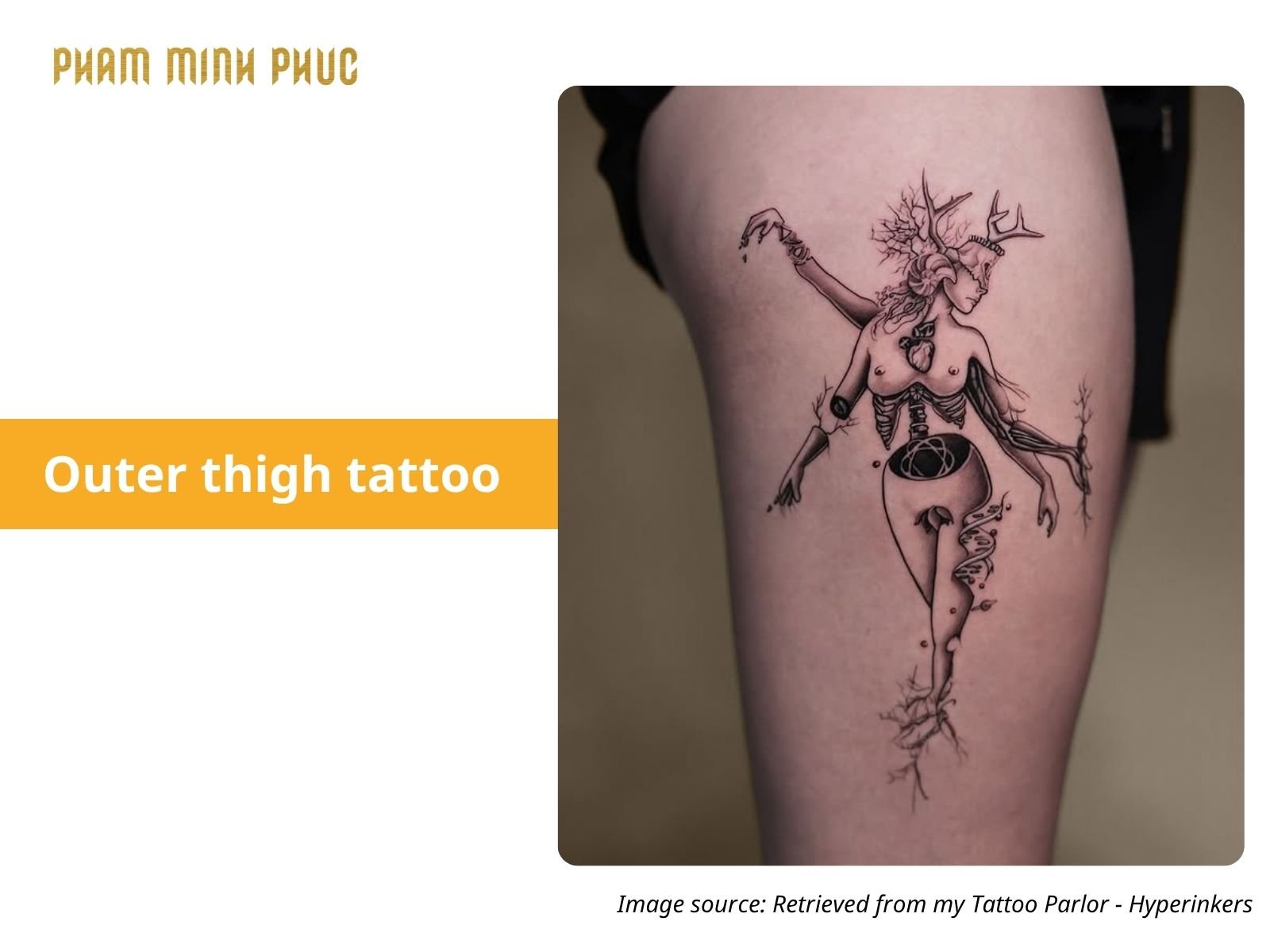
The outer or side thigh uses the lateral surface between the hip and knee. The outer thigh placement provides an excellent natural cushion over the femur bone to create a highly comfortable tattooing experience. This expansive lateral canvas offers the largest uninterrupted surface area on the lower human body. The smooth skin texture allows the tattoo machine to glide effortlessly to produce clean, highly saturated lines.
This specific area frequently triggers the involuntary leg twitch reflex during the procedure. When the needle strikes deep nerve clusters within the massive quadriceps muscle, your leg will automatically kick or spasm without your conscious control. You must understand this is a normal physiological response and remain completely calm while your artist physically stabilizes your leg to prevent accidental needle blowouts.
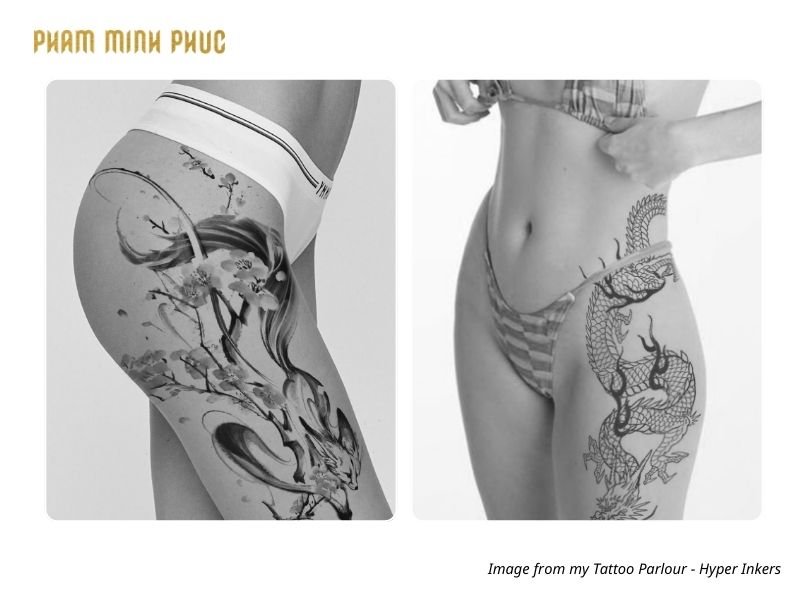
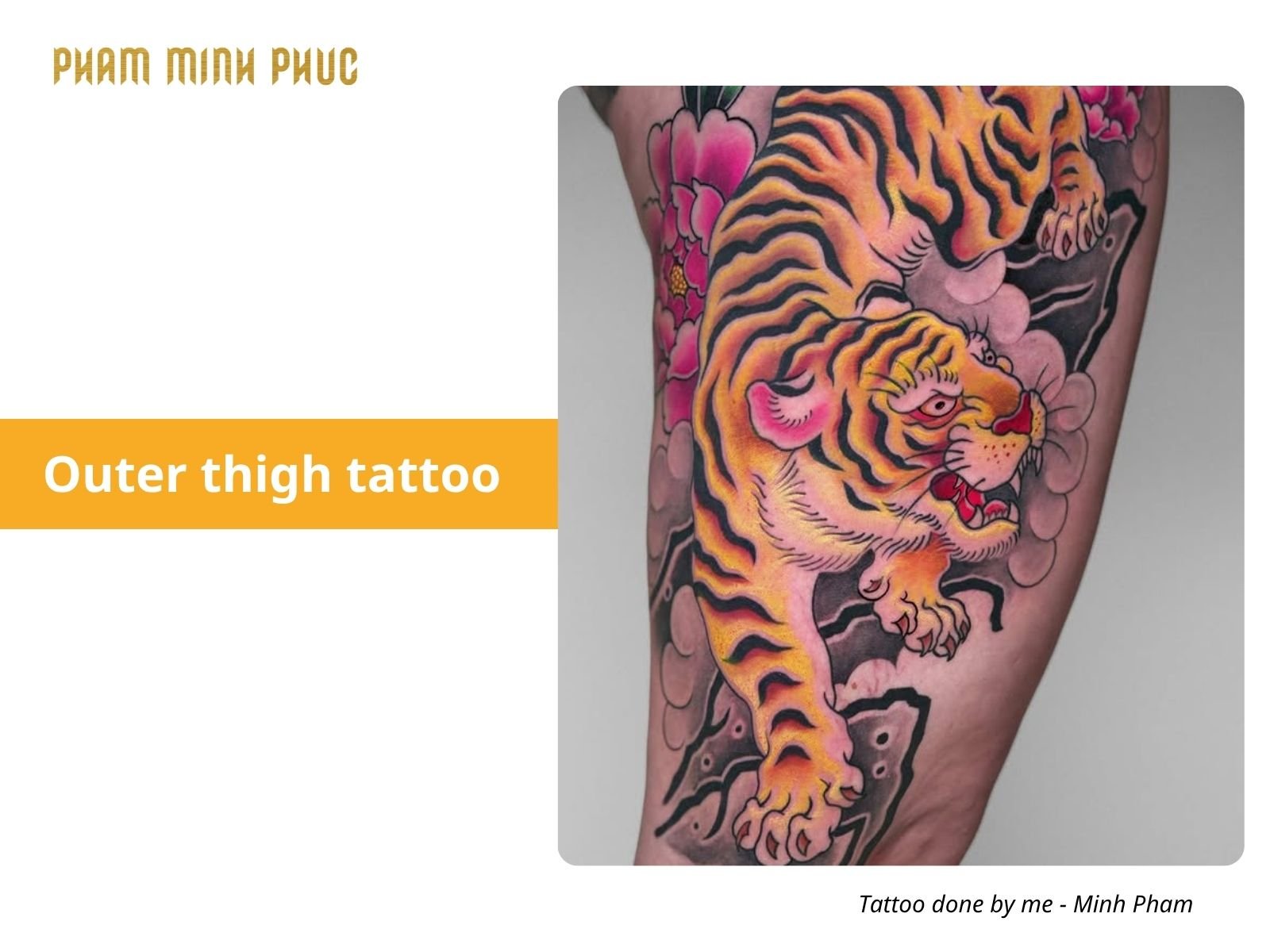
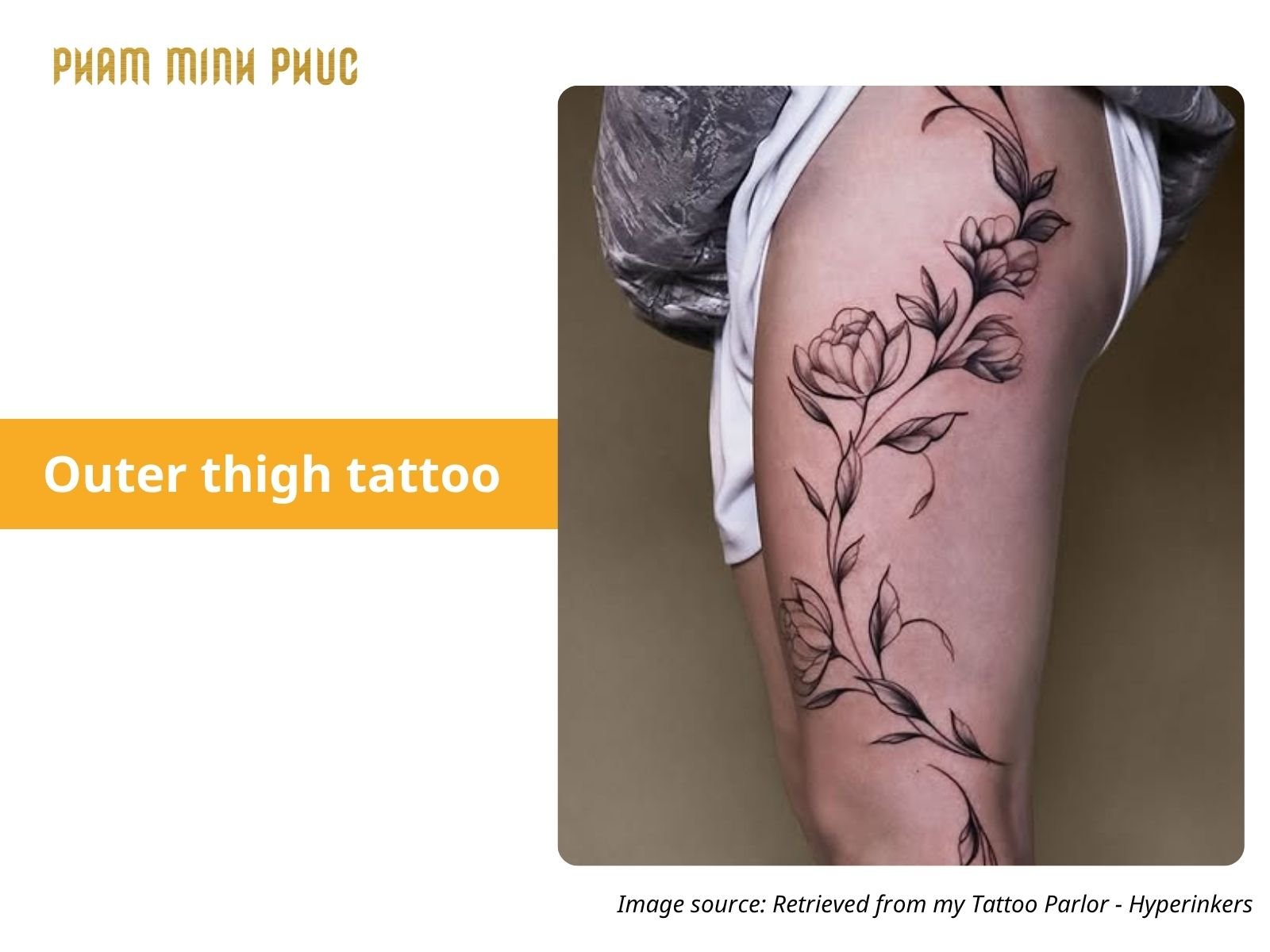
This placement works particularly well for larger compositions such as floral arrangements, animals, realism, Japanese-inspired artwork, fantasy subjects, and illustrative designs. Artwork that needs to wrap slightly around the leg can also use the outer thigh more naturally than a strictly front-facing placement.
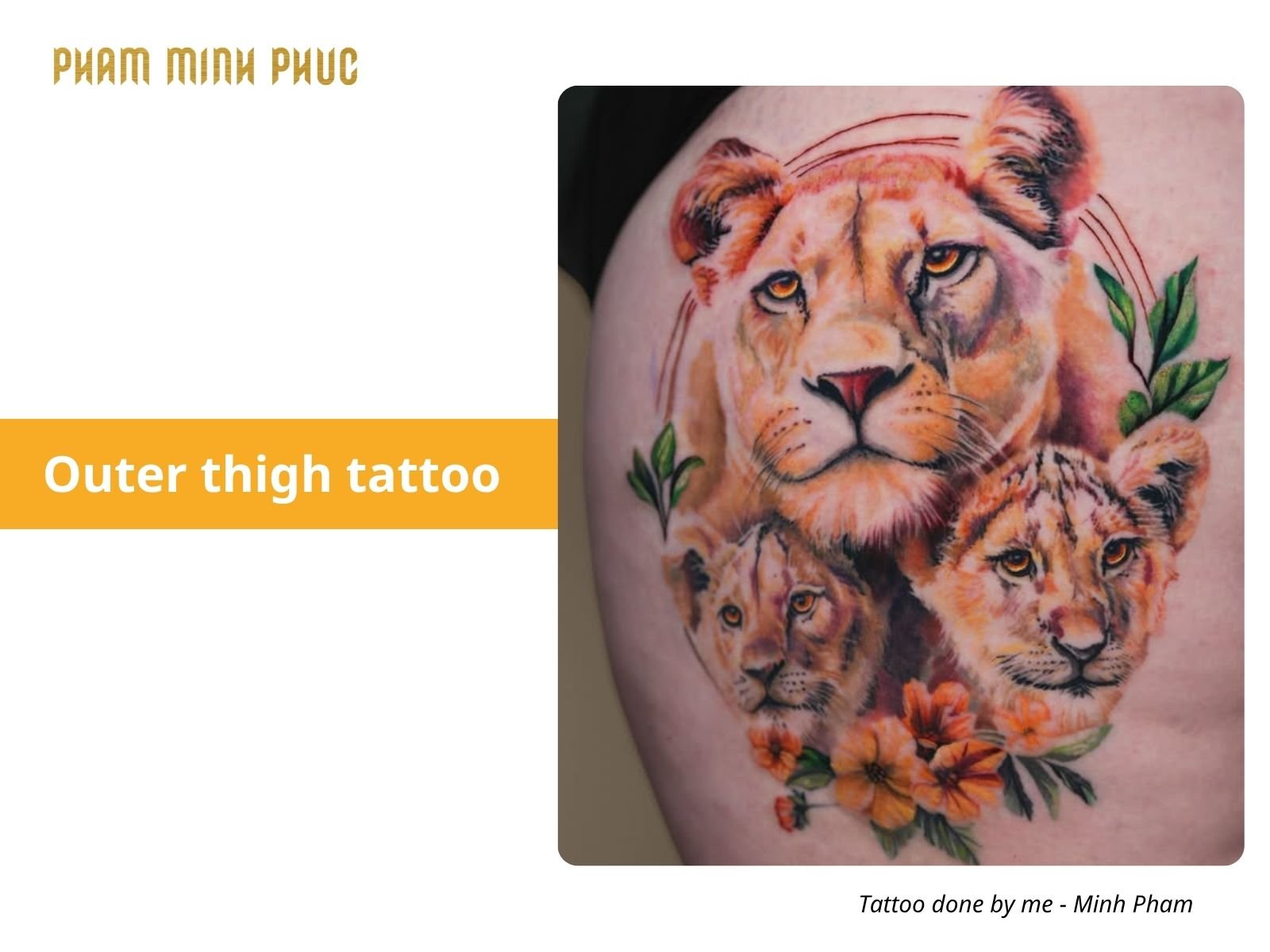
Pain on the outer thigh is generally mild to moderate, around 3–4/10 for many people. Its thicker muscle and soft tissue make this one of the more comfortable areas of the thigh to tattoo. For someone considering a first tattoo, the combination of available space, concealment, and a generally lower pain level can make the outer thigh a practical option.
Inner Thigh Tattoo Placement
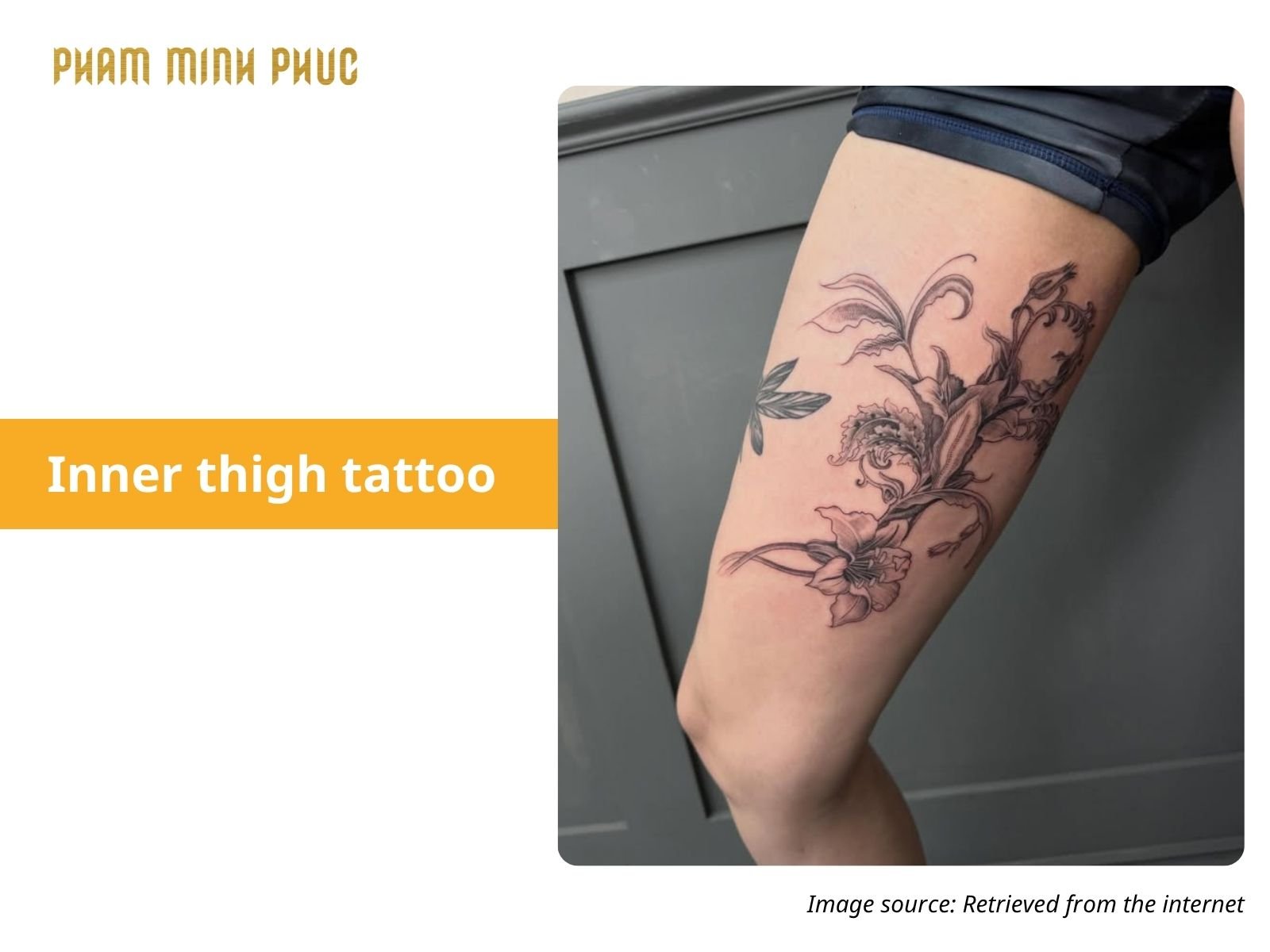
The inner thigh is one of the more private thigh tattoo placements because most of the area remains covered by everyday clothing. The inner thigh placement involves extremely thin skin, a high concentration of sensitive nerve endings, and close proximity to the femoral artery. The lack of dense muscle tissue makes this specific zone significantly more painful than the outer leg.
Fine-line artwork, script, botanical designs, ornamental pieces, meaningful symbols, and smaller-to-medium compositions can work naturally here. Larger tattoos are possible as well, but the available width and the transition toward the groin should be considered when deciding how much detail to include.
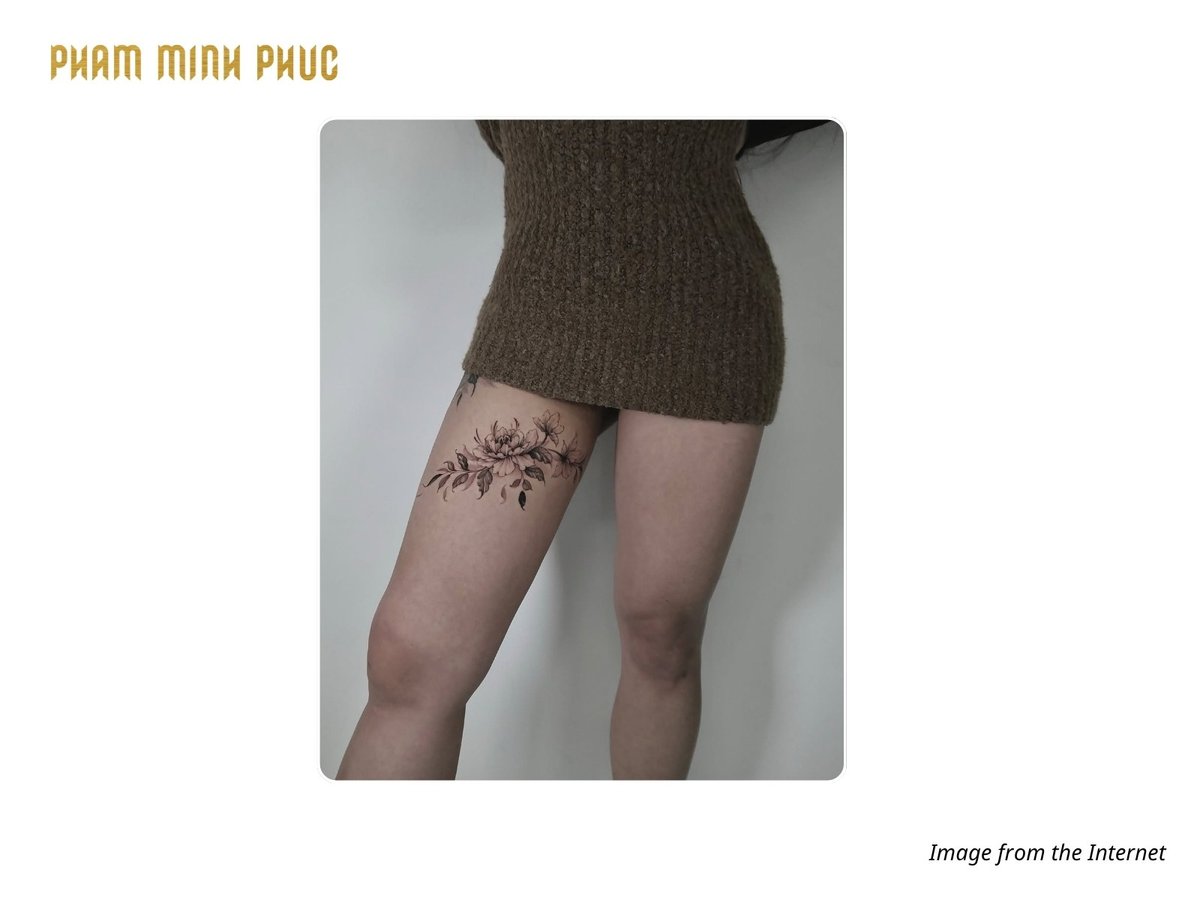
This area is considerably more sensitive than the outer thigh. Pain can reach around 8–9/10 because this softer, more sensitive area tends to react more strongly to the needle.
Healing also requires more attention to friction. Depending on the exact placement and anatomy, the opposite thigh or clothing may repeatedly contact the tattoo while walking. Loose clothing can therefore be especially useful during the early healing period. A tattoo placed high on the inner thigh can remain almost completely concealed, while one positioned farther down the leg may become visible with shorter clothing.
Back of Thigh Tattoo Placement
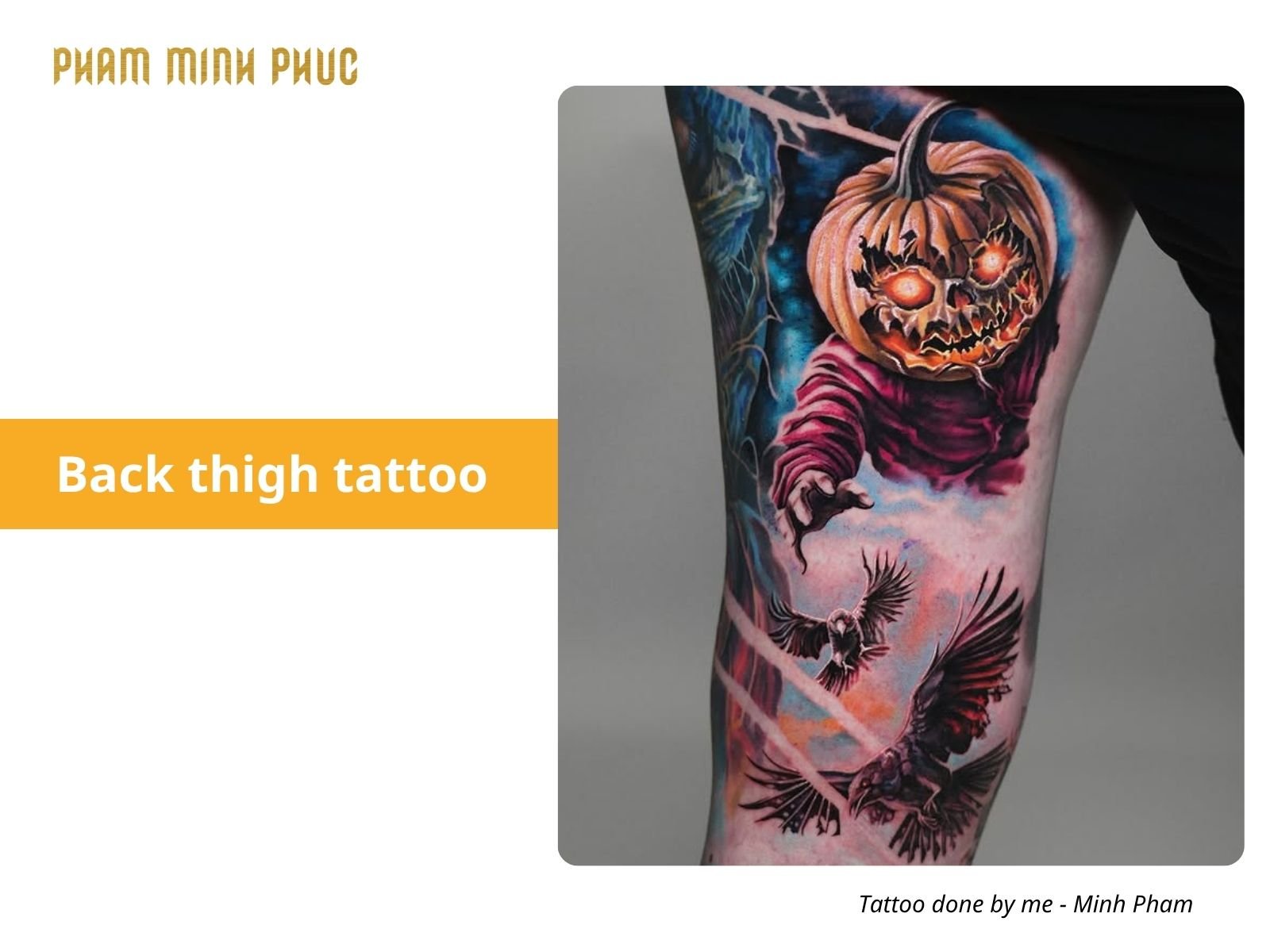
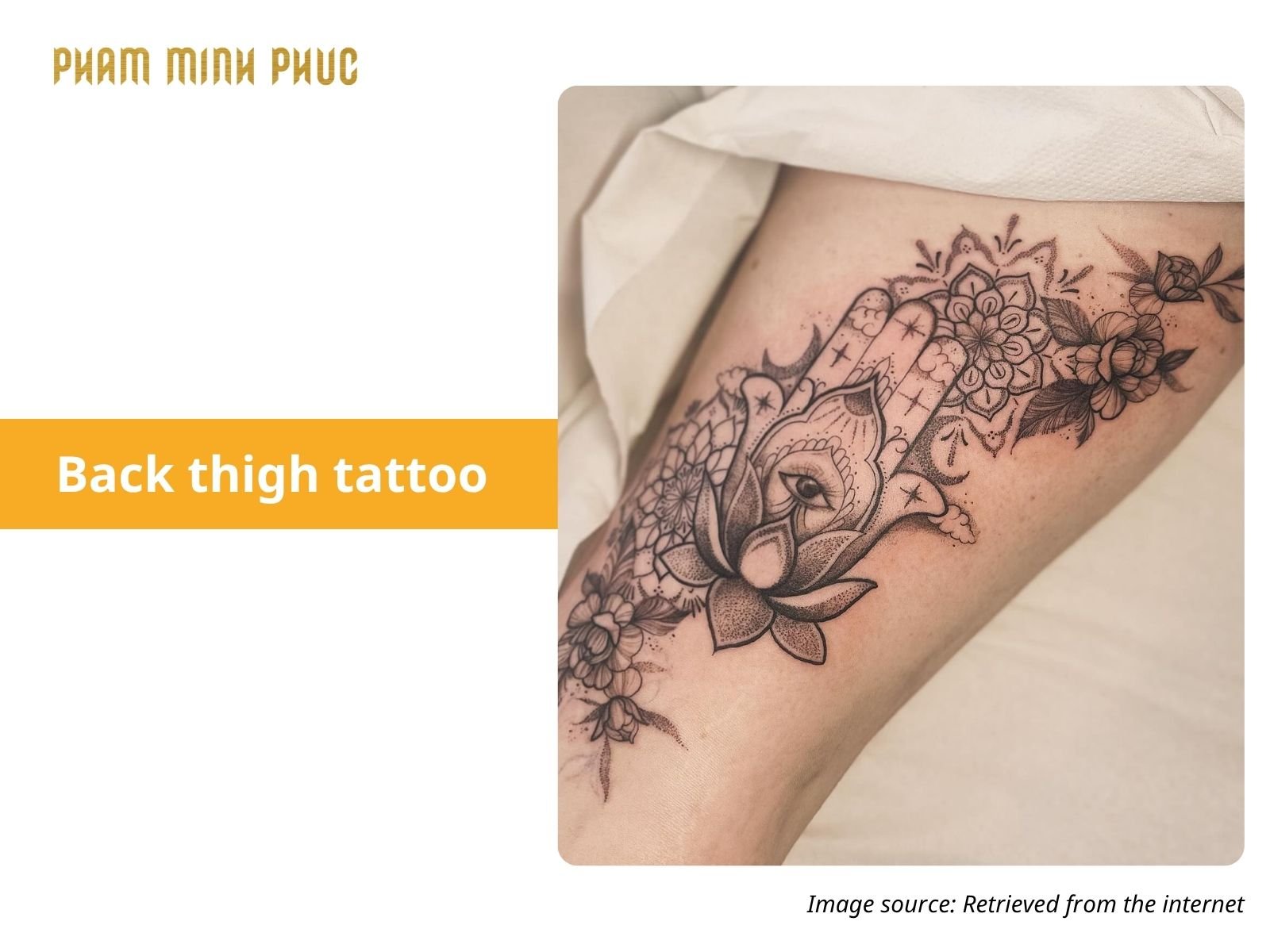
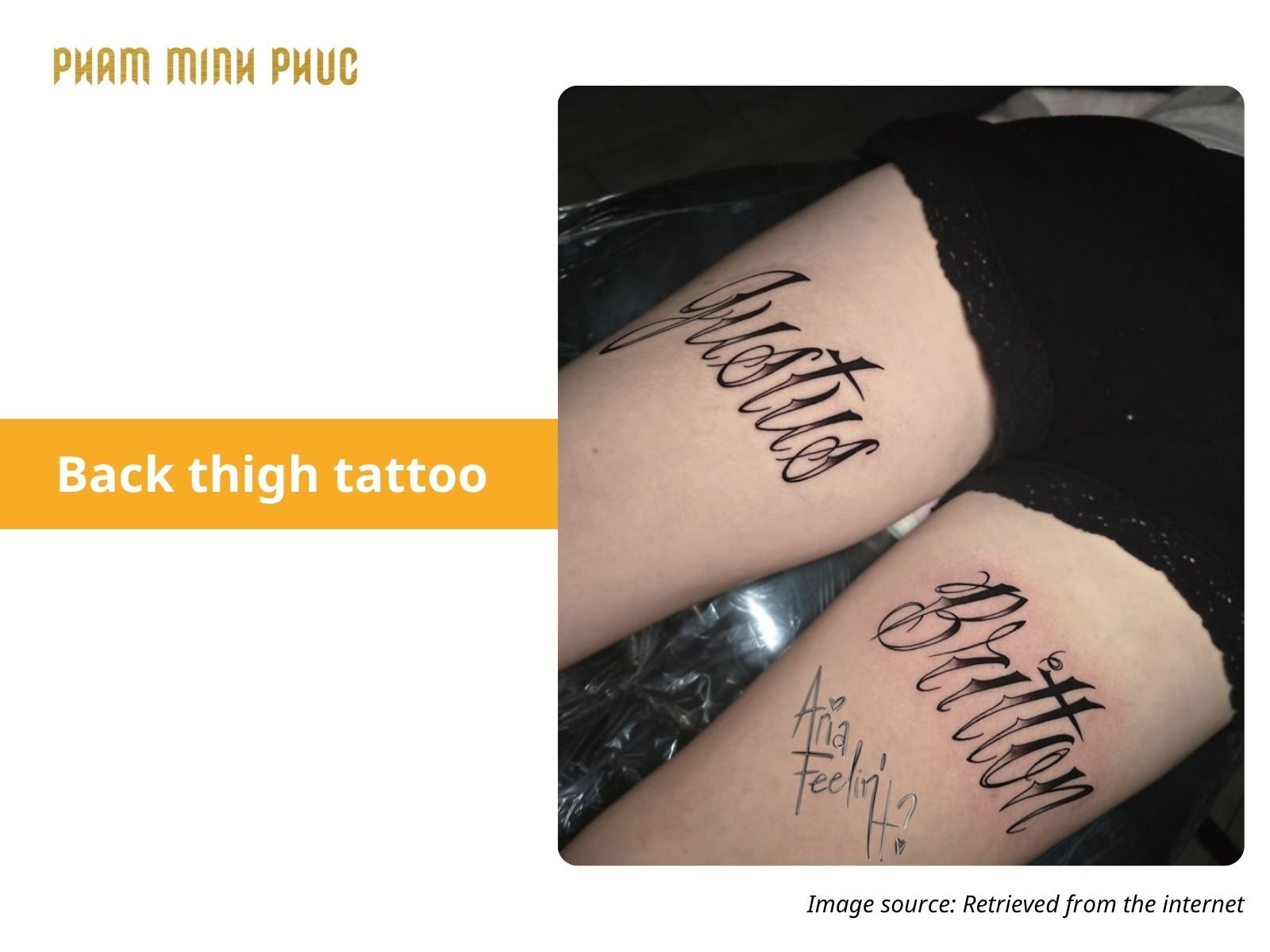
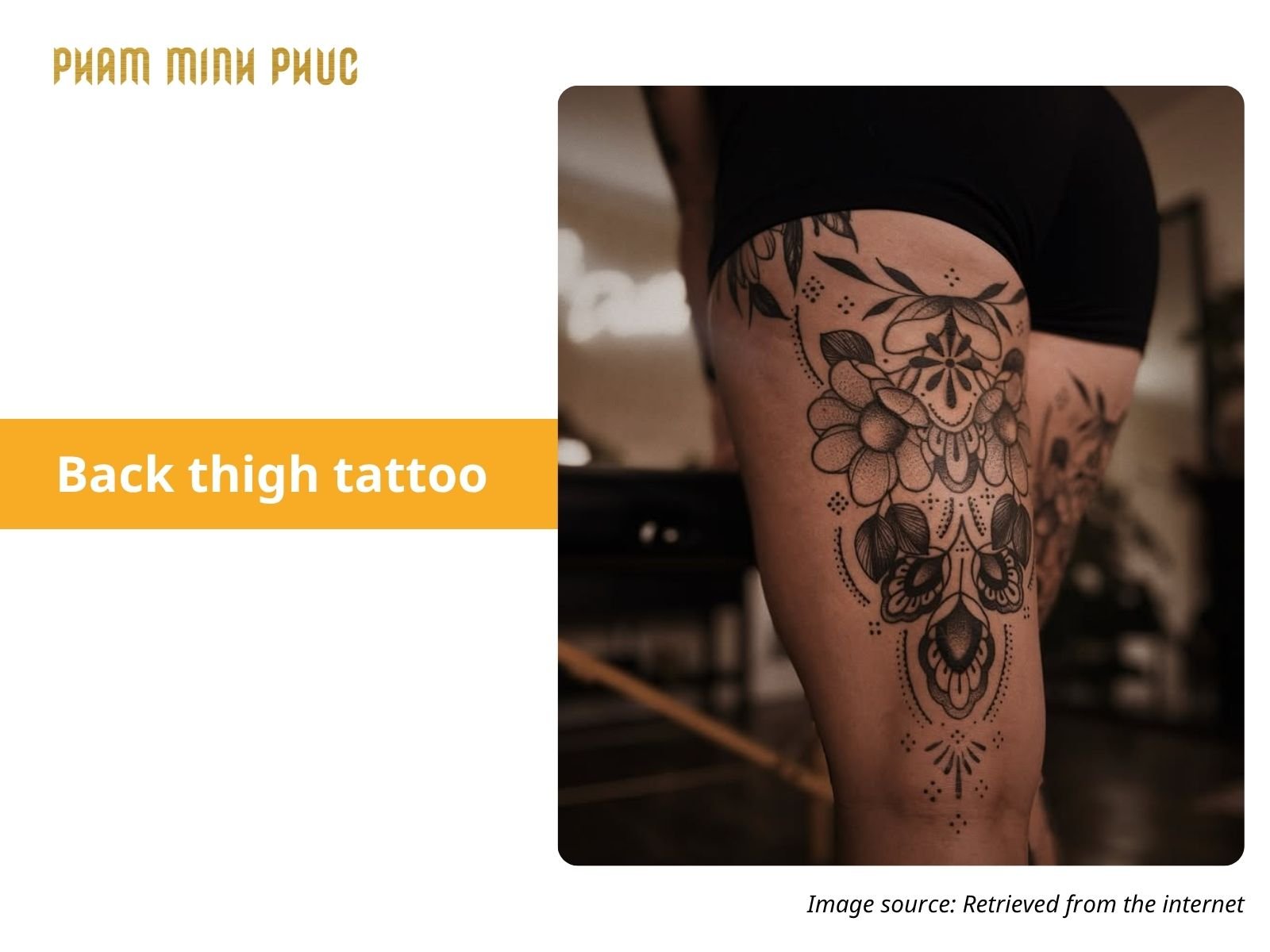
The back of the thigh placement provides a discreet canvas that naturally follows the downward curve of the hamstring muscle. A back-of-thigh tattoo is primarily viewed from behind, which gives the placement a different visual effect from a front or side thigh piece.
This posterior region offers a broad, relatively flat surface when you stand upright. The thick fatty tissue near the upper glute crease provides moderate pain relief during the tattooing process.
You must actively collaborate with your artist to avoid the knee ditch agony when finalizing the stencil placement for the lower posterior leg. The skin located directly behind the knee joint folds and stretches violently with every single step you take. You should ask your artist to position the tattoo so it stops at least two to three inches above the knee crease. This crucial adjustment prevents constant mechanical movement from ripping your fresh scabs entirely in half during the recovery period.
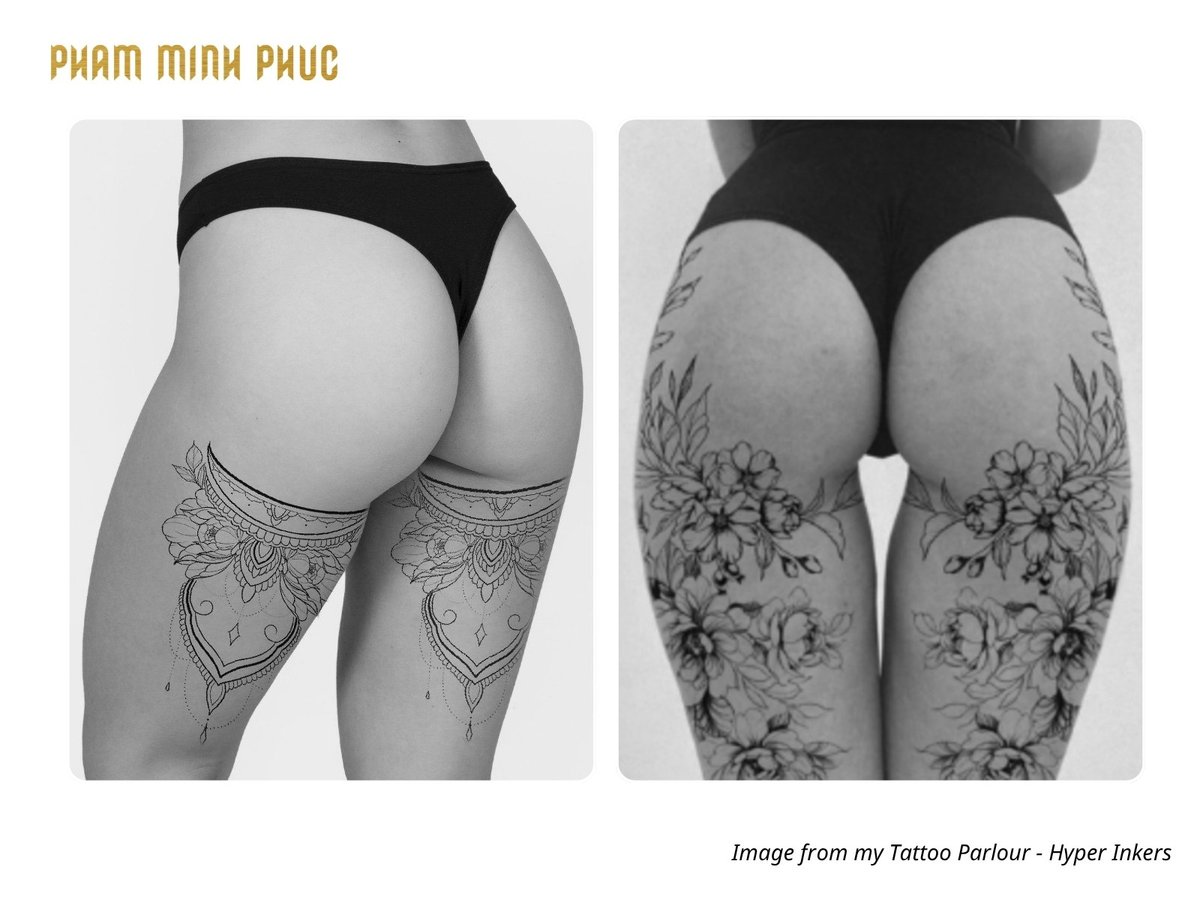
The hamstring creates a long vertical surface that suits floral compositions, lettering, ornamental work, American Traditional designs, animals, and other artwork with a strong top-to-bottom direction.
Upper / High Thigh Tattoo Placement
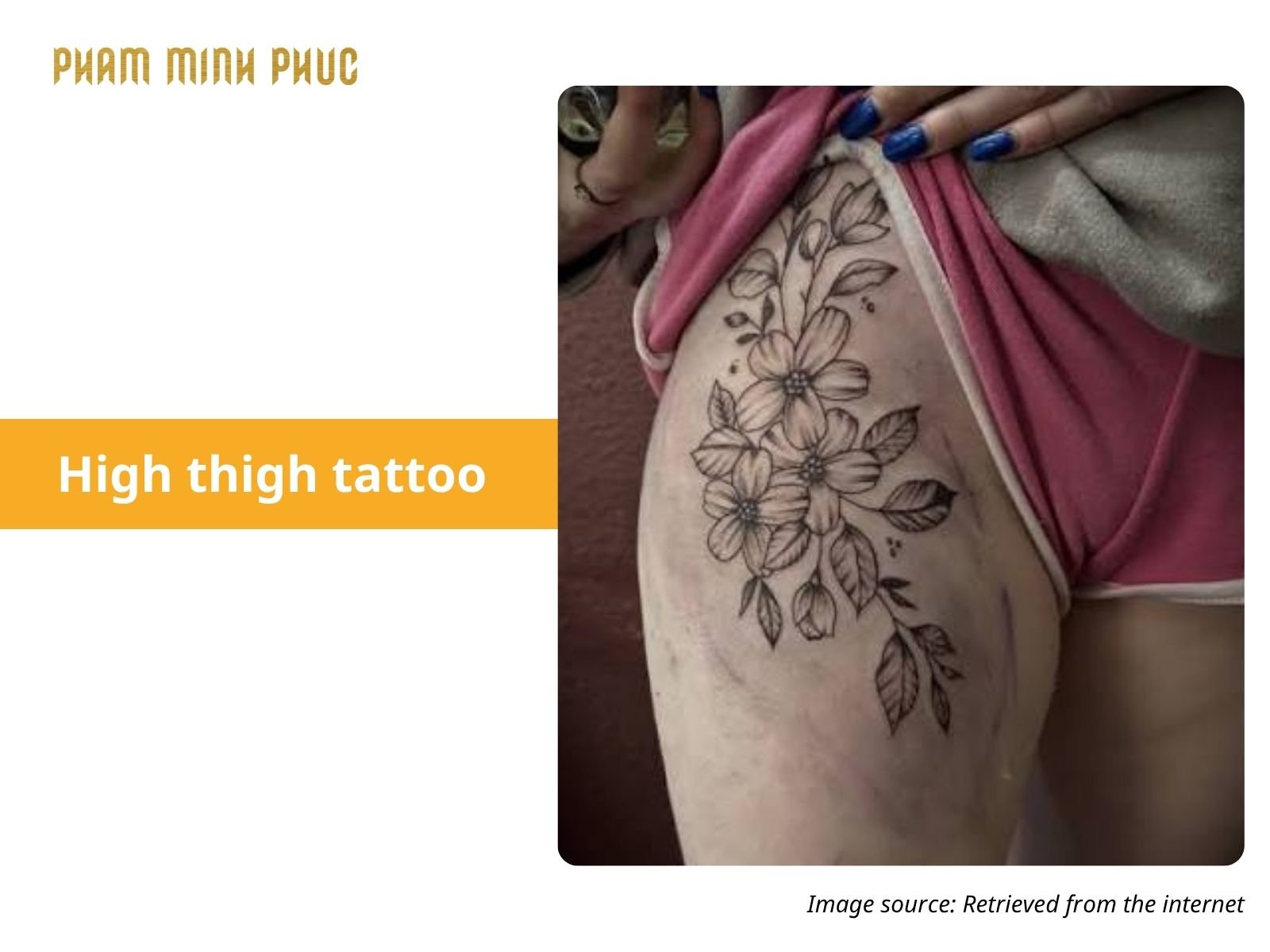
The upper or high thigh refers to the highest part of the leg near the hip and groin. It is not limited to one surface. A high-thigh tattoo may sit toward the front, outer, inner, or back of the leg. Upper thigh tattoos are often chosen when the goal is to keep a tattoo easy to conceal while still having enough space for a substantial design.
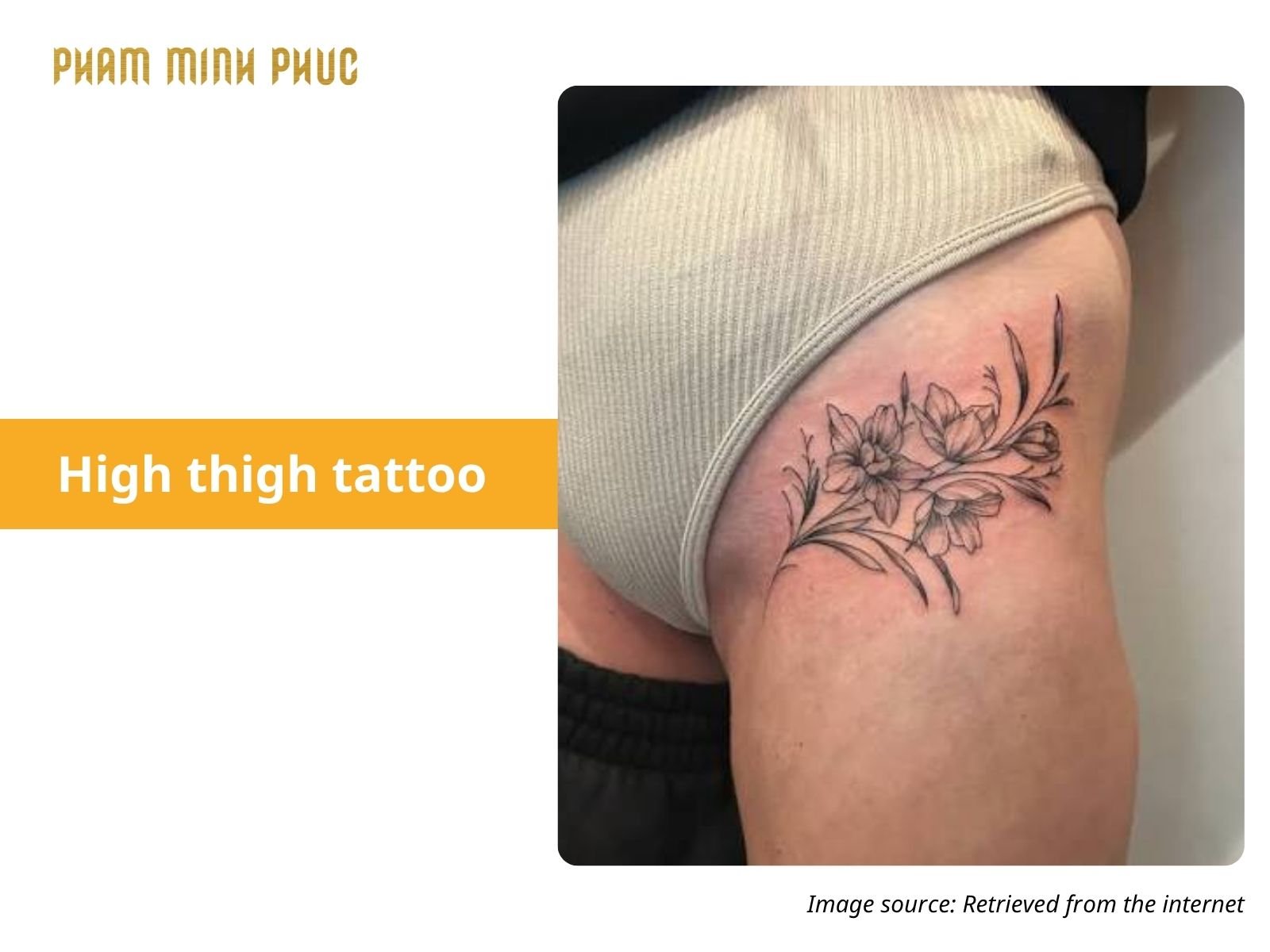
That flexibility allows many different compositions. A small symbol or fine-line design can sit high on the thigh, while larger floral, ornamental, animal, or illustrative pieces can spread across the upper leg.
The transition between the hip and thigh is particularly useful for designs that need a longer curved flow. Floral arrangements, ornamental compositions, snakes, dragons, and other directional subjects can extend from the upper outer thigh toward the hip without feeling restricted to one flat area.
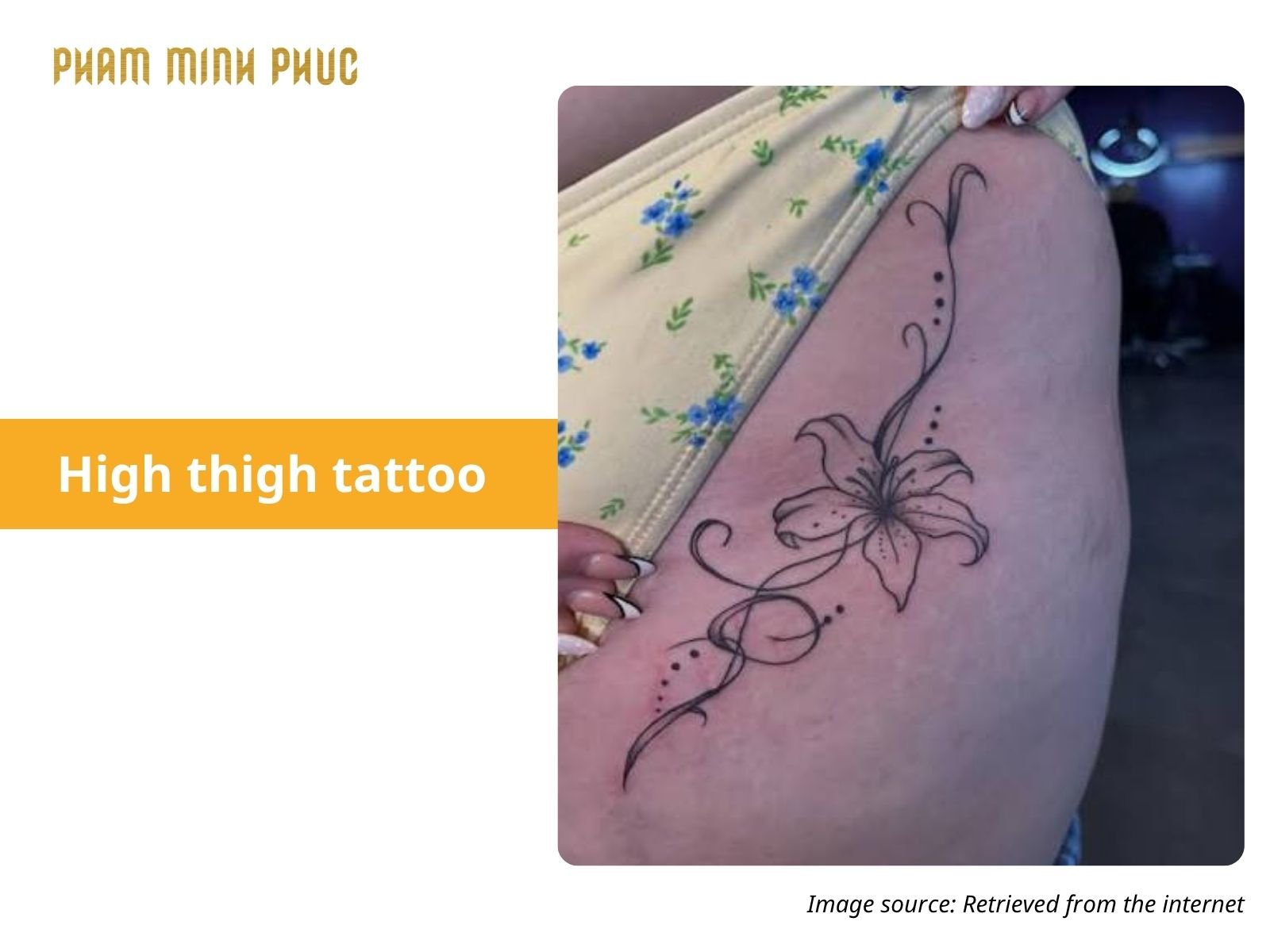
Visibility depends heavily on exact placement and clothing. High inner-thigh pieces can remain very private, while upper outer-thigh designs may become visible with shorts or swimwear.
Which Tattoo Styles Work Well on the Thigh?
The thigh is especially suitable for tattoo styles that benefit from either a broad focal canvas or enough length to build a larger composition around the leg.
- Black and Grey can use the front and outer thigh effectively because large areas of shading have enough space to develop gradually around the muscle contours.
- Realism also benefits from the available width. Portraits, animals, and detailed objects often need enough scale for facial features, texture, highlights, and tonal transitions to remain readable.
- Japanese tattooing can use the thigh differently. Dragons, koi, flowers, waves, and background elements can flow around the side of the leg or connect toward the hip and lower leg as part of a larger composition.
- Ornamental designs can be centered on the front thigh for symmetry or extended vertically along the inner and back thigh.
- Fine-line work often suits more contained areas such as the inner or upper thigh, particularly for botanical designs, script, and smaller ornamental pieces.
- American Traditional designs also work well because the thigh gives bold standalone subjects enough room to maintain clear silhouettes.
How to Choose a Thigh Tattoo Placement That Fits Your Design
The strongest thigh placement is usually the area whose shape matches the artwork rather than simply the spot that is most popular.
- A broad portrait, animal head, or large central subject usually benefits from the front or outer thigh, where there is enough width to preserve important details.
- Long floral designs, lettering, ornamental pieces, and other vertically arranged artwork can use the front or back thigh because these areas create a clear top-to-bottom direction.
- If privacy matters more than display, the inner thigh or high thigh gives you greater control over when the tattoo is visible.
- For artwork intended to continue toward the hip, the upper outer thigh provides a useful transition. It allows the design to move from the upper leg onto the hip without forcing an abrupt change in direction.
Choosing between the inner and outer thigh also involves a practical tradeoff. The outer thigh gives you more open space and is rated around 3–4/10 on the pain chart. The inner thigh is more private but is considerably more sensitive at around 8–9/10 and may experience more friction during healing.
Men and women may have different common preferences, but thigh placement should not be treated as gender-specific.
- Women often choose the upper, outer, inner, or front thigh for floral, ornamental, fine-line, and decorative work.
- Men commonly use the front and outer thigh for animals, realism, Japanese work, and larger focal designs. These are patterns of preference, not placement rules.
For a first tattoo, the outer thigh can be a practical starting point because it provides a large working area, good concealment, and a relatively lower pain rating. The overall size of the tattoo and session length should still be considered.
If you may eventually extend the tattoo into the hip or a larger leg piece, tell your artist early. Leaving appropriate space and choosing the direction of the first design carefully can make future expansion much easier.
What Should You Wear for a Thigh Tattoo Appointment?
Wear loose clothing that gives your tattoo artist easy access to the placement and does not press tightly against the fresh tattoo afterward.
- For a front or outer-thigh tattoo, loose shorts are often practical because they expose the area without restricting the leg.
- An upper or inner-thigh tattoo may require clothing that can be moved farther out of the way while still keeping you comfortable and appropriately covered. Your artist can use draping when necessary so only the area being tattooed needs to remain exposed.
- For a back-thigh piece, loose shorts or another garment that gives clear access to the hamstring is generally more convenient than tight pants.
Avoid arriving in skinny jeans, leggings, compression shorts, or other restrictive clothing if those garments will need to be pulled directly over the fresh tattoo afterward.
Caring for a Thigh Tattoo During Healing
The main placement-specific challenge with a healing thigh tattoo is friction.
- A front-thigh tattoo can repeatedly contact fitted pants when sitting or walking. Outer-thigh pieces may rub against tight jeans or receive pressure while sleeping on that side.
- Inner-thigh tattoos require more awareness of skin-to-skin contact because the legs may rub together during normal movement.
- With a back-thigh piece, sitting can put direct pressure on tattoos placed high on the hamstring, while designs closer to the knee move more as the leg bends.
- High-thigh tattoos can also sit directly beneath underwear, waistbands, or fitted shorts.
Loose clothing and avoiding unnecessary rubbing can make these placements easier to manage while the skin heals. Follow your tattoo artist’s instructions for dressing, washing, and moisturizing, and use a dedicated tattoo aftercare guide for the full healing routine.
FAQs about Thigh Tattoo
Does a thigh tattoo hurt more than an arm tattoo?
A thigh tattoo generally hurts significantly less than an arm tattoo due to the extensive fat and thick muscle tissue shielding the underlying bone structure. The outer and front sections of the upper leg provide a highly comfortable natural cushion that easily absorbs the machine’s vibration. The inner leg and the sensitive area near the knee joint generate sharper pain signals similar to the inner bicep or wrist.
Should you shave your legs before your thigh tattoo appointment?
You should not shave your legs immediately before your thigh tattoo appointment. Shaving at home often creates microscopic skin abrasions, razor burn, or small cuts that actively invite dangerous bacterial infections. You must allow the professional tattoo artist to shave the specific area using a sterile, single-use medical razor right before applying the stencil.
Do thigh tattoos need touch-ups?
Yes, thigh tattoos need touch-ups based entirely on their specific anatomical location and your daily clothing habits. Outer and front leg pieces age exceptionally well because standard pants protect the pigment from direct sun exposure and harmful UV radiation. Inner leg pieces frequently require touch-ups after the first year because constant daily walking creates severe skin friction that physically degrades the ink particles over time.
See full my tattoo placement guide to find the best spot
Can a thigh tattoo extend into the hip or a larger leg tattoo?
Yes. Upper and outer-thigh tattoos can transition naturally toward the hip, while front, side, and back-thigh artwork can later connect with other parts of the leg. Planning the direction and surrounding space of the first tattoo helps make future expansion easier.
A thigh tattoo gives you enough room to think beyond simply finding an empty spot on the leg. You can use the front or outer thigh for a large focal piece, keep artwork more private on the inner or upper thigh, or use the back of the leg for a vertical composition that is mainly viewed from behind. I hope this guide gives you a clearer idea of which area fits the tattoo you have in mind. If you are planning a thigh tattoo and still need help with the size, position, or how the design should follow your leg, you can contact me, Minh Pham, for a consultation so we can evaluate the artwork and placement together.
Explore more leg tattoo placement ideas: