Arm tattoo placement includes several distinct areas, from the upper arm and bicep to the forearm, elbow, and wrist. Each location provides a different amount of space, visibility, movement, and surface shape, which affects the tattoo designs and sizes that work best there.
The arm is especially flexible because you can choose one defined location for a standalone tattoo or connect several areas into a half sleeve or full sleeve. A portrait may need the broader surface of the upper arm, while a long design can follow the forearm. A smaller symbol may fit the wrist, and a radial composition can use the elbow as its center.
Your final choice should consider more than where the tattoo looks good in a photo. The design also needs to work with the shape of your arm, the way it moves, how visible you want the tattoo to be, and whether you may expand it in the future.
In this article, I, Minh Pham, will explain the main arm tattoo placements, which designs work naturally in each area, and what to consider before choosing the final position.
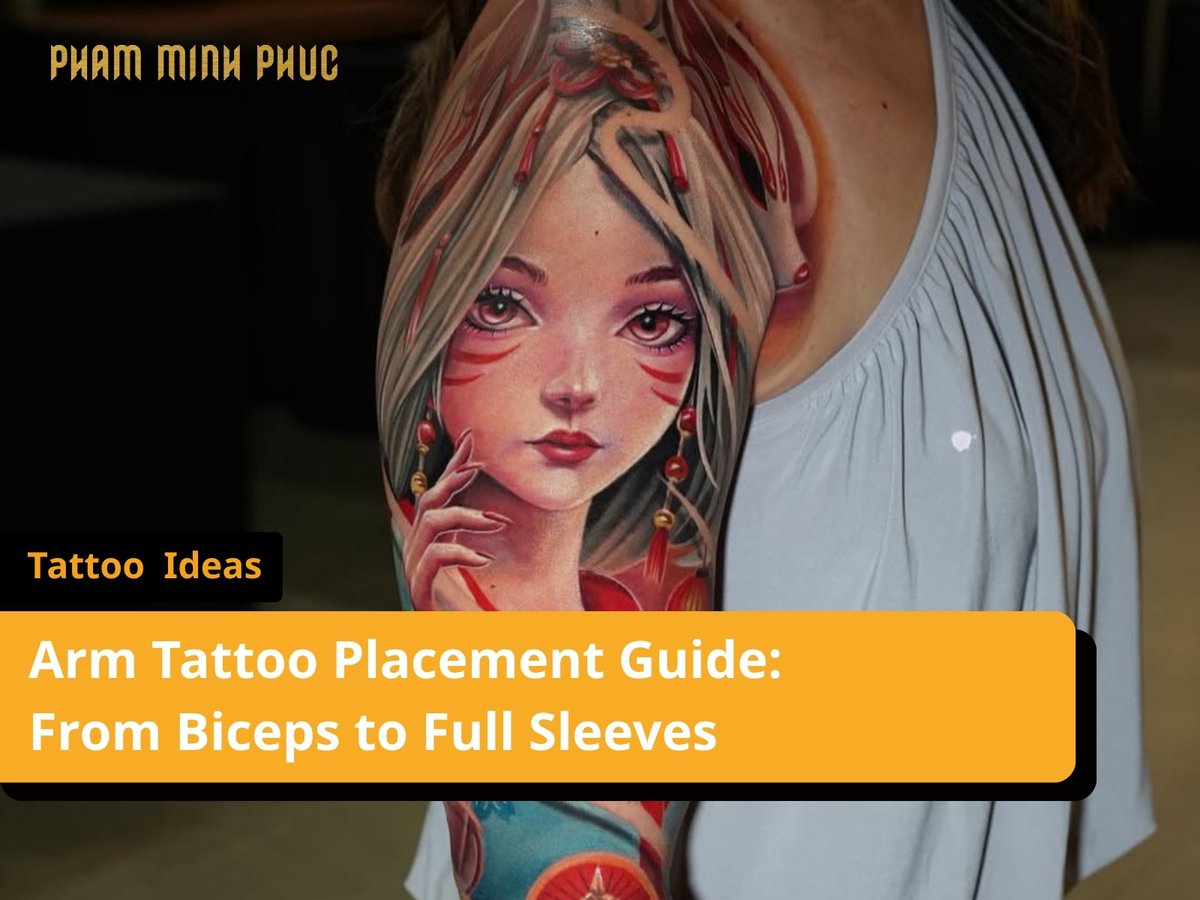
Table of Contents
Main Arm Tattoo Placement
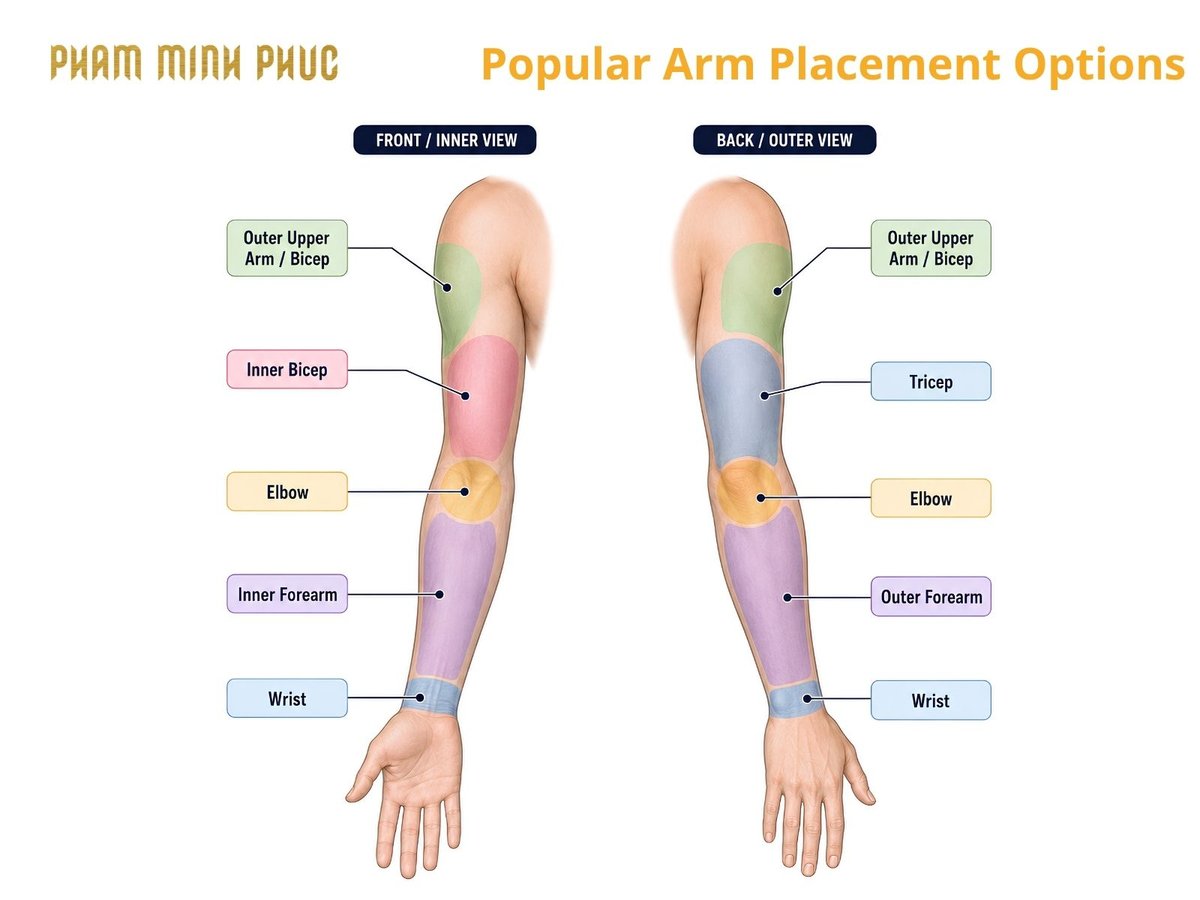
The main arm tattoo placements are the outer upper arm or bicep, inner bicep, back of the upper arm or tricep, outer forearm, inner forearm, elbow, and wrist.
The upper arm generally provides broader surfaces for focal artwork, while the forearm, or lower arm, creates a longer canvas for vertical and elongated designs. The elbow and wrist are smaller transition areas where movement and joint structure become more important.
The Upper Arm (Bicep Area)
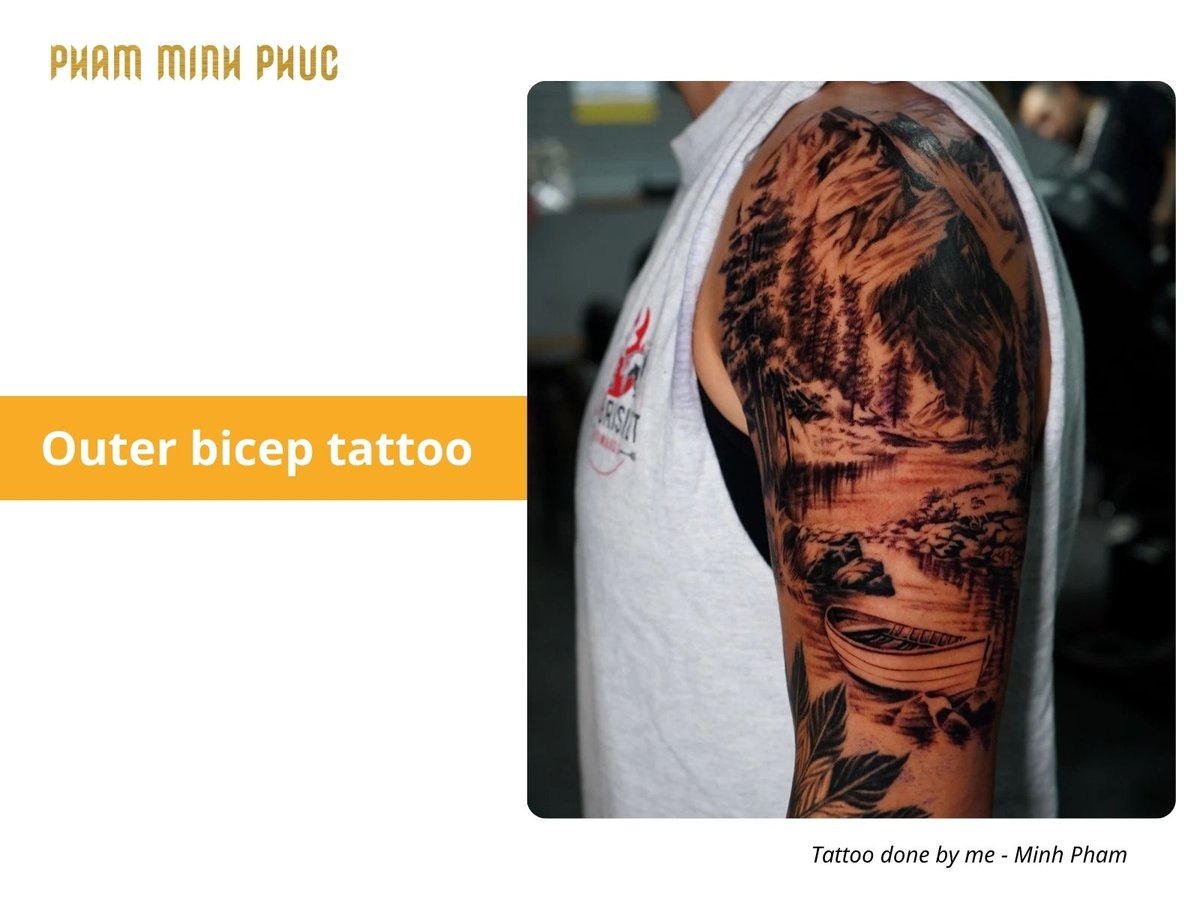
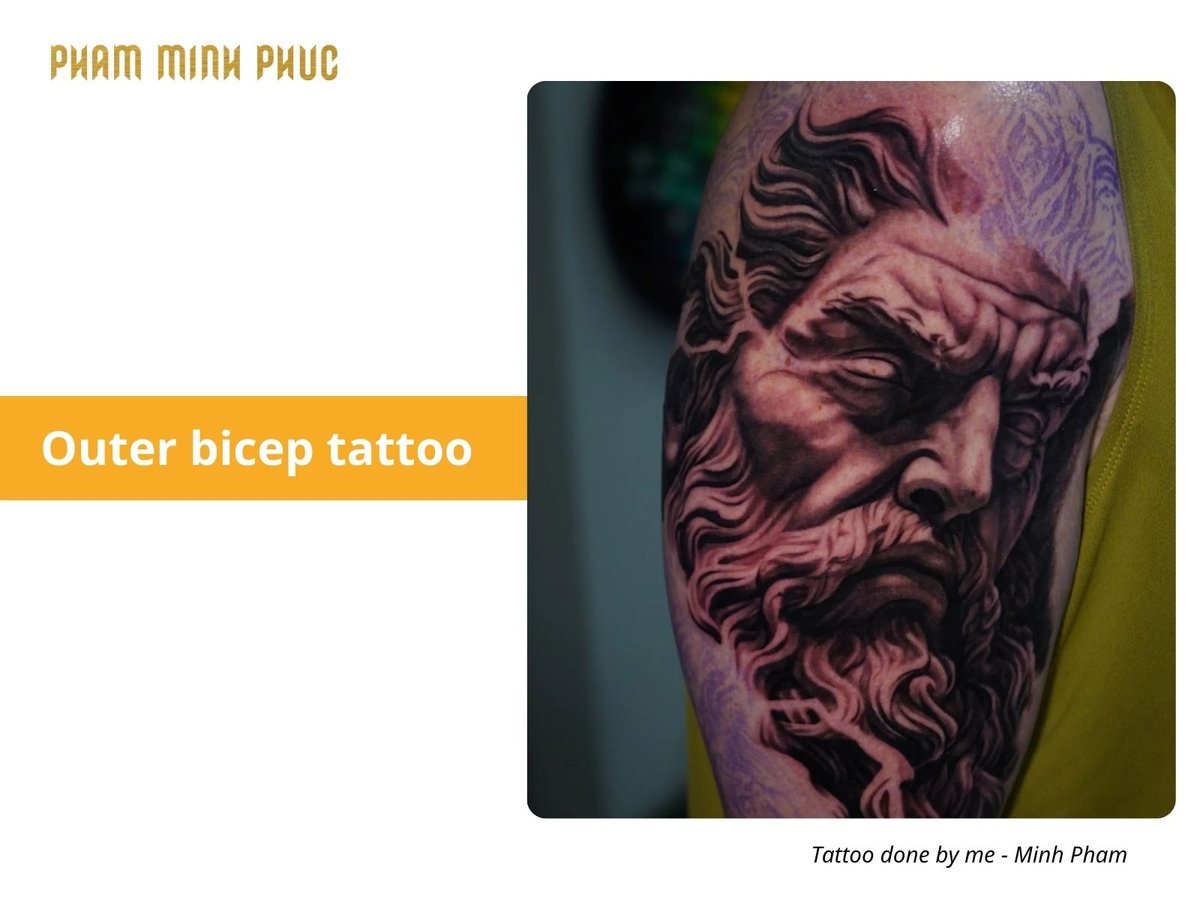
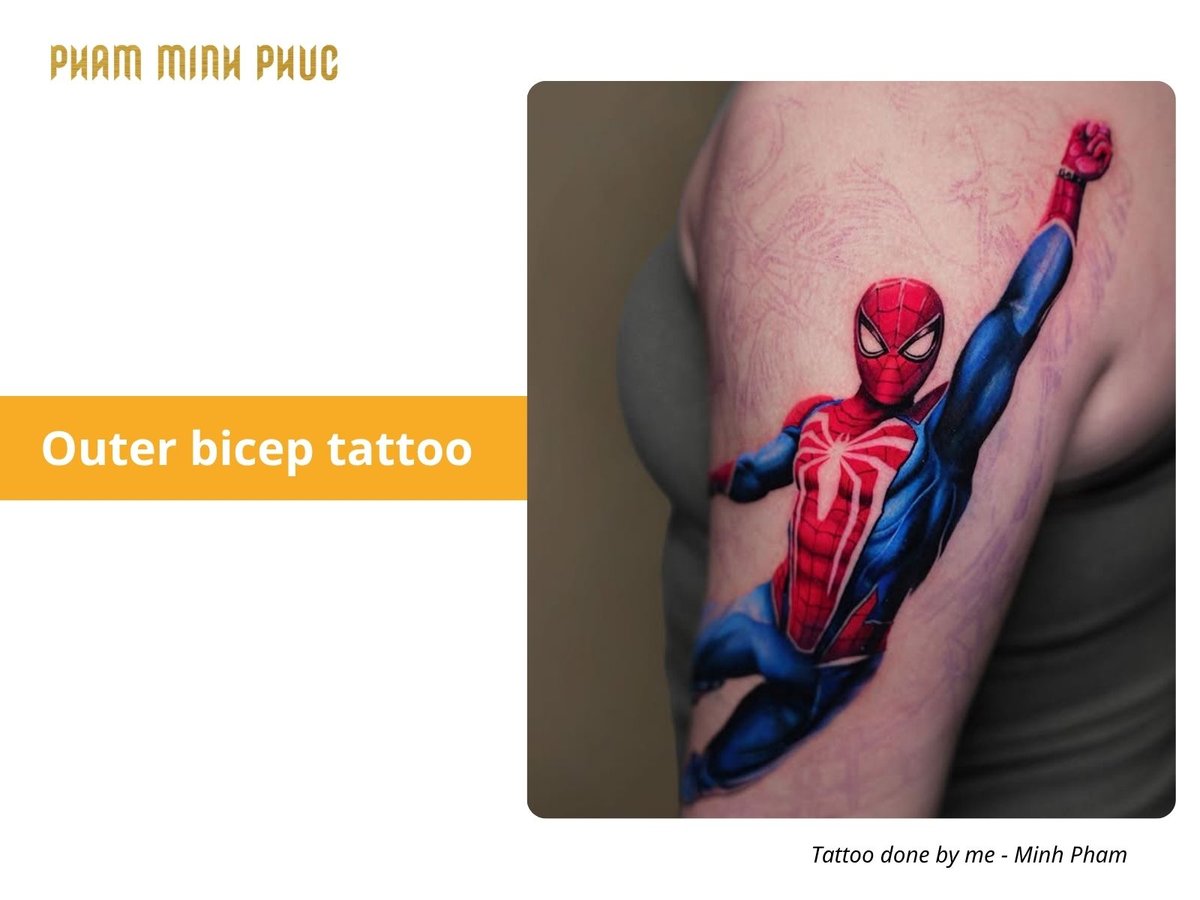
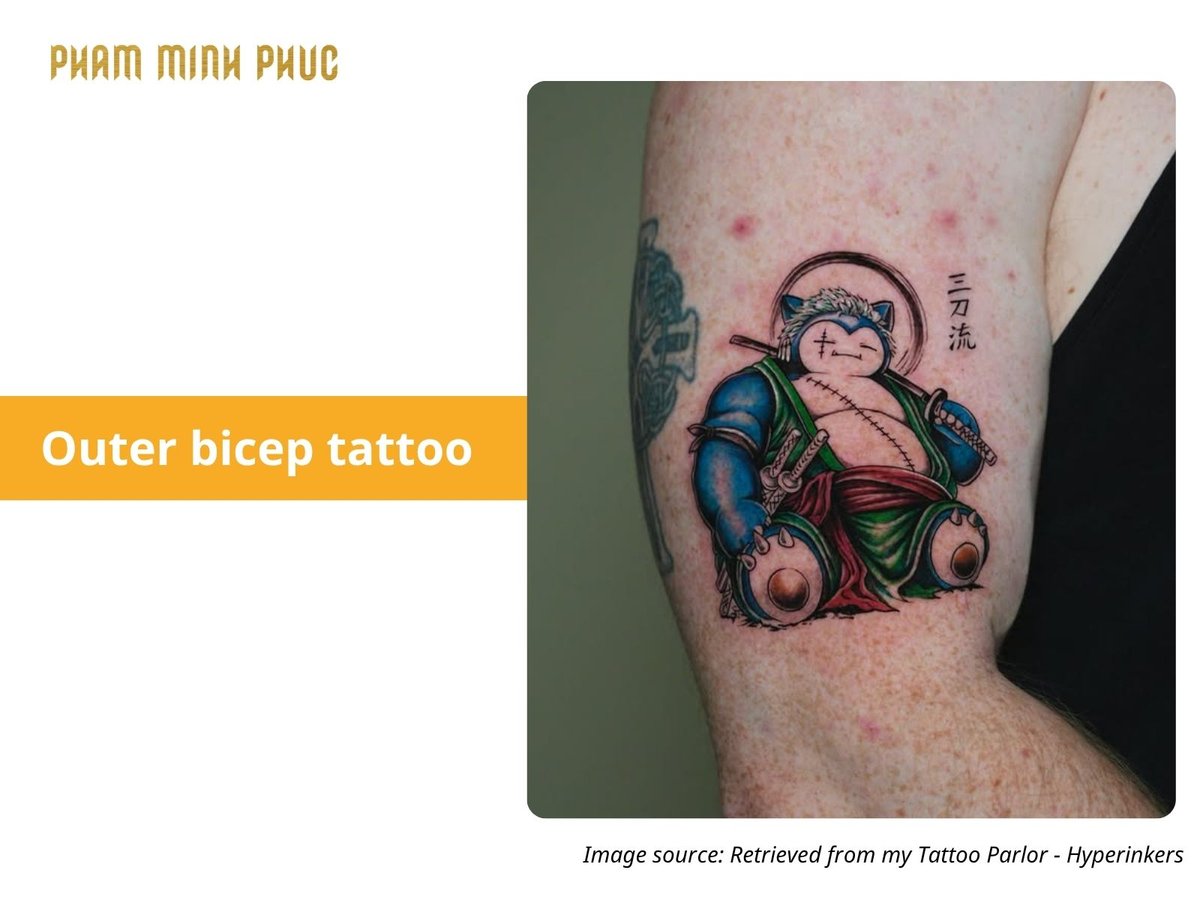
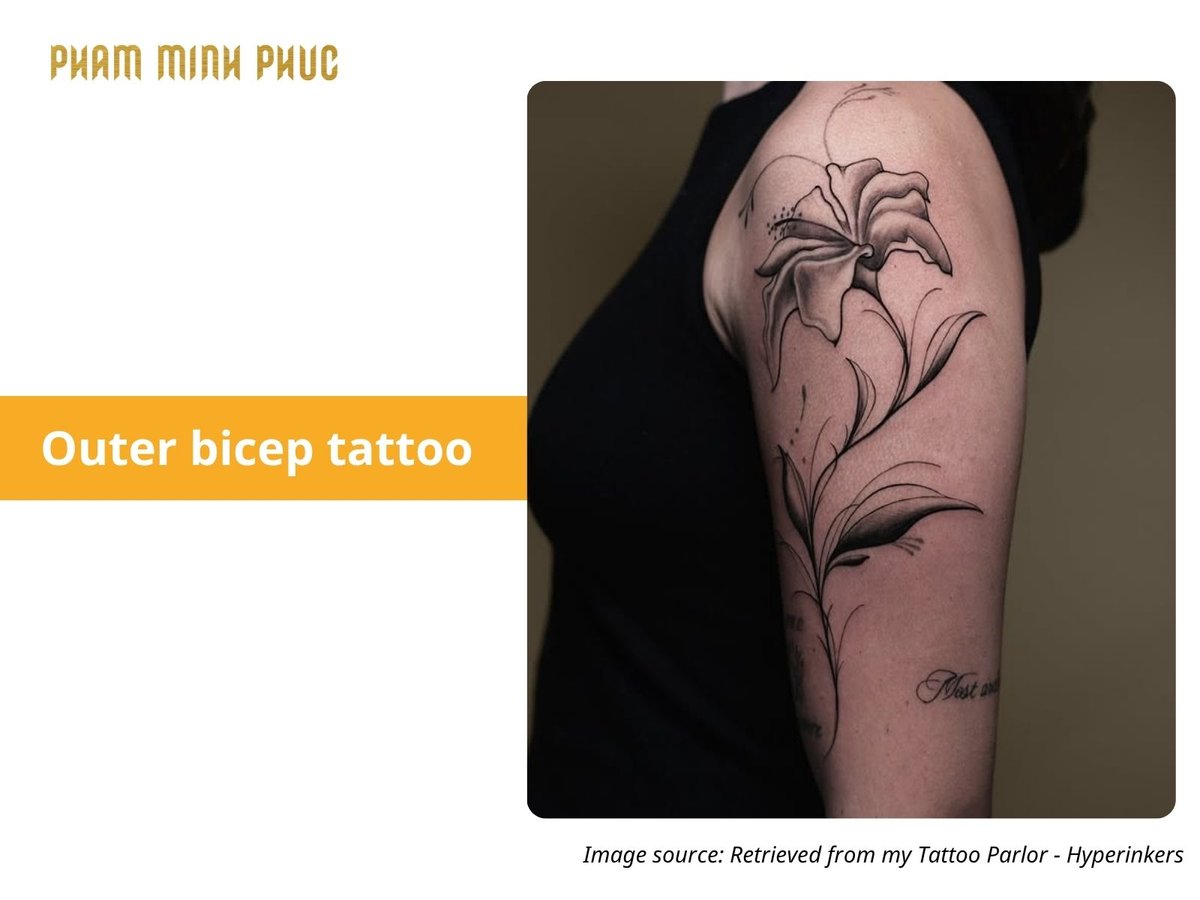
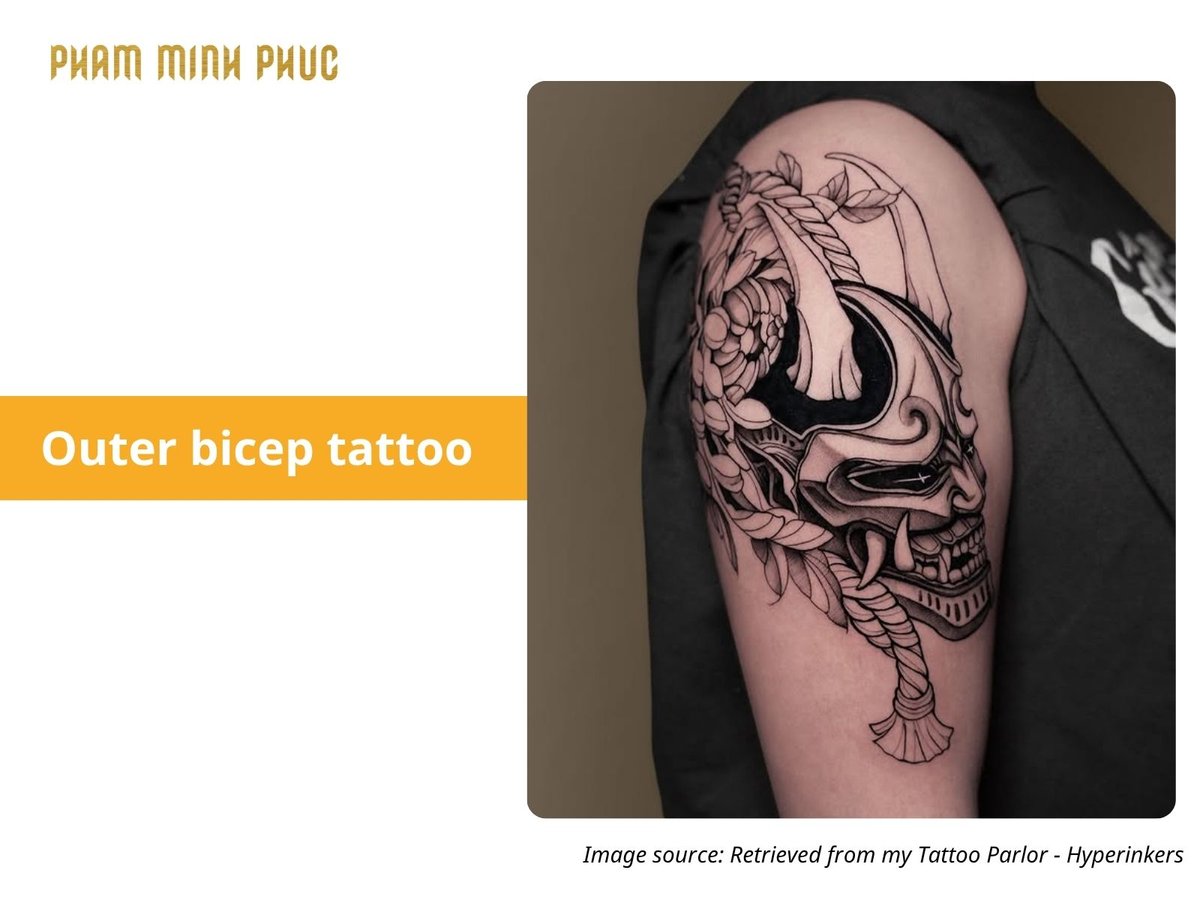
The upper arm bicep area offers a classic, highly versatile canvas with substantial muscle padding. This thick tissue layer absorbs the tattoo machine vibration, resulting in a very low pain level during the session. The cylindrical shape of the bicep perfectly accommodates rounded designs, large portraits, and intricate geometric patterns. You can easily conceal this area with a standard t-shirt, making it highly preferred for professionals.
The natural curve of the bicep muscle provides an excellent foundation for framing focal points. Artists place the heaviest details on the peak of the muscle to create dynamic movement when you flex the arm. This strategic placement ensures the artwork enhances your physical anatomy seamlessly.
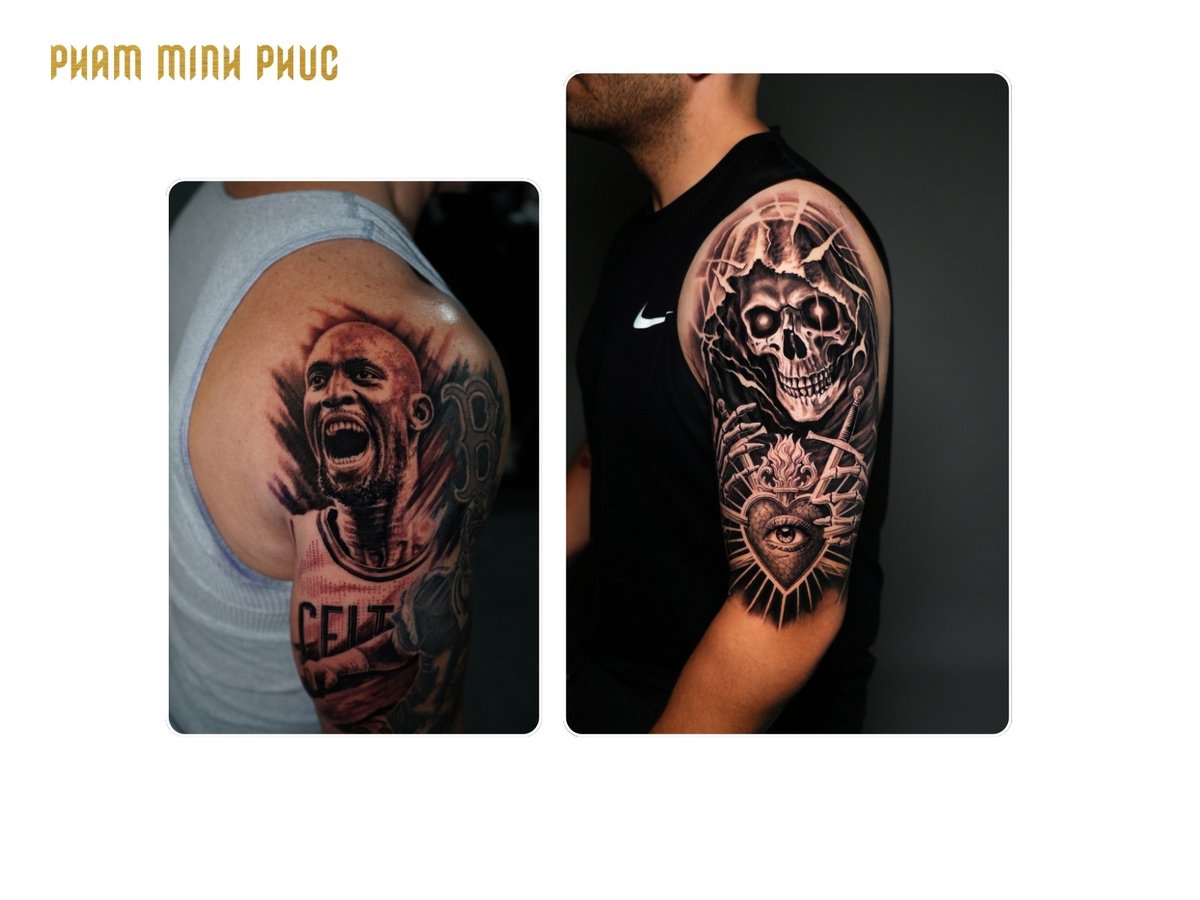
Portraits, animal heads, realism, American Traditional designs, flowers, and other detailed subjects work particularly well here because the upper arm gives the artist room for a clear focal point, shading, contrast, and supporting elements. Medium and larger tattoos usually make better use of this surface than very small designs. A portrait or animal head can sit around the broadest part of the bicep, while a longer composition can extend toward the shoulder or elbow.
Inner Bicep Tattoo Placement
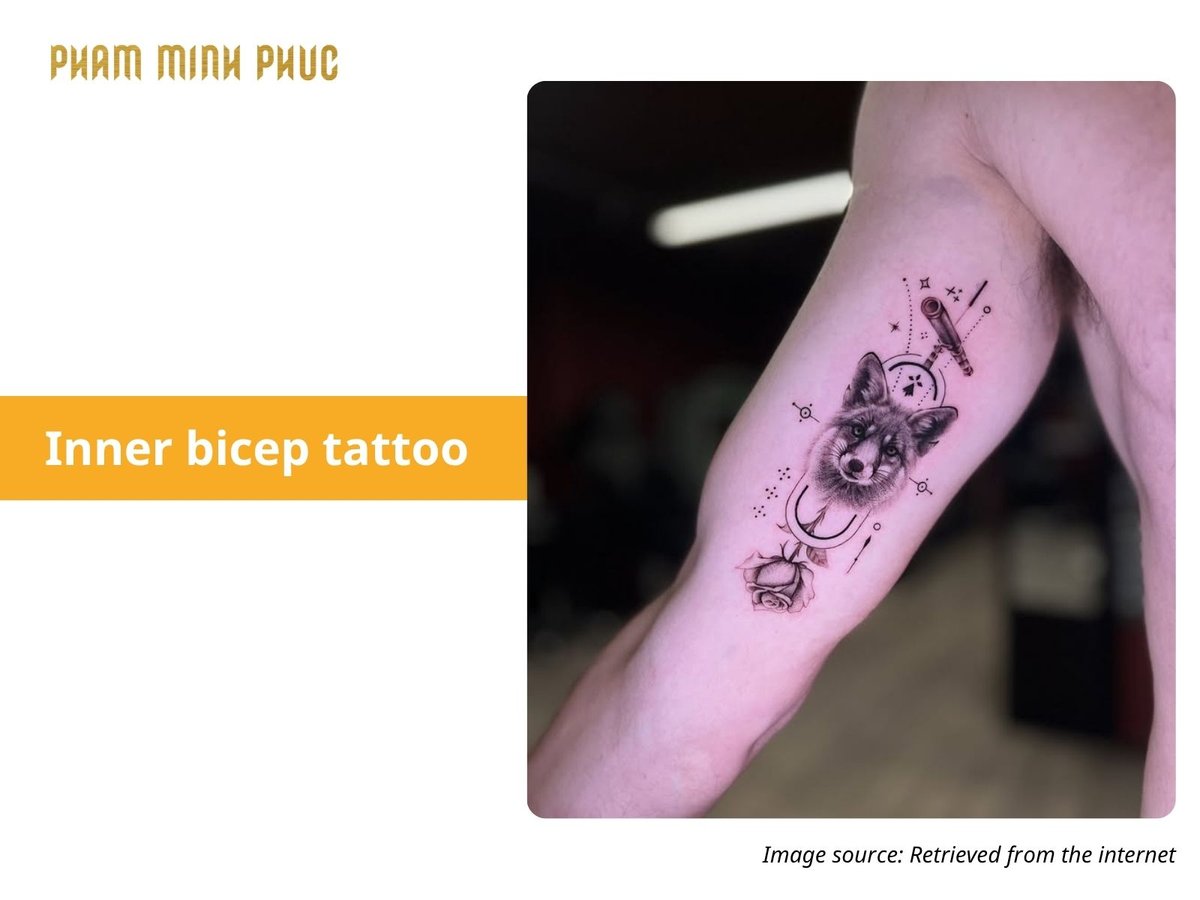
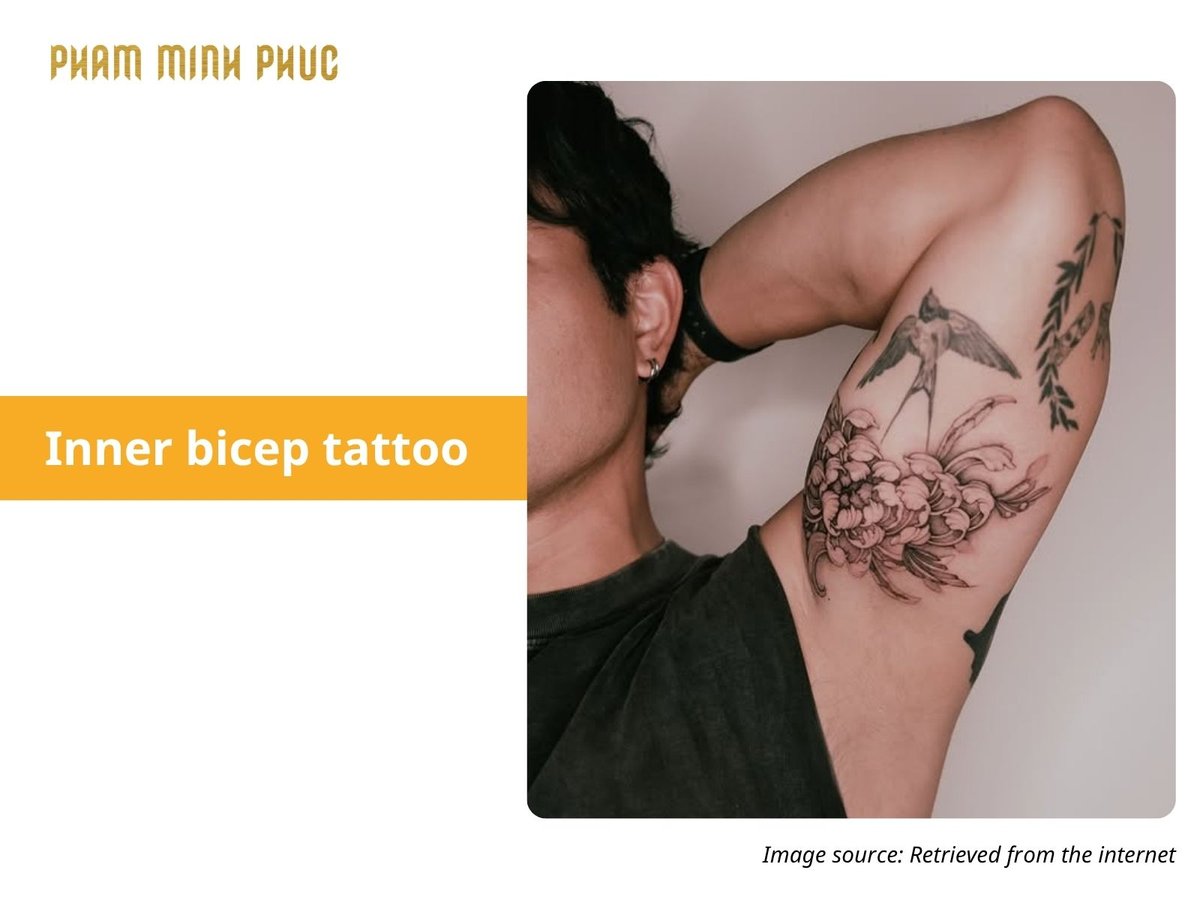
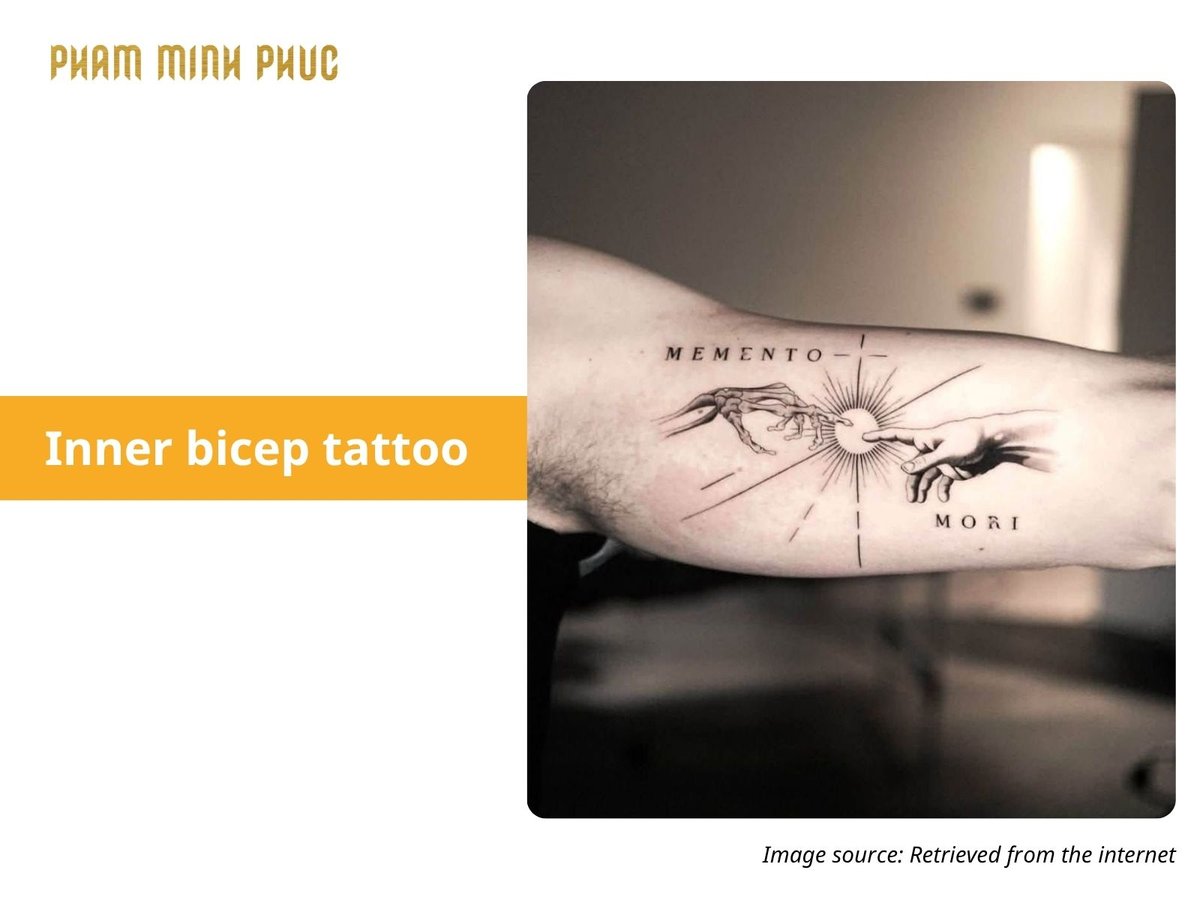
Inner bicep tattoo placement sits on the inside of the upper arm between the armpit and elbow, creating a more discreet surface than the outer bicep. This area acts as a treasured spot for highly personal, intimate designs that require a high level of discretion. The thinner skin and close proximity to the armpit and major nerve endings elevate the pain threshold significantly.
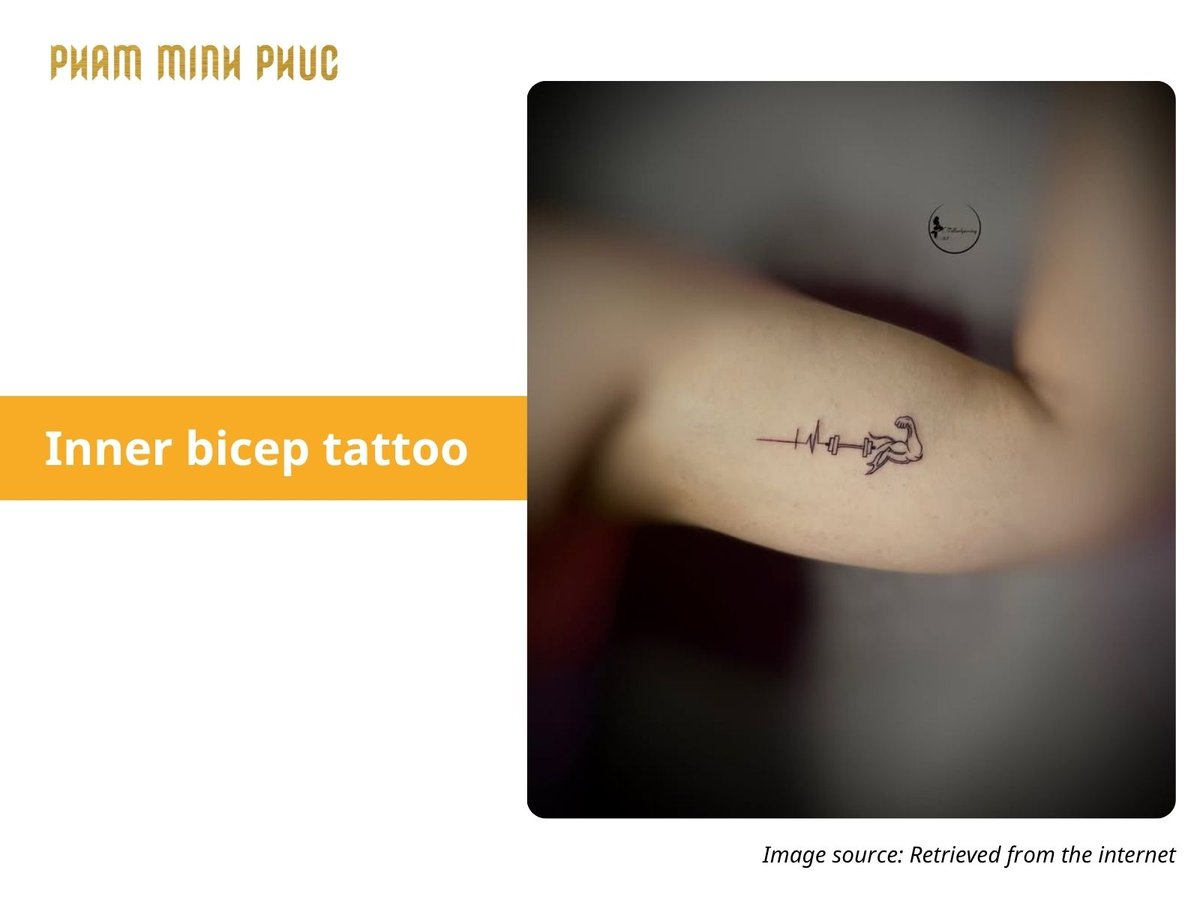
This area works well for tattoos that feel more personal or do not need to remain visible throughout the day. Script, fine-line artwork, botanical elements, meaningful symbols, smaller portraits, and vertically arranged designs can all fit naturally depending on their scale. Small-to-medium and medium-sized designs usually work well here. The available space is narrower than the outer upper arm, so highly detailed artwork needs enough room to avoid feeling compressed.
The inner bicep is rated around 5–6/10 on the pain chart. This location experiences minimal sun exposure, making it the perfect environment for preserving vibrant color tattoos.
You will wonder to know about: Shoulder tattoo placement
Back of Upper Arm (Tricep Area)
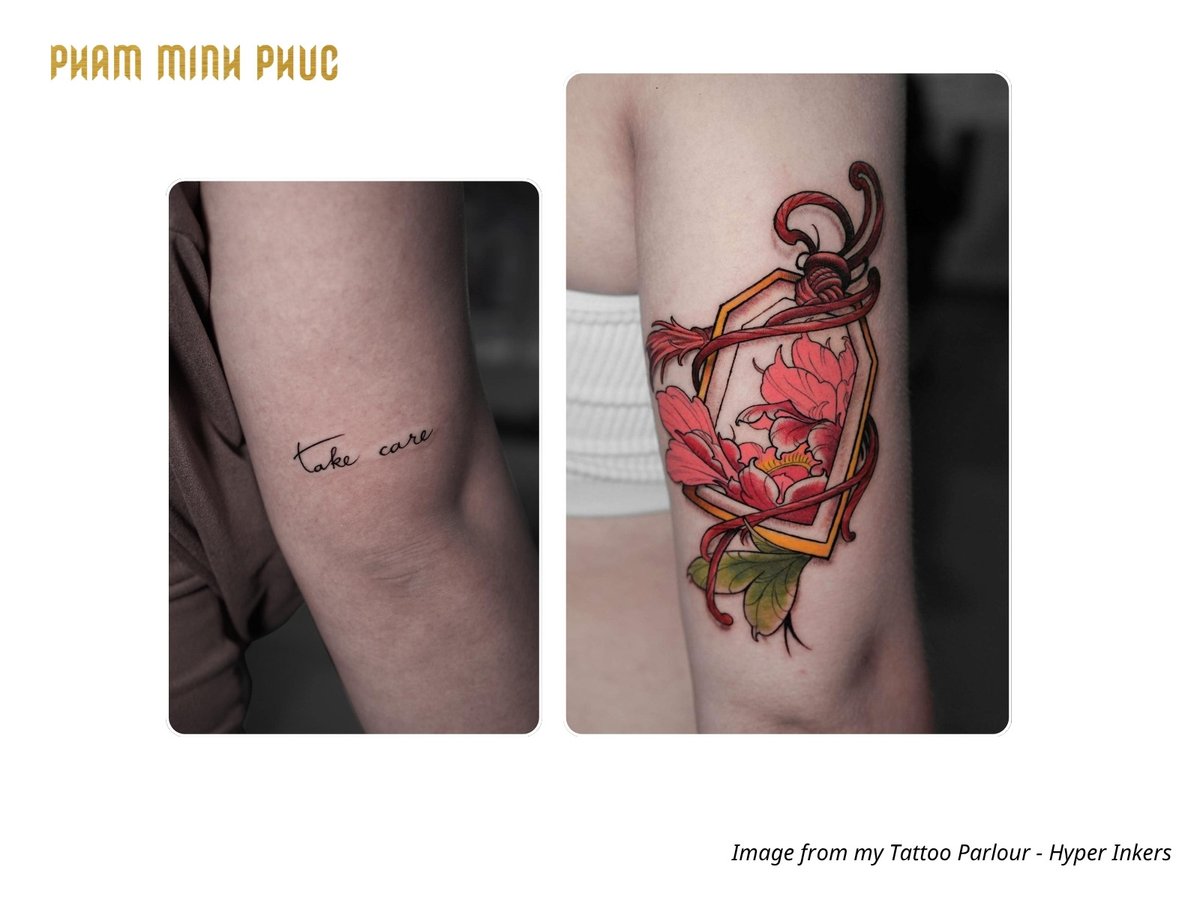
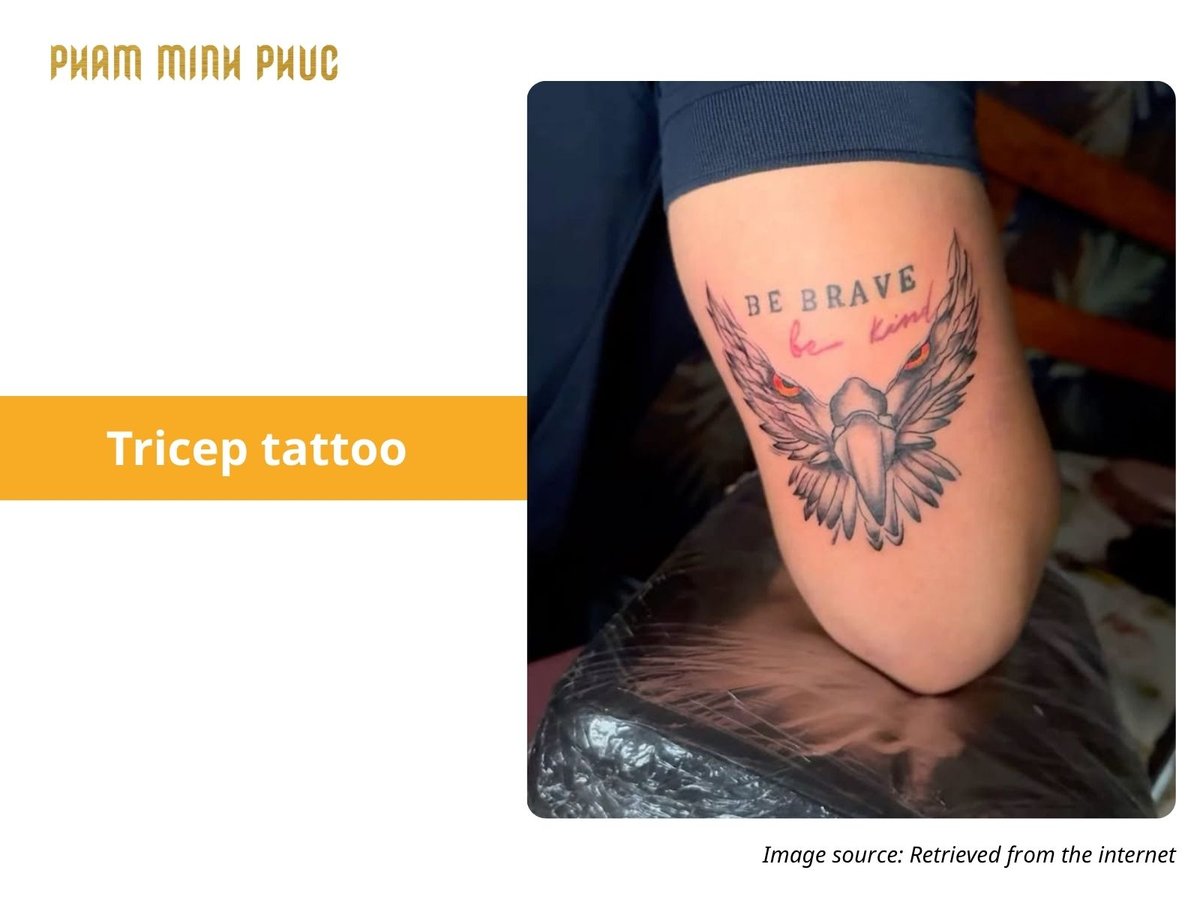
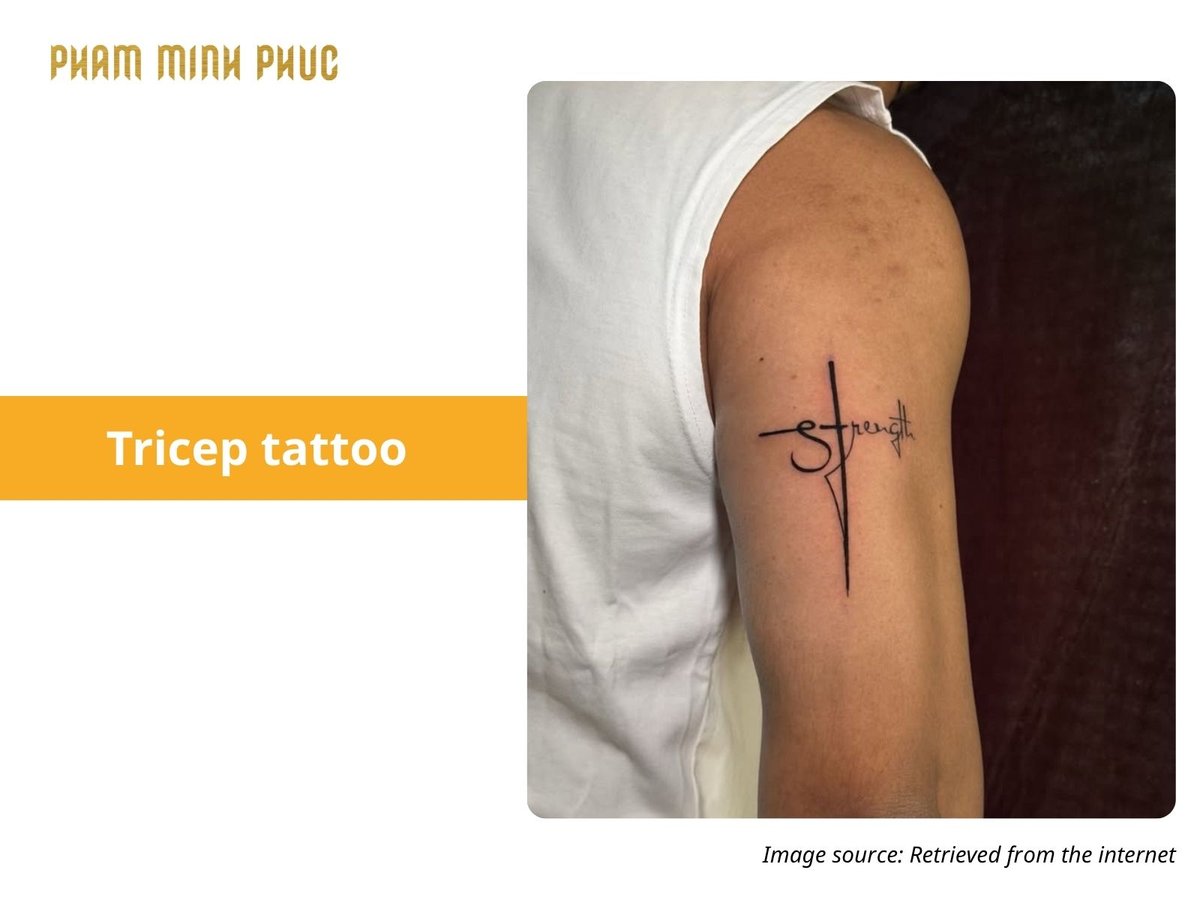
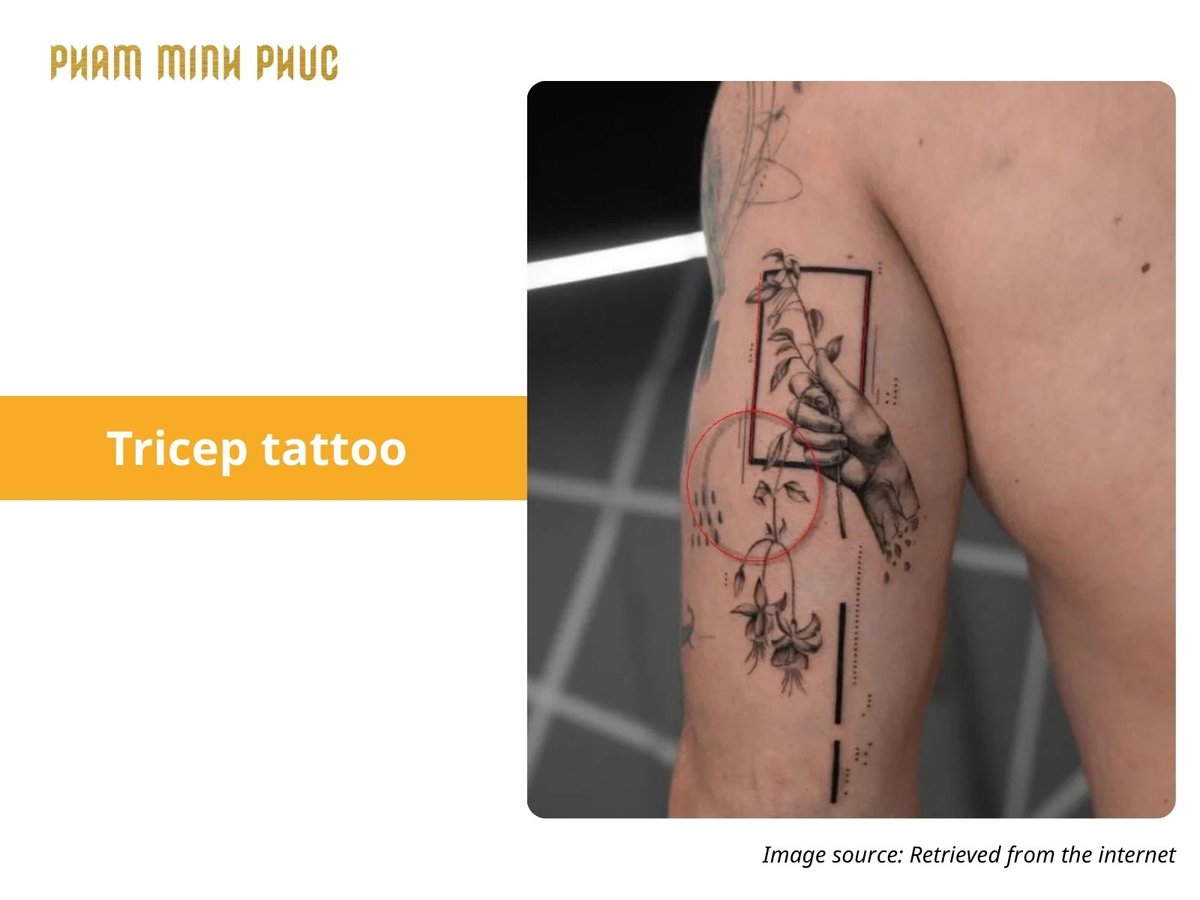
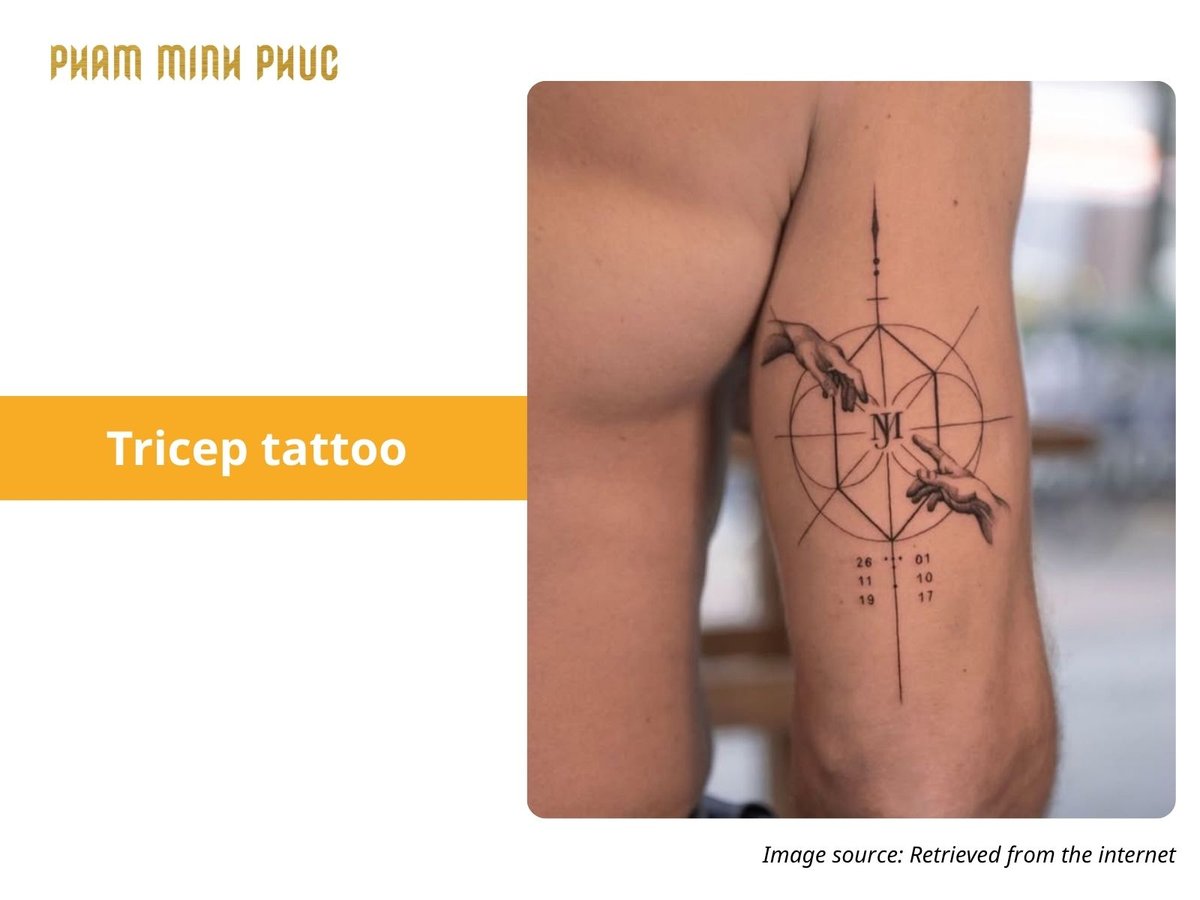
Tricep tattoo placement uses the back of the upper arm between the shoulder and elbow. This area provides a smooth, flat canvas ideal for clean, precise line work and vertical script. This placement offers a unique balance of visibility and discretion, as the design remains noticeable to others from behind while easily hidden by the wearer. The skin sits slightly closer to the bone here compared to the bicep, causing a moderate pain level.
Long-stemmed flowers, vertical script, ornamental pieces, illustrative designs, animals, and other elongated compositions work well because their direction can follow the shape of the tricep. Medium-sized designs are particularly versatile here. A tattoo can remain concentrated on the center of the tricep or extend upward toward the shoulder and downward toward the elbow as part of a larger composition.
You must consider the visual reality of this biological blind spot before booking your session. You will rarely see your own tricep tattoo without using a mirror. Additionally, rapid muscle growth or heavy weight lifting impacts this specific skin zone intensely, making it highly susceptible to stretch marks that can distort fine lines.
Outer Forearm Tattoo Placement
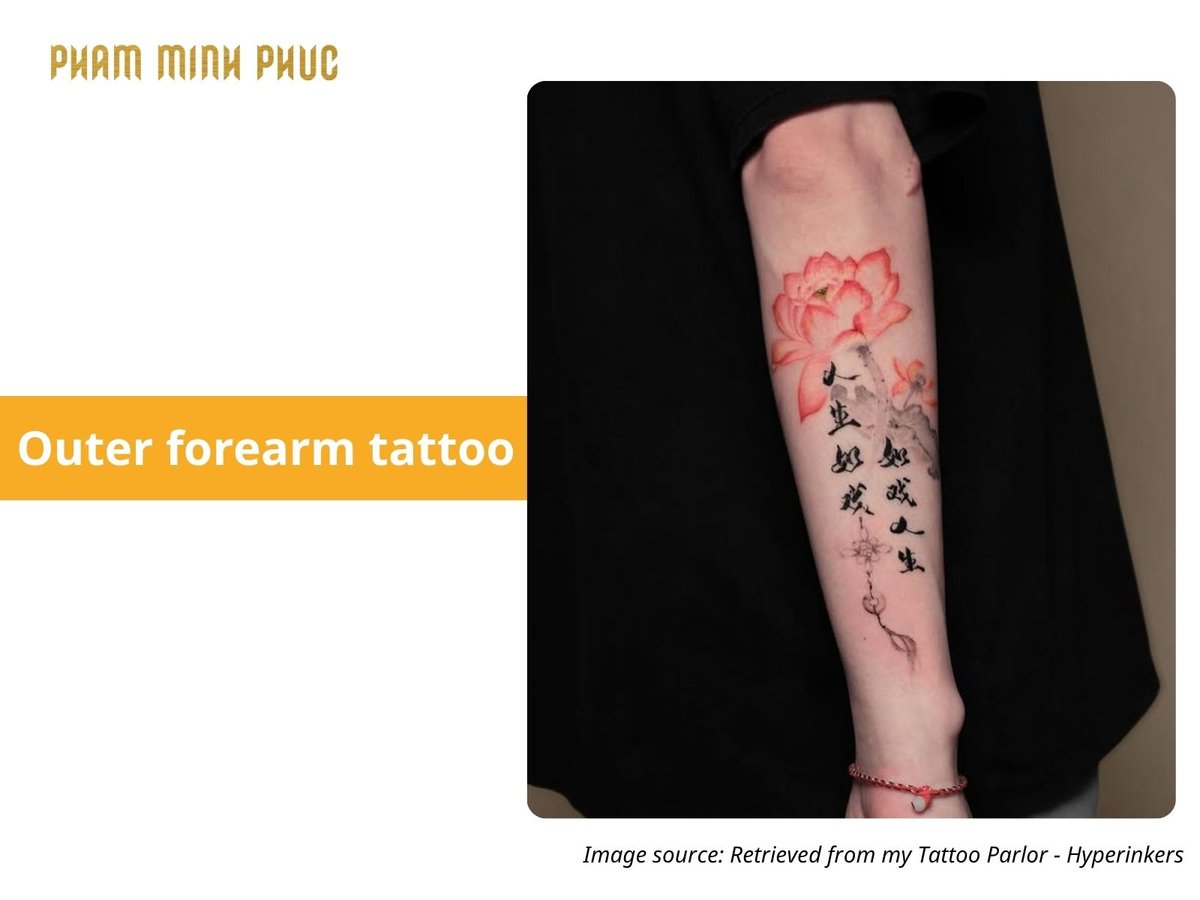
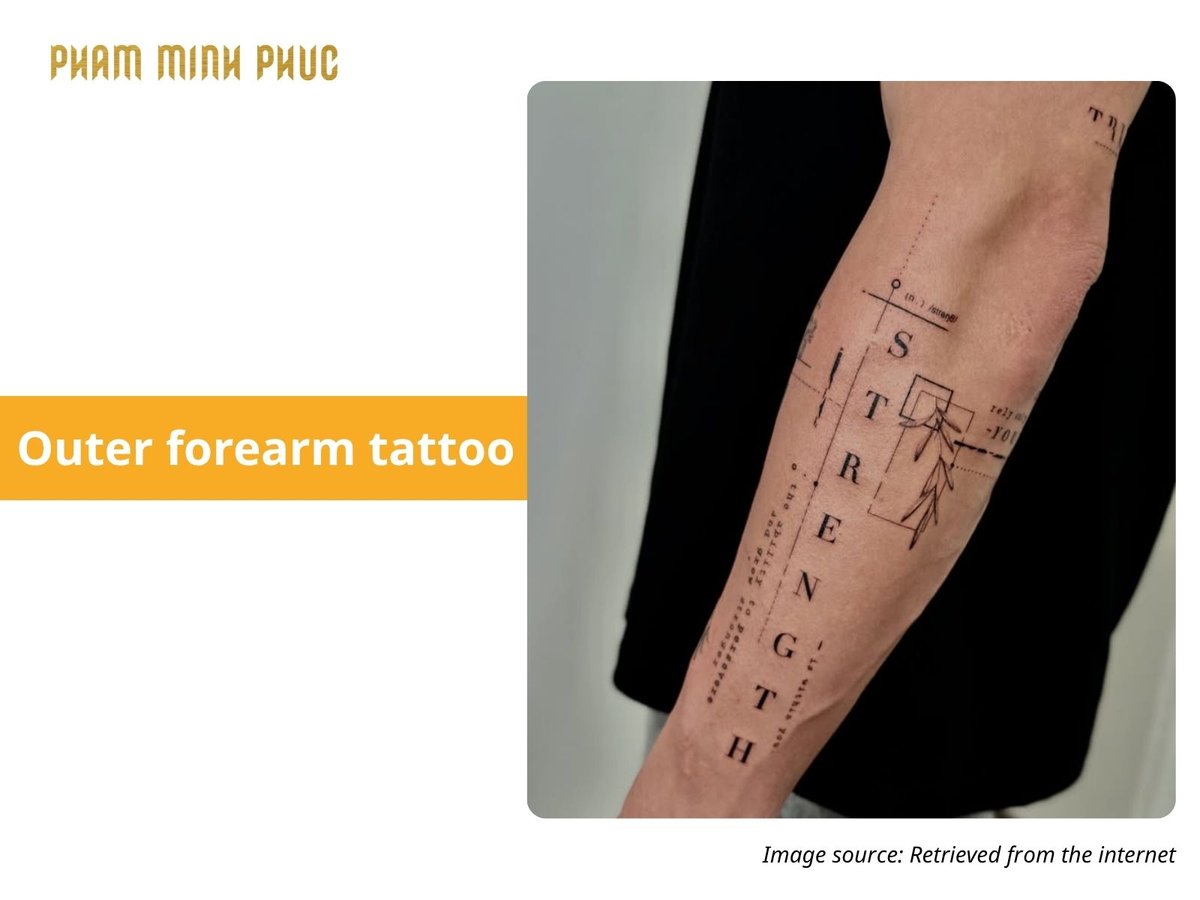
Outer forearm tattoo placement uses the outward-facing side of the lower arm between the elbow and wrist, making it one of the most visible arm tattoo locations.
The forearm provides a long, relatively narrow canvas that works well for medium-sized and elongated designs. Animals, illustrative pieces, American Traditional tattoos, black and grey artwork, floral compositions, lettering, and other vertical subjects can use the length of the arm effectively.
When you rotate your wrist, the radius and ulna change position relative to one another, which also changes how the skin and tattoo are viewed. Designs with rigid geometry or a strong directional axis should therefore be checked from several natural arm positions before the stencil is finalized. Pain on the forearm is usually around a 3–4 out of 10, it can feel more intense closer to the wrist or elbow.
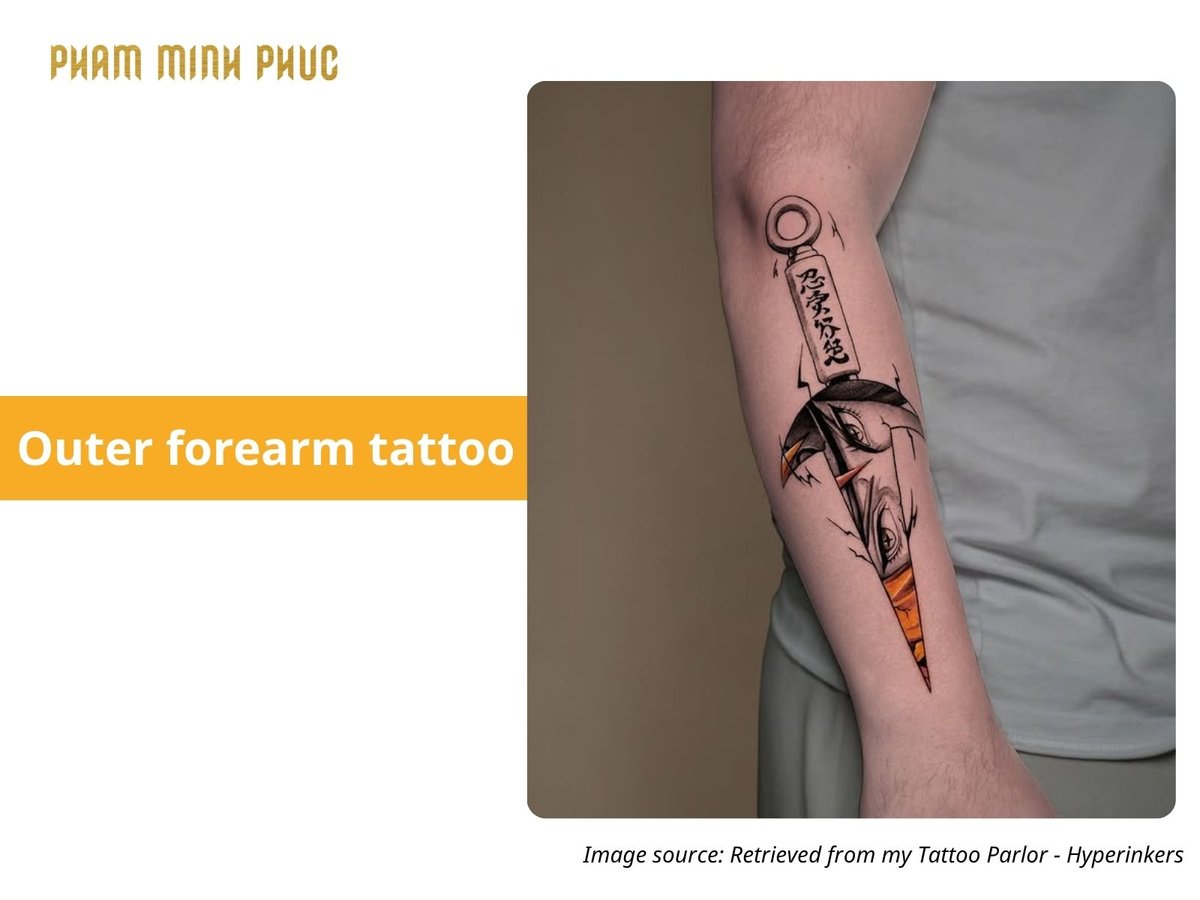
Outer forearm tattoos receive high everyday visibility and more regular sun exposure than protected inner-arm placements. This can be an advantage if you want the tattoo displayed, but it matters if concealment is important.
Inner Forearm Tattoo Placement
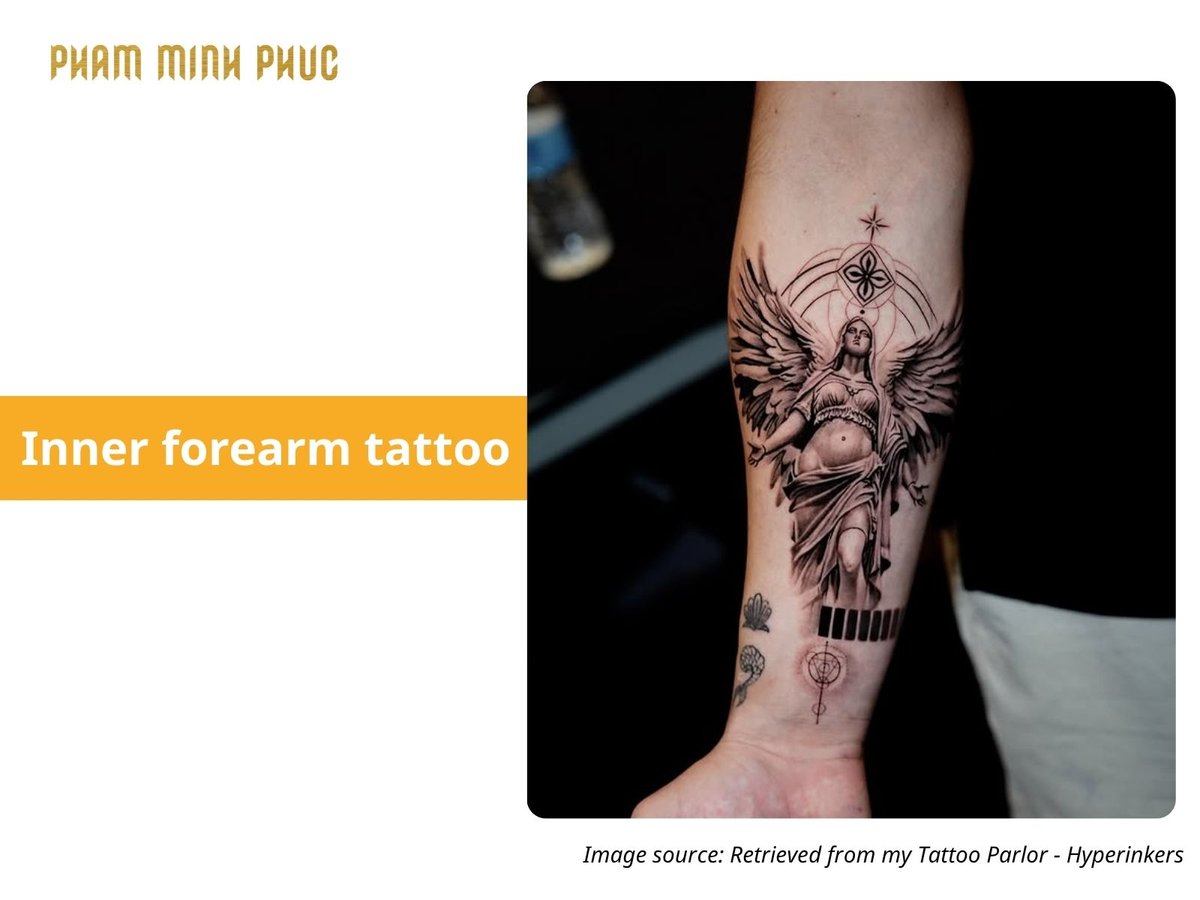
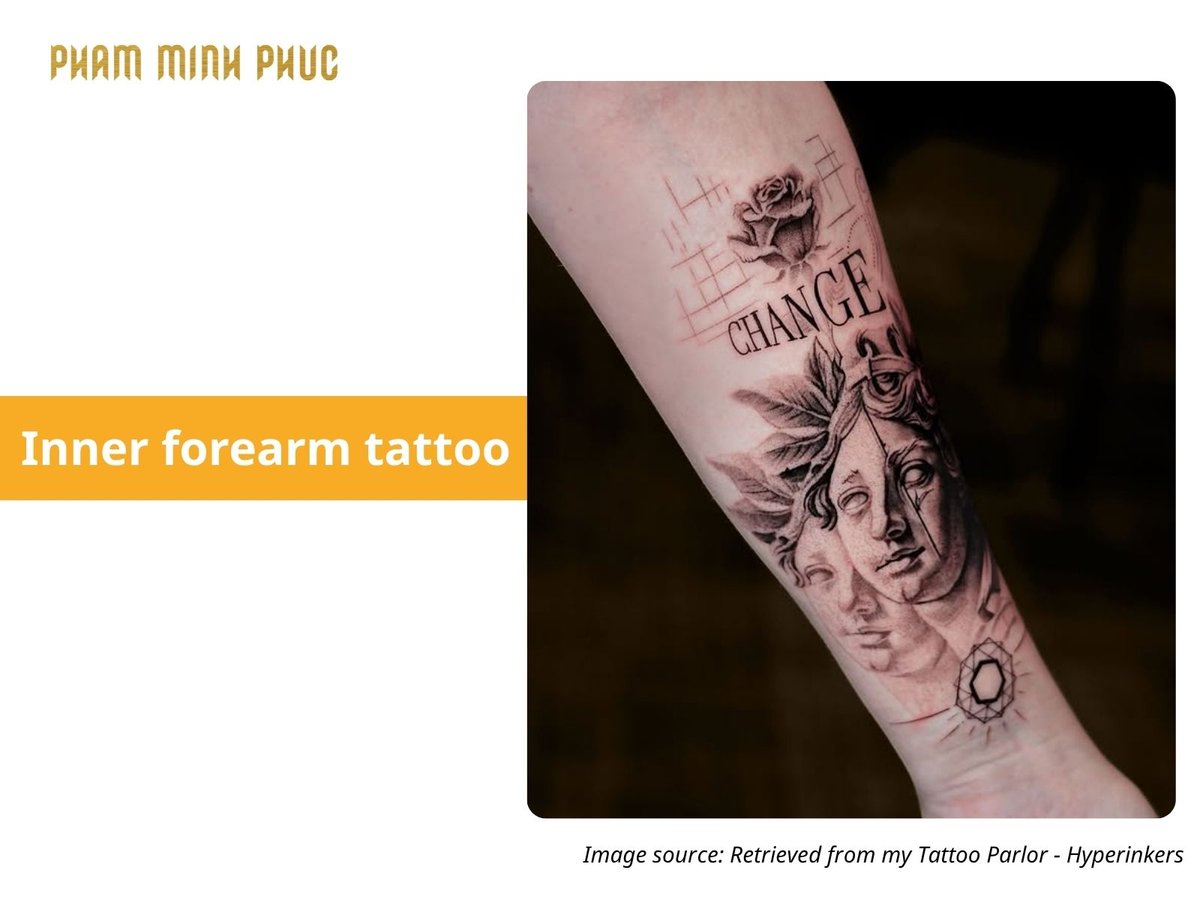
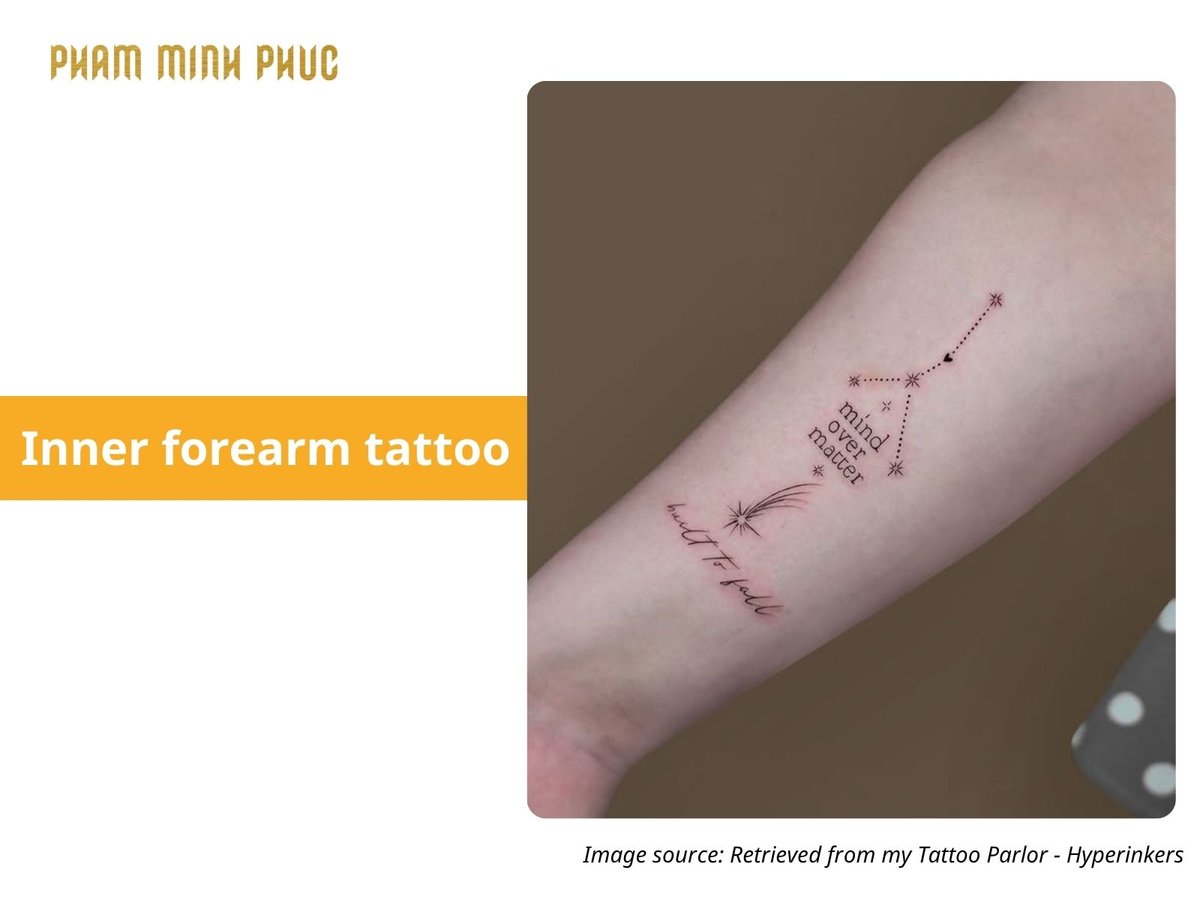
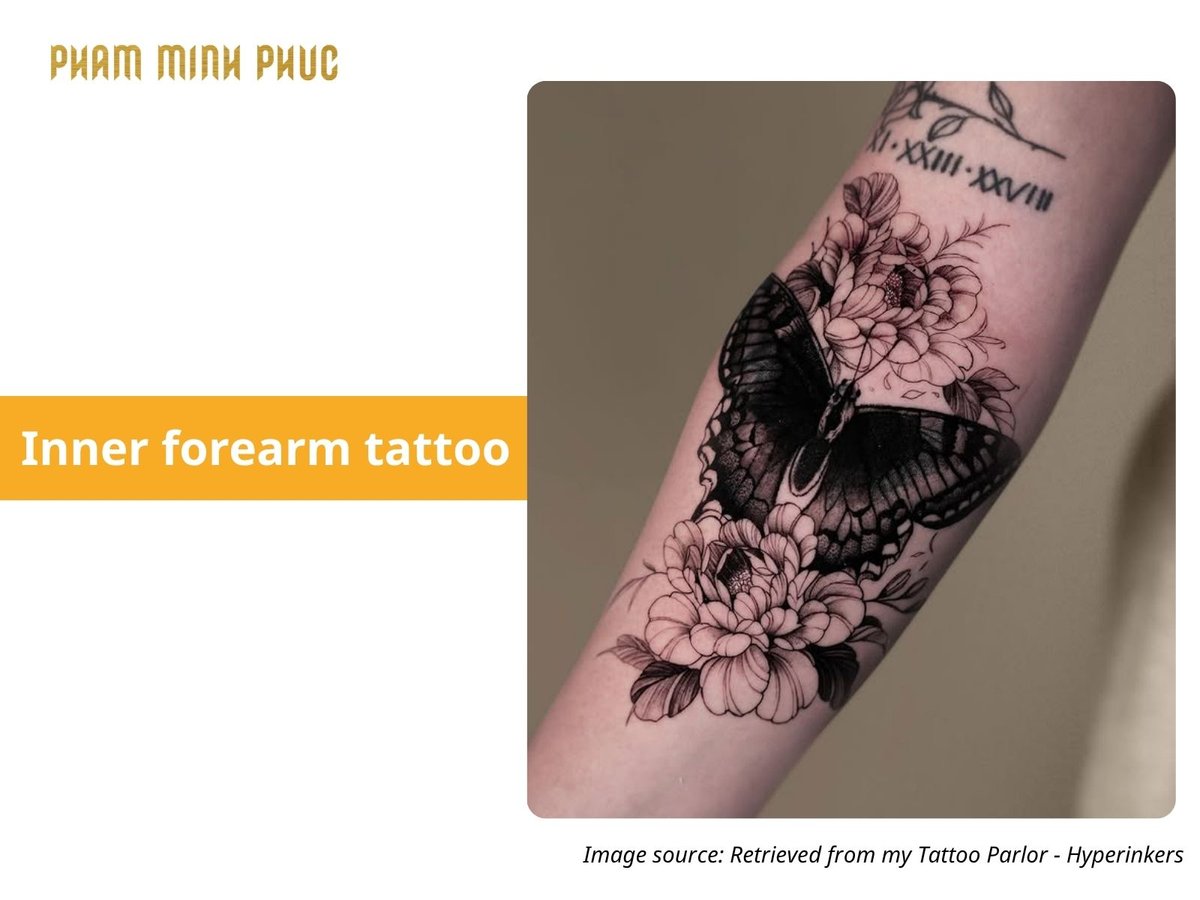
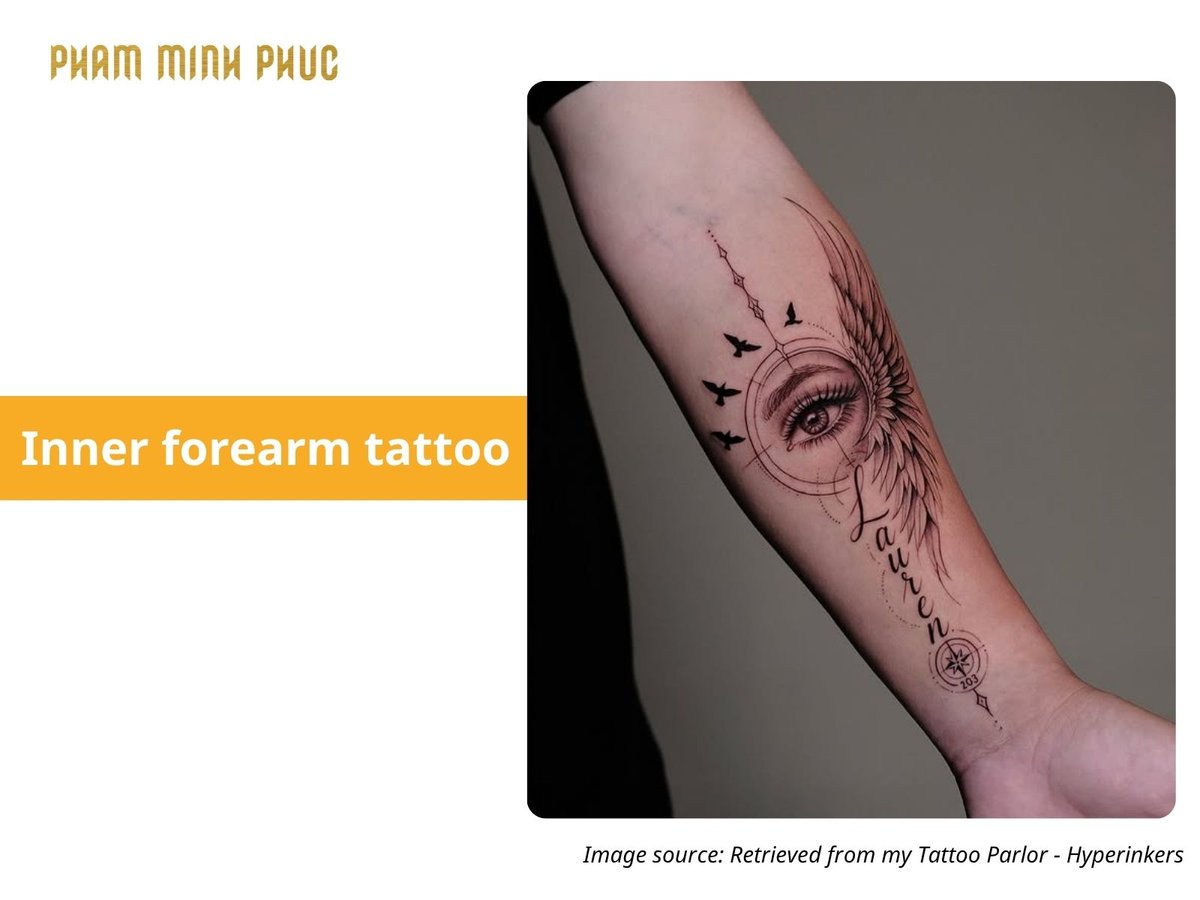
Inner forearm tattoo placement runs along the inside of the lower arm between the elbow crease and wrist. Its elongated surface gives tattoos a clear top-to-bottom direction and keeps the artwork easy for the wearer to see.
Script, botanical designs, fine-line tattoos, portraits, symbolic artwork, and vertically arranged compositions can all work naturally here. Small-to-medium and medium-sized tattoos are common. A realistic portrait needs more room for shading and facial features than simple lettering or a minimal symbol.
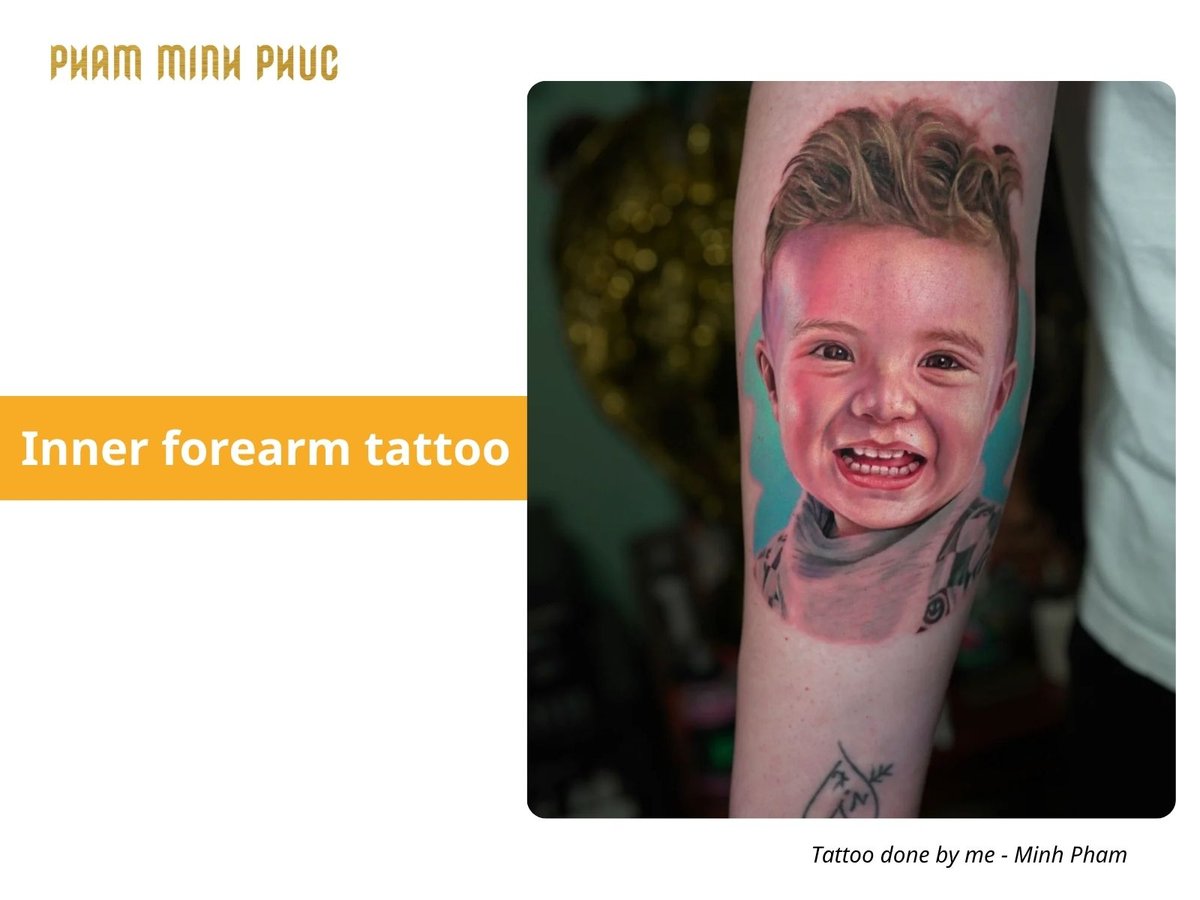
The inner forearm also offers a different viewing relationship from the outer forearm. When the arm is turned upward, the tattoo naturally faces the wearer, which can make this placement attractive for artwork with personal meaning. However, it is still a relatively visible location when wearing short sleeves.
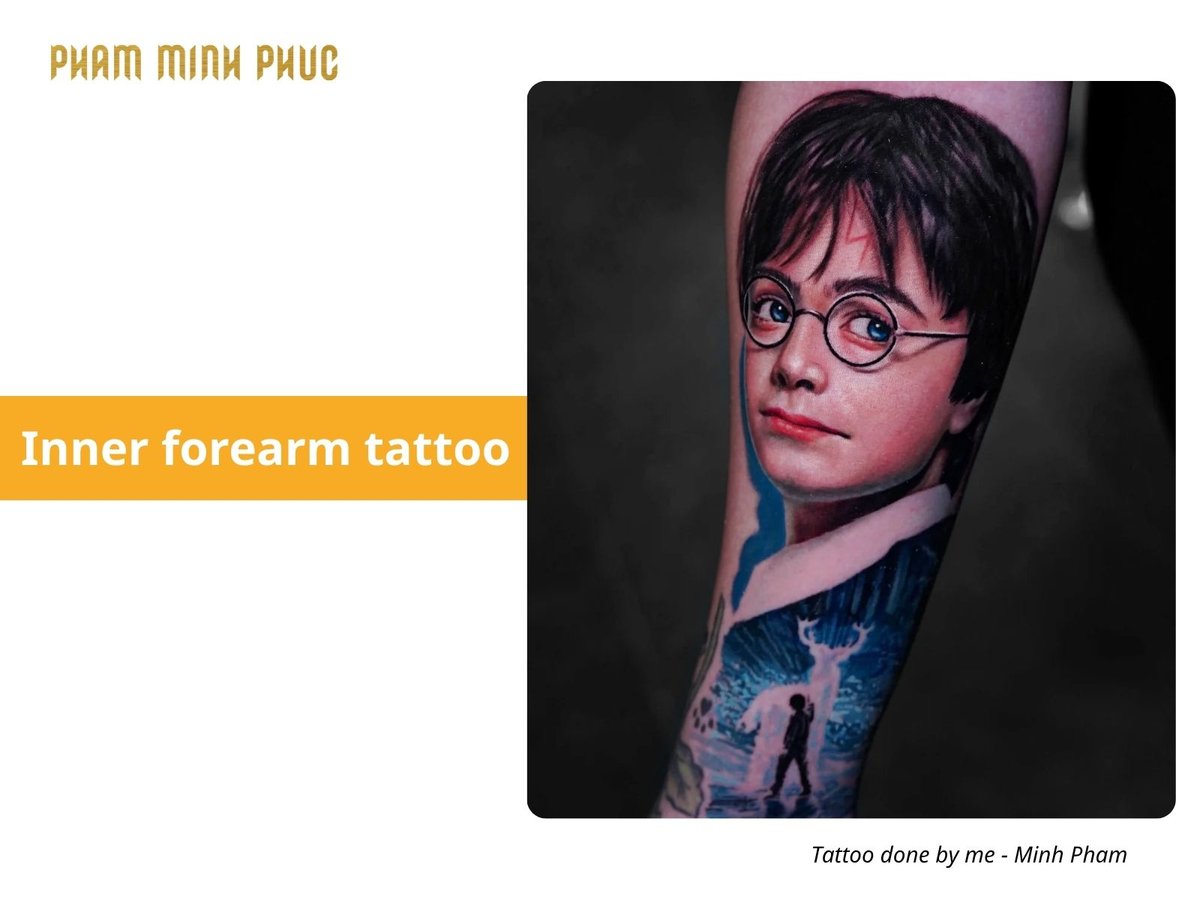
The area also transitions into two high-movement zones, the wrist and inner elbow. Unless the design is intentionally crossing those joints, important details should be positioned with those natural creases in mind.
The Elbow Tattoo Placement
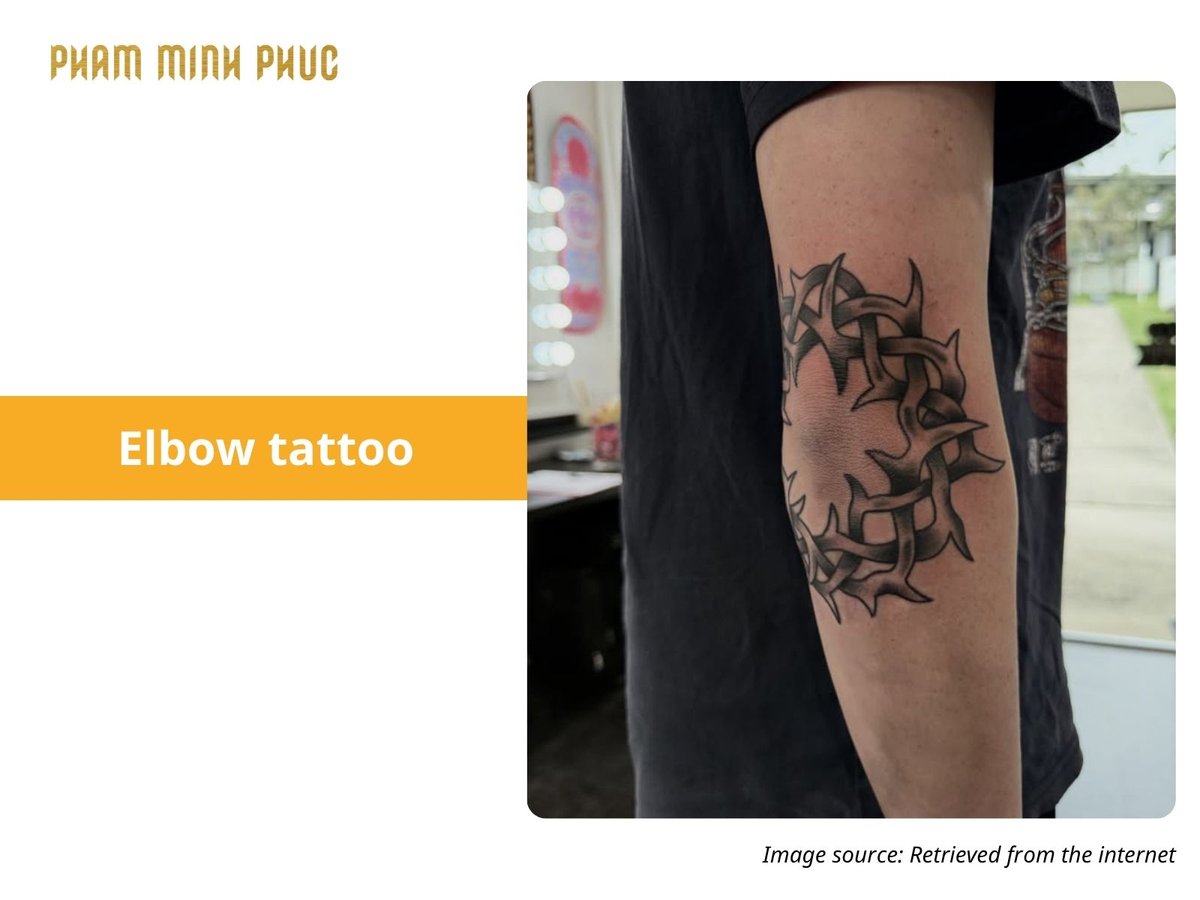
The elbow presents an unconventional, highly visible spot demanding careful design consideration due to constant motion. The extremely thin skin stretches directly over the bone, creating a sharp sensation that ranks among the most painful areas on the body.
Radial designs work particularly well because the point of the elbow can become the center of the composition. Common choices include:
- Mandalas
- Spiderwebs
- Sunflowers
- Circular ornamental patterns
- Geometric radial designs
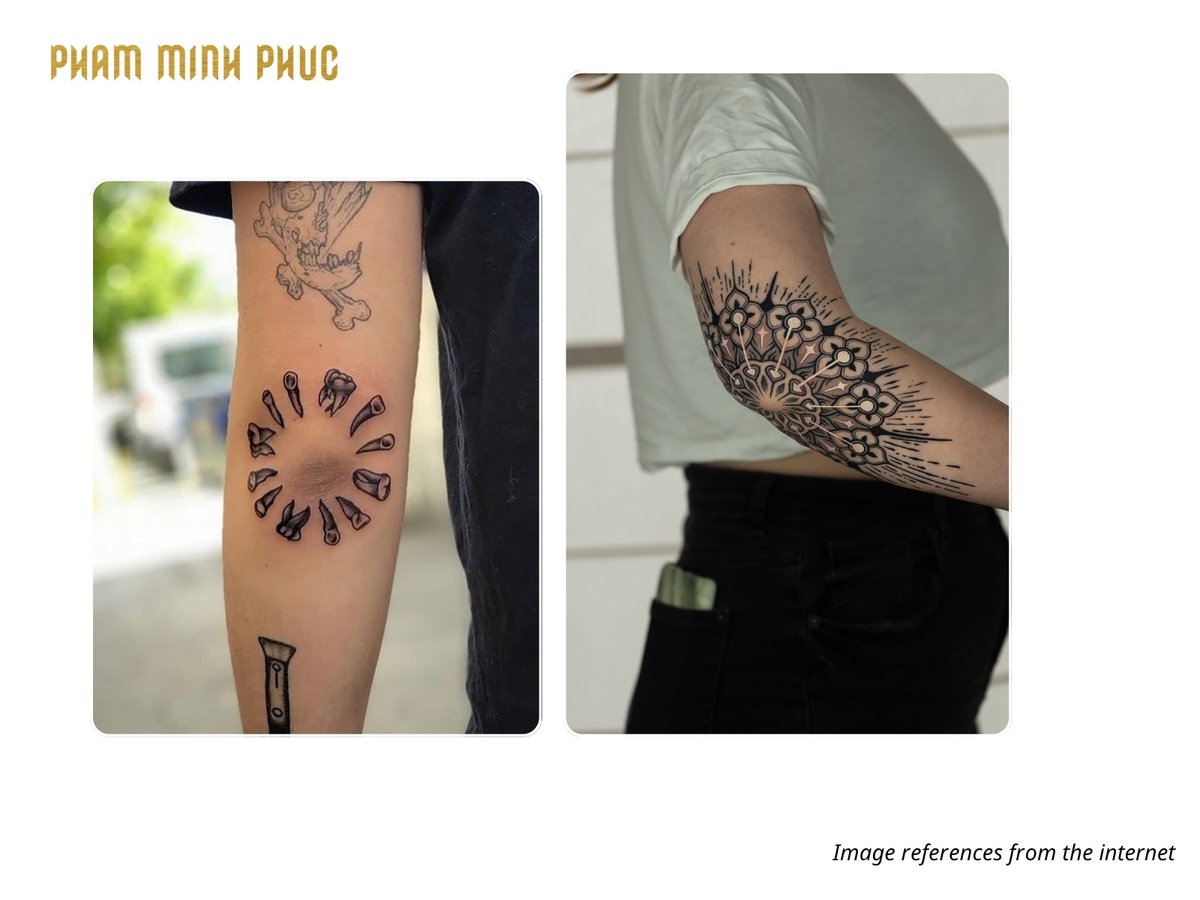
These geometric concepts complement the joint’s form whether the arm is bent or extended. You should opt for bold outlines and heavy color saturation here. Fine details and soft shading will inevitably distort over time due to the dense skin texture and the massive physical friction this joint endures daily.
The elbow is rated around 7-8/10 on the tattoo pain chart. The thin tissue over the joint and proximity to bone can make it noticeably more sensitive than fleshier arm areas.
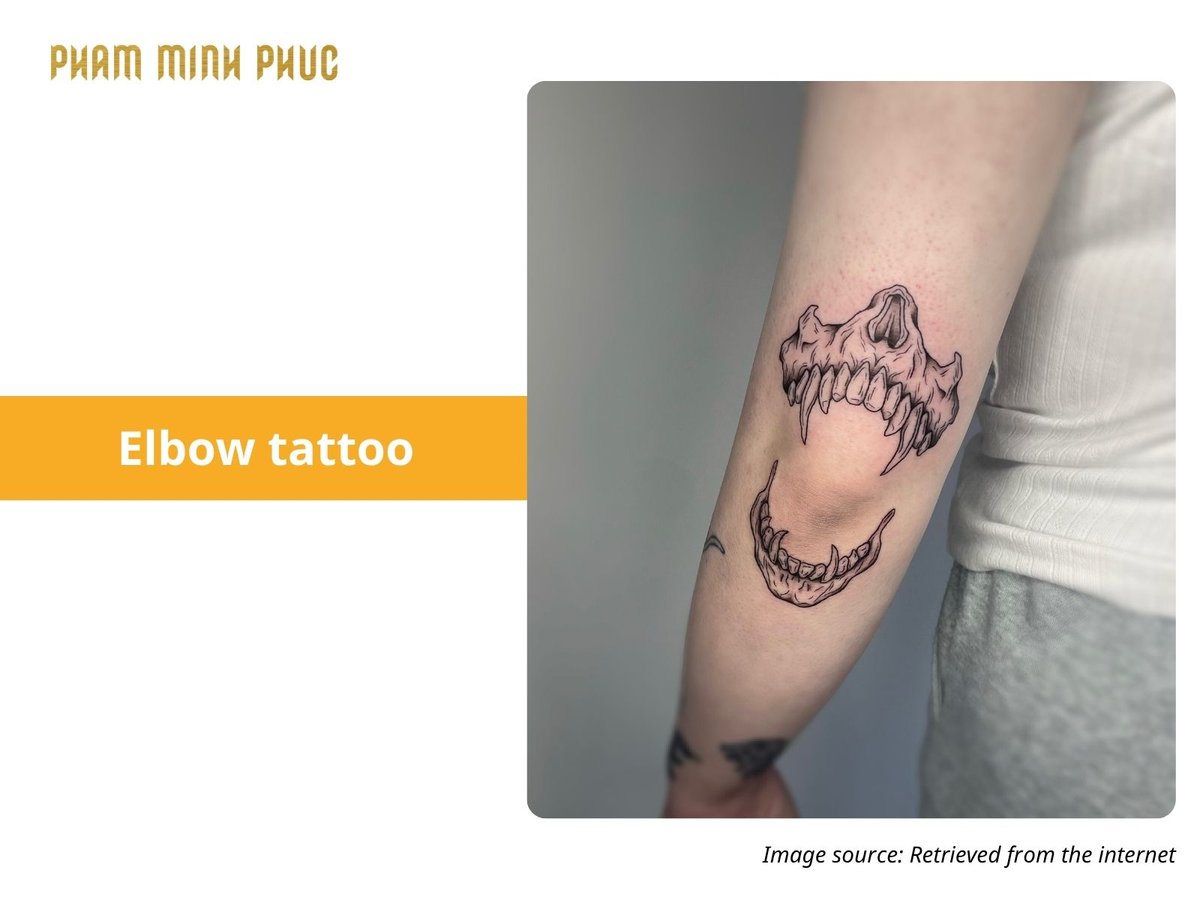
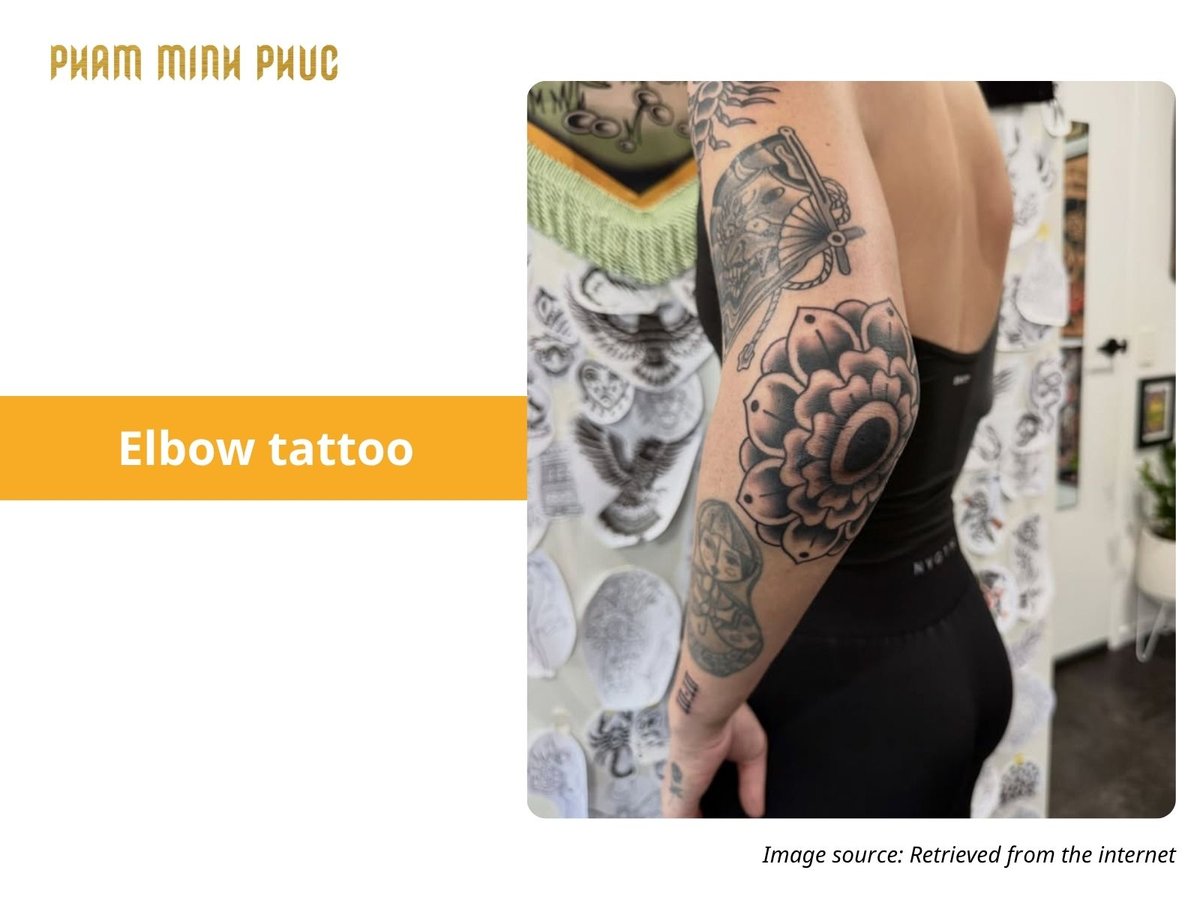
Movement and daily contact with clothing or surfaces should also be considered when planning very fine details around the joint. In larger projects, the elbow can serve as a visual connector between upper-arm and forearm artwork rather than being treated as an isolated tattoo location.
The Wrist Tattoo Placement
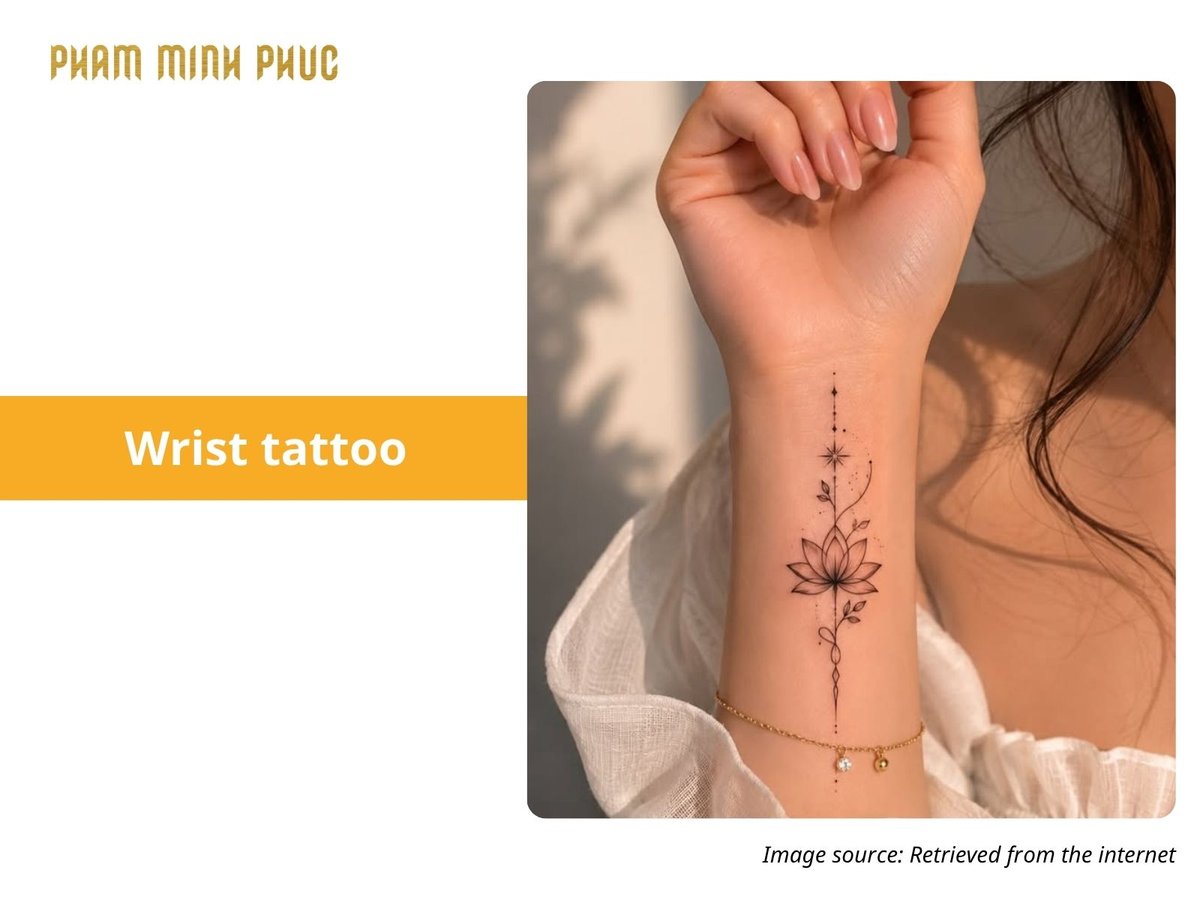
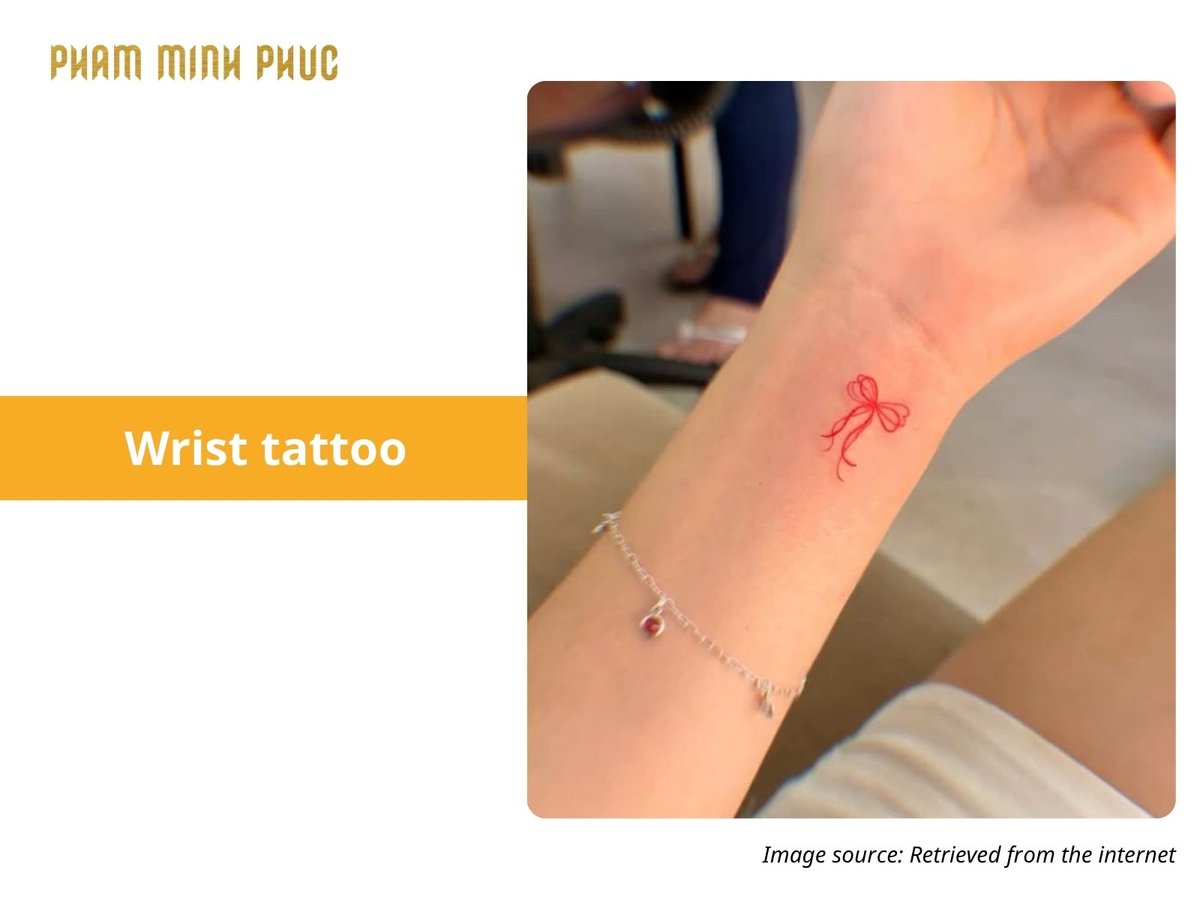
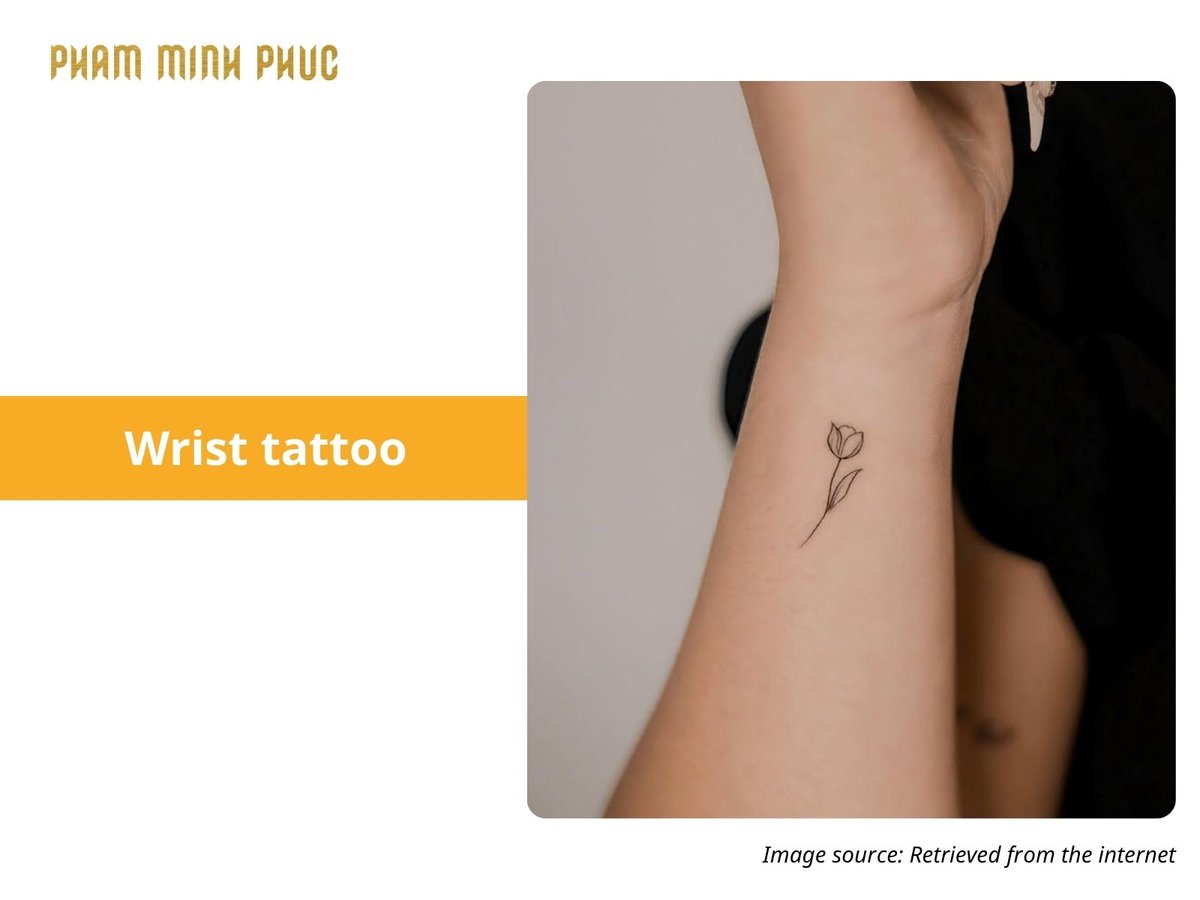
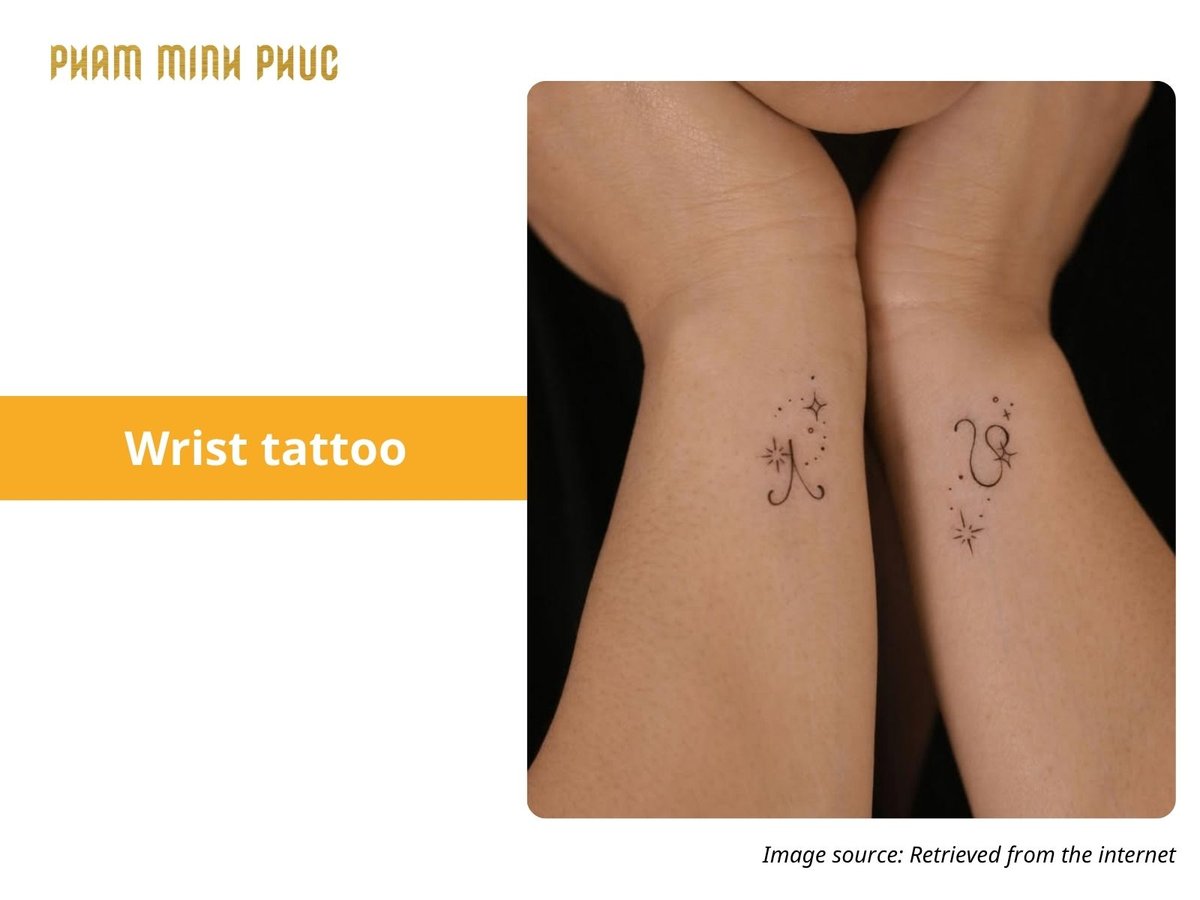
The wrist tattoo placement offers a delicate canvas perfect for small, meaningful symbols and minimalist designs. The extremely thin skin lacks fat padding and sits directly over the bone, resulting in a highly sensitive and painful experience. You can easily conceal these small pieces with a watch or long sleeves.
Common choices include:
- Small symbols
- Initials
- Dates
- Short words
- Fine-line designs
- Bracelet or band tattoos
- Minimal ornamental elements
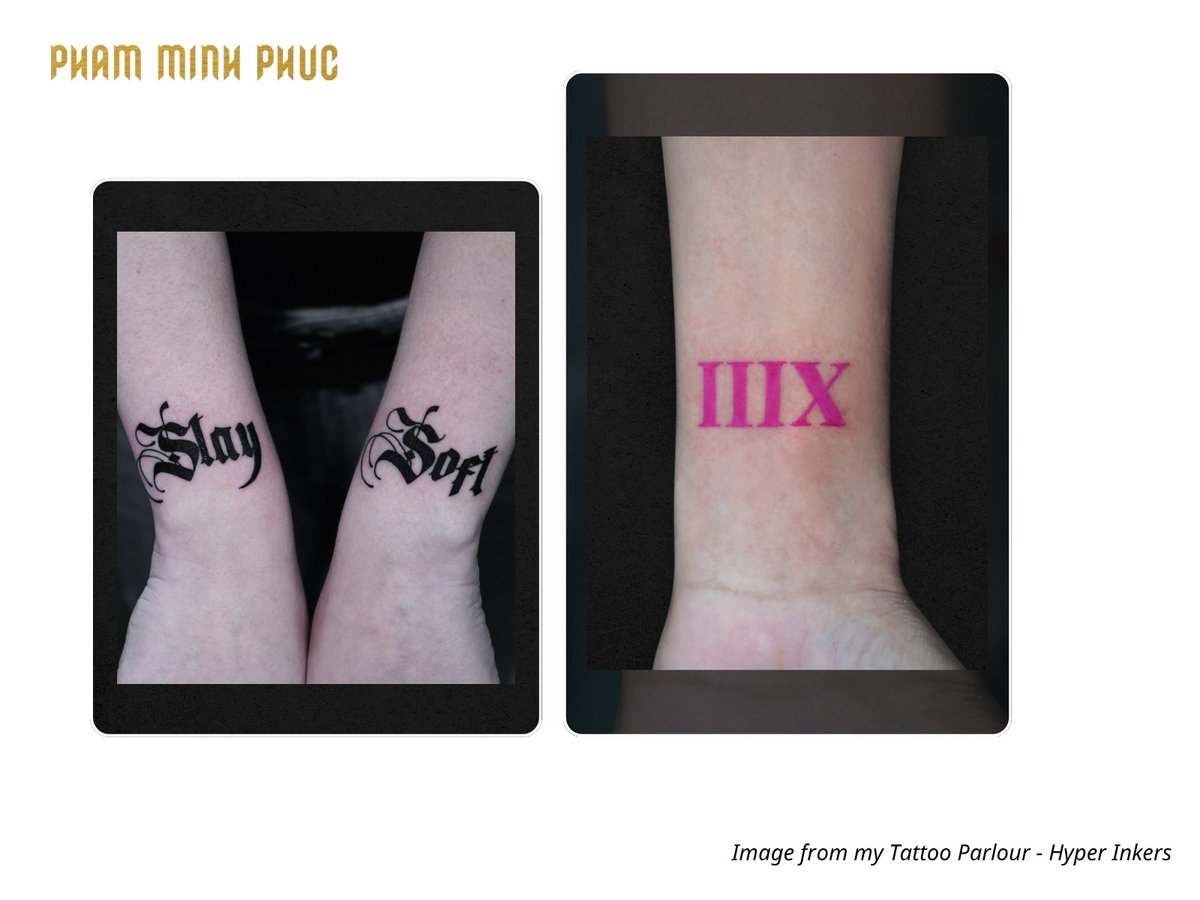
You must avoid placing the stencil directly over the deep wrist creases located at the base of the palm. The constant bending of your hand creates deep skin folds that reject tattoo pigment aggressively. Placing the design at least one inch below these natural fold lines prevents severe ink blowout and guarantees crisp, long-lasting lines.
Half-Sleeve Tattoos
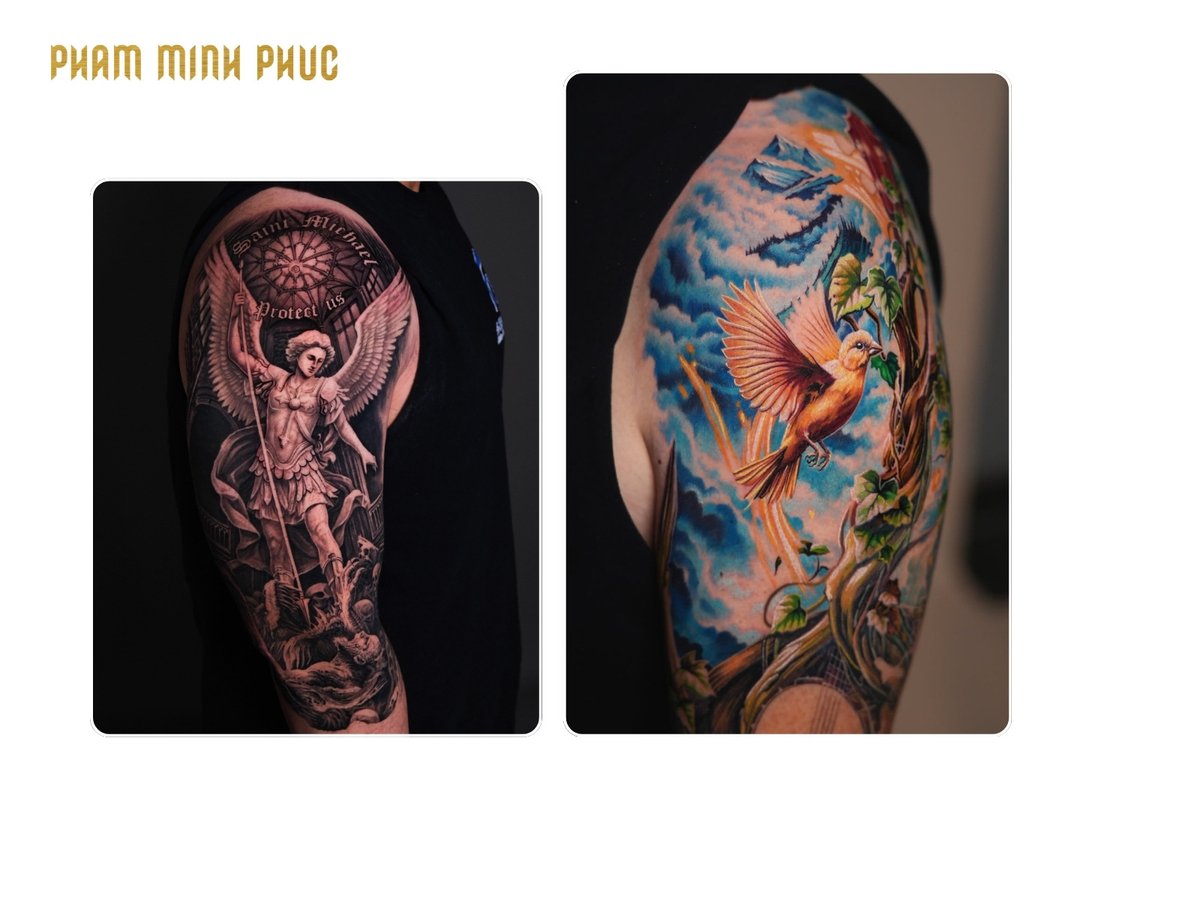
Half-sleeve tattoos provide a substantial canvas for cohesive art without the total commitment of a full arm piece. This layout typically spans from the shoulder down to the elbow, or from the elbow extending to the wrist. The expansive space allows artists to blend intricate designs, bold graphics, and detailed backgrounds into a unified narrative. Common designs involve themed narratives, such as a nautical scene with a lighthouse and waves or a forest landscape with trees and wildlife.
A well-planned half-sleeve utilizes the upper bicep for large focal points and the lower tricep for supporting background elements. This structural hierarchy creates a visually striking composition that wraps naturally around the arm cylinder.
Full Sleeve Tattoos
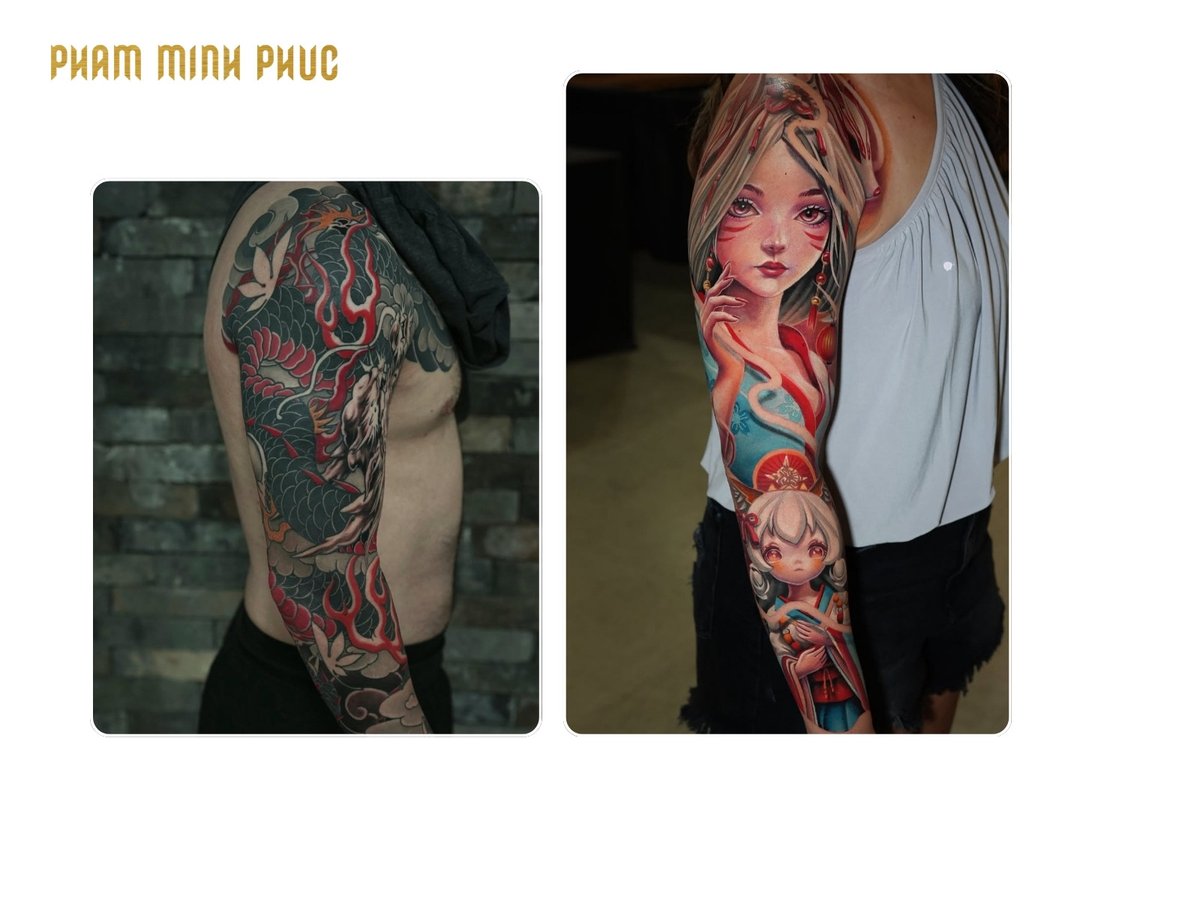
Full sleeve tattoos transform the entire arm into a seamless, unified masterpiece from the shoulder to the wrist. This extensive placement requires a massive investment of time and pain tolerance over multiple sessions. Common designs for sleeve tattoo placement involve complex themes like biomechanical armor, traditional Japanese storytelling, or hyper-realistic collages.
Designing a full sleeve involves mapping the flow of the muscles to dictate the background shading. Using “connectors” like wind bars or geometric hexes to bridge the forearm and bicep pieces creates a flawless transition. This unified flow ensures the arm looks like a single piece of art rather than a collection of scattered stickers.
What Are Popular Arm Tattoo Styles?
Specific tattoo styles thrive on the arm by leveraging the limb’s cylindrical shape and varied muscle contours. The physical stability of the upper arm and forearm makes them ideal for technical precision and artistic depth.
- Black and Grey: This style remains the most requested for arm placements due to its timeless aesthetic and graceful aging. High-contrast shading and soft gradients utilize the broad surface of the bicep and forearm to create realistic depth and dimension.
- American Traditional: Bold outlines and heavy color saturation excel on the outer arm. These designs withstand sun exposure better than finer styles, maintaining their clarity on this frequently exposed canvas.
- Realism: Detailed portraits and lifelike textures require the flat, stable skin of the upper arm or inner forearm. These zones provide the necessary space for complex light and shadow work.
- Japanese Irezumi: Flowing motifs like koi fish and dragons wrap naturally around the arm’s circumference. This style uses the arm’s length to tell a continuous visual story from shoulder to wrist.
- Fine-Line: Delicate, single-needle work fits perfectly on sensitive areas like the inner bicep or wrist. These minimalist designs offer a subtle, sophisticated look that complements the arm’s natural elegance.
How to Choose the Right Arm Tattoo Placement
You should choose an arm tattoo placement based on the shape and size of your design, how visible you want it to be, and whether you plan to add more tattoos around it later.
- If your tattoo has a large focal subject, such as a portrait, animal, or realism piece, the outer upper arm or bicep generally provides enough width for the main subject, shading, and supporting detail.
- If you want something more discreet, the inner bicep is a useful option because the tattoo faces toward the torso and is easier to cover than most forearm placements.
- For a long or vertical tattoo, the forearm provides a natural direction from elbow to wrist. The inner forearm works well when you want to see the design yourself, while the outer forearm gives it greater everyday visibility.
- If your design is radial or circular, the elbow can become a natural center point for the composition.
- For a small and compact tattoo, the wrist provides a defined area for symbols, dates, short lettering, or minimalist artwork.
When you choose between the forearm and bicep, you should consider the visibility and shape of the canvas. The forearm provides a longer and more exposed surface for vertical artwork, while the bicep or outer upper arm provides a broader focal area that is easier to cover with a short sleeve.
Arm placement preferences can also vary between men and women, although these are preferences rather than fixed rules.
- For women, the inner and outer forearm, inner bicep, and upper arm are commonly chosen for fine-line, botanical, script, ornamental, and small-to-medium designs. The upper arm also provides additional space when the artwork needs greater detail or easier concealment.
- For men, the bicep, outer upper arm, tricep, and forearm are commonly used for portraits, animals, realism, bold traditional designs, and larger pieces that may later expand into a sleeve. Anatomy, design shape, visibility, and personal preference should ultimately matter more than gender.
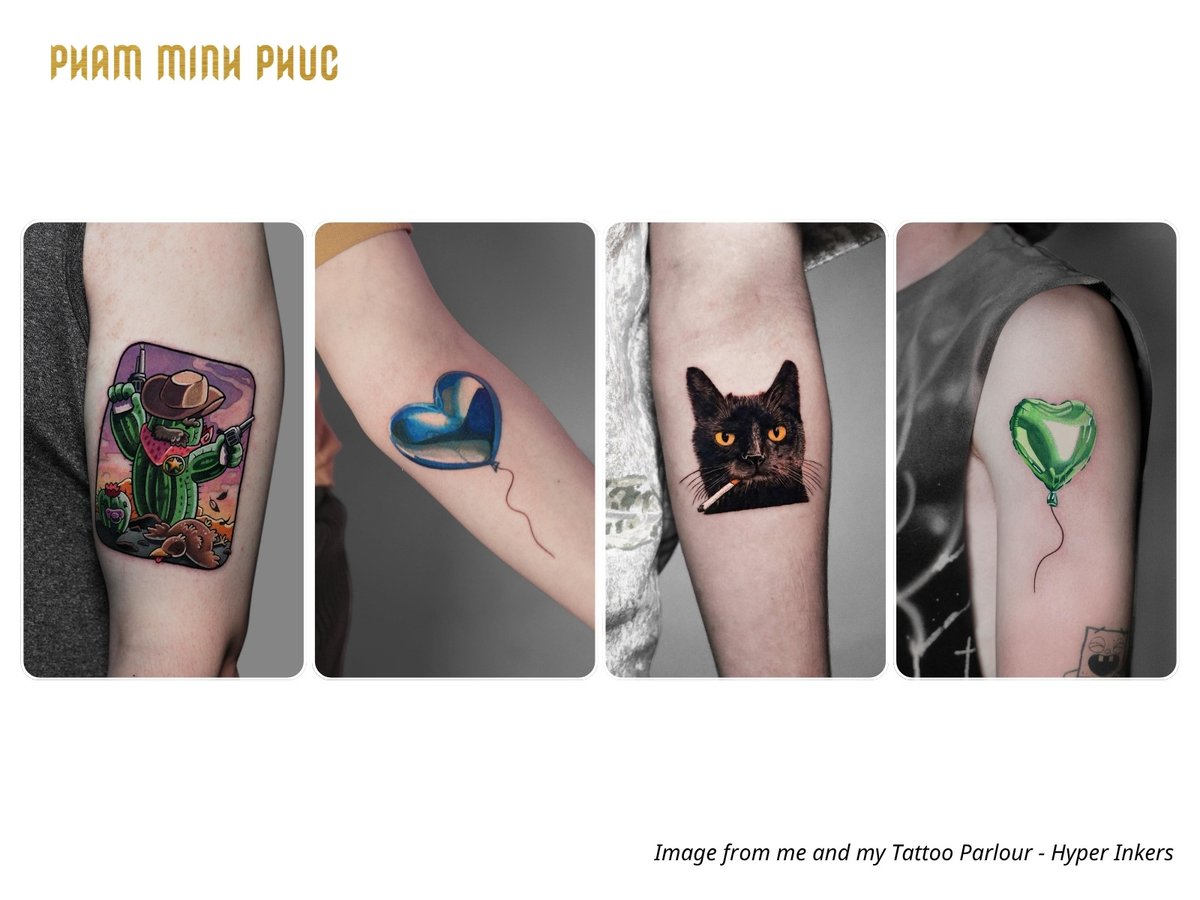
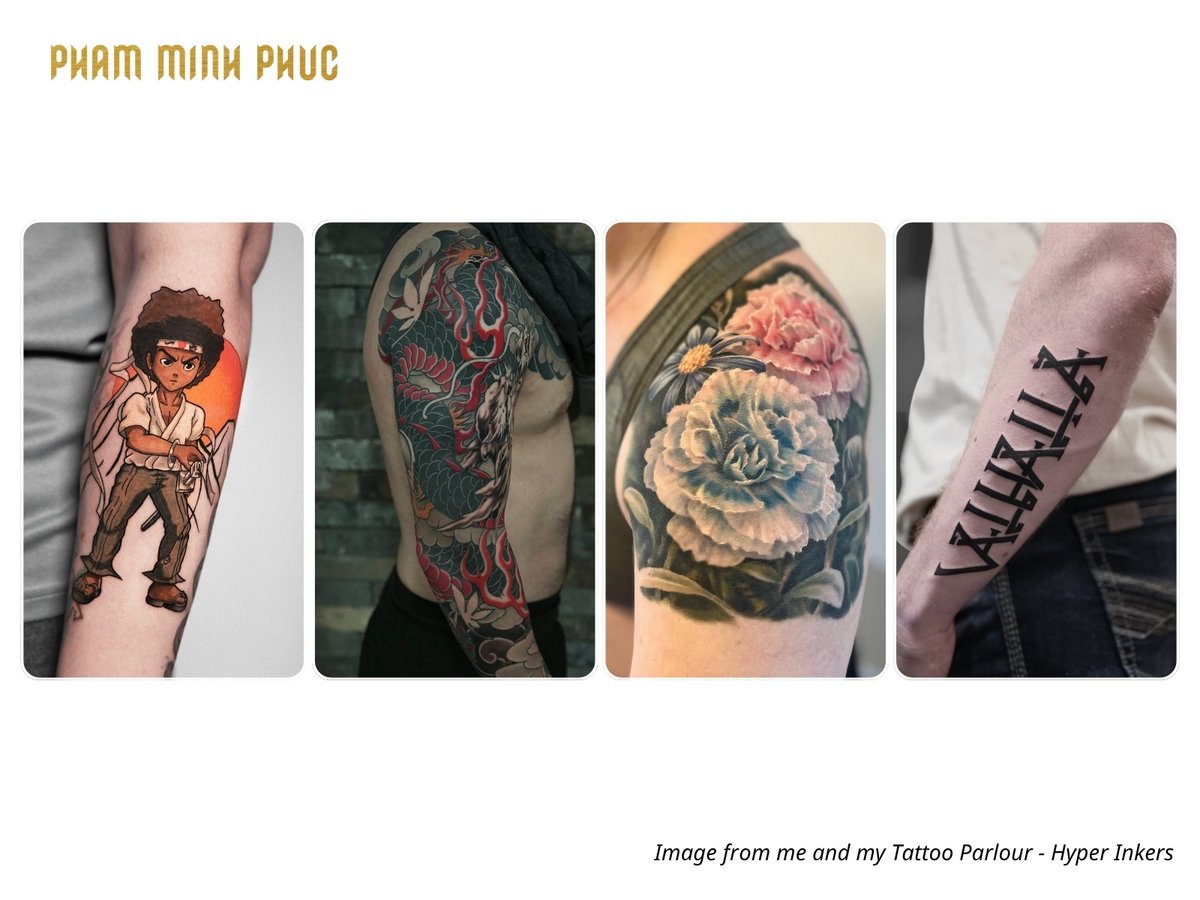
If you may eventually build a half sleeve or full sleeve, think beyond the first tattoo. Its scale, direction, surrounding negative space, and edges can affect how easily the next pieces connect through the bicep, tricep, elbow, and forearm.
When a client comes to me with an arm tattoo idea, I usually start with the artwork rather than asking them to choose a location immediately. I look at the subject’s shape, the amount of detail it needs, how visible the client wants it to be, and whether they may build a sleeve later. From there, I can compare the bicep, tricep, inner arm, and forearm to find the surface that gives the design the strongest composition.
Will Muscle Growth or Weight Changes Affect an Arm Tattoo?
Gradual muscle growth or weight changes usually cause only modest changes to an arm tattoo, while larger or faster changes can alter how the design sits on the skin.
The upper arm may change more noticeably as the bicep and tricep develop, which is why larger designs should follow the natural shape of the muscles rather than relying on a rigid flat composition.
Stretch marks or substantial changes in skin tension can also pass through tattooed areas and affect individual lines or details.
This does not mean you need to avoid an upper-arm tattoo if you train regularly. Appropriate sizing, good stencil placement, and a composition that works with the anatomy are more important than trying to predict every future body change.
Arm Tattoo Aftercare by Placement
Arm tattoo aftercare should focus on protecting the healing skin from friction, pressure, repeated movement, and unnecessary exposure.
Different placements create different practical considerations:
- Outer upper arm: Watch for tight shirt sleeves or clothing that repeatedly rubs against the tattoo.
- Inner bicep: Contact with the torso and nearby clothing can create additional friction.
- Forearm: The area is exposed during many everyday activities, so avoid unnecessary contact and protect the tattoo from strong sun exposure once it has fully healed.
- Elbow: Frequent bending and contact with surfaces can make the joint more difficult to protect.
- Wrist: Watches, bracelets, cuffs, and repeated wrist movement can create extra friction around a fresh tattoo.
Follow your tattoo artist’s instructions for cleaning, dressing, and moisturizing because the recommended routine can depend on the tattoo and the type of protective dressing used.
See my full tattoo aftercare guide if you plan to get an arm tattoo
How Long Does An Arm Tattoo Take To Heal?
An arm tattoo takes approximately two to three weeks to heal on the superficial surface layer. During this initial phase, the skin will form protective scabs, peel, and feel tight. The deeper dermis layers require up to three full months to regenerate completely and lock the pigment into place permanently. Following strict aftercare protocols and keeping the arm moisturized guarantees vibrant, crisp colors for decades.
FAQs about Arm Tattoo Placement
Is the Forearm or Bicep Better for a Tattoo?
The forearm is usually better if you want a longer and more visible canvas, while the bicep provides a broader surface that is easier to cover with a short sleeve. Choose based on the shape and size of your design rather than treating one location as universally better.
What is the Best Arm Tattoo Placement For Women?
Common arm tattoo placements for women include the inner forearm, outer forearm, inner bicep, and upper arm. The best choice depends more on design shape, size, anatomy, and desired visibility than gender.
Is the Inner or Outer Forearm Better for a Tattoo?
Choose the inner forearm if you want the artwork to face you more naturally or prefer a slightly more personal presentation. Choose the outer forearm if you want the tattoo to be more visible to other people.
Which Arm Tattoo Placement is Easiest To Hide?
The inner bicep and upper arm are among the easier arm locations to conceal because much of the tattoo can be covered by short or long sleeves. Forearm and wrist tattoos generally remain more visible.
Which Arm Placement is Good for a First Tattoo?
The outer upper arm is a practical option for many first tattoos because it provides plenty of design space, and the shoulder / outer bicep area is rated around 3–4/10 on the pain chart used for this guide. The forearm is another popular option if higher visibility is not a concern.
Can An Arm Tattoo Later Become Part of a Sleeve?
Yes. An upper-arm or forearm tattoo can become part of a half sleeve or full sleeve if the original composition leaves enough space and direction for future connections. Planning that possibility before the first stencil is placed gives the artist more flexibility later.
Can You Tattoo Over Arm Hair?
You cannot tattoo over arm hair safely or effectively. The artist must shave the exact placement area completely smooth right before applying the stencil. Shaving removes a physical barrier, allowing the needle to penetrate the dermis cleanly without pushing hair follicles into the open wound. This standard preparatory step prevents severe bacterial infections and ensures the stencil adheres perfectly to the skin.
How Much Does A Full Sleeve Cost?
A full sleeve costs a significant amount, generally ranging from several thousand to tens of thousands of dollars. The total price depends entirely on the artist’s hourly rate, the complexity of the design, and the total number of sessions required. Highly detailed realism sleeves demand substantially more hours in the chair compared to simpler geometric or traditional patterns. You must consult directly with your chosen artist to receive an accurate, customized time and cost estimate.
See More: Explore the complete tattoo placement guide to find the ideal location based on your design, pain level, lifestyle, and long-term visual appeal.
I hope this guide has helped you understand how different arm tattoo placements can affect the way a design looks, moves, and fits into any future tattoo plans. The best location depends on how the artwork works with your arm rather than simply choosing the most visible or popular spot. If you are planning an arm tattoo and are still unsure whether your design fits the bicep, forearm, inner arm, elbow, or a larger sleeve composition, you can contact me, Minh Pham, for a consultation. I can help you evaluate the design, size, and placement based on your anatomy and the result you want to achieve.
If you’re thinking about extending your tattoo beyond the arm, my hand tattoo placement and finger tattoo placement guides cover everything you should know before choosing these high-visibility locations.