The best spots for a first tattoo are the outer thigh, forearm, outer shoulder and bicep, and calf. These 4 placements share the same core advantages: enough muscle padding to absorb needle impact, low nerve density that keeps pain manageable, and surface access that makes daily aftercare realistic without turning your life upside down.
I’m Minh Pham. I’ve been tattooing in San Antonio for over 10 years, currently at my tattoo parlor – HyperInkers, and I’ve worked with more first-timers than I can count. The ones who walk out happiest aren’t always the ones who were the least nervous. They’re the ones who made a smart placement decision going in. This guide is what I’d tell you if you sat down across from me in the studio.

Table of Contents
3 Factors to Consider Before Your First Ink
3 factors determine whether a placement works for a first tattoo: pain tolerance, lifestyle visibility, and design size. Get all three right and you walk out with something you’re proud of, healing that doesn’t wreck your routine, and a tattoo that still looks sharp a decade from now. Miss even one and the regret tends to follow.
- Pain tolerance is the obvious one, but most people think about it the wrong way. The question isn’t “how tough am I?” It’s “what does this specific area of my body actually feel like under a needle?” Two specific biological elements drive tattoo pain: proximity to the bone and nerve ending density. Fleshy spots with thick underlying muscle, like the outer thigh or outer bicep, absorb the machine vibration effectively. Areas where the bone sits directly under the skin transmit every vibration directly into your skeleton.. That’s the difference between a 3 out of 10 and a 9 out of 10. Not willpower. Anatomy.
- Lifestyle visibility is the factor most first-timers completely underestimate. A forearm tattoo is visible at every job interview, every family dinner, every client meeting. That’s fine if your life accommodates it. But if you work in law, corporate finance, or certain hospitality roles, an outer thigh or upper back placement gets you the same quality of artwork with full cover when you need it. I’m not here to tell you what’s appropriate. I’m here to make sure you’ve actually thought it through before something is on your skin permanently.
- Design size is the one that surprises people most. A 1.5-inch tattoo on the outer arm holds clean detail and ages well. That same design squeezed onto a wrist or finger looks good for maybe 18 months before the lines start bleeding together. High-friction, thin-skin areas can’t hold micro-detail over decades. It’s not a quality issue. It’s just how skin works. Bigger designs need room. The outer thigh and back give them that. The wrist and ankle don’t.
In every first consultation, I ask my client three questions before I touch a stencil: What do you do for work? What do you actually wear most days? Have you ever been tattooed before? Those three answers shape my placement recommendation more than anything the client shows me on their phone.
4 Best Spots for Your First Tattoo
The four best spots for your first tattoo consistently deliver manageable pain, straightforward healing, and excellent long-term ink retention. The outer thigh, forearm, outer shoulder and bicep, and calf all check those boxes. Here’s what makes each one worth considering.
The Outer Thigh
The outer thigh is the most forgiving spot for a first tattoo. Pain sits at 3 to 4 out of 10, which puts it firmly in Zone 1 on the pain scale. The canvas is large. It heals cleanly, and most clothing doesn’t create friction against it during the critical first 2 weeks.
Why is the pain this low? It comes down to one muscle: the vastus lateralis. It’s one of the thickest muscle groups in the body, and it sits right under the skin on the outer thigh. The needle vibrates against dense tissue rather than bouncing off bone or triggering concentrated nerve clusters. The sensation is completely different from tattooing over the shin or the ribs. Most clients are genuinely surprised mid-session by how manageable it feels.
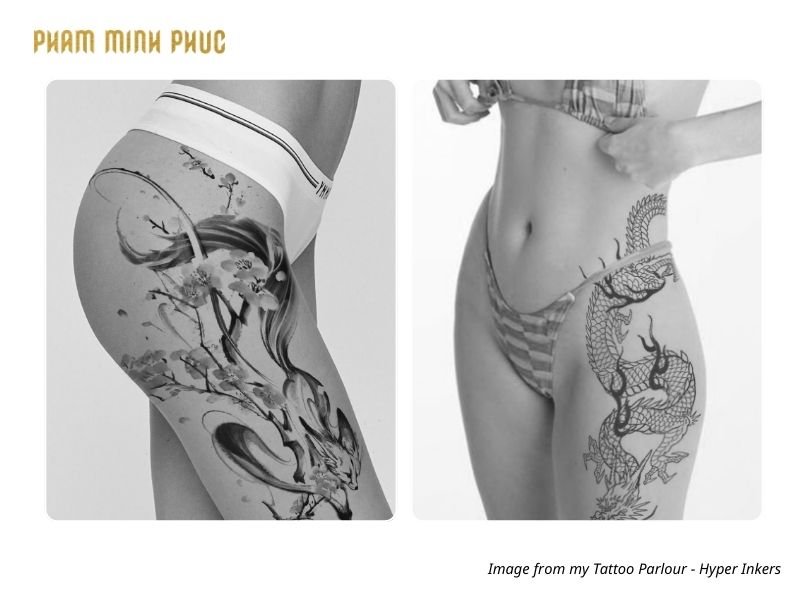
Worth knowing: Outer and inner of thigh tattoo placement are not the same experience. The inner thigh sits at 8 to 9 out of 10 on the pain scale. The skin is thinner, the nerves are denser, and proximity to the groin adds a sharp sensitivity that catches people completely off guard. When you book, say “outer thigh” specifically.
The outer placement offers excellent longevity because it receives minimal UV exposure during daily activities. Since the area is typically covered by clothing and doesn’t face the same constant sun exposure as the arms, hands, or neck, tattoos here tend to retain their color and sharpness much longer. The skin here also resists severe stretching during normal weight fluctuations, making it the perfect foundation for fine line work and bold black and grey realism.
In 10 years of tattooing in San Antonio, this is the placement I recommend most often to first-timers who want a piece larger than 4 inches. Nearly every client who goes for it says the same thing after: they had no idea it would be that easy.
The Forearm
The forearm provides an excellent, flat anatomical cylinder that you can see and admire every single day. This constant visibility actively improves your healing process. Clients naturally check their visible tattoos more frequently, apply lotion consistently, and catch early dryness before it causes severe scabbing.
The outer forearm sits over solid muscle and registers a low pain score. It runs 3 to 4 out of 10 on pain so pain stays manageable through most of the session. The inner forearm is more sensitive because the skin is thinner and veins sit closer to the surface. For first-timers, I default to recommending the outer forearm unless the design specifically needs the inner.
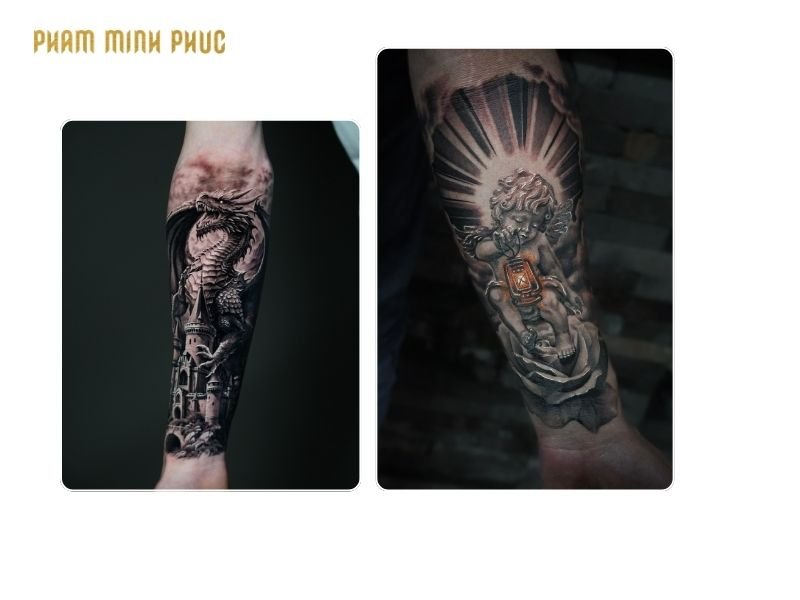
You must actively protect this highly visible area from constant sun exposure. The intense UV radiation in San Antonio acts as a rapid laser removal system. You must commit to daily high-SPF sunscreen application once the skin heals fully to prevent your crisp lines from blurring into a dark shadow.
The Outer Shoulder and Bicep
The outer shoulder and bicep combination serves as the most strategic starting point for nervous beginners. Pain is 3 to 4 out of 10, the same zone as the outer thigh. It heals cleanly. This consistently muscled spot lacks major nerve clusters and prominent bones.
The thick deltoid muscle acts as a natural shock absorber against the needle strikes. And it gives the artist enough surface for designs ranging from 2 to 6 inches without distortion issues.
This specific shoulder tattoo placement establishes the perfect anchor point if you plan to build a full sleeve in the future. Starting your collection on the outer bicep gives your artist the best possible foundation to create a cohesive anatomical flow down the arm later. A standard t-shirt completely covers this area, which minimizes UV damage and protects your professional aesthetic.
The Calf
The calf muscle provides a highly underrated, dynamic canvas that stretches naturally with your body movement. Pain sits at 4 to 5 out of 10, still comfortably in Zone 1. The dense tissue on the back of the lower leg registers very low on the pain scale. You must keep the design centered over the bulk of the gastrocnemius muscle and away from the sharp tibia bone on the shin.
Healing on the calf proceeds very smoothly because socks sit below the tattoo and loose pants avoid direct friction. The elongated shape of the calf works beautifully with vertically oriented designs like botanical stems, animal portraits, and long script pieces.
Which Spots Should You Avoid for a First Tattoo?
I advise you to avoid the five spots that most first-timers regret choosing: the ribs, feet, hands, inner arm, and spine. Not because the tattoos look bad there. They often look incredible. The problem is the experience of getting them is significantly harder than most people think. Starting your journey on these challenging canvases frequently causes immense physical distress and complicated healing periods.
| Placement | Pain Level | Healing and Longevity Challenges |
| Ribs | Very High (Zone 4) | Breathing causes constant micro-movement. Tight clothing creates painful friction. |
| Feet | High (Zone 3) | High nerve density. Constant friction from shoes destroys ink rapidly. |
| Hands | High (Zone 3) | Rapid skin cell turnover causes massive ink fallout within the first year. |
| Inner Arm | Medium (Zone 2) | Thin skin and superficial veins cause sharper pain than the outer bicep. |
| Spine | High (Zone 3) | Needle vibration against vertebrae causes nerve rattling and muscle spasms. |
What Should You Tell Your Tattoo Artist Before Choosing a Spot?
You must tell your tattoo artist about your long-term aesthetic goals, career dress code, and previous tattoo history before finalizing the exact spot. A client working in a conservative corporate role requires vastly different placement options than a creative professional.
You must also discuss your design shape and scale. Circular mandalas demand rounded anatomical joints like the shoulder. Vertical compositions require elongated muscles like the forearm or calf. Sharing your complete tattoo history allows the artist to pace the session correctly and structure the appointment to match your specific endurance level. Ten minutes of transparent communication prevents decades of placement regret.
Where Can You Get Your First Tattoo in San Antonio?
San Antonio has reputable studios worth checking out. Each has artists with different strengths depending on the style you’re after. Do your research, look at healed work in their portfolios specifically, not just fresh pieces, and ask directly whether they do placement consultations before booking.
If you’re looking for an artist who specializes in custom realism, fine line, and black and grey work and who works with first-timers regularly, I’m a reasonable option to consider. I’ve been tattooing in San Antonio for over 10 years and every new client I take on gets a full placement discussion before we start. I also give specific aftercare guidance calibrated to San Antonio’s climate, because the UV exposure and humidity here create healing conditions that generic online instructions simply don’t account for. A guide written for someone in Portland doesn’t translate directly to Texas summers.
The artwork is only half the job. Book a consultation here if you want to talk through your first piece before committing to anything.

Should You Start Small or Go Big for Your First Tattoo?
You should prioritize design integrity rather than just physical comfort when deciding whether to start small or go big for your first tattoo. The common myth tells beginners to start small for safety. A microscopic design in the wrong anatomical spot ages much faster than a properly scaled piece on the correct surface.
For most first-timers, a design measuring between three and five inches serves as the optimal starting point. This specific scale gives the artist ample room to establish clean line work and solid contrast that survives the natural aging process. This size typically requires a single two to four-hour session. This duration provides a meaningful endurance test without overwhelming your nervous system.
You can absolutely execute a massive six-inch piece as your first tattoo if you select the correct placement. The outer thigh, upper back, and shoulder handle large-scale work flawlessly. I always sketch multiple size variations during consultations to find the exact scale that maintains structural integrity as your body moves and ages over the next decade.
FAQs About Your First Tattoo Placement
Is the Wrist a Good Spot for a First Tattoo?
The wrist works as a first placement, but it’s not the easiest starting point. Pain of wrist tattoo placement sits at 5 to 6 out of 10 because the skin is thinner than the outer arm, veins sit close to the surface, and bone is closer than most people expect. Small designs under 2 inches fit the scale of the area without issue.
Healing is where it gets demanding: frequent hand washing throughout the day creates constant contact with the fresh tattoo, more so than almost any other spot on the body. If the wrist is where your design makes sense, it’s a reasonable choice. It’s just not what I default to when someone tells me they want their first experience to be as smooth as possible.
Are Collarbone or Sternum Tattoos Good for Beginners?
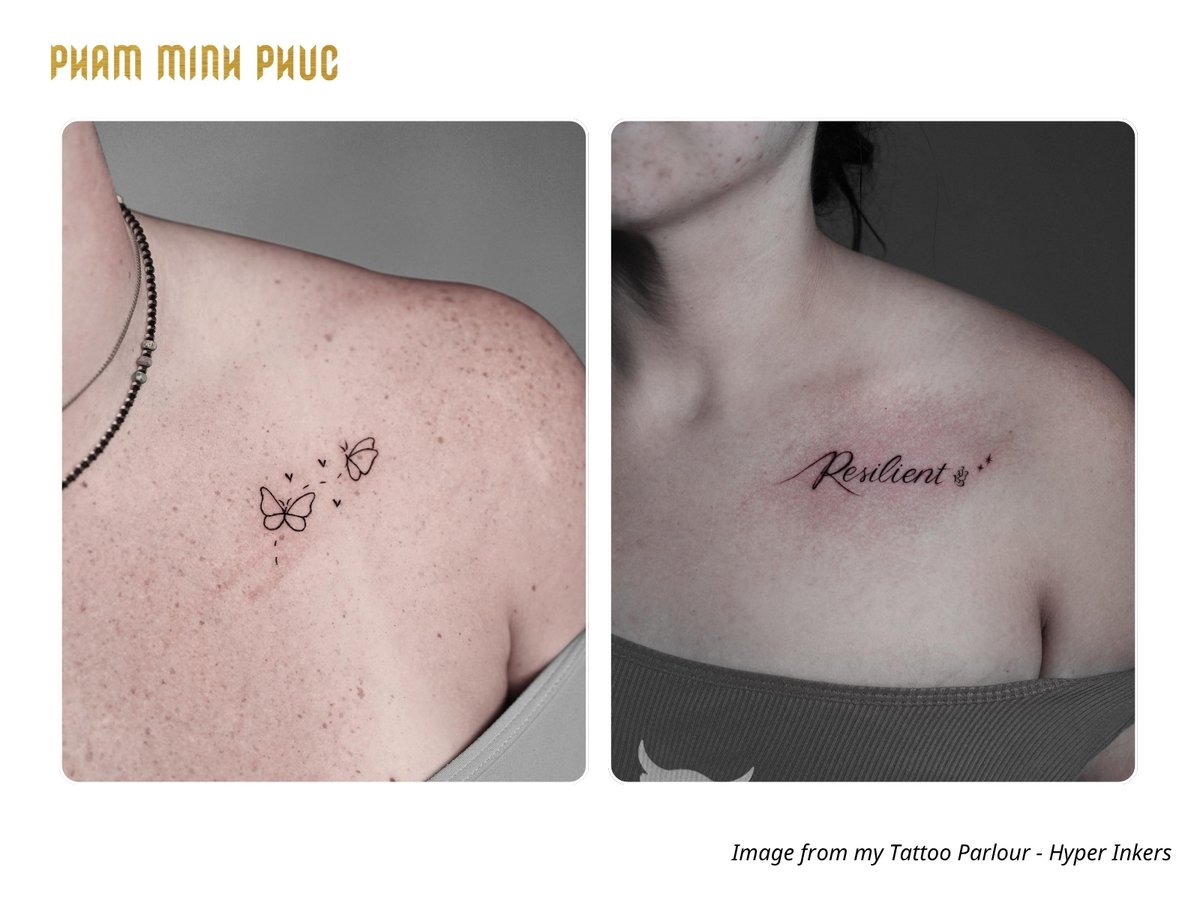
Collarbone and sternum tattoos are not the right starting point for most first-timers. The chest and sternum sit at 7 to 9 out of 10, firmly in Zone 3. These central placements lack fat cushioning entirely. The needle strikes directly over the hard bone structure. This creates intense physical discomfort and breathing complications that frequently overwhelm first-time clients.
Does Tattoo Placement Affect How Long It Lasts?
Yes. Tattoo placement directly determines how long a tattoo holds its detail, because high-friction, high-UV, and high-flexion areas degrade ink faster than protected, low-movement surfaces. High-friction zones like the hands and fingers lose pigment quickly due to constant mechanical rubbing and rapid cellular turnover. Stable, well-cushioned canvases like the upper back or outer thigh retain crisp lines and smooth shading for decades.
Placement is the decision most first-timers make too quickly and think about too late. The outer thigh, forearm, outer shoulder, and calf give you the best foundation: manageable pain, clean healing, and ink that still looks right a decade from now. Start in a spot that works with your body, not against it.
If you’re still unsure where your design actually belongs, that’s exactly what a consultation is for. Book one before you commit to anything permanent.