Shoulder tattoos can sit on the rounded shoulder cap, across the top of the shoulder, toward the front or back of the joint, over the shoulder blade, or along the collarbone. Each position changes how the design follows your body, how visible it is, and whether it can later connect with your arm, chest, or back. Shoulder tattoo placement provides an exceptionally adaptable anatomical canvas that perfectly balances prominent public visibility with effortless corporate concealment.
The shoulder is also one of the most three-dimensional tattoo areas. A design that looks balanced on a flat reference image may need to be adjusted once it wraps around the deltoid, crosses the top of the shoulder, or continues toward the upper arm. This makes placement especially important for larger designs, shoulder caps, and tattoos intended to accentuate your natural shoulder shape. Small tattoos also benefit from being anchored to a clear anatomical area instead of floating between the arm, chest, and upper back.
Today I will help you know the main shoulder tattoo placements, how different designs fit each area, pain, clothing and healing considerations, and how to choose a position that works with your body and future tattoo plans.

Table of Contents
Where Can You Place a Shoulder Tattoo?
You can place a shoulder tattoo on the shoulder cap, top of the shoulder, front shoulder, back shoulder, shoulder blade, or along the collarbone. These areas provide different amounts of curvature, space, visibility, and connection to the upper arm, chest, and back.
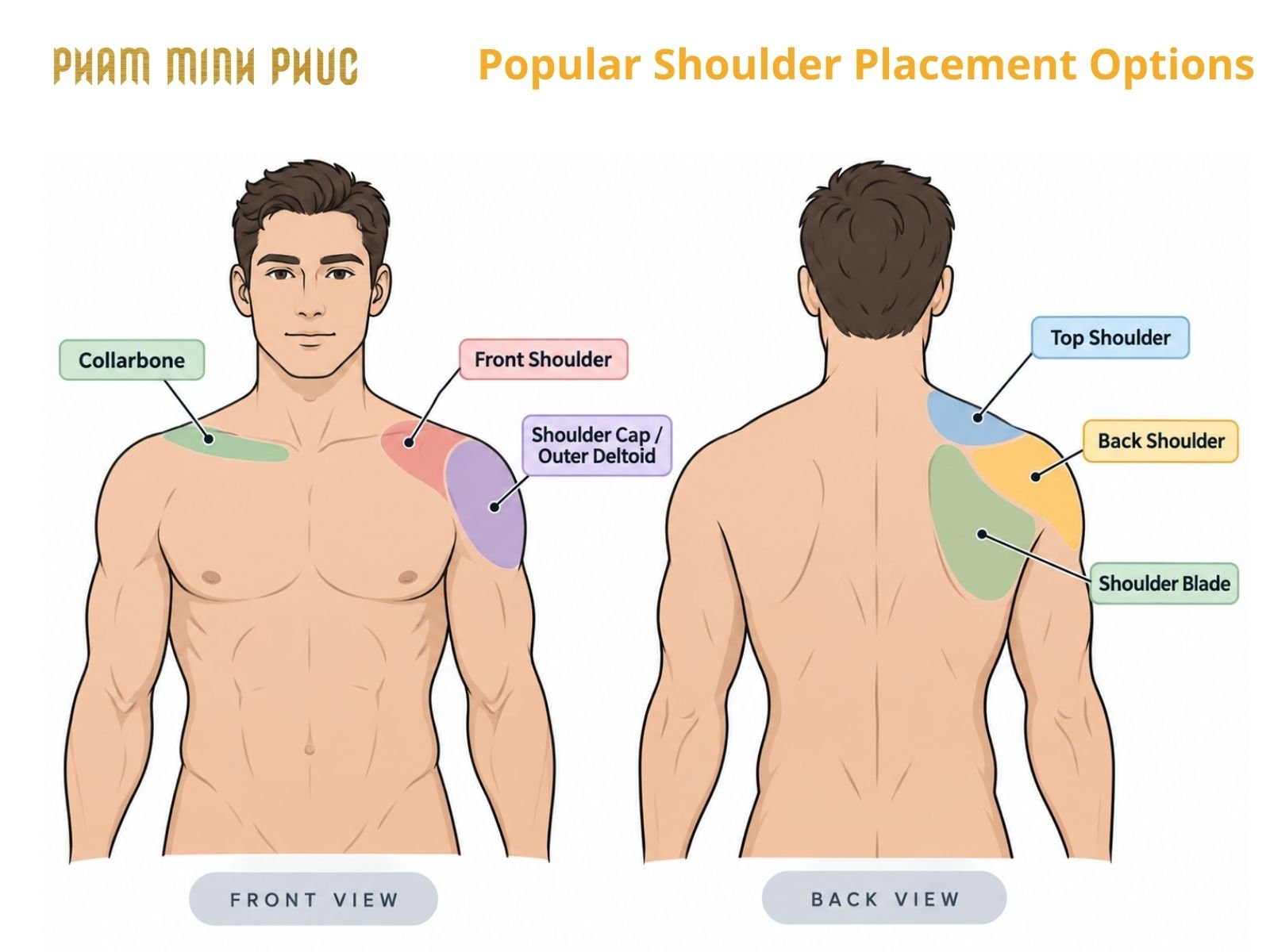
Shoulder Cap / Outer Deltoid Tattoo Placement
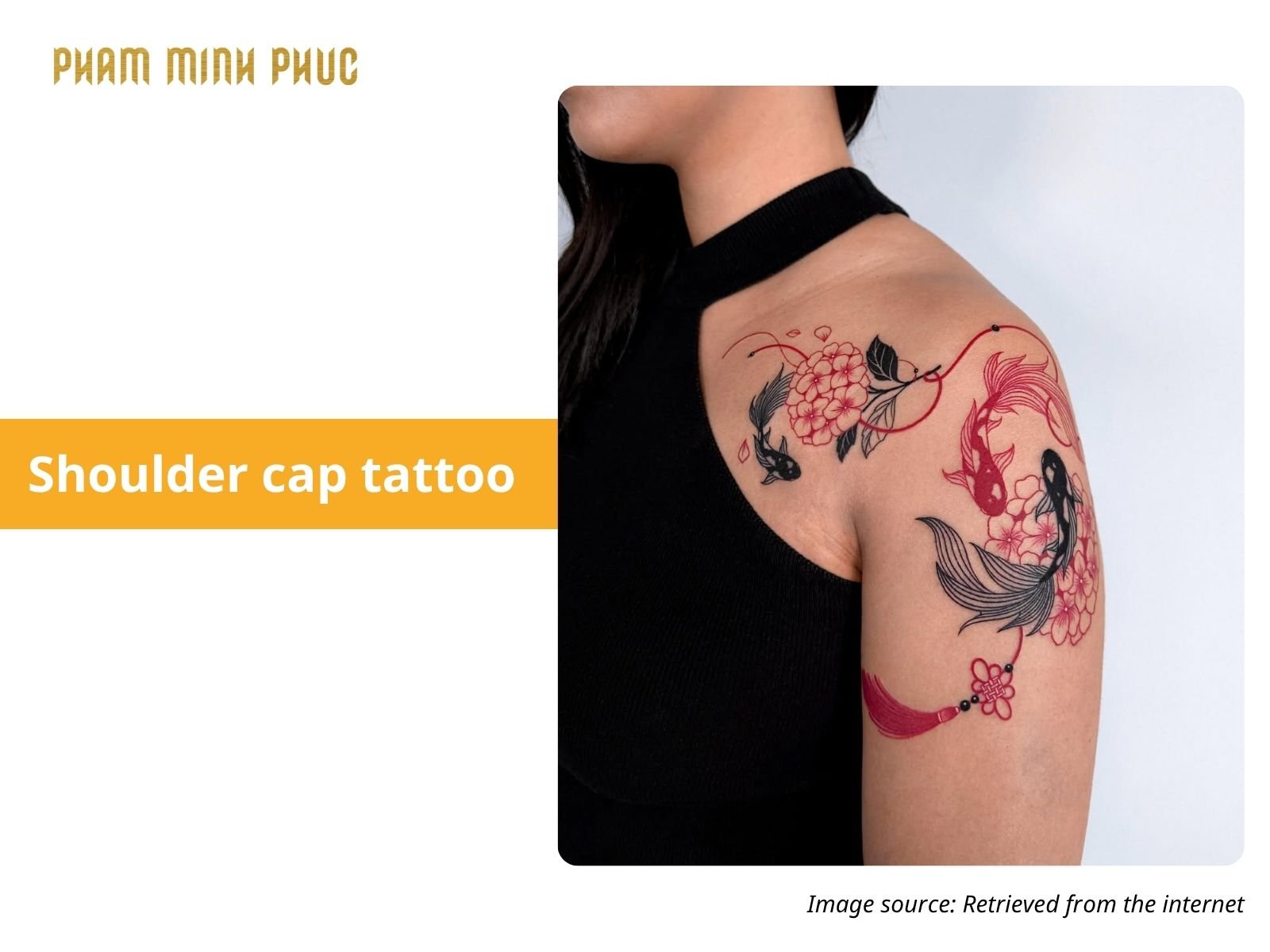
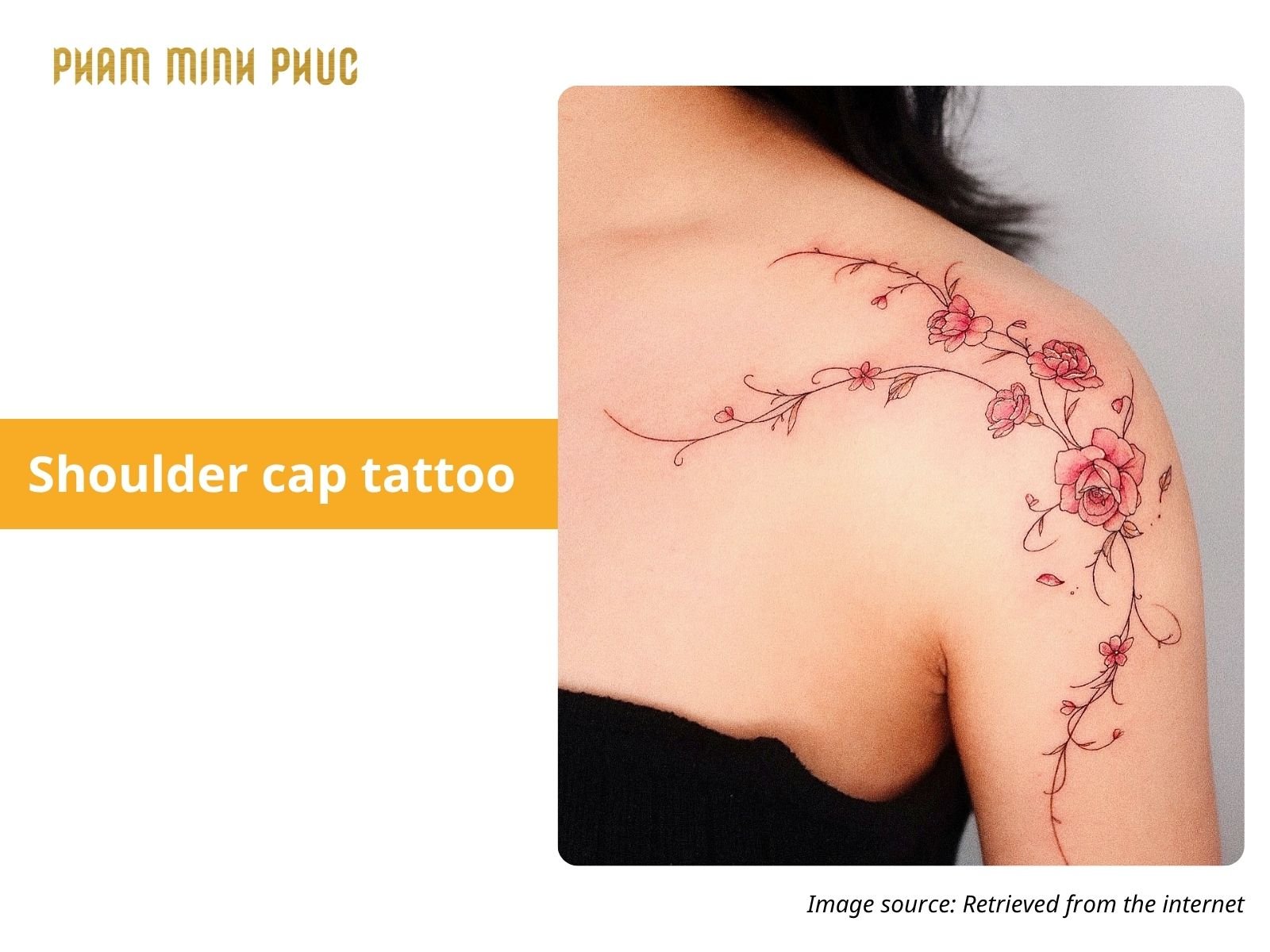
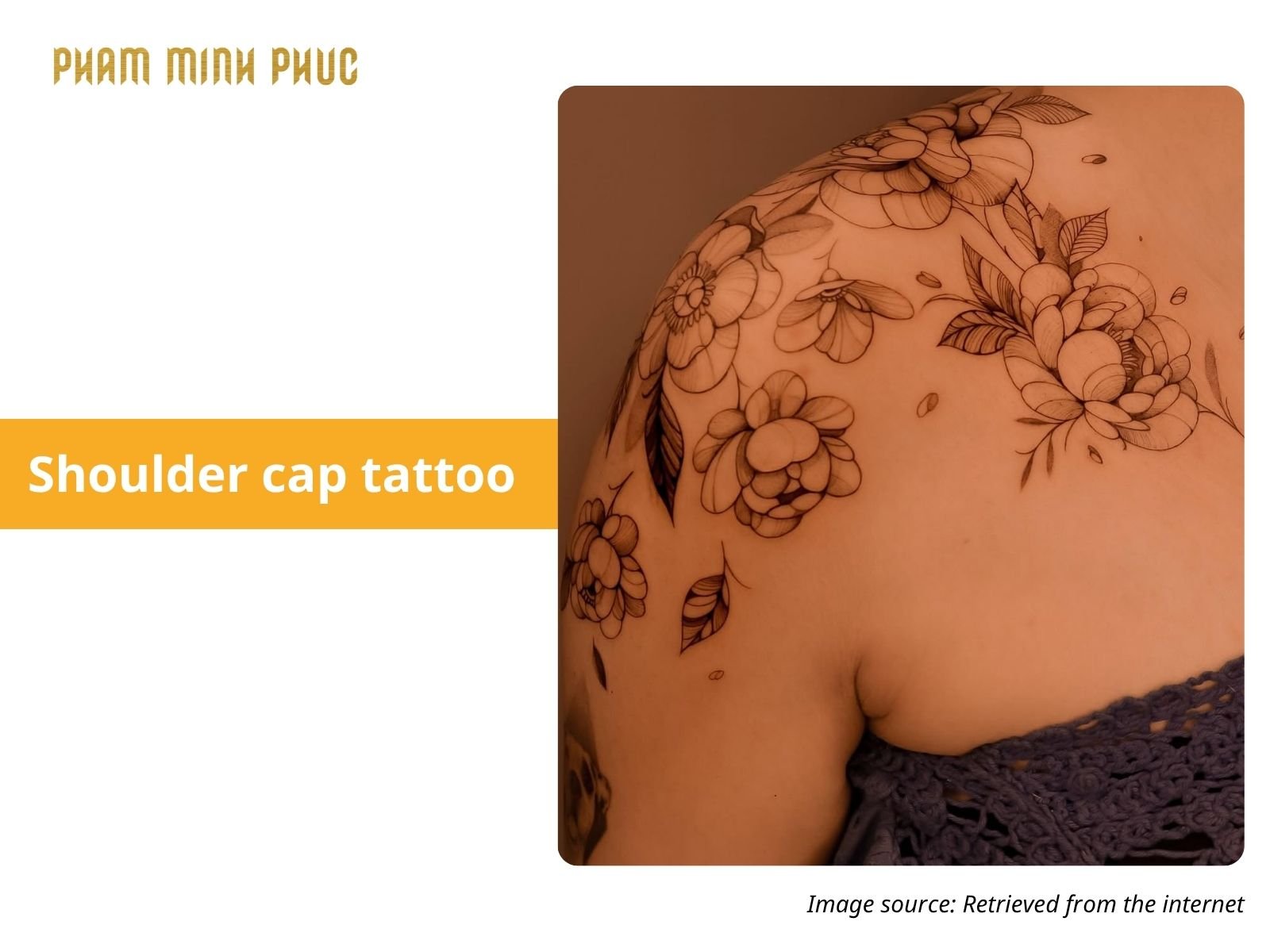
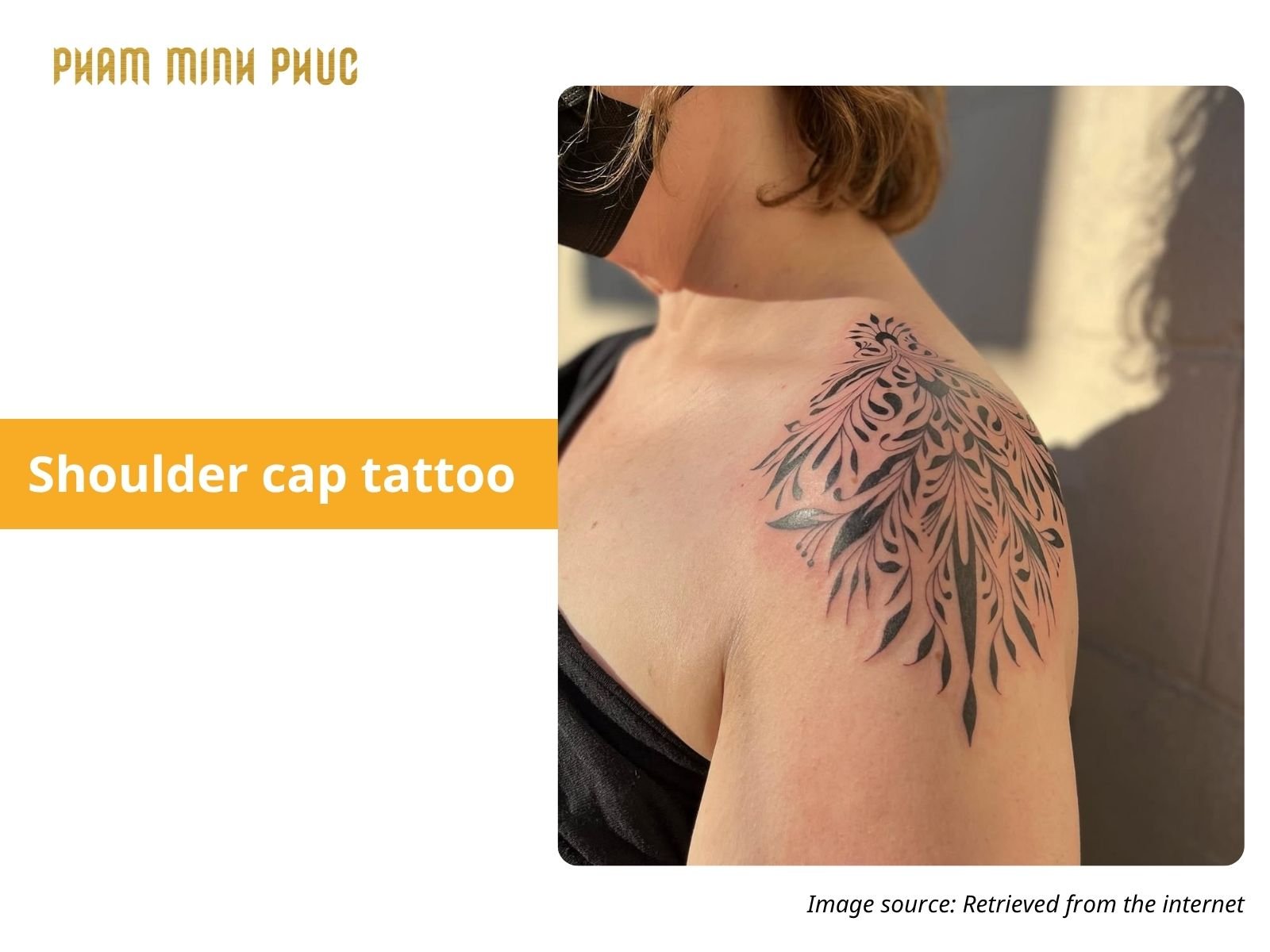
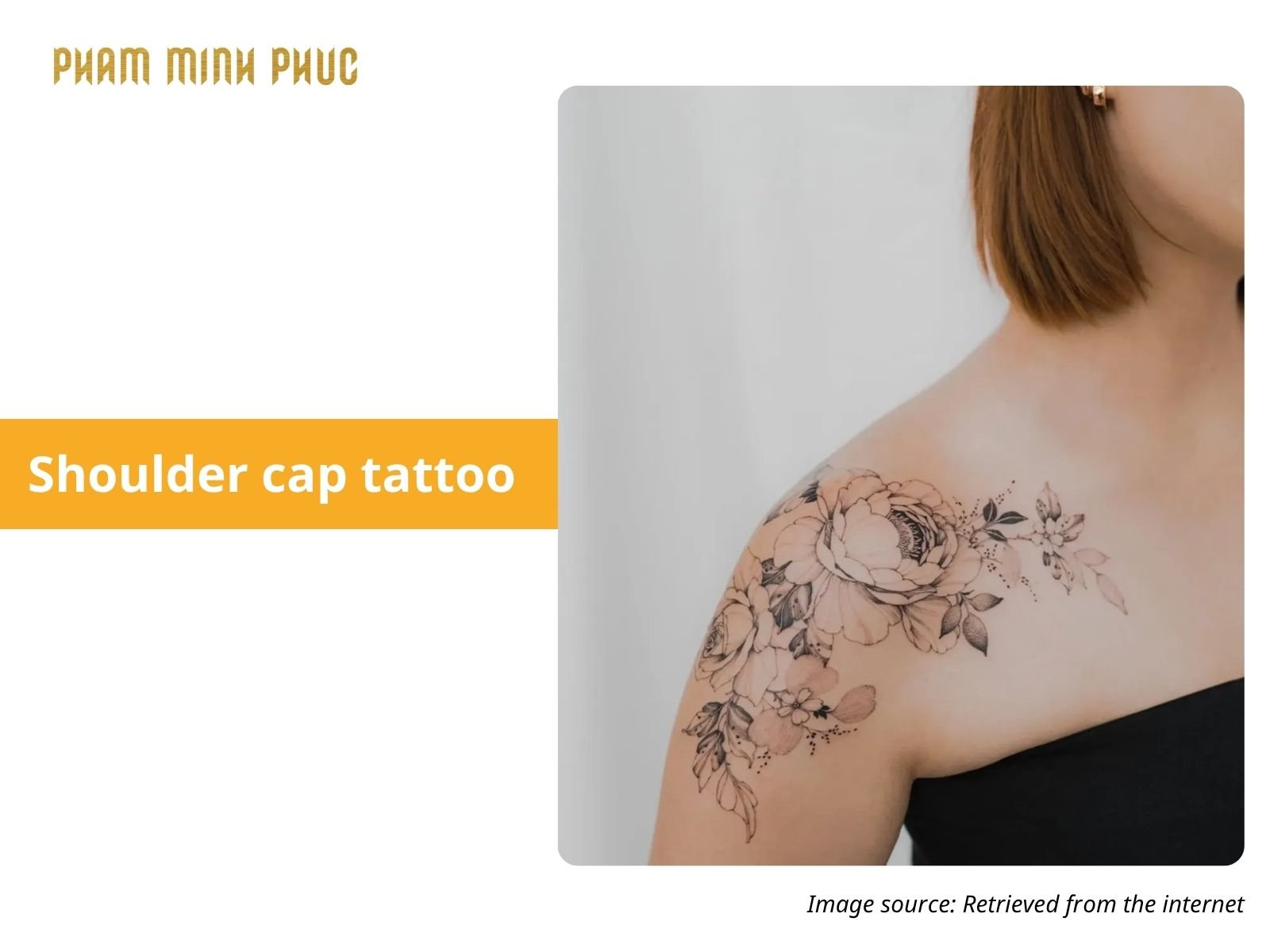
A shoulder cap tattoo wraps around the rounded outer deltoid, making it one of the strongest placements for designs that should follow the shape of your shoulder. This area sits where the upper arm meets the shoulder and can be viewed from the front, side, and back. Medium and large designs can use that curved surface without extending far onto the chest or upper back.

Designs that often work well on the shoulder cap include:
- Japanese-inspired artwork such as koi, waves, wind bars, and other flowing elements that can wrap around the deltoid.
- Animals and portraits when the main subject is positioned so it remains readable from a natural viewing angle.
- Ornamental and mandala-style designs that can be adapted to the rounded contour instead of treated like a flat circle.
- Biomechanical and illustrative pieces that benefit from the three-dimensional shape of the shoulder.
Because the shoulder cap curves away from the viewer, the stencil should be checked from several angles rather than judged only from the side. A focal subject that looks centered from one view may shift visually when you turn your body. The outer edge of the design can also follow the natural outline of your deltoid. This can help the tattoo work with your existing muscle definition instead of cutting straight across the shoulder.
Top of Shoulder Tattoo Placement
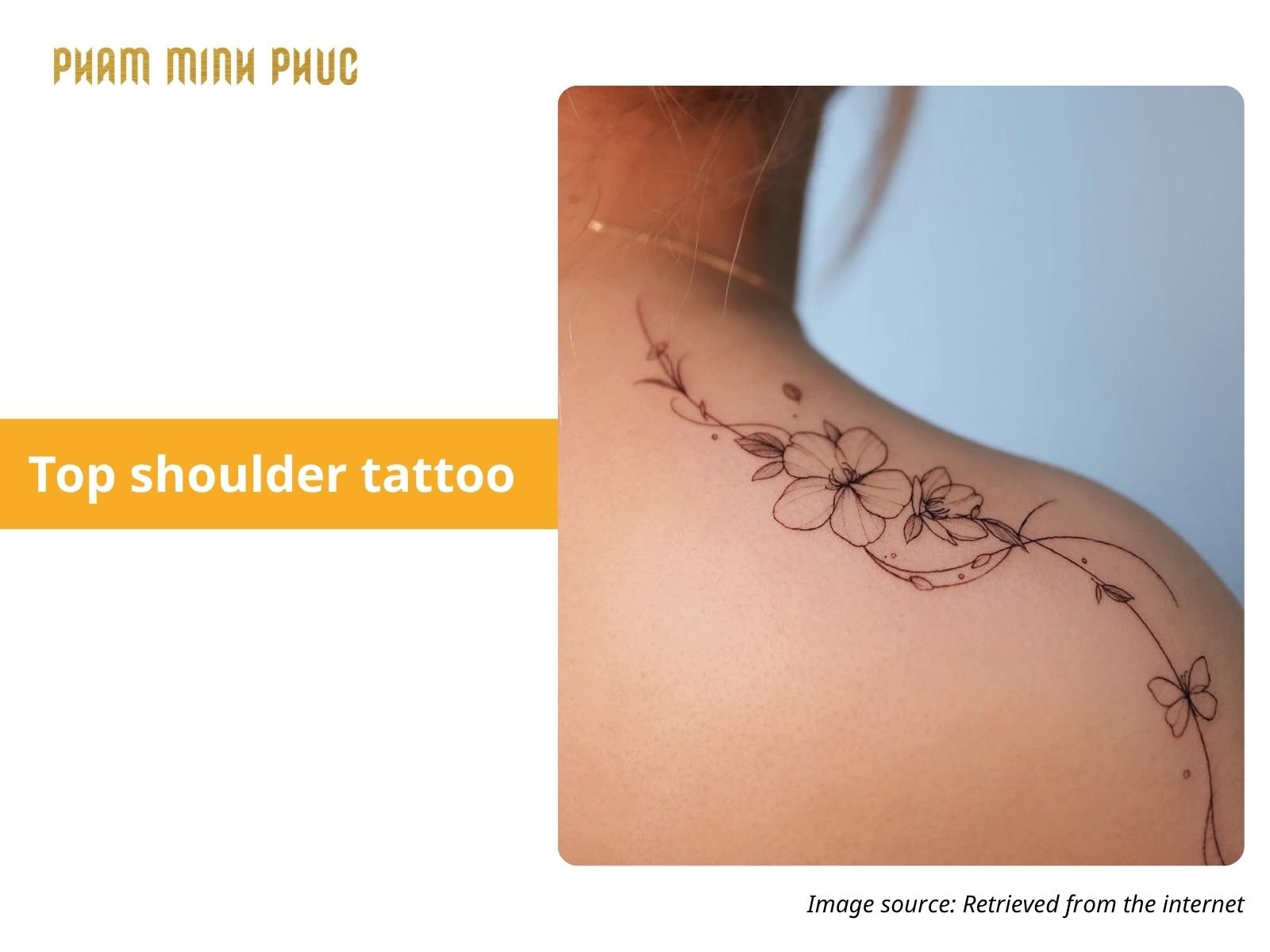
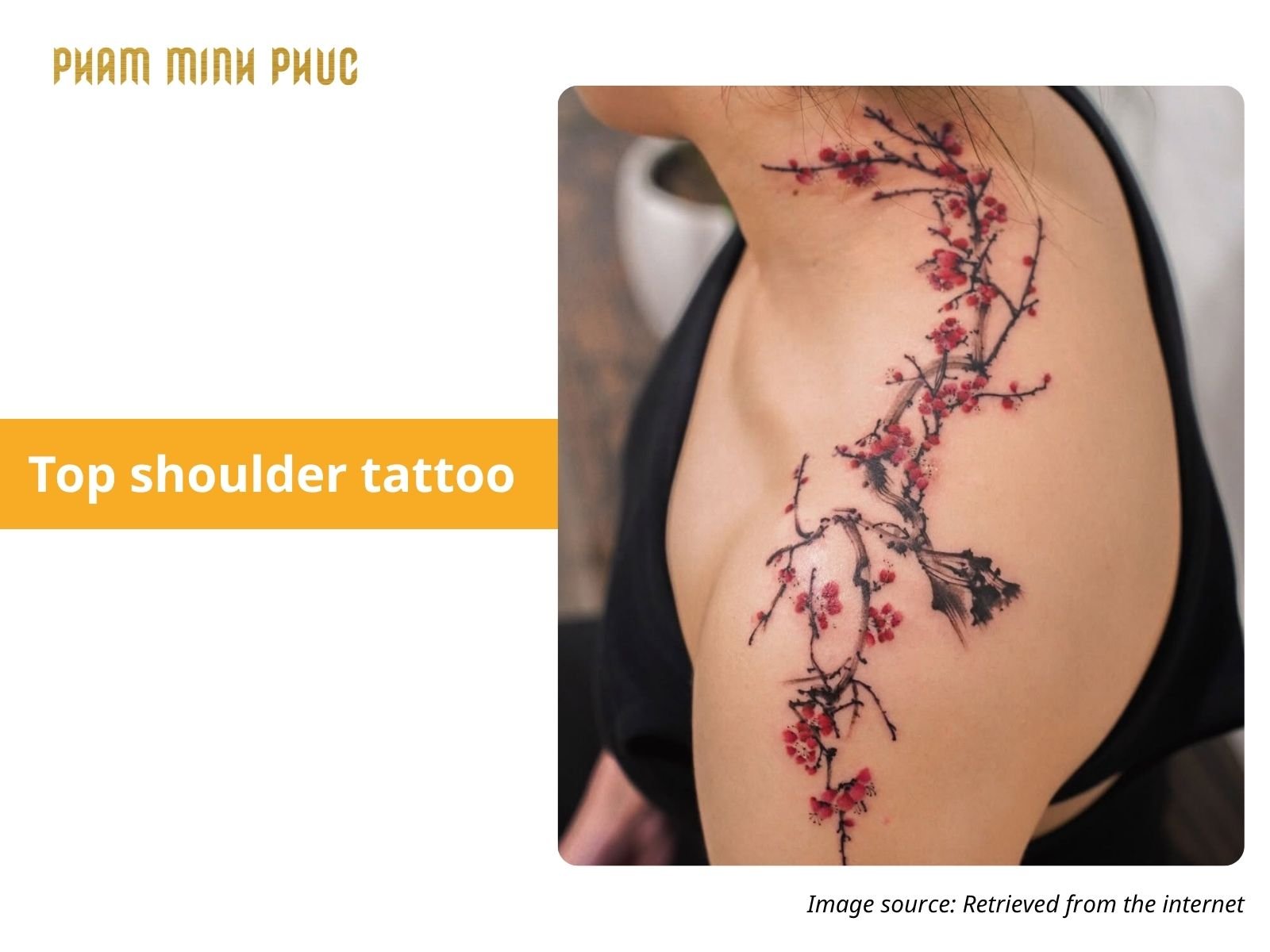
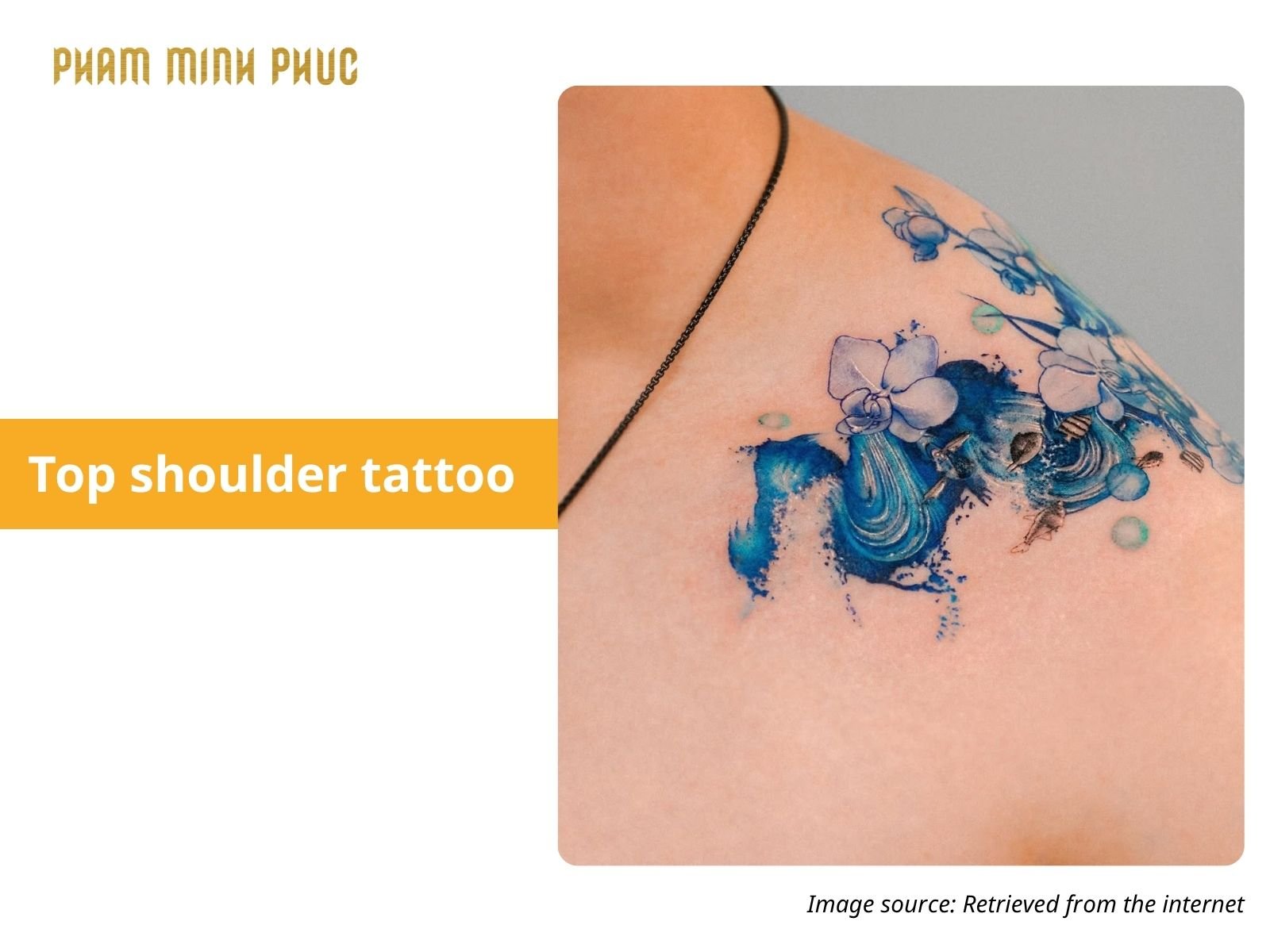
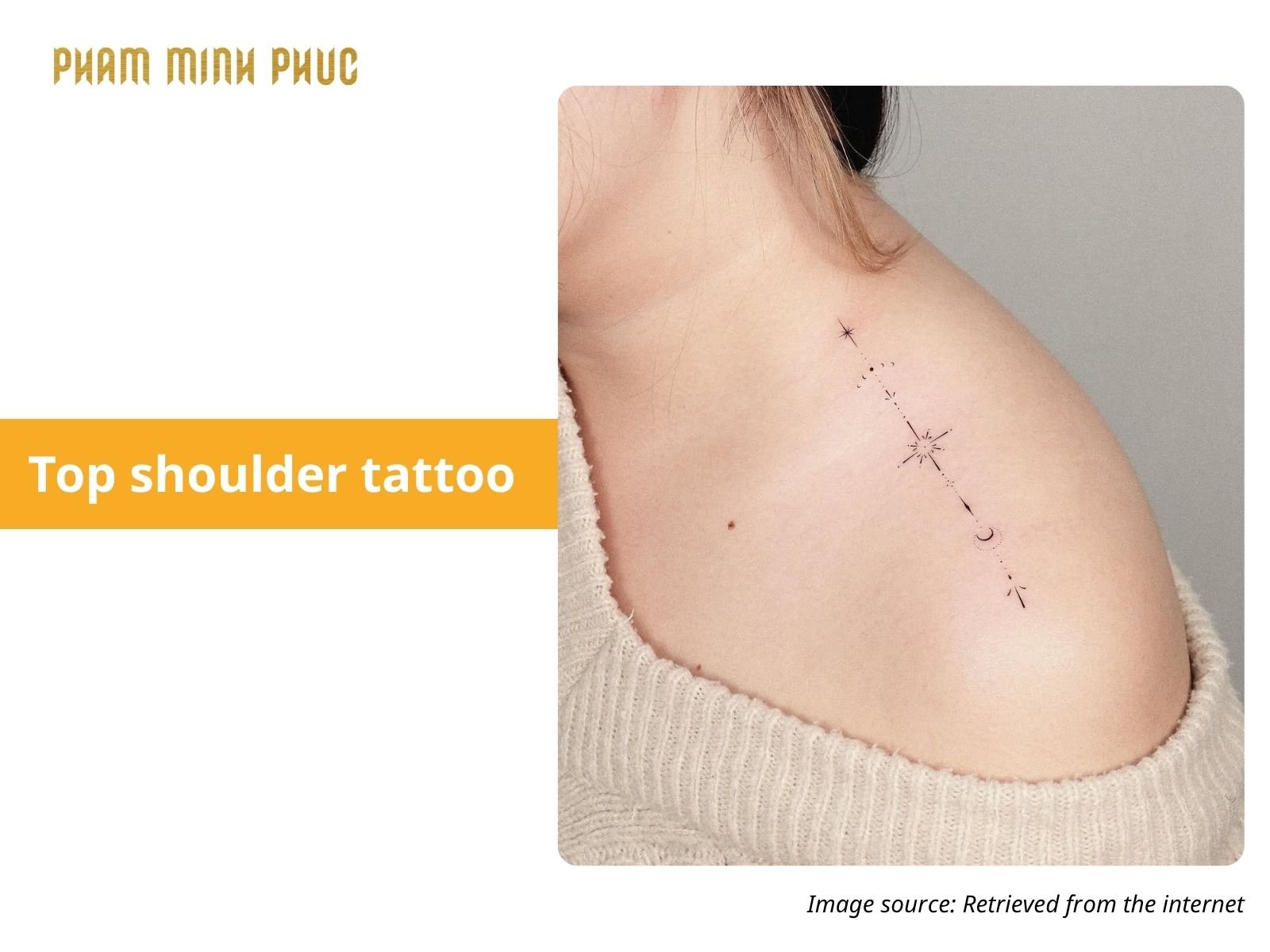
The top of the shoulder creates a narrow curved path between the base of your neck and the outer shoulder. This placement works especially well for artwork that travels across the body rather than staying centered in one spot. Florals, vines, ornamental lines, short script, birds, and celestial elements can follow that direction without requiring much vertical space.

A tattoo here can remain small and isolated, although the area becomes more interesting when the design uses its natural connections. It can move toward the collarbone, continue onto the shoulder cap, climb slightly toward the neck, or travel backward toward the upper back. Visibility of this placement changes considerably with clothing. Sleeveless tops and wider necklines may expose most of the tattoo, while a standard T-shirt can cover much of it.
This specific zone faces the highest fading risk on the entire human body because the skin receives direct, ninety-degree UV radiation from the sun. You must apply SPF 50+ sunscreen religiously to prevent light colors from breaking down rapidly.
Front Shoulder Tattoo Placement
A front shoulder tattoo sits where the deltoid approaches the upper chest and collarbone, so the artwork is naturally visible from the front of your body. One advantage of this placement is that you can usually see the tattoo yourself without using a mirror.
Florals, ornamental work, script, small portraits, symbolic designs, and compositions that curve toward the chest can all fit naturally here. The design may stay on the front deltoid or move inward toward the clavicle and upper chest. For symmetrical or decorative pieces, the neckline and collarbone can be useful visual references, but the stencil still needs to follow your own shoulder shape rather than a generic body template.
The pain level of front shoulder remains generally manageable but intensifies significantly as the needle approaches the bony ridge of the clavicle.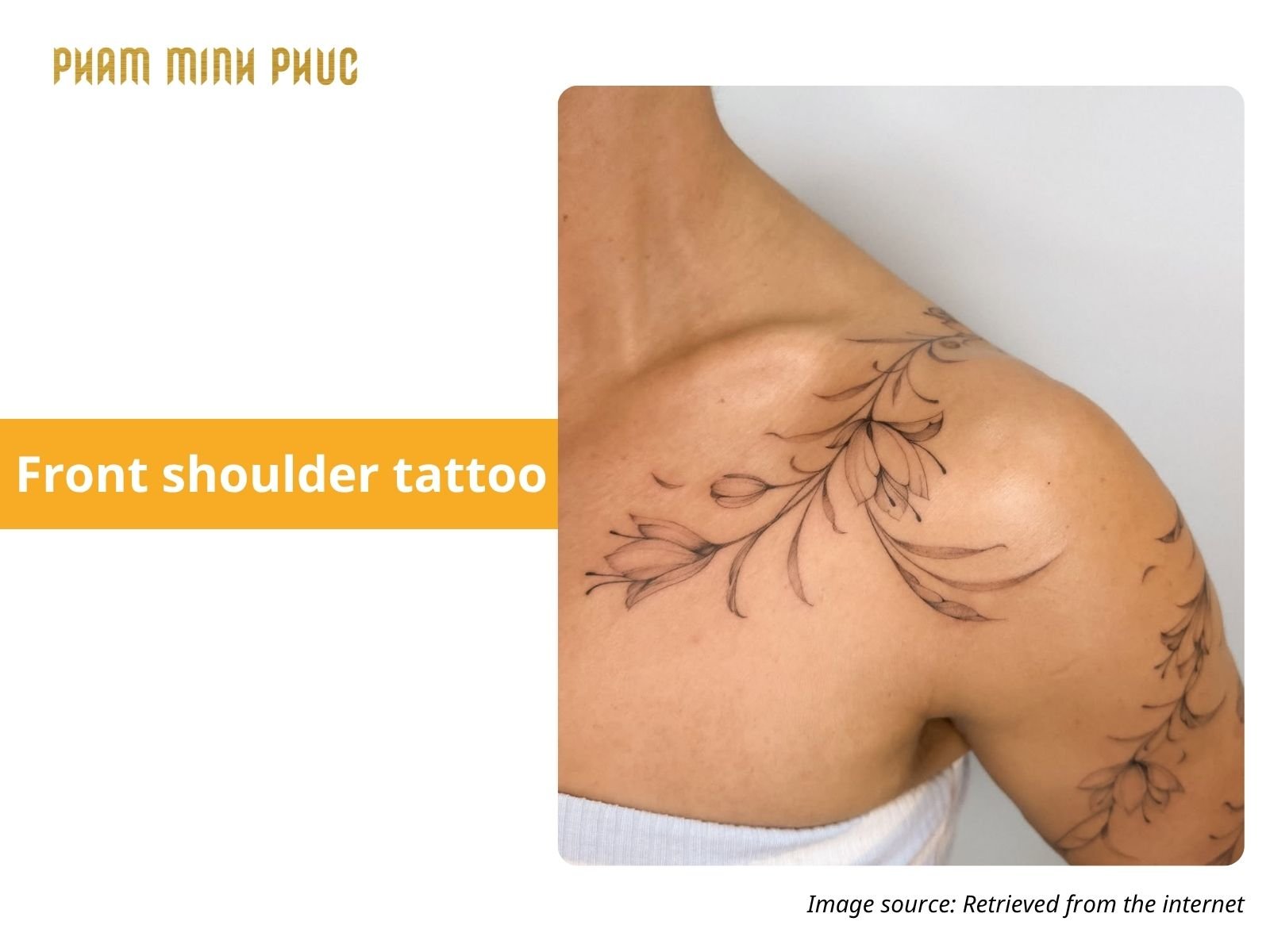
Your daily routine matters as well. A seatbelt often crosses the front shoulder, so check whether it lands directly over the planned tattoo. You must use a soft seatbelt pad or clip the belt loosely to prevent the abrasive fabric from ripping the protective scabs off your fresh tattoo. During early healing, repeated pressure or rubbing in that exact spot can make the area uncomfortable.If you think you may add a chest piece later, it is worth considering that connection before the first tattoo is placed. The direction of the original composition can make later expansion feel intentional rather than added on.
Back Shoulder Tattoo Placement
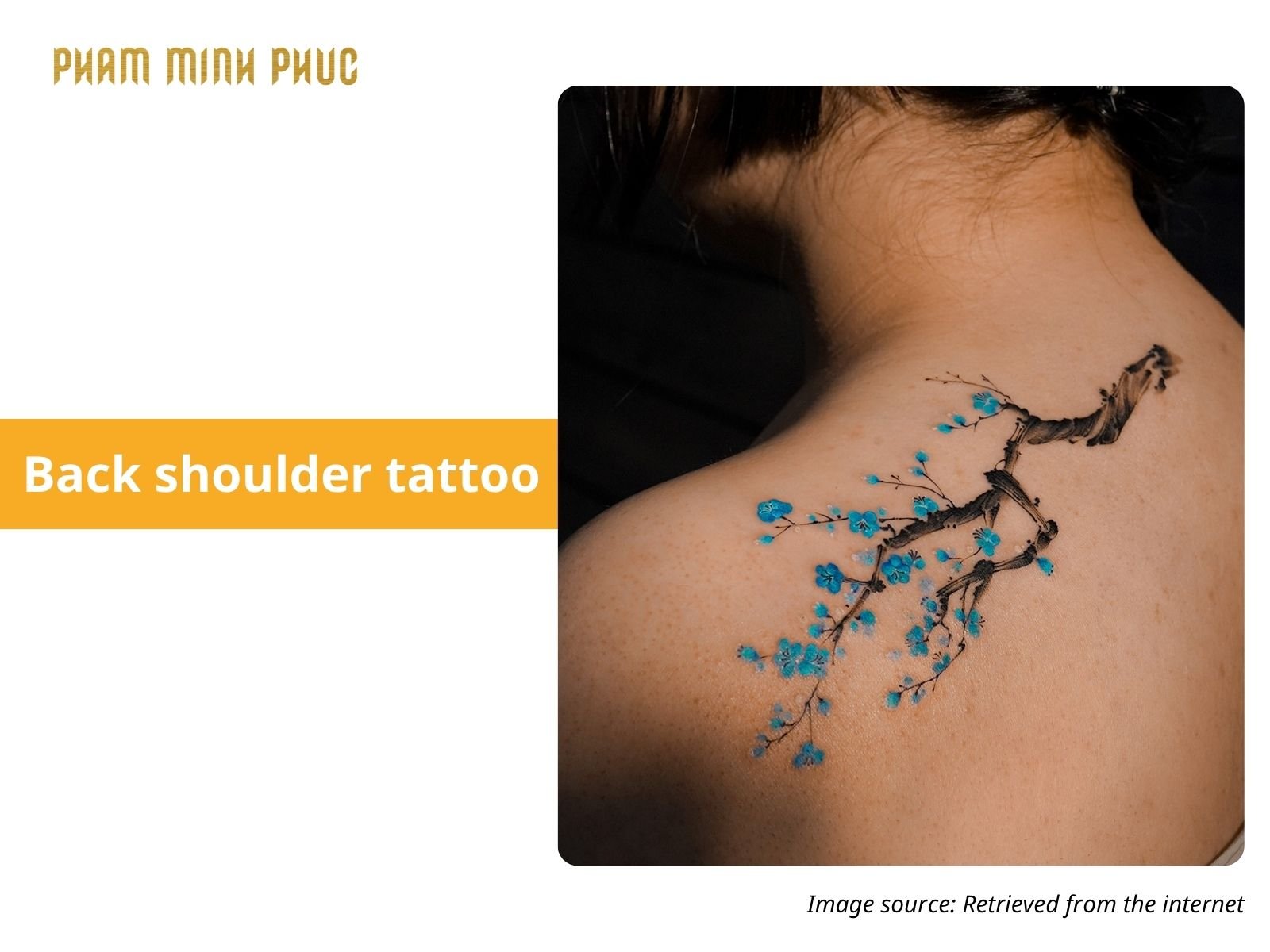
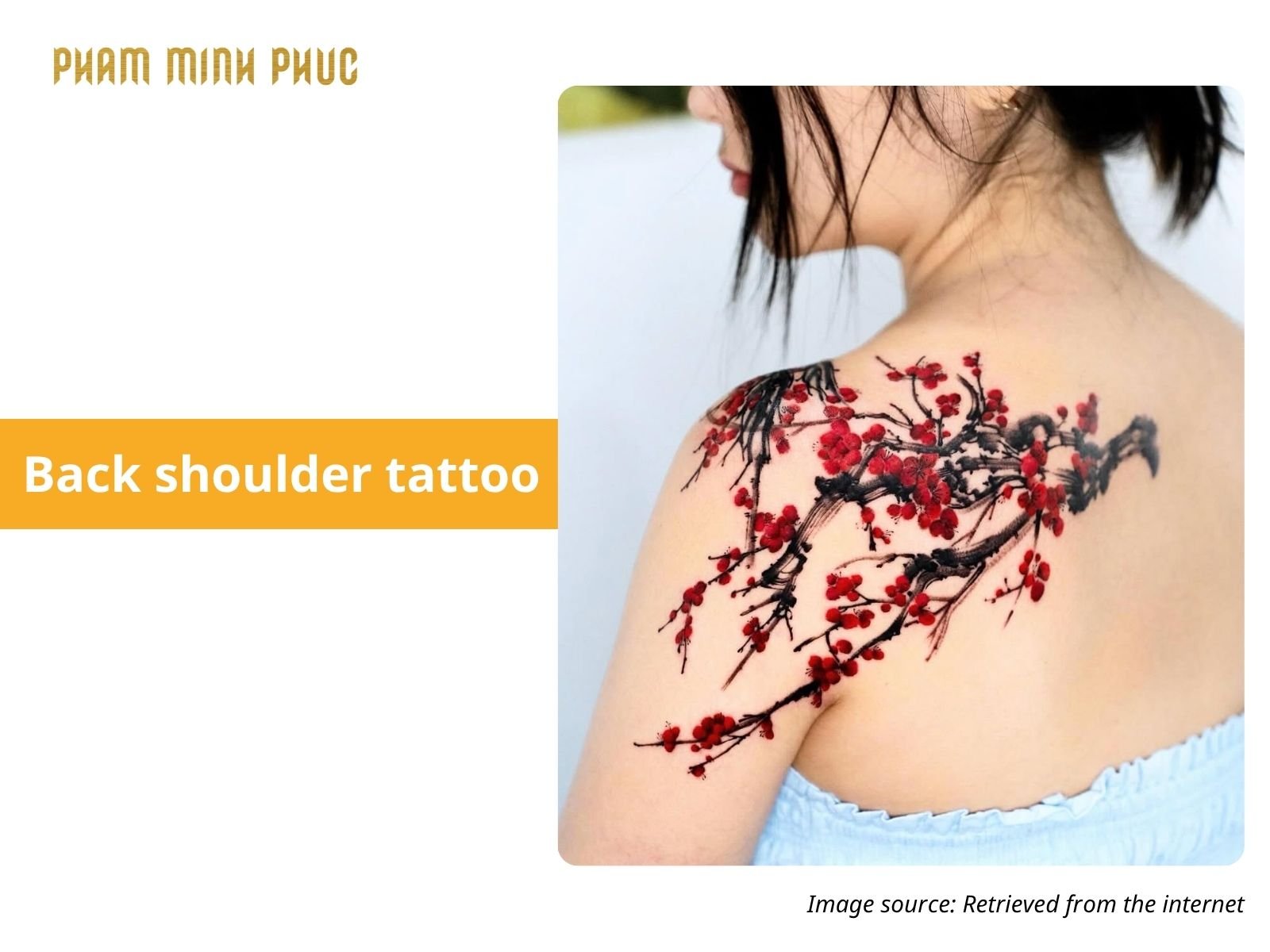
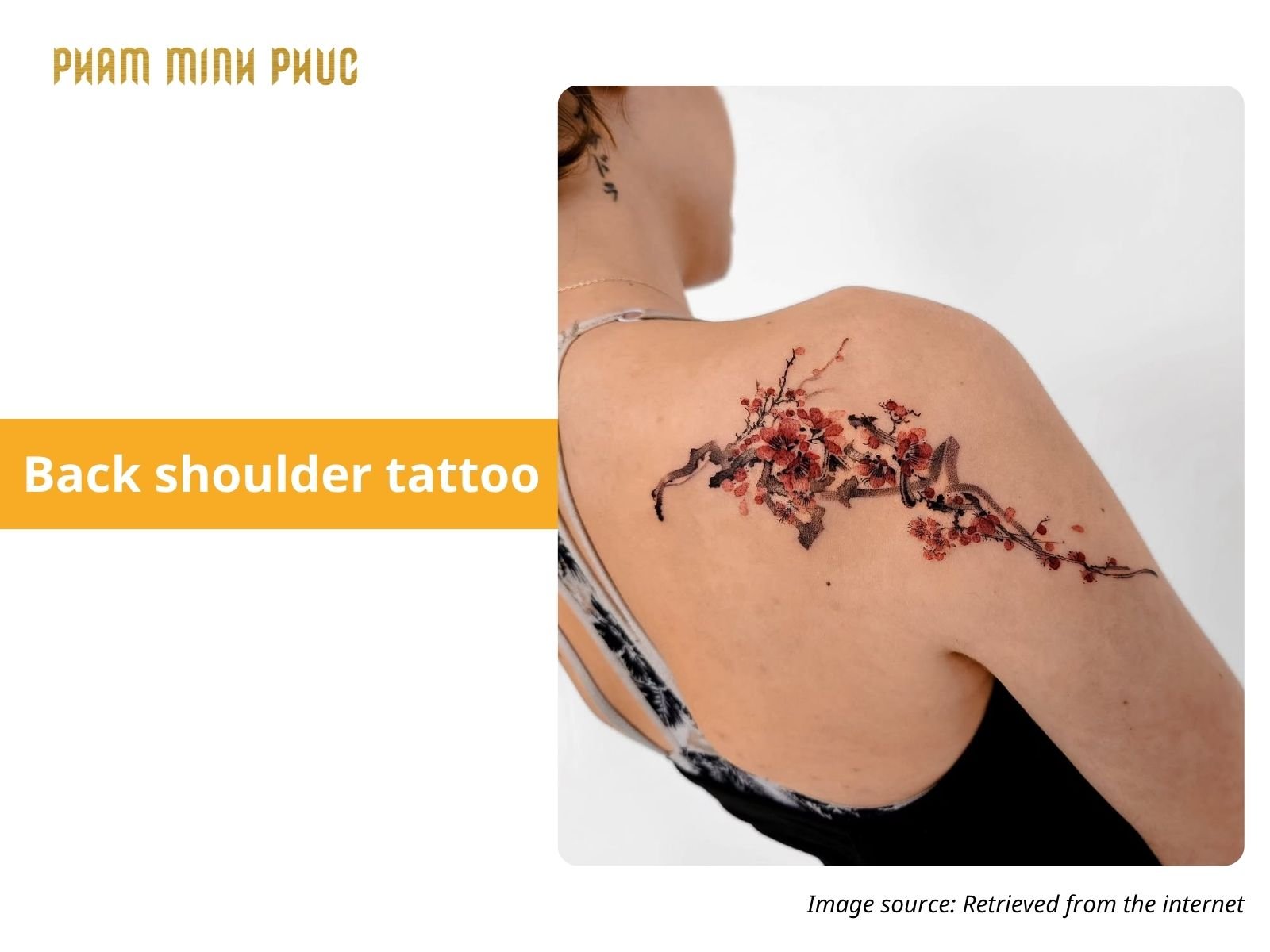
The back shoulder gives you a broader posterior surface that can support larger artwork while remaining easy to cover with everyday clothing. It sits behind the shoulder cap and transitions toward the upper back. This gives medium and large designs enough space without automatically turning them into full back pieces.
Animals, portraits, angel imagery, geometric compositions, florals, and illustrative work can all use this area effectively.

A back-shoulder tattoo can remain completely standalone. It can also become part of a larger composition that travels toward the shoulder blade, upper back, or back of the upper arm. For people who prefer more privacy, this is one of the easier shoulder placements to conceal under standard shirts.
The natural shielding from sun exposure makes this an excellent choice for preserving color-intensive designs for the long term.
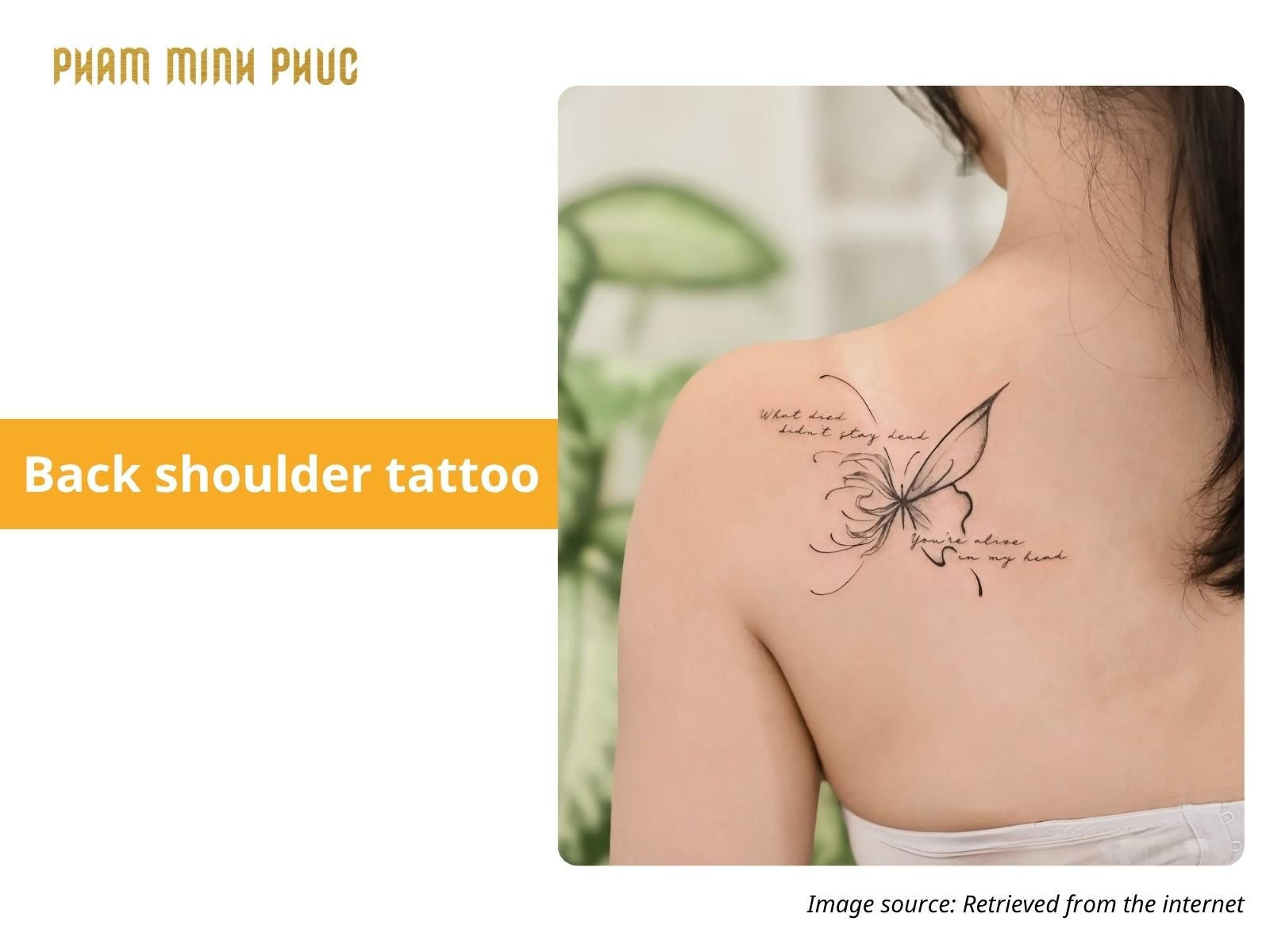
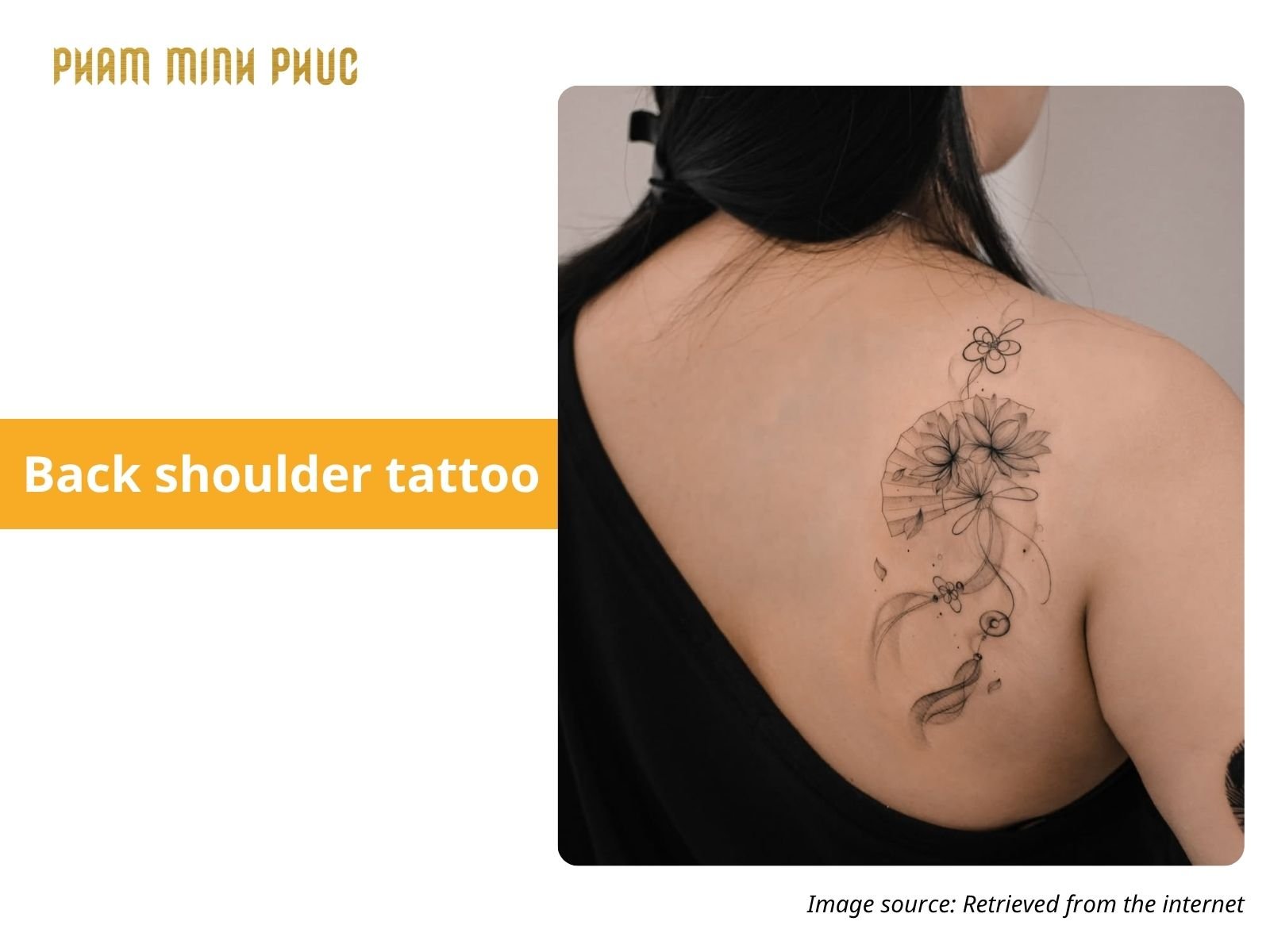
When I plan a larger back-shoulder tattoo, I check whether the main subject remains clear when the arm rests naturally at the side. I make sure that important details remain visible around the curve of the shoulder. The stencil may look balanced when the arm moves away from the body, but the final tattoo should still look clear when the arm returns to its natural position.
Shoulder Blade Tattoo Placement
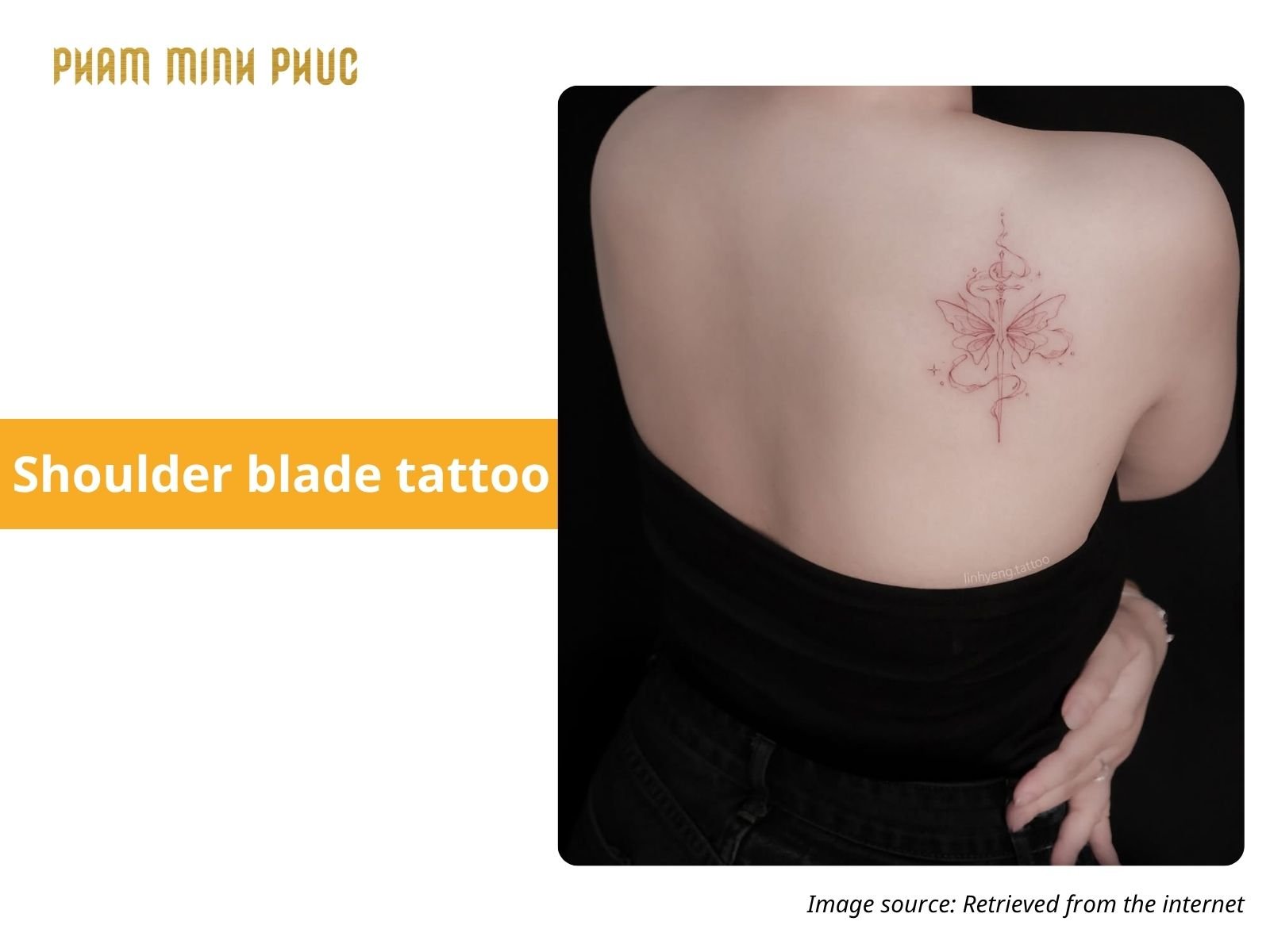
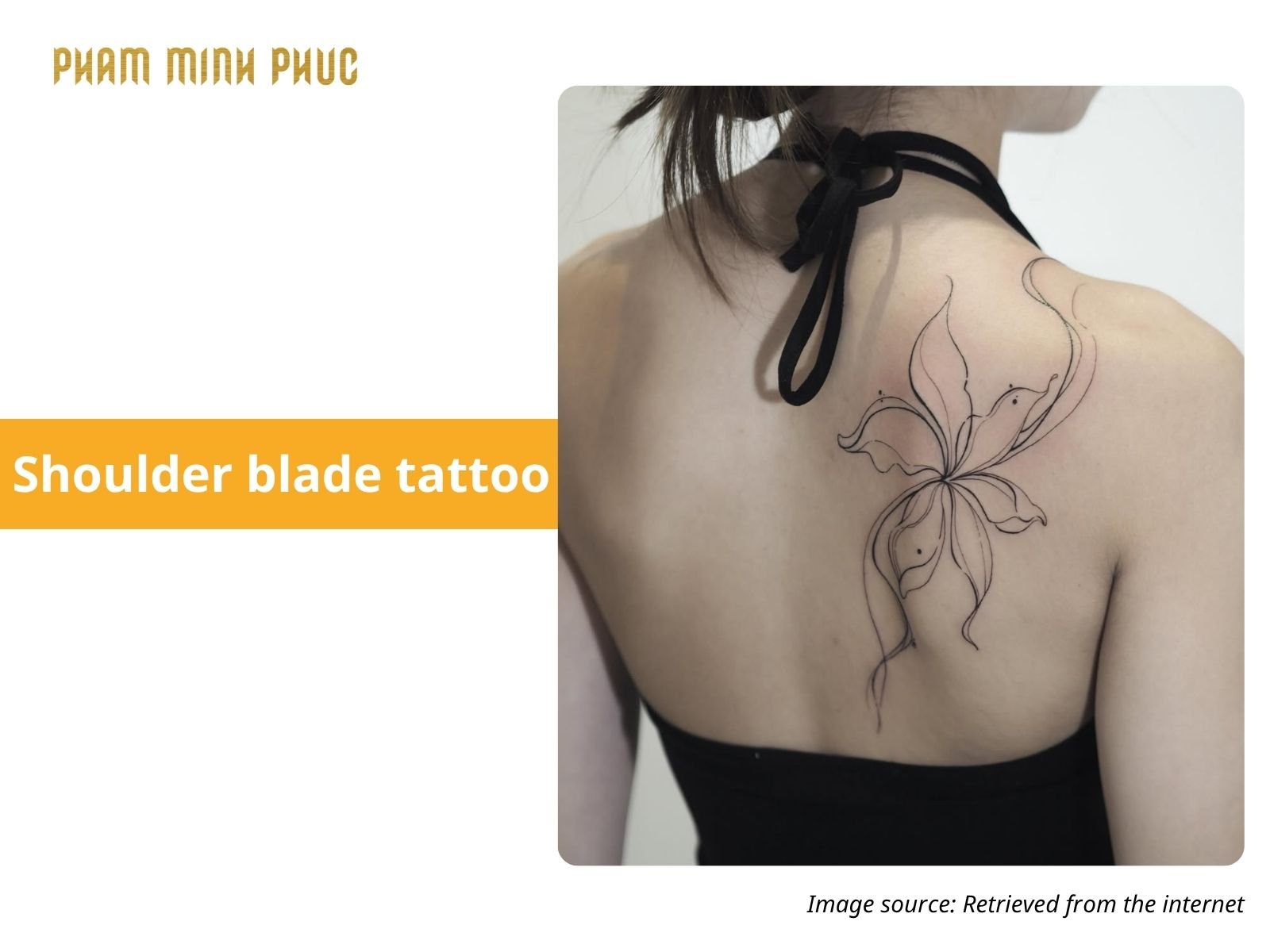
A shoulder-blade tattoo gives you a broad posterior area for a standalone design or a piece that may later connect with the rest of your back. Compared with the shoulder cap, the scapular area offers more height and width for artwork that needs a clearer central shape. Tattoos placed here also strongly resist distortion from natural skin aging or significant weight fluctuations, ensuring the artwork remains crisp for decades.
Common choices include:
- Mandala and ornamental designs that benefit from a centered composition.
- Florals and botanical artwork that can spread vertically or diagonally.
- Animals and portraits that need more space around the focal subject.
- Traditional and illustrative pieces that work well on a broader posterior canvas.
The tattoo can sit directly over one shoulder blade or shift toward the spine, outer shoulder, or upper back depending on the composition. This is also a practical placement if you want the tattoo hidden under most shirts but visible with open-back or sleeveless clothing. The shoulder blade moves as your arm lifts and rotates, so stencil placement should be checked with your arm relaxed before the final position is approved.
You will experience the scapula bone echo during the procedure, where the tattoo machine vibrating across the thin skin sends deep, rattling tremors throughout your ribs and spine. This internal vibration causes rapid physical exhaustion despite the surface pain remaining moderate.

Collarbone
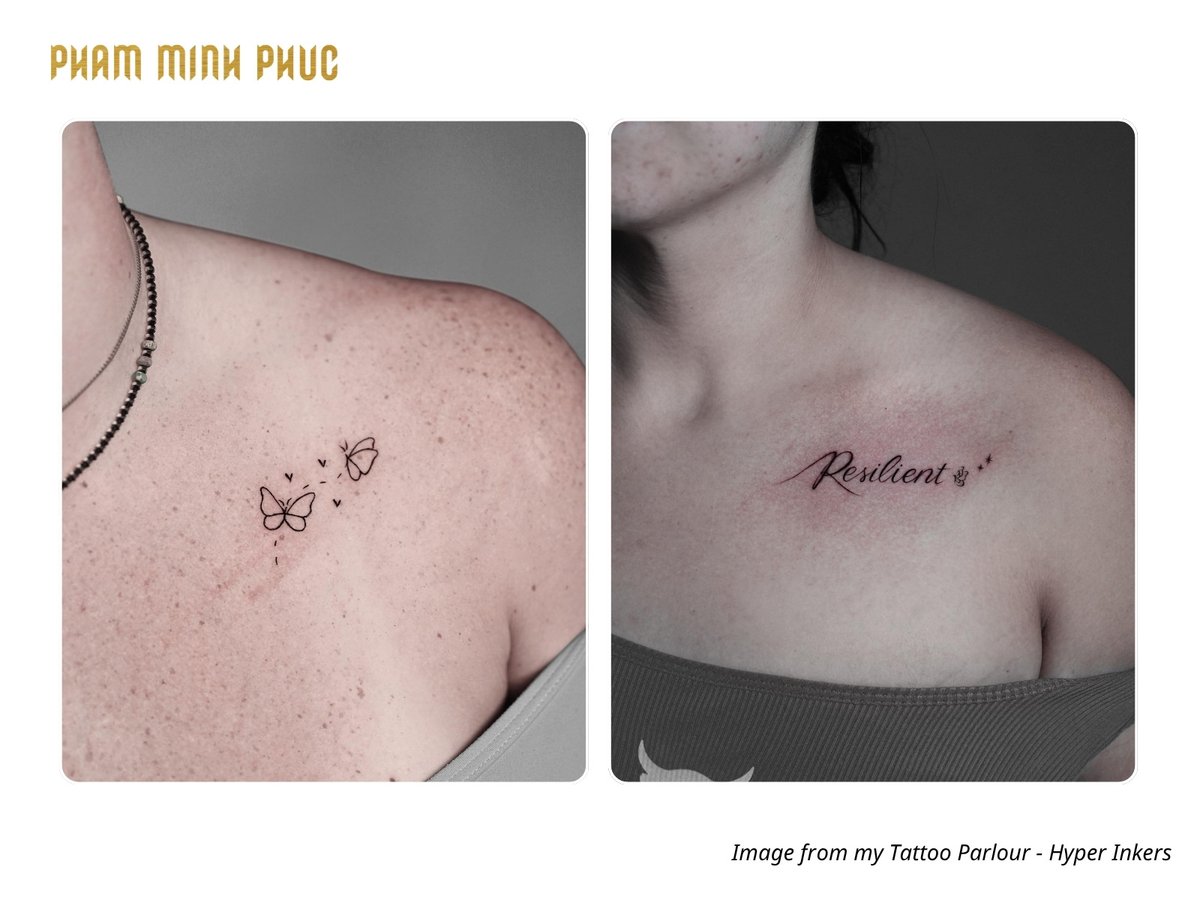
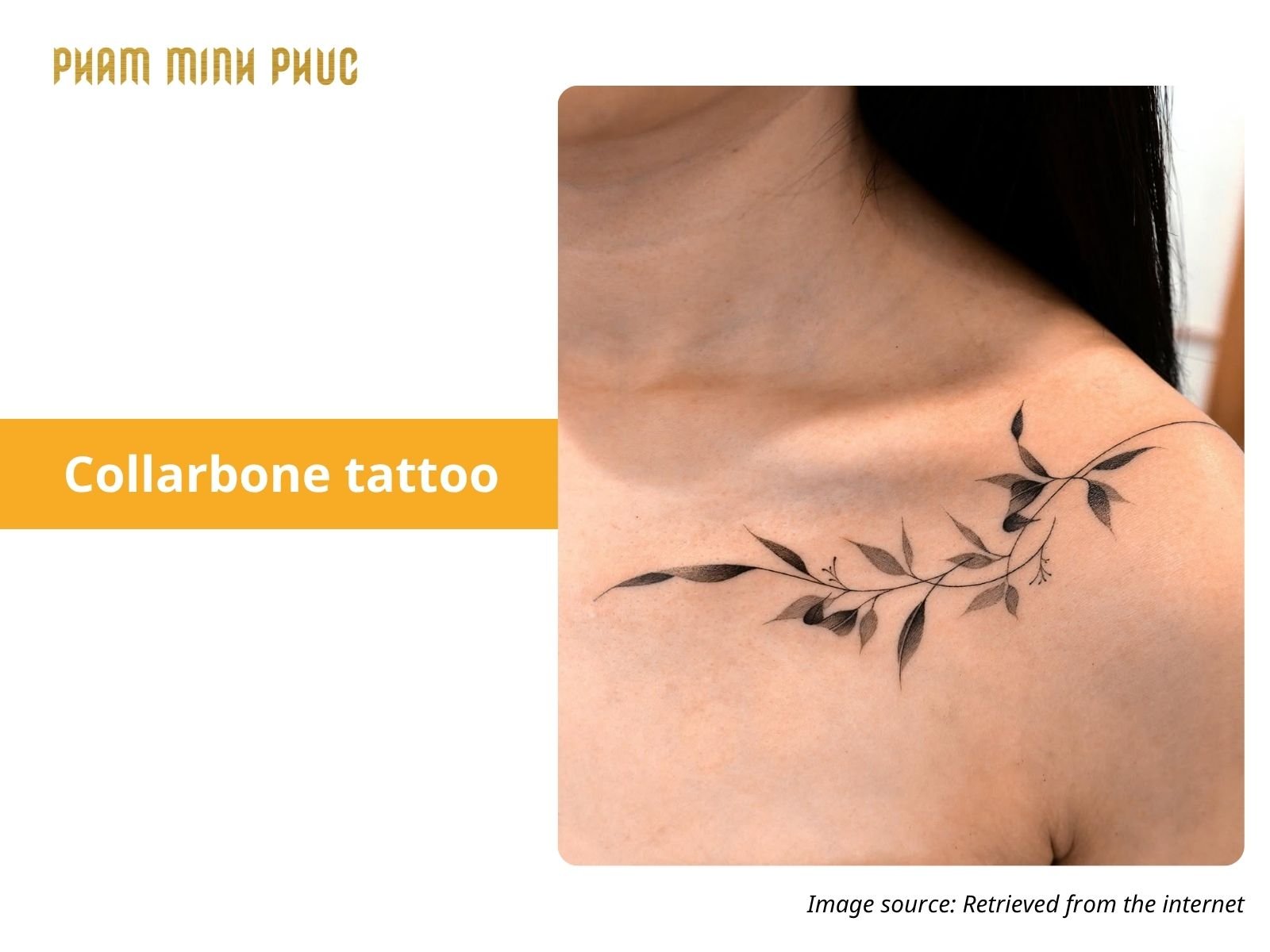
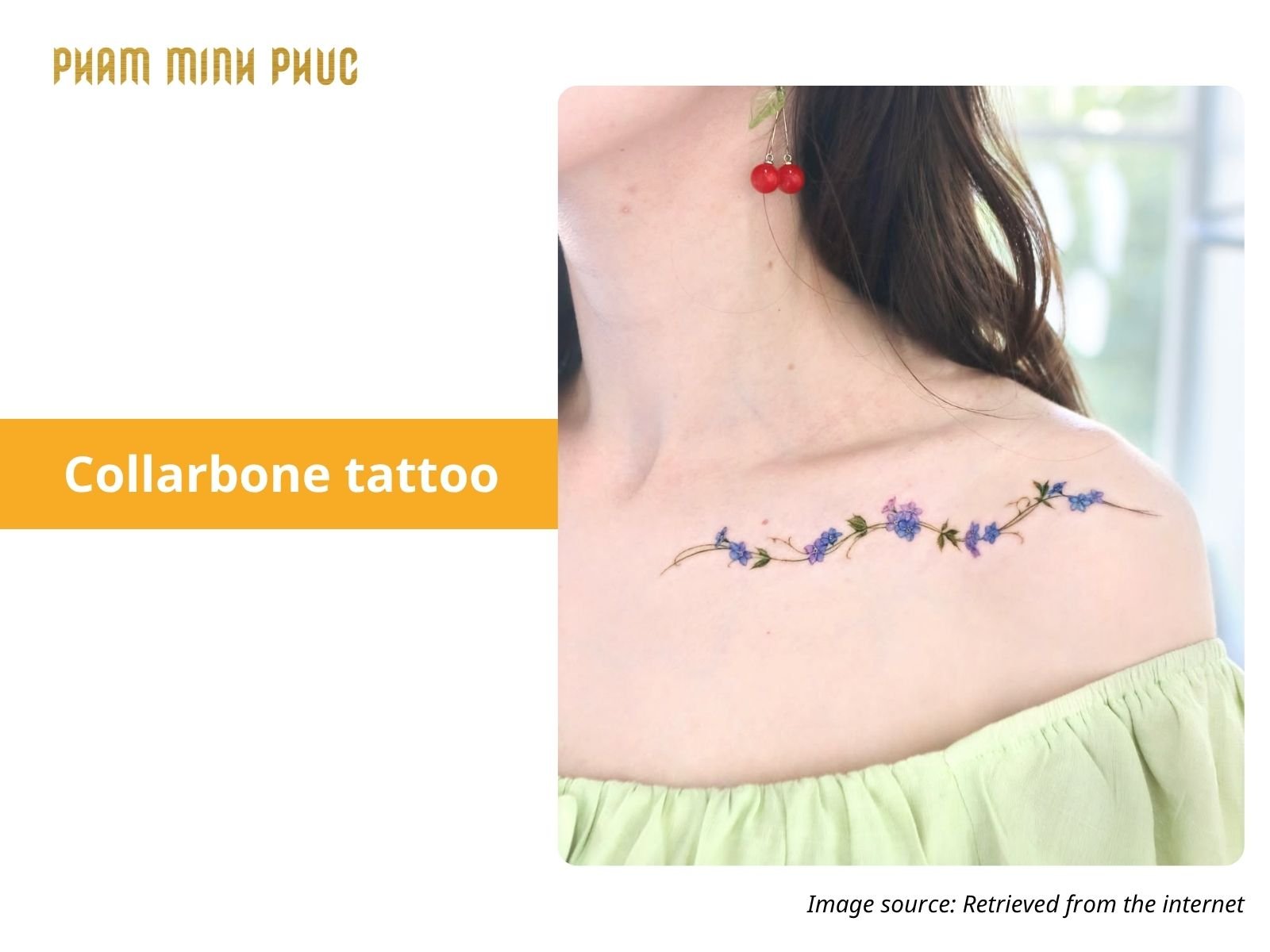
A collarbone tattoo follows the clavicle line and emphasizes the transition between your neck, chest, and front shoulder. This elegant location draws immediate attention to the neckline and serves as a highly refined statement piece. The extreme thinness of the skin and the total lack of fat padding over the bone generate a sharp, intense sensation, making it one of the most painful placements in the shoulder region.
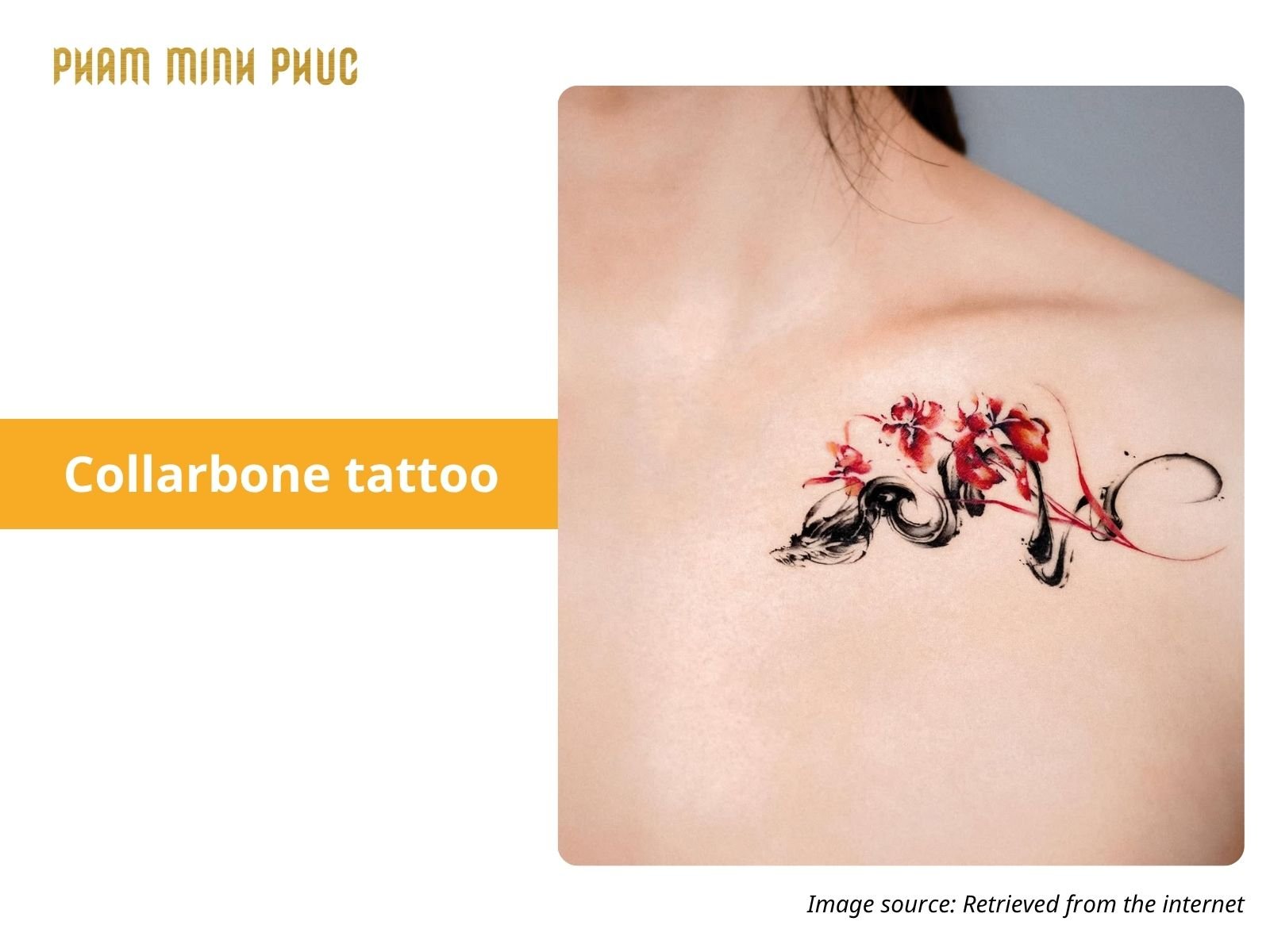
Because this is a narrow area, designs with horizontal, diagonal, or gently curved movement tend to fit more naturally than compositions that require a wide central canvas. Fine-line florals, script, Roman numerals, ornamental details, celestial symbols, and other linear designs can all work well here.
The tattoo does not need to sit directly on top of the clavicle. It can move slightly above or below the bone depending on the design and whether you want it to connect more strongly with the shoulder or upper chest.
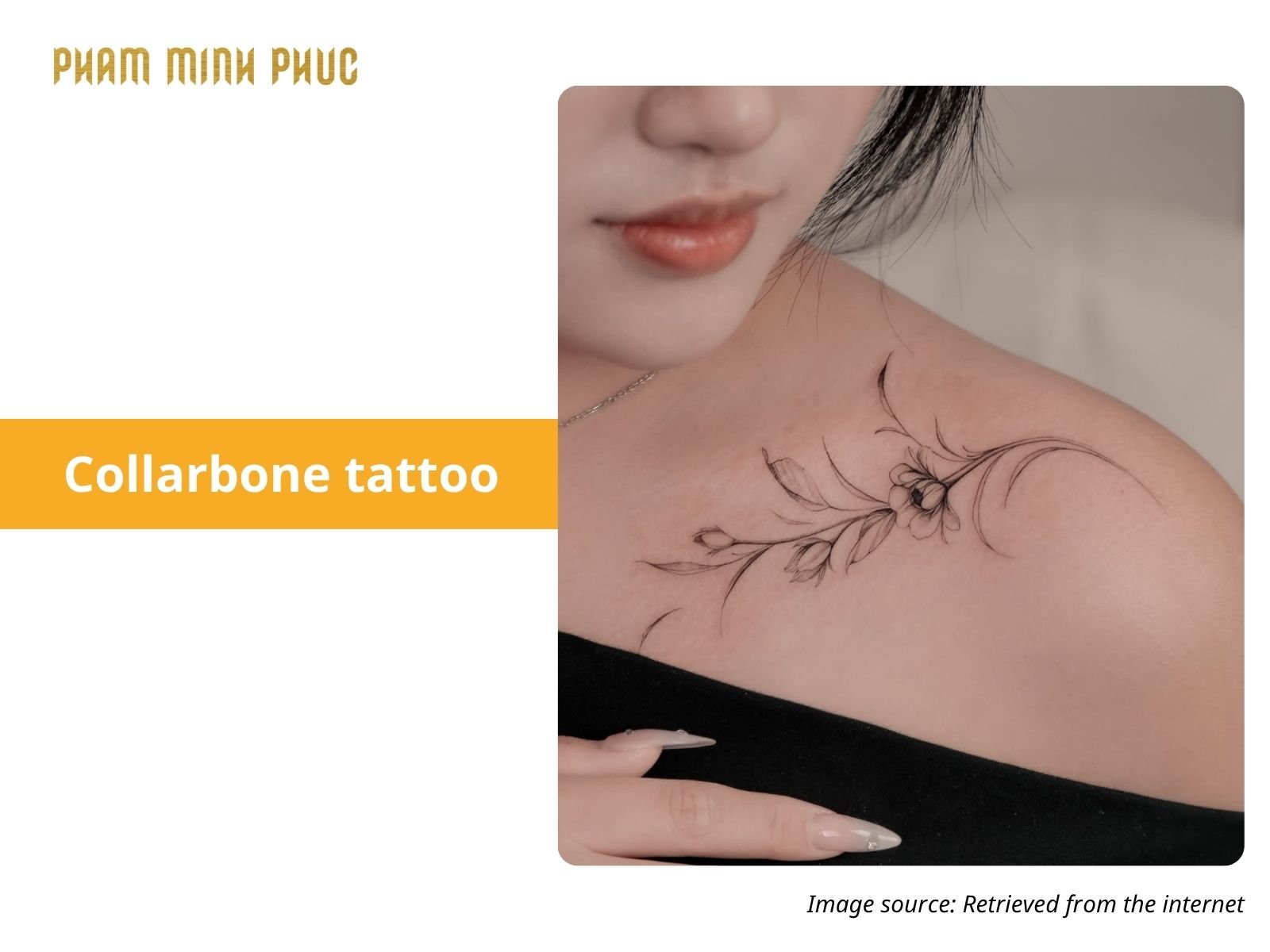
For longer compositions, the collarbone often works best as a visual bridge rather than as an isolated strip of artwork. Your neckline will affect how much of the tattoo is normally visible, so checking the stencil with clothing similar to what you usually wear can help you decide the final height. Moreover you have to maintain complete stillness as the needle sweeps directly across the hard clavicle, as any sudden flinch will cause a permanent blowout.
How Painful Is a Shoulder Tattoo?
You can expect the fleshy outer shoulder to be around 3–4/10 in pain, while areas closer to bone such as the top shoulder, shoulder blade, and collarbone can feel more sensitive.
The outer deltoid generally feels more manageable because there is more muscle between the skin and underlying bone. As the tattoo approaches the clavicle or moves directly across a bony area, the sensation may become sharper and the machine vibration more noticeable.
Size and session length matter too.
- A small tattoo in a sensitive spot may still be manageable because the session is short.
- A large shoulder cap or back-shoulder piece can become tiring even when the area itself is not extremely painful, especially after repeated lining, shading, and detail work.
Your body position can also influence comfort. Depending on the placement, you may need to sit upright, lean forward, or hold your arm in one position for part of the session.
What Tattoo Designs Work Well on the Shoulder?
Tattoo designs that work well on the shoulder usually follow the rounded shape of the deltoid, use the direction of the collarbone or shoulder line, or connect naturally with the arm, chest, or back.
- Japanese-inspired compositions are especially adaptable because waves, wind bars, clouds, florals, and animals can move around the shoulder without forcing the viewer to see the entire design from one angle.
- Portraits and realistic subjects can also work well, particularly on the shoulder cap and back shoulder. The important part is deciding where the main focal point should sit before building background elements around it.
- Fine-line florals, vines, script, and ornamental work often suit the front shoulder, top shoulder, and collarbone because these designs can follow the neckline or travel diagonally across the upper body.
- Geometric work needs a different approach. A shape that is perfectly circular or symmetrical on paper may require small adjustments once it wraps over a curved shoulder. That does not mean geometric tattoos should be avoided, only that the stencil should be evaluated on the body rather than judged from the reference image alone.
The shoulder also works well as a transition zone for larger compositions. Artwork can move downward into the arm, inward toward the chest, or backward across the upper back without an abrupt visual stop.
How to Choose the Right Shoulder Tattoo Placement?
You should choose a shoulder tattoo placement based on your design’s size and direction, how visible you want it to be, and whether you want the tattoo to stay standalone or connect with your arm, chest, or back later.
- Start with the shape of the artwork. Rounded or wraparound compositions often suit the shoulder cap, while narrow directional designs may fit the top shoulder, front shoulder, or collarbone more naturally.
- Then think about the viewing angle. A shoulder-cap tattoo can appear from the front, side, and back at the same time. A shoulder-blade tattoo is mainly viewed from behind, while the front shoulder becomes part of the body’s frontal silhouette.
- Clothing is another practical factor. Standard T-shirts usually cover much of the back shoulder and shoulder blade. Sleeveless tops or wider necklines reveal more of the front, top, and outer shoulder.
- Future expansion is especially important in this area because the shoulder sits between several major tattoo zones. If you already have artwork on your arm, chest, or upper back, the new placement should consider how those areas may eventually connect.
Women often choose the front shoulder, top shoulder, shoulder blade, and collarbone for floral, ornamental, fine-line, and decorative designs. Men often choose the shoulder cap, outer deltoid, front shoulder, and back shoulder for animals, realism, Japanese-inspired work, lettering, and larger compositions. These are common preferences, not placement rules.
If you are still comparing different body areas, my full tattoo placement guide can help you compare visibility, size, pain, and future expansion.
How Can a Shoulder Tattoo Accentuate Muscle Definition?
A shoulder tattoo can accentuate muscle definition when the major lines of the design follow the natural outline and direction of your deltoid. On the shoulder cap, curved borders can trace the outer edge of the muscle instead of cutting straight across it. This often makes the artwork feel more integrated with the upper arm.
Directional elements such as Japanese waves, flames, feathers, ornamental curves, or animal shapes can reinforce that rounded form when their movement follows the anatomy underneath.
A tattoo does not literally make the muscle larger. Thoughtful placement simply makes the existing structure more visually noticeable. If muscle definition matters to you, look at the stencil while your arm is relaxed rather than flexed. That is the position in which the tattoo will be seen most of the time.
What Should You Wear for a Shoulder Tattoo Appointment?
You should wear a loose top that gives your artist easy access to the shoulder and does not press tightly against the tattoo afterward.
- For a shoulder-cap or outer-deltoid tattoo, a sleeveless shirt or loose T-shirt usually provides enough access.
- Front-shoulder and collarbone tattoos may be easier with a loose button-up shirt, wide-neck top, or another garment that can be moved aside without pulling across the skin.
If you wear a bra, check whether the strap crosses the planned area. For back-shoulder or shoulder-blade tattoos, clothing should be easy to lower or reposition without dragging fabric over the fresh tattoo.
Also think about what you will wear when leaving the studio. Tight sleeves, rough seams, backpack straps, and other pressure points can become uncomfortable once the skin is freshly tattooed.
How Do You Care for a Shoulder Tattoo?
You care for a shoulder tattoo with the same basic cleaning and moisturizing routine as other tattoos, but clothing, straps, sleeping pressure, and repeated shoulder movement deserve extra attention.
- Loose clothing helps reduce friction. If the tattoo sits under a bra strap, backpack strap, messenger-bag strap, or seatbelt, try to reduce unnecessary rubbing while the skin is still sensitive. Front-shoulder tattoos are more likely to interact with seatbelts, while top and back placements may sit directly beneath backpack straps.
- You do not need to keep your shoulder completely still during healing. Normal movement is part of daily life, but aggressive stretching or repeated motion should be reduced if it pulls uncomfortably on the area.
- Sleeping position is mostly about pressure and comfort. If lying directly on the tattoo makes the skin sore or causes it to stick to clothing or bedding, use another position until that contact becomes comfortable again.
- Clean the tattoo gently with lukewarm water and follow the dressing and moisturizing instructions provided by your artist.
FAQs about Shoulder Tattoo Placement
Is the Shoulder a Good Place for a First Tattoo?
Yes, the outer shoulder can be a good place for a first tattoo because it has more muscle cushioning than many bony areas and can accommodate both small and medium designs. The outer shoulder is around 3–4/10 on the pain framework used in this guide. Areas closer to the collarbone, top shoulder, or shoulder blade may feel more sensitive.
A smaller design can also keep the first session relatively manageable, although session length and your individual pain tolerance still matter.
What Size Works Best for a Shoulder Tattoo?
The best shoulder tattoo size depends on the placement and how much detail the design needs.
Small tattoos work well when they are anchored to a clear point on the front shoulder, top shoulder, collarbone, or back shoulder. Medium designs often suit the shoulder cap because there is enough curved surface for a stronger focal subject. Large compositions can extend into the upper arm, chest, shoulder blade, or upper back. You should avoid shrinking a detailed design only to force it into a smaller area. If facial features, textures, or important lines begin to crowd together, increasing the size or changing the placement usually gives the artwork more space to remain readable.
Does Shoulder Tattoo Placement Have a Meaning?
A shoulder tattoo does not have one universal meaning based only on where it is placed. The symbolism usually comes from the design itself, your reason for choosing it, or the cultural meaning of the subject.
A tattoo on the left shoulder does not automatically mean something different from the same design on the right. If you personally choose one side for symbolic reasons, that meaning belongs to you rather than to a fixed tattoo-placement rule. Shoulder tattoos are sometimes associated with strength, protection, or confidence, but those interpretations are not universal.
Will Lifting Weights or Gaining Muscle Affect a Shoulder Tattoo?
Moderate muscle gain usually does not ruin a shoulder tattoo, although major changes in body size can alter how the design sits on your shoulder. The amount of change depends on the placement, how quickly your body changes, and whether the skin develops stretch marks. If you train regularly, position the stencil while your shoulder is relaxed rather than flexed. The tattoo should look balanced in your normal posture first.
After the session, avoid returning immediately to workouts that repeatedly stretch or rub the fresh area. Follow your artist’s guidance before resuming intense upper-body training.
How Much Does a Shoulder Tattoo Cost?
The cost of a shoulder tattoo depends on its size, detail, style, color, and the amount of tattooing time required. A small front-shoulder or collarbone tattoo usually takes less work than a large shoulder-cap design that wraps around the deltoid or continues onto the arm. Your artist needs to see the final design and placement before giving you an accurate estimate.
If you’re exploring more upper limb tattoo placements, continue with my guides to
The shoulder gives you several distinct placement options, from the rounded shoulder cap to the top, front, back, shoulder blade, and collarbone. Before approving the stencil, check how the design looks from multiple angles with your arm relaxed, and think about whether you may later connect it with your arm, chest, or upper back. If you are planning a shoulder tattoo, I can help you compare these placements and adjust the composition so the design works with your natural shoulder shape instead of only matching a flat reference image.