
Expert Laser Tattoo Removal
In San Antonio, Texas
Do you find a trusted tattoo removal specialist near you to safely remove an old tattoo before getting new ink?
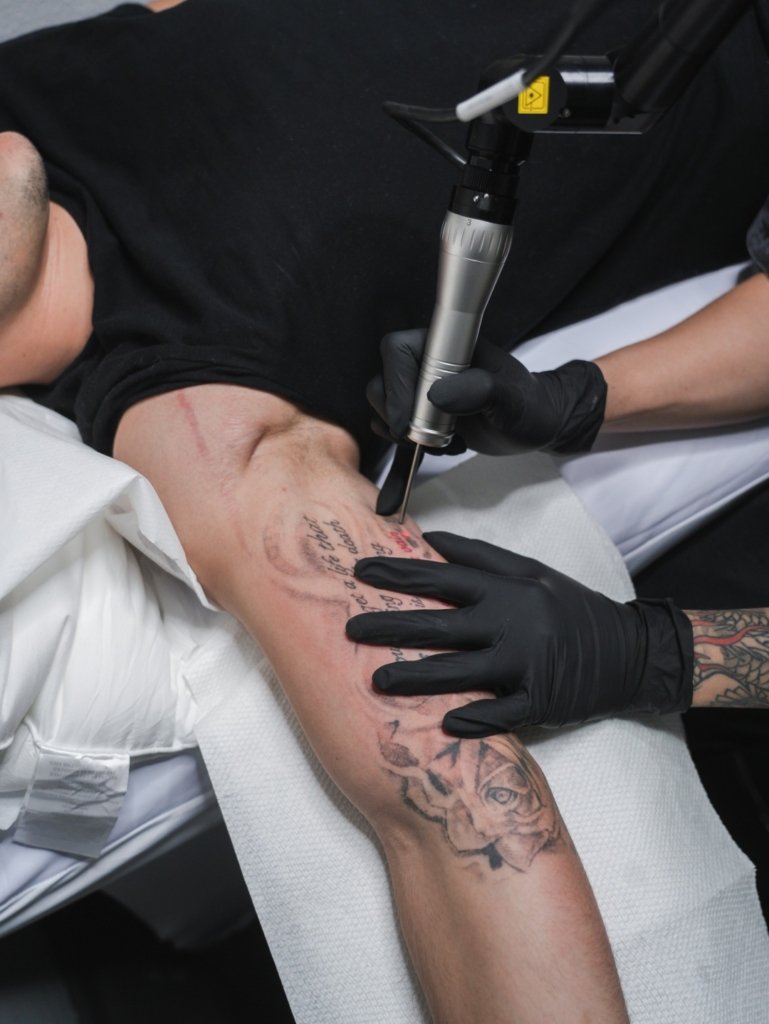
I’m Minh Pham, a professional tattoo artist in San Antonio. After years of working directly with skin and ink, I’ve expanded into laser tattoo removal through advanced training and certified Pico technology.
This approach combines laser expertise with real tattoo experience, helping you safely fade or remove old ink while protecting your skin. It is especially effective if you are preparing for a cover-up and want the cleanest possible result.
Why You Should Choose Me for Tattoo Removal
Certified and Professionally Trained
I have completed rigorous clinical training and obtained professional certifications under strict international standards. This ensures every tattoo removal treatment is performed with precision, safety, and protocols aligned with global medical practices.
Advanced Laser Removal Technology
I use the PicoStar® laser system, engineered and manufactured in Germany by Asclepion, a leader in medical laser technology for over 40 years. This advanced system delivers highly precise energy pulses for effective ink breakdown while maintaining skin safety.
Personalized to Your Skin
I evaluate factors carefully to design a personalized laser removal plan that maximizes fading results while keeping your skin safe.
Proven Results with Professional Care
As a working tattoo artist, I understand ink placement, depth, and composition at a clinical level – not just from a removal technician’s perspective.
Before And After
Tattoo removal Results
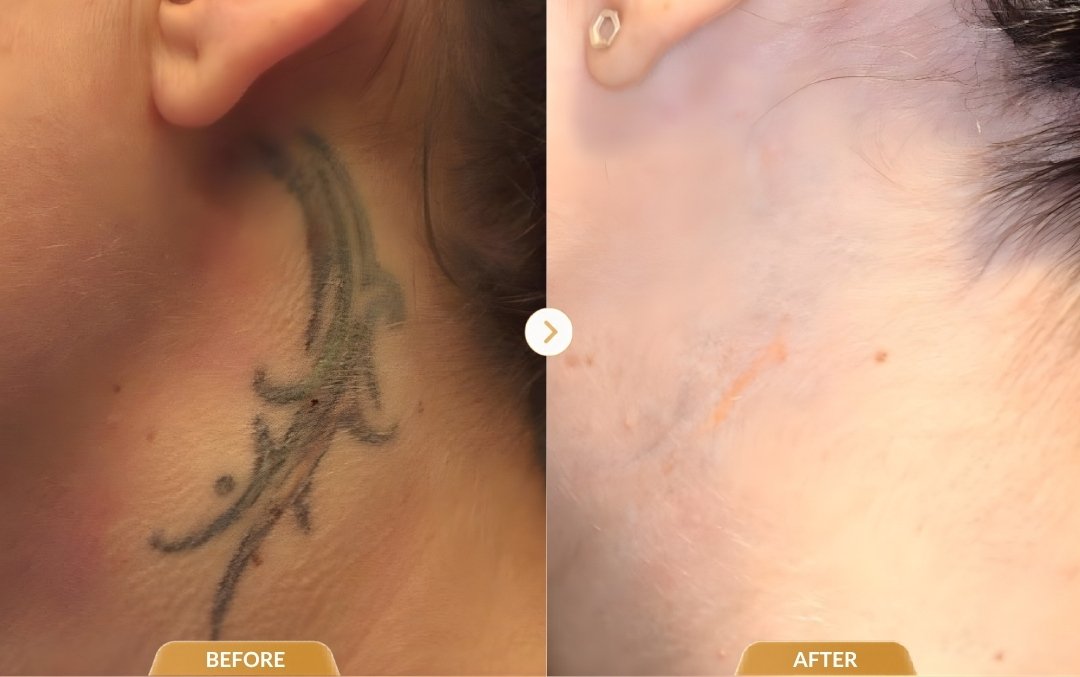
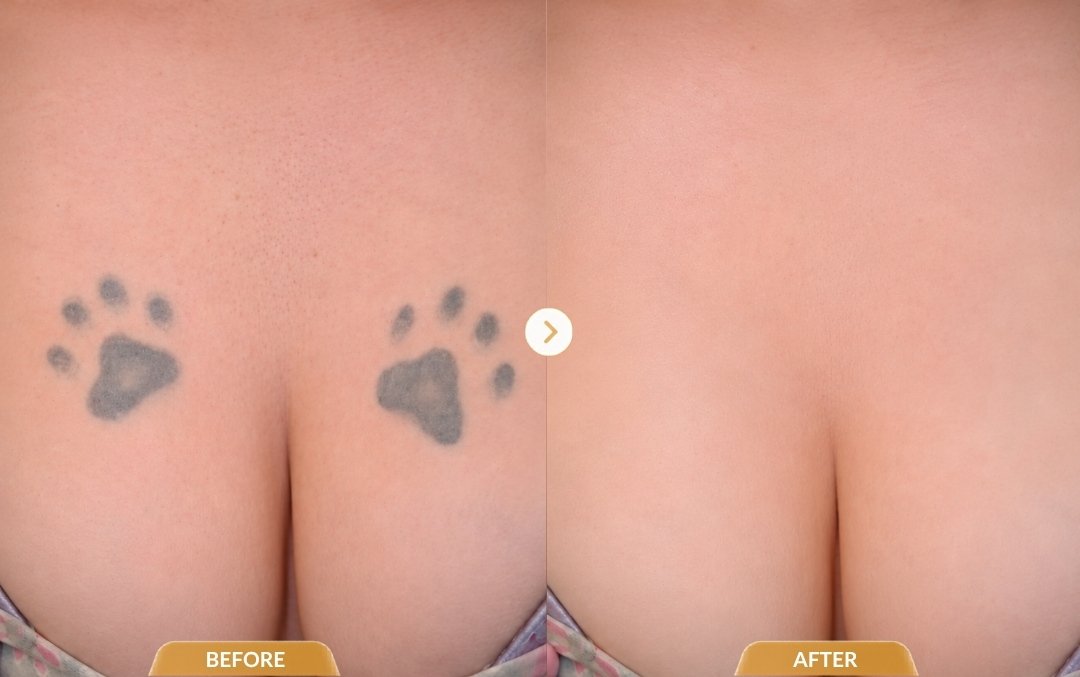
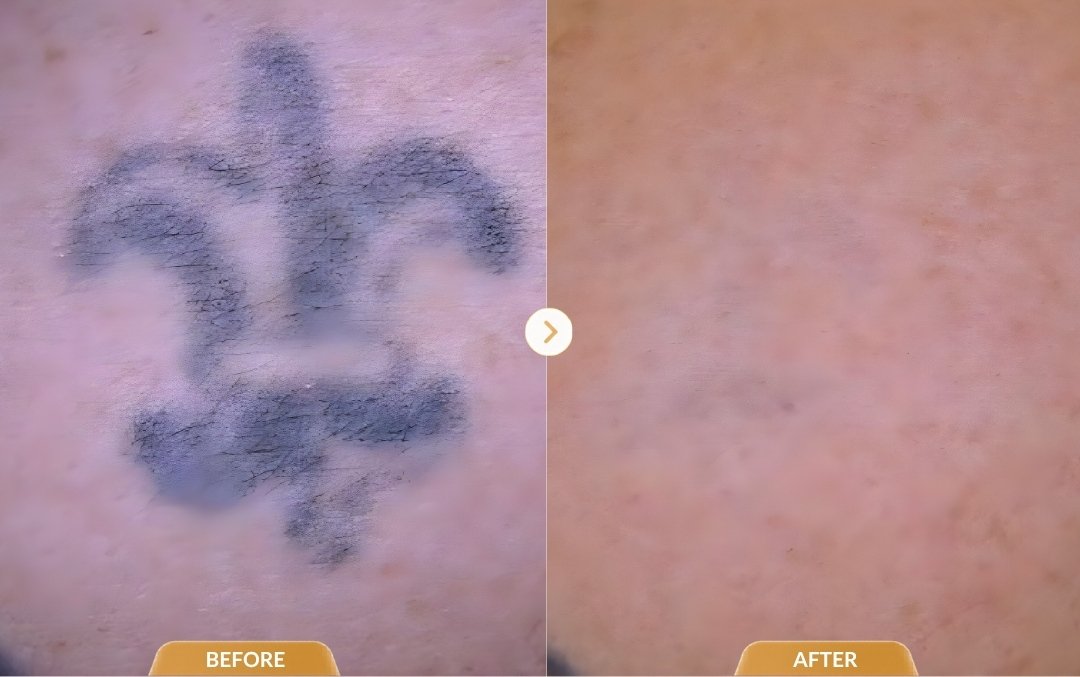
Every tattoo is different. These cases from my San Antonio clients show what realistic fading and removal looks like with the PicoStar® system — no filters, no cherry-picking.
What Are Benefits of Tattoo Removal By PicoStar?
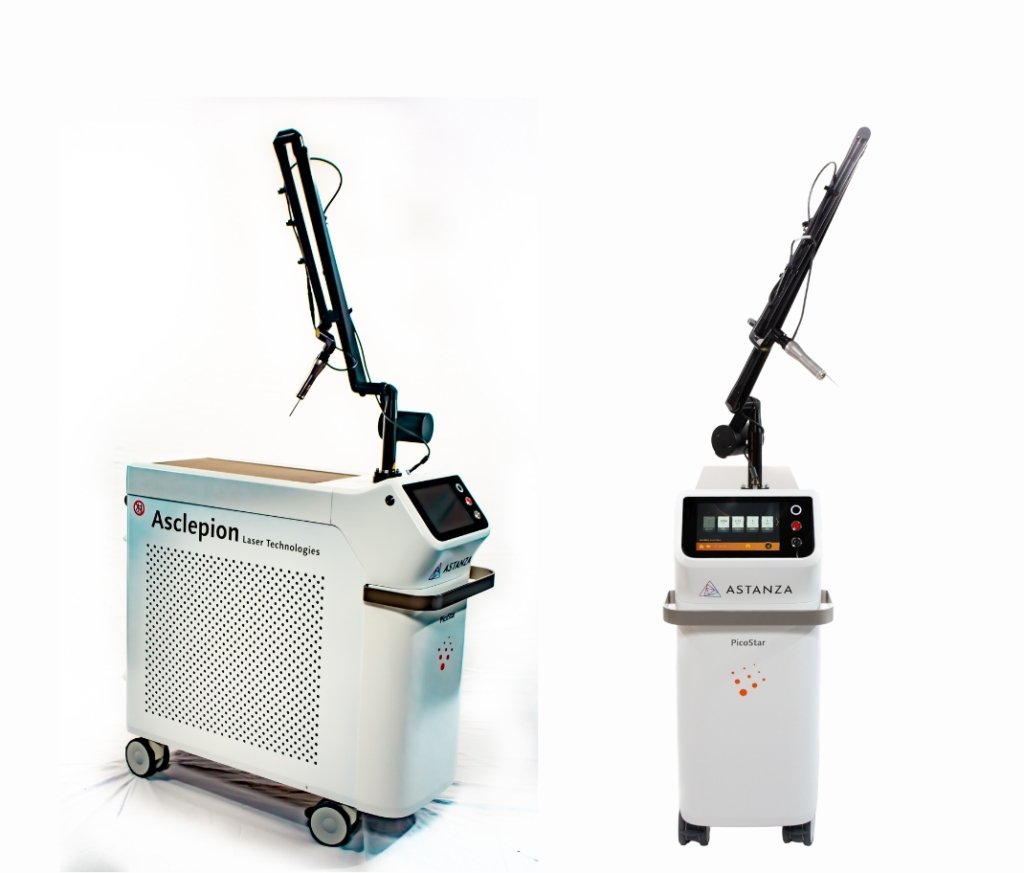
The PicoStar® system is engineered and manufactured in Germany by Asclepion, a leader in medical laser technology for over 40 years. With more than 5 million patients successfully treated worldwide, customers can be confident in its quality and precision
PicoStar® is capable of removing all tattoo ink colors, from professional to amateur tattoos. Additionally, it supports the treatment of pigmented lesions (sunspots, freckles), acne scars, and wrinkles.
This method is non-invasive, gentle, and low-pain. Thanks to ultra-short pulses, thermal impact on the skin is minimized, making it safe for all skin types, reducing the risk of side effects, and shortening recovery time.
PicoStar®’s pico laser technology emits ultra-short pulses (under 400 picoseconds), fragmenting tattoo ink into ultra-fine particles. This allows the lymphatic system to clear the ink faster and more effectively than traditional nano lasers, with most treatments taking around 15 minutes per appointment depending on the tattoo size.
How Does Laser Tattoo Removal Work?
Laser tattoo removal works by using highly concentrated light energy to break down tattoo ink particles embedded in the skin. The laser targets the pigment without significantly damaging the surrounding tissue. Here’s how tattoo removal works.
Laser targets the ink
The PicoStar® emits precise pulses at 532nm and 1064nm wavelengths, selectively absorbed by tattoo pigment in the dermis – leaving surrounding tissue largely untouched.
Ink particles are shattered into tiny fragments
Ultra-short picosecond pulses break ink into microscopic fragments through photomechanical fragmentation – not heat. This reduces thermal damage and lowers scarring risk versus nanosecond lasers.
The body removes the ink
Your lymphatic system gradually removes fragmented particles over the 6–8 weeks following each session. Hydration and immune function directly affect clearance speed.
The tattoo fades session by session
Each session clears more pigment. Most tattoos clear in 5–10 sessions with the PicoStar®, significantly fewer than older nanosecond Q-switch systems.
How Many Sessions Does Removal Take?
Most tattoos need 5–10 sessions spaced 6–8 weeks apart. The total timeline typically runs 9–18 months. The exact count depends on your tattoo. I’ll give you an honest estimate at consultation.
Average sessions needed
5–10
depending on size, color, age, and skin type
Time between sessions
6–8 wks
for lymphatic clearance and full skin recovery
Per-session duration
~15 min
depending on tattoo size and complexity
Session 1
First Signs of Fading
10–20% fading, most visible at the 6-week mark as your lymphatic system processes the first round of fragmented ink. Redness and swelling last 24–48 hours — a normal healing response.
Sessions 2–4
Visible Progress — Significant Lightening
Fading accelerates noticeably. Black and dark inks show the fastest response. Clients with small, black-ink tattoos may see near-complete clearance by session 4–5.
Sessions 5–8
Deep Clearance — Residual Ink Targeted
Remaining ink — lighter colors like yellow, green, and light blue — is systematically targeted. Multicolored and heavily saturated tattoos progress through this phase at varying rates.
Sessions 9–12 (if needed)
Final Sessions — Complete Removal
Large tattoos, dense ink saturation, or stubborn colors may require additional sessions. I reassess progress at every appointment and adjust settings to match where the tattoo is in its clearing cycle.
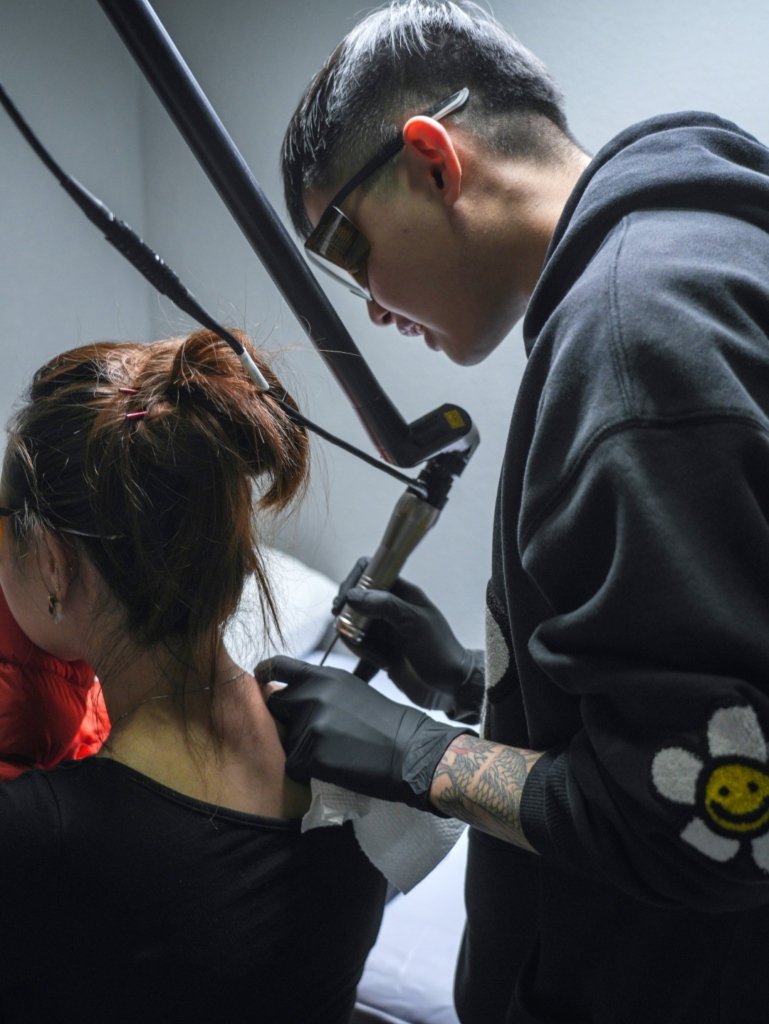
What Determines How Well Your Tattoo Fades?
5 below factors influence how effectively a tattoo can be removed and how many sessions may be required. Understanding these variables helps set realistic expectations for the fading and removal process.
- Tattoo ink colors. Different ink colors respond differently to laser energy. Black and darker pigments typically absorb laser wavelengths more effectively, making them easier to remove, while lighter colors such as yellow or green may require more sessions.
- Tattoo age and ink depth. Older tattoos often fade naturally over time, which can make them easier to remove. The depth and density of the ink placed in the dermis also affect how quickly the laser can break down the pigment.
- Tattoo size and ink density. Larger tattoos or designs with heavy ink saturation require more laser passes and additional sessions to achieve sufficient fading.
- Skin type and immune response. Your skin type and the strength of your immune system play an important role. After the laser breaks the ink into smaller particles, the body’s lymphatic system must gradually clear the pigment from the skin.
- Laser technology used. Advanced picosecond systems such as PicoStar® can fragment ink particles more efficiently than traditional nanosecond lasers, helping improve fading results while minimizing impact on surrounding skin tissue.
Is laser tattoo removal safe?
Does Tattoo Removal Leave Scars?
Performed correctly, laser tattoo removal does not cause permanent scarring. Picosecond technology minimizes thermal damage – the primary cause of scarring with older systems.
Normal Side Effects After Each Session
These responses are expected and temporary — they indicate the treatment is working:
- Redness and mild swelling — resolves within 2–4 hours
- Blistering — indicates effective ink fragmentation, do not pop
- Itching and scabbing — heals within 7–14 days
- Frosting — white discoloration immediately post-treatment, temporary
- Skin sensitivity in treated area for several days
What Actually Causes Scarring
(and How to Prevent It)
Scarring from laser removal is largely preventable. Most cases result from:
- Sessions spaced under 6 weeks apart
- Popping or picking blisters during healing
- Sun exposure on the treated area between sessions
- Laser settings too aggressive for your skin type
- Treating pre-existing scarred tattoo tissue
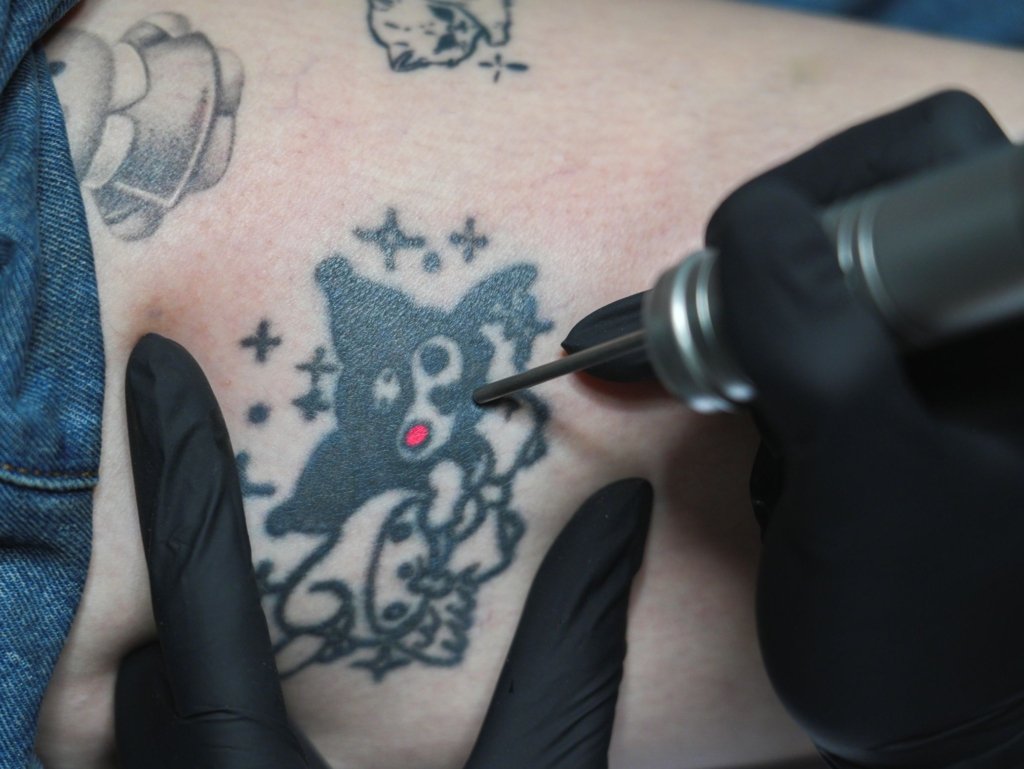
Does Laser Tattoo Removal Cause Cancer?
No. There is no clinical evidence linking laser tattoo removal to increased cancer risk. The PicoStar® uses non-ionizing light energy, which does not damage DNA. The ink particles cleared during treatment are the same particles already present in your skin — the laser simply enables your lymphatic system to remove them more efficiently.
How Much Does Tattoo Removal Cost in San Antonio?
Laser tattoo removal in San Antonio typically costs $200–$500 per session, with most clients investing $1,000–$4,000 total for complete removal depending on tattoo size, color count, and sessions needed.
I price each session based on tattoo size and complexity. Smaller tattoos require fewer passes and less time; larger or densely-inked designs take longer. Multi-session package pricing is available upfront for a lower per-session rate.
At your free consultation, I evaluate your specific tattoo and give you a personalized estimate including expected session count and total cost. No guesswork, no pressure.
Insurance: Tattoo removal is a cosmetic procedure and not covered by health insurance. HSA and FSA funds may be applicable contact your plan administrator to confirm eligibility.
| Pricing Guide | ||
|---|---|---|
| Size | Per Session | Avg. Sessions |
|
Size: Extra Small Stamp-size |
Per Session: $100–150 |
Avg. Sessions: 4–6 |
|
Size: Small Business card |
Per Session: $150–250 |
Avg. Sessions: 5–7 |
|
Size: Medium Palm size |
Per Session: $250–400 |
Avg. Sessions: 6–8 |
|
Size: Large Half sleeve |
Per Session: $400–600 |
Avg. Sessions: 8–12 |
|
Size: Extra Large Full sleeve / back |
Per Session: $600+ |
Avg. Sessions: 10–15 |
Tattoo Removal Aftercare Instructions
Proper aftercare directly impacts your results and healing speed. Here’s exactly what to do before, immediately after, and during the weeks following each treatment.
Before Your Session
- Avoid sun exposure on the treatment area for at least 2 weeks prior — tanned skin increases hypopigmentation risk
- Skip blood-thinning medications (aspirin, ibuprofen) for 24 hours unless medically necessary
- Arrive with clean, dry skin — no lotion, sunscreen, or self-tanner on the area
- Apply numbing cream 45–60 minutes before your appointment if using it
- Stay well-hydrated — hydration supports lymphatic clearance post-session
- No alcohol for 24 hours prior
Immediately After Treatment
- Apply a thin layer of antibiotic ointment (Aquaphor or similar) to the treated area
- Cover with a non-stick bandage for the first 24 hours
- Apply a cold pack (wrapped in cloth) for 10–15 minutes — no direct ice contact
- Avoid submerging in water for at least 2 weeks — pools, baths, hot tubs
- No makeup, lotion, or active skincare on treated skin
- Pat dry gently — do not rub the area
Between Sessions
- Apply SPF 30+ every day the treatment area will see sunlight — UV is the most common cause of complications
- Do not pop, pick, or scratch blisters or scabs — this is the primary cause of post-removal scarring
- Moisturize once initial healing is complete — days 5–7
- Exercise after 48 hours — avoid heavy sweating directly over the area initially
- Contact me immediately if you notice signs of infection: increasing redness, warmth, pus, or fever
YOUR HEALING TIMELIME
Days 1–3
Initial Reaction
Redness, swelling, and possible blistering. Frosting fades within hours. Blisters indicate the laser worked — leave them intact.
Days 4–7
Scabbing Begins
Blisters flatten and scab. Itching is normal — do not scratch. Keep the area clean and gently moisturized.
Weeks 2–4
Skin Renews
Scabs fall naturally, revealing lighter skin. Fading continues beneath the surface — the tattoo may look similar at this stage.
Weeks 4–8
Visible Fading Emerges
Lymphatic clearance peaks. Most visible fading happens here. Full session results assessed at the 6–8 week mark before next appointment.
Free Consultation
I evaluate your tattoo — ink colors, size, depth, skin type — and give you an honest estimate of sessions and total cost. No pressure, no commitment required.
Custom Plan
I design your removal protocol: wavelength selection, fluence settings, spot size, and session spacing — calibrated to your specific tattoo and skin type.
Laser Sessions
Each session runs ~15 minutes. I walk you through what to expect before every treatment and assess progress at each visit.
Full Clearance
Fading session by session until we reach your goal — lightening for a cover-up or complete removal. I’m with you the entire way.
IF YOU’RE INTERESTED,
DON’T HESITATE TO BOOK NOW
BOOK
NOW
FREQUENTLY ASKED QUESTIONS
Can tattoos be completely removed?
Yes, most tattoos can be fully removed with enough sessions. Black and dark-ink tattoos respond most completely. Certain colors (greens, yellows, light blues) may leave trace pigment depending on the ink's chemical composition. I give an honest assessment of expected final clearance at your consultation.
How long does full removal take?
Most complete removal processes take 9–18 months from start to finish — 5–10 sessions spaced 6–8 weeks apart. Total depends on your tattoo's size, ink density, colors, and how your skin responds to treatment.
Can black tattoos be completely removed?
Black ink is the most responsive to laser treatment — it absorbs laser wavelengths most efficiently and fragments most completely. Most black tattoos can be fully removed in 5–8 sessions with the PicoStar®. Heavy blackout tattoos take longer due to sheer ink volume.
How long do you wait between session?
Minimum 6 weeks. I recommend 6–8 weeks for most skin types, and up to 8 weeks for Fitzpatrick IV–VI (darker skin). This allows lymphatic clearance and full skin recovery. Shortening the gap does not speed results — it increases scarring risk.
Is PicoStar beter than PícoSure or PicoWay?
All three are picosecond-class lasers. The PicoStar® is notable for its <400ps pulse, 2.0 GW peak power, and largest homogeneous spot size in its class (up to 16mm) for more uniform coverage per pass. Asclepion has 40+ years of medical laser engineering. Results ultimately depend on the operator's skill as much as the machine.
Does tattoo removal leave scars?
Performed correctly, it does not cause permanent scarring. The PicoStar® uses photomechanical fragmentation rather than heat, reducing thermal damage significantly. Scarring risk rises if blisters are popped, scabs are picked, or sessions are too closely spaced.
Does insurance cover tattoo removal?
Tattoo removal is cosmetic and not covered by standard health insurance. HSA and FSA accounts can often be used — contact your plan administrator to confirm. In rare medically indicated cases, partial coverage may be available.
Can you remove tattoos at home?
No at-home method is clinically effective. Tattoo removal creams only affect the skin surface — they cannot reach dermis-level ink. Methods like salabrasion and DIY devices carry significant scarring risk with no proven efficacy. Professional laser removal is the only method with documented clinical results.
Can you shower after laser removal?
You can shower the day after with cool or lukewarm water. Avoid direct high-pressure water on the treatment area for 48 hours. No submerging — pools, hot tubs, baths — for at least 2 weeks. Pat dry gently rather than rubbing.
What does removal look like after the first session?
Immediately after: white frosting (temporary), then redness and swelling. Blistering and scabbing may develop over 2–3 days. The tattoo may look similar to before at the 2-week mark — significant visible fading appears at 6 weeks, once the lymphatic system has processed the first round of fragmented ink.
Can you remove face or neck tattoo?
Yes. Face and neck tattoos can be safely removed with the PicoStar®. These areas require extra care due to skin sensitivity and proximity to eyes. I use smaller spot sizes and conservative fluence on facial work. Results are comparable to body tattoo removal.
Other Services

Custom Tattoo
Bring your unique vision to life with a one-of-a- kind design.
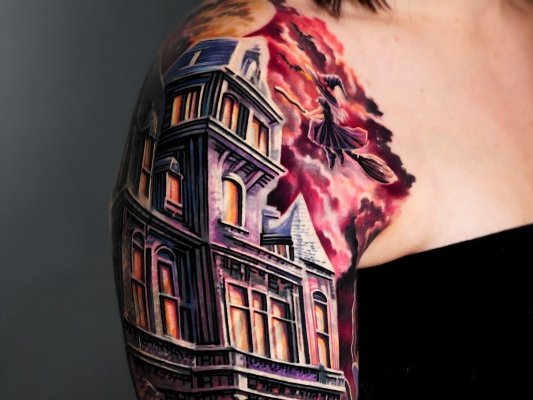
Cover-Up Tattoo
Transform unwanted ink into a new tattoo masterpiece

