Sleeve tattoo placement transforms the human arm into a unified, large-scale visual narrative. This extensive surface area spans the muscular deltoid, the sensitive inner bicep, the complex elbow ditch, and the highly exposed forearm. Dedicated collectors commit immense time and financial resources to execute flowing Japanese Irezumi or complex biomechanical structures across these specific zones. The thick upper shoulder pad absorbs needle trauma efficiently to provide a highly comfortable starting point for the client.
The multi-session execution inflicts severe cumulative physical stress on the body. The constant biological folding of the inner elbow actively distorts rigid geometric stencils during daily movement. Furthermore, direct UV radiation constantly degrades vibrant pigments on the lower arm. I, Minh Pham, designed this comprehensive framework to help clients map precise anatomical sleeve divisions, evaluate continuous high-contrast styles, and master strict multi-session recovery protocols below.
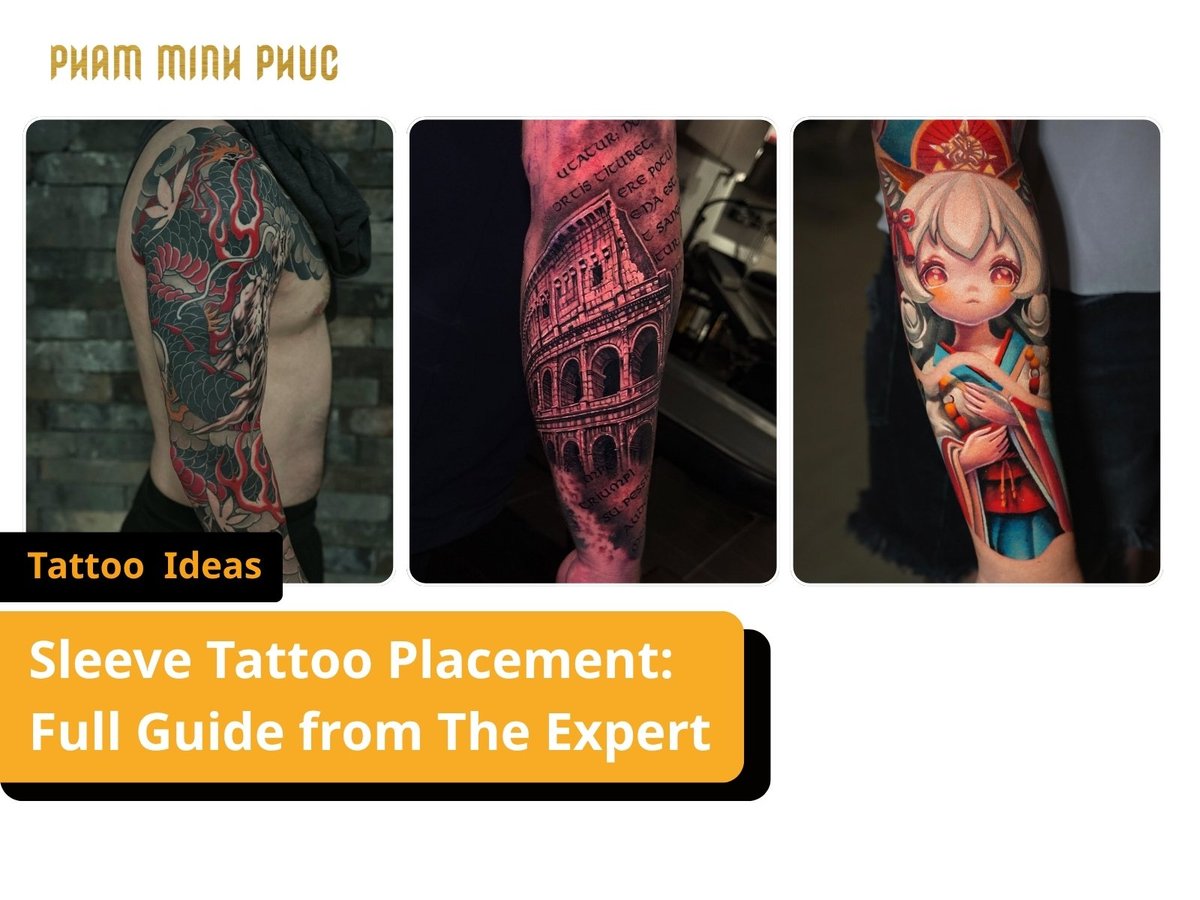
Table of Contents
Who is a Sleeve Tattoo Suitable For?
A sleeve tattoo perfectly suits individuals fully prepared to commit substantial time and financial resources to a massive art project. You must possess immense physical endurance to sit through dozens of hours of intense needle work over many months.
- The Dedicated Collector: The full arm provides the ultimate canvas for complex storytelling. You utilize this expansive space to showcase unified themes like mythology or biomechanical illusions.
- The Strategic Professional: The upper half placement allows you to maintain strict corporate boundaries. You easily conceal detailed portraits or geometric patterns under standard short-sleeve shirts during business hours.
- The Patient Planner: This marathon project requires exceptional long-term discipline. You must follow strict aftercare protocols between multiple sessions spanning several months to a full year.
Main Sleeve Tattoo Placement
The main sleeve tattoo placement divides the arm into specific anatomical zones based on coverage and visibility. Each section demands unique compositional strategies to maintain a seamless visual flow across the deltoid, bicep, elbow, and forearm. You must establish a clear focal point and utilize background elements like wind bars or geometric shading to unify the entire structure perfectly.
Full Sleeve
The full sleeve placement covers the entire arm from the top of the shoulder completely down to the wrist joint. This massive structural canvas offers the ultimate space for intricate, story-driven body art. You must prepare for varying pain levels as the needle moves from the comfortable fleshy bicep down to the highly sensitive inner elbow and bony wrist.
This extensive canvas requires you and your artist to strictly follow the prime real estate rule. You must position the most crucial focal points, like realistic eyes or detailed animal faces, squarely on the flat outer bicep and outer forearm. How each individual section of the arm responds to needle work, ink retention, and daily movement is what arm tattoo placement breaks down before you commit to covering the entire limb.
You should ask your artist to utilize the hidden, high-motion areas like the inner bicep and elbow ditch strictly for background shading and organic filler to prevent severe visual warping when you bend your arm.
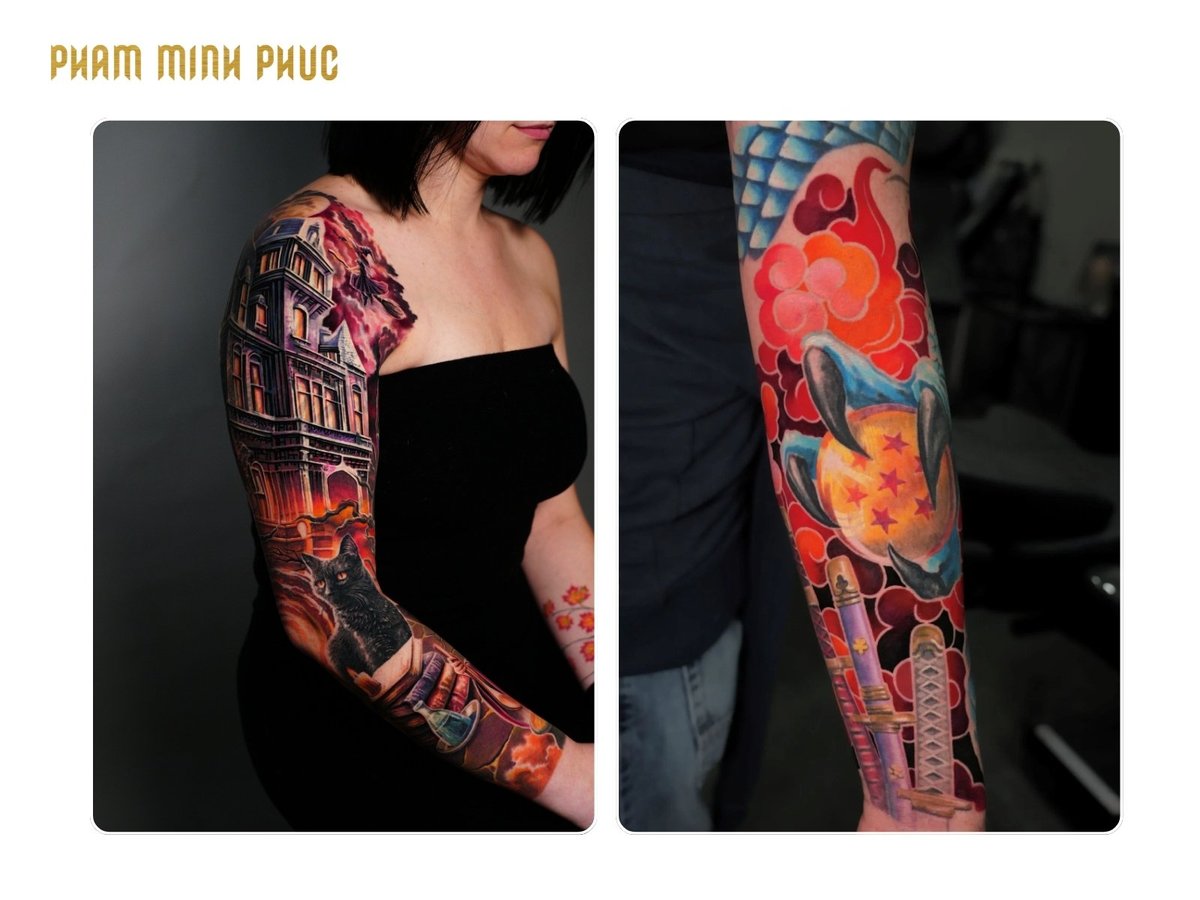
Popular full sleeve tattoo designs include cohesive mythological battles, sprawling biomechanical illusions, and continuous Japanese Irezumi elements that flow seamlessly across the entire arm.
Half Sleeve
The half sleeve placement covers exactly fifty percent of the arm, dividing into either the upper shoulder-to-elbow section or the lower elbow-to-wrist forearm section. The upper half provides a discreet canvas easily hidden by standard shirts and benefits from the thick, pain-reducing deltoid muscle. The lower half offers high daily visibility and a flat surface, though it requires significantly more pain endurance near the wrist tendons.
You must actively protect your fresh forearm half sleeve from the severe UV radiation tax. The lower arm constantly faces the sun during daily outdoor activities. You must commit to applying a broad-spectrum, high-SPF sunscreen every single day once the tattoo heals to prevent the vibrant pigments from fading and the crisp black lines from blurring into a messy dark block.
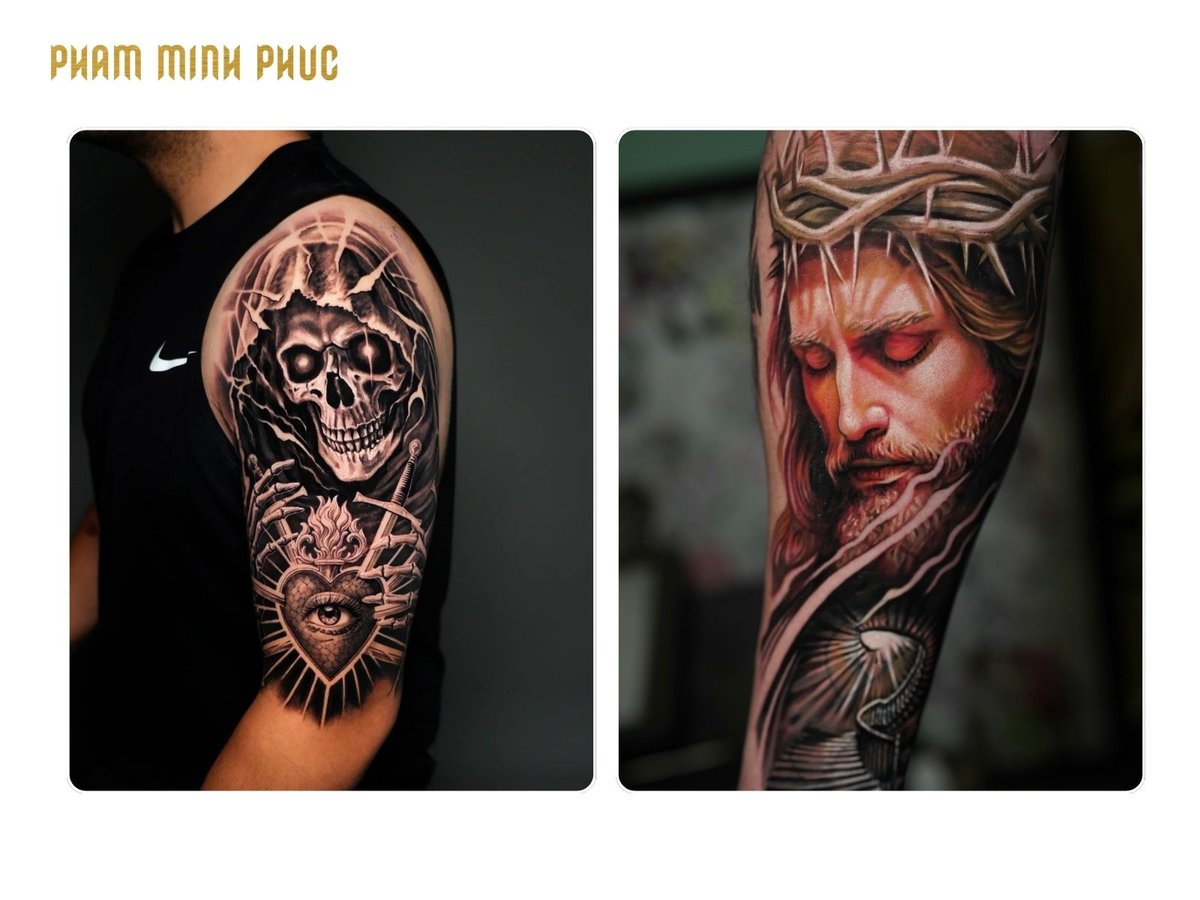
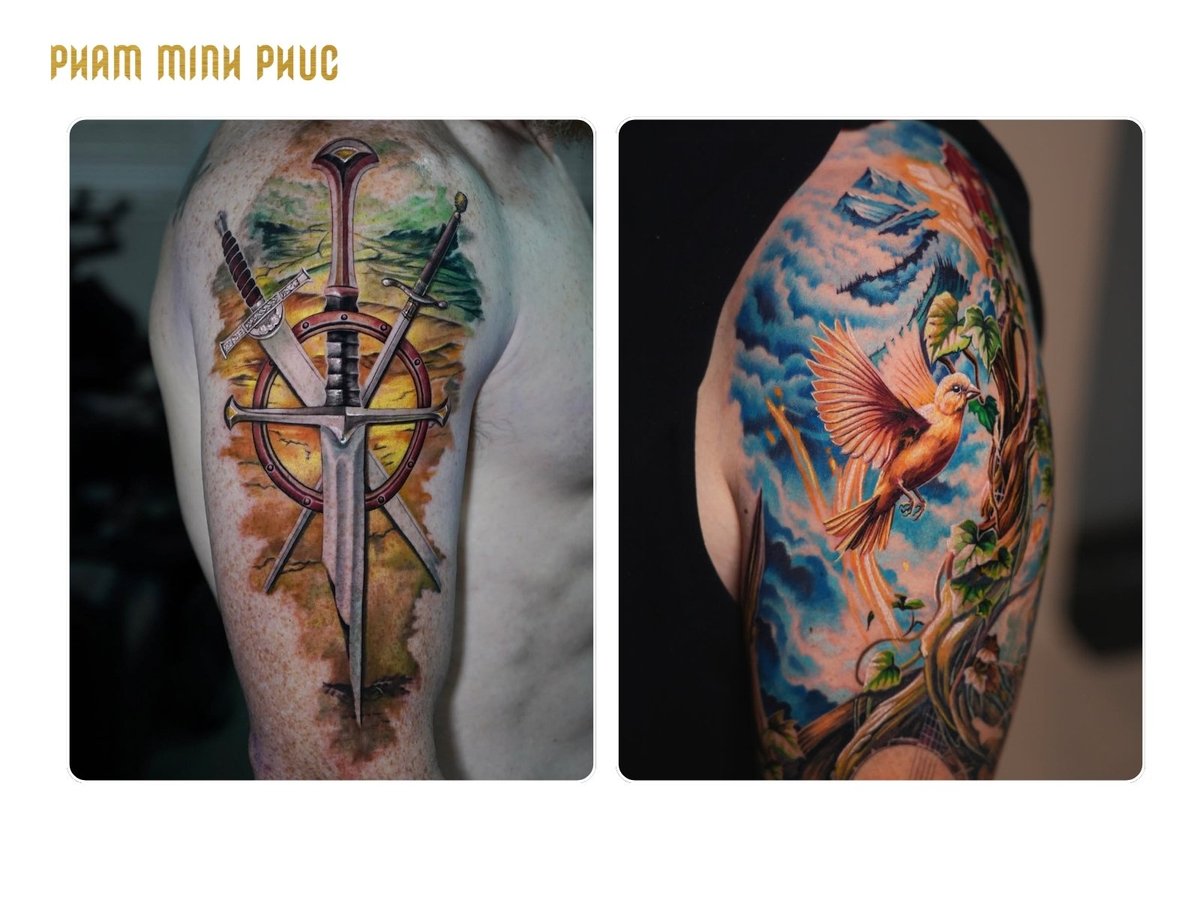
Common half sleeve tattoo designs include fierce animal portraits on the upper arm, intricate armor pauldrons covering the deltoid, and complex geometric mandalas or detailed scripts running down the lower forearm.
Quarter Sleeve
The quarter sleeve placement covers the top portion of the upper arm, extending strictly from the shoulder down to the mid-bicep. This contained area serves as the perfect entry point to test your pain tolerance and experience the healing process before committing to a massive project. The thick muscle mass makes this specific zone one of the least painful areas on the human body to get tattooed.
You must consciously avoid the sticker sleeve trap if you plan to expand this piece into a full sleeve in the future. Inexperienced clients often box themselves in with hard, defined borders that look unnatural later. You must inform your artist about your long-term goals during the first consultation so they can intentionally leave the bottom edges open and fade the shading to ensure smooth background blending later.
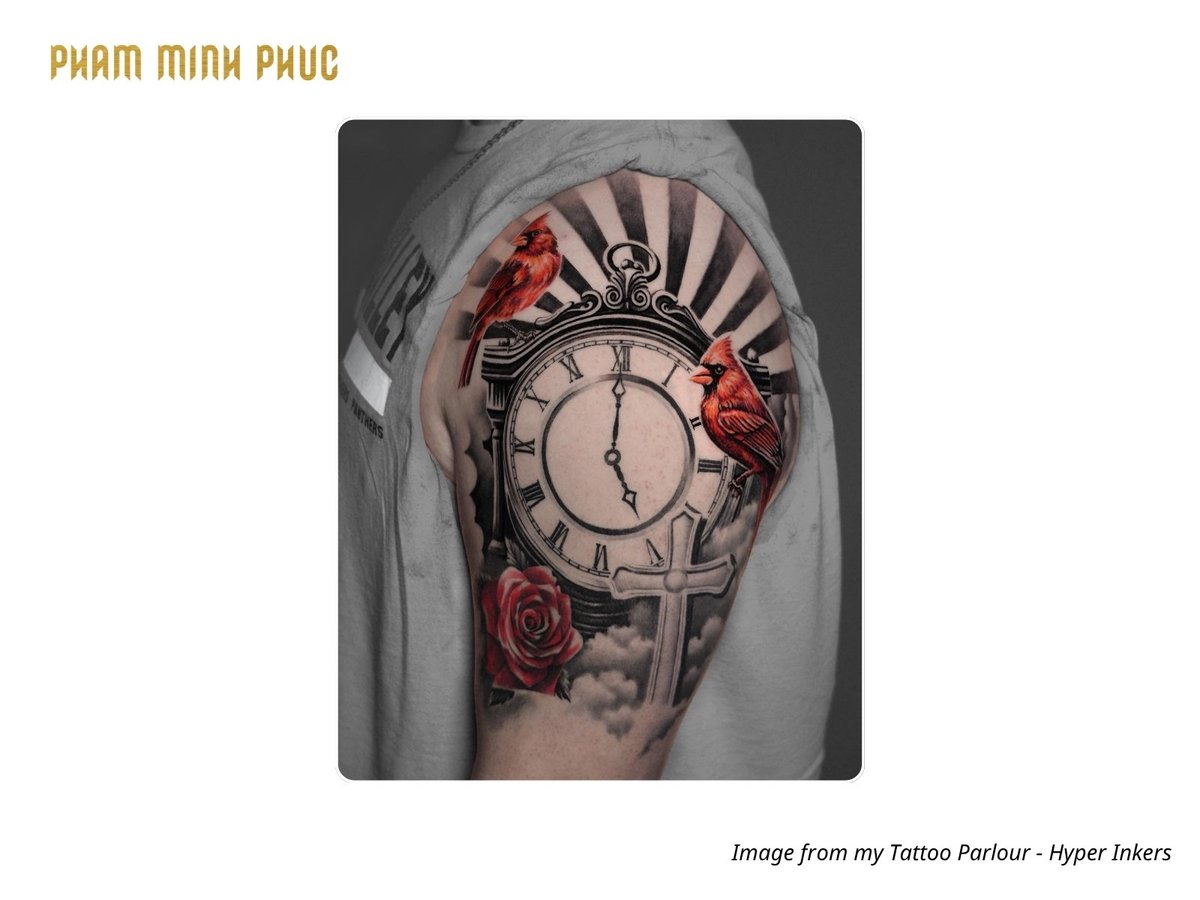
Popular quarter sleeve tattoo designs include single bold focal points like large floral crests, traditional Japanese masks, and classic American traditional eagles that anchor perfectly on the rounded deltoid.
Which Tattoo Styles Work Best for Full Sleeves?
Specific tattoo styles work best for full sleeves by utilizing continuous background elements to create fluid motion across the muscles. You must select technical approaches that naturally guide the eye around the arm’s anatomical curves to achieve a seamless composition.
- Japanese Traditional (Irezumi): Organic elements like water waves, wind bars, and clouds connect classic motifs seamlessly across the entire arm.
- Biomechanical: Intricate machinery designs map perfectly onto the muscles and joints to create a realistic cyborg illusion.
- Black and Grey Realism: Soft shading and high-contrast lighting connect multiple detailed portraits and nature scenes into one cohesive composition.
- Ornamental Geometry: Symmetrical mandalas and repetitive structural patterns create a powerful, unified visual flow from the shoulder to the wrist.
Sleeve Tattoo Aftercare: Multi-Session Healing and The Sun
Sleeve tattoo aftercare demands strict wardrobe management and lifelong sun protection to survive the intensive multi-session healing phase safely. The massive anatomical surface area requires these professional guidelines to prevent severe physical trauma, extreme swelling, and rapid ink fading.
- Avoid the long-sleeve peeling nightmare: You must completely ban tight jackets, slim-fit shirts, and restrictive athletic wear for two weeks after each session. The harsh friction from tight sleeves aggressively rips off protective scabs and destroys fresh pigment. You must wear oversized cotton shirts or slippery silk button-downs exclusively to eliminate this dangerous mechanical friction.
- Manage the swelling cascade effect: You must rest and elevate your arm frequently during the first forty-eight hours. Tattooing massive areas continuously causes severe lymphatic fluid buildup and painful edema. You must avoid heavy lifting to help gravity drain the excess fluid naturally and prevent the swollen skin from rejecting new ink.
- Defend the canvas against the sun: You must protect the raw dermis from direct UV radiation completely during the initial healing window. Once the skin fully regenerates, you must apply a broad-spectrum, high-SPF sunscreen to the arm every single day. The sun acts as the ultimate destroyer of ink and rapidly fades vibrant colors across your highly exposed forearm.
- Clean the massive wound properly: You must wash the entire arm gently using lukewarm water and unscented antibacterial soap two to three times daily. You must always pat the extensive surface completely dry with a clean, single-use paper towel to avoid bacterial transfer from standard fabric bath towels.
- Apply moisturizer strategically: You must apply a microscopic layer of the recommended aftercare ointment to keep the canvas hydrated. Applying thick layers of lotion suffocates the healing tissue, traps intense body heat, and disrupts the natural scab formation entirely.
Choosing the right tattoo placement is just as important as choosing the design itself. If you’re still weighing your options, explore my full tattoo placement guide for expert insights on visibility, pain levels, healing, and long-term appearance.
FAQs about Sleeve Tattoo
How much does a full sleeve tattoo cost?
A full sleeve tattoo costs several thousand dollars, representing a major luxury art investment. The final price depends directly on the artist’s hourly rate, the design complexity, and the total time required in the chair. Intricate color realism pieces demand significantly more blending time and cost much more than standard black and grey shading. You must budget realistically for this massive project and prioritize the artist’s proven expertise over finding a cheap deal.
How many sessions does a full sleeve take?
A full sleeve takes anywhere from five to ten separate sessions to complete properly. The total duration frequently ranges between forty and sixty hours of actual tattooing time. Your personal pain endurance, the physical size of your arm, and the density of the chosen artwork dictate the exact number of appointments required.
How long should you wait between sleeve sessions?
You should wait a minimum of three to four weeks between sleeve sessions to allow complete epidermal regeneration. You must respect the swelling cascade effect when planning your schedule. Tattooing large areas continuously causes severe lymphatic fluid buildup and edema in the arm. The swollen skin rejects new pigment completely. The artist must wait for the swelling to subside fully to prevent overworking the fragile tissue and causing permanent raised scarring.
Can you combine different styles in one sleeve?
You can combine different styles in one sleeve if your artist possesses exceptional compositional skills to create visual harmony. A successful multi-style project requires a strong unifying element to prevent a chaotic appearance. The artist will utilize a consistent background texture, apply a strict color palette, or use specific geometric framing devices to connect disparate styles smoothly.
Should you start your sleeve at the shoulder or the forearm?
You should generally start your sleeve at the shoulder and work your way down the arm. The upper bicep and deltoid provide a large, prominent focal point that anchors the entire design securely. Starting at the top allows the artist to establish the primary theme and structural flow before mapping the secondary background elements toward the narrower wrist area.
Are sleeve tattoos suitable for women?
Sleeve tattoos are highly suitable for women seeking to make a powerful and elegant artistic statement. Female clients frequently utilize the natural flow of the arm to display sprawling botanical arrangements, delicate ornamental mandalas, and intricate fine-line nature scenes. The artist expertly shapes the background elements to accentuate the natural curves of the feminine arm, creating a beautifully integrated masterpiece.
Sleeve tattoo placement demands exceptional long-term discipline and rigorous aftercare protocols to survive the intensive multi-session healing phase. The client protects the massive raw dermis by entirely avoiding restrictive long sleeves and elevating the limb to counteract severe lymphatic swelling. The individual also prevents rapid ink fading by applying broad-spectrum sunscreen religiously to the exposed forearm. As a San Antonio-based custom artist, I specifically engineer cohesive focal points to flow naturally across the bicep and elbow without visual warping. If the objective involves acquiring a monumental art investment, I am ready to evaluate the arm.