The right tattoo artist is someone whose work matches the tattoo you actually want. Their portfolio should show consistent quality in that style, including healed tattoos and projects with a similar level of detail, size or placement. Before you book, you should also check how the artist communicates, whether the studio is licensed and clean, and how pricing and policies work.
Instagram followers, low prices and a convenient location can help you discover an artist, but they do not prove that the artist is the right fit. Give more weight to the quality and consistency of the work, and to how the artist handles your design, placement and questions during the consultation. A strong portfolio builds confidence across many examples. It does not depend on one impressive tattoo.
After more than 10 years of tattooing, I have seen how much the choice of artist affects both the experience and the final result. This guide shows you what I would check myself, step by step, and includes a scorecard you can use to compare the artists on your shortlist.
Table of Contents
How Do You Choose a Good Tattoo Artist?
A good tattoo artist has strong work in the style you want, experience with similar projects, a safe and licensed setup, and clear communication. To find one, follow these eight steps in order:
- Match the artist to the style you want
- Build a shortlist of artists
- Evaluate the portfolio and healed work
- Look for experience with tattoos similar to yours
- Check reviews and professional reputation
- Verify hygiene, safety and licensing
- Use the consultation to judge communication and expertise
- Compare availability, pricing and policies
Step 1: Match the Tattoo Artist to the Style You Want
You should have a general idea of the tattoo style you want before choosing artists. Each style uses its own approach to linework, shading, color, contrast and composition. Strong work in one style does not guarantee the same result in another.
Fine Line, Traditional, Black and Grey, Realism, Japanese and Color tattoos all rely on different techniques. Portrait work also needs different skills from ornamental designs, lettering or simple symbols. An artist’s portfolio tells you more when their regular work is close to the look you want.
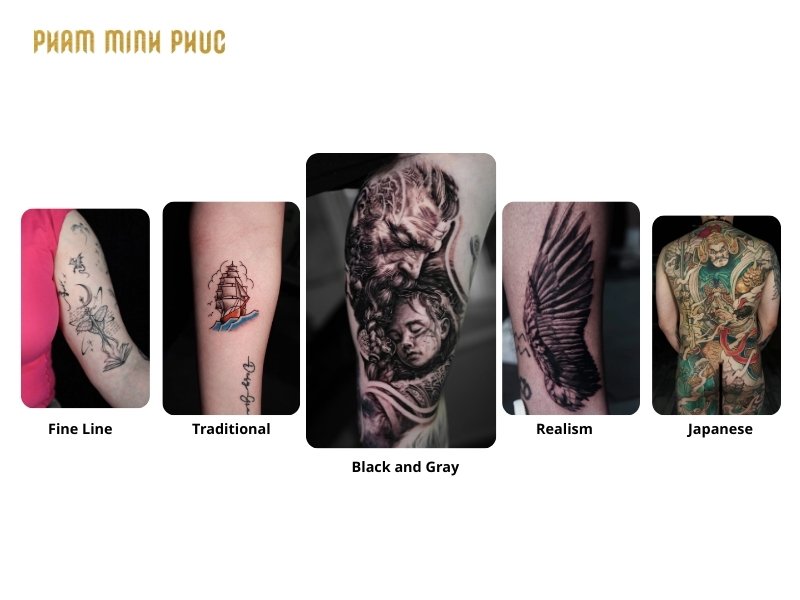
Look at what the artist chooses to post most often, not only at the list of styles they say they offer. Most artists do their best work in the styles they enjoy, and their feed usually shows it. An artist who mainly posts black and grey realism is a stronger choice for a realistic portrait than one who lists portraits among ten other styles.
Save the images you like in one Pinterest board or folder, then narrow them down until you can see a pattern in style, contrast and subject. Compare that pattern with the artist’s portfolio or recent posts. You do not need to find your exact idea, but you should see repeated work that uses similar techniques. If you are unsure how to describe the look, a tattoo styles guide can help you narrow the direction first.
Step 2: Build a Shortlist of Tattoo Artists
You can find tattoo artists through Google, Instagram, artist and studio websites, referrals from people whose tattoos you admire, and tattoo conventions. Popularity should not decide the shortlist by itself. An artist with fewer followers may be the better choice if their portfolio contains stronger examples of the style, subject, placement or scale you want. The same applies to location: the closest artist is not automatically the best match for a specialized project.
Recommendations from friends or other tattoo collectors can also be useful, especially when they tell you something about communication, the studio, or the overall experience. You should still review the work yourself to match your expectations.
Aim for three to five artists whose portfolios already match your style, then compare them using the same criteria. Do not let one strong Instagram post or one enthusiastic recommendation decide everything.
Step 3: Evaluate the Artist’s Portfolio and Healed Work
A portfolio should show consistent quality across many pieces, not a few standout posts. Compare linework, shading, composition and use of the body across several tattoos in the style you want. If quality changes noticeably from one project to another, you have less evidence that your tattoo will match the artist’s best work.
What to Look For in a Tattoo Artist’s Portfolio:
| What to Check | What You Should Look For |
| Style consistency | Several strong tattoos in the style you want |
| Linework | Clean, deliberate lines |
| Shading | Smooth or intentional transitions |
| Color saturation | Even, controlled color |
| Composition | Artwork that fits the body’s shape |
| Healed work | Tattoos that remain clear after healing |
| Similar projects | Work with similar scale or complexity |
| Overall consistency | Strong results across many pieces |
Fresh tattoos look darker and more saturated right after the session because of redness, swelling and surface ink. Healed photos show how the lines, shading and color actually settled. Photos taken at least 4–6 weeks after the session show the healing result; photos taken a year or more later show how the tattoo ages.
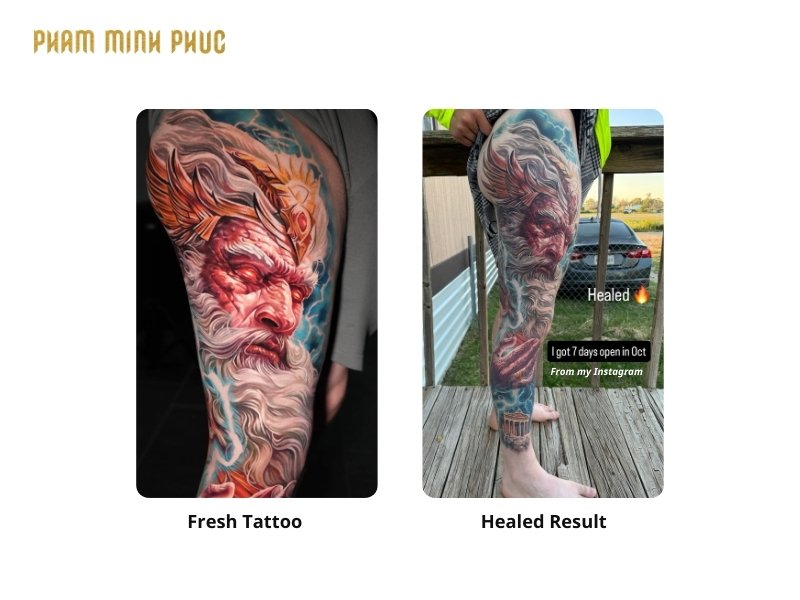
Minh’s Insight: In my own healed photos, the first thing I check is whether the colors and shadows still separate. In this leg piece, the warm reds and oranges of the face still stand apart from the blue background after healing. Right after a session, everything looks bright and sharp. After healing, low-contrast work can blur into one flat tone, in color work as well as in black and grey. When you compare healed photos between artists, look for that separation. It tells you how the tattoo will read years from now much better than a fresh photo does.
An artist may not have healed photos of every tattoo because clients do not always return for follow-up pictures. That alone is not a problem, but a portfolio with several healed examples gives you more information. If you cannot find healed work publicly, ask the artist for examples in your style.
Step 4: Look for Experience With Tattoos Similar to Yours
The artist should have experience with projects that resemble yours in subject, scale, placement or technical difficulty. A strong small realism tattoo does not prove that an artist can plan a full realism sleeve. A sleeve requires managing composition across the arm, working with changes in anatomy, connecting visual elements and keeping consistency over several sessions.
Minh’s Insight: The most common mismatch I see is size. A client brings a detailed portrait reference and asks for it at 2 or 3 inches. I recommend at least about 4×4 inches for a portrait, because below that size the eyes, nose and mouth have no room for the tonal steps that make a face recognizable, and fine detail blurs as the tattoo ages. So when you check a portfolio, look at the artist’s work at the size you want, not just the subject you want. An artist who does beautiful large portraits has not yet shown you how they handle a small one.
If you are not sure how big your design should be, my tattoo size guide explains the common sizes and what each one can hold. The same principle applies to other specialized projects. You should look for:
- Portraits for portrait work
- Healed color tattoos for saturated color projects
- Completed sleeves for sleeve work
- Pet portraits for animal tattoos
- Healed before-and-after photos for cover-ups (see how to choose a redone tattoo artist and my cover-up tattoo work)
- Tattoos on the same body area when placement affects composition
The artist does not need to have tattooed your exact subject before. Their previous work only needs to show that they understand the main challenges of your project. If you are planning a large chest piece, for example, give more weight to complete chest compositions than to several unrelated small tattoos. Scale changes how an artist plans spacing, focal points, background and movement across the body.
Step 5: Check Reviews and Professional Reputation
Reviews show parts of the experience that a portfolio cannot. They tell you whether the artist communicates clearly, respects appointment times, keeps the workspace clean, explains aftercare and stays professional during long sessions. Look for repeated patterns rather than one unusually positive or negative review; themes that come up again and again tell you more than the star rating.
Useful review themes include:
- communication
- punctuality
- cleanliness
- professionalism
- organization
- aftercare guidance
- how the artist handles longer sessions
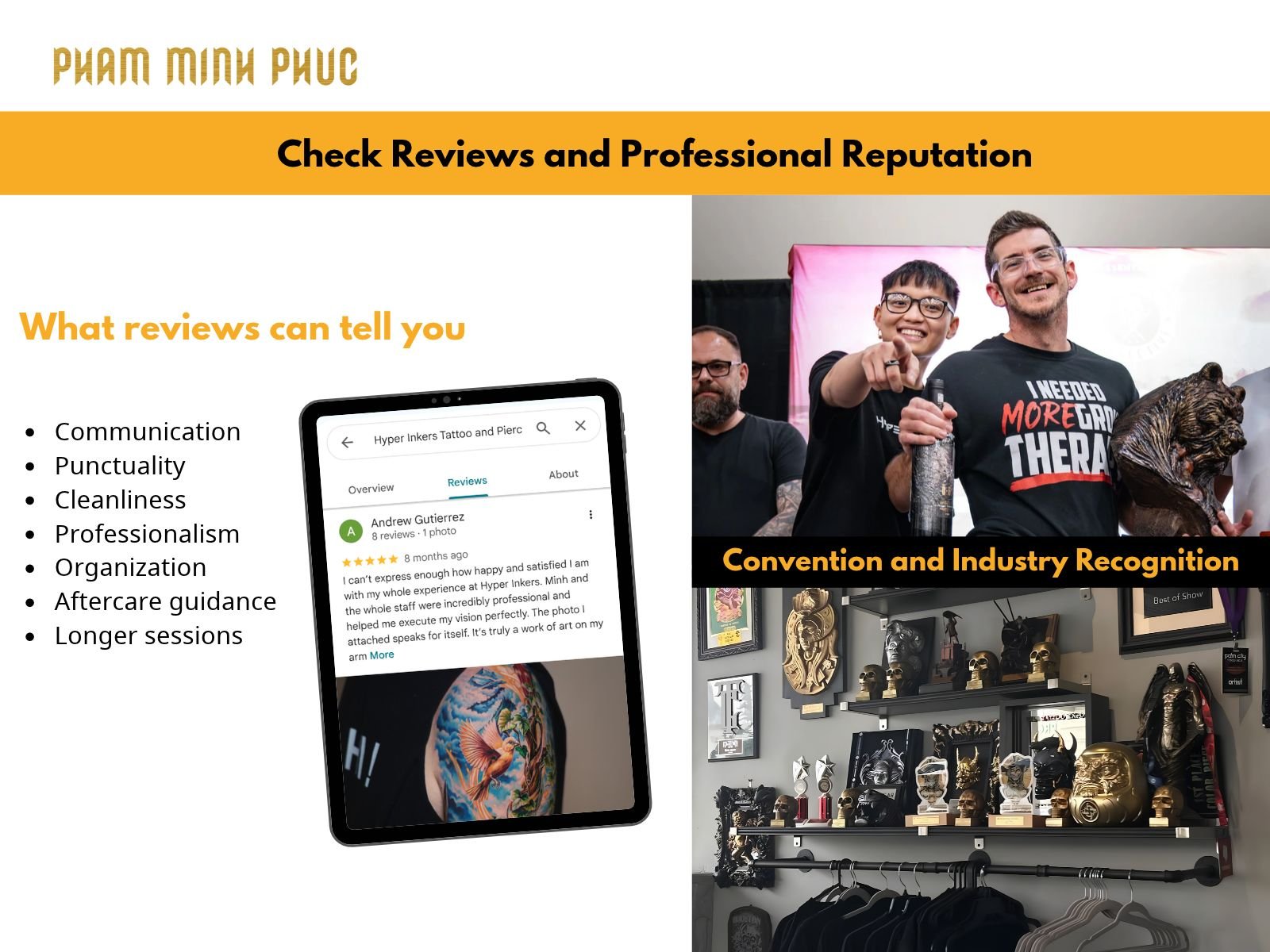
Awards, convention results, press coverage, and industry recognition can add useful context when they are verifiable. These signals matter most when the artist’s current portfolio still supports the reputation they have built.
Step 6: Verify Hygiene, Safety and Licensing
Good tattoo work should come from a clean, professional setup. Artistic skill does not compensate for poor hygiene, so you should treat safety as a basic requirement rather than a bonus. You should expect to see:
- single-use sterile needles
- fresh disposable gloves
- protective barriers where needed
- a clean and organized workstation
- proper sharps disposal
- appropriate sterilization for reusable equipment

Check the studio’s license as well. In many US states the health department licenses tattoo studios. In Texas, for example, studios are licensed by the Department of State Health Services (DSHS); the state does not issue individual licenses to tattoo artists. Texas rules also prohibit tattooing anyone under 18 except to cover an existing tattoo with parental consent, and require artists to give aftercare instructions both verbally and in writing.
You do not need to understand every technical detail of tattoo hygiene. You should still be able to ask how the artist prepares the station, handles disposable items and cleans between clients. A professional answers these questions clearly. If the workspace looks poorly maintained or the artist avoids basic safety questions, that is a valid reason to reconsider.
Step 7: Use the Consultation to Judge Communication and Expertise
A tattoo consultation shows you how the artist approaches your specific project. The artist should understand what you want, identify practical problems and explain how the design will work on the body area you chose. They may recommend changing the size, placement, spacing or level of detail. These changes help when a reference image holds more detail than the available skin can support, or when the composition does not fit the body’s shape.
Pay attention to the reason behind each recommendation. An artist who suggests making a portrait larger should be able to explain how the extra space protects important facial details. An artist who recommends moving a design should explain how the new position improves the composition or works better with the anatomy.
Minh’s Insight: In consultations, my recommendations are usually about size or placement, not the idea itself. My Evil Doll pieces are a good example. They are designed in 3D and mapped to the body, so most of them go on the thigh or the full leg, where there is enough surface for the doll, the mask details and the background to read clearly. If a client wants the same design on a smaller area, I explain what would be lost and offer a version built for that space. A good artist should do the same for you: tell you what changes, why it changes, and what the result will look like.
A useful consultation should clarify:
- design direction
- tattoo size
- placement
- expected session length
- number of sessions
- pricing
- deposit requirements
- preparation
- aftercare expectations
Notice how the artist responds when you disagree or ask for another option. You should be able to discuss the design without feeling pressured into a placement or concept you do not want.
You can prepare questions to ask your tattoo artist before the consultation so you cover the details that matter to your project. If you have not contacted the artist yet, learning how to message a tattoo artist can help you provide the right information from the start.
Step 8: Compare Availability, Pricing and Policies
Set your budget before you compare artists, then focus on the artists who work within it. Understand each artist’s availability, pricing and policies before you choose. Clear terms help you compare artists accurately and prevent misunderstandings later.
Well-booked artists often have a waiting list and may take a few days to reply, because they are tattooing all day. A short waiting list is not a warning sign by itself. Some strong artists keep their schedule open on purpose so they can take on new projects. Also ask whether the artist is genuinely interested in your project. An artist who is excited about the design usually brings more to it.
Follow below checklist:
- pricing structure
- deposit amount
- refund or transfer rules
- rescheduling policy
- cancellation policy
- late-arrival policy
- estimated number of sessions
- accepted payment methods
- touch-up policy, when applicable
Price should be one factor in your decision, not the deciding one. A higher rate does not automatically prove better work, and a lower rate does not automatically mean poor quality. Compare the cost with the artist’s experience, portfolio, project fit and the amount of work your tattoo requires. A large custom piece may take several sessions, so the total project cost matters more than one hourly number without context.
If you need a broader reference, a guide to how much tattoos cost can help you understand the factors that usually affect tattoo pricing.
Tattoo Artist Scorecard: Compare Your Shortlist
Use this scorecard for each artist on your shortlist. Answer every question, then compare the scores side by side. Questions 6 and 7 are must-haves. If either answer is “No”, do not book that artist, whatever the total score.
If two artists score close to each other, compare them in this order:
- Quality of work in your style
- Experience with similar projects
- Safety and licensing
- Communication
- Price
Choose the artist who gives you the most confidence on the first two points. Do not rush the decision to fit a date you have in mind. A permanent tattoo is worth waiting a few extra weeks for the right artist.
What Are the Red Flags When Choosing a Tattoo Artist?
Some problems directly affect the quality or safety of your tattoo, while others make it difficult to know what you are agreeing to before the appointment.
You should watch for:
- a portfolio that does not contain the style you want
- little or no healed work when the artist makes strong claims about long-term quality
- heavily edited portfolio photos
- an unhygienic workspace
- vague answers about safety
- pressure to accept a design or placement you do not want
- dismissive responses to reasonable questions
- unclear pricing or deposit policies
- willingness to copy another artist’s custom tattoo exactly
You should also compare what the artist says with what their portfolio shows. If someone describes themselves as a specialist in a style, you should be able to find enough examples of that style to support the claim.
FAQs About Choosing a Tattoo Artist
How Many Tattoo Artists Should You Compare?
Three to five relevant artists is usually enough. Start with artists whose portfolios already match your style, then narrow the list based on healed work, relevant experience, communication, pricing and availability. Five relevant artists give you a more useful comparison than twenty artists who work in very different styles.
Should You Choose a Tattoo Artist Based on Reviews?
No, you should not rely on reviews alone. Reviews help you judge communication, punctuality, cleanliness, organization and the overall client experience. They say less about technical quality, because most reviewers do not assess linework, composition, saturation or healed results in detail. Use reviews together with the portfolio instead of treating the star rating as the main criterion.
Does an Artist’s Instagram Follower Count Matter?
Follower count matters less than most people think. It can help you discover an artist, but it does not measure whether they suit your tattoo. Social media growth can depend on posting frequency, photography, personality or exposure as much as on tattoo technique. Give more weight to relevant portfolio work, healed results, consistency and experience with projects similar to yours.
Can You Ask to See Healed Tattoo Photos?
Yes, you can ask any artist for healed photos. Ask for them when their public portfolio does not show enough examples. Do not expect a healed photo of every tattoo, because clients do not always return for follow-up pictures. A selection of relevant healed work still shows how the artist’s tattoos settle over time.
Can You Change Artists If You Do Not Like the Design?
Yes, you can change artists if the design still does not work for you. First explain what you want changed and give the artist a chance to revise it. If the revised design still does not match what you want, you can choose another artist rather than accept a permanent design you do not like. Check the deposit and cancellation policy first, because you may lose part of your deposit if you switch artists.
Should You Choose the Cheapest Tattoo Artist?
No. Price alone does not tell you whether an artist has the experience or technical ability your project needs. Your budget still matters, so compare the total cost with the artist’s portfolio, style fit, experience and estimated amount of work. The cheapest option only makes sense when the artist also meets the quality and safety standards above.
Is It Worth Traveling for the Right Tattoo Artist?
Travel makes sense when a specific artist offers experience or a style you cannot easily find nearby. This is especially relevant for large custom work, portraits, sleeves, cover-ups and highly specialized styles. Calculate the full commitment before booking, including travel, accommodation, multiple sessions and possible follow-up visits. The artist should still meet the same portfolio, hygiene and communication standards you would expect from someone local.
Choosing Me, Minh Pham, for Your Custom Tattoo
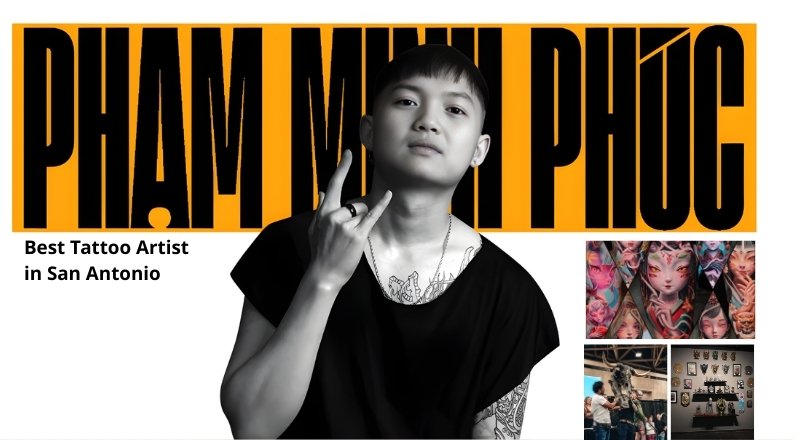
I am Minh Pham (Pham Minh Phuc), a custom tattoo artist based in San Antonio, Texas, and the founder of Hyper Inkers. I have more than 10 years of tattooing experience and have received over 40 awards at tattoo competitions in the United States and internationally.
My portfolio includes Black and Grey, Realism, Portrait, Color, Anime, Fantasy, large custom compositions and my signature Evil Doll style. I develop each design around the idea, placement, body structure and available space. When a design needs more room or a different composition to work on the body, I explain those changes during the consultation, before tattooing begins.
I use single-use needles, disposable protective barriers and professional hygiene procedures in every session. I also review the expected scale, session requirements and technical limits of a project before the appointment, so you know what the tattoo will involve. If the work in my portfolio matches the tattoo you want, book a consultation to discuss the design, size, placement and number of sessions.