A redo tattoo defines the professional process of modifying or concealing existing ink that has faded, is poorly executed, or is simply no longer desired. Unlike creating a design on virgin skin, this procedure requires the artist to work backward by assessing saturation levels and skin integrity to determine the correct technical approach. Depending on the condition of the canvas, the solution may range from a routine maintenance touch-up to restore vibrancy, a structural rework to fix technical flaws, a strategic tattoo cover-up designed to hide the old image completely, or a stylistic blast-over that intentionally layers new ink over the faded background.
Selecting a specialist for this corrective work requires identifying an artist who masters color theory and ink layering, as working over scar tissue leaves zero margin for error. You must scrutinize healed portfolios to avoid deceptive plastic skin filters and understand why these complex projects command a 20-50% higher financial investment than fresh tattoos. I, Minh Pham, will equip you with the essential knowledge to vet a true expert and ensure your skin receives a seamless transformation in the guide below.
Table of Contents
What Does Redo Tattoo Mean?
A redo tattoo is the process of transforming or fixing an existing tattoo that is faded, poorly done, or no longer desired. Unlike a fresh design applied to virgin skin, a redo requires the artist to work backward, assessing how the old, settled ink will interact with new pigment layers. A specialist must evaluate the skin integrity and saturation levels of the previous work to determine the correct technical approach.
How Many Types Of Redo Tattoos Are There?
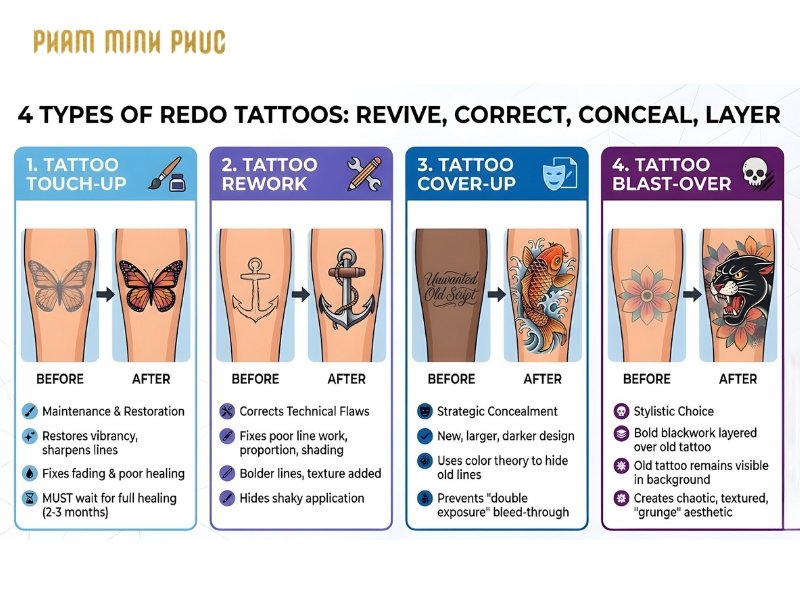
There are four redo tattoo types, depending on the condition of the original ink and your aesthetic goals.
Tattoo Touch-up
A tattoo touch-up is a maintenance procedure aimed at restoring the vibrancy and crispness of an existing design without changing its core structure. This method is ideal for tattoos that have suffered from sun exposure, poor healing, or natural fading over time. The artist re-saturates the faded areas with fresh ink and sharpens lines that have “blown out” or blurred, effectively returning the piece to its original high-contrast state.
I often see clients ask for a touch-up on a tattoo that is only 3 weeks old. I always refuse. You must wait until the skin regenerates completely (at least 2-3 months). Touching up “shiny” or healing skin will cause more trauma and likely lead to scarring.
Tattoo Rework
A tattoo rework involves modifying a poorly executed tattoo to correct technical flaws while keeping the original concept intact. This is necessary when the original artist failed to deliver quality line work, proportion, or shading. A rework specialist will manipulate the existing lines by making them bolder or adding texture. This technique effectively hides the shaky application and brings the design up to professional standards.
Tattoo Cover-up
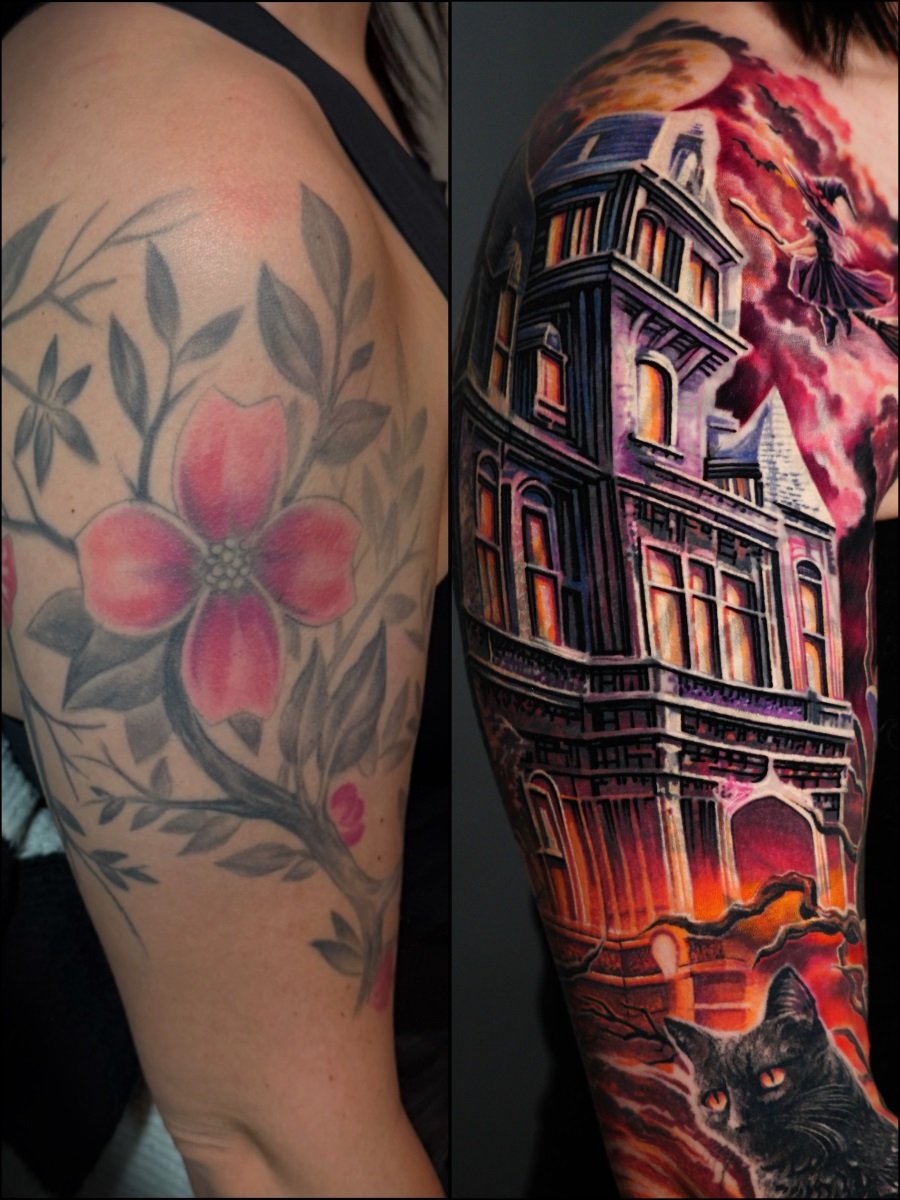
A tattoo cover-up is the strategic concealment of an unwanted design beneath a completely new, typically larger and darker piece of art. This requires mastery of color theory; the artist acts as an illusionist, using the old dark lines as shadows for the new design. Without this skill, the old tattoo will eventually bleed through, creating a “double exposure” effect where both images are visible.
Tattoo Blast-over
A blast-over is a stylistic choice where bold, heavy blackwork is tattooed directly over a faded or color tattoo without attempting to hide it completely. The goal is not total concealment but rather artistic layering. The old tattoo remains visible in the background, creating a chaotic, textured, or “grunge” aesthetic that is popular in modern Blackwork and Traditional styles.
How to Vet a Redo Tattoo Specialist?
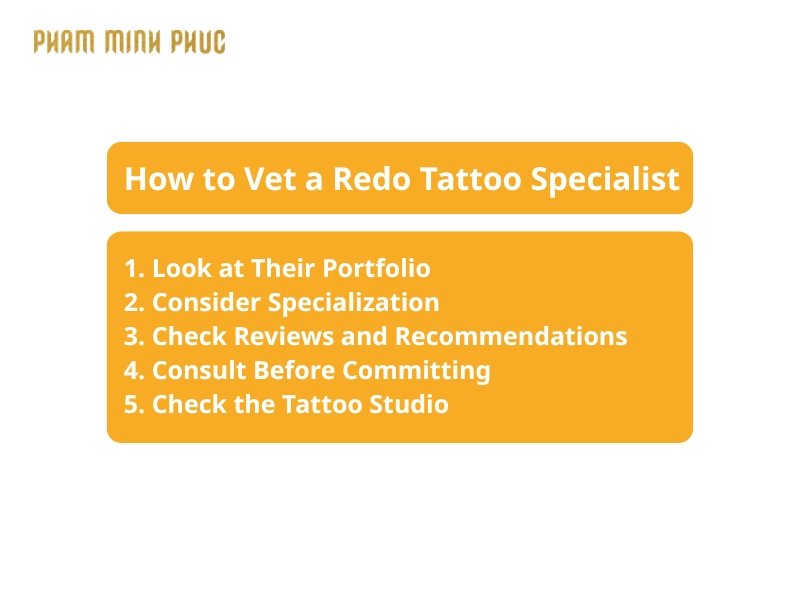
Choosing a redo specialist requires a stricter vetting process than hiring an artist for fresh ink because the margin for error is non-existent. You are not starting with a blank canvas; you are asking an artist to solve a complex visual problem on compromised skin. You must look for specific evidence of technical problem-solving capabilities.
Look at Their Portfolio
You must scrutinize the artist’s portfolio specifically for “Before and After” photos of healed work. Do not rely on fresh photos taken immediately after the session, as blood and inflammation can hide the underlying old tattoo temporarily. A true specialist will proudly display healed results showing that the old ink did not bleed back through the new design.
Minh’s Insight: Beware of “plastic skin.” I will show you how to spot a fake result. When viewing a portfolio on Instagram or a website, do not just look at the design. Zoom in until you can see the actual skin pores. If the skin looks blurry, plastic, or overly smooth, the artist is likely using filters to hide the fact that the cover-up isn’t solid. You want to see natural skin texture (even slight redness or bumps). This is the only proof that the ink is actually saturated enough to hide your old tattoo without digital manipulation.
Consider Specialization
Tattooing over scar tissue or dense pigment requires a different skill set than tattooing virgin skin. Generalist artists often lack the knowledge of color correction needed to neutralize an old blue tattoo with orange pigment before covering it. You should prioritize artists who market themselves as “Cover-up Specialists” or “Correction Artists” because they understand the science of ink layering.
Check Reviews and Recommendations
You must cross-reference client testimonials on independent third-party platforms like Google Maps, Yelp, Facebook and Instagram. Unlike curated reviews on an artist’s personal website, these platforms provide unfiltered feedback that is difficult to manipulate. Specifically, scan these sources for keywords like “saved,” “fixed,” “covered,” or “corrected.” A general 5-star rating is not enough; you need written confirmation that the artist has successfully managed high-anxiety redo situations and delivered a healed result that satisfied the client.
See more: How to message a tattoo artist to book a consultation
Consult Before Committing
A physical consultation is non-negotiable for redo work. The artist needs to touch the skin to assess scar tissue texture (raised or keloid scars) and verify the density of the old ink. A remote quote via Instagram is insufficient for complex correction work.
Minh’s Insight: Don’t just listen. Interrogate. To verify if an artist truly understands the science of a redo, do not accept a generic “Yes, I can fix it.” Instead, ask them these three specific questions to test their expertise:
- “How exactly will you neutralize the old dark pigment before adding the new color?” (Testing knowledge of Color Theory)
- “Will you use texture or solid black to break up the existing outline?” (Testing Design Strategy)
- “What is your protocol if the old tattoo starts to bleed through after healing?” (Testing Guarantee/Integrity) If they stumble or cannot answer these instantly, they are guessing. You should walk away.
Check the Tattoo Studio
The studio environment must adhere to strict sanitation protocols because reworking skin causes more trauma than a standard tattoo. Covering an area requires packing ink densely. This increases the risk of infection if the environment is not sterile. Ensure the studio uses hospital-grade sterilization and single-use disposables.
Why Reworks Cost More Than New Tattoos?
Reworks and cover-ups typically cost 20-50% more than new tattoos as they demand significantly more labor, mental energy, and technical skill. To give you a realistic baseline, a simple touch-up may cost under $100, while a full cover-up often ranges from a few hundred to several thousand dollars. The final price depends entirely on the size, complexity, the darkness of the old tattoo, and the artist’s hourly rate (typically $100-$300+). Due to these specific variables, a direct consultation is necessary for an exact quote.
Here is why the price is higher for correction work:
- Design Time: The artist must draw a custom design that fits the exact shape of your mistake. This takes hours of preparation compared to a standard stencil.
- Execution Time: Packing ink over scar tissue takes longer and requires slower, more deliberate needle movements to ensure saturation.
- Risk Management: The artist accepts the liability of fixing someone else’s mess. This carries a financial premium for the expertise required to guarantee the result.
See More: Discover tattoo price structure
Why Choosing the Right Redo Specialist is Critical?
Selecting a qualified redo artist is the single most important factor in determining whether your new tattoo will be a masterpiece or a permanent disaster. Modification work requires a completely different skill set than applying fresh ink. General tattoo artists often lack the advanced knowledge of color theory and ink layering needed to neutralize old pigments effectively.
Partnering with a dedicated specialist guarantees the preservation of your skin’s integrity and ensures a seamless transformation. A skilled artist utilizes precise depth control and color neutralization to turn a previous regret into a masterpiece, effectively making the old design vanish without leaving a trace. Ultimately, this investment restores your confidence, giving you a piece of high-caliber art that you will be proud to display for a lifetime.
Why Choose Minh Pham for Your Redo in San Antonio?
I stand as a San Antonio’s tattoo expert, combining 10+ years of technical experience with artistic excellence. My studio, Hyper Inkers, is not just a tattoo shop; it is a destination for corrective artistry. My reputation is built on solving the difficult skin problems that other artists refuse to touch.
Here is why I am the best choice for your redo project:
- Award-Winning Expertise: I have earned over 40 international awards, specifically for my mastery of Black and Grey and Realism. This competitive background proves my ability to control ink saturation with absolute precision.
- Mastery of High-Contrast Texture: I utilize advanced texturing techniques that create deep visual depth. Scientifically, this is the most effective method for “absorbing” and masking old, faded lines. Instead of just covering your tattoo with a black block, I use complex shading to make the old design disappear naturally into the new art.
- Sterile Safety Standards: I treat every redo project with hospital-grade sterilization protocols. This is critical when working on skin that has already been compromised by previous tattooing.
Book your custom cover-up tattoo service with me and transform your old ink into a one-of-a-kind masterpiece

Can Any Tattoo be Redone?
No, not every tattoo is an immediate candidate for a redo; some require laser removal sessions first. If the existing tattoo is extremely dark, densely saturated, or “blown out” (ink spread deep under the skin), adding more ink will only result in a solid black blob.
The Laser Hybrid Approach: In cases of dense blackwork, I often recommend 2-3 sessions of laser removal to lighten the pigment by 30%. This creates enough “visual space” to allow for a cover-up with color or texture, rather than just a larger black block.
Does Reworking a Tattoo Hurt More?
Yes, reworking a tattoo generally hurts more than the original session because the skin has already been traumatized. The area often has underlying scar tissue, which is more sensitive and holds nerve endings differently than virgin skin. Additionally, cover-ups require the artist to saturate the area more densely to ensure the old ink is hidden, meaning the needle passes over the same spot more frequently.
How Long Should You Wait Before Redoing A Tattoo?
You must wait until the original tattoo is fully healed and the skin has regenerated, which typically takes 3 to 6 months. While the surface may look healed after 2 weeks, the deeper layers of the dermis are still remodeling. Tattooing over healing skin will cause excessive bleeding, ink rejection, and permanent scarring.
If you rush a cover-up on still-healing skin, the new ink will blow out, and you will need a third tattoo to fix the second one. Wait until the skin texture feels identical to the surrounding un-inked skin.
Can an overworked tattoo be touched up?
Yes, an overworked tattoo can sometimes be touched up, but only after the skin has fully healed. In many cases, a skilled tattoo artist can improve uneven ink, patchy areas, or blurred details with a careful touch-up session. However, severely overworked skin may scar permanently, which can limit how much the tattoo can be corrected.
You should always wait until the area is completely healed before considering any additional work, and it is often best to consult an experienced artist who specializes in tattoo correction or redone tattoos.
Transforming a regret into a masterpiece requires partnering with a specialist who understands the intricate science of color neutralization and scar tissue management. Prioritizing authentic healed results over the lowest price ensures your skin’s integrity remains preserved, justifying the premium investment required for these complex correction procedures. As a San Antonio-based correction expert, I combine technical precision with advanced texturing to erase past mistakes effectively. If you are ready to reclaim your confidence with high-caliber art, I am ready to help.