You must strictly avoid getting a tattoo while taking antibiotics because the medication confirms the immune system is actively fighting a pathogenic infection. Introducing a new wound into the dermis during this heightened state triggers a “double trauma” response where white blood cells prioritize fighting the pathogen over healing the cosmetic abrasion. This biological conflict inevitably accelerates phagocytosis which is a process where the body aggressively expels the fresh pigment as a foreign invader resulting in patchy saturation and potential scarring.
I, Minh Pham, have analyzed the specific dermatological side effects including drug-induced photosensitivity and excessive bleeding that turn a standard session into a medical risk. This guide explains why the “One-Week Rule” is non-negotiable and how to reschedule the appointment without losing the deposit in the analysis below.

Table of Contents
Why You Cannot Get a Tattoo While on Antibiotics?
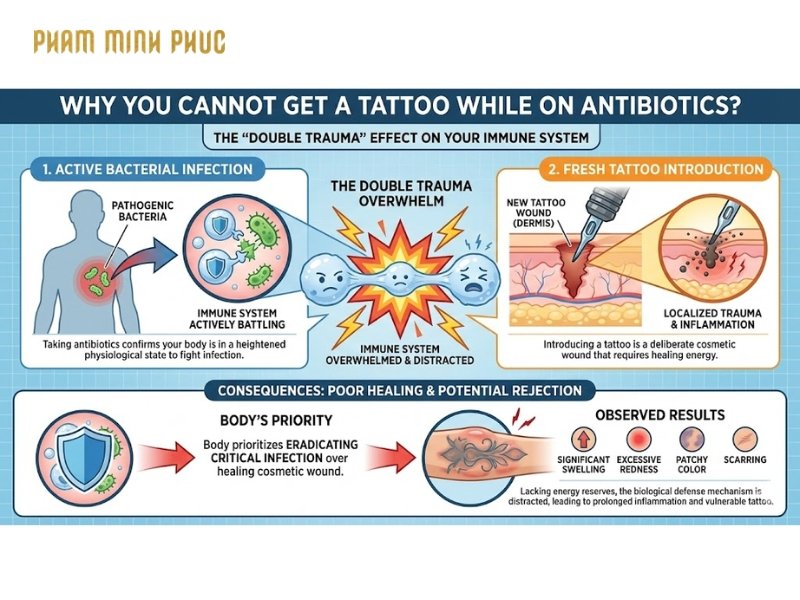
Taking antibiotics confirms that your immune system is actively battling a pathogenic bacterial infection. Introducing a fresh tattoo into the dermis during this heightened physiological state creates a “double trauma” effect that overwhelms your white blood cells. The body inevitably prioritizes eradicating the critical infection over healing the cosmetic wound, leaving the new tattoo vulnerable to prolonged inflammation and potential rejection.
I have observed that clients attempting to tattoo with compromised immune systems experience significantly more swelling and excessive redness. Their bodies lack the energy reserves to manage the localized trauma effectively, which often results in the tattoo healing poorly with patchy color or scarring because the biological defense mechanism is distracted.
Will Antibiotics Ruin a Tattoo?
Yes. Antibiotics accelerate the body’s foreign object elimination response, which directly targets the tattoo pigment during the healing phase. The heightened immune activity causes the body to push the ink out of the skin more aggressively than usual via a process called phagocytosis.
You risk walking away with a permanent piece of art that looks aged, “patchy,” or faded within the first month due to this biological rejection. My goal is to implant ink that stays vibrant for a lifetime; tattooing a body that is actively trying to expel foreign invaders guarantees a subpar result that will require expensive touch-ups later.
Side Effects of Getting Tattoo While on Antibiotics for Your Skin
Antibiotics do not just target internal bacteria; they fundamentally alter the chemical composition and resilience of your largest organ. These systemic changes create a hostile environment for the tattoo needle, leading to the following complications:
- Photosensitivity: Medications like tetracyclines significantly increase the skin’s sensitivity to UV light and bright studio lamps. This reaction often causes the skin to blister or burn rapidly under normal tattooing conditions.
- Excessive Bleeding: Certain antibiotics act as mild blood thinners, preventing platelets from clotting efficiently. Uncontrolled bleeding pushes fresh ink out of the dermis, forcing the artist to overwork the skin to achieve saturation.
- Altered Texture: The medication changes the skin’s turgor, making it feel “spongy” or resistant to needle penetration. This texture forces the artist to apply more pressure, which inevitably results in increased tissue trauma and potential scarring.
What If I Don’t Tell My Artist About My Antibiotics?
Omitted medical information on a consent form constitutes a breach of the legal and ethical client-artist contract. Hiding your condition puts the artist at risk if your infection is contagious and complicates the medical response if you have an adverse reaction in the chair.
You should practice transparency; I respect clients who prioritize safety over convenience and will happily reschedule the deposit. If you need to reschedule due to illness, knowing the proper way to message a tattoo artist ensures you maintain a good professional relationship while navigating these logistical changes.
How Long Should You Wait to Get a Tattoo After Antibiotics?
You must wait a minimum of seven days after finishing your full course of medication before sitting for a tattoo. This “One-Week Rule” allows the drug to clear your system completely and gives your white blood cell count time to stabilize.
Rushing this timeline often leads to a false sense of recovery, where the body feels strong enough but lacks the deep reserves to heal a major skin abrasion properly. Once you have fully recovered, you should review what to eat before getting a tattoo to rebuild your nutritional strength and prepare your body for the upcoming session.
Why Minh Pham Prioritizes Your Health?
My reputation relies on the healed result of your tattoo rather than the immediate photo taken after the session. I prioritize your physiological readiness because a healthy canvas ensures the artwork remains vibrant for decades without the need for correction.
Turning a client away is never personal; it is a professional standard designed to protect your investment and my artistic integrity. Once your health is restored and the tattoo is complete, following a strict tattoo aftercare guide becomes the next step to ensuring the longevity of your piece.

Frequently Asked Questions
Can you get a tattoo if you are on antibiotics for acne?
Long-term, low-dose antibiotics for acne are generally safer than acute infection courses, but you must still consult your dermatologist. These medications often increase skin sensitivity, so a patch test may be required.
Does this apply to antibiotic ointment on the tattoo?
Yes, you should avoid applying antibiotic ointments like Neosporin to a fresh tattoo unless prescribed for an infection. These dense creams block oxygen and can actively pull ink out of the skin, causing color loss.
Can you take painkillers instead?
You can take acetaminophen (Tylenol) as it does not thin the blood. You should avoid aspirin or ibuprofen before a tattoo as they reduce clotting ability and increase bleeding.
Postponing the appointment until seven days after the final dose ensures the immune system regains the stability required to lock pigment into the skin. Attempting to bypass this recovery window not only violates the ethical client-artist contract but guarantees a subpar aesthetic result due to altered skin texture and uncontrolled bleeding. As a top rated San Antonio-based custom artist, I enforce this safety standard to protect the longevity of the artwork. If the body is fully recovered and ready for trauma, I am ready to tattoo.