Knowing the specific questions to ask your tattoo artist serves as the primary safeguard against medical risks and permanent aesthetic regret. This vetting process extends far beyond assessing visual style. The inquiry demands a rigorous evaluation of the artist’s apprenticeship history, cross-contamination protocols, and technical versatility. A professional tattoo consultation provides the ideal environment to transparently address critical concerns regarding the use of single-use needles, the chemical stability of their ink brands, and their capability to handle specific skin types without hesitation.
I, Minh Pham, have compiled this essential vetting guide to help you distinguish between a dedicated specialist and a less experienced amateur. We will cover the specific inquiries needed to verify Bloodborne Pathogen certifications, clarify touch-up policies, and establish a transparent pricing structure, ensuring you enter the studio with total confidence in the guide below.
Table of Contents
Phase 1: Vetting Their Skill (Ask Before Booking)
The initial phase of your inquiry determines if the artist has the technical capability to handle your specific request. You must distinguish between a general practitioner and a specialized master.
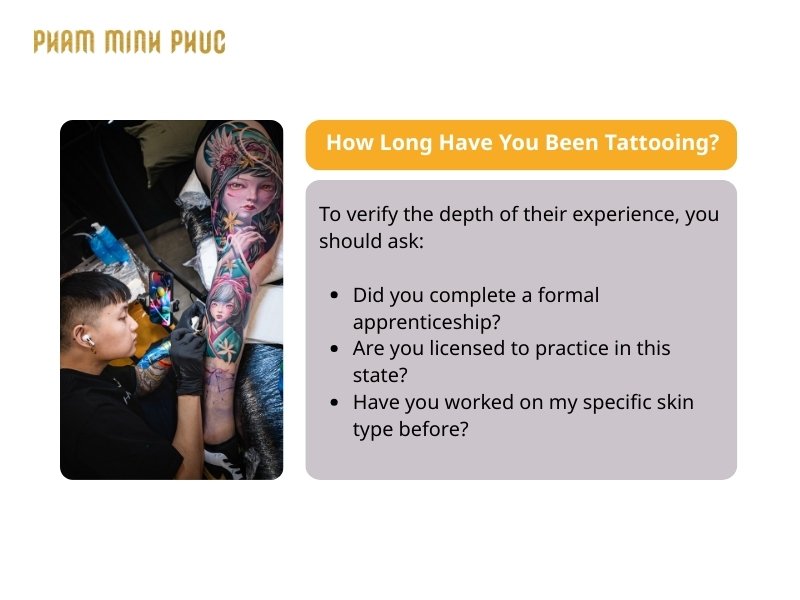
1. How Long Have You Been Tattooing?
Years of experience provide a baseline for an artist’s technical consistency and ability to handle diverse skin types. A professional career spanning over five to ten years typically indicates that the artist has encountered and solved various complications during the tattooing process. You should look for a history of a formal apprenticeship rather than self-taught experimentation, as this ensures they learned proper technique and safety foundations from established mentors.
To verify the depth of their experience, you should ask:
- Did you complete a formal apprenticeship?
- Are you licensed to practice in this state?
- Have you worked on my specific skin type before?
2. Do You Specialize in Some Specific Style?
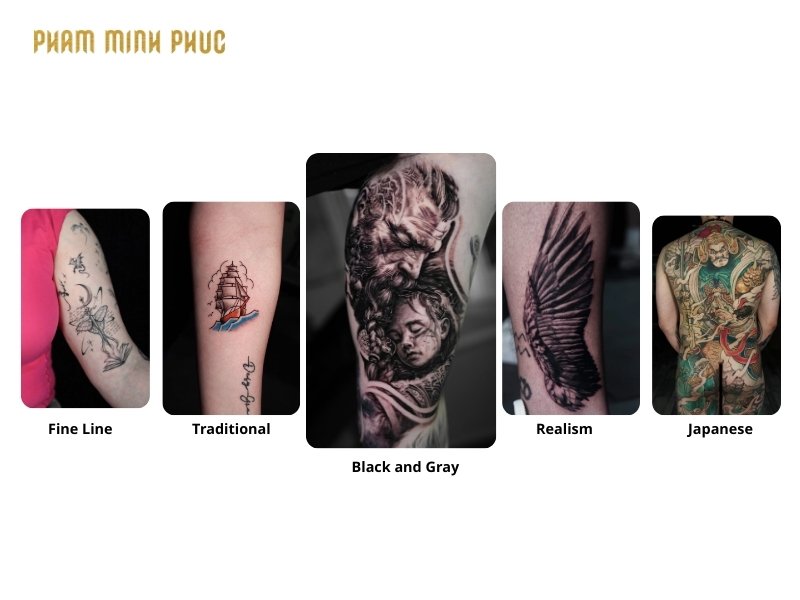
Tattooing has evolved into highly specialized disciplines such as Realism, Fine Line, or American Traditional. An artist who claims to do everything often lacks mastery in complex styles. Even seasoned professionals who possess the versatility to execute various styles competently still cultivate specific areas of expertise where their skill is unmatched. It is critical to match your concept to their primary strength.
For instance, if you envision a smooth Black and Grey Realism portrait, booking an artist who primarily executes bold American Traditional work will result in a subpar outcome, regardless of their general skill level.
3. Can I See Photos of Your Healed Work?
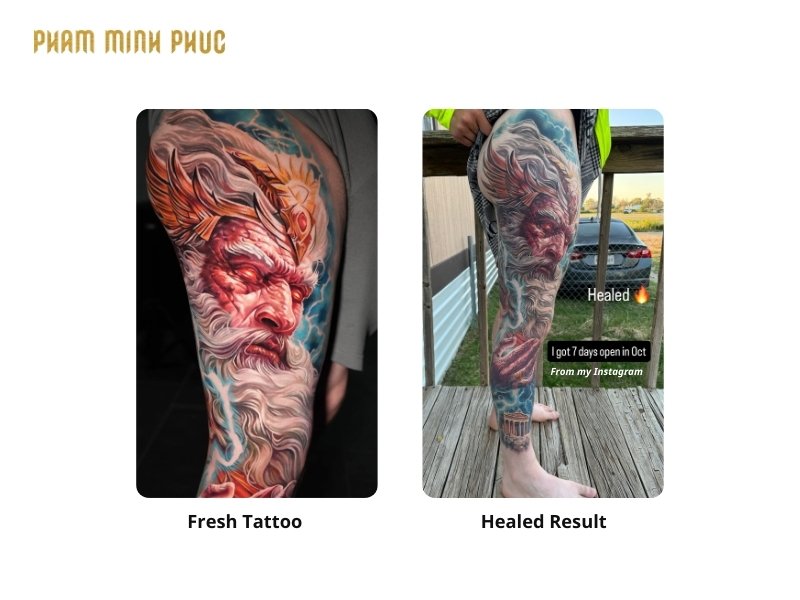
Healed tattoos are the definitive measure of an artist’s capability and must be the primary focus when reviewing a portfolio. While fresh work appears vibrant, only the healed result reveals if the ink was applied with proper depth and technique. You should explicitly ask to see examples that have settled into the skin for at least three months to verify quality. You should specifically examine these key indicators of proper execution:
- Line Consistency: Check if fine lines have blown out or thickened significantly over time.
- Color Saturation: Ensure solid blacks remain dark and colors have not become patchy.
- Skin Trauma: Look for signs of raised scarring or overworked skin, which indicates poor needle control.
4. Do You Create Custom Designs or Only Use Flash?
High-end tattoos are bespoke creations designed to fit the unique flow of your anatomy. While flash (pre-drawn designs) has its place, a complex concept requires a custom approach. The artist should explain how they will translate your narrative or reference images into a cohesive design that works on a curved body surface. This process proves they understand composition and are not simply tracing an image from Pinterest that may not translate well to skin.
Phase 2: Verifying Safety and Hygiene
This is the non-negotiable aspect of the industry. You are verifying the prevention of cross-contamination and bloodborne pathogens.
5. Do You Use Single-Use Needles and Tubes?
Modern safety standards dictate the use of disposable, single-use equipment for any item that touches blood or plasma. The artist must confirm that all needles and cartridge tubes come in sterile blister packs. They should open these packages in front of you at the start of the session. Reusing needles, even after cleaning, is a malpractice that carries severe risks of transmitting disease such as Hepatitis and HIV.
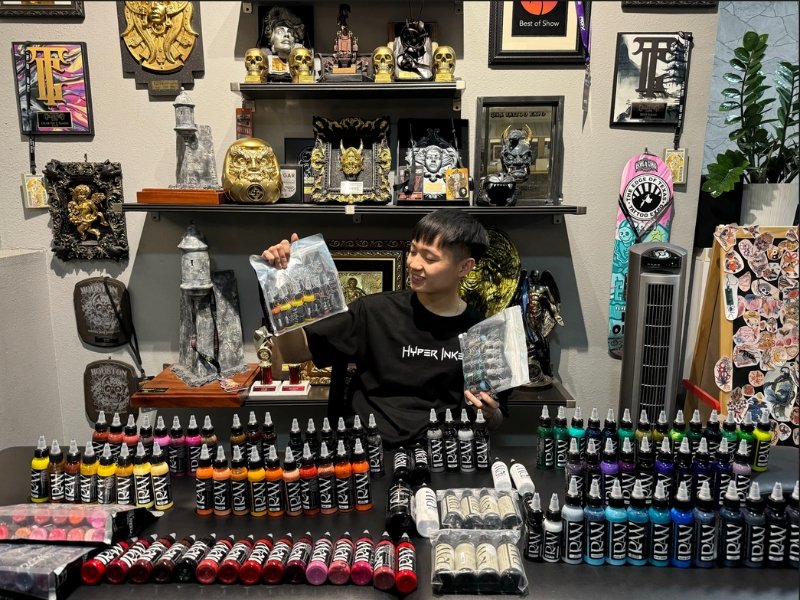
6. What Brand of Ink Do You Use?
The chemical composition of tattoo ink directly dictates both safety and longevity. Professional artists exclusively use reputable brands like Eternal Ink, World Famous Ink, or Dynamic Color Co., which provide Material Safety Data Sheets (MSDS). These manufacturers formulate pigments that are stable, sterile, and strictly tested. Gaining insight into what tattoo ink is made of helps you appreciate why professional-grade pigments are essential for preventing allergic reactions and avoiding heavy metal toxicity found in counterfeit products.
If an artist gives any of the following responses, consider it a major warning sign:
- “I just buy whatever is cheapest on eBay; ink is just ink.”
- “I mix my own pigments from scratch at home.” (Without a sterile lab environment).
- “I don’t know the brand name; I just refill these generic bottles.”
- “We don’t keep the original packaging or expiration dates.”
To further verify their standards, ask these follow-up questions:
- “Can I see the expiration date on the bottle?” Expired ink can harbor bacteria and cause serious infections.
- “Is the ink vegan and organic?” This ensures the pigment is free from animal by-products and harsh chemicals.
- “Do you have the MSDS sheets available for review?” A professional studio will always have these safety documents on file.
7. Are You Licensed and Certified in Bloodborne Pathogens?
A professional license is a legal requirement that proves the artist has met local health department standards. Beyond the business license, the artist must hold a current Bloodborne Pathogen (BBP) Certification. This certification verifies they have undergone training on preventing the spread of infectious diseases. A reputable artist will have these documents framed and visible in their station, or they will produce them immediately upon request.
Be cautious if the artist offers these evasive responses:
- “I do not need a certificate; I have been tattooing for years without issues.”
- “The shop license covers everyone, so I do not need my own.”
- “My certification just expired, but I haven’t had time to renew it.”
- “We don’t keep those papers here; they are with the owner.”
To ensure their training is up to date, ask these specific questions:
- “May I check the expiration date on your BBP card?” These certifications typically require annual renewal to remain valid.
- “Is your specific station permitted by the health department?” In some regions, both the artist and the specific workspace must pass inspection.
- “Do you maintain a sterilization log for your equipment?” This documentation proves they consistently adhere to safety protocols over time.
Phase 3: The Process and Logistics
Understanding the workflow manages expectations regarding time, collaboration, and long-term maintenance.
8. How Many Sessions Will This Take?
The number of sessions is a critical logistical factor that depends on the design’s complexity and your skin’s trauma threshold. While simple designs are completed in one sitting, large-scale projects like full sleeves require a multi-stage approach to allow for proper saturation and healing. The artist should provide a realistic timeline based on these categories:
- Single Session: Small to medium pieces (2–6 hours).
- Multi-Session: Large scale work (20+ hours total).
- Healing Intervals: Typically 3–4 weeks between sessions on the same area.
Understanding these timeframes is vital for planning your schedule. For a more detailed breakdown of duration factors based on size and style, refer to our comprehensive guide on how long does getting a tattoo take.
9. How Do You Handle Design Changes?
Collaboration is key while technical boundaries remain. You should ask how the artist handles feedback on the stencil or preliminary sketch. A professional will accommodate reasonable adjustments to elements or placement to ensure you are happy. Note that requesting a complete redesign of the concept on the day of the appointment usually requires rescheduling and a new deposit, as it disregards the artist’s preparation time.
10. What Is Your Policy on Touch-Ups?
Even with perfect application, the body may naturally reject some ink during the scabbing phase. Most professional artists provide one complimentary touch-up session within a specific window, typically 3 to 6 months post-appointment, to correct minor imperfections. You should explicitly ask if this service is fully free or if a nominal setup fee is required to cover sterile supplies. Note that this guarantee typically becomes void if you neglect the prescribed aftercare instructions or expose the fresh tattoo to the sun.
Phase 4: Clarifying Pricing and Payment
Financial transparency prevents awkward misunderstandings once the session concludes. Establishing clear expectations regarding rates and terms upfront ensures the focus remains entirely on the artwork rather than the bill.
11. Do You Charge by the Hour or by the Piece?
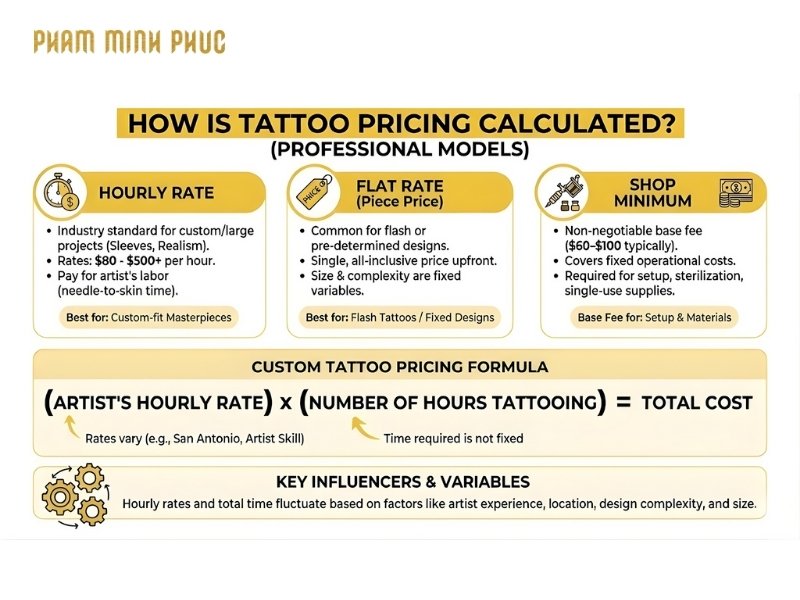
The pricing structure reflects the nature of the work and the artist’s workflow. Clarifying this model prevents sticker shock and allows for precise financial planning. Professional studios typically categorize costs into these two distinct brackets based on the project’s scope:
- Hourly Rate: Standard for large-scale, multi-session projects (sleeves, back pieces), with professional rates typically ranging from $80 to $500 per hour.
- Flat Rate: Common for “one-shot” pieces or pre-drawn flash, often starting at a $60-$100 shop minimum in San Antonio for even the smallest designs.
Beyond the basic rate, final expenses depend heavily on placement difficulty and design intricacy. For a comprehensive look at current market averages and budget planning, explore our detailed guide on how much tattoos cost.
12. How Much Is the Deposit, and What Payment Methods Are Accepted?
A deposit is standard industry practice to secure your appointment slot and compensate the artist for drawing time. This amount is deducted from the final cost of the tattoo. You should also confirm acceptable payment methods. While many studios accept cards, some artists prefer cash to avoid processing fees. Knowing this in advance prevents last-minute trips to the ATM.
13. Is the Deposit Refundable?
Deposits are almost exclusively non-refundable. They protect the artist from income loss due to last-minute cancellations. You must clarify the cancellation policy. Typically, artists allow you to transfer the deposit to a new date if you provide sufficient notice (usually 48 to 72 hours). Understanding these terms ensures you respect the artist’s time and business operations.
Phase 5: Physical Experience & Pain Management
Preparation minimizes trauma and ensures the artist can work efficiently without frequent interruptions.
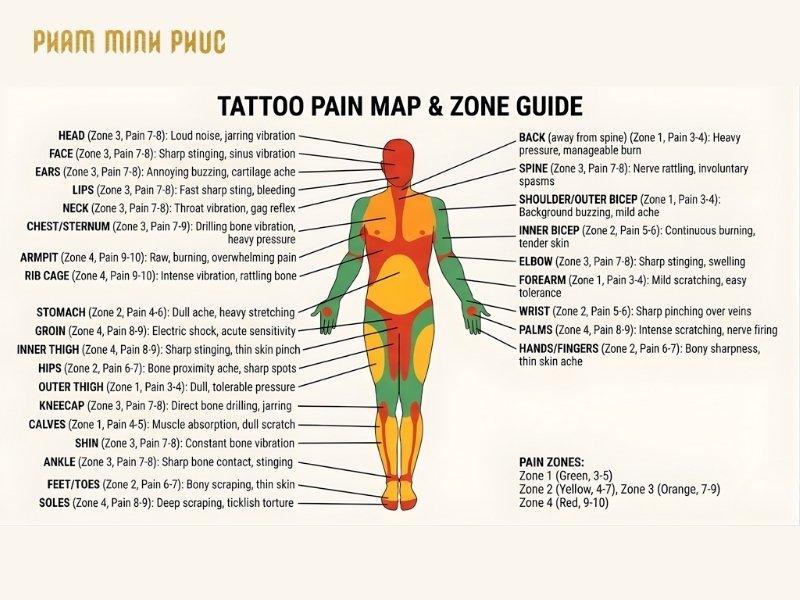
14. How Painful is This Specific Placement?
Pain is subjective; anatomical reality is objective. Areas over bone (ribs, spine) or with high nerve density (inner bicep, ditch) inherently hurt more than fleshy areas like the outer thigh. Asking this allows you to mentally prepare or discuss numbing cream options. Some artists have specific protocols regarding numbing agents, as certain types can alter skin texture and affect ink absorption.
15. How Should I Prepare for the Appointment?
A successful session relies heavily on your physical state. Asking this question tests whether the artist proactively manages factors that influence pain tolerance and bleeding rates. A professional will not simply tell you to “show up,” but will instead provide specific biological protocols to ensure their canvas (your skin) is in optimal condition. You need to solicit their expert advice on these critical variables:
- Nutrition & Hydration: Ask what they recommend eating to stabilize blood sugar and prevent fainting.
- Skin Preparation: Clarify if you should moisturize the area beforehand or if they prefer dry skin for the stencil application.
- Substance Restrictions: Confirm their policy on caffeine, alcohol, or blood-thinning medications prior to the session.
To ensure you are fully compliant with their studio protocols, ask these specific follow-up questions:
- Should I shave the area myself, or will you do it at the shop?
- Am I allowed to bring snacks and sugary drinks for breaks?
- Do you require me to wear specific clothing to access this placement easily?
16. What is Your Recommended Aftercare Routine?
The healing process determines 50% of the final aesthetic outcome. You must strictly inquire about the artist’s specific protocol rather than relying on generalized internet advice. Different techniques, such as heavy color packing versus delicate fine line work, require distinct healing strategies to prevent ink fallout or infection. A professional artist will provide a tailored regimen that accounts for their specific application method and ink choice, taking full accountability for the longevity of their work.
You need to clarify these critical components of their protocol:
- Healing Method: Ask if they utilize modern wet-healing bonds (like Saniderm or Second Skin) or prefer the traditional dry-healing method with antibacterial soap.
- Product Recommendations: Request specific brand names for lotions or ointments to avoid products containing petroleum or heavy fragrances that can suffocate the skin.
- Emergency Contact: Confirm how to reach them immediately if you suspect an infection or abnormal reaction.
To cover all scenarios, ask these specific follow-up questions:
- What signs of infection should I look for versus normal irritation?
- How long must I wait before swimming or resuming high-intensity gym workouts?
- Do you have an alternative protocol if I am allergic to the adhesive bandages?
How to Ask a Tattoo Artist These Questions Naturally?
You do not need to interrogate the artist. Firing a rapid list of questions can create an adversarial atmosphere, making the artist feel defensive rather than valued. Instead, frame your inquiries as genuine curiosity about their craft and a desire to be the best possible client. This approach builds rapport and establishes a collaborative partnership, ensuring the artist feels respected while you gather the necessary verification.
Follow these strategies to integrate vetting into casual conversation:
- Spread them out: Do not ask everything at once. Ask logistical questions via email before booking and save creative questions for the consultation.
- Frame as “we”: Use language that implies teamwork, such as “How can we ensure this heals best?” rather than “What will you do?”
- Compliment first: Anchor technical questions to a specific compliment about their work to soften the tone.
Examples of Natural Phrasing:
- Instead of “Are your tools sterile?”, ask: “I really admire how organized your station looks. What is your setup process like for a session like this?”
- Instead of “How long have you been tattooing?”, ask: “Your color packing is incredible. Have you been focusing on this specific style for a long time?”
You may also need to know:
- Ask a tattoo artist to design your tattoo
- Ask tattoo artist to alter your tattoo
- Asking your tattoo artist about a sleeve
What Are Some Questions You Should Avoid?
Certain questions immediately flag a client as a liability. These inquiries reveal a fundamental disregard for the artist’s intellectual property, pricing structure, or sterile boundaries. Asking them often compromises the professional relationship and results in a denied appointment. You must strictly avoid the following questions to maintain professional respect:
- Can You Give Me a Discount?
- Can You Draw It Before I Pay a Deposit?
- Can You Copy This Exact Tattoo From Pinterest?
- Can You Make It Smaller (But Keep All the Detail)?
- Can I Bring My Kids or My Dog?
- Can I Get Tattooed While Drunk or High?
- Can You Hurry Up?
- Does It Hurt?
- What Does This Symbol Mean?
- Can We Change the Design Now?
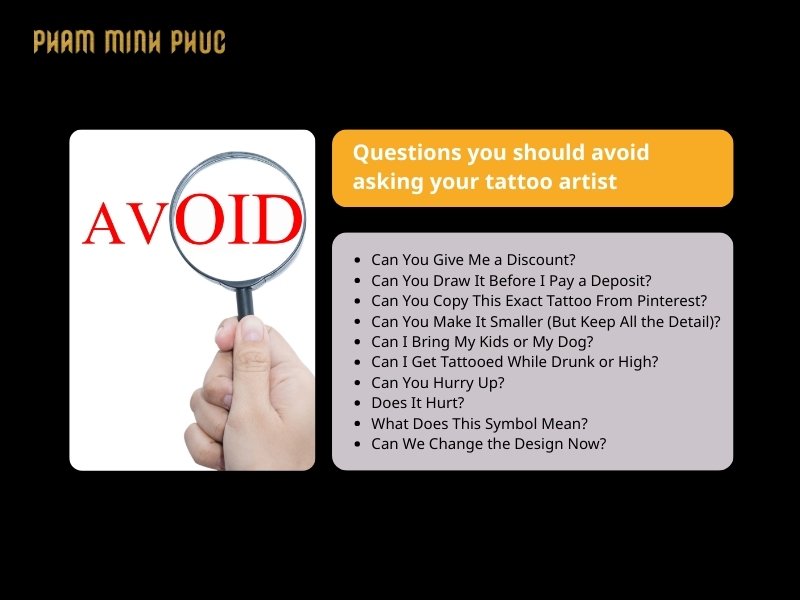
Each question violates specific industry standards regarding ethics and safety. To understand the crucial etiquette behind these boundaries and why they are offensive to professionals, read my full guide on what not to ask your tattoo artist.
What Questions Your Tattoo Artist May Ask You?
A professional tattoo consultation is a reciprocal interview. The artist must verify your suitability to ensure a safe, successful outcome. They will probe your medical history, design logistics, and financial expectations to guarantee the final piece aligns with your anatomy and lifestyle. Answering these inquiries honestly accelerates the design process and prevents safety hazards. Here are some common questions a professional tattoo artist is likely to ask:
- What is the specific story or meaning behind your concept?
- Do you have high-resolution reference images to illustrate your vision?
- Where exactly on the body do you intend to place this design?
- Do you have existing tattoos in the surrounding area that we need to integrate?
- What is your approximate budget ceiling for this entire project?
- Are you currently pregnant, breastfeeding, or taking blood-thinning medication?
- Do you have any history of keloid scarring, psoriasis, or latex allergies?
- Is your job physically demanding or does it expose the skin to direct sunlight?
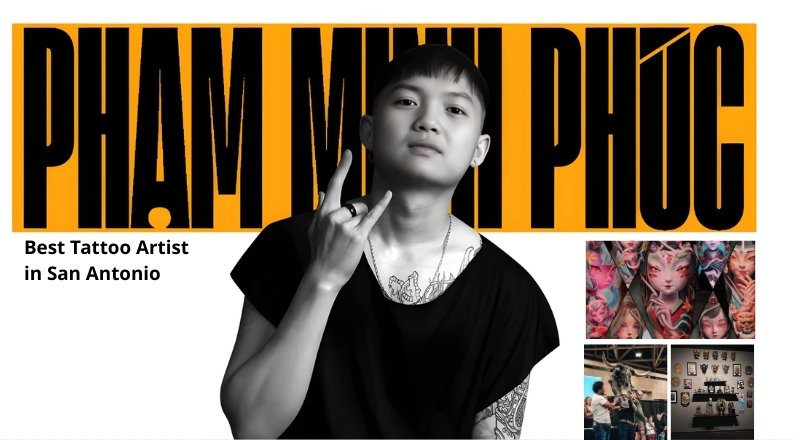
Why Should You Choose Minh Pham Tattoo Artist in San Antonio?
As one of the top tattoo artists in San Antonio Texas, my practice combines elite artistry with rigorous safety standards to deliver permanent excellence. I strictly prioritize technical precision and hygiene to ensure every piece stands the test of time. Clients entrust their skin to my studio for these distinct advantages:
- 40+ International Awards: My portfolio reflects global recognition and consistent mastery. Whether executing complex cover-ups or delicate fine-line work, I ensure the result remains sharp and vibrant for decades.
- Bespoke Custom Design: I strictly avoid generic templates. I architect unique concepts tailored specifically to your anatomy and personal narrative.
- Hospital-Grade Sterility: Your health is paramount. My private studio enforces strict medical protocols, utilizing single-use disposables to guarantee a risk-free environment.
- Intimidation-Free Atmosphere: I prioritize clear, respectful communication. You receive professional guidance throughout the entire process, from the initial consultation to final aftercare.
When Is The Best Time To Ask These Technical Questions?
You should address these inquiries during the formal consultation or via a detailed email prior to placing a deposit. Avoid asking complex technical questions via Instagram DM or text message, as these platforms are informal and often overlooked. A face-to-face meeting or structured email ensures the artist can provide focused, comprehensive answers.
Can You Ask To Check The Shop’s License?
Absolutely. A reputable studio will display their Health Department License and Biomedical Waste Permit in the lobby or workspace. If these are not visible, you are within your rights to ask to see them. A refusal or excuse is a major red flag indicating non-compliance with state safety regulations.
Can You Ask For A Price Quote Before The Consultation?
You can request a rough “ballpark” estimate, but exact pricing requires a consultation. Artists cannot provide an accurate quote without analyzing the size, placement, and detail level of the specific design. Asking for a fixed price sight-unseen often signals to the artist that you are “price shopping” rather than seeking quality work.
Will Asking Too Many Questions Annoy The Tattoo Artist?
A professional respects a well-researched client. Thorough vetting signals that you take the commitment seriously and respect the craft. However, ensure your tone remains curious rather than accusatory. If an artist becomes defensive or dismissive of standard safety inquiries, this serves as an immediate warning sign to look elsewhere.
Can You Bring A Guest To My Appointment?
Space is often limited. You must ask the artist beforehand. Most studios allow one guest for moral support, but bringing a large group or children is prohibited as it distracts the artist and compromises the sterile field.
What Should I Do If I Am Not Satisfied With Their Answers?
Do not book the appointment. If an artist gives vague responses, lacks a portfolio of healed work, or dismisses safety concerns, simply thank them for their time and leave. Never compromise on safety or quality due to social pressure. Your health and permanent appearance take precedence over politeness.
Asking the right questions transforms you from a passive customer into an informed client, ensuring your safety and satisfaction are never compromised. By systematically verifying critical factors like sterilization logs, healed portfolio results, and ink quality, you protect yourself against both medical risks and aesthetic failure. As a San Antonio-based custom artist, I encourage this level of scrutiny because transparency is the hallmark of true professionalism. If you are ready to entrust your skin to a studio that welcomes your questions, I am ready to provide the answers.