A tattoo is a permanent form of body modification created by inserting indelible ink into the dermis layer of the skin. Unlike temporary markings, this design becomes a fixed part of your physiology because the body’s immune system, specifically macrophage cells, encapsulates the pigment particles to prevent them from being eliminated. According to Pew Research Center, tattooing has shifted from counter-culture to mainstream acceptance, with approximately 32% of American adults possessing at least one tattoo.
A professional tattooing workflow follows a strict 5-step protocol, ranging from consultation and sterilization to the final bandaging. Clients must distinguish between flash tattoos (pre-drawn designs) and custom tattoos (bespoke artwork), which can be executed in styles like Traditional or Realism depending on anatomical placement. Proper aftercare is critical, as the epidermis typically heals in 2 to 4 weeks, while the deeper dermis requires up to 6 months for full regeneration.
In this article, I – Minh Pham, will help you understand more about professional tattoos, navigating from the technical application process to explore diverse styles and tips on selecting a San Antonio tattoo artist who prioritizes hospital-grade safety.

Table of Contents
What Is A Tattoo? Why Are Tattoos Common Nowadays?
A tattoo is a permanent form of body modification created by inserting indelible ink, dyes, or pigments into the dermis layer of the skin to form a design. This process uses needles to puncture the skin barrier and deposit color into the stable tissue below the shedding epidermis. Once healed, the design becomes a fixed part of your physiology because the body’s immune system encapsulates the pigment particles to keep them in place.
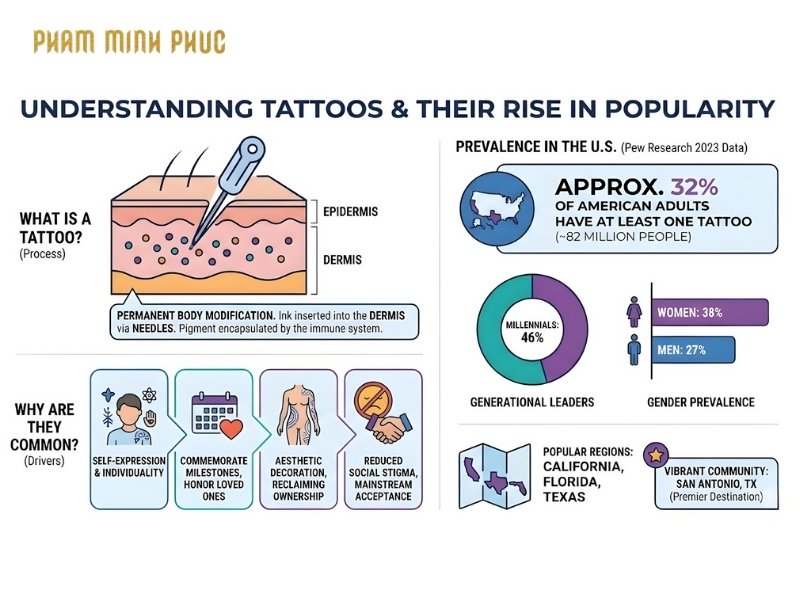
Tattoos have evolved from fringe counter-culture symbols into a widely accepted mainstream art form driven by the human desire for self-expression and individuality. People nowadays use body art to commemorate personal milestones, honor loved ones, or reclaim ownership of their bodies through aesthetic decoration. The significant reduction in social stigma has further accelerated this trend, making it entirely common for professionals across all industries to wear visible ink with pride.
This artistic movement is prevalent across the United States, particularly in states like California, Florida, and Texas. According to recent major data from 2023 of Pew Research Center, approximately 32% of American adults have at least one tattoo, which equates to roughly 82 million people. The landscape has shifted dramatically, with Millennials leading the charge at 46% and women now surpassing men in prevalence (38% vs 27%). This surge in popularity is especially visible here in San Antonio, where a deep cultural history has fostered a vibrant community of collectors and established the city as a premier destination for professional body art.
Why Do Tattoos Last Forever?
Tattoos are permanent because the ink is deposited into the dermis, the stable inner layer of the skin, rather than the shedding epidermis. When the tattoo needle punctures the skin, your body immediately identifies the pigment as a foreign intruder and triggers an aggressive immune response. White blood cells, specifically macrophages, rush to the site to attack and engulf the invading particles through a biological process called phagocytosis.
However, this cellular battle results in a stalemate because the ink particles are too large for the macrophages to destroy or carry away effectively. When you consider what is tattoo ink made of, it becomes clear why these dense pigment compounds resist the body’s natural breakdown process. Instead of being eliminated, the pigment becomes encapsulated inside these cells and the surrounding fibroblasts of the connective tissue. This locking mechanism prevents the design from migrating into the deeper subcutaneous tissue and effectively traps the art in place.
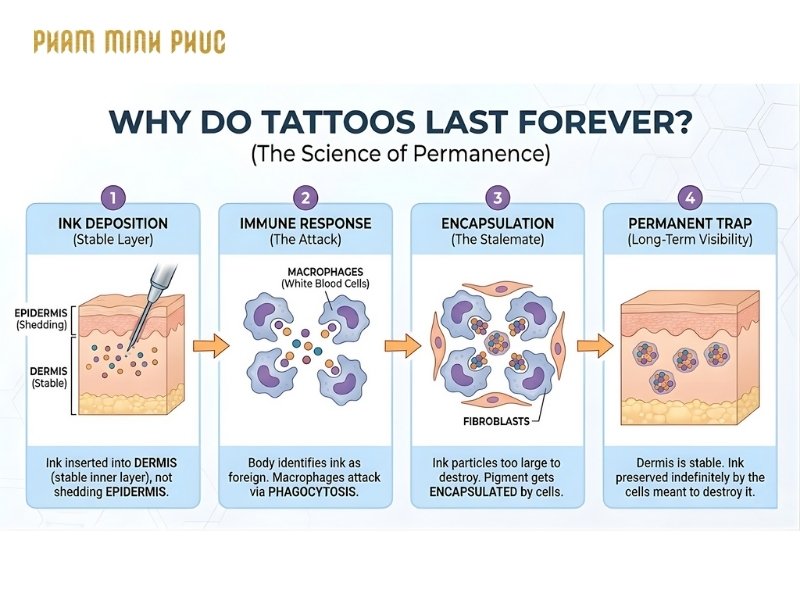
While the outer epidermis constantly sheds and regenerates, causing the tattoo to peel during the initial healing phase, the dermis remains structurally stable. Once the damaged top layer heals and falls away, the ink remains permanently visible through the new skin because it is preserved indefinitely by the very cells sent to destroy it.
How Does the Tattooing Process Work?
A professional tattooing process follows a strict 5-step protocol to ensure precision, safety, and hygiene. Adhering to this complete workflow is mandatory to eliminate the risk of cross-contamination and guarantee that the artwork heals perfectly without complications.
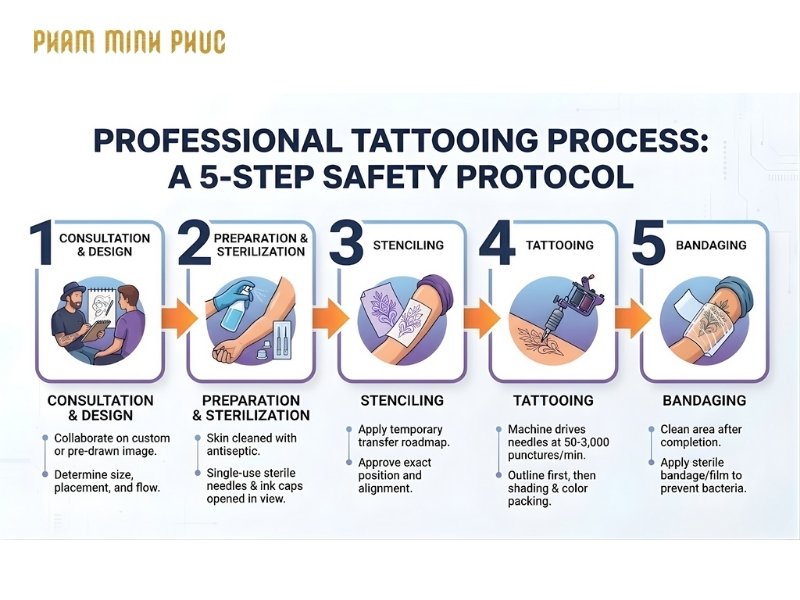
- Consultation and Design: The artist collaborates with you to finalize a custom design or select a pre-drawn image. This stage determines the size, placement, and flow of the artwork on your body.
- Preparation and Sterilization: The artist cleans the skin area with an antiseptic solution. They must open single-use, sterile needles and ink caps in front of you to guarantee safety.
- Stenciling: The artist applies a temporary transfer of the design onto your skin. This “roadmap” allows you to approve the exact position and alignment before any permanent marks are made.
- Tattooing: Using a tattoo machine, the artist drives needles into the skin at a rate of 50 to 3,000 punctures per minute. They typically outline the design first, followed by shading and color packing.
- Bandaging: Once completed, the artist cleans the area and applies a sterile bandage or protective film to prevent bacteria from entering the fresh wound.
What Is The Difference Between Flash and Custom Tattoos?
The fundamental difference lies in the exclusivity and the creative origin of the design. A flash tattoo is a pre-drawn design available for multiple clients to choose from, whereas a custom tattoo is bespoke artwork created exclusively for one individual.
Flash tattoos are typically displayed on studio walls or in an artist portfolio. Since the design and stenciling are already prepared, they are the standard choice for walk-in tattoo appointments where convenience and classic aesthetics are prioritized.
Custom tattoos are designed for storytelling. This process involves a consultation to translate your personal narrative into a unique collector’s piece. A professional artist strictly respects artistic copyright, ensuring that your custom design remains a one-of-a-kind creation that will never be replicated on another person.
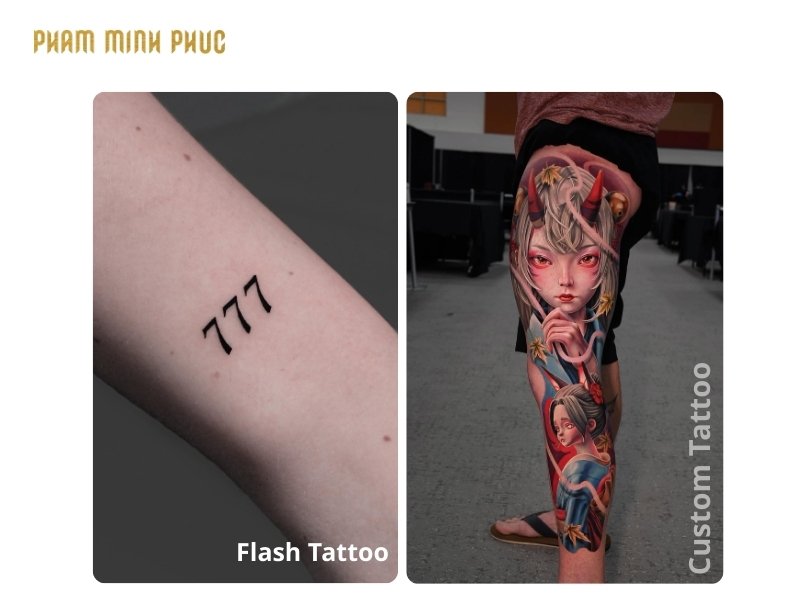
To help you determine which approach aligns with your vision, the table below compares these styles based on uniqueness, cost, and the required time commitment.
| Feature | Flash Tattoo | Custom Tattoo |
| Uniqueness | Repeatable. The design is non-exclusive and can be tattooed on multiple people. | Exclusive. A one-of-a-kind design created solely for you; it is never reused. |
| Consultation | Minimal. You select a design from the book and can start the process immediately. | Mandatory. Requires a meeting to discuss concepts, placement, and flow. |
| Cost | Fixed Rate. Typically ranges from $100 to $400 total, depending on size. | Hourly Rate. Typically ranges from $150 to $300+ per hour due to complexity. |
| Time | Immediate. The art is pre-drawn, allowing for same-day completion in a single sitting. | Extensive. Includes weeks for design preparation and may require multiple tattoo sessions to finish. |
| Best For | Ideal for clients prioritizing speed, convenience, and lower budget over personal meaning. | Ideal for anyone (including first-timers) seeking a meaningful connection to the art and a perfect anatomical fit. |
What Are the Main Types of Tattoo Styles?
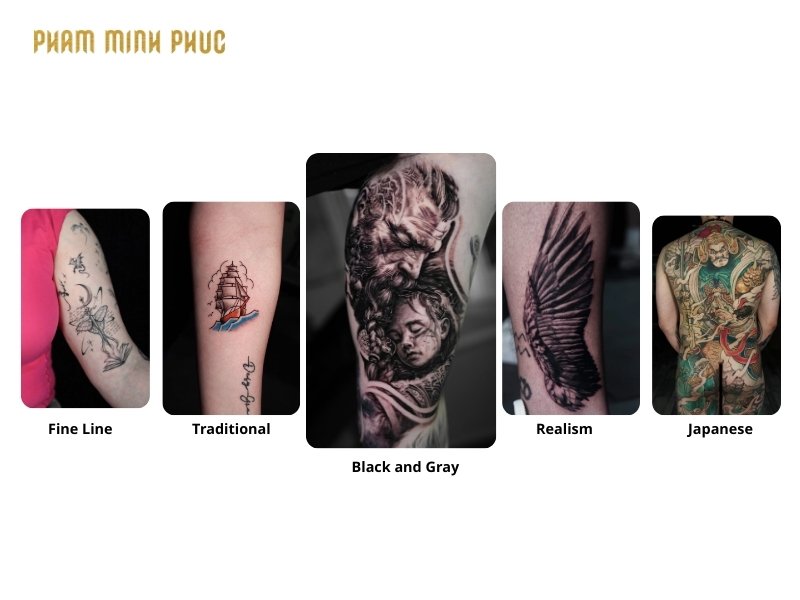
Tattooing encompasses a vast universe of artistic expression, ranging from ancient cultural markings to modern photorealism. Understanding the different tattoo styles is the critical first step in defining your aesthetic and finding an artist who specializes in your desired look. Whether you prefer bold lines or delicate shading, identifying the correct genre ensures your final piece resonates perfectly with your personal vision.
- Traditional (Old School): Defined by bold black outlines, a limited color palette (red, green, yellow), and iconic imagery like roses, anchors, and eagles.
- Realism/Portrait: Focuses on creating photorealistic images that resemble high-resolution photographs, requiring advanced shading skills to capture depth and light without hard outlines.
- Black and Grey: Uses diluted black ink to create a spectrum of shades. This versatile style is ideal for portraits, religious imagery, and Chicano-style art.
- Fine Line: Utilizes single needles to create delicate, intricate designs with very thin lines, often popular for minimal text, flowers, or micro-tattoos.
- Japanese (Irezumi): Characterized by large-scale compositions covering entire body parts (sleeves, backpieces) featuring mythological creatures such as dragons, koi fish, and demons.
How Can You Choose A Suitable Tattoo?
Selecting a suitable tattoo is a permanent commitment that requires aligning your personal meaning with artistic feasibility. You should start by gathering reference images that resonate with your aesthetic rather than copying a design directly from the internet. Consider whether you want the piece to be purely decorative or hold deep symbolic value. Once you have a concept, you must consult with a professional artist to refine the imagery so it fits the anatomical curves of your body naturally. Beyond the design itself, you must strictly evaluate two technical factors: placement and size.
Tattoo Placement
Your lifestyle, pain tolerance, and career visibility strictly dictate the ideal location for your tattoo. You must consider that high-friction areas like fingers or feet fade faster due to constant rubbing and skin regeneration.
- Low Pain/Low Visibility: Areas like the outer thigh, upper arm, or calf are fleshy and less painful, making them ideal for first-timers.
- High Pain/High Visibility: Areas near bone or nerve endings, such as the ribs, spine, elbow, or neck, involve significant discomfort and are harder to conceal.
Tattoo Size
The level of detail in your design strictly determines the necessary size. Intricate details require a larger canvas to prevent the ink from blurring over time (a phenomenon known as migration). Common industry standards for sizing include:
- Micro/Tiny (< 2 inches): Best for simple symbols, minimalism, or fine-line work.
- Small (2-4 inches): Suitable for simple flowers, script names, or small traditional flash.
- Medium (Palm Size/4 – 6 inches): The most versatile size, allowing for moderate detail, shading, and color packing.
- Large (Hand to Elbow/7 – 12 inches): Covers a significant portion of a limb, ideal for realistic portraits or detailed illustrative pieces.
- Extra Large (Full Sleeve/Backpiece): Requires multiple sessions and is reserved for complex, storytelling compositions that cover major muscle groups.
How To Care For A New Tattoo?
Proper tattoo aftercare is just as critical as the technical execution of the ink itself in determining the final quality of your artwork. Neglecting this phase can lead to pigment loss or infection, effectively compromising the investment you made in your body art. You must strictly follow a disciplined hygiene routine to ensure the design heals flawlessly and remains vibrant for years.
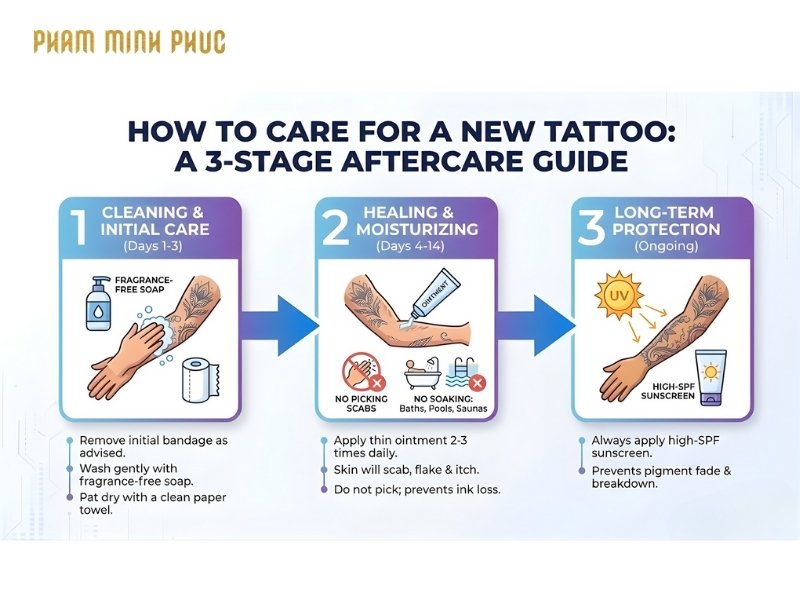
- Stage 1 (Days 1-3): Keep the tattoo clean. Remove the initial bandage after the time specified by your artist, wash gently with fragrance-free soap, and pat dry with a paper towel.
- Stage 2 (Days 4-14): During this regenerative phase, the skin will naturally scab, flake, and itch; to assist healing, apply a thin layer of ointment 2-3 times daily to keep the area moisturized but not oversaturated. It is critical to avoid picking these scabs, as this pulls ink out of the dermis, while simultaneously ensuring you do not soak the tattoo in water. This strict prohibition means no baths, swimming pools, hot tubs, or saunas until the skin has fully closed to prevent infection and fading.
- Stage 3 (Long-term): Protect from UV rays. Once healed, always apply high-SPF sunscreen to the tattoo when exposed to sunlight to prevent the pigments from breaking down and fading.
How Long Does It Take For A Tattoo To Heal?
The visible outer layer (epidermis) typically heals in 2 to 4 weeks. However, the deeper layers of the skin (dermis) require 3 to 6 months to fully regenerate and lock the ink in place completely.
How To Choose A Good Tattoo Artist?
Selecting the right artist is the single most critical factor in ensuring your safety and satisfaction. You must look beyond price and proximity to find a professional who respects both the craft and your body. Follow this step-by-step guide to make an informed decision:
- Research Tattoo Artist Near You. Start by searching for reputable studios in your area, but do not simply choose the closest shop. You must prioritize artists who demonstrate a professional online presence and specialize in the specific style you want, whether it is Black and Grey, Realism, Color, or Traditional.
- Review the Artist’s Portfolio and Reputation. Examine their work critically. Do not just look at fresh, filtered photos; you must specifically look for healed work to ensure the lines hold up and the shading remains smooth over time. Additionally, read client reviews to verify their consistency and professionalism.
- Verify Hygiene and Safety Standards. This is non-negotiable. Inspect the studio for cleanliness and ensure the artist uses medical-grade sterilization, including autoclaves for tools and single-use needles opened in front of you. A safe studio smells like a hospital, not a locker room.
- Test Their Communication Skills. A great artist is a listener. They should offer professional advice on placement and size without being arrogant or forcing their ideas on you. The process must be collaborative to ensure the final design suits your preferences.
- Trust Your Gut Feeling. You will be sitting in a chair for hours in a vulnerable position. If you feel uncomfortable, rushed, or unsafe for any reason during the consultation or studio visit, trust your intuition and walk away. You deserve an environment where you feel respected and at ease.
Why Choose Minh for Your Tattoos in San Antonio?
I am the best tattoo artist in San Antonio because I combine world-class artistry with hospital-grade safety protocols to deliver tattoos that stand the test of time. Choosing the right artist is the most significant decision in your tattoo journey, and I am committed to providing an experience that is as safe as it is creatively fulfilling. Here are the specific reasons why clients trust me with their permanent art.
- Award-Winning Expertise: With over 40 international awards and years of dedicated practice, I bring a level of technical mastery that ensures your tattoo is sharp, vibrant, and artistically sound. Whether it is a complex cover-up or a delicate fine-line piece, my portfolio proves consistent excellence.
- Bespoke Custom Designs: I do not believe in “copy-paste” tattoos. I specialize in creating custom artwork that tells your unique story. I take the time to consult with you and understand your vision to design a piece that fits your anatomy and personality perfectly.
- Hospital-Grade Safety: Your health is my absolute priority. My private studio strictly adheres to medical-grade sterilization protocols. I use single-use needles, protective barriers, and autoclave-sterilized equipment for every single session to eliminate any risk of infection.
- A Client-Centered Experience: I pride myself on clear, honest communication. From the initial consultation to the final aftercare instructions, I ensure you feel heard, respected, and comfortable. There is no intimidation here. I simply provide a professional environment dedicated to bringing your vision to life.

Ready to start your project? Book your consultation today to discuss your ideas with an expert based in San Antonio.
Frequently Asked Questions about Tattoos
Below are several clear and concise professional answers to the most common questions clients ask before committing to their first piece of body art.
Is Getting a Tattoo Safe?
Yes, getting a tattoo is exceptionally safe when performed by a professional tattoo artist in a licensed studio that adheres to medical-grade hygiene standards. The primary risks, such as blood-borne pathogens (Hepatitis B, C) or skin infections, arise only from unsanitary practices. A professional studio must use an autoclave to sterilize non-disposable equipment and strictly employ single-use needles and barriers for every client.
Does Getting A Tattoo Hurt?
Yes, getting a tattoo involves some level of pain because needles are piercing the skin repeatedly. The intensity depends on your pain tolerance and the body location. Areas with thin skin or close to the bone (ribs, spine, feet) are significantly more painful than fleshy areas like the upper arm or thigh. If you want to understand how pain levels vary across different parts of the body, you can refer to our detailed tattoo pain chart.
Additionally, it’s important to choose a professional and experienced tattoo artist to minimize unnecessary pain. Less experienced artists may repeatedly work over the same area of skin, which can lead to overworking a tattoo, a situation that increases pain, causes excessive skin trauma, and can negatively affect healing and the final tattoo quality.
How Long Does Getting a Tattoo Take?
The time required to complete a tattoo can vary dramatically depending on the design complexity, size, and body placement. While a minimalist symbol might require only about 45 minutes of actual dermal application, complex photorealistic projects can demand more than 30 hours, often spread across multiple healed sessions to achieve proper ink saturation. If you want a more detailed breakdown of session lengths, healing intervals, and project timelines, read our guide on how long does getting a tattoo take.
How Much Does a Tattoo Cost?
Tattoo costs vary significantly based on the artist’s expertise, the design’s complexity, and the placement. Most studios charge either a flat rate for smaller flash pieces or an hourly rate (ranging from $100 to $300+) for large-scale custom work. You should view this cost as an investment in permanent art rather than seeking the cheapest option, which often leads to poor results. If you want to understand the typical tattoo price structure and how artists calculate the final cost, read our detailed guide on tattoo price.
What Is A Walk-in Tattoo?
A walk-in tattoo is a service where you get tattooed without a prior appointment. This option is generally reserved for small, simple designs or pre-drawn flash art that can be completed in a short timeframe, depending entirely on the artist’s availability that day.
What Should You Do Before Your Tattoo Appointment?
Proper physical preparation is essential to maximize your pain tolerance and ensure the session proceeds smoothly without complications. To get your body ready for the procedure, you should follow this checklist:
- Stay Hydrated: Drink plenty of water in the 24 hours before your session to keep your skin resilient and easier to tattoo.
- Eat a Substantial Meal: Never get tattooed on an empty stomach; a balanced meal maintains your blood sugar levels to prevent lightheadedness or fainting.
- Rest Well: Get a full night’s sleep to calm your nervous system and increase your physical stamina for the appointment.
- Avoid Blood Thinners: Do not consume alcohol or take aspirin for at least 24 hours beforehand, as these substances cause excessive bleeding that can dilute the ink.
- Dress Appropriately: Wear loose, comfortable clothing that allows the artist easy and unrestricted access to the area being tattooed.
Can You Get A Tattoo Removed?
Yes, tattoos can be removed, primarily through laser treatments. This process works by using high-intensity light beams to break up the ink particles into smaller fragments, which the immune system can then eliminate. However, removal is more expensive, more painful, and takes longer than getting the tattoo itself, and complete clearance is not always guaranteed.
This article has helped you understand tattooing as more than just a design on the skin. A high quality tattoo requires artistic skill, knowledge of how ink works within the dermis, strict sterilization standards, and proper aftercare to ensure clean healing and long term results. Whether you are planning your first tattoo or investing in a custom realism piece, choosing an experienced tattoo artist is essential to protect both your skin and the artwork itself. My approach focuses on precision, safety, and tattoos that age well over time. If you are considering getting a tattoo and want professional guidance on design, placement, and execution, book a private consultation with me to start your tattoo journey with confidence.