An overworked tattoo is a severe form of skin trauma occurring when the needle exceeds the dermis’s tolerance limit, causing deep tissue destruction often described as looking like raw hamburger meat. This excessive mechanical trauma strips away the epidermis completely, leading to immediate distress signals like rapid inflammation, persistent weeping of plasma, and the eventual formation of thick, hard scabs known as alligator skin.
Unlike a standard heal, this damage creates a high risk for hypertrophic scarring and significant ink fallout if not managed with a strict hygiene routine. Recovery demands patience, utilizing specific healing advice to keep the wound clean and pliable while avoiding further irritation during the months of tissue regeneration. Let’s explore the detailed causes and expert solutions with me, Minh Pham, in the article below.
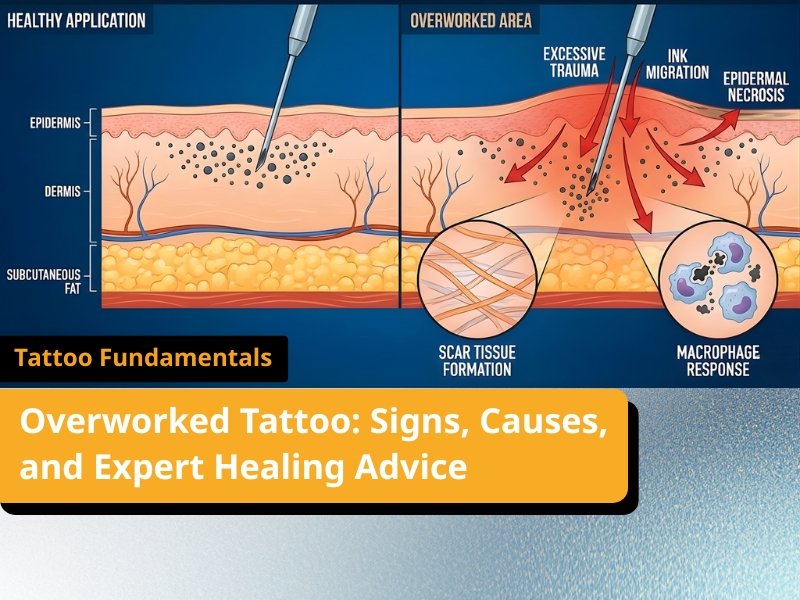
Table of Contents
What Is An Overworked Tattoo?
An overworked tattoo is a specific type of skin trauma occurring when the artist exceeds the dermis’s tolerance limit. This results in an excessively macerated appearance that artists often describe as resembling “raw hamburger meat” due to deep tissue destruction. Unlike a correctly executed piece that feels like a smooth abrasion, this damage leaves the skin surface feeling bumpy, raised, or cratered. You will observe substantial weeping of clear or yellowish plasma mixed with watery blood that soaks through bandages rapidly, accompanied by intense heat and throbbing signals indicating the epidermis has been totally stripped away by excessive mechanical trauma.
What Are The Signs of An Overworked Tattoo?
You can identify an overworked tattoo by observing specific physical reactions during the session and monitoring the wound throughout the healing phase. The skin typically exhibits immediate distress signals like excessive bleeding or distinct texture changes due to deep mechanical trauma. Recognizing these visual cues early is essential for adjusting your aftercare routine to minimize scarring.
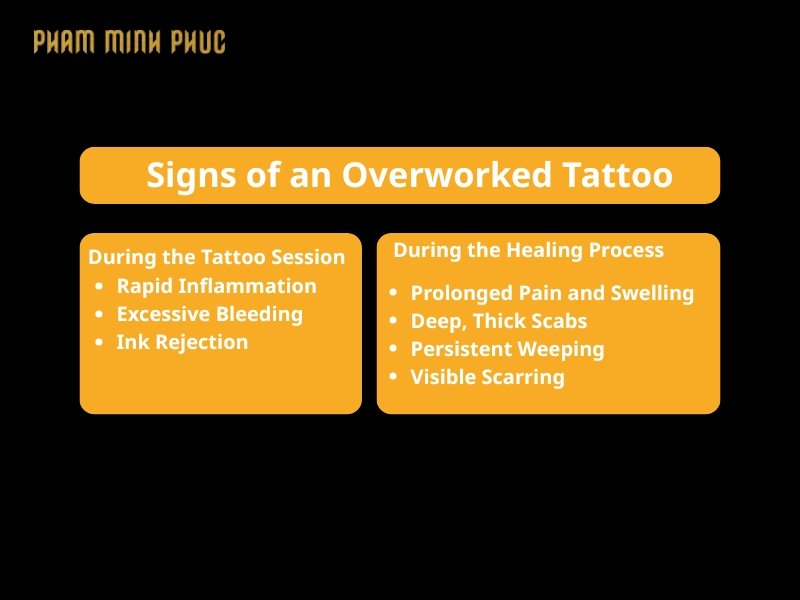
During the Tattoo Session: The skin provides immediate feedback when it reaches its limit of endurance, often showing visible distress before the artist finishes.
- Rapid Inflammation: The skin becomes intensely red, puffy, and swollen almost immediately after the needle makes contact.
- Excessive Bleeding: You will notice significantly more blood and plasma surfacing than usual, which dilutes the ink on the surface.
- Ink Rejection: The skin seems to stop “accepting” the pigment. When the artist wipes the area, the ink comes right back out with the ointment because the tissue is too saturated to hold it.
During the Healing Process: The true extent of the damage becomes clearly visible in the days following the appointment as the body attempts to repair the deep tissue injury.
- Prolonged Pain and Swelling: The tattooed area remains painful and swollen for much longer than the standard inflammation period of a normal heal.
- Deep, Thick Scabs: This is the most distinct indicator of trauma. Instead of light, papery peeling, the wound forms thick, hard, and often cracked scabs that look like a heavy abrasion.
- Persistent Weeping: The tattoo continues to ooze plasma and fluid for several days, creating a “wet” appearance long past the typical 1-2 day window.
- Visible Scarring: Once fully healed, the skin often remains permanently raised due to hypertrophic scarring, and the lines may appear blurry or blown out rather than crisp.
Why Does Tattoo Get Overworked?
A tattoo generally gets overworked when the mechanical application exceeds the skin’s tolerance threshold, primarily driven by technical execution or specific anatomical challenges. While the goal is always smooth saturation, several variables can push the skin past its breaking point.
- Artist Technique: This is the primary cause of skin trauma. A less experienced artist or someone with a “heavy hand” may lack the technical finesse to deposit ink efficiently into the dermis. Consequently, they may penetrate the needle too deep or make too many passes over the same area to achieve color saturation, causing unnecessary and permanent damage to the tissue.
- Difficult Skin or Placement: Anatomical location plays a significant role in how the skin receives ink. Areas with very thin skin (like the inner bicep or ribs) are delicate and bruise easily, while very tough skin (like knees and elbows) resists pigment, often tempting the artist to overwork the area to force the ink in.
- The Client’s Role: The condition of the canvas matters. A client who is constantly flinching or twitching disrupts the needle’s precision, making it harder for the artist to execute clean lines. Furthermore, sun-damaged or extremely dry skin lacks the necessary elasticity, making it difficult to work with and more prone to tearing under the needle.
What Are The Consequences of An Overworked Tattoo?
An overworked tattoo causes severe damage that extends beyond a painful healing process. Excessive mechanical trauma destroys the dermis layer, leading to permanent scarring and aesthetic defects. This deep open wound also significantly increases the risk of bacterial infection and heavy ink loss.
- Permanent Scarring: This is the most common long-term issue. Because the needle has chewed up the skin, the body repairs the deep wound with dense collagen, resulting in hypertrophic scars (raised, rigid tissue) or keloids. Even if the color remains, the tattoo will have an uneven, bumpy texture forever.
- Significant Ink Loss (Fallout): When the skin is traumatized, the immune system treats the pigment as debris to be purged. The heavy, thick scabs that form will often pull large chunks of ink out with them when they shed, leaving the healed tattoo looking patchy, faded, or full of “holidays” (empty spots).
- Aesthetic Distortion: Lines may appear blown out (fuzzy and spread) because the ink migrates uncontrollably in the damaged tissue. Instead of crisp edges, the tattoo often heals with a muddy or gray appearance.
- Increased Infection Risk: An overworked tattoo remains an open, weeping wound for much longer than a healthy one. This prolonged healing window, combined with the depth of the trauma, creates an ideal environment for bacteria to enter, potentially leading to serious infections that require medical intervention.
How to Care For An Overworked Tattoo?
Healing an overworked tattoo requires patience and a strict hygiene routine to manage severe inflammation. Your primary goal is to prevent infection in the deep tissue and minimize the formation of thick, ink-pulling scabs that lead to pigment loss.
- Keep It Impeccably Clean. Overworked skin acts as a deep, open wound highly prone to bacterial infection. Daily cleansing with lukewarm water and a fragrance-free antibacterial soap is mandatory. Avoid scrubbing the macerated tissue; gently lather the area with your hand to wash away excess plasma and dried blood without causing further irritation.
- Soothe the Inflammation. Immediate heat reduction helps stabilize the traumatized dermis during the first 48 hours. Applying a specialized tattoo soothing gel containing Aloe Vera can significantly decrease redness and swelling. This step calms the intense burning sensation before hard scabs begin to form.
- Moisturize to Prevent Scabbing. Proper hydration is the best defense against thick, rigid crusts often called “alligator skin.” Once the initial weeping stops and the wound feels dry, switch to a breathable aftercare balm. Apply a thin layer to keep the skin pliable and prevent deep cracks that pull pigment out of the healing tissue.
What Is The Difference Between Overworked, Infected, and Blowout Tattoos?
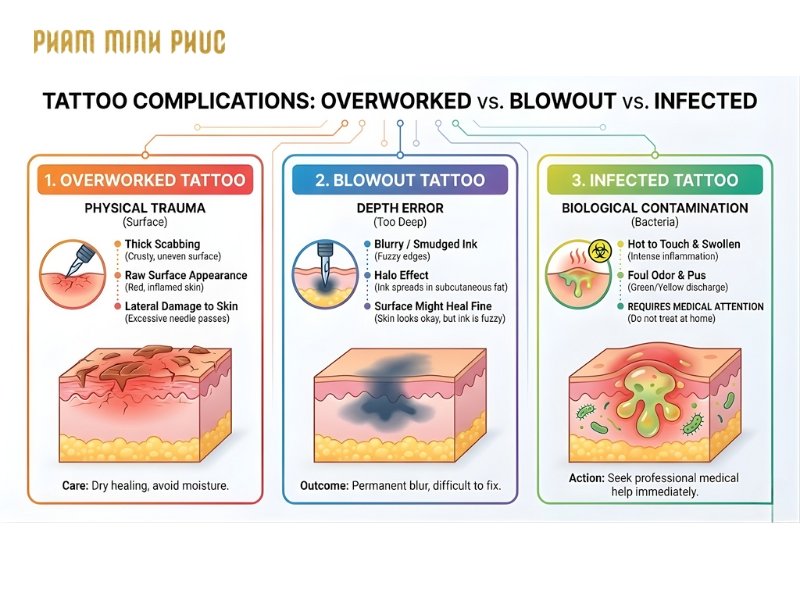
While all three issues damage the tattoo, “overworked” is physical trauma to the surface, “blowout” is depth error, and “infection” is biological contamination. Distinguishing them is vital for proper treatment.
- Overworked: Characterized by thick scabbing and a raw surface appearance; caused by lateral damage to the skin.
- Blowout: The ink looks blurry or has a “halo” effect because the needle went too deep into the subcutaneous fat layer; the skin surface might actually heal fine.
- Infected: The area is hot to the touch, emits a foul odor, or leaks pus (green/yellow discharge); this requires medical attention, whereas overworking requires dry healing care.
Will An Overworked Tattoo Scar?
There is a significant risk that an overworked tattoo will result in permanent scarring, specifically hypertrophic scars, because the needle has physically destroyed the collagen structure within the dermis layer. Even if the pigment issues are eventually corrected, the skin often retains a raised, uneven texture or pitted appearance that differs from the surrounding tissue. This type of damage not only affects healing but also prevents the design from aging properly over time, unlike well-executed pieces designed as tattoos that age well. For individuals genetically predisposed to keloids, the deep mechanical trauma can trigger these hard, rubbery growths to extend beyond the original tattoo boundaries.
Does Ink Fall Out of Overworked Skin?
Yes, excessive trauma causes the body to reject the pigment as a foreign object, pushing it out along with the heavy scabbing. The immune system goes into overdrive to repair the deep wound, treating the ink as debris to be expelled.
- Rejection: You may see color literally coming off onto your sheets or clothes attached to the wet scab.
- Patchiness: The result is rarely a total loss of image, but rather a “Swiss cheese” effect where spots of skin are completely bare of ink.
How to Avoid Getting an Overworked Tattoo?
The single most effective way to prevent an overworked tattoo is to entrust your skin to a seasoned professional who prioritizes technical precision over speed. While communicating your pain threshold is important, the responsibility ultimately lies with the artist’s ability to manage mechanical trauma.
To ensure you are sitting in a safe chair, you must vet your artist’s portfolio with a specific focus on healed results. Fresh photos can often hide damage with filters and lighting but a healed photo reveals the truth. You need to look for smooth textures and solid saturation without raised scarring. You should also observe their working style because a heavy-handed artist who rushes through the session is a major red flag. To help you navigate this critical decision and identify true professionals, I have written an in-depth guide on how to choose a tattoo artist that covers every warning sign you need to avoid.
Can Minh Pham Fix an Overworked Tattoo?
Yes, I can fix an overworked tattoo using advanced corrective techniques, but strictly only after the skin has fully regenerated, which typically takes a minimum of 3 to 6 months. As an internationally recognized and best tattoo artist in San Antonio, I have the expertise to assess compromised tissue and distinguish between actual missing ink and raised scar tissue. Once the area is completely stable, I proceed with a specialized, gentle application method to carefully pack pigment into the patchy areas without re-traumatizing the fragile dermis.
If you want to research carefully before fixing your overworked tattoo, read my article “How to choose a redone tattoo artist” to learn how to find a reputable and experienced tattoo artist for the job.
In this guide, I helped you navigate the distressing reality of overworked tattoos by outlining the causes of deep mechanical trauma and the necessary steps for a safe recovery. You now understand that patience is vital to prevent permanent scarring and that fixing these defects requires waiting for total tissue regeneration. As the best tattoo artist in San Antonio, I possess the technical precision to repair compromised skin without causing further damage. If you need expert correction for a past mistake, I am ready to restore your confidence.