Tattoo ink is chemically defined as a colloidal suspension, where solid pigments are suspended in a liquid carrier to be locked permanently within the dermis. The specific ingredients range from organic carbon black for dark lines to metallic salts like cadmium, cobalt, or chromium for vibrant hues, though this chemical complexity introduces potential risks. In the United States, the FDA classifies tattoo ink as a cosmetic product and generally does not exercise strict pre-market approval for these pigments, placing the responsibility on artists to avoid dangerous heavy metals and bacterial contaminants through careful brand selection.
In this article, I – Minh Pham, will help you decode the specific composition of tattoo ink, differentiating between industrial blends and safer, vegan formulations. The discussion will address critical health concerns, including the risks of ink poisoning and allergic reactions, while explaining why I exclusively rely on scientifically tested, premium brands like RAW Pigments and Dynamic to ensure the highest standards of safety and longevity for every custom piece.

Table of Contents
What Is The Composition of Tattoo Ink?
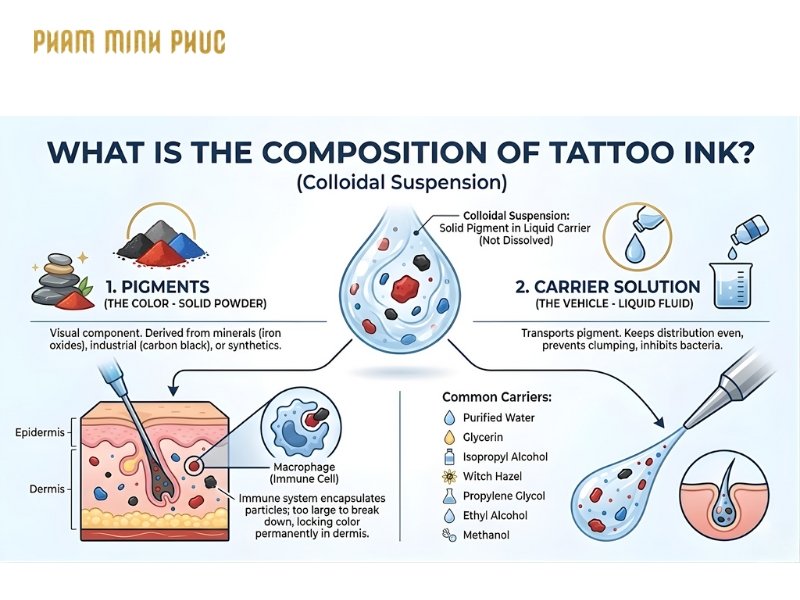
Tattoo ink is chemically composed of a solid pigment suspended within a liquid carrier, forming a colloidal suspension rather than a dissolved solution. This distinction is crucial because the body cannot break down the solid pigment particles, which is exactly what makes tattoos permanent.
- Pigments (The Color): These are the visual components of the tattoo. Pigments are typically powdered solids derived from mineral sources (like iron oxides), industrial materials (like carbon black), or modern synthetic organic compounds. Once the needle deposits them into the dermis (the second layer of skin), your immune system’s macrophages engulf these particles but are too small to break them down, locking the color in place permanently.
- Carrier Solution (The Vehicle): The carrier is the fluid that transports the pigment from the needle tip into the skin. Its primary functions are to keep the pigment evenly distributed, prevent clumping (agglomeration), and inhibit bacterial growth. Common carrier ingredients include purified water, glycerin, isopropyl alcohol, witch hazel, ethyl alcohol, propylene glycol, and methanol.
What Ingredients Create Specific Tattoo Colors?
Specific tattoo colors are created using distinct chemical compounds, ranging from organic carbon for black to various heavy metals and mineral salts for vibrant hues. While modern high-quality inks have evolved to use safer synthetic organics, many pigments rely on metals like cadmium, cobalt, and chromium to achieve brightness and stability.
- Black Pigments: This ink contains Carbon Black (soot) as its primary base. It also includes Iron Oxides (such as magnetite and wustite), where Nickel frequently exists as a chemical impurity.
- White Pigments: The industry standard relies on Titanium Dioxide or Zinc. These minerals have replaced toxic historical pigments such as Barium Sulphate and White Lead.
- Red Pigments: This color carries the highest risk of allergic reaction due to its ingredients. It consists of Cadmium Sulphide, Iron Oxides (red ochre), or Azo compounds. Historically, toxic Mercury Sulfide (cinnabar/vermilion) was the standard, but the industry has phased it out in favor of Quinacridone.
- Yellow Pigments: Bright yellow hues utilize Cadmium Sulphide or Azo compounds. Manufacturers mix these with Titanium Dioxide to increase brightness.
- Green Pigments: This pigment derives from Cobalt or Chromium Oxide. Modern formulations use Phthalocyanine Green G, whereas older mixes utilize Lead Chromate (chrome yellow), a hazardous heavy metal compound.
- Blue Pigments: Blue inks contain Cobalt (Cobalt Blue) or Copper Phthalocyanine. Certain formulations also include Nickel, a known allergen.
- Purple Pigments: This color utilizes Cobalt or Manganese to achieve its violet hue.
- Brown Pigments: Earthy brown tones consist of Iron Oxides, specifically Ochre (clay earth pigments).
- Orange Pigments: Chemically, this shade shares the same Cadmium or Azo-based ingredients found in red pigments.
What Other Additives Are Present in Tattoo Ink?
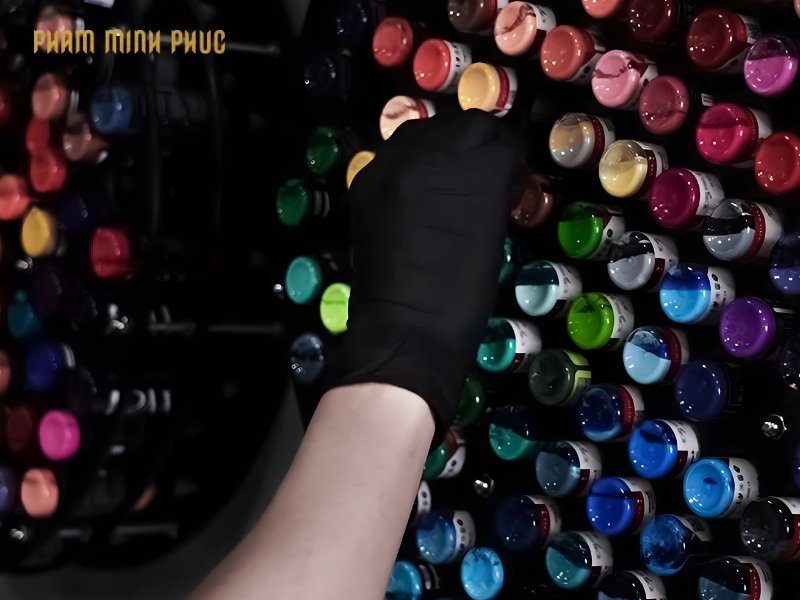
Beyond pigments and carriers, manufacturers include additives like binding agents, preservatives, and surfactants to optimize ink performance and shelf life. These “invisible” ingredients are vital for consistency but can be a source of irritation if low-quality substances are used.
- Binding Agents: These help the pigment particles adhere to each other and the skin tissue.
- pH Regulators: These compounds adjust the acidity or alkalinity of the ink. Maintaining a neutral pH is critical to ensure the ink is compatible with the body’s biochemistry and prevents excessive skin irritation or burning during the process.
- Preservatives: Essential for preventing bacterial contamination (like Staph or Pseudomonas) once the bottle is opened. Common preservatives include ethyl alcohol or methylisothiazolinone.
- Stabilizers & Surfactants: Substances like Glycerin act as humectants to keep the ink smooth and prevent it from drying out in the cup.
- Contaminants (The Risk): In unregulated or cheap inks, analysis has found traces of Formaldehyde, Antifreeze (Ethylene Glycol), and Denatured Alcohols. This is why choosing a studio that uses premium brands is non-negotiable.
How Many Different Types of Tattoo Inks Are There?
The tattoo industry categorizes inks into three primary types based on their formulation ethics and intended visual effect: Standard/Industrial, Vegan, and Specialty (UV).
Vegan Tattoo Inks
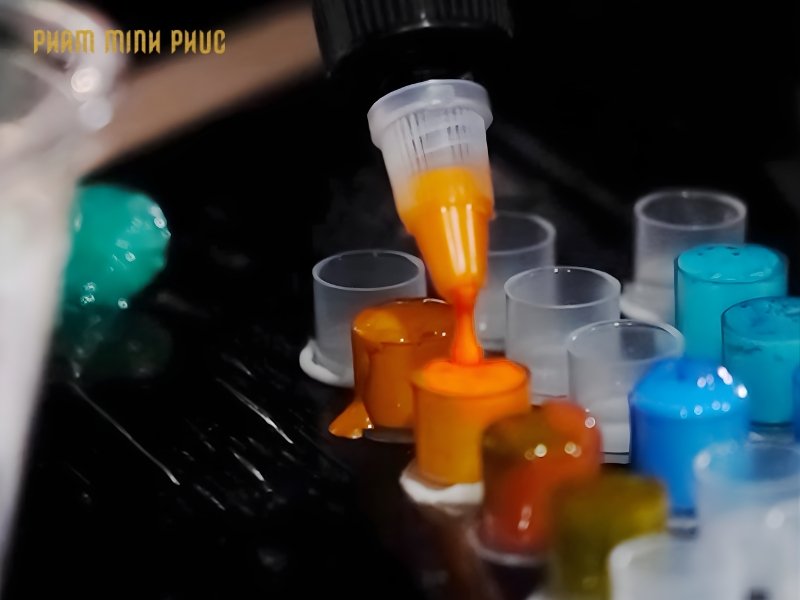
Vegan tattoo inks are formulations that strictly exclude animal by-products such as bone char, glycerin from animal fat, or shellac. Instead of Bone Char (commonly used for black pigment), vegan inks use carbon from plants. They replace animal glycerin with vegetable glycerin, ensuring the product is 100% cruelty-free without compromising on quality or vibrancy.
Organic Tattoo Inks
Organic tattoo inks refer to pigments derived from organic chemistry (carbon-based molecules), specifically Azo pigments, rather than the “pesticide-free” definition used in food. These inks move away from heavy metals and rely on modern synthetic pigments. They are generally considered safer and offer higher vibrancy, though they may have slightly different lightfastness compared to mineral pigments.
UV/Blacklight Tattoo Inks
UV or Blacklight tattoos use inks containing phosphorescent compounds or PMMA (Polymethylmethacrylate) that are invisible in daylight but glow under ultraviolet light. While visually striking, I rarely recommend them for large-scale work because phosphorus can be toxic, and the long-term safety of injecting glowing chemicals into the lymph system is not well-researched.
How Can You Know The Quality of The Tattoo Ink Used By The Tattoo Artist?
You can determine the quality of tattoo ink by inspecting the brand label, the condition of the bottle, and the storage standards of the studio. As a studio owner, I believe transparency is key. Here is how you can verify quality:
- Check the Brand: Ask your artist what brand they use. Industry standards include Dynamic, Eternal, Intenze, Solid Ink, and Fusion. If the bottle has no label or looks generic, that’s a red flag.
- Inspect the Station: Ink bottles should look clean, not splattered with old dried ink.
- Ask about Storage: Heat and sunlight destroy ink chemistry. A professional studio stores ink in a cool, climate-controlled environment (cabinet or drawer), not displayed on a sunny windowsill.
- Sterility: The artist should never dip a used needle back into the main bottle. Ink must be poured into single-use ink caps before the session begins.
What Tattoo Ink Does Minh Pham Use?
I exclusively curate my palette with industry-leading, vegan-friendly pigments that undergo rigorous testing to ensure they are free from harmful contaminants like heavy metals. For my signature style, consistency is paramount. I need ink that flows smoothly, saturates the skin without overworking it, and heals true to tone.
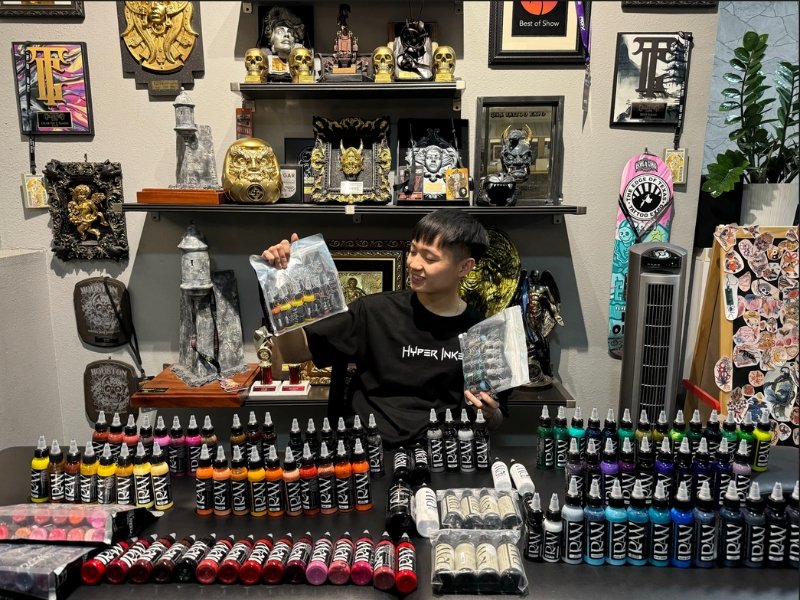
I am proud to announce that I am now sponsored by RAW Pigments. This partnership reflects my dedication to using only the finest tools in the industry. RAW is renowned for its high pigment load and consistent flow, allowing me to achieve the smooth gradients and intense saturation required for my large-scale work. Alongside RAW, I continue to rely on trusted staples like Dynamic for my blackwork to guarantee lines that stand the test of time. When you book a session with me, you are not just paying for the art; you are investing in the assurance that only the safest, highest-quality materials are being used in your skin.
Does The Quality Of Ink Affect The Tattoo Price?
Yes, the use of high-quality, pre-dispersed professional inks directly impacts the tattoo price because these premium products are significantly more expensive than generic alternatives.
- Longevity: Premium ink heals brighter and stays vibrant for decades, whereas cheap ink can blow out (spread under the skin) or fade to a patchy grey within a year.
- Safety: You are paying for the purification process that removes toxic impurities like arsenic and lead. In my studio, I exclusively use top-tier, vegan-friendly inks like Solid Ink and Dynamic. While this increases my overhead costs (which is reflected in the hourly rate), it ensures that the masterpiece we create on your skin remains safe and beautiful for a lifetime. When you pay for a professional tattoo, you are investing in medical-grade safety just as much as the artwork itself.
Now that you understand how tattoo ink works beneath the skin, it becomes easier to see how every element comes together in the tattooing process. To explore the bigger picture, you can learn more about what a tattoo and how this art form is created from start to finish.
FAQs about Tattoo Ink
Is Tattoo Ink Harmful?
Tattoo ink is generally safe when sourced from reputable manufacturers like Eternal, Intenze, or Fusion, but it carries inherent risks due to a lack of strict FDA regulation. The FDA classifies tattoo ink as a cosmetic product, the safety burden falls on the artist to select non-toxic products. The primary risks involve contamination (bacteria in the bottle) or heavy metal toxicity in counterfeit inks.
Does Tattoo Ink Cause Cancer?
There is currently no direct scientific evidence linking tattoo ink to skin cancer in humans. While some pigment ingredients (like certain azo compounds) can theoretically degrade into carcinogenic amines under laser treatment or UV exposure, millions of people are tattooed annually without a correlated spike in cancer rates. The risk is considered extremely low compared to common factors like sun exposure.
Can You Get Ink Poisoning From a Tattoo?
Ink poisoning is a rare systemic reaction caused by using non-sterile, toxic, or expired ink, resulting in the body being overwhelmed by contaminants. It is different from a localized infection. Symptoms may include improper healing, prolonged swelling, or systemic fever. The body’s immune system is efficient at isolating foreign pigment particles in the dermis, but an overload of toxic substances can stress the lymphatic system.
Can You Be Allergic to Tattoo Ink?
Yes, allergic reactions to tattoo ink can occur, typically manifesting as a delayed immune response where the body attacks the specific pigment.
- Red ink is the most frequent culprit due to ingredients like mercury sulfide or cadmium.
- How to know if you’re allergic to tattoo ink: If your healed tattoo remains itchy, raised, lumpy, or scaly months after the session, you may have a delayed allergic reaction (granuloma). I always recommend a Patch Test (applying a small dot of ink on the skin) 24 hours prior if a client has a history of sensitive skin.
Does Tattoo Ink Have Metal In It?
Yes, many tattoo pigments rely on heavy metals such as chromium, cobalt, and copper to achieve color stability and brightness.
- Green: Often contains Chromium.
- Blue: Often contains Cobalt or Copper.
- Yellow/Red: May contain Cadmium.
- Black: Primarily Carbon, but traces of Nickel or Iron Oxide can be present. For clients requiring MRI scans, these metallic particles can occasionally cause a warming or burning sensation due to magnetic conductivity, though this is a rare occurrence and typically does not prevent the medical procedure.
How Long Is Tattoo Ink Good For?
Tattoo ink typically has a shelf life of 1 to 2 years unopened, but once opened, it should be used within 12 months to prevent bacterial growth. Professional bottles always carry an expiration date. Once the seal is broken, alcohol evaporates, altering the viscosity, and preservatives degrade. I strictly discard any ink past its date or any bottle that has been open too long to ensure sterility.
Does Red Tattoo Ink Fade Faster?
Red tattoo ink, along with yellow and white, fades faster than darker colors because lighter pigments are more susceptible to UV degradation. All ink fades over time as macrophages slowly move particles and UV light breaks down the chemical bonds, which directly impacts how tattoos that age well are designed to maintain clarity and longevity. Black ink (Carbon) is the most lightfast and stable, which is why outlines last longer than color shading.
Can Tattoo Ink Be Removed?
Yes, tattoo ink can be removed using laser technology, which works by shattering the large pigment particles into nanoparticles. This process is physics-based, not chemical. The laser pulses break the pigment down into pieces small enough for your white blood cells (lymphatic system) to engulf and flush out of the body. Black ink is the easiest to remove; Green and Blue are the most stubborn due to their absorption spectrum.
Can You Tattoo Color Over Black Ink?
You cannot directly tattoo light colors over black ink because the black carbon pigment is too dense and dark, causing the lighter pigment to be invisible. The technique: We don’t “cover” the black; we usually use white ink to lighten the black first (multiple sessions) or use highly opaque, concentrated pigments to tint it. However, the best approach is often to design around the black or use laser lightening before a cover-up.
Are antibiotics affecting your tattoo plans? Could certain medications impact how your skin reacts to tattoo ink? Read my full guide about “Can You Get a Tattoo While on Antibiotics?”
In this guide, I helped you understand the chemical composition of tattoo ink and the vital difference between industrial pigments and safer vegan formulations. Understanding these ingredients is the first step in ensuring your body art heals perfectly and stands the test of time. As the best tattoo artist in San Antonio, I exclusively utilize the industry’s most reputable ink brands like RAW and Dynamic to guarantee elite safety standards for every client. If you are ready for a safe and vibrant custom piece, I am ready to bring your vision to life.