Tattoo peeling is your skin’s top layer shedding as your tattoo heals, the same way skin peels after a sunburn. It usually starts around day 3 to 5, moves through a lighter stage and then a more intense one, and clears within 10 to 14 days for most tattoos. None of that means your tattoo is fading or that something went wrong.
I’m Minh Pham, and peeling is one of the stages I walk every client through before they leave the chair, right alongside scabbing. What follows covers when peeling starts and how long it runs, how to tell normal peeling from something that needs attention, why people see color in the flakes and what that actually means, what affects how much your tattoo peels, and exactly what to do (and avoid) while your skin works through it.
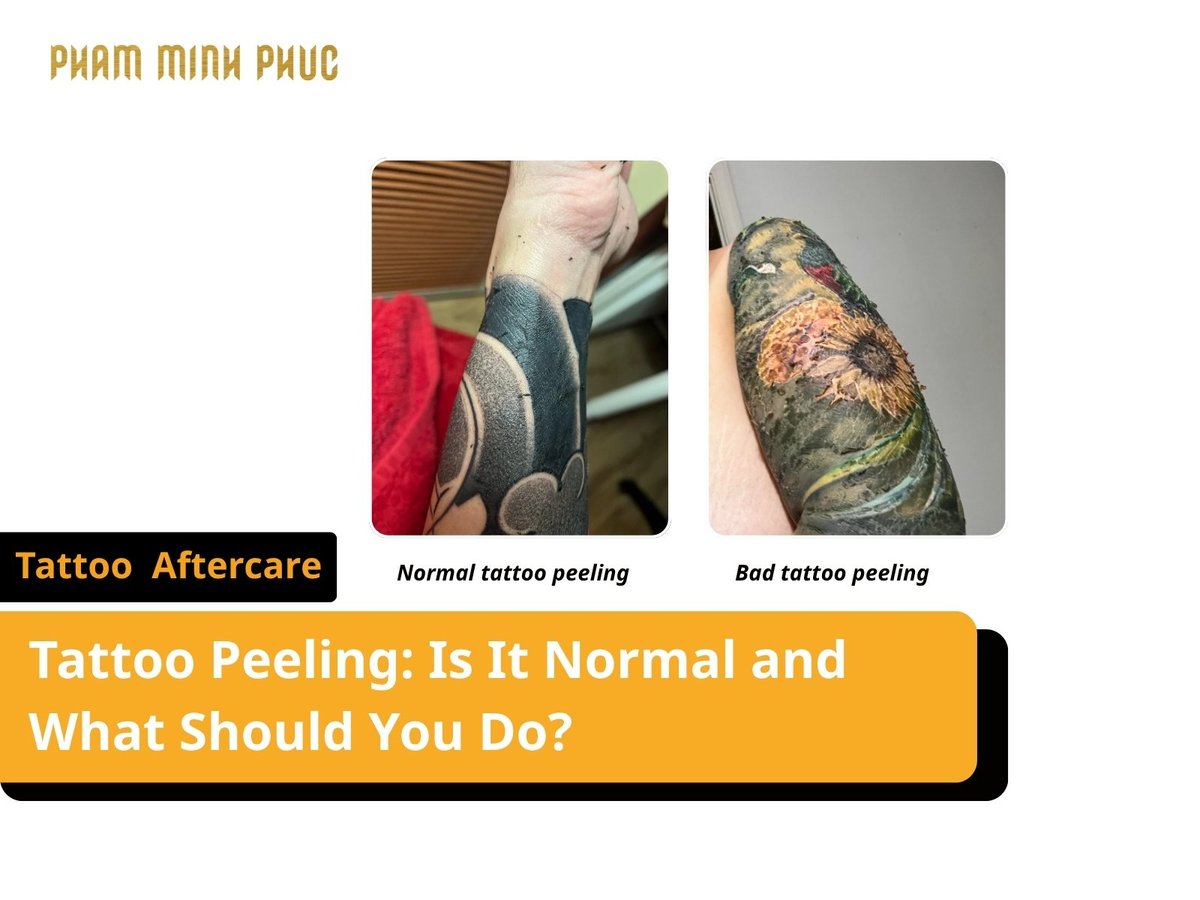
Table of Contents
What Is Tattoo Peeling?
Tattoo peeling is a standard part of the tattoo healing process. It’s the process of your epidermis, the top layer of skin, shedding dead cells as your tattoo heals. The needle punctures that layer thousands of times to push ink into the dermis underneath, and once the tattoo is done, your skin reacts the same way it would to a wound or a sunburn: it replaces the damaged surface with new skin, and the old layer flakes away.
Your ink lives in the dermis, the layer beneath where the peeling actually happens, so shedding skin on top doesn’t touch the tattoo itself. How much your skin peels and how visible it looks comes down to a few things working together: how fast your body regenerates skin, how much tissue was worked during your session, and how closely you stick to aftercare in the days right after. The specifics, by size, placement, and style, are covered further down.
Tattoo Peeling Stages
Tattoo peeling moves through two distinct stages rather than one steady process, starting around day 3 to 5 and finishing up by day 10 to 14 for most tattoos.
- Day 3 to 5, light stage: Your skin starts to feel dry and tight, with small cracks forming across the surface, almost like dried-out ground.
- Day 5 to 7, peak stage: Peeling is at its heaviest, and your skin can genuinely look like it’s coming apart in pieces. This is the point where most people panic, and it’s also the point where nothing unusual is actually happening.
- Day 8 to 9: Most of the peeling is done.
- Day 10 to 14: Finished everywhere except heavier work, which can take a few extra days to catch up.
Once the flakes are gone, your tattoo can look hazy or dull for close to a month before the color settles fully. That’s a separate stage covered in the complete healing timeline, not a sign anything’s off.
What Is the Difference Between Normal and Bad Tattoo Peeling?
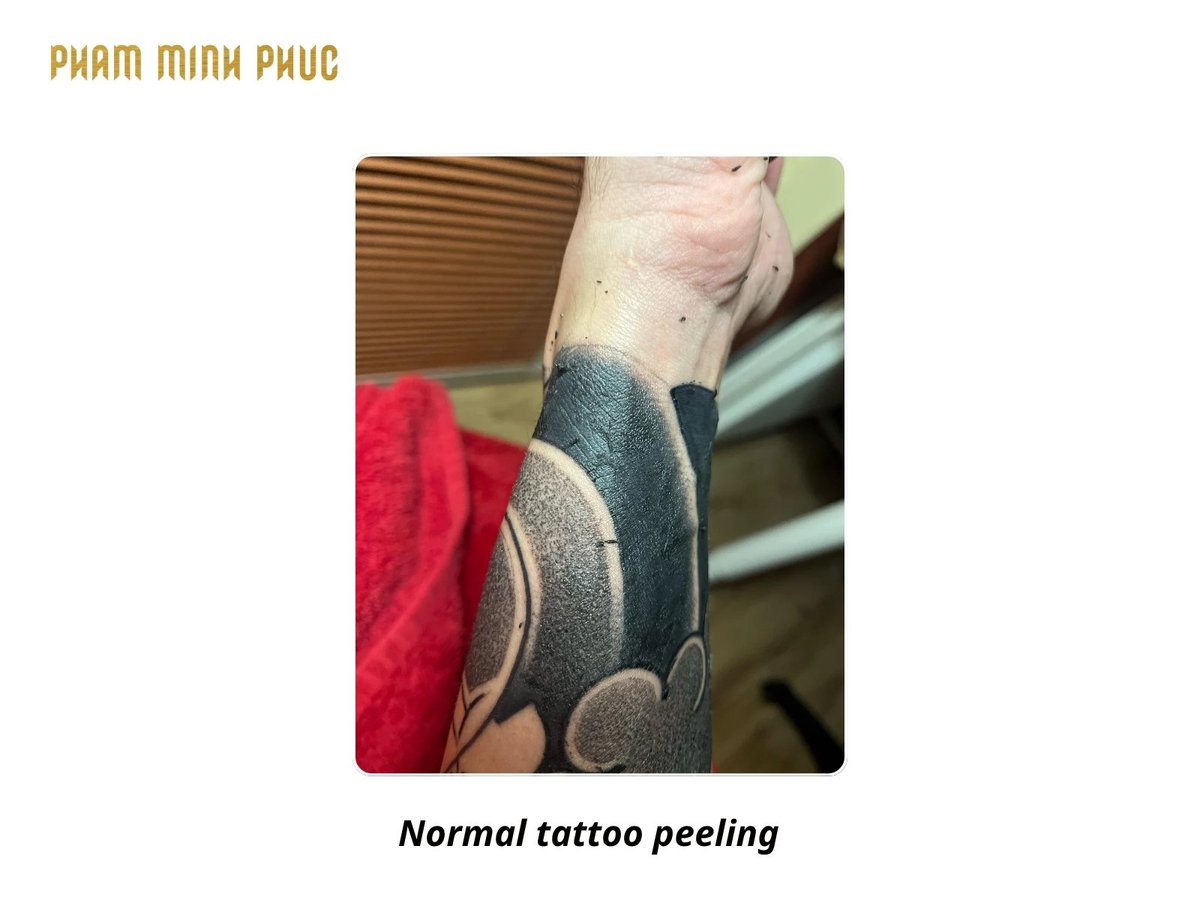
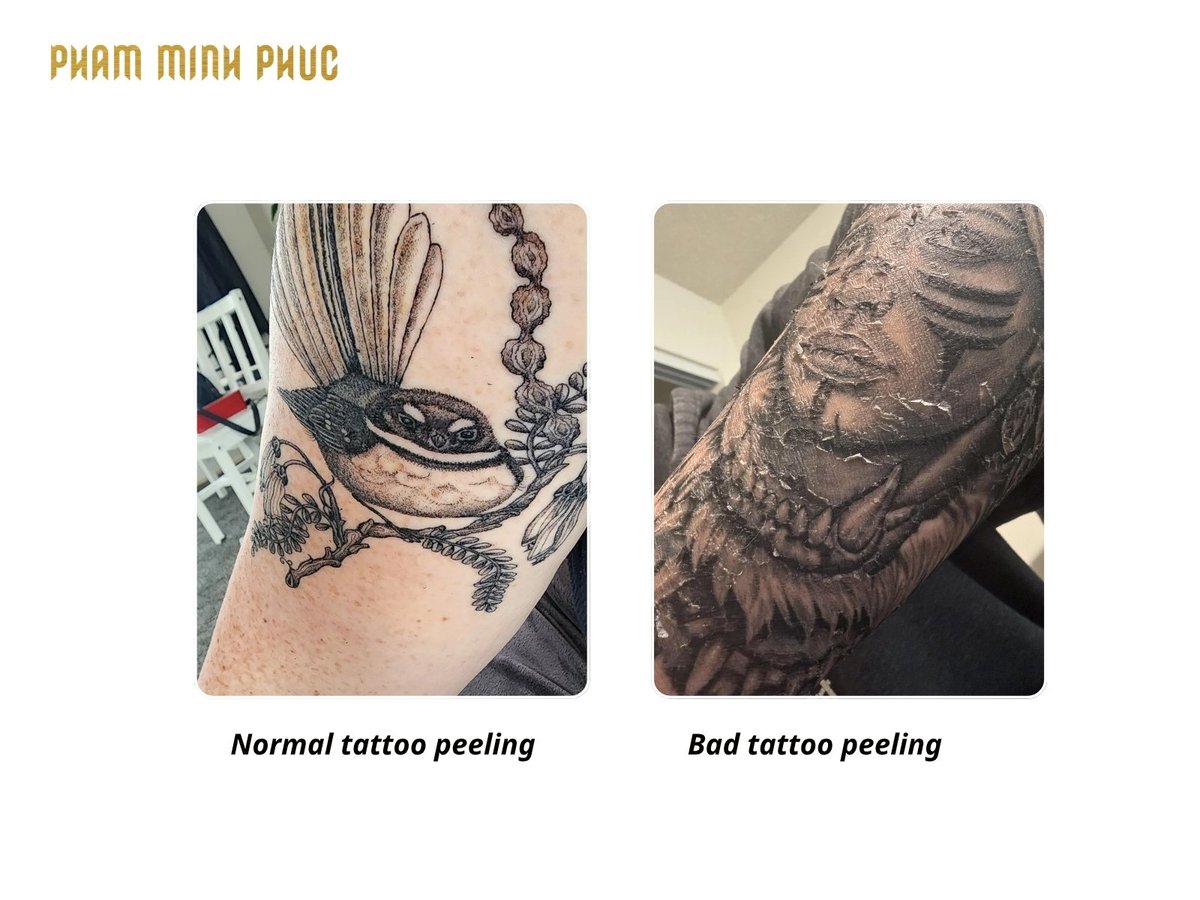
Normal tattoo peeling stays predictable: thin, dry flakes coming off in patches, with the skin around the tattoo staying calm the whole time. Bad peeling breaks that pattern in a few specific ways, and the table below lays out the difference side by side.
| Normal Peeling | Bad Peeling |
| Thin, dry flakes | Thick, uneven chunks |
| Skin around the tattoo stays calm | Redness or swelling spreads past the edges |
| Mild itching or tightness | Heat when you touch the area |
| Fades day by day | Pain that gets worse after day 3 or 4 |
| No odor | Pus or an unusual smell |
| Flakes lift on their own | Skin seems to pull away rather than lift naturally |
Bad peeling usually traces back to one of two different causes, and they call for different next steps.
- Infection is the more common one, and it tends to come with pus, fever, or a smell that wasn’t there before; that calls for a doctor.
- Allergic reaction is rarer, triggered by the ink itself or something in an aftercare product, and it shows up as redness, itching, or swelling that’s more pronounced than typical healing flakes, often without pus.
If that’s what you’re seeing, a dermatologist or allergist is the better call since they can pin down the actual cause instead of just treating symptoms.
Is the Ink Coming Off When Your Tattoo Peels?
Seeing flecks of color in the skin you’re shedding is one of the things that worries people most, and there’s a specific reason it happens.
Ink needs to sit deep enough in the dermis to stay there permanently. A small amount sometimes doesn’t make it that far and ends up caught in the epidermis instead, the layer that’s actively shedding during peeling. That portion flakes off naturally along with the dead skin. It isn’t your tattoo disappearing. It’s excess ink that was never going to stay in the first place, sitting in the wrong layer from the start.
Even a careful artist working at a consistent depth can leave a small amount of ink in the epidermis. It’s not a technique issue, it’s just how skin and ink interact. What matters is the difference between seeing a light tint in your flakes, which is completely normal, and ending up with a faded or blank patch in your finished tattoo, which only happens when skin gets picked or scratched off before it’s ready to release on its own. That kind of real ink loss is covered in more depth in its own guide, and what to do (and not do) during peeling is covered next.
What Factors Affect How Much Your Tattoo Peels?
A handful of things beyond style shape how much your tattoo peels and how long it takes to clear up.
- Placement. Areas that deal with regular friction, elbows, fingers, knees, tend to peel longer than skin that barely moves, like the inner forearm.
- Size and ink density. A bigger piece means more skin was worked, and color work that needs more ink packed into the skin tends to take a bit longer to fully clear than simpler line work.
- Skin conditions. Eczema, psoriasis, or skin that’s naturally on the drier side will peel more visibly and may need extra moisture to stay comfortable.
- Healing method. Dry healing tends to show more noticeable peeling, while second skin or a wrap locks in your body’s natural moisture and keeps flaking to a minimum.
- Hydration and general health. Drinking enough water and eating well supports how fast your skin regenerates, a small factor, but one that’s entirely up to you.
What to Do and Not Do While Your Tattoo Peels
A handful of habits during the peeling stage decide whether your tattoo heals clean or patchy, and most of them come down to leaving it alone.
Do:
- Wash gently twice a day with a fragrance-free cleanser
- Switch from healing ointment to a thin layer of water-based lotion once your skin starts feeling dry or tight, usually around day 3 to 5
- Wear loose clothing so nothing rubs against the area
- Let flakes come off on their own in the shower or while moisturizing
Don’t:
- Pick or pull at flakes, no matter how loose they look
- Scratch when it itches; pat or tap the area instead, and if the itch is intense, press a cool, damp cloth against it for a few seconds
- Submerge the tattoo in water until healing is finished
- Pile on lotion too thick; a thin layer is enough, and too much can clog the skin
Protecting Your Tattoo After Peeling
Once your tattoo finishes peeling, the healing process is not completely over. The fresh layer of skin beneath is still delicate and more vulnerable to external damage, especially from sun exposure. At this stage, UV rays can fade tattoo ink more quickly than they would on fully healed skin, making sun protection an important part of tattoo aftercare process. Whenever your tattoo is exposed to sunlight, apply sunscreen to help preserve its color and clarity.
You should also continue moisturizing the area, even after the itching and tightness have disappeared. While moisturizer is no longer needed to manage peeling, it still helps keep the skin healthy and supports the tattoo’s appearance as the ink settles over the following weeks.
Tattoo Peeling vs Tattoo Scabbing
Tattoo peeling and tattoo scabbing aren’t two separate problems, they’re two stages of the same healing process, and most tattoos go through both. Scabbing tends to show up first, usually in week one or two, forming a thicker layer that protects the area while the wound underneath closes. Peeling follows after, a lighter, drier kind of shedding as the skin finishes its renewal.
Depending on your tattoo’s size and style, you might go through both stages clearly, barely notice one of them, or experience mostly light flaking the whole way through. None of those variations means anything went wrong.
Frequently Asked Questions
Are all tattoos supposed to peel?
Not every tattoo peels in a way you’ll actually notice. Some people see light, barely-there flaking, while others go through a much more visible stage, and that’s just as normal as heavier peeling on a larger piece.
What does it mean if my tattoo isn’t peeling at all?
Some tattoos barely peel and that doesn’t signal a problem. Everybody’s skin regenerates a little differently, and how much ink and skin trauma a tattoo involves plays a role too. As long as the area isn’t showing any of the warning signs covered above, no peeling at all is just as normal as heavy peeling.
Can I help the peeling skin come off my tattoo?
No. Flakes that haven’t released on their own are still attached to ink and healing tissue underneath, and forcing them off early carries the same risks as picking: patchy color, scarring, and a longer road back to even healing.
Why is my tattoo so itchy while it’s peeling?
Itching peaks during the heaviest part of peeling, usually day 5 to 7, as the skin underneath finishes rebuilding. Patting the area or using a cool, damp cloth instead of scratching gets you through it without disturbing anything.
Why does my tattoo look dull or faded after peeling?
That dullness is temporary. The layers of skin beneath the surface are still settling, and the color sharpens up over the following weeks as that process finishes.
Can a tattoo peel too much?
Heavy peeling on its own isn’t a warning sign. Larger pieces and color-saturated work naturally shed more than a small black and grey design, simply because more skin and ink were involved.
How long does the peeling stage of a tattoo last?
Most peeling wraps up within 10 to 14 days. Heavier, more saturated work can run a few days past that before it’s fully done.