You’ve ruled out normal peeling and the kind of ink-tinted fluid that shows up in the first few days. What you’re looking at is actual ink loss, color or linework that’s genuinely missing once the area settles. That happens for a specific set of reasons, and most of them trace back to either how the tattoo was applied or how the skin was treated while it healed. Some ink loss resolves on its own once healing finishes. Some don’t, and that’s where a touch-up comes in.
I’m Minh Pham, and in this guide we will pick up right where confusion is clear up. It covers what actually causes ink loss during healing, how to tell minor unevenness from something worth fixing, what you can still do to protect the ink that’s settling, and when a touch-up makes sense.
Table of Contents
What Causes a Tattoo to Lose Ink While Healing?
A handful of distinct causes sit behind real ink loss during healing, and most of them trace back to either the tattooing process itself or how the skin was treated afterward.
Picking or scratching a colored scab before the skin underneath is ready is the most common cause, and the mechanism behind it is covered in detail in the guide on tattoo scabbing. A less talked about cause sits in the tattoo session itself. If the needle didn’t drive ink deep enough into the dermis, or if your artist didn’t pack enough ink into the area, especially in solid color or dense black sections, that ink is more likely to get pushed out as your skin regenerates instead of settling permanently. This isn’t always a sign of an inexperienced artist. Some areas of skin simply hold ink less predictably than others.
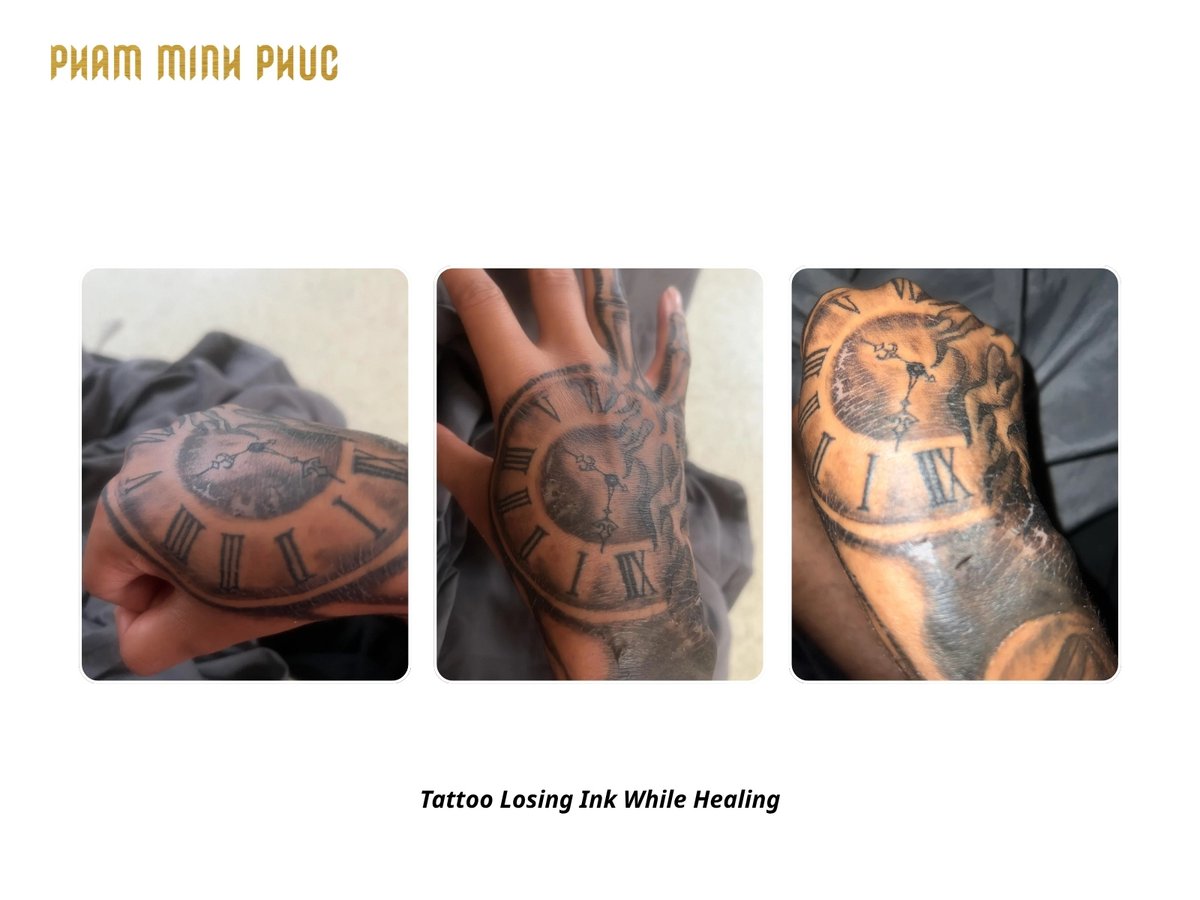
Placement plays a real role here too. Skin that deals with constant friction or movement, hands, fingers, or joints, holds ink less reliably than skin that stays mostly still.
A rarer cause worth knowing about is ink rejection. In some cases, the body treats a specific ink as a foreign substance and works to push it out, similar to how a piercing sometimes gets rejected. Your immune system reacts to something in the pigment rather than accepting it as part of the skin. This isn’t common, and it usually comes with noticeably more irritation than ink loss on its own would explain.
How Much Ink Loss Is Normal vs a Problem?
How much ink loss counts as normal depends largely on timing and scale. A few faint light spots or a slightly soft edge after your tattoo has fully healed, which takes about four to six weeks, is fairly common, especially in solid color areas or fine linework, and it usually doesn’t call for any action.
A real problem looks different. Visible gaps, missing sections of linework, or patches you can spot from a normal viewing distance are worth addressing rather than waiting out. That’s the point where a touch-up becomes the right next step instead of more patience.
See more and find the difference between losing ink and tattoo leaking ink in healing time
How to Prevent Further Ink Loss While Healing
A few specific habits protect the ink that’s still settling, beyond the general aftercare basics you’ve probably already heard.
- Never pick or scratch a colored scab, no matter how much it itches
- Keep friction off the area with loose clothing, especially over joints or hands
- Skip extended water exposure for the first few weeks
- Give yourself extra patience if your tattoo sits somewhere that’s naturally harder to heal, like a hand or finger
You should treat any colored scab as off limits until it releases on its own. That single habit prevents more ink loss than almost anything else on this list.
When and How to Get a Touch-Up
A touch-up only makes sense once your tattoo has fully healed, which typically takes four to six weeks. Judging ink loss any earlier risks mistaking skin that’s still settling for ink that’s actually gone.
Many artists offer one touch-up free of charge within the first few months, provided the cause wasn’t tied to how you cared for the tattoo. If the ink loss came from picking at scabs or skipping aftercare instructions, some artists will charge for that session instead.
Going back to your original artist is usually your best option. They already know the exact colors and technique they used on your piece, which makes matching the touch-up to the rest of your tattoo far more straightforward than starting with someone new.
Frequently Asked Questions
Is it normal to lose a little ink while a tattoo heals?
Yes, minor unevenness is common and often settles on its own once your tattoo finishes healing. It’s only worth addressing if visible gaps remain after the full four to six week healing window.
Can a tattoo artist fix ink that fell out during healing?
In most cases, yes. A touch-up performed after the tattoo is fully healed can fill in missing sections and restore the design’s consistency.
Why did my tattoo lose ink even though I followed aftercare correctly?
Good aftercare doesn’t rule out causes tied to the tattooing process itself. Needle depth and how much ink your artist packed into the skin both play a role independent of how well you cared for it afterward.
How long should you wait before getting a touch-up?
You should wait until your tattoo is fully healed, typically four to six weeks, before deciding whether a touch-up is actually needed. Judging too early often leads to fixing something that would have been resolved on its own.