A headache after getting a tattoo is usually normal and, in most cases, isn’t caused by the tattoo ink itself. Most tattoo headaches happen because your body is responding to the physical stress of the session, especially after several hours of pain, muscle tension, dehydration, low blood sugar, or lack of sleep. These headaches are typically mild and improve once you rest, rehydrate, and eat a proper meal.
In this guide, you will know why headaches happen after a tattoo, how long they normally last, what you can do to relieve them, and when a headache may be a warning sign of a more serious problem, such as an infection or allergic reaction. You’ll also learn a few simple steps that can help prevent a headache before your next tattoo appointment.
Table of Contents
Is It Normal to Get a Headache After a Tattoo?
Yes, getting a headache after a tattoo is normal and usually isn’t a sign that anything went wrong. A tattoo session puts physical stress on your body through pain, muscle tension, hours of sitting still, and, in some cases, dehydration or low blood sugar. Any of these can trigger a temporary headache, especially after a long appointment.
Several factors can make a tattoo headache more likely:
- Long sessions (3 to 4 hours or more) increase fatigue and dehydration.
- Large tattoos place more physical stress on your body than smaller pieces.
- Skipping food or water before your appointment raises the risk of a headache afterward.
- Poor sleep or anxiety before the session can also make headaches more likely.
The tattoo ink itself is rarely the cause. In most cases, the headache comes from your body’s response to the tattooing process rather than the pigment. The next section explains the most common causes and how to tell them apart.
Why Do You Get a Headache After a Tattoo?
A headache after a tattoo usually comes from your body’s response to the tattooing process rather than the tattoo ink itself. Five factors explain most tattoo headaches: your body’s stress response to pain, dehydration, low blood sugar, lack of sleep, and a vasovagal response triggered by anxiety or fear of needles. Less commonly, a headache can signal an infection, an allergic reaction, or a migraine triggered by the stress of the session.
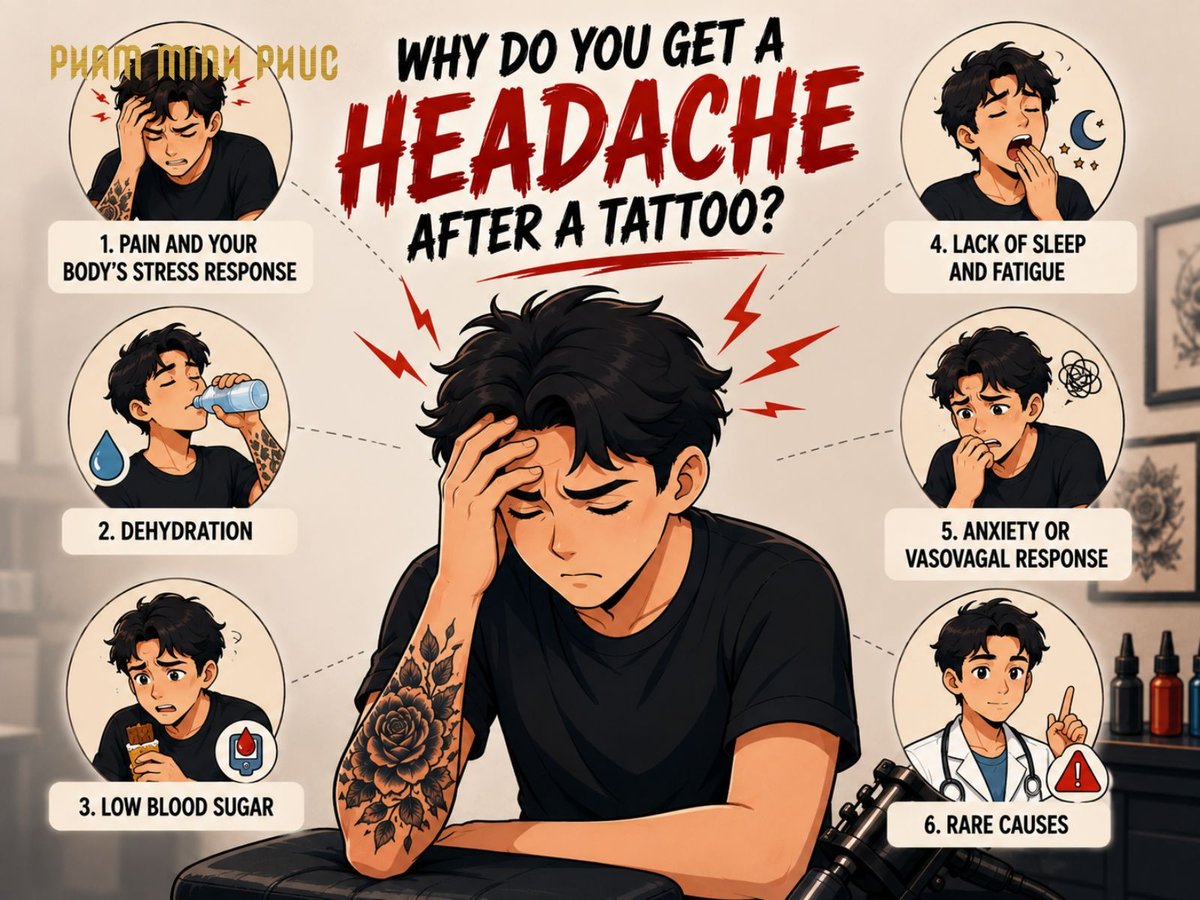
Pain and Your Body’s Stress Response
Pain is the most direct cause of a headache after a tattoo. Tattooing activates your body’s natural stress response, releasing hormones such as adrenaline and cortisol that increase muscle tension throughout your neck, shoulders, and jaw.
That muscle tension often leads to a tension headache, especially during longer sessions. Many clients unconsciously clench their shoulders or jaw while being tattooed, and the tight muscles around the neck and scalp can produce the same type of headache that develops after hours of stress at a desk. Tattoos on the neck, shoulders, or upper back may make this more noticeable because those areas naturally tense up during the session.
Dehydration
Dehydration is one of the most common, and easiest to prevent, causes of a tattoo headache. During a long session, many people simply forget to drink enough water while sitting in the chair for several hours.
The risk increases in hot weather or during larger tattoo sessions. If you develop a dull, whole-head headache during or shortly after your appointment, dehydration is one of the first things to consider. Drinking water regularly before, during breaks, and after your session usually helps prevent this problem.

Low Blood Sugar
Low blood sugar is another common reason people develop a headache after getting tattooed. Skipping a meal before a long appointment leaves your brain with less glucose, its main energy source, which can trigger a headache along with weakness, light-headedness, or mild nausea.
This is much more common during sessions lasting several hours than during smaller tattoos. Eating a balanced meal before your appointment and bringing a snack for longer sessions can help keep your blood sugar stable.
Lack of Sleep and Fatigue
Poor sleep before your appointment makes headaches more likely, especially when combined with the physical and mental fatigue of a long tattoo session. Many people sleep poorly the night before because they’re excited or nervous, leaving them more sensitive to pain and stress the next day.
Starting a session well rested gives your body a better chance to tolerate the tattoo and recover afterward without developing a headache.
Anxiety or Vasovagal Response
For some people, anxiety or a fear of needles triggers a vasovagal response, a temporary drop in heart rate and blood pressure that can cause dizziness, nausea, sweating, or even brief fainting.
Although this reaction can feel alarming, it usually improves quickly once you lie down, drink water, and eat something. If symptoms are severe, don’t improve after resting, or happen together with persistent fainting or confusion, seek medical attention instead of trying to manage them yourself.
Rare Causes
Most tattoo headaches are harmless, but a few medical conditions can also cause one.
- Infection: A headache accompanied by fever, increasing redness, swelling, warmth, or pus around the tattoo may indicate an infection rather than normal healing.
- Allergic reaction: According to the American Academy of Dermatology (AAD), allergic reactions to tattoo pigment can develop immediately or even years after getting tattooed. Along with a headache, you may notice itching, a rash, or raised skin around one ink color, most commonly red.
- Migraine: If you have a history of migraines, the pain, stress, dehydration, or lack of sleep associated with a tattoo session may trigger one..
How Long Does a Headache After a Tattoo Last?
Most tattoo-related headaches ease within a few hours and clear up completely within 24 hours. Once you rehydrate, eat, and rest, the stress response driving the headache resolves on its own.
Longer sessions can push that timeline slightly. After a full-day appointment or a large tattoo, a mild headache lasting 1 to 2 days still falls within the normal range. A headache lasting more than 48 hours isn’t typical, and it’s worth checking against the warning signs covered below.
How to Relieve a Headache After Getting a Tattoo?
Most tattoo headaches respond to the same basics that fix any tension or dehydration headache: fluids, food, and rest. Here’s what actually helps:
- Drink plenty of water. Even mild dehydration can trigger or worsen a headache, especially after sitting for a long tattoo session.
- Eat a balanced meal. If you had your tattoo on an empty stomach or several hours have passed since eating, choose foods with carbohydrates and protein to help stabilize your blood sugar.
- Rest in a cool, quiet place. Bright lights, loud noise, and physical activity can make a headache feel worse. Give your body time to recover after the session.
- Avoid alcohol for at least 24 to 48 hours. Drinking alcohol after getting a tattoo can worsen dehydration, one of the most common causes of post-tattoo headaches, and may also slow your body’s healing process.
- Take an over-the-counter pain reliever if needed. Acetaminophen is generally the preferred option for relieving a headache after getting a tattoo because it does not increase bleeding the way NSAIDs such as ibuprofen or aspirin can during the first day. If you’re unsure which medication is appropriate for you, ask your healthcare provider or pharmacist.
- Continue your tattoo aftercare routine. Keep the tattoo clean, stay hydrated, and get enough sleep, since your body heals more efficiently when you’re well rested.
I always recommend clients eat a good meal and stay well hydrated before and after their appointment. In my experience, headaches caused by dehydration, low blood sugar, or physical stress usually improve quickly once those basic needs are addressed.
When Is a Headache After a Tattoo a Warning Sign?
A headache becomes a warning sign when it gets worse instead of better, lasts longer than expected, or appears alongside symptoms that suggest something more serious than dehydration or stress.
You should seek medical care if your headache occurs with any of the following:
- A fever above 100.4°F (38°C), chills, or increasing redness and swelling around the tattoo, which may indicate an infection rather than a normal healing response.
- A severe or worsening headache that does not improve with hydration, food, or over-the-counter pain relief, especially if it continues for more than 24 to 48 hours.
- Persistent vomiting, confusion, dizziness, fainting, blurred vision, or neck stiffness, as these symptoms can signal a medical condition unrelated to normal tattoo healing and should be evaluated immediately.
- Signs of an allergic reaction, such as widespread hives, swelling of the face, lips, or throat, difficulty breathing, or severe itching beyond the tattooed area. Although tattoo ink allergies usually affect the skin, severe allergic reactions require emergency medical attention.
In my experience, most post-tattoo headaches resolve within a few hours after clients rehydrate, eat a proper meal, and get some sleep. If your headache continues to worsen instead of improving, or if it appears together with the warning signs above, contact a healthcare provider rather than assuming it’s part of the normal healing process.
How to Prevent a Headache Before and During Your Tattoo Appointment?
Most tattoo headaches are preventable with basic preparation before you sit down in the chair. A few habits make the biggest difference:
- Sleep well the night before your appointment.
- Eat a full meal before you arrive.
- Stay hydrated throughout the day, not just right before the session.
- Avoid alcohol for at least 24 hours beforehand.
- Limit caffeine if you’re sensitive to it.
- Take breaks during long sessions to stretch, drink water, and eat a snack.
- Tell your artist if you’re prone to migraines.
I always ask about migraine history during the consultation, since it changes how I plan breaks through a longer session. A client who mentions this upfront gets a session built around it, not a session interrupted by it. Good preparation doesn’t just prevent a headache. It makes the entire appointment more comfortable from start to finish.
FAQ About Headache After a Tattoo
What’s the Difference Between a Stress Headache and a Low Blood Sugar Headache From a Tattoo?
A stress headache builds slowly and centers around your neck, shoulders, and jaw, since it comes from muscle tension during pain. A low blood sugar headache feels more like a dull, whole-head ache and often comes with light-headedness or shakiness. Eating a meal fixes the second type within 20 to 30 minutes. If food doesn’t help, tension and stress are the more likely cause.
Can a Headache After a Tattoo Mean You’re Losing Too Much Blood?
A headache alone does not mean you’re losing too much blood. A tattoo draws very little blood, and normal bleeding stops well before the session ends. A headache paired with severe dizziness, fainting, pale or clammy skin, or a rapid heartbeat is a different situation, and it needs medical attention right away.
Does the Placement or Size of a Tattoo Affect Your Chances of Getting a Headache?
Yes, both tattoo placement and size affect your risk. Tattoos on the scalp, neck, or behind the ear sit closest to the muscles that tense up under pain, so headaches show up more often with these placements. Larger tattoos also raise the risk simply because the session runs longer, giving dehydration, low blood sugar, and muscle tension more time to build up.