Tattoo scabbing is your natural skin’s protective response to the thousands of tiny punctures a needle makes while depositing ink. The scabbing thickness varies, from light, dry flaking to a darker, denser crust, and that range depends mostly on your tattoo’s size and style. Both ends of that range are a normal part of healing. Tattoo scabbing typically starts around day 3 to 5, lasts about a week, and clears within 10 to 14 days for most tattoos.
I’m Minh Pham, and I’ve watched hundreds of tattoos go through this exact stage across every style I work in: black and grey, color realism, fine line, and the bold outlines that define my Evil Doll pieces. In this guide, I will help you know what normal scabbing looks like, how long it lasts, when it signals a problem, why your tattoo’s style changes the pattern, and how to get through this stage without losing any color.
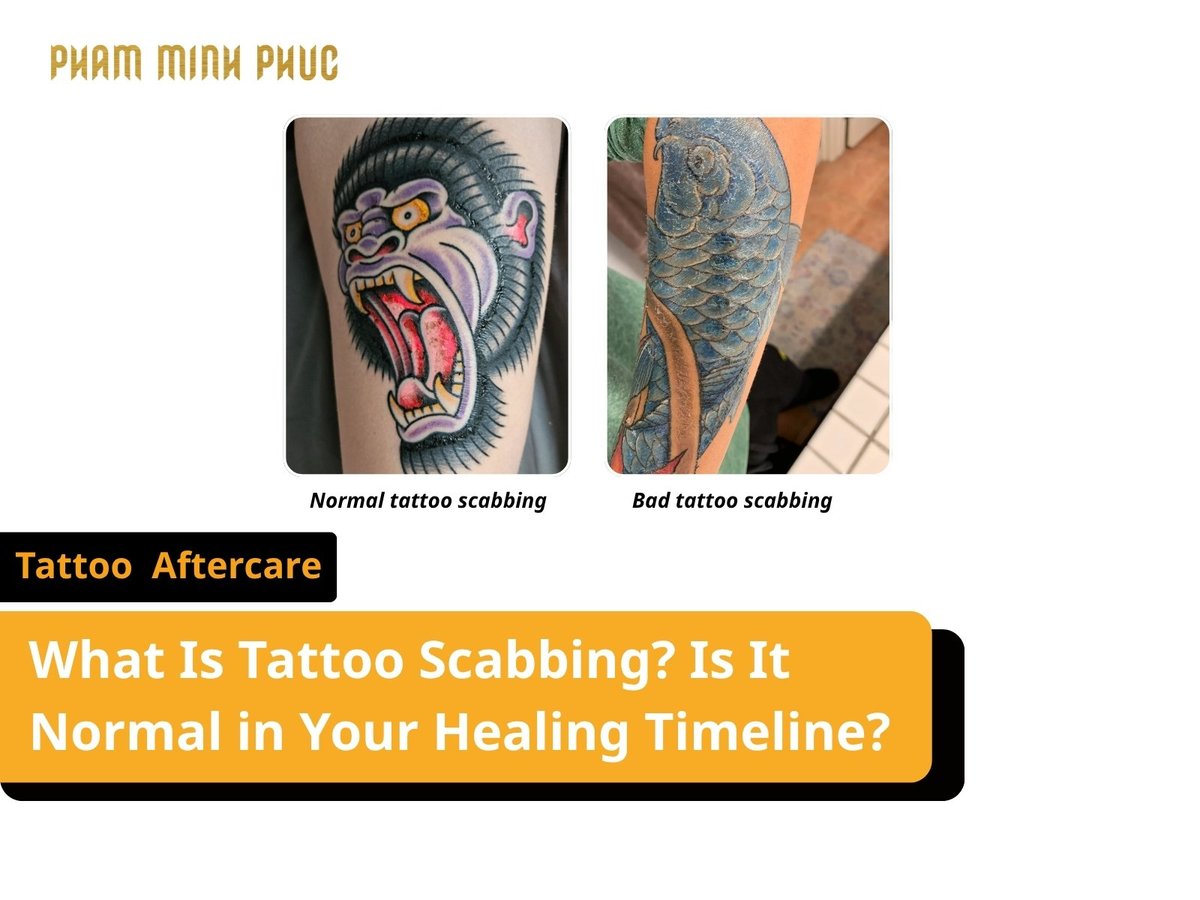
Table of Contents
What Is Tattoo Scabbing?
Tattoo scabbing is the protective layer your skin forms over a fresh tattoo as it heals. The needle breaks the skin’s surface thousands of times to push ink into the dermis, and your body responds the same way it would to any wound: it seals the area while new skin forms underneath. That scab can show up as something close to dry, flaky skin, or as a noticeably thicker, darker crust. Both are normal. The thickness reflects how much tissue was worked, not whether something went wrong.
A healthy scab, thin or thick, shares the same core traits: it’s dry, it stays firmly attached to the skin, and it holds the shape of your design. That protective layer doesn’t form by accident.
Why Do Tattoos Scab?
Tattoos scab because the needle punctures the skin thousands of times to deposit ink, and your body treats that the same way it treats any open wound. Plasma and a small amount of blood rise to the surface, dry out, and harden into a crust that shields the area from bacteria while new skin cells form below it.
A few things make that scab more pronounced: Skipping proper aftercare, an artist going over the same area multiple times to build saturation, or early irritation from picking or friction. How much that adds up to scabbing on your specific tattoo comes down largely to style, which the section further down covers in detail.
What Does Normal Tattoo Scabbing Look Like?
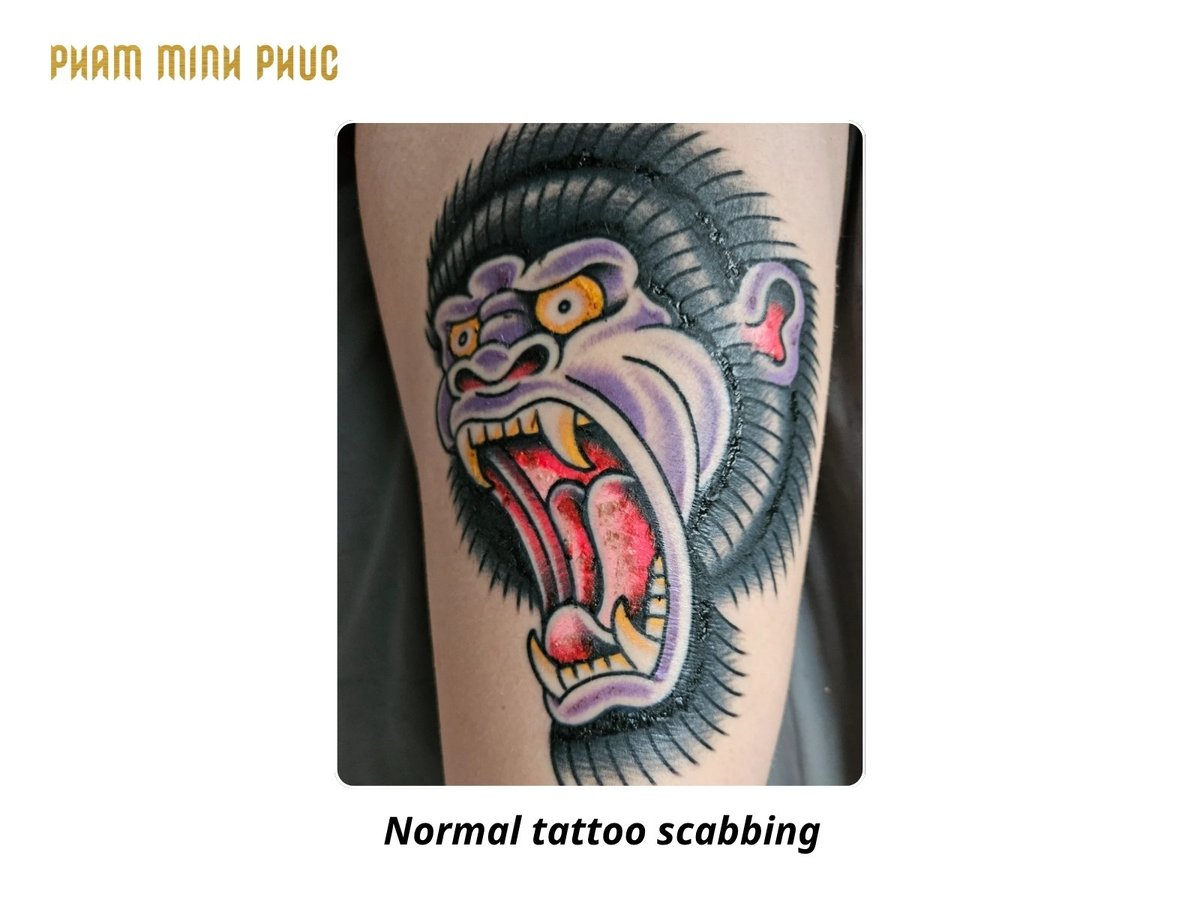
Normal tattoo scabbing follows a consistent set of traits no matter how thick or thin the scab ends up being. It stays firmly attached to your skin, with no looseness or lifting at the edges. It holds the same shape and pattern as your tattoo design rather than forming in random patches. Day by day, it gets better instead of worse, gradually drying and flaking at the edges. And while some tenderness or itching is expected, it stays mild and doesn’t escalate.
How Long Does Tattoo Scabbing Last?
Tattoo scabbing typically starts around day 3 to 5, lasts about a week, and clears within 10 to 14 days for most tattoos.
That window shifts depending on what you got. Light line work tends to flake off within 2 to 3 days of starting, while heavier shading or larger pieces can take 3 to 5 days just to begin clearing, and the thicker the scab, the longer the full process runs. The exact reasons for that gap are covered in the style breakdown below. Once the scab is gone, your tattoo can look slightly hazy or faded for a short stretch before the color settles, a stage covered in more depth in the full healing timeline guide.
Signs Your Tattoo Scabbing Is Not Normal
Abnormal tattoo scabbing breaks from the pattern described above, and it’s worth recognizing quickly. Watch for:
- A scab that’s thick, puffy, or pulling away at the edges instead of staying flat and attached
- Green, yellow, or bright red coloring instead of the dark tone trapped ink normally produces
- An unusual or foul smell
- Heat that increases instead of fades
- Pain that gets worse after day 3 or 4 rather than easing
- Redness spreading past the tattoo’s border
- Pus lasting more than 48 hours
- Fever or chills
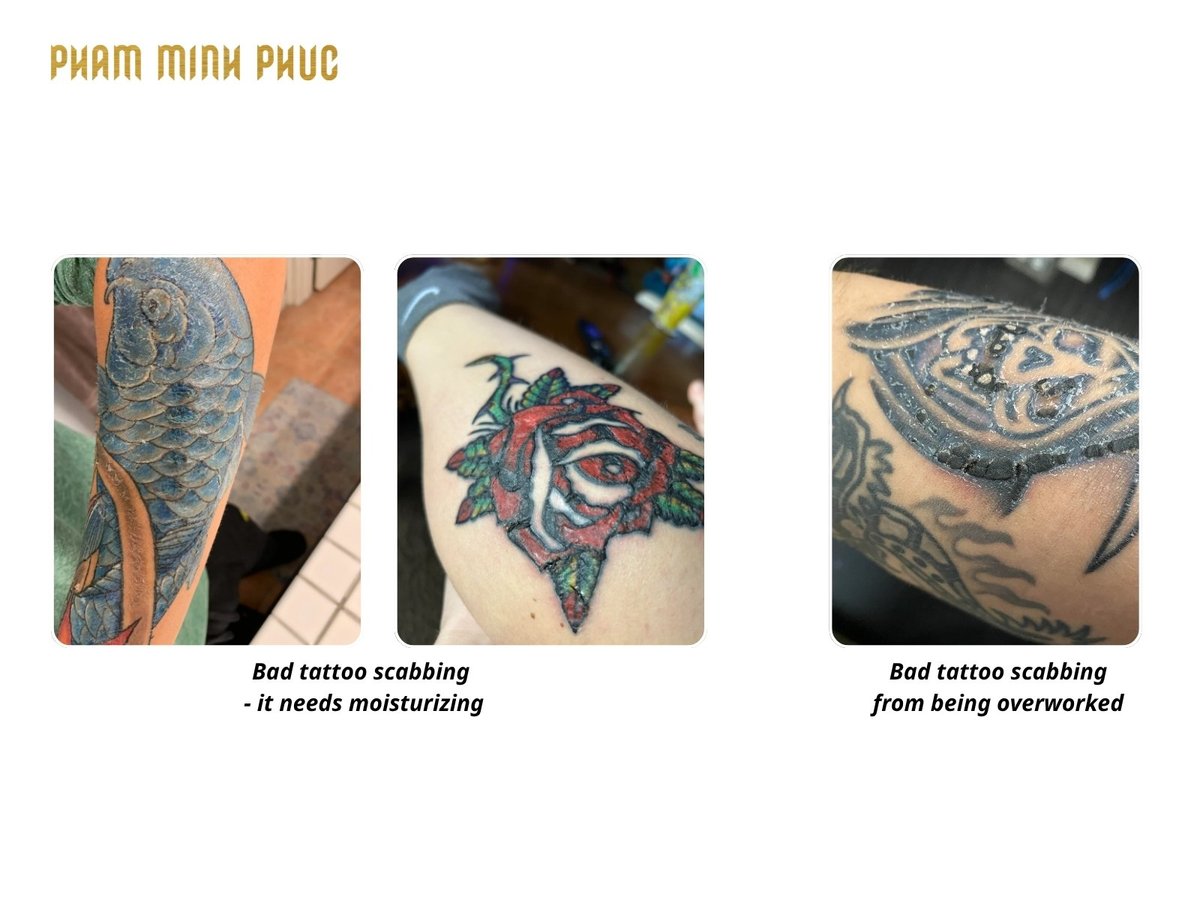
A handful of causes sit behind most of these signs. Infection from inadequate hygiene is the most common, followed by picking or scratching that tears already-healing tissue. The wrong products, anything petroleum-based or heavily fragranced, can irritate the area and slow healing. Submerging the tattoo in water too early softens the scab and opens the door to bacteria. None of these are guesswork once you know what to look for, and catching them early keeps a minor setback from becoming a bigger one.
How Does Scabbing Differ by Tattoo Style?
Scabbing differs by tattoo style because the amount of ink deposited and how many times the needle passes over the same area both shape how your skin responds, which is exactly why thickness alone was never the right way to judge what’s normal.
| Tattoo Style | Typical Scabbing Pattern |
| Black & Grey | Moderate, varies with shading depth |
| Color Realism | Most noticeable, multiple ink layers |
| Fine Line | Minimal, closer to flaking |
| Traditional | Thickest along outlines, even on fills |
This is why I always tell clients to judge their healing by the four traits above, attachment, shape, daily improvement, and mild sensation, rather than by how thick the scab looks on day five. A heavily shaded black and grey sleeve and a fine line wrist piece are both healing correctly even though one scabs far more than the other.
What Should You Do and Not Do While Your Tattoo Scabs?
A handful of habits during the scabbing phase decide whether your color heals even or patchy.
Do while your tattoo scrabs:
- Let the scab fall off on its own, in its own time
- Wash gently twice a day with a fragrance-free cleanser
- Pat the area dry with a clean paper towel
- Keep the skin lightly moisturized with a thin layer of aftercare product
Don’t while your tattoo scrabs:
- Pick or peel at the scab, no matter how tempting
- Rub the area dry with a towel
- Submerge the tattoo in water until it’s fully healed
- Use petroleum-based or heavily scented products
Itching shows up for almost everyone during this stage, and it’s usually the hardest part to sit with. When a client tells me it’s getting unbearable, I tell them to pat the area gently instead of scratching, or press a cool, damp cloth against it for a few seconds. Both ease the sensation without disturbing the scab underneath. Loose clothing helps too. Friction from tight fabric is a common reason itching drags on longer than it needs to.
Frequently Asked Questions
Are tattoos supposed to scab?
Some degree of scabbing is common, though how much shows up depends heavily on your tattoo’s size and style. Fine line work might barely scab at all, while a solid black piece almost always will, and both are normal.
Is it normal for a tattoo to scab heavily?
Heavy scabbing is normal for larger or more saturated pieces, as long as it still matches the core traits of healthy healing: firmly attached, holding the tattoo’s shape, and improving day by day.
What’s the difference between tattoo scabbing and tattoo peeling?
Scabbing is the thicker, darker crust that forms early in healing. Peeling is the lighter, drier shedding that follows once that crust starts breaking down. They’re two stages of the same process rather than separate events, and most tattoos move through both.
What happens if you pick a tattoo scab?
Picking pulls ink out of the skin before it’s settled, which can leave patchy color or lead to scarring. The scab is doing protective work; removing it early interrupts that.
Can tattoo scabbing cause ink loss?
It can, but only when the scab comes off before the skin underneath has fully closed, whether that’s from picking at it or from it cracking on its own. A scab that sheds naturally and on schedule rarely takes meaningful ink with it.
What happens if a tattoo scab cracks?
A cracked scab exposes the healing skin underneath, which raises the risk of both ink loss and infection if it’s not addressed right away. Cracking usually comes down to dryness from skipped moisturizer or friction from movement or tight clothing. Apply a thin layer of moisturizer as soon as you notice it, and keep an eye out for the infection signs covered above.
Why is your tattoo scab yellow?
Yellow coloring in a scab can signal infection, especially when it comes with an odor or increasing pain. A healthy scab runs dark from trapped ink, not yellow or green.