Tattoo aftercare serves as the critical biological bridge between a medical procedure and a permanent masterpiece. A fresh tattoo acts as an open wound that requires specific hygiene protocols to prevent infection while anchoring the pigment into the dermis. The final visual quality of your body art depends as much on what happens after you leave the studio as on what happens during the session. Your artist controls the technical application from needle depth, ink saturation to pressure consistency. You control everything that follows. Neither half of the equation overrides the other.
I’m Minh Pham, a custom tattoo artist based in San Antonio. Every client who leaves my studio receives this exact protocol, developed from years of watching what heals cleanly and what doesn’t. This guide walks you through the day-by-day cleaning and moisturizing schedule, the complete Saniderm and second-skin guide, the approved products for each healing phase, the mistakes that cause permanent ink loss, and the warning signs that require immediate medical attention.
Table of Contents
Day 1 Tattoo Aftercare
The first 24 hours define the entire trajectory of your healing process. Your skin acts as an open wound during this period, making it vulnerable to airborne bacteria and irritation.
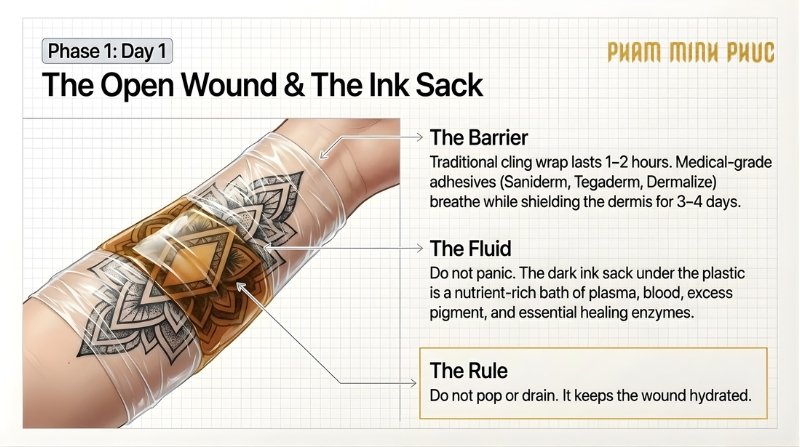
Your artist will secure the fresh tattoo with one of two protective barriers. Traditional cling wrap acts as a temporary shield that must be removed within one to two hours to prevent bacterial breeding. Conversely, medical-grade adhesive barriers, commonly known as second skin tattoo aftercare, are designed to breathe while remaining on the dermis for three to four days. Reliable industry brands include:
- Saniderm
- Tegaderm
- Dermalize
- SecondSkin
- Tatu-Derm
- Flexifix
If you use Saniderm tattoo aftercare or similar adhesives, you will likely notice a dark fluid accumulating under the plastic. This “ink sack” consists of plasma, blood, and excess pigment. While it looks visually alarming, this nutrient-rich fluid bath keeps the wound hydrated and contains essential healing enzymes. You must not pop or drain it unless the seal breaks and leaks.
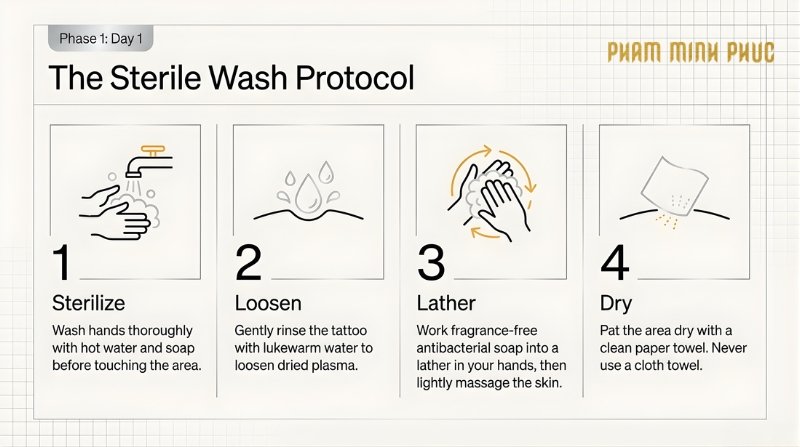
Strict hygiene is mandatory the moment the tattoo wrap aftercare is removed. Here is the cleaning protocol you must follow to ensure the wound remains sterile:
- Wash your hands thoroughly with hot water and soap before touching the area.
- Gently rinse the tattoo with lukewarm water to loosen dried plasma.
- Lather a fragrance-free antibacterial soap in your hands and lightly massage the skin.
- Pat the area dry with a clean paper towel; never use a cloth towel.
Saniderm Tattoo Aftercare: How Long to Keep It On and When to Remove It
Keep the first piece of Saniderm on for 24 hours minimum, up to 3 days maximum. A second piece, which you apply yourself after the first removal, can remain on for up to 5 additional days. The total bandaged period should not exceed 7 days from the date of your tattoo.
I apply Saniderm to every client who leaves my studio. The reason is straightforward: it eliminates the contamination risk caused by repeated cling wrap changes during the highest-vulnerability window, the first 72 hours when your wound is fully open.
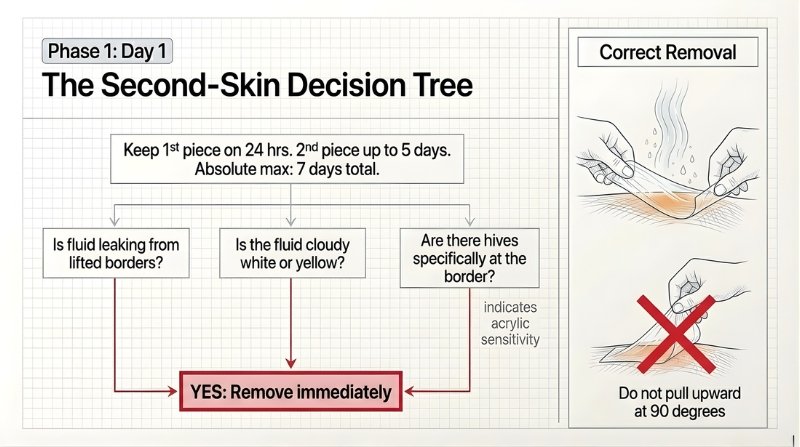
Remove it in the shower under warm running water. Start from one corner and peel the film back parallel to the skin. You should not ever pull it upward at a 90-degree angle, as this can damage healing tissue. Warm water helps loosen the adhesive and makes removal more comfortable. Once removed, wash the area immediately with antibacterial soap and lukewarm water, then pat dry with a clean paper towel. After that, assess whether a second piece of Saniderm is needed or if you can move on to the lotion phase.
You should remove immediately if you observe any of these:
- The adhesive border has lifted and fluid is leaking out
- The fluid under the bandage has turned from amber/red to cloudy white or yellow
- You develop a rash, hives, or intense itching specifically at the adhesive border. This indicates a skin sensitivity to the acrylic adhesive, not an infected tattoo
Days 2–3 Tattoo Aftercare
The initial shock subsides during this window, but the skin remains raw and reactive. You will experience a sensation similar to a severe sunburn, where the area feels hot, tight, and radiates a dull ache. Visually, the vibrant ink may start to appear duller or cloudy as the skin attempts to close, and light scabbing often begins to form.
You should continue to wash the tattoo gently twice a day, once in the morning and once at night, for the first 14 days. Do not wash more than twice a day; over-cleaning strips the natural sebum that your skin produces to assist healing and dries out the epidermis prematurely.
The two-wash schedule continues through the peeling phase regardless of how clean the tattoo looks. Ink residue, dead skin cells, and bacteria accumulate on the surface even when invisible to the eye.
You should stop washing twice daily when the skin surface feels smooth to the touch and no more peeling is occurring, typically between day 10 and day 14. At that point, you should once-daily washing with a gentle fragrance-free cleanser is sufficient for the remainder of the healing period.
Hygiene remains critical even after the bandage is gone. You might notice colored fluid rinsing away in the sink; this is simply excess ink expelling from the dermis and is a completely normal part of the process.
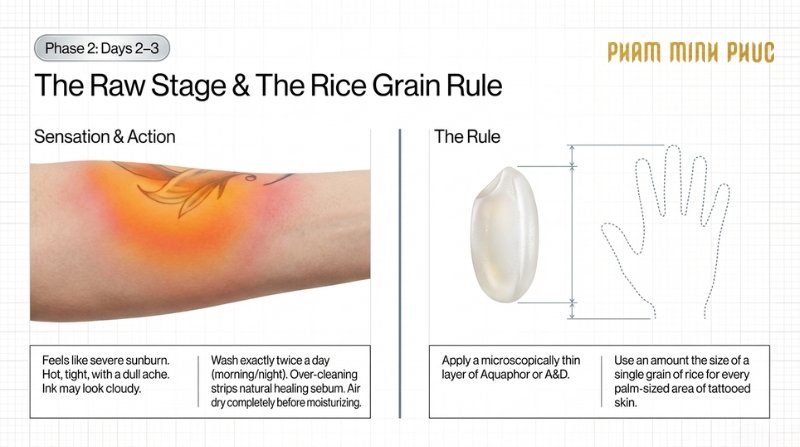
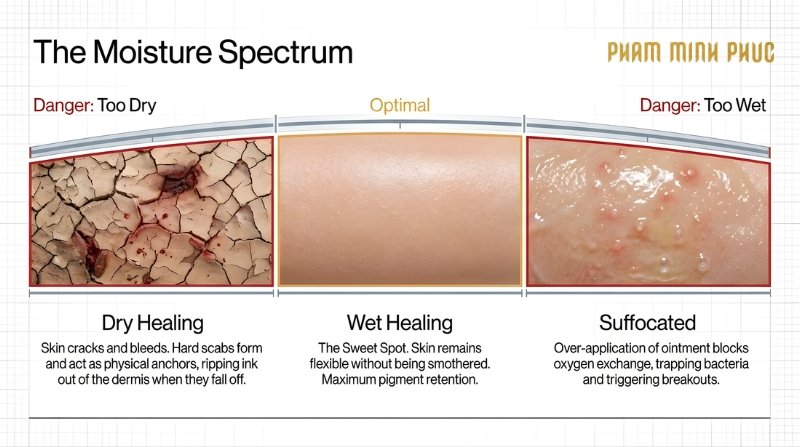
You must allow the skin to air dry completely before applying any product to avoid trapping moisture and bacteria. Once dry, apply a microscopically thin layer of Aquaphor for tattoo aftercare or A&D ointment. I adhere strictly to the “Rice Grain Rule”: use an amount the size of a grain of rice for a palm-sized tattoo. Over-applying ointment creates a suffocating barrier that causes breakouts.
I advocate for wet healing, which involves maintaining a moisture balance to prevent hard scabs from forming. Hard scabs act like anchors that pull ink out of the dermis when they fall off. Keeping the area slightly moisturized ensures the skin remains flexible, resulting in higher pigment retention compared to “dry healing,” where the skin is left to crack and bleed.
Days 4–14 Tattoo Aftercare
This phase marks the critical transition from open wound care to skin regeneration. The top layer of the epidermis dies and sheds to reveal the healed skin beneath.
You must stop using heavy occlusive products like Aquaphor typically around day four or five, once the tattoo is no longer weeping plasma. Switch immediately to a lightweight tattoo aftercare lotion to allow the pores to breathe while maintaining hydration. The best lotion for tattoo aftercare must be water-based and completely free of alcohol or fragrances to avoid chemical burns on the tender tissue.
The tattoo will flake and peel exactly like a sunburn, leaving colored flakes on your clothes or in the shower. This is a natural exfoliation process. You must never pick, pull, or scrub the peeling tattoo skin, as this forces ink out of the healing layers and creates permanent white spots.
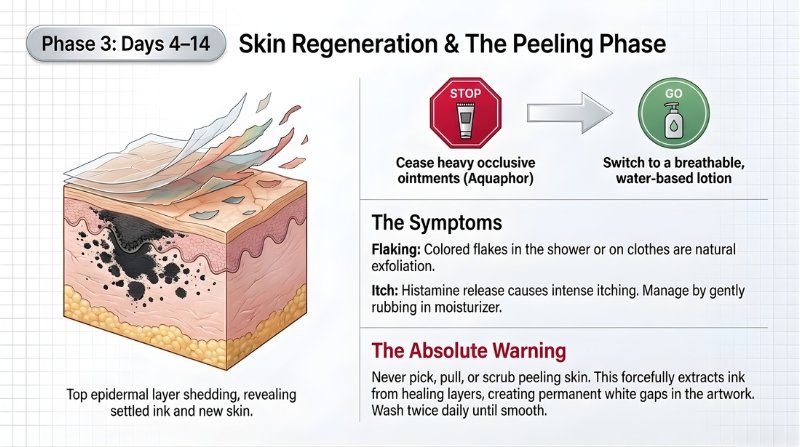
As the skin knits back together, histamine release causes an intense itching sensation. You should gently rub a fragrance-free and alcohol-free moisturizer into the area several times daily to relieve the tension. However, be vigilant; if your tattoo remains red, swollen, or hot to the touch at this stage, you might have an infected tattoo. Consult your artist or a healthcare professional immediately if these symptoms persist beyond the first week.
Days 15–30 and Beyond
The surface healing concludes, but the deep dermal remodeling continues for months. The tattoo aftercare timeline extends far beyond the peeling phase.
You will notice a milky, dull haze over the artwork known as “Silver Skin.” This is a fresh layer of epidermis that has not yet fully settled. The colors will return to their original vibrancy once this layer matures and becomes transparent.
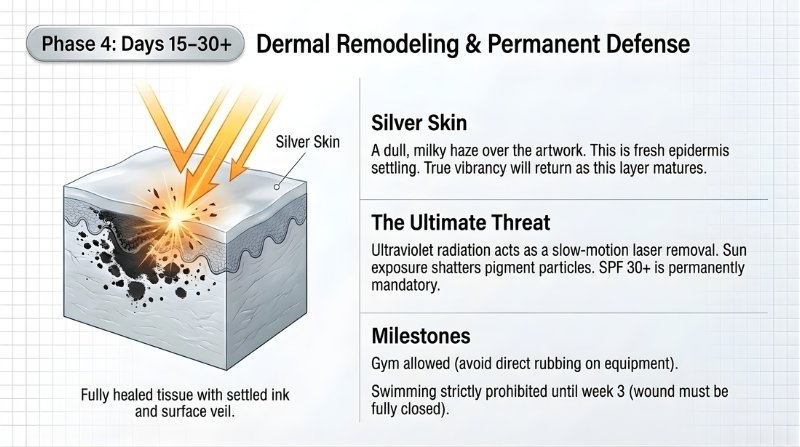
Ultraviolet radiation acts as a laser removal treatment in slow motion, making sun protection for tattoos the single most important factor for longevity. You must apply SPF 30+ sunscreen whenever the tattoo is exposed to daylight to prevent the ink particles from shattering and spreading. Consistent protection is the primary factor that distinguishes tattoos that age well from those that fade prematurely.
You can generally return to the gym once the peeling stops, provided the equipment does not rub against the area. However, swimming with new tattoo work is strictly prohibited until the skin is fully closed, usually after three weeks, to prevent bacterial infections from pools or natural bodies of water.
What to Put on Tattoos: Best Aftercare Products Recommended
Selecting the right product for each healing phase is not optional — the wrong choice at the wrong stage actively damages the ink. The requirements change from week to week: the open wound phase (days 1–3) demands an occlusive ointment to lock in healing factors; the peeling phase (days 4–14) requires a breathable lotion that allows skin to respire; long-term maintenance requires daily sun protection above everything else. Below is the breakdown by category, which starts with soap for daily cleaning, moving through ointment and lotion choices, and ending with the products that should never touch a fresh tattoo and why.
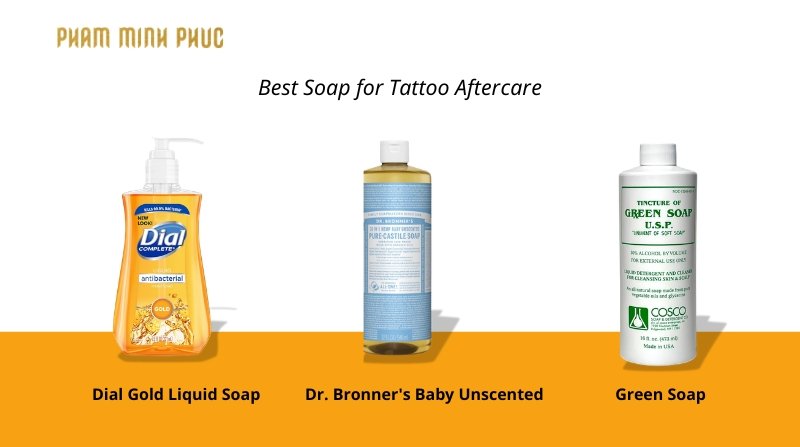
Best Soap for Tattoo Aftercare
The ideal cleanser must be antibacterial and fragrance-free to strip away plasma without irritating nerve endings.
- Dial Gold Liquid Soap. It is what I keep at my own station. Its active ingredient, triclocarban at a 0.6% concentration, provides broad-spectrum antimicrobial action against the gram-positive bacteria most likely to infect open wounds, including Staphylococcus aureus and Streptococcus pyogenes. It does this without the skin-stripping harshness of surgical scrubs. Lather it in your hands first. Never apply it directly to the tattoo.
- Dr. Bronner’s Baby Unscented has one of the cleanest ingredient lists you will find in a mass-market soap. It is made from saponified organic oils with no synthetic fragrance, preservatives, or added foaming agents beyond what the saponification process naturally produces. Some clients with sensitive skin or known reactions to conventional soap respond better to this option. It is slightly less antimicrobial than Dial Gold, but still adequate after day 3 when the wound has begun to close.
- Green Soap, typically used by artists in the shop, works well in diluted form for home use. It’s what you’ve already had on your skin during the tattooing process, which makes it a low-irritation choice for the first wash.
Best Ointment for Tattoo Aftercare (Days 1–3)
Ointments provide an occlusive barrier that locks in healing factors during the open wound phase.
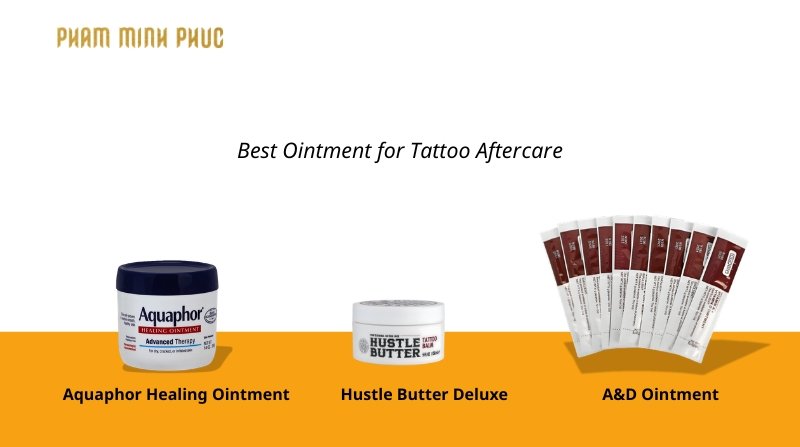
- Aquaphor Healing Ointment is what I recommend to every client. Its formula contains 41% petrolatum, along with glycerin, lanolin, and panthenol. Together, these create a semi-occlusive barrier that allows oxygen exchange while locking in moisture and healing factors. This is what separates it from Vaseline, which is 100% petrolatum and does not allow oxygen exchange, and makes it the benchmark for wound-phase tattoo care. Dermatologists recommend it broadly for wound healing. For fresh tattoos specifically, nothing at this price point performs better.
- Hustle Butter Deluxe is the vegan alternative I recommend for clients who avoid animal-derived ingredients. It contains shea butter, mango butter, coconut oil, and rice bran oil. These are all skin-compatible emollients that hydrate without synthetic additives. It performs well during both the ointment phase and the lotion phase, making it a solid option if you prefer to use a single product throughout the healing process. The trade-off is that it feels heavier than a standard lotion, so apply a thinner layer than you think you need after day 5.
- A&D Ointment is effective and affordable, though some clients find the texture too greasy. Apply using the Rice Grain Rule — a grain-sized amount, not more.
Best Lotion for Tattoo Aftercare (Days 4+)
Lotions provide hydration without the heavy barrier of ointments.
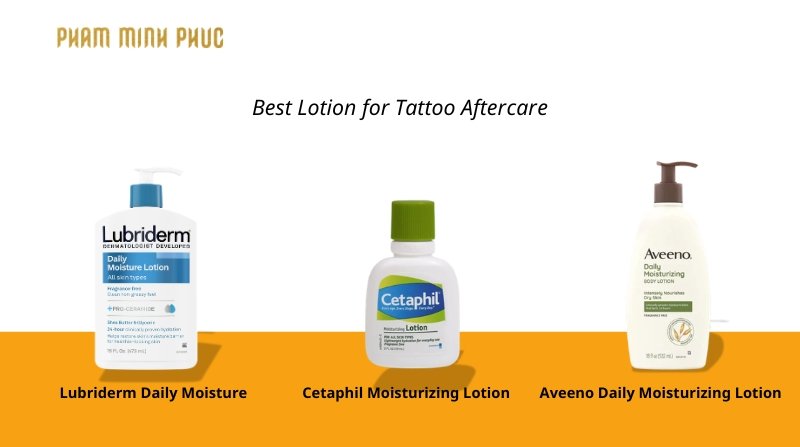
- Lubriderm Daily Moisture: Fast-absorbing and non-greasy.
- Cetaphil Moisturizing Lotion: Excellent for sensitive skin types.
- Aveeno Daily Moisturizing Lotion: Contains colloidal oatmeal to soothe the itch.
Which Products Should You Never Put on a Fresh Tattoo?
Many common household staples promote general wound healing but actively destroy fresh tattoo ink pigment. Applying the wrong formulation can trap anaerobic bacteria or physically pull color from the dermis. I have compiled this restricted list based on years of witnessing preventable damage caused by ill-informed product choices.
- Vaseline (100% Petroleum Jelly): Pure petroleum creates an impermeable seal that traps anaerobic bacteria against the wound. It also causes the ink to fade by preventing the skin from breathing.
- Neosporin: This medicated ointment is designed to extract foreign bodies from wounds. Your body perceives tattoo ink as a foreign body, meaning Neosporin actively pulls the pigment out of your skin.
- Scented Lotions: Artificial fragrances contain alcohol and chemicals that cause severe burning and contact dermatitis on broken skin.
What Are the Most Damaging Tattoo Aftercare Mistakes?
Avoiding common errors is just as important as following the correct steps.
- Picking and Scratching: This is the fastest way to create holes in your design.
- Submerging in Water: You must avoid pools, hot tubs, lakes, and baths for at least three weeks. Standing water harbors bacteria that cause severe infections in fresh tattoos. Showers are safe; soaking is not.
- Sun Exposure: Direct sunlight on a fresh tattoo causes a burning sensation and rapid fading. Keep it covered with loose clothing until fully healed.
- Over-moisturizing: Applying too much product causes the skin to bubble and potentially reject the ink. The tattoo should look matte, not glossy.
Complications During the Tattoo Healing Process
Redness, itching, and plasma leakage are standard biological responses during the first 72 hours. However, if these symptoms persist or escalate rather than subsiding after the first week, they indicate an underlying medical complication. You must consult a healthcare professional immediately if you observe these specific warning signs.
- Infection: The infected area feels excessively warm, painful, and may radiate red streaks across the surrounding skin. In severe cases, the wound leaks yellow or green pus, potentially signaling exposure to bloodborne pathogens like Hepatitis or Tetanus due to contaminated equipment.
- Allergic Reaction: Red tattoo ink is statistically the most likely pigment to trigger sensitivity. Symptoms include a persistent, itchy, raised rash or extreme photosensitivity (reaction to light) that continues long after the tattoo should have healed.
- Scarring: Permanent scar tissue or raised keloids can form if you pick at the scabs or if the artist accidentally caused an overworked skin tattoo by applying too much pressure. This structural damage alters the skin texture and permanently distorts the design.
What Else Affects How Your Tattoo Heals?
Every tattoo heals differently, and the day-by-day protocol above applies to standard placement on areas with normal skin thickness and minimal movement. Three variables can change the equation significantly.
Placement on joints or high-movement areas such as hands, elbows, knees, and feet requires extra care. These locations stretch and flex constantly during healing, which can pull the repairing skin apart. Apply moisturizer more frequently, about three to four times daily instead of two. Keep the area covered with loose clothing during the first week to minimize friction. Healing typically takes two to three weeks longer than standard placement.
Fine line tattoos require a different approach. This style deposits less ink density per square centimeter than black and grey or realism work, making it more susceptible to ink migration if the skin is over-moisturized. Use lighter lotion layers, thinner than you think is necessary. Avoid applying any product while the skin still feels damp after washing.
Darker or more saturated skin tones: Keloid formation risk is higher in individuals with deeper skin tones and is also hereditary. If you or a blood relative has a history of keloid scarring, inform your artist before the session so they can adjust pressure and needle depth, and monitor the healed tattoo closely for raised tissue at the 3 to 4 week mark.
How to Keep Your Tattoo Vibrant Long After It Heals
The 30-day protocol ends. The maintenance does not.
Sun protection is the single highest-leverage action you can take for long-term ink quality. UV-A radiation penetrates the dermis and fragments tattoo pigment particles into sizes small enough for macrophages, the skin’s cleanup cells, to transport out of the tissue. This is the same mechanism used in laser removal, just slower. Apply a broad-spectrum SPF 30 or higher sunscreen to any healed tattoo exposed to daylight. Not just at the beach. Every day.
After the 30-day mark, applying a basic daily moisturizer once per day keeps the skin supple and helps prevent micro-cracking, which can make older tattoos look faded and uneven. Any fragrance-free, alcohol-free lotion works at this stage. This is maintenance, not healing, so consistency matters more than product selection.
At 12 to 18 months post-tattoo, book a consultation to assess whether any areas healed patchily and would benefit from a touch-up. Light spots are normal and expected in certain placements; they are completely correctable. What is not correctable is sun damage accumulated over years of unprotected exposure.
The work you put into the first 30 days determines what the tattoo looks like at year one. What you do in years one through ten determines what it looks like at year twenty.
As a San Antonio-based custom artist, I emphasize that the client is fully responsible for the artwork once they leave the studio. If your goal is a vibrant, well-healed piece, follow this guide without shortcuts and reach out if anything looks off. It is always better to ask early than to fix a problem that could have been avoided.
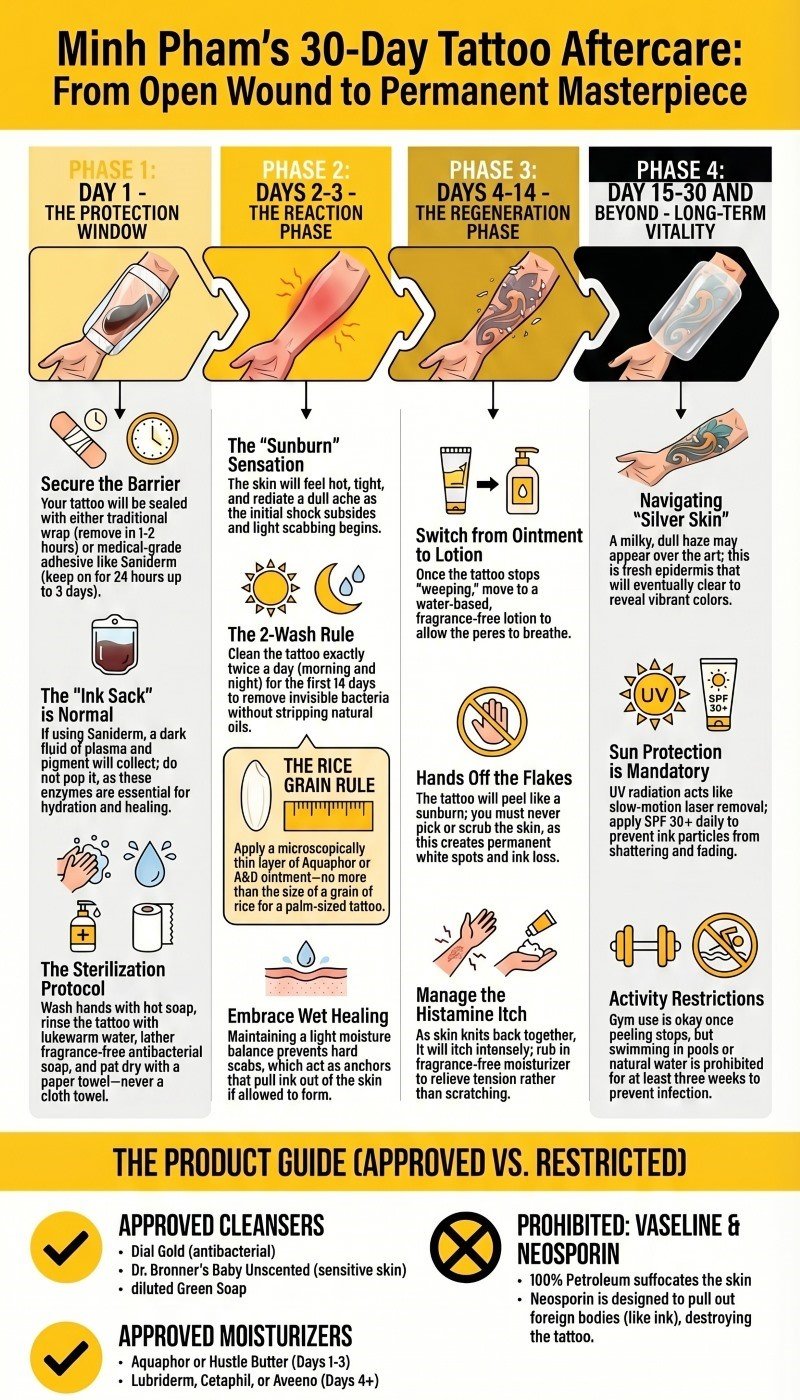
Here is a complete summary of the 30-day tattoo aftercare guide:
Frequently Asked Questions About Tattoo Aftercare
Can you use Coconut Oil or Aloe Vera for a Tattoo?
Natural oils like coconut oil and shea butter are acceptable during the peeling phase if you have no history of acne in the area. They provide excellent hydration but lack the sterile consistency of medical products. Aloe Vera helps soothe inflammation but buy a pure gel without added green dyes or alcohol.
Can You Put Aloe Vera on a Tattoo?
Yes, pure aloe vera gel is safe for tattoo aftercare during the peeling and itch phase (days 5–14), provided the product contains no alcohol, artificial dye, or fragrance.
Aloe’s active compound, acemannan, reduces histamine-driven inflammation and soothes the itch without disrupting the healing epidermis. The critical check: many commercial aloe gels list “SD alcohol 40” or “ethanol” on the ingredient label, these cause chemical irritation on healing skin. Use only clear gels with “aloe barbadensis leaf juice” as the first ingredient.
Is CeraVe Good for Tattoo Aftercare?
CeraVe Moisturizing Lotion and CeraVe Daily Moisturizing Lotion are both safe and effective starting from day 4, once the tattoo stops weeping plasma. CeraVe’s formula contains three ceramides, ceramide 1, 3, and 6-II. These help reinforce the skin’s lipid barrier and directly support dermal repair. The hyaluronic acid component provides humectant hydration without the heaviness of occlusive products. One caveat is to avoid CeraVe Healing Ointment on fresh tattoos. Its high petrolatum content functions similarly to Vaseline for wound care purposes, meaning it is fully occlusive and does not allow oxygen exchange.
Is Cetaphil Safe for Tattoos?
Cetaphil Moisturizing Lotion is safe for tattoo aftercare from day 4 onward. Cetaphil Gentle Skin Cleanser can replace antibacterial soap once the skin is no longer an open wound, typically after day 5 to 7. During the first 5 days, it is better to stick with antibacterial soap. Cetaphil cleanser does not provide the antimicrobial action needed while the wound is still open. After that period, its gentle surfactant system cleans effectively without disrupting the skin’s natural pH range of 4.5 to 5.5.
Is Vaseline Good for Tattoos?
No. Do not use Vaseline on a fresh tattoo. The full explanation is in the Products section above. The short version: 100% petrolatum creates a fully occlusive seal that traps anaerobic bacteria and prevents the skin from breathing, which interferes with ink anchoring in the dermis. If you’ve already applied it by accident, remove it immediately with a gentle cleanser and switch to Aquaphor.
Can You Wear Long Sleeves Over a New Tattoo?
Yes, with one condition. The fabric must not rub directly against the tattoo during the first 7 days.
Loose clothing that sits away from the tattoo surface is fine from day 1. Tight sleeves or any fabric that compresses the healing skin can create friction, lift forming scabs, pull ink, and introduce fibers into the open wound. If you need to cover the tattoo for work, sun protection, or comfort, wear breathable and loose-fitting fabric. You can also place a clean non-stick bandage over the tattoo first to reduce direct contact.
Can You Sleep on Your Tattoo After 3 Days?
Avoid sleeping directly on your tattoo for the first 7 to 10 days if at all possible.
After day 3, the tattoo is no longer an open wound in the acute sense, but the surface is still actively peeling and forming new skin. Sleeping on it can compress the healing tissue, transfer bacteria from your pillow, and cause the peeling skin to stick to fabric and pull away, which may take ink with it. Sleep on the opposite side whenever you can. If it is unavoidable, wrap the tattoo loosely with a breathable bandage to reduce direct contact.
What Happens If You Scratch a New Tattoo?
Scratching a healing tattoo pulls ink out of the dermis and creates permanent white spots or gaps in the design.
The peeling skin acts as a protective layer over the reforming dermis underneath. When you scratch it, you remove that layer before the skin beneath is ready, exposing raw tissue and physically dragging pigment particles out of their settled position. The fix is not scratching. Tap the area lightly with a clean finger, apply a thin layer of fragrance-free lotion, or press a cold pack against the area through a clean cloth.
How Do You Know if Your Tattoo Is Infected?
Signs of infection include red streaks radiating from the tattoo, excessive swelling, pus discharge, and fever. Pain that increases after day three rather than decreasing is a red flag. Seek medical attention immediately if you observe these symptoms — do not message your artist and wait. Go to a clinic.
Your tattoo is peeling and itchy, is that normal?
Yes, peeling and itching are positive signs of skin regeneration. It indicates the dead epidermal layer is shedding to reveal the healed skin beneath. Manage the itch with ice or light slapping and trust the process.
How Long Does Tattoo Aftercare Last?
Surface healing typically takes two to four weeks. Deep dermal healing continues for three to six months. Maintain a moisturizing regimen indefinitely to keep the skin healthy and the ink bold.