Sleeping on a new tattoo for one night is unlikely to ruin it, but repeated pressure, friction, and trapped heat over several nights can slow the healing process and irritate skin that hasn’t fully recovered. Protecting your tattoo while you sleep isn’t about finding one perfect position. It’s about keeping the area clean before bed, reducing friction from sheets and clothing, and avoiding direct pressure on the tattoo until the surface has healed.
In this guide, I’m Minh Pham, a tattoo artist in San Antonio, and I’ll show you how to sleep with a new tattoo, the best sleeping positions for different tattoo placements, what to do if your tattoo sticks to the sheets, why it may itch or sweat more at night, and how long you should protect it while it heals.
Table of Contents
Can Sleeping Ruin a New Tattoo?
Sleeping on a new tattoo is unlikely to ruin it after just one night, but repeated pressure, friction, and trapped heat can interfere with the healing process. Accidentally rolling onto your tattoo while you sleep usually won’t damage the final result. The bigger concern is putting stress on the same area night after night before the skin has fully healed.
While you sleep, three factors can affect a healing tattoo:
- Pressure. Lying directly on a fresh tattoo compresses the healing skin and underlying tissue, which can increase swelling, tenderness, and discomfort the next day.
- Friction. Rubbing against bed sheets or blankets can irritate the fragile outer layer of skin, disturb forming scabs, and make the tattoo take longer to heal.
- Heat and moisture. Body heat and sweat can become trapped between your skin and the bedding, creating a warm, damp environment that may increase irritation and slow the healing process.
Understanding these risks makes it easier to protect your tattoo while you sleep. The goal isn’t to find one perfect sleeping position, but to reduce pressure, friction, and excess moisture until your tattoo has fully healed.
How to Sleep With a New Tattoo?
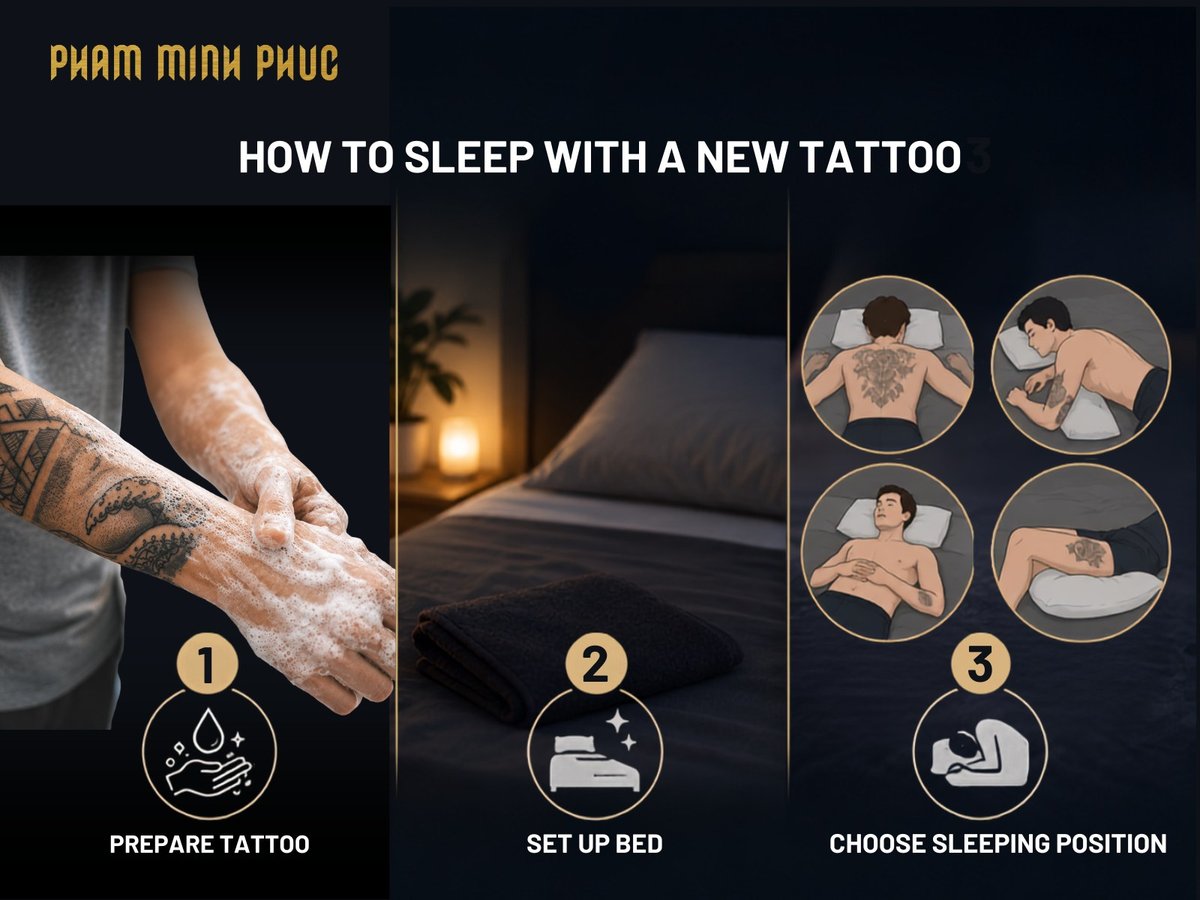
Sleeping with a new tattoo is easier when you focus on three things: keeping the tattoo clean, reducing friction, and avoiding pressure while you sleep. A few simple adjustments before bed can help protect the healing skin and make your tattoo more comfortable during the first several nights.
Prepare Your Tattoo Before Bed
Before going to sleep, gently wash your tattoo with lukewarm water and a fragrance-free, gentle soap, then pat it dry with a clean paper towel. Starting the night with clean, dry skin helps reduce irritation and lowers the chance of bacteria becoming trapped against the tattoo.
For the first night, follow your tattoo artist’s tattoo aftercare instructions:
- If you’re wearing a Second Skin bandage (such as Saniderm or Recovery Derm), leave it in place for the recommended time. Most artists advise time to keep second skin on is usually on for 24 to 48 hours, or longer if instructed. The bandage protects the tattoo from friction while allowing the skin to heal.
- If your tattoo isn’t covered with a Second Skin bandage, apply a thin layer of the aftercare product recommended by your tattoo artist. Avoid using too much ointment, since overly moist skin may slow the healing process.
- Wear loose, breathable sleepwear. Soft fabrics reduce rubbing against the tattoo and lower the chance of the tattoo sticking to your clothing overnight.
Set Up a Clean Sleeping Environment
Your bedding comes into direct contact with a healing tattoo for several hours, so keeping it clean is just as important as cleaning the tattoo itself.
Before your appointment or before your first night at home:
- Sleep on freshly washed sheets and pillowcases to reduce exposure to dirt, sweat, pet hair, and other irritants.
- Place a clean, dark towel under the tattooed area during the first few nights to absorb any plasma or excess ink that may leak while you sleep.
- Keep pets off the bed until the tattoo has healed, since fur, dirt, and saliva can introduce unnecessary bacteria.
- Elevate the tattoo if it’s swollen. Placing a pillow under an arm or leg can help reduce swelling and make sleeping more comfortable.

Choose the Best Sleeping Position
Finding the right sleeping position depends less on how you normally sleep and more on where your new tattoo sits on your body. The goal in every case is the same: keep your body weight off the tattooed area for as much of the night as possible.
| Tattoo placement | Recommended position | Practical tip |
| Back or chest (large pieces) | Sleep on your stomach or on your side | Change sides occasionally to avoid prolonged pressure on one area. |
| Shoulder or arm | Sleep on the opposite side | Place a pillow behind your back or against your body to help prevent rolling over. |
| Rib or side | Sleep on your back | Use pillows on both sides to help maintain your position throughout the night. |
| Leg or thigh | Sleep on your back or on the opposite side | Elevate the leg slightly with a pillow to reduce swelling and pressure. |
If you accidentally roll onto your tattoo during the night, don’t panic. Sleeping on it once is unlikely to ruin your tattoo. Simply change your position when you wake up and continue protecting the area over the following nights while it finishes healing.
What Happens If Your Tattoo Sticks to the Sheets?
Waking up with your new tattoo stuck to the bed sheets is a common part of the healing process, especially during the first few nights. It usually happens because plasma, a small amount of blood, or excess ink dries onto the fabric while you sleep.
If this happens, don’t pull the sheets away from your tattoo. Instead, soak the stuck area with clean, lukewarm water or let warm water run over it in the shower until the fabric loosens on its own. Removing dry fabric by force can tear away healing skin, reopen the wound, and slow the healing process.
Once the fabric comes away naturally, inspect the tattoo carefully. A small amount of dried plasma or ink on the sheet is normal and isn’t usually a cause for concern. Gently wash the tattoo with a fragrance-free, mild soap, pat it dry with a clean paper towel, and continue your normal tattoo aftercare routine as usual.
If you notice persistent bleeding, a large raw area, severe pain, or skin that appears torn or damaged, contact your tattoo artist for advice. If you also develop signs of infection, such as spreading redness, pus, increasing swelling, or a fever, seek medical care promptly.
Minh Pham’s tip: If your tattoo is leaking plasma during the first few nights, sleeping on clean, dark-colored sheets or placing a clean towel under the tattoo can help protect both your bedding and your healing skin.
Why Does Your Tattoo Itch, Sweat, or Feel Irritated at Night?
It’s common for a healing tattoo to feel itchier, warmer, or more irritated at night. While you sleep, your body focuses on repairing damaged skin, and the combination of dry skin, nerve healing, and reduced daytime distractions can make these sensations feel more noticeable. Mild itching is usually a normal part of the healing process and doesn’t mean something is wrong.
Here are the most common nighttime issues and how to handle them safely:
- Itching. As your tattoo heals, the outer layer of skin naturally dries and peels, which often causes itching. Apply a thin layer of a fragrance-free moisturizer or your tattoo artist’s recommended aftercare product before bed to keep the skin comfortable. If the itch becomes distracting, gently pat the area instead of scratching it.
- Scratching while you sleep. Keep your fingernails trimmed during the first week to reduce the chance of damaging the healing skin. If you accidentally scratch off a small piece of peeling skin, gently wash the tattoo and continue your normal aftercare routine. However, if the area becomes raw, starts bleeding, or develops increasing redness, monitor it closely and contact your tattoo artist if you’re concerned.
- Sweating. Sweat itself doesn’t damage a healing tattoo, but excessive sweating and trapped moisture can irritate the skin and soften healing scabs before they’re ready to come off naturally. Wear breathable sleepwear, use clean cotton sheets, and gently clean the tattoo the next morning if you wake up feeling sweaty.
From my experiencet, mild itching and a small amount of overnight sweating are usually signs that your skin is healing normally. What concerns me is persistent swelling, increasing pain, bleeding caused by scratching, or signs of infection such as pus or spreading redness. Those symptoms should never be ignored.
How Long Should You Be Careful While Sleeping?
You should be mindful of how you sleep for about 7 to 10 days after getting a new tattoo, or until the tattoo has finished peeling and the outer layer of skin has healed. During this time, repeated pressure and friction can still irritate the healing skin and slow the recovery process.
If you’re wondering whether it’s safe to sleep normally after 3 days, the answer is usually not yet. Although the initial inflammation has started to settle, the tattoo is still healing beneath the surface. The skin is often peeling, itchy, and rebuilding its protective barrier, so it’s still best to avoid sleeping directly on the tattoo whenever possible.
After 7 to 10 days, most tattoos have healed enough on the surface that your normal sleeping position is much less likely to cause problems. Even so, healing continues beneath the skin for several more weeks. Keep the area moisturized with a fragrance-free lotion or the aftercare product recommended by your tattoo artist, and continue following your aftercare routine until the tattoo has fully healed.
From my experience, I tell clients to use their tattoo, not the calendar, as the final guide. If the area is still peeling, tender, or feels irritated when you lie on it, give it a few more nights before returning to your usual sleeping position.
FAQ about Sleeping With a New Tattoo
Can You Sleep on Your Stomach With a New Tattoo?
Yes, as long as your tattoo isn’t on the front of your body. Sleeping on your stomach is often one of the best positions if you have a back tattoo, since it keeps pressure off the healing area. However, if your tattoo is on your chest, stomach, or ribs, it’s best to choose another sleeping position until the skin has healed.
Should You Cover Your Tattoo at Night After the First Week?
In most cases, no. Once your tattoo has reached the end of its first week of healing, the outer layer of skin is usually strong enough that an additional covering isn’t necessary. Clean bedding, loose sleepwear, and avoiding unnecessary friction are generally all you need. If your tattoo is still peeling or feels unusually sensitive, follow your tattoo artist’s aftercare instructions, as some tattoos may benefit from a little extra protection for a few more nights.
What Should You Do If Your Tattoo Feels Warm or Swollen After Sleeping?
A small amount of warmth and swelling during the first 24 to 48 hours is a normal part of the healing process. These symptoms should gradually improve each day. If the swelling continues to increase after the first couple of days, or you notice spreading redness, thick discharge, a foul odor, severe pain, or a fever, contact a healthcare professional promptly, as these may be signs of an infection. If you’re unsure whether your tattoo is healing normally, you can also reach out to your tattoo artist for guidance.
Do You Need a Special Pillow for a New Tattoo?
No. A regular pillow works perfectly well. The most important factors are keeping your pillowcase clean and using pillows to support your body so you don’t roll onto the tattoo while you sleep. For example, placing a pillow behind your back, between your knees, or under a tattooed arm or leg can help reduce pressure and keep you in a comfortable sleeping position throughout the night.