Yes, you can ice a new tattoo, and using a cold compress correctly can make the healing process much more comfortable without affecting the ink. The benefits change as your tattoo heals. During the first 24 to 72 hours, icing helps reduce swelling, redness, and soreness by narrowing blood vessels. Once the tattoo enters the peeling stage, it becomes a simple way to calm itching without scratching the healing skin.
Technique matters just as much as the ice itself. A clean, dry tattoo, a cloth-wrapped ice pack, and 10 to 15 minute sessions with at least 20 minutes between applications help you get the benefits while avoiding unnecessary irritation. Using ice the wrong way can lead to cold burns, reduced circulation, excess moisture, or bacterial contamination.
There also comes a point when icing is no longer the right choice. After the early swelling has resolved, proper aftercare becomes more important than continued icing. The same applies when you notice signs of infection, persistent numbness, or have a medical condition that affects circulation or cold sensitivity.
In this guide, I, Minh Pham, will let you know when icing actually helps, how to do it safely step by step, the risks of incorrect icing, and the signs that tell you it’s time to stop icing and seek medical advice instead.
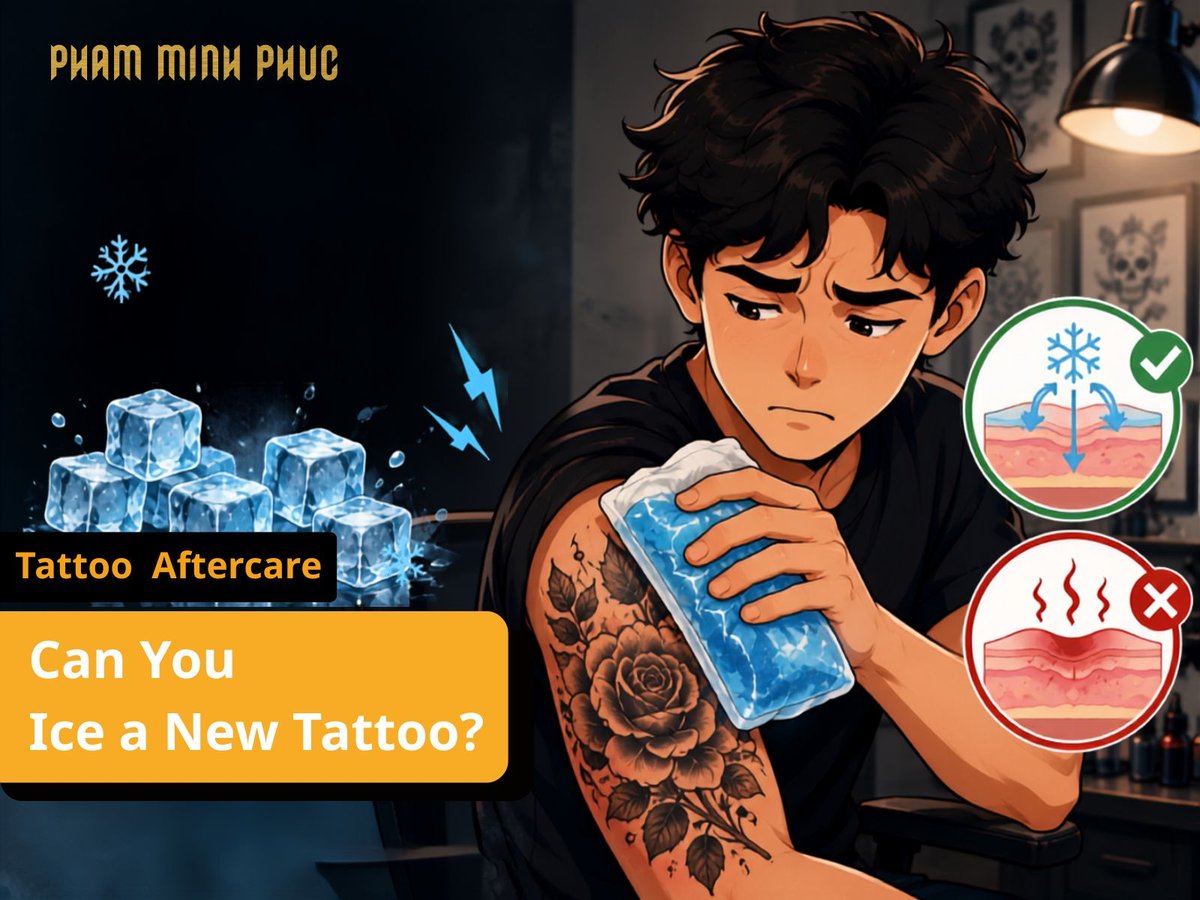
Table of Contents
What Are the Benefits of Icing a Tattoo?
Icing a tattoo helps reduce your body’s inflammatory response during healing, making the tattoo more comfortable without affecting the ink. When used correctly, a cold compress can provide several benefits:
- Reduce swelling by temporarily narrowing blood vessels, which limits the amount of fluid that collects around the fresh tattoo.
- Relieve pain and tenderness by numbing the nerve endings for a short time, making the area feel less sore after your appointment.
- Calm redness by reducing inflammation, especially during the first few days when the tattoo is still an open wound.
- Ease itching by cooling the skin and calming irritated nerve endings as the tattoo begins to peel.
- Help prevent scratching by reducing the urge to itch, lowering the chance of irritating the skin or accidentally pulling off peeling skin too early.
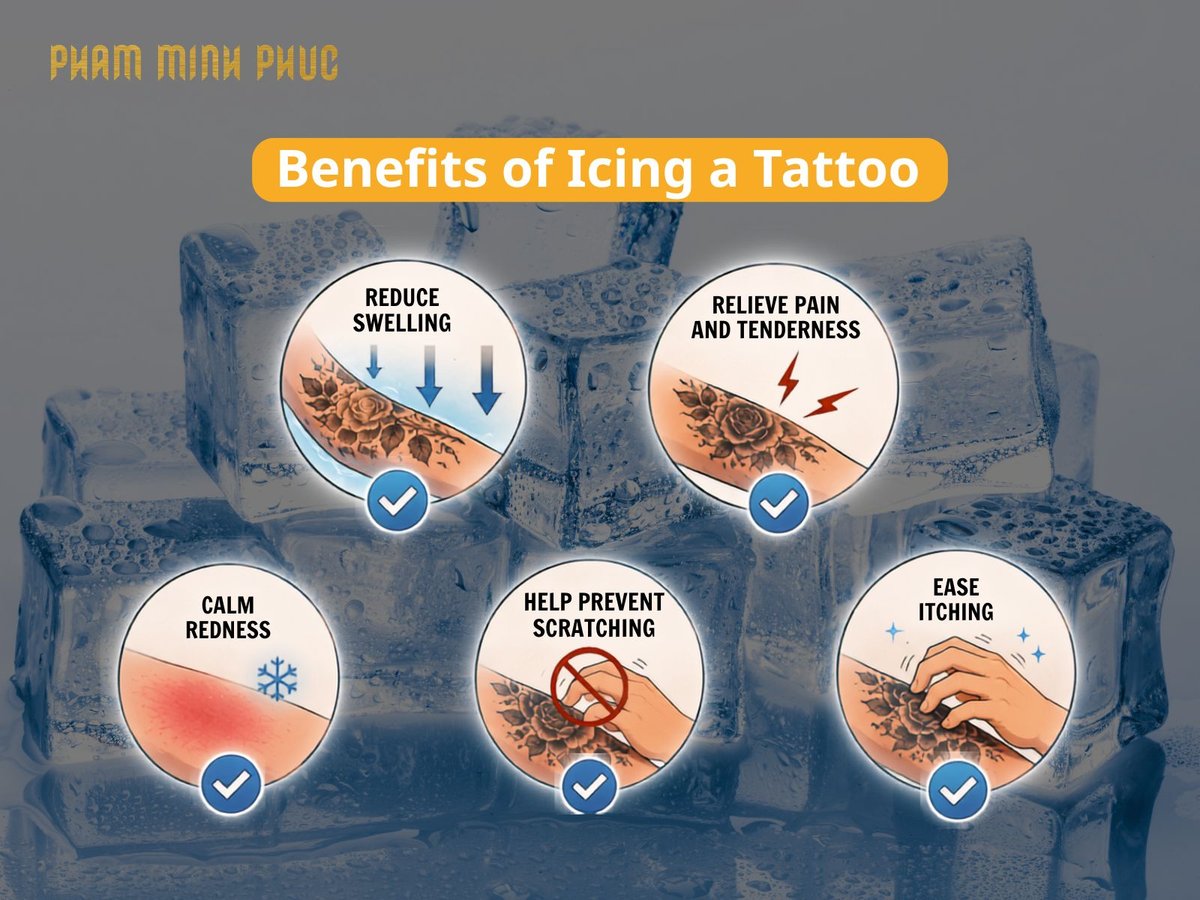
The benefits of icing change as your tattoo moves through the healing process. During the first 24 to 72 hours, the main goal is to reduce swelling, redness, and soreness while your body’s inflammatory response is at its strongest. Once the tattoo enters the peeling stage, usually around day 4, swelling becomes less of a concern and icing is mainly used to relieve itching and make healing more comfortable.
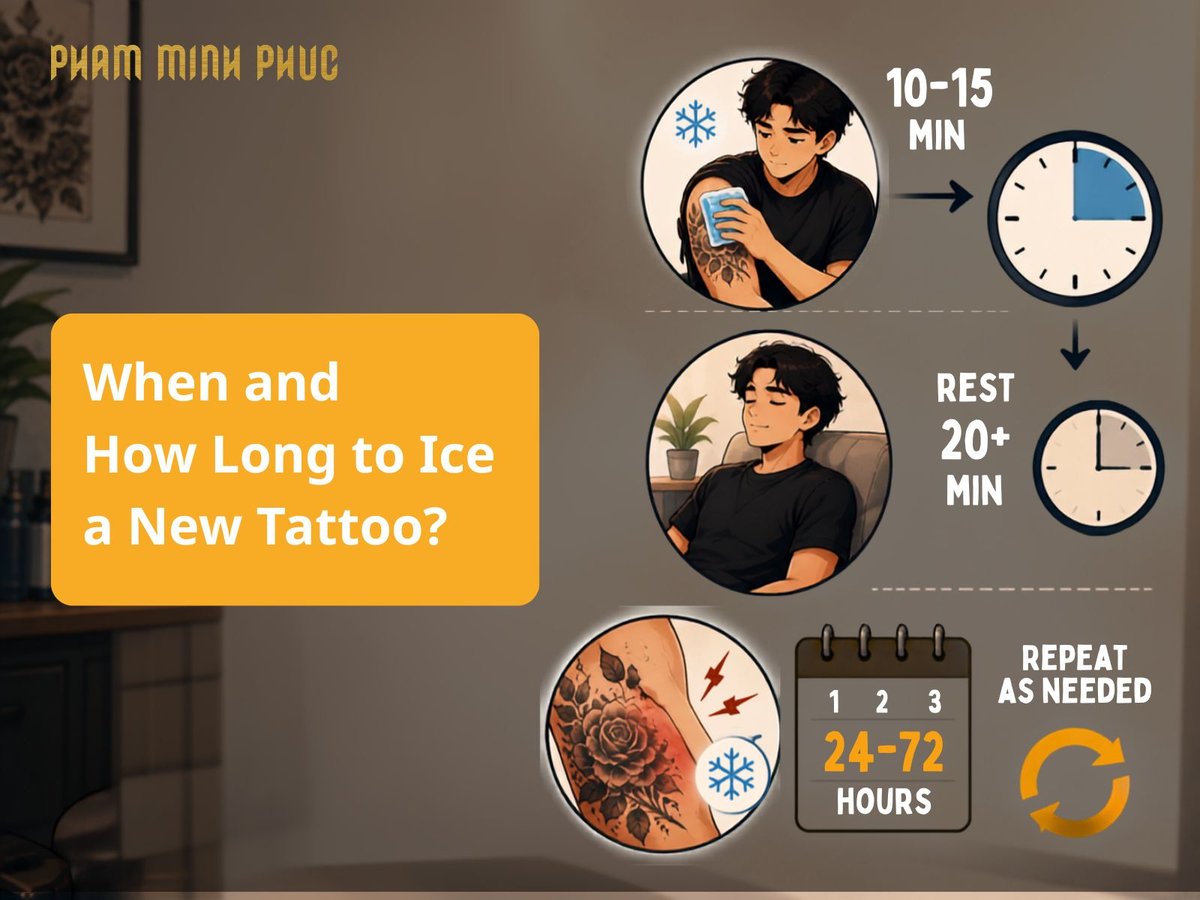
You can start icing your tattoo as soon as you get home, especially if the area feels swollen or tender. Apply a cold compress for 10 to 15 minutes at a time, then let the skin rest for at least 20 minutes before icing again. This can be repeated several times throughout the day during the first 24 to 72 hours, and later as needed if itching becomes uncomfortable.
How to Ice a Tattoo the Right Way?
Using the right icing technique is just as important as using ice itself. Following a few simple steps helps reduce swelling and itching while protecting your healing tattoo from unnecessary irritation.
- Wash your hands first. Clean hands reduce the chance of transferring bacteria to your healing tattoo.
- Make sure the tattoo is clean and completely dry. If you’ve recently washed it, gently pat the area dry with a clean paper towel or let it air dry before icing. Avoid placing a cold compress on wet skin.
- Wrap the ice pack in a clean cloth. Never apply ice directly to the tattoo. A clean cotton cloth or paper towel protects the healing skin from cold injury.
- Place the cold compress gently over the tattoo for 10 to 15 minutes. Let it rest lightly on the area without pressing or rubbing the skin.
- Remove the ice pack and check the tattoo. If the skin is still dry, you don’t need to wash or clean the tattoo again. If condensation has left the area damp, gently pat it dry with a clean paper towel before leaving it uncovered or reapplying your aftercare product if needed.
- Wait at least 20 minutes before icing again. Repeat as needed during the first 24 to 72 hours to help control swelling and discomfort.
- If you’re wearing Second Skin, ice over the bandage instead. Keep a thin cloth between the cold pack and the bandage, and avoid prolonged icing, as excess moisture and cold may weaken the adhesive.
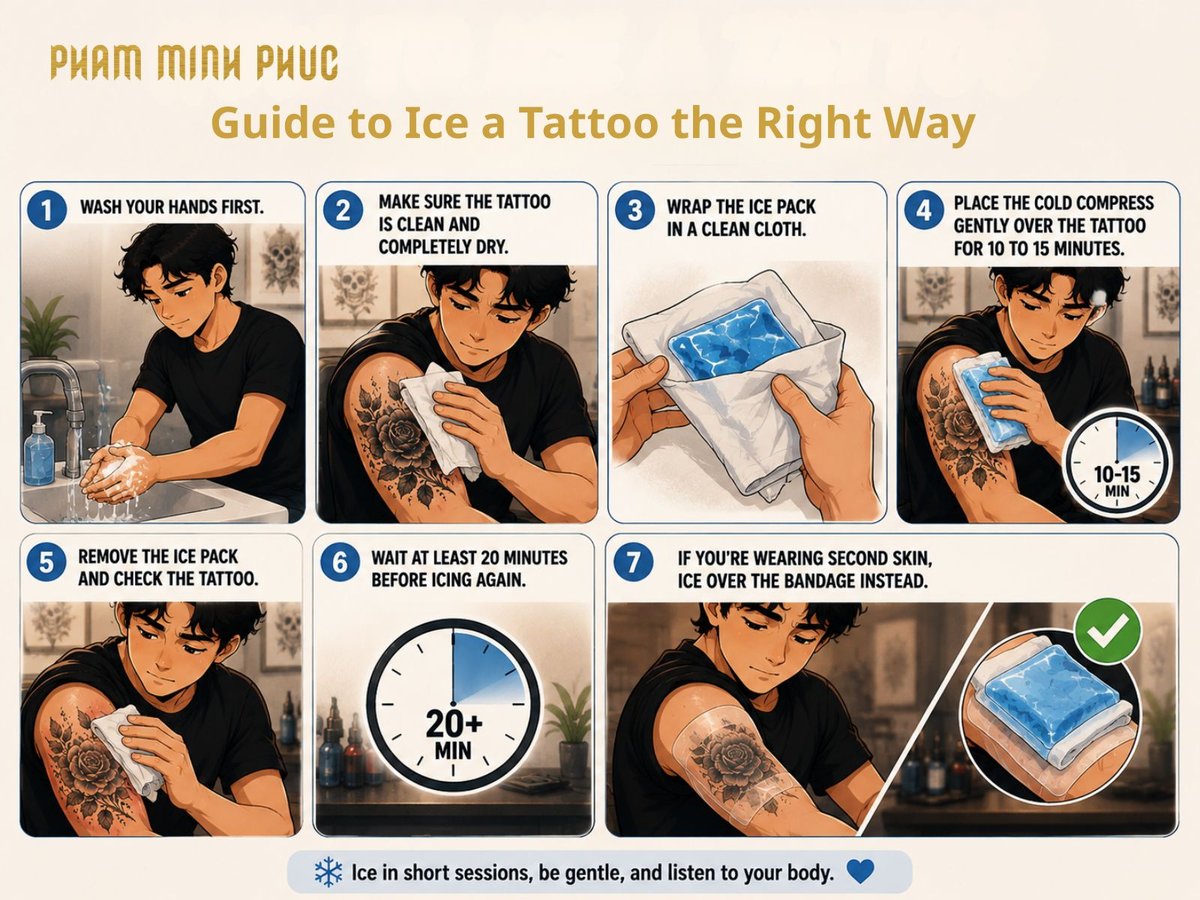
Rules to remember: Always wrap the ice pack in a clean cloth or paper towel, and only apply it to clean, dry skin. Never place ice directly on the tattoo or leave it on continuously, as excessive cold and trapped moisture can irritate the healing skin.
What Are the Risks of Icing a Tattoo Incorrectly?
Icing a tattoo the wrong way can cause new healing problems instead of relieving swelling. The most common risks include skin damage, delayed healing, excess moisture, bacterial contamination, and incomplete aftercare.
- Skin irritation or cold burns. Applying ice directly to a fresh tattoo or leaving it on for too long can damage already sensitive skin. In severe cases, prolonged exposure to extreme cold may cause a cold burn (frostnip). Prevent this by wrapping the ice pack in a clean cloth and limiting each session to 10–15 minutes.
- Delayed healing from reduced circulation. Cold temporarily narrows blood vessels, which helps reduce swelling. However, excessive or prolonged icing may also reduce blood flow more than necessary, limiting the oxygen and nutrients needed for normal healing. Allow the skin to warm up for at least 20 minutes before icing again.
- Skin maceration from trapped moisture. Condensation from an ice pack can leave the tattoo damp. If moisture stays against the skin for too long, the healing tissue may soften (maceration), making it easier to irritate. Pat the area dry if condensation forms, and avoid applying ice to wet skin.
- A higher risk of infection. Using dirty towels, reusable ice packs, or handling the tattoo with unwashed hands can introduce bacteria to the healing skin. Always wash your hands first and use clean materials every time you ice your tattoo.
- Incomplete aftercare. Ice only relieves swelling, soreness, and itching. It doesn’t clean the tattoo, prevent infection, or replace your normal aftercare routine. Continue following your tattoo artist’s aftercare instructions throughout the healing process.
When You Should Not Ice Your Tattoo?
Icing is most helpful during the early stages of healing. Once swelling has settled or certain conditions develop, it’s better to stop icing and focus on proper tattoo aftercare instead.
- After the initial swelling has gone down. Once the first few days have passed, most tattoos are no longer significantly swollen, so icing provides little additional benefit. Continue washing the tattoo gently, keeping it moisturized, and protecting it from direct sun instead.
- Signs of infection. Increasing redness after the first few days, thick yellow or green discharge, fever or chills, red streaks spreading from the tattoo, or worsening pain and swelling require medical evaluation. A cold compress won’t treat an infection and may delay proper care.
- A tattoo that already feels cold or numb. Allow the skin to return to its normal temperature before using another cold compress. Continuous or excessive icing may further reduce blood flow and irritate the healing skin.
- Medical conditions that affect circulation or cold sensitivity. People with conditions such as peripheral vascular disease, cryoglobulinemia, cold urticaria, or certain types of neuropathy should avoid cold therapy unless advised otherwise by their healthcare provider.
- Different aftercare instructions from your tattoo artist. Every tattoo heals differently depending on its size, placement, your skin type, and the type of bandage used. Follow your artist’s aftercare instructions unless you develop symptoms that require medical attention.
Any of these signs means you need a doctor, not another round of ice. Some people try to manage an infected tattoo with more icing, and it only delays the treatment that actually clears it up.
FAQs about Icing a New Tattoo
Can You Take Tylenol While Icing a Tattoo?
Yes. Ice helps reduce swelling at the tattoo site, while Tylenol helps relieve pain throughout the body. Since they work differently, they’re generally safe to use together when taken as directed. If you have a medical condition or take other medications, check with your healthcare provider first.
Is Tapping or Icing Better for an Itchy Tattoo?
It depends on the healing stage. During the first few days, icing can help relieve itching caused by inflammation. Once the tattoo starts peeling, gentle tapping is usually the better option because it relieves the itch without adding moisture or disturbing the healing skin.
Can You Leave Ice on a Tattoo Too Long?
Yes. Leaving ice on for too long or placing it directly on the skin can irritate a healing tattoo, reduce blood flow, and increase the risk of a cold burn. Limit each icing session to 10–15 minutes and always use a cloth barrier.
Can Moisture From an Ice Pack Harm a Tattoo?
Yes. Condensation from an ice pack can leave the tattoo damp, and prolonged moisture may soften the healing skin (maceration), making it more prone to irritation. Pat the area dry after icing if any moisture collects on the skin.
Does Icing Affect Tattoo Ink?
No. Icing doesn’t fade or pull out tattoo ink when it’s done correctly. Using a cloth barrier and limiting each session to 10–15 minutes won’t affect the pigment. Ink loss is much more likely to result from scratching, picking scabs, or improper aftercare.
See more questions you might have after getting a tattoo: