A tattoo typically takes 2 to 4 weeks to heal on the surface, and the deeper layers of skin can take anywhere from 3 to 6 months to fully recover.
Your surface layer, the epidermis, sheds and rebuilds the way sunburned skin does. Once that layer closes, your tattoo can look completely healed: smooth, matte, no more flaking. The dermis underneath tells a different story. Ink particles sit there, and the skin around them keeps reorganizing for months after the surface looks done. A tattoo that looks healed at week three is not the same as a tattoo that is fully healed.
I’m Minh Pham, a custom tattoo artist, and I guide every client through the same healing journey after their appointment. In this article, I’ll explain how long it takes for a tattoo to heal, breaking the process down stage by stage. You’ll learn which symptoms are a normal part of healing, which signs may indicate a problem, what factors affect healing time, and how to tell when your tattoo is truly healed.
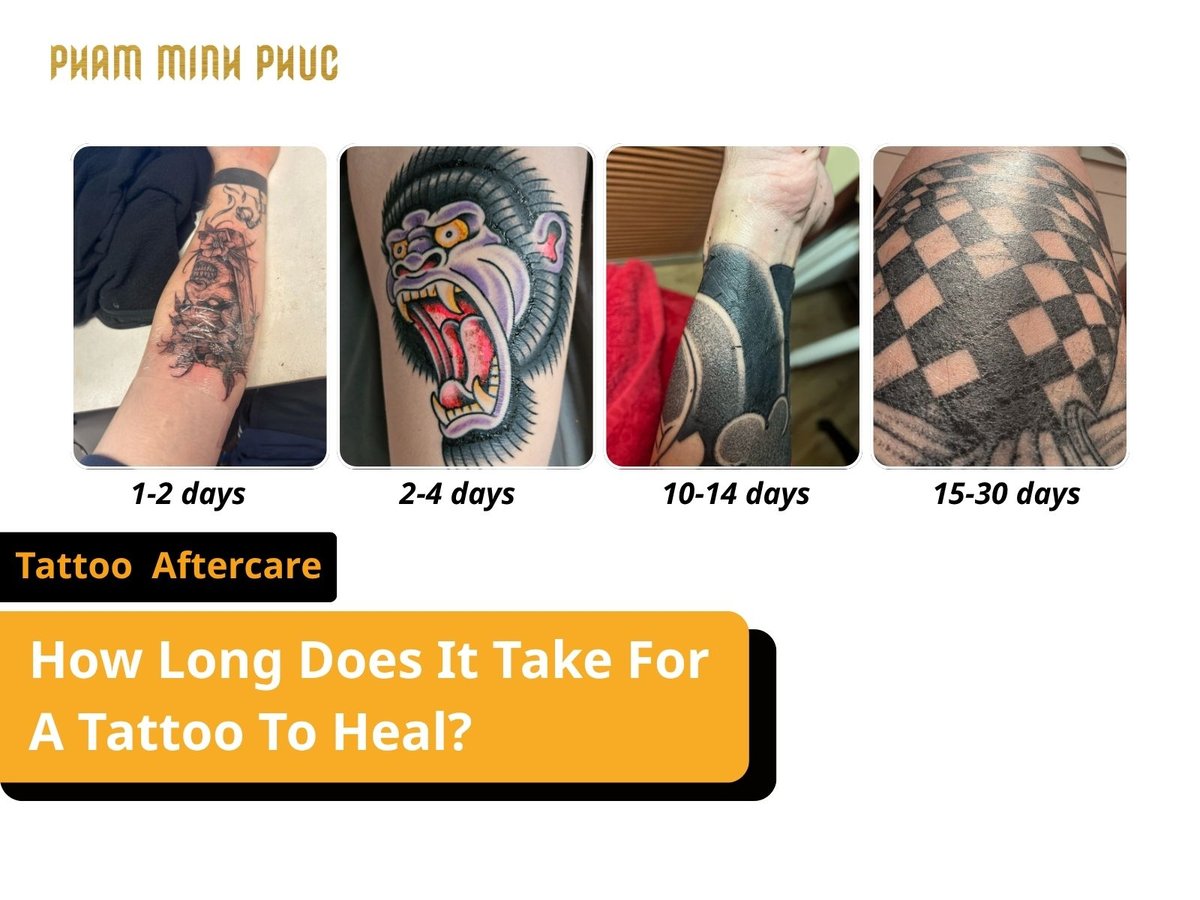
Table of Contents
Tattoo Healing Stages
Tattoo healing happens in three broad phases under the skin: inflammation, tissue formation, and remodeling. From the outside, though, it’s easier to follow as four stages, since something different shows up in your tattoo at each one. Here’s what each looks like and what you can expect along the way.
Stage 1: Initial Healing Stage – Inflammation (Days 1-10)
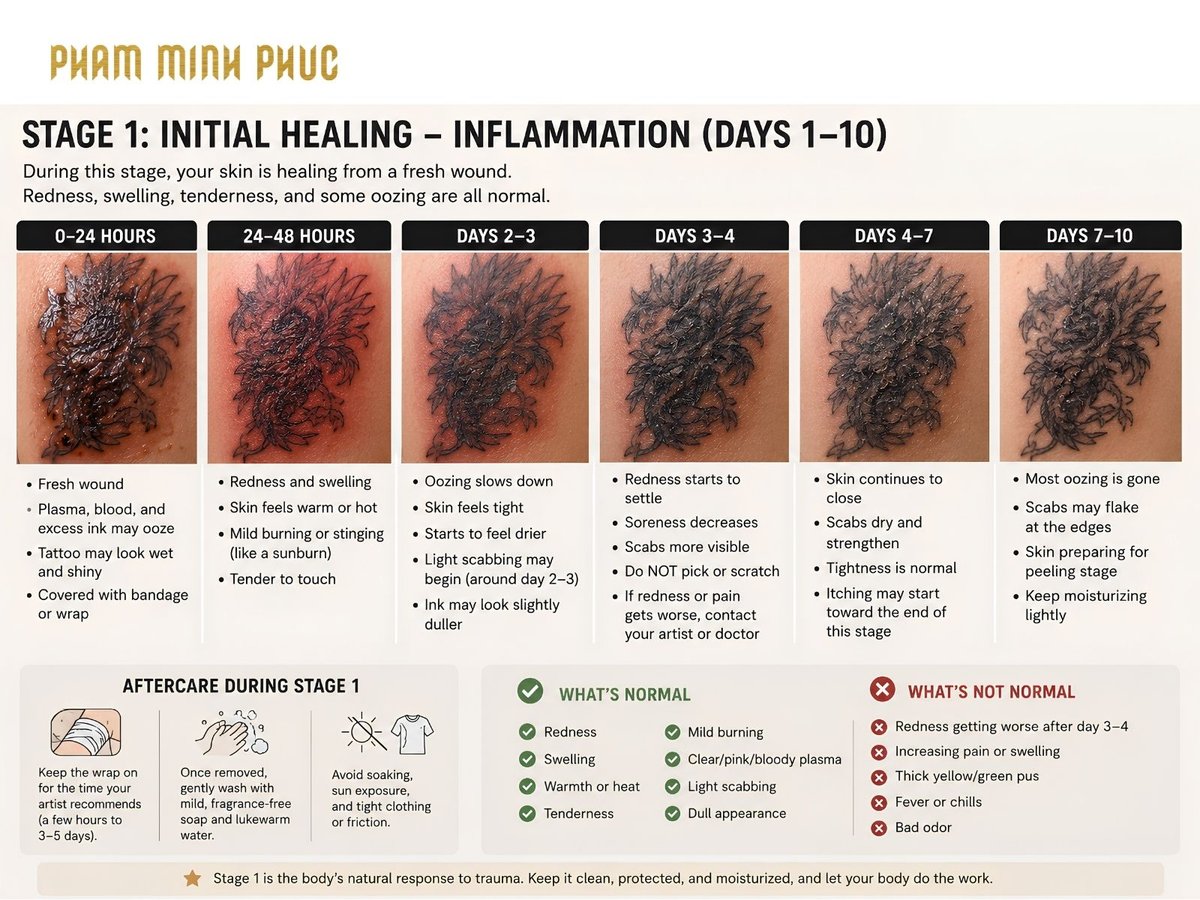
The inflammation stage is the first phase of tattoo healing and usually lasts around 10 days. During this time, your tattoo behaves similarly to a fresh wound while your body works to repair the damaged skin. The tattoo gradually changes from a raw, swollen wound into a tender, sunburn-like area as the skin starts to stabilize and repair itself.
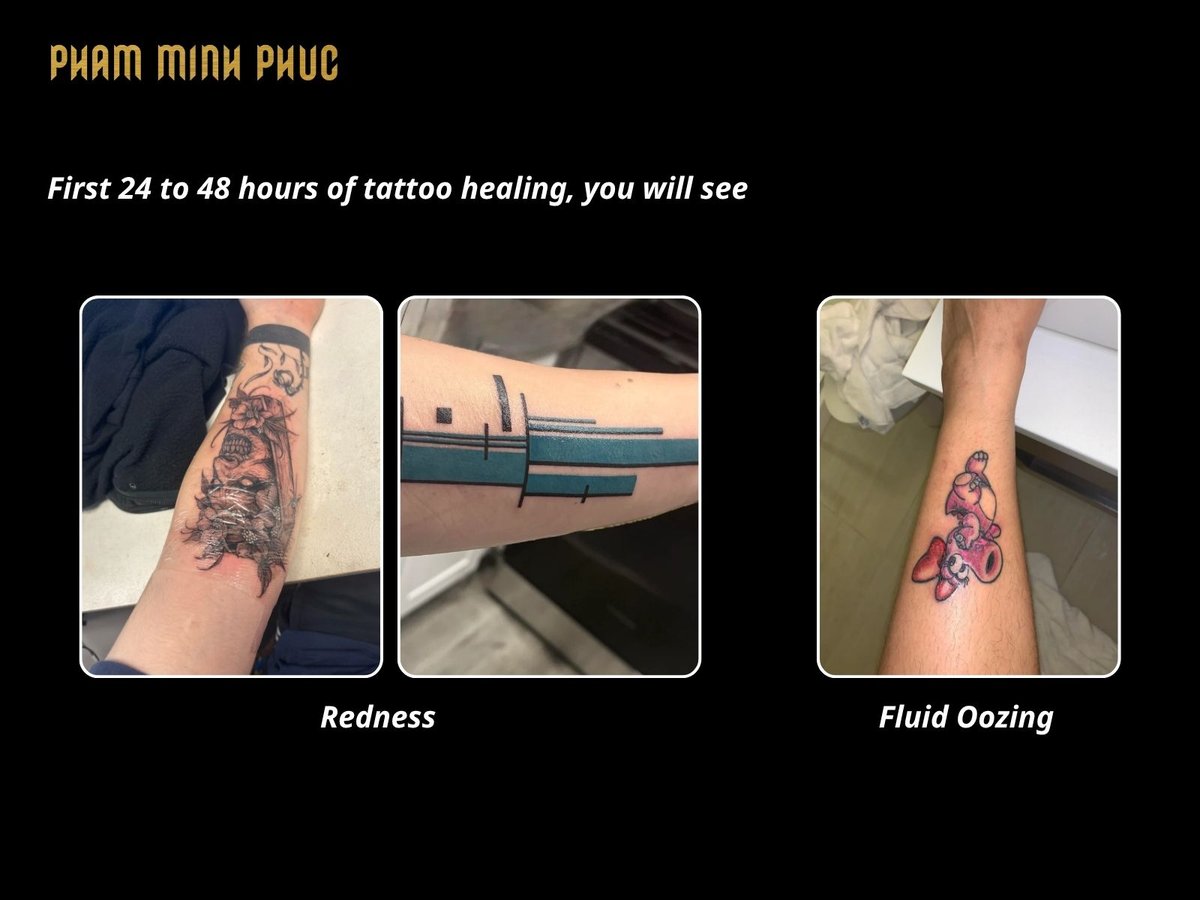
For the first 24 to 48 hours, your skin is broken, swollen, and sensitive to touch, with redness and warmth around the entire design. A mild burning or stinging sensation is common during this window too, similar to a fresh sunburn, and it normally fades within the first few days. Plasma, blood, and excess ink often seep through during this window, sometimes pooling visibly under your bandage or adhesive wrap. That fluid isn’t your tattoo leaking ink in any concerning sense; it’s the normal byproduct of a fresh wound closing.
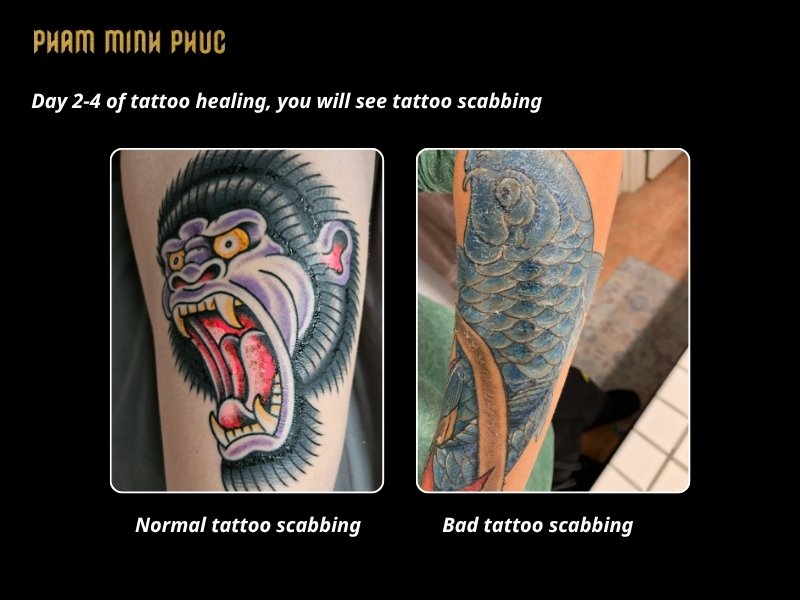
By day 4, the sharp redness from the first 48 hours starts to settle, and your skin feels tight and slightly dry as a new surface layer forms underneath. You might notice light scabbing or a duller look to the ink as early as day 2 or 3, which just means the surface is beginning to close over. If redness or soreness worsens after day 3 or 4 instead of gradually improving, it may be a sign that the tattoo is not healing properly. It’s important to reach out to your doctor and your artist.
In this stage, your artist will cover the tattoo with a protective wrap or bandage, which may stay on for a few hours or up to 3–5 days, depending on the aftercare method used. Once the wrap is removed, gently wash the tattoo with a mild, fragrance-free cleanser and lukewarm water. Avoid soaking the area, direct sun exposure, and tight clothing that could cause friction during healing.
Stage 2: The Peeling and Itching Stage (Days 10 to 14)
The peeling and itching stage runs from around day 10 to day 14, and it’s where most of the discomfort in tattoo healing happens. Over these days, you’ll watch your tattoo itch, flake, and scab as the top layer of skin starts lifting away. Itching usually kicks in around day 5 to 7, right as thin scabs form over the area and dead skin starts lifting at the edges.
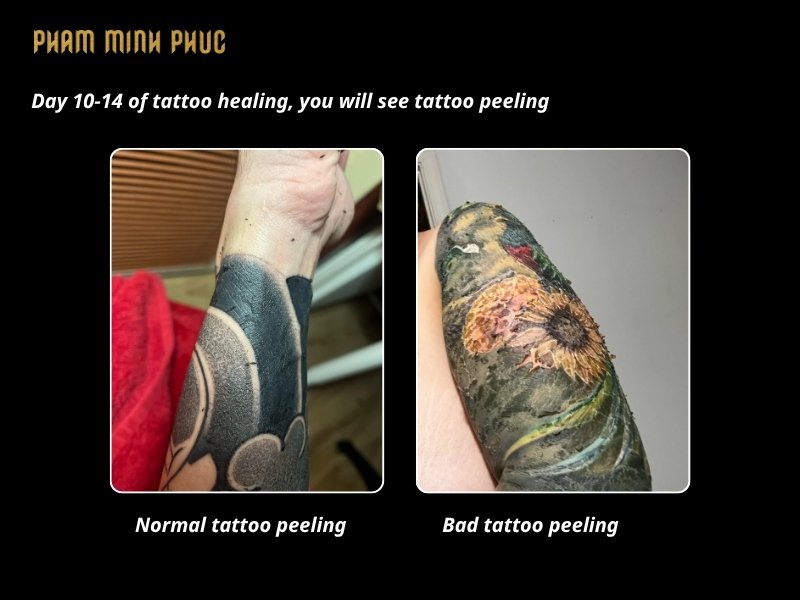
Tattoo scabbing is a normal part of this stage, not a sign that something went wrong, and the scabbing itself typically lasts about a week before it’s done. The itch comes from histamine release as your skin rebuilds, and it can feel intense. No matter how itchy your healing tattoo feels, don’t scratch it.
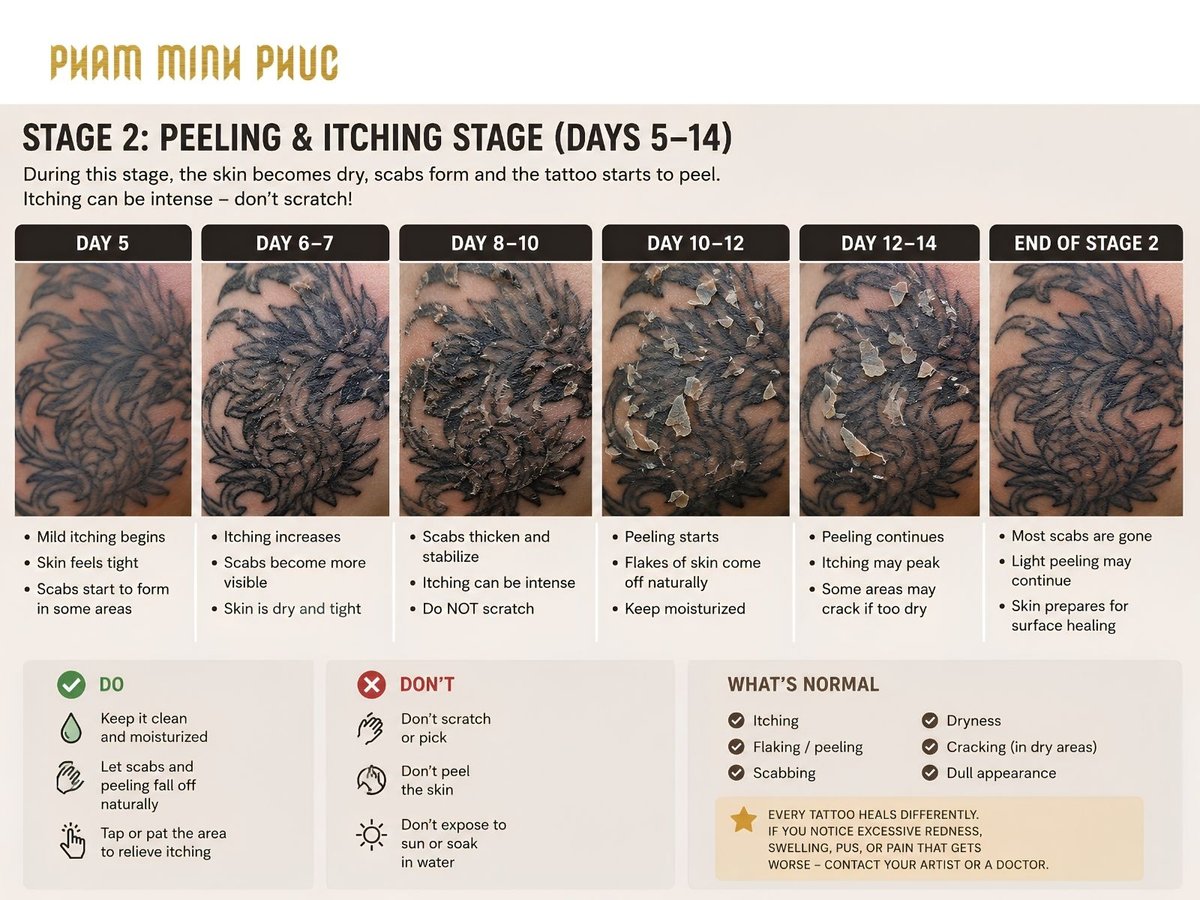
Scratching pulls ink out of your dermis before it has settled, leaves permanent light spots in the design, and opens the door to infection if it breaks the skin. Tap or gently slap the itchy area instead, and moisturize daily with a fragrance-free lotion to keep your skin hydrated and take the edge off the itch.
Stage 3: Surface Healing (Days 15-30)
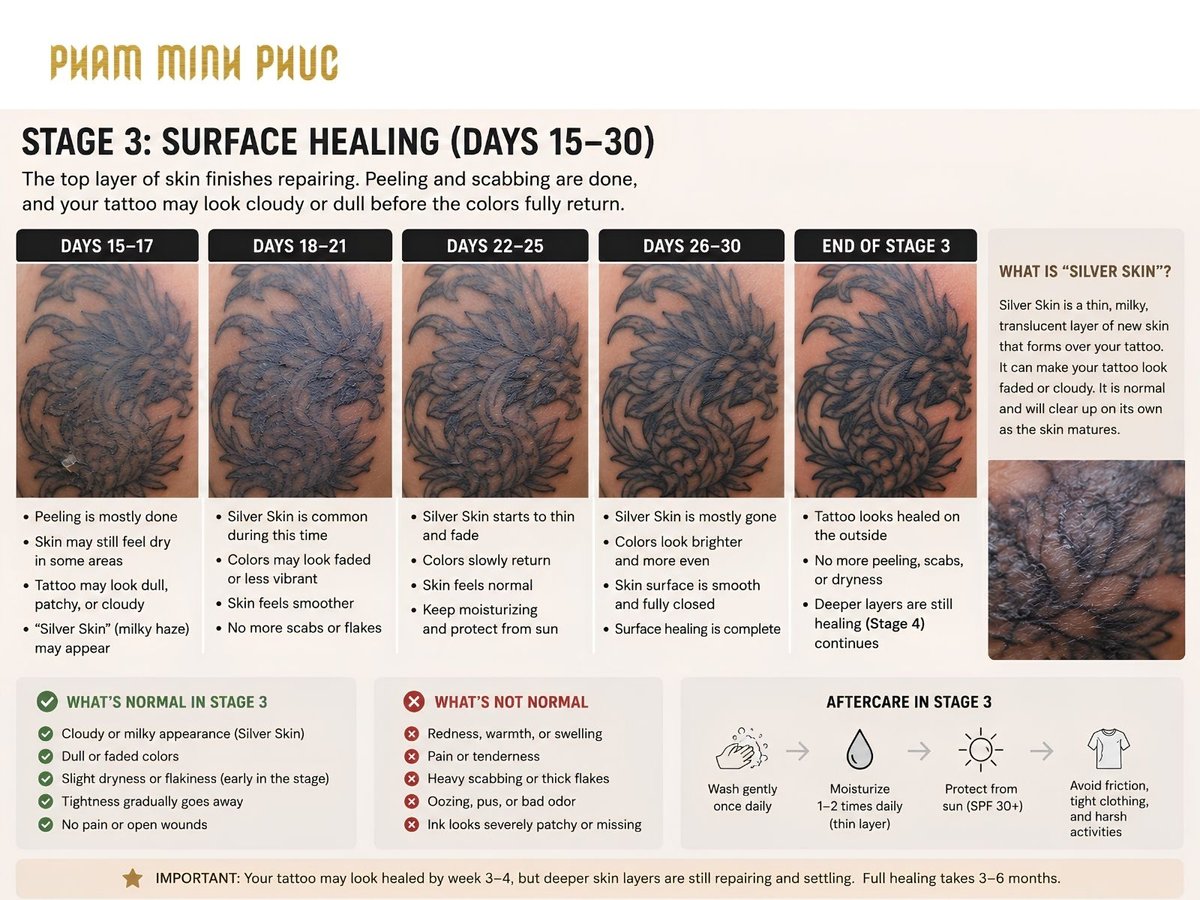
Surface healing runs from around day 15 to day 30, and it’s when your tattoo finishes closing up on top. Your tattoo may develop a milky, dull haze artists call Silver Skin during this stage. The color underneath can look faded or cloudy through this layer, which sometimes worries people into thinking they’re losing ink while healing.
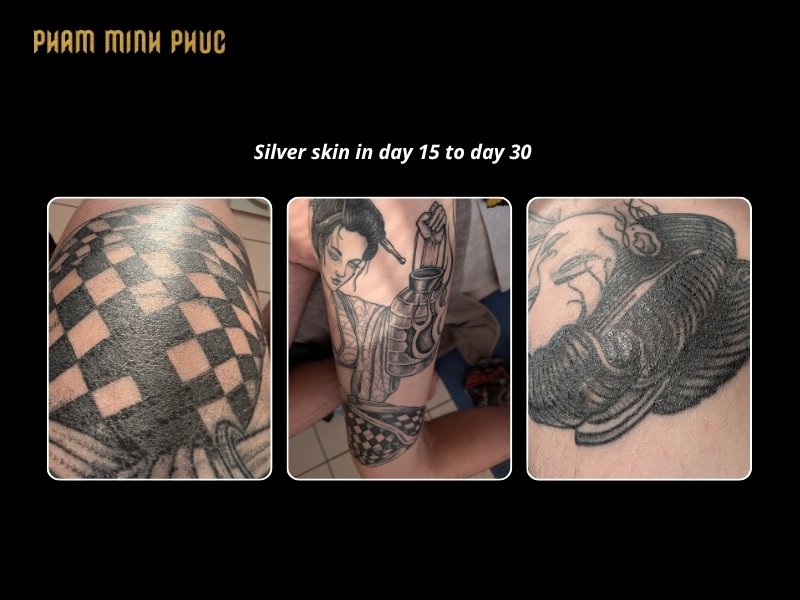
What’s actually happening is a fresh, immature layer of skin sitting on top of your design, finishing the peeling cycle that started around day 10. Silver Skin clears on its own as that layer matures, usually by the end of week four, and your color returns to full saturation underneath. By that point, surface healing is essentially complete: no more active peeling, no more scabs, and your skin feels smooth instead of tight.
Stage 4: Deep Skin Healing (Months 3-6)
The deep skin healing stage runs from around month three to month six, and it’s the part of healing that happens entirely under the surface. From the outside, your tattoo will already look done, while underneath, your skin is still quietly settling into its final shape.
Collagen in your skin reorganizes around the ink particles during this window, a slow process that doesn’t show on the outside but determines how your tattoo settles long-term. Your tattoo looks finished well before this stage ends, which is exactly why it’s easy to assume healing is over once the surface stops peeling.
This is also the stage where sun protection starts to matter for the life of your piece, not just for the next few weeks. UV exposure on skin that’s still remodeling fades color faster than on skin that’s fully settled, which is why I tell clients to treat sun protection as a permanent habit rather than a 30-day rule.
Remember, even if your tattoo appears healed on the surface, deeper layers of skin continue healing for weeks or even months. Consistent aftercare during this stage helps ensure the best long-term results.
Which Tattoo Healing Symptoms Are Normal?
Most of what feels alarming in the first month is a normal part of how tattoo skin heals. The table below covers seven symptoms my clients ask about most, when each one typically shows up, and what makes it expected rather than a concern.
| Symptom | When it shows up | Normal when |
| Redness and swelling | Days 1-4 | It peaks early and fades steadily after day 3-4 |
| Burning or feels hot | Days 1-3, sometimes up to a week | The heat fades along with the redness, with no spreading warmth |
| Itching | Days 5-14 | It comes with flaking, not pain or heat |
| Scabbing | Week 2 | Scabs stay thin and fall off on their own within about a week |
| Peeling | Days 10-21 | Flakes are dry and the skin underneath looks even |
| Cracking | Days 7-14, mostly on joints | It stays limited to dry patches and clears up with moisturizer |
| Leaking ink (oozing) | First 24-48 hours | Fluid runs clear, pink, or lightly colored |
| Losing ink (apparent fading) | Days 15-30, the Silver Skin phase | Color returns once the surface layer matures |
What Are Signs a Tattoo Isn’t Healing Properly?
It’s possible to run into side effects after getting a tattoo, anything from a minor skin reaction to something that needs a doctor’s attention. A tattoo that isn’t healing properly tends to move in the wrong direction: pain, redness, swelling, or heat that gets worse after day 3 or 4 instead of fading. That reversal, more than any single symptom, is the clearest signal something is off.
A few things shape how likely that is: the ink itself, how clean the needles and studio were, and how closely you follow your tattoo aftercare routine afterward. Infection is the complication that comes up most often, while scarring and tattoo rejection show up less often but follow a similar slow-moving pattern.
Talk to a doctor if you notice any of these in the days or weeks after your tattoo:
- Redness, swelling, or itching that keeps getting worse instead of fading
- Pus or fluid that’s yellow, green, or has a strong smell
- Fever or chills
- Heat that increases rather than decreases days after your session
- Raised, thickened scarring or bumps that don’t flatten out over time
Catching any of these early makes treatment simpler, so don’t wait it out if something here matches what you’re seeing.
What Factors Affect Tattoo Healing Time?
Your healing time depends on four things: the tattoo’s size and placement, its style and ink saturation, the healing method used, and the person’s own health and aftercare habits. Each one shifts the timeline differently, and together they explain why two people can get nearly identical tattoos and heal at noticeably different speeds.
How Long Does a Small Tattoo Take to Heal?
A small, simple tattoo in a low-friction spot, a wrist line piece or a small forearm design, typically has its surface closed in about 10 to 14 days. Larger pieces, heavily saturated color work, and tattoos on joints or hands take longer, simply because there’s more tissue to repair and more movement working against it.
| Size and placement | Estimated surface healing | Why |
| Small, fine-line (wrist, forearm) | 10-14 days | Less tissue trauma, low friction |
| Medium-sized pieces | 2-3 weeks | More surface area to close |
| Large or color-saturated pieces | 3-4 weeks or more | More passes, more ink deposited |
| Hands and fingers | 3-4 weeks, often uneven | Constant washing and friction slow closure |
| Joints (elbows, knees) | 3-4 weeks | Movement stresses healing skin |
A small tattoo can heal in 21 days under the right conditions: low-friction placement and aftercare followed exactly as instructed. Skipping moisturizer or exposing the area to friction stretches that timeline regardless of size.
Tattoo Style and Ink Saturation
Tattoo style changes how the skin experiences healing, not just how the finished piece looks. Black and grey work tends to heal slightly faster, with less initial swelling, since it usually involves fewer passes over the same area. Color-saturated pieces, especially realism or work with heavy shading, put more ink and more trauma into the skin at once, which often means more redness and swelling in the first few days.
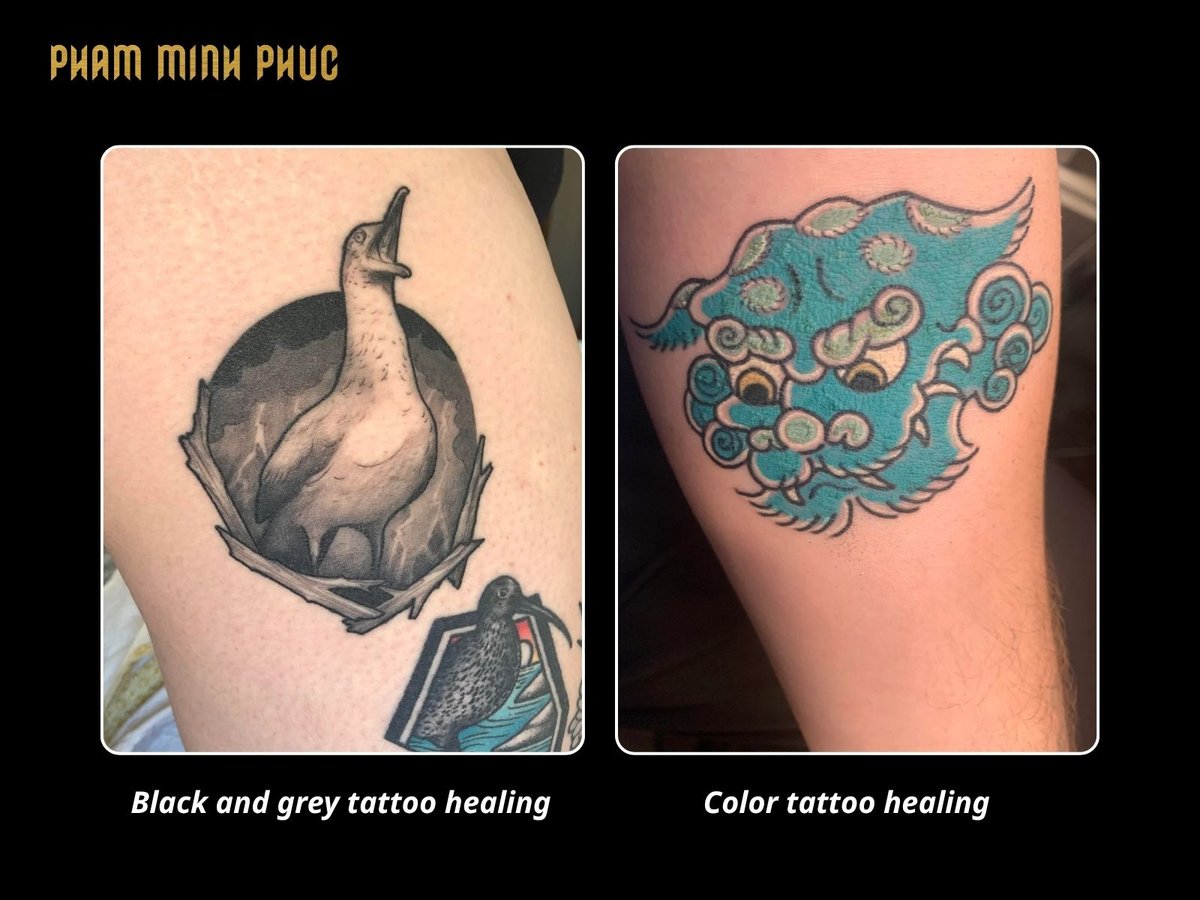
Fine-line tattoos heal quickly on the surface but are also the most vulnerable to fading if the peeling phase isn’t handled carefully, since there’s less ink depth to begin with. Working across black and grey, color realism, and fine-line pieces, the early days look different for each style, but the overall timeline, surface in 2 to 4 weeks and deep healing over months, stays the same.
Healing Method: Wrap, Second Skin, or Dry Healing
Your artist will usually recommend one of three methods for the first few days: a traditional wrap, a second-skin adhesive, or a dry-heal approach with no covering at all. A traditional wrap gets changed a few times in the first 24 hours and protects the tattoo before the first wash. Second skin products like Saniderm stay on for 3 to 4 days, keep the area moist, and reduce how much scabbing forms underneath.
Dry healing skips the adhesive after the first day: the tattoo gets washed and moisturized by hand, with nothing covering it. It works, but it leaves the skin more exposed to cracking if moisturizer isn’t applied consistently. Wet healing, through a wrap or second skin, tends to give better pigment retention in my experience, since it keeps the skin flexible while it closes. Hard, dry scabs act like small anchors and can pull ink out when they fall off.
Your Health, Age, and Aftercare Habits
Hydration, diet, and how well the immune system responds all influence how quickly skin repairs itself, tattoo or otherwise. Older skin tends to heal a little more slowly and can run drier during the peeling phase, which makes consistent moisturizing matter more, not less.
Chafing from tight clothing, bag straps, or repetitive movement adds friction to skin that’s already trying to close, and it shows up as raw or irritated patches that slow healing down in exactly that spot. Loose clothing over the area for the first couple of weeks avoids most of this.
Of everything on this list, aftercare habits make the biggest difference, and they’re the one factor entirely in your control. Two tattoos of the same size, on the same person, can heal at different speeds depending on whether the aftercare routine gets followed closely or skipped on busy days.
How Can You Help Your Tattoo Heal Faster?
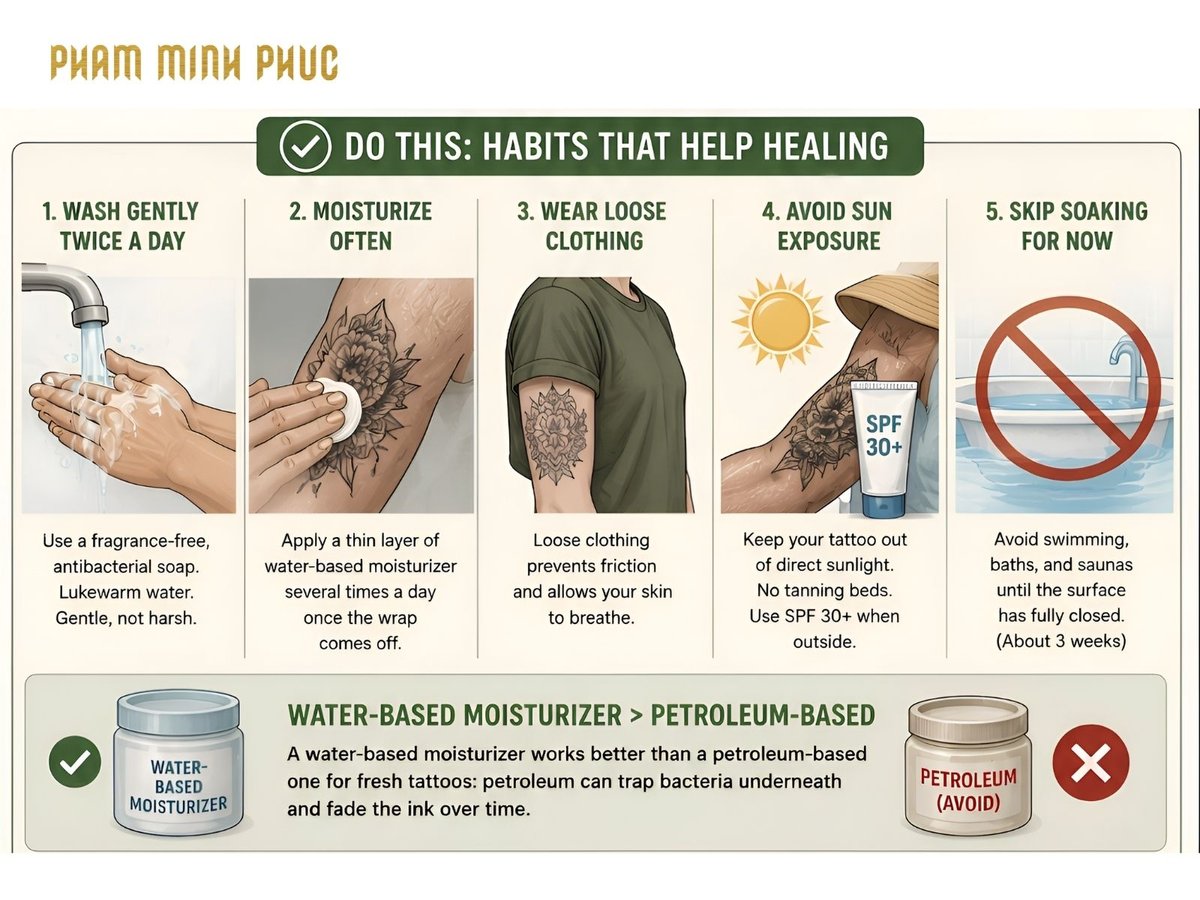
Healing faster comes down to a short list of habits, repeated consistently for the first 2 to 3 weeks:
- Wash the tattoo gently with a fragrance-free, antibacterial soap, twice a day.
- Apply a thin layer of water-based moisturizer several times a day once the wrap comes off.
- Wear loose clothing over the area to avoid friction.
- Keep the tattoo out of direct sunlight and skip tanning beds entirely.
- Hold off on swimming, baths, and saunas until the surface has fully closed.
A water-based moisturizer works better than a petroleum-based one for fresh tattoos: petroleum can trap bacteria underneath and fade the ink over time. The exact products and schedule I recommend to clients are laid out in the tattoo aftercare guide, which covers the full 30-day routine in more detail than fits here.
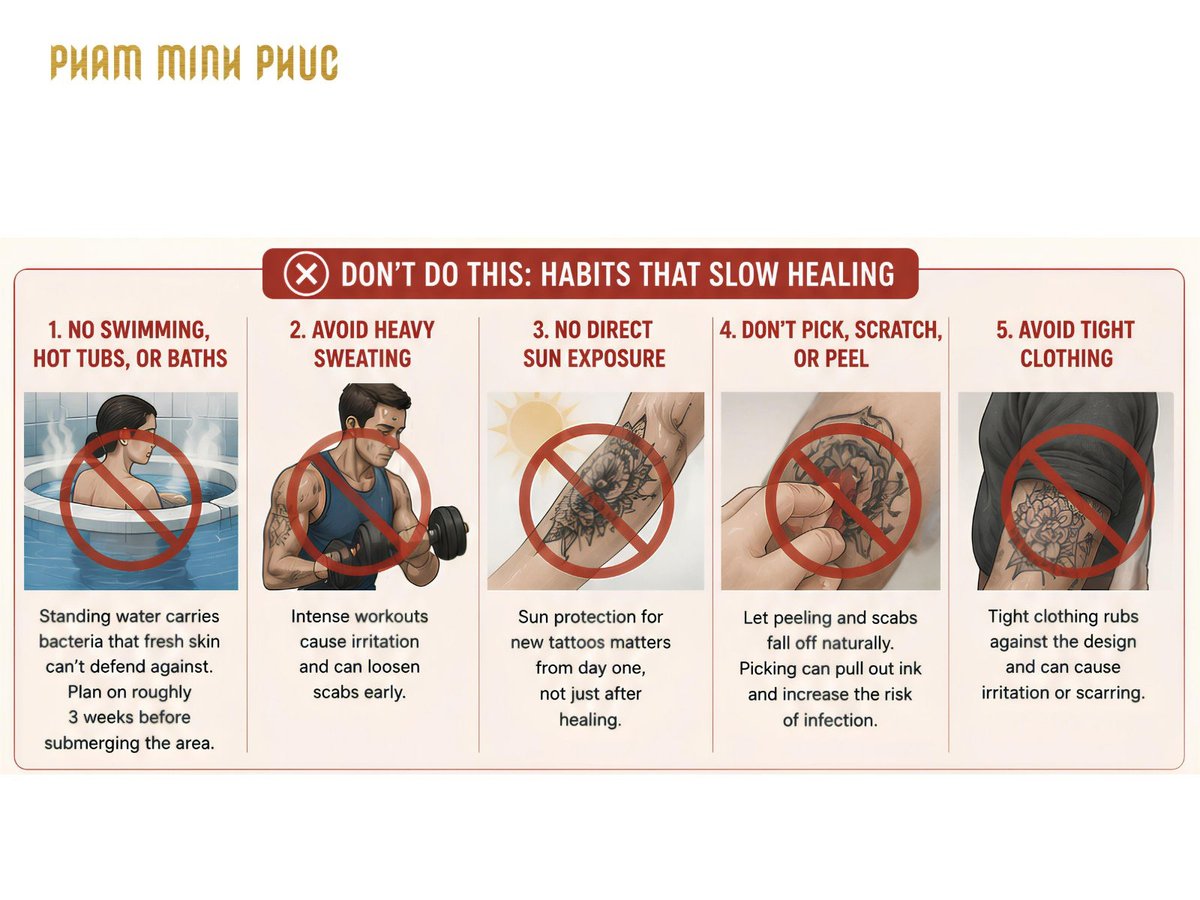
On the other hand, a few habits can undo weeks of careful healing in a single afternoon. Until the surface has fully closed, you should avoid:
- Swimming, hot tubs, and baths. Standing water carries bacteria that fresh skin can’t defend against; plan on roughly 3 weeks before submerging the area.
- Heavy sweating from intense workouts, which irritates healing skin and can loosen scabs early.
- Direct sun exposure. Sun protection for new tattoos matters from day one, not just after healing.
- Picking, scratching, or peeling skin manually, even when it looks ready to come off.
- Tight clothing that rubs against the design
How Do You Know When Your Tattoo Is Fully Healed?
A tattoo is fully healed when the skin feels completely smooth, with no raised texture, no flaking, and no tenderness when touched. The color should look settled and even, not patchy or dull, and any itching from the earlier phases should be gone entirely.
Checking against the timeline above: surface healing usually wraps up by the end of week 4, but “fully healed” includes the deeper skin too, which keeps adjusting for another few months. Once a tattoo checks every box above and stays that way for a few weeks straight, it has made the full trip from open wound to finished piece.
How Long Should You Wait for a Touch-Up or Your Next Tattoo?
Wait at least 4 to 6 weeks after a tattoo is fully healed before booking a touch-up, giving the skin time to settle so any uneven spots show clearly. For multi-session work like sleeves or large back pieces, most artists space sessions 3 to 4 weeks apart, enough time for the previously worked area to move past the peeling phase before more work goes into the surrounding skin.
Once a tattoo has gone through the stages above and looks fully healed, that’s also the right time to start planning what comes next, whether that’s a touch-up or the next piece in a larger project. If you’re not sure where your healing stands, book a consultation and I can take a look.
Frequently Asked Questions
How long should a tattoo stay red?
Redness peaks in the first one to two days and fades noticeably by day 4. If it’s still prominent or getting worse after two weeks, check it against the warning signs above.
Can a tattoo heal in a week?
Not completely. One week takes you through the most intense part, the open-wound phase, but scabbing and peeling are still ahead.
Do color tattoos take longer to heal than black and grey?
Generally yes. Color-saturated pieces involve more passes and tend to swell and redden slightly more in the first few days than black and grey work of the same size.
Why does your tattoo look cloudy or faded while healing?
That cloudy look is Silver Skin, a fresh layer of skin sitting over the ink. The color returns once that layer matures, usually by the end of week 4. More detail is in losing ink while healing.
How often should I moisturize a new tattoo?
Several times a day for the first 2 to 3 weeks, using a fragrance-free, water-based lotion. The full schedule is in the tattoo aftercare guide.
Why does my tattoo feel hot or burn while healing?
A mild burning or hot sensation in the first 2 to 3 days is normal; it comes from the same inflammation that causes the redness and swelling, and it fades on the same schedule. If the area still feels hot to the touch after day 3 or 4, especially alongside increasing pain or spreading redness, that pattern points to the warning signs above.