Sweating after getting a tattoo does not damage the ink directly, but it can interfere with the healing process if it stays on your skin for too long. A fresh tattoo is still an open wound, and trapped sweat creates a warm, damp environment that softens healing skin, increases friction from clothing, and allows bacteria already on your skin to multiply more easily. That’s why managing sweat is one of the most important parts of tattoo aftercare during the first few weeks.
Most people can return to light exercise after about 48 hours, while intense workouts should wait until the tattoo has fully healed, usually within 4 to 6 weeks. The exact timeline depends on where your tattoo is located and how much sweat, friction, heat, and skin movement an activity creates. In this guide, you’ll learn how sweat affects a healing tattoo, when it’s safe to exercise again, which activities to avoid, and how to clean your tattoo properly after sweating to support the best possible healing.
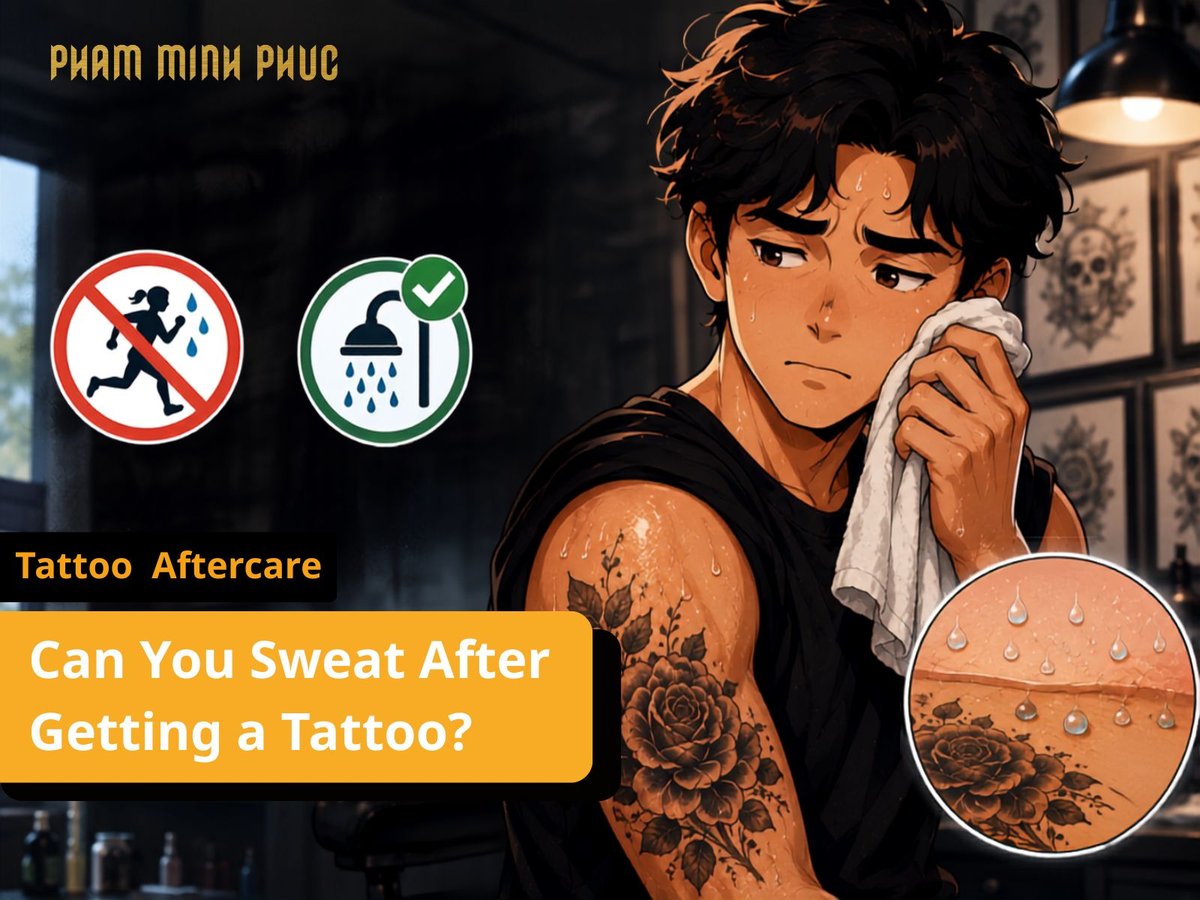
Table of Contents
How Does Sweat Affect a Healing Tattoo?
Sweat doesn’t damage tattoo ink directly, but it can interfere with the healing process when it stays on a fresh tattoo for too long. Because a new tattoo is still an open wound, excessive sweating creates conditions that make the skin more prone to irritation, slower healing, and, in some cases, infection.
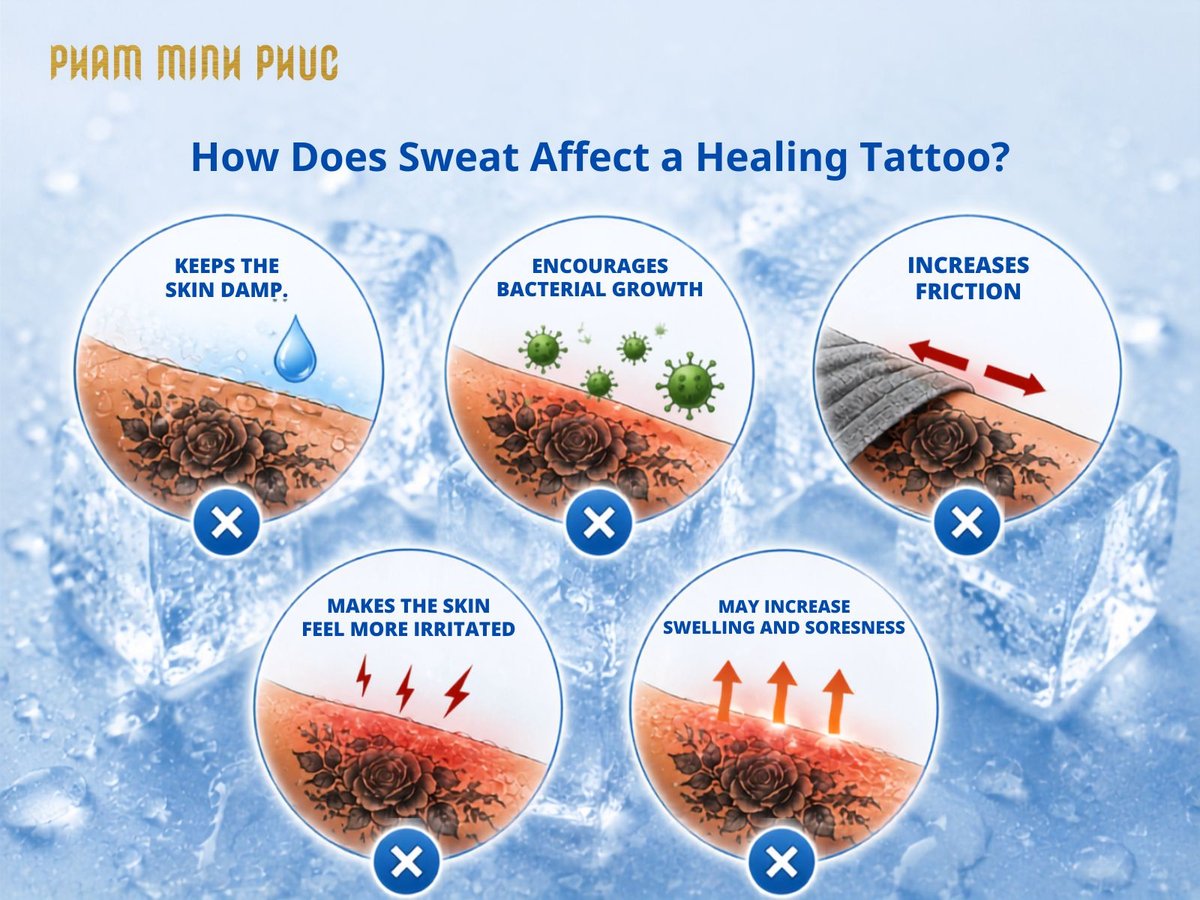
Sweat affects a healing tattoo in several ways:
- Keeps the skin damp. Excessive sweating leaves the tattoo continuously moist, especially under tight or non-breathable clothing. Too much moisture softens the healing skin (maceration), making it more fragile and easier to irritate.
- Encourages bacterial growth. Sweat is almost sterile when it’s produced, but bacteria naturally living on your skin multiply more easily in a warm, damp environment. When sweat stays trapped against a fresh tattoo, particularly under dirty clothing or bandages, the risk of irritation and infection increases.
- Increases friction. Sweat causes clothing to stick to the skin. During exercise or other physical activity, this extra friction can rub against the tattoo and pull at peeling skin or scabs before they’re ready to come off naturally.
- Makes the skin feel more irritated. Healthy skin usually tolerates sweat well, but a fresh tattoo has a weakened skin barrier. Salt and moisture left on the area for long periods can cause stinging, itching, and additional irritation.
- May increase swelling and soreness. Intense exercise raises your body temperature, blood flow, and sweat production. During the first 24 to 48 hours, this can make a new tattoo feel more swollen, tender, or uncomfortable, even though it doesn’t affect the tattoo ink itself.
Sweat doesn’t only come from intense workouts. It can build up from light activities like walking, hot weather, or daily chores, and becomes much heavier during running, weightlifting, sports, or physically demanding work. The more sweat stays on your tattoo, the greater its impact on the healing skin.
Can You Work Out or Exercise After Getting a Tattoo?
You can work out after getting a tattoo, but your return to exercise happens in two stages of healing:
- After 48 hours: Most tattoo artists consider this the earliest point for light exercise, as long as the tattoo isn’t being stretched, rubbed, or exposed to heavy sweating.
- After 4 to 6 weeks: By this stage, most tattoos are fully healed, and you can usually return to intense workouts, heavy lifting, contact sports, and other high-sweat activities without affecting the healing process.
The same timeline answers how long after a tattoo you can sweat. Light sweat from a short walk or a warm room usually will not hurt your tattoo if you wipe it off right away. Heavy sweat from a real workout session is different, since it sits on the wound longer and mixes with friction from clothes or gym equipment. Wait through the 48-hour window before you push into anything intense, and ease back in based on how your skin looks and feels.
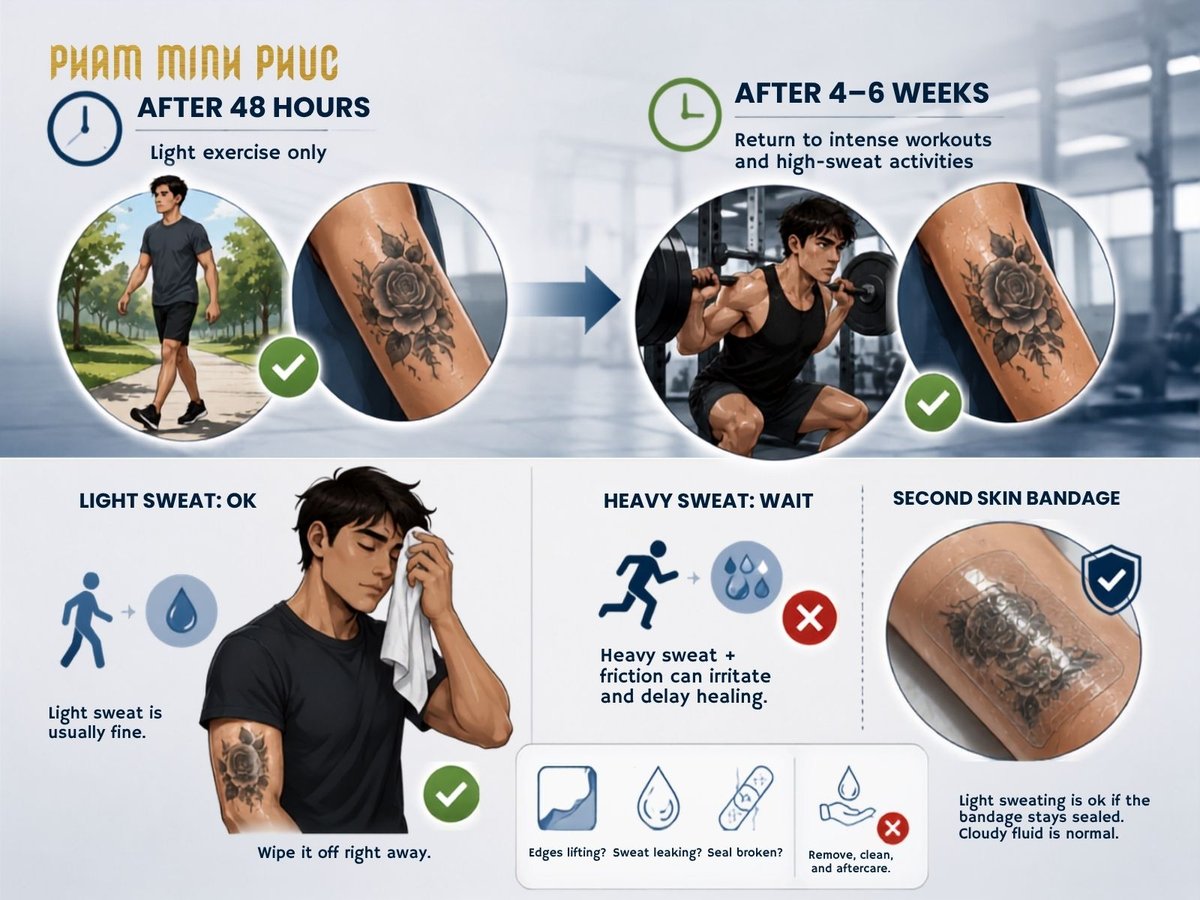
If you’re wearing a Second Skin bandage such as Saniderm or Tegaderm, light sweating is generally safe as long as the bandage remains fully sealed. It’s normal to see a cloudy or milky fluid under the film during the first few days, as this is usually a mixture of plasma, ink, and wound fluid. However, if the edges lift, sweat leaks underneath, or the bandage loses its seal, remove it according to your tattoo artist’s instructions, clean the tattoo gently, and continue with your normal aftercare routine.
What Happens If You Exercise Too Soon?
Exercising too soon puts unnecessary stress on a fresh tattoo while it’s still healing. The combination of sweat, friction, stretching, and exposure to bacteria can slow recovery and increase the risk of healing problems.
Working out too early can:
- Increase your risk of infection. Gym equipment, workout mats, and shared surfaces can carry bacteria that may enter a fresh tattoo if the skin is still open.
- Delay wound healing. Repeated stretching and muscle movement pull on the tattooed skin, making it harder for the wound to close normally, especially if the tattoo is over a joint or another high-movement area.
- Cause premature scabbing and patchy healing. Heavy sweating combined with friction from clothing or gym equipment can soften and rub off tattoo scabs before they’re ready to fall off naturally, increasing the risk of uneven healing and ink loss.
What Types of Workouts Are Fine With a New Tattoo?
The safest workouts are those that keep sweating to a minimum, avoid direct friction, and don’t stretch the tattooed skin excessively. Even after the initial 48-hour waiting period, choose exercises that don’t put pressure on the healing area.
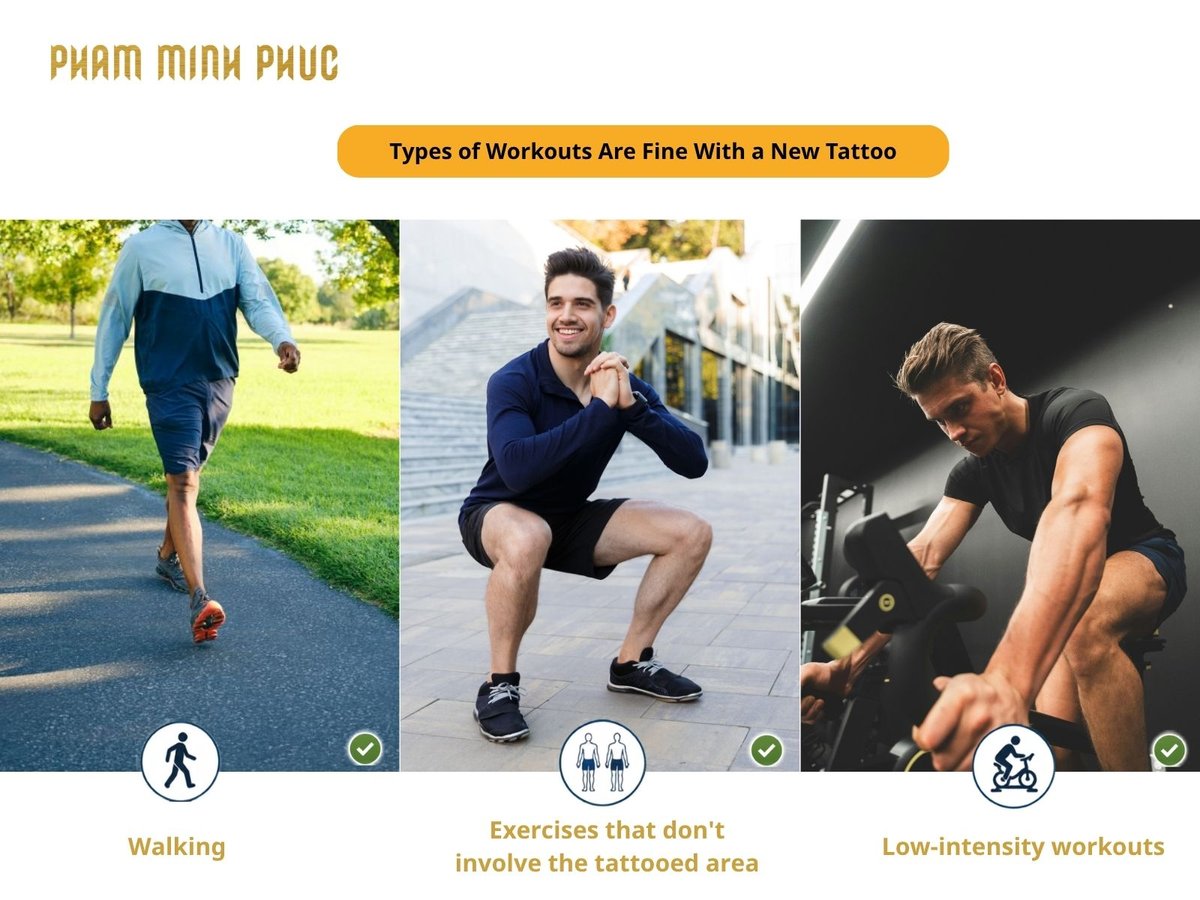
In general, these activities are the safest during the early healing stage:
- Walking. A relaxed walk is usually the best way to ease back into exercise because it causes minimal sweating and puts little stress on most tattoos.
- Exercises that don’t involve the tattooed area. Match your workout to your tattoo’s placement. For example, a leg tattoo usually allows light upper-body or seated core exercises, while an arm or shoulder tattoo may let you do lower-body movements such as squats or lunges, provided the tattoo isn’t rubbing against clothing or equipment.
- Low-intensity workouts. Gentle mobility exercises, light stretching that doesn’t pull on the tattoo, or easy stationary cycling may be appropriate if they don’t cause discomfort or heavy sweating.
Large tattoos, such as a full sleeve, back piece, or chest piece, require extra caution because they move with almost every exercise. In these cases, keep workouts short and low intensity, and wait until peeling has finished before gradually returning to your normal training routine.
Which Activities Make You Sweat the Most After Getting a Tattoo?
The table below covers the most common activities after getting a tattoo and when it’s generally safe to return to each one based on the amount of sweat, heat, friction, and skin movement involved.
| Activity | Why it’s a concern | Recommended wait |
| Running | Heavy sweating and repeated friction from clothing, especially on leg tattoos | About 1 week for leg tattoos, or until running no longer irritates the area |
| Weightlifting | Friction from bars, benches, machines, and repeated skin stretching | At least 48 hours for light lifting; wait longer if the tattoo is over a joint or high-movement area |
| Yoga | Stretching can pull on the tattooed skin; hot yoga also adds heat and heavy sweating | Gentle yoga after 48 hours if it doesn’t stretch the tattoo; hot yoga should wait until peeling has finished |
| Sauna | Extreme heat, prolonged sweating, and excessive moisture | Avoid until the tattoo is fully healed (about 2 to 4 weeks for most tattoos) |
These timelines are general guidelines. If an activity causes your tattoo to stretch, rub against clothing or equipment, or produce heavy sweating, give your skin more time to heal before trying again.
How to Clean Your Tattoo After Sweating?
Clean your tattoo as soon as possible after sweating, the same way you would shower after getting a tattoo. Removing sweat, salt, and bacteria from the skin helps reduce irritation and supports normal healing while your tattoo is still an open wound. Follow these steps after you sweat:
Follow these steps after you sweat:
- Wash your hands first to avoid transferring bacteria to the tattoo.
- Gently rinse the tattoo with lukewarm water and a fragrance-free, antibacterial soap. Clean the area with your fingertips instead of using a washcloth, sponge, or loofah.
- Pat the tattoo dry with a clean paper towel. Avoid rubbing the skin, as friction can irritate the tattoo or disturb peeling skin.
- Apply a thin layer of the aftercare product recommended by your tattoo artist once the tattoo is completely dry. Use only enough to lightly moisturize the skin.
- Check your Second Skin bandage, if you’re wearing one. If sweat has leaked underneath the bandage or the edges have lifted, follow your tattoo artist’s instructions for removing or replacing it.
If you can’t wash your tattoo immediately, gently blot away excess sweat with a clean paper towel and clean the area as soon as you have access to soap and water.
FAQ about Sweating After a New Tattoo
Can Sweat Cause a Tattoo Infection?
Sweat itself doesn’t cause a tattoo infection. However, if sweat stays on a fresh tattoo for too long, it creates a warm, damp environment where bacteria on the skin can multiply more easily. The risk increases when combined with dirty hands, unwashed clothing, or shared gym equipment. Seek medical care if you notice spreading redness, increasing pain, pus, or fever.
Which Is Safer for a New Tattoo: Cardio or Weightlifting?
Neither is automatically safer because they stress a healing tattoo in different ways. Cardio usually causes more sweating, while weightlifting creates more friction from equipment and repeated skin movement. The better choice depends on your tattoo’s location and whether the activity causes the area to sweat heavily, stretch, or rub against clothing or equipment.
Does Sweating Fade Tattoo Ink?
No. Sweat doesn’t wash tattoo ink out of your skin or cause fading by itself. However, heavy sweating during the healing process can increase friction, irritation, and premature scabbing, which may affect how evenly the tattoo heals. Cleaning your tattoo soon after sweating helps protect both the healing skin and the final appearance of your tattoo.