Tattoo dry healing is a method where you let your tattoo heal without applying any lotion, ointment, or aftercare product after washing. You still clean the area with a fragrance-free soap and lukewarm water twice a day. What you skip is everything that goes on top afterward.
Most people ask about dry healing for one of two reasons: they reacted badly to a lotion someone recommended, or they’ve read that fewer products means fewer risks. Both are valid starting points. The reality is more specific than that. Dry healing works in certain situations, creates real problems in others, and the difference comes down to your skin type, your tattoo placement, and how much margin for error you’re willing to accept.
In this guide, I will let you know how dry healing actually works, what happens when a tattoo dries out too much, how it compares to wet healing, the risks involved, who should avoid it, and how to do it correctly if it’s the right choice for you.
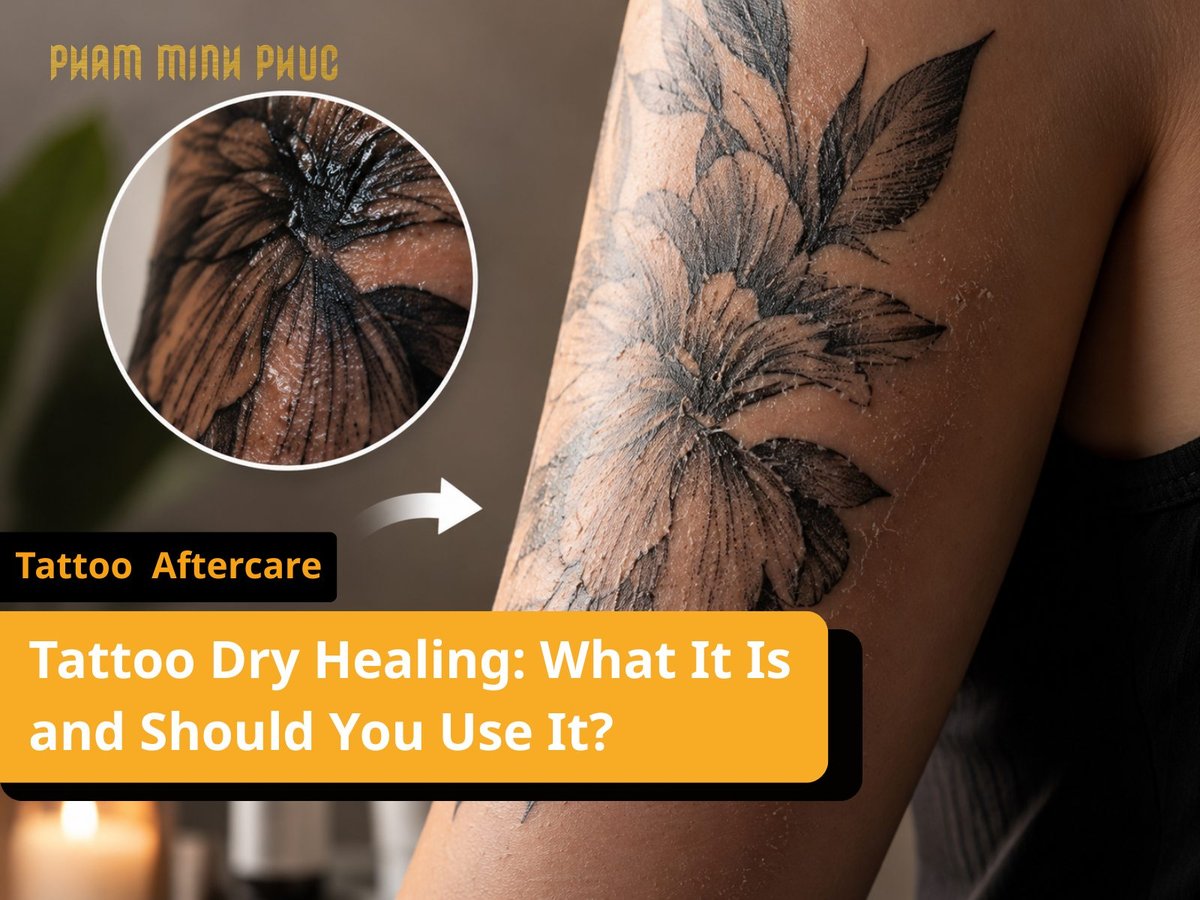
Table of Contents
What Is Tattoo Dry Healing?
Tattoo dry healing means letting your tattoo heal without applying any moisturizer, ointment, or balm after washing. You clean the tattoo, you pat it dry, and then you leave it alone. No product touches the skin until it has fully healed.
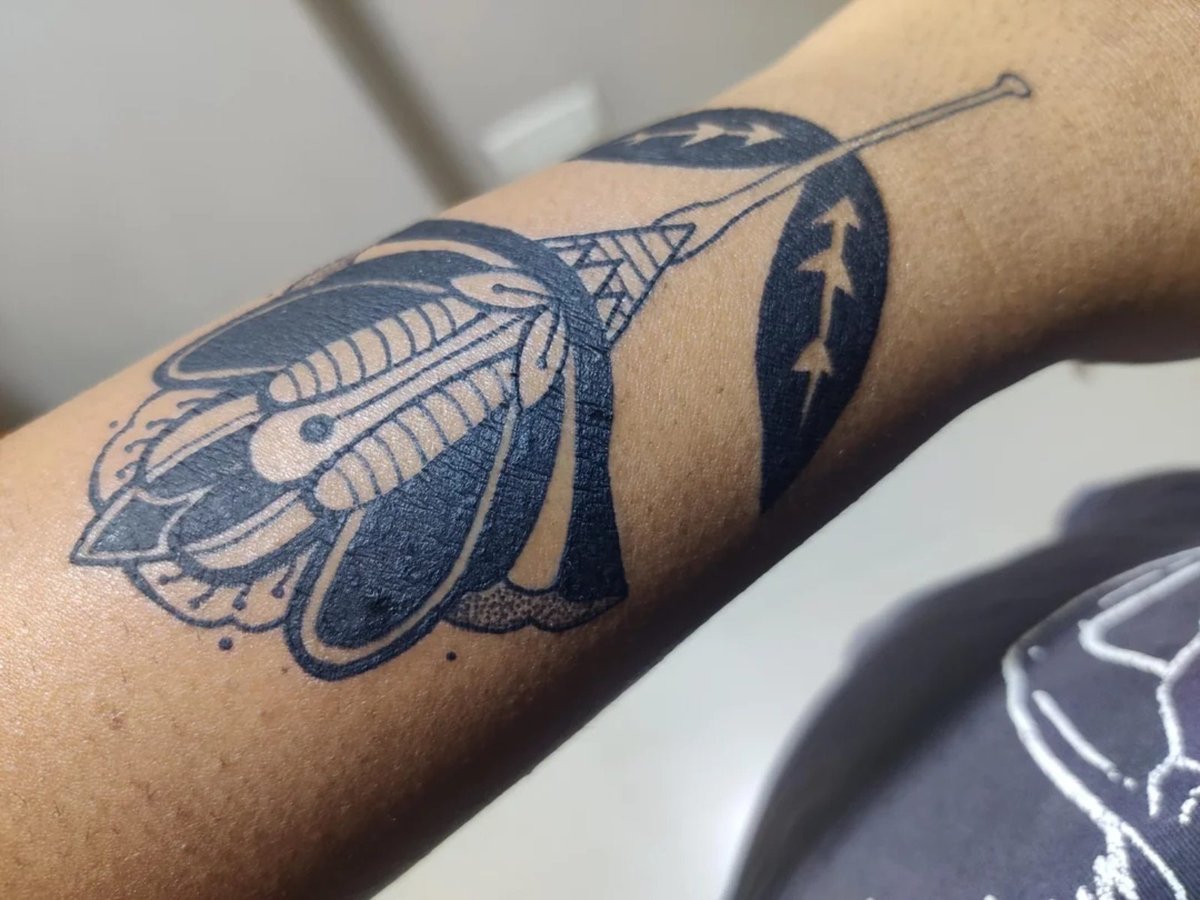
There are two things people call “dry healing” that aren’t the same. The first is keeping the tattoo wrapped in plastic film without applying any lotion underneath, also known as wrap healing. That’s a different method with a different mechanism, covered in detail further down. True dry healing means no wrap and no product on the skin at all, just open air. The distinction matters because the risks and outcomes are different. This article is about the second definition: no covering, no moisturizer, no ointment, nothing but soap and water.
The main reason dry healing exists as a practice is skin sensitivity. Some people react to almost every aftercare product they try. Fragrance, petroleum derivatives, and certain preservatives in lotions can cause contact dermatitis on freshly broken skin. For someone with eczema or multiple lotion allergies, eliminating all products is sometimes the only way to avoid making things worse.
How Does Tattoo Dry Healing Work?
Dry healing works by letting your body handle the entire wound-closing process without external moisture support. After each wash, your skin produces its own natural moisture to begin repairing the broken dermis. Without any product to supplement that, your skin works with what it can generate internally.
The visible result is a thicker scab than you’d see with wet healing. When your skin doesn’t have external moisture keeping the surface soft, the scab layer builds up denser and firmer. That thicker scab is the foundation of most of the risks that come with this method, which the sections below cover in detail.
What Happens When a Tattoo Dries Out?
When a healing tattoo loses too much moisture, it follows a predictable sequence. Your skin tightens across the design. Scabs form thicker than normal. Those thick scabs begin to crack under the pressure of daily movement or a dry environment. Once a scab cracks, you have micro-tears in the healing skin underneath.
From there, two outcomes run in parallel.
- The first is ink loss. When a thick scab rips or falls off before the skin beneath it has fully closed, it pulls ink from the dermis along with it. The result is patchy color and uneven saturation, most visible in color-saturated pieces and solid fills.
- The second outcome is specific to fine-line and thin-outline work: cracking scabs apply pressure to delicate lines in ways that cause blowouts. The crisp edges that your artist worked to produce spread into the surrounding skin. That’s a permanent result.
“Dried out tattoo” and “dry healing tattoo” are not the same condition. Dry healing is a controlled method where you choose to skip products but still wash consistently. A dried-out tattoo is what happens when moisture drops below what the skin needs, whether from forgetting to wash, a genuinely dry climate, or a placement like knuckles or elbows where skin naturally loses moisture fast. You can dry heal and still end up with a dried-out tattoo if the conditions aren’t right for it. The tattoo cracking and splitting that comes from a dried-out tattoo is a sign that intervention is needed immediately.
How Does Dry Healing Differ from Wet Healing?
The core difference between dry healing and wet healing comes down to scab thickness and what that thickness does to your ink when the scab eventually falls away.
Wet healing keeps the skin surface soft and moist, which produces thin, pliable scabs. Those scabs release naturally and cleanly. The dermis underneath holds the ink without significant disruption. Dry healing produces denser, harder scabs that take more force to release. That force translates to more ink being pulled out during the shedding process, which is why color consistency tends to be better with wet healing across most tattoo types and placements.
That said, wet healing has its own condition: you need the right product. A lotion with fragrance, alcohol, or petroleum can irritate freshly broken skin, introduce bacteria if applied with contaminated hands, or block the skin from breathing correctly if applied too thickly. Dry healing removes that variable entirely.
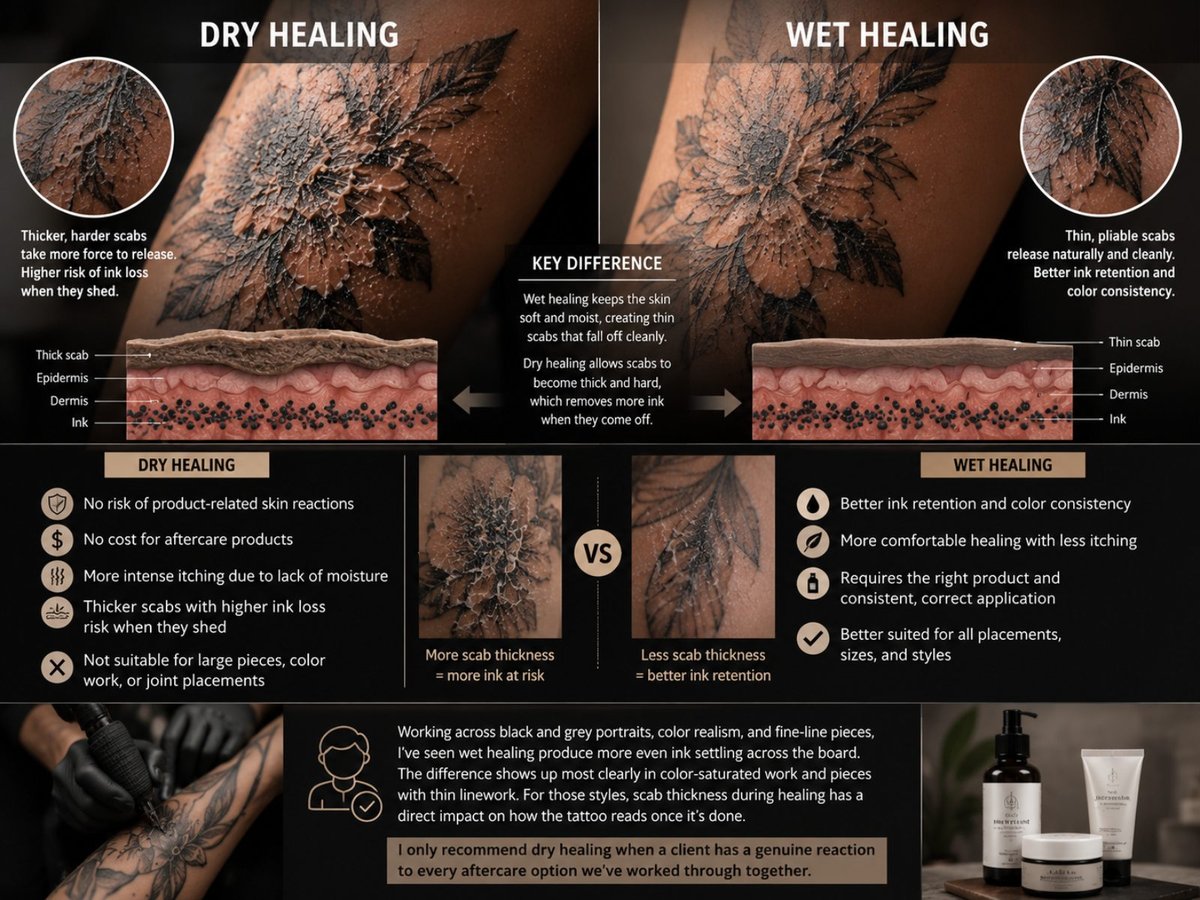
Here’s how the two methods compare directly:
Dry healing
- No risk of product-related skin reactions
- No cost for aftercare products
- More intense itching due to lack of moisture
- Thicker scabs with higher ink loss risk when they shed
- Not suitable for large pieces, color work, or joint placements
Wet healing
- Better ink retention and color consistency
- More comfortable healing with less itching
- Requires the right product and consistent, correct application
- Better suited for all placements, sizes, and styles
Working across black and grey portraits, color realism, and fine-line pieces, I’ve seen wet healing produce more even ink settling across the board. The difference shows up most clearly in color-saturated work and pieces with thin linework. For those styles, scab thickness during healing has a direct impact on how the tattoo reads once it’s done. I only recommend dry healing when a client has a genuine reaction to every aftercare option we’ve worked through together.
Does Dry Healing Differ from Wrap Healing?
Dry healing and wrap healing get confused with each other because neither one involves applying a moisturizer. That’s where the similarity ends. Wrap healing means keeping your tattoo covered in plastic film for the first few days, with no lotion or ointment underneath it. Dry healing means no covering and no product at all, just open air and regular washing.
The mechanism is different too. Wrap healing keeps the area sealed, which traps the lymphatic fluid and plasma your body naturally produces as it heals. That trapped fluid keeps the skin moist from the inside without you adding anything external. Dry healing has no seal and no trapped fluid; your skin is exposed to open air after every wash, with nothing slowing down moisture loss.
In practice, wrap healing tends to produce a more comfortable first few days, less itching, less visible scabbing, since the skin underneath stays soft longer. Dry healing skips that step entirely, which means the itching and scab formation discussed above start sooner and tend to be more pronounced. Neither method uses outside moisturizer, so if your main concern is avoiding product ingredients, both work. If your main concern is comfort and scab thickness during the first week, wrap healing has the edge, since it’s giving your skin moisture even without a product.
Does Dry Healing Have Any Risks?
Dry healing isn’t dangerous in itself, but it narrows your margin for error. The consequences of getting it wrong show up in the finished tattoo permanently.
- Micro-tears and blowouts in thin outlines. Thick scabs that crack under movement put direct pressure on the lines beneath them. In fine-line work, that pressure spreads the ink laterally into the surrounding skin before it’s set. The lines that were crisp when you left the chair no longer are. This is the risk most people don’t expect until they see the healed result.
- Scar tissue formation. If the scabs crack repeatedly, the repeated disruption to the healing skin triggers a scar response. Raised texture under the tattoo and permanent changes to the skin’s surface are the outcomes. Once scar tissue forms under a design, it affects how the tattoo looks and feels for good.
- Intense, harder-to-manage itching. Dry healing produces more intense itching than wet healing because there’s no moisture buffer. The stronger the itch, the stronger the urge to scratch. Scratching pulls ink from the dermis before it’s anchored, leaving permanent light spots in the design.
- Uneven color settling in large or saturated pieces. Large tattoos and color-heavy work need consistent moisture during healing to settle evenly. Dry healing in these cases often produces patchy saturation, with some areas healing solid and others looking faded even after the skin is fully closed.
The risk level isn’t uniform. A small black and grey piece on a forearm in a humid climate carries far less risk than a full color sleeve in a dry environment. Placement, size, style, and climate all shape how much risk dry healing actually carries for your specific tattoo.
Who Should Avoid Tattoo Dry Healing?
Dry healing isn’t the right choice for most tattoos or most skin types. These are the situations where I’d recommend against it:
- Large or color-saturated pieces. More ink deposited means more surface area that needs consistent moisture to settle evenly. Dry healing large work almost always produces less uniform color distribution than wet healing.
- Joint placements including elbows, knees, knuckles, and fingers. These areas move constantly. Movement stresses healing scabs, and dry scabs crack under that stress. Each crack is a micro-tear. For joints, moisture in the healing skin is not optional.
- Eyebrow and blackout tattoos. Dense ink areas need moisture to prevent patchy healing. Eyebrow tattoos are also in a high-movement area from facial expressions. Blackout work has too much ink volume for dry healing to manage consistently.
- Extremely dry climates. If your environment already pulls moisture from your skin, your body can’t generate enough internal moisture to compensate during healing. What starts as dry healing becomes a dried-out tattoo.
Dry healing makes sense in a narrow set of conditions: a small or fine-line tattoo in a low-friction spot like the wrist or forearm, a client with confirmed reactions to every aftercare product they’ve tried, and a climate that isn’t actively working against them. Even then, I’d recommend starting with jojoba oil or a single-ingredient fragrance-free option before going fully product-free. Ask your artist before making this call, because the right answer depends on what you got tattooed and where it sits on your body.
How to Dry Heal a Tattoo Safely
If dry healing is the right choice for your situation, here’s the process that keeps your tattoo clean without adding anything your skin might react to.
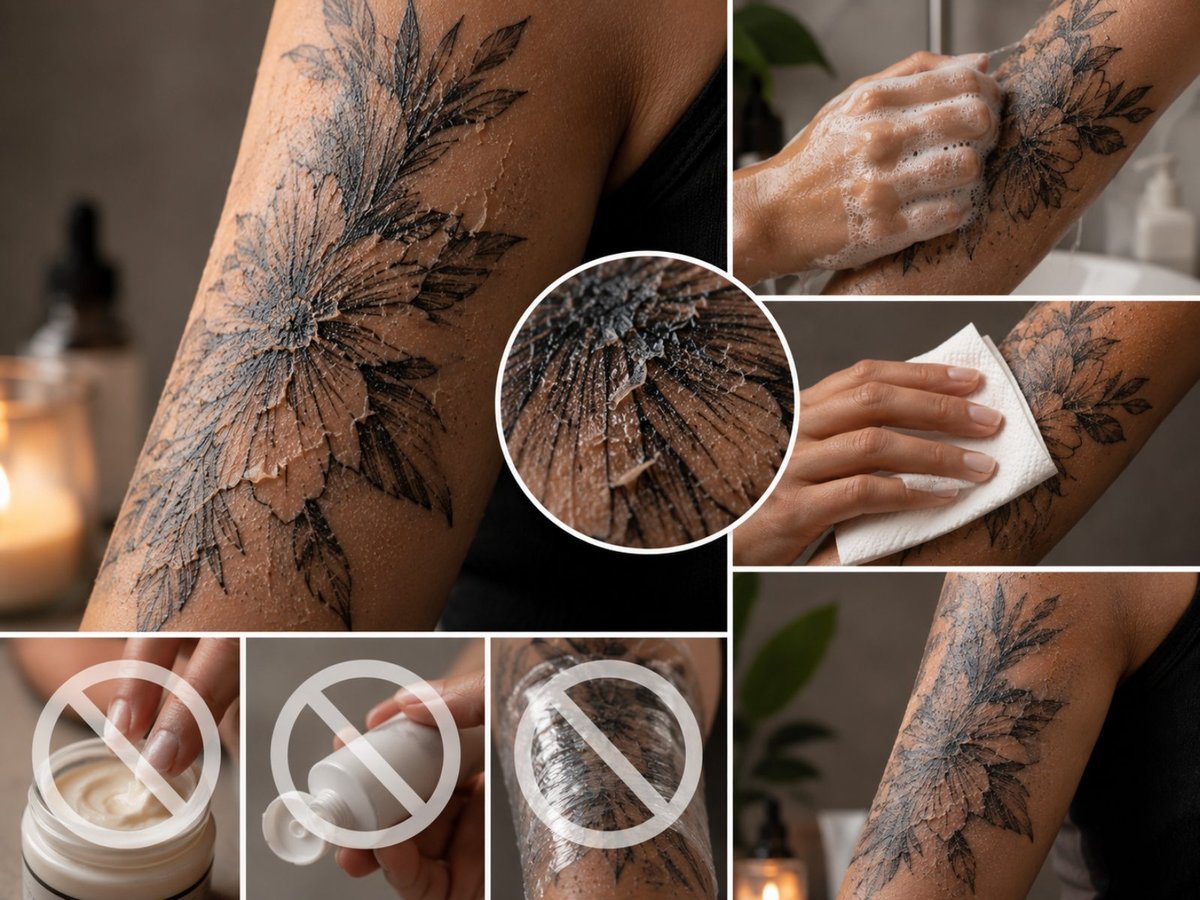
- Wash your hands first, every time, before you touch the tattoo. Dry healing has no wrap or film acting as a barrier, so your hands are the main way bacteria reaches the open skin.
- Wash twice a day with a mild, fragrance-free antibacterial soap and lukewarm water. Wash gently with your fingertips, no cloth or sponge.
- Pat dry completely with a clean paper towel after every wash. Pat, don’t rub. Rubbing disturbs the healing skin surface the same way scratching does.
- Apply nothing afterward. No lotion, ointment, balm, or oil. That’s the defining step of dry healing.
- Don’t re-cover the tattoo once your artist’s initial wrap comes off. Putting a bandage or plastic back over a dry healing tattoo traps moisture against skin that’s meant to stay exposed, which works against the entire point of the method.
- Don’t pick at scabs, no matter how loose or ready to come off they look. Let them release on their own.
- Wear loose clothing over the tattoo. Tight fabric against a dry healing tattoo creates friction, and friction has the same effect on healing scabs as scratching.
- Keep it out of the sun. Cover the area with breathable clothing or stay in the shade. UV exposure on healing skin slows recovery and fades fresh ink before it’s even settled.
- Stay out of water beyond your daily wash. No swimming, baths, or hot tubs until the surface has fully closed, roughly 3 weeks.
Follow this routine for the full 2 to 4 weeks of surface healing. The itching will be more intense than with wet healing, especially in week two. Tapping or lightly slapping the area takes the edge off without touching the scabs.
One important note: if your skin starts cracking or the scabs look thicker than a thin, even layer, switch to a thin application of fragrance-free water-based lotion immediately. There’s no point of no return with healing. Switching from dry to wet at any point is the right call if your skin needs it. A full aftercare routine with product recommendations is in the tattoo aftercare guide.
Signs Your Tattoo Is Not Healing Properly
These signs are worth knowing specifically in the context of dry healing, because several of them are more likely to show up without the moisture buffer that wet healing provides.
- Scabs thicker than a thin, even layer. Normal scabs in dry healing are still relatively thin. If yours is building up dense and rigid, your skin is too dry. Switch to a fragrance-free lotion.
- Cracking skin around or through the scab. Cracking means micro-tears are happening. Act immediately rather than waiting to see if it resolves.
- Ink visibly pulling out when scabs shed. If pieces of scab are coming away with color attached, the scab layer has bonded too deeply. Moisture could have prevented this; switching now won’t undo it, but it prevents further loss.
- Redness, heat, or swelling increases after day 3 or 4. Normal healing moves in one direction: better. If these symptoms intensify past the first few days, that’s infection territory, not a dry healing issue. See a doctor rather than adjusting your aftercare method.
- Raised texture or unusual skin surface after healing. Raised areas that don’t flatten within a few weeks point to scar tissue forming under the design. Contact your artist.
If any of these match what you’re seeing, the full list of warning signs and when to act is in the tattoo healing guide.
Frequently Asked Questions
Does dry healing take longer than wet healing?
Dry healing doesn’t automatically extend the timeline. Surface healing still runs roughly 2 to 4 weeks either way. Where dry healing adds time is when complications appear: thick scabs that crack and need to re-heal take longer to clear than scabs that shed cleanly. The method itself isn’t slower; the complications it’s more prone to are.
Can you switch from dry healing to lotion partway through?
Yes, and if your skin is cracking or the itch has become unmanageable, that’s exactly what you should do. Apply a thin layer of fragrance-free, water-based lotion after your next wash. There’s no penalty for switching mid-process, and waiting to see if it gets better on its own is how a manageable situation becomes a permanent one.
What can you put on a tattoo if you’re dry healing but the skin gets too dry?
A thin layer of fragrance-free water-based lotion is the first option. If you react to most lotions, jojoba oil is a single-ingredient alternative that sits well on healing skin without the additives that typically cause reactions. Apply a small amount after washing and patting dry, just enough to take the tightness away. Avoid anything petroleum-based, as it can trap bacteria against fresh skin.
Is dry healing a tattoo bad?
Dry healing isn’t inherently bad. It’s a valid fallback for people who can’t tolerate most aftercare products. Where it becomes a problem is when it’s used for the wrong tattoo type, the wrong placement, or without understanding the risks. For most tattoos and most people, wet healing produces better ink retention with less discomfort. Dry healing is a tool for a specific situation, not a preferred method.
Does dry healing affect how a tattoo looks long-term?
It can, mainly through the thick scabs dry healing tends to produce. When a scab is dense and takes more force to release, it pulls ink out of the dermis along with it, which shows up as patchy color or faded spots once the skin clears. This is a common form of tattoo losing ink while healing, and dry healing makes it more likely simply because the scabs are thicker than they’d be with a moisturizer involved. It doesn’t happen to every dry-healed tattoo. Thin scabs that release cleanly cause minimal ink loss regardless of method. The risk goes up specifically when scabs crack, get picked at, or come off before the skin underneath has closed.