Tattoo cracking is a healing complication, a problem that can come up during recovery rather than a stage your skin goes through on purpose. It happens when the tattoo or the scab over it gets too dry and loses its flexibility, usually within the first two weeks. It’s not the same thing as the peeling that happens during normal healing, and knowing the difference matters for how you respond.
I’m Minh Pham, and cracking is something I want every client to recognize early, before it turns into a bigger issue. Therefore, in this article, I will help you know what cracking actually looks like compared to peeling, what causes it, the warning signs that mean it’s more than just dryness, how to keep it from happening, and what to do if it’s already started.
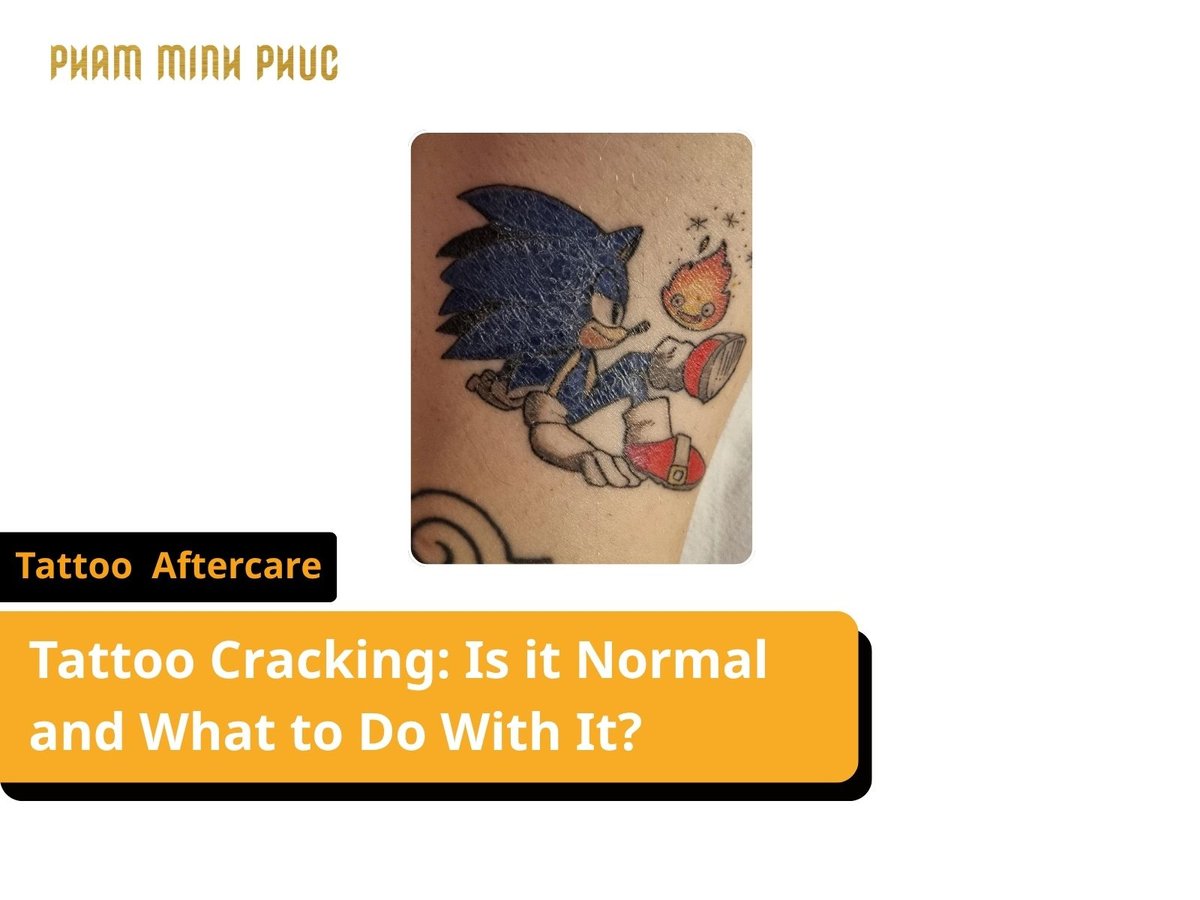
Table of Contents
What Is Tattoo Cracking?
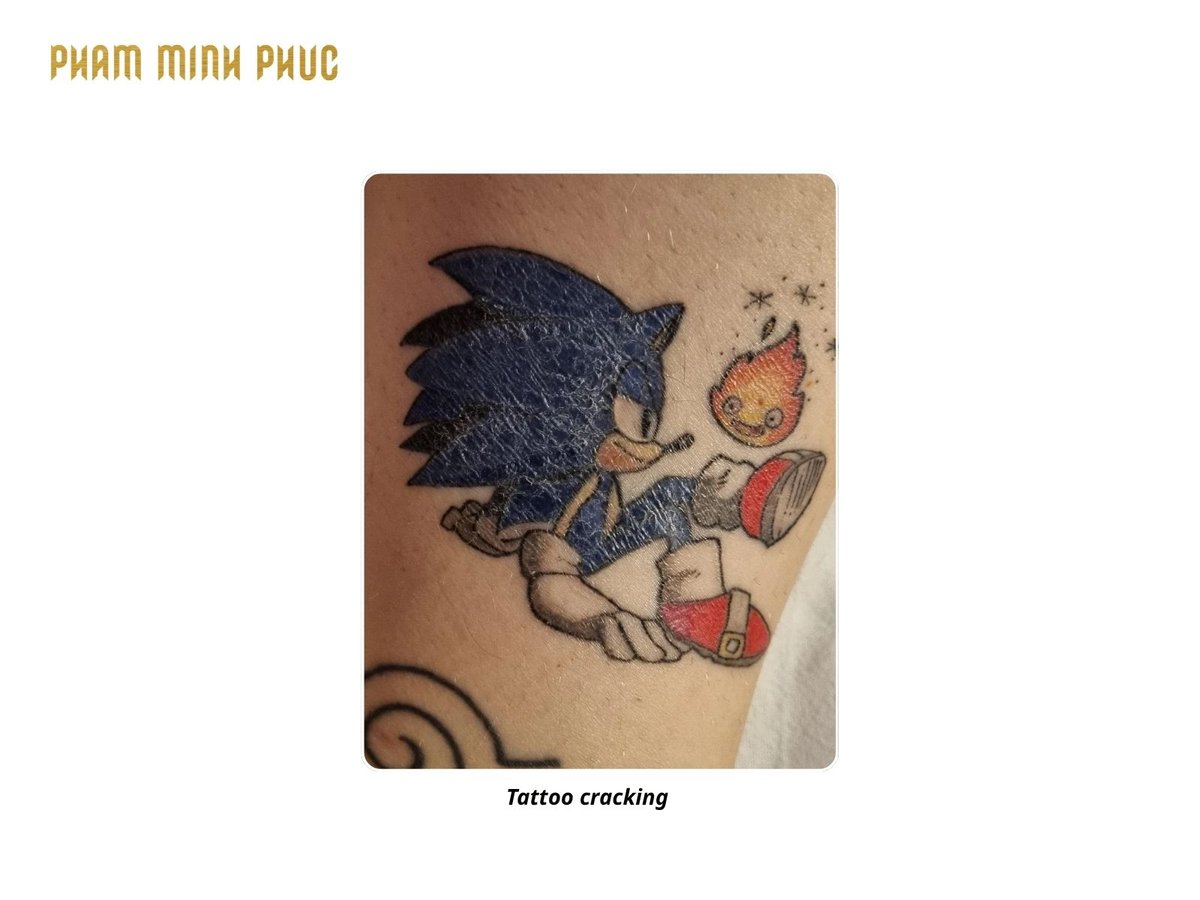
Tattoo cracking is a healing complication, a problem that can come up during the healing process rather than a normal part of it. It happens when the tattoo or the scab covering it becomes too dry and loses its elasticity, causing the surface to split instead of shedding smoothly. It usually shows up within the first two weeks, while your skin is still actively repairing itself underneath. Visually, it can look like dry, cracked ground, a turtle shell pattern, or alligator skin, distinct enough once you know to look for it.
Does Tattoo Cracking Differ From Tattoo Peeling?
Tattoo cracking differs from tattoo peeling in a few specific, visible ways, and the distinction matters because one is normal and the other isn’t.
- Peeling sheds in a thin, almost translucent layer, with the edges naturally curling up and lifting away from the skin on their own, similar to how dried glue peels off your hands. That’s a normal part of healing and nothing to worry about.
- Cracking looks and behaves differently. The skin stays thick, stiff, and develops a shiny quality right at the split, and the edges don’t lift the way peeling does. The surface looks tight, sometimes glossy where it’s cracked, instead of dry and flaky like typical peeling.
Tattoo scabbing sits in this picture too. It’s the protective layer that forms earlier in healing, usually thicker and darker than either cracking or peeling. Cracking can show up alongside scabbing, especially when a scab gets too thick and stiff to flex with the skin underneath, or during the peeling stage if your skin isn’t getting enough moisture. It isn’t a fixed stage like scabbing or peeling. It’s a sign your skin is more dehydrated than it can recover from on its own.
That difference is worth paying attention to. Peeling and scabbing, done right, are just your body doing its job, nothing to step in on beyond your regular routine. Cracking sits in a different category. It’s a healing complication, a signal that your skin is losing more moisture than it can keep up with, and left alone, it can turn into a real problem, covered in the warning signs below.
What Causes Tattoo Cracking?
Tattoo cracking comes down to a handful of causes, and dry skin sits behind most of them.
- Dry skin and dehydration. Skin that’s lost moisture also loses flexibility, making it stiffen and split rather than flex with movement. Choosing dry tattoo healing without staying on top of consistent washing raises this risk specifically, since there’s no product holding moisture in.
- A scab that’s too thick. When an artist works over the same area repeatedly, the resulting scab forms thicker and less flexible, more likely to crack as the new skin underneath stretches.
- Sun exposure. UV rays pull moisture out of healing skin fast and weaken the protective barrier your tattoo needs while it recovers.
- Inadequate aftercare. Skipping regular washing and moisturizing, or using harsh, scented soap, leaves skin without what it needs to stay flexible.
- Pre-existing skin conditions. Eczema or psoriasis already predispose skin to dryness, which carries straight through into how a healing tattoo responds.
- Infection or allergic reaction. Irritation from either one can dry and crack the skin alongside other symptoms, covered in detail in the next section.
Moisture is the common thread running through nearly all of these. That’s also exactly why it’s something you can manage through consistent aftercare.
What Are the Warning Signs of Tattoo Cracking?
A handful of symptoms paired with cracking point to something beyond ordinary dryness, and each combination signals a different cause worth knowing.
- Cracking with bleeding. A few small drops of blood while your skin is tight can happen on their own. Bleeding that continues or recurs isn’t normal and usually points to a deep scab or infection underneath.
- Cracking with no ink underneath. Surface shedding on its own doesn’t take pigment with it. The problem starts when entire pigmented chunks of scab come off too soon, usually from picking, scratching, or skin that’s been allowed to get severely dry. That leaves lighter or blank patches where ink should be.
- Cracking with severe itching. Mild itching is part of normal healing. Itching that’s intense, paired with redness, a rash, or swelling, can signal an allergic reaction to the ink or to an aftercare product, and it’s worth getting checked rather than waiting it out.
- Cracking with spreading redness, swelling, pus, or fever. This combination points to infection, and it’s the clearest sign you need to see a doctor rather than manage it at home.
Cracking that goes unaddressed tends to follow a predictable path. The skin keeps losing moisture, the scab hardens further, and it eventually releases before the tissue underneath is ready, taking ink with it and leaving patchy color or scarring behind. Catching it early, while it’s still just dryness, is almost always easier to fix than waiting until a hardened scab has already formed.
How to Prevent Tattoo Cracking?
Preventing tattoo cracking comes down to keeping your skin consistently hydrated, from the outside and the inside.
- Wash gently twice a day with a fragrance-free soap and lukewarm water, never hot
- Moisturize in a thin, even layer, and don’t let your skin dry out between applications
- Drink enough water daily to support your skin’s elasticity from within
- Skip long soaks in baths, pools, or hot tubs; a quick shower is fine
- Keep the tattooed area out of direct sun while it heals
These habits work together. Skip one and the others have to compensate, which is usually where cracking starts to creep in even when you think you’re doing everything right.
What to Do If Your Tattoo Is Already Cracking?
If cracking has already started, a few specific steps help more than general prevention at this point.
Step up your moisturizing right away, applying a slightly thicker layer than usual to replace lost moisture faster than a standard tattoo aftercare routine would. Over-the-counter pain relief can take the edge off if the area feels tight or uncomfortable.
Keep a close eye on the warning signs covered above, since cracking that’s caught early rarely escalates.
If you’re not sure whether what you’re seeing is normal, reach out to your artist. They’ve dealt with this before, and they can usually tell a lot just from a photo or a quick look.
Frequently Asked Questions
How long does tattoo cracking last?
Cracking that’s caught early and treated with consistent moisture usually clears up within a week or two. The sooner you increase moisturizing, the faster it tends to resolve.
Can dry skin ruin a tattoo?
Severe dryness can, mainly by causing scabs to harden and release before they’re ready, pulling ink and color along with them. That’s why staying ahead of dryness matters more than reacting after the fact.
Is it normal for a new tattoo to crack?
Some surface dryness in the first couple of weeks is common. True cracking, thick and stiff with edges that don’t lift, isn’t something to leave alone, even if it doesn’t look dramatic at first.
Why does your tattoo look cracked but not bleeding?
Dryness alone can split the surface without breaking deep enough to bleed. That’s usually the easiest version to fix, and more consistent moisturizing typically clears it up on its own.
Should you see a doctor for a cracked tattoo?
Only if it comes with the warning signs covered above: persistent bleeding, spreading redness, pus, or fever. Surface dryness without those symptoms is something you can manage at home.
Will a cracked tattoo heal back normally?
In most cases, yes, especially if you catch it early. Severe or repeated cracking raises the chance of scarring or patchy color that may need a touch-up later on.