A tattoo doesn’t stop healing when your appointment ends. For the next several weeks, your skin is repairing thousands of tiny needle punctures, making the tattoo vulnerable to infection, irritation, fading, and other healing problems if it’s not cared for properly. Many of the most common aftercare mistakes, such as soaking the tattoo, exposing it to direct sunlight, or picking at peeling skin, can affect both how well it heals and how it looks in the long run.
I’m Minh Pham, a custom tattoo artist based in San Antonio. After tattooing clients for years, I’ve found that most healing problems aren’t caused by the tattoo itself, but by small mistakes people make during the first few weeks. That’s why every client leaves my studio with clear aftercare instructions before they walk out the door.
In this article, you’ll learn the most common things not to do after getting a tattoo, why each mistake matters, how long to avoid it, and what to do if you’ve already broken one of the rules.
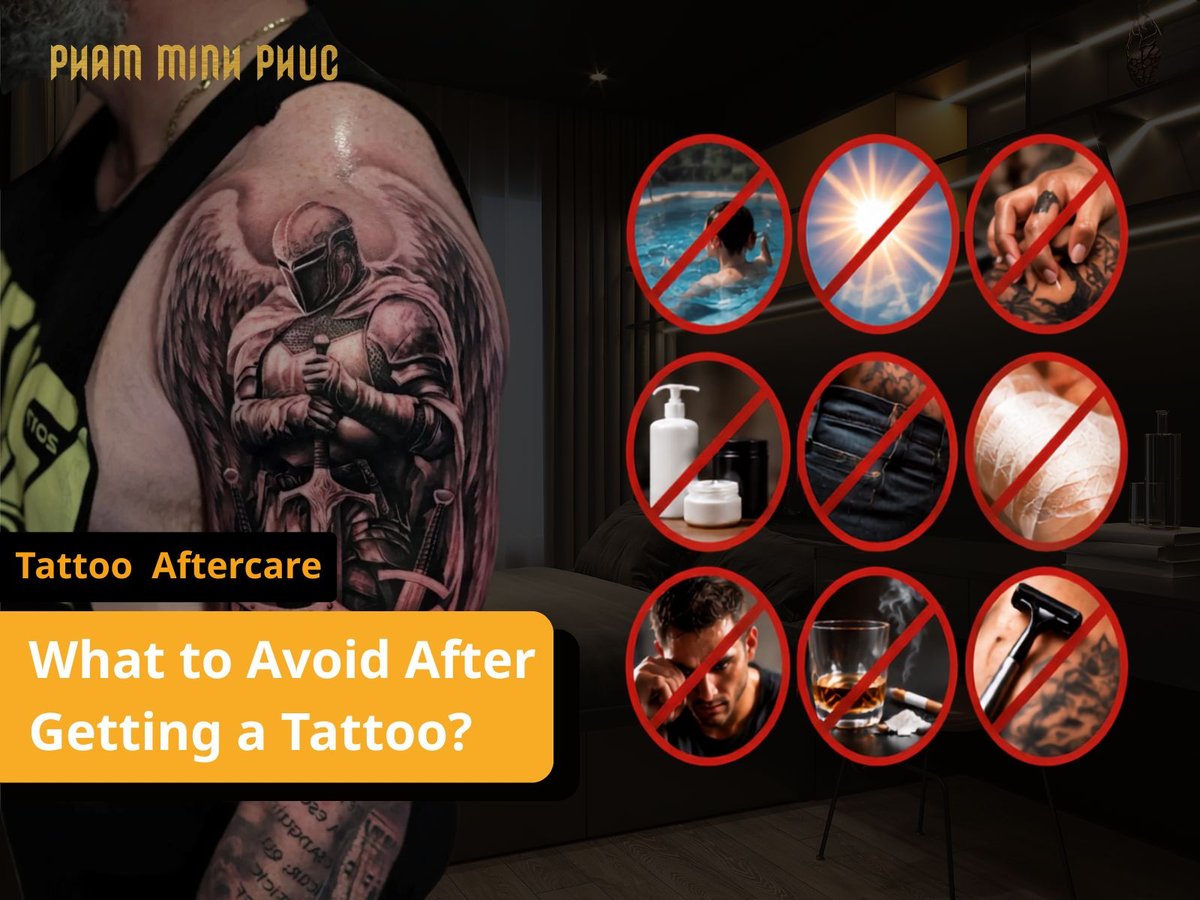
Table of Contents
Don’t Submerge Your Tattoo in Water (Pools, Baths, or Hot Tubs)
You should avoid submerging your tattoo in water for at least 2 to 4 weeks, or until it has fully healed. Unlike a quick shower, soaking a healing tattoo in a pool, hot tub, bathtub, lake, or the ocean keeps the skin wet for too long, which can soften scabs, delay healing, and increase the risk of infection.
During the healing period, you should avoid every one of these
- Swimming pools and hot tubs: Chlorine and other chemicals can irritate healing skin, while shared water may contain bacteria that increase the risk of infection.
- Lakes, rivers, and the ocean: Natural bodies of water can contain bacteria, fungi, and other microorganisms that shouldn’t come into contact with a fresh tattoo.
- Bathtubs: Soaking in a bath keeps the tattoo underwater for an extended period, making it easier for scabs to soften and come off before the skin is ready.
- Showers are safe: A short shower with lukewarm water is fine from day one. Afterward, gently pat the tattoo dry with a clean paper towel or let it air dry. Avoid rubbing the area with a towel while it’s healing.

As a tattoo artist, I recommend waiting until all peeling, scabbing, and open areas have completely healed before swimming or soaking your tattoo. If you’re unsure whether it’s ready, it’s safer to wait a few extra days than risk slowing the healing process.
That doesn’t mean you need to avoid water completely. A short shower with lukewarm water is safe because it doesn’t keep the tattoo submerged. Once you’re done, gently pat the area dry with a clean paper towel or let it air dry instead of rubbing it with a towel.
Learn more about how long you should wait before swimming after getting a tattoo and why: How Long After a Tattoo Can You Swim?
Don’t Expose Your Tattoo to Direct Sun
Direct sunlight is one of the fastest ways to fade a healing tattoo. During the first few weeks, UV rays can increase irritation, slow the healing process, and gradually break down tattoo pigments, causing colors to lose their vibrancy sooner.
Freshly tattooed skin is also more vulnerable to sunburn because its protective barrier hasn’t fully recovered. Sunburn can increase redness, swelling, and discomfort while the tattoo is still healing.
To protect your tattoo during this stage:
- Cover it with loose, breathable clothing whenever you’re outdoors for extended periods.
- Skip sunscreen until the tattoo has fully healed. Applying sunscreen to broken or peeling skin may cause irritation and interfere with the healing process.
- After the skin has completely healed, use a broad-spectrum sunscreen with SPF 30 or higher whenever the tattoo will be exposed to sunlight. Consistent sun protection helps preserve the color and crisp details of your tattoo over time.
Don’t Touch, Scratch, or Pick at the Tattoo
A healing tattoo needs as little contact as possible. Repeated touching can transfer bacteria to the area, while scratching or picking at peeling skin can reopen the wound, delay healing, and increase the risk of ink loss.
Scratching is especially damaging because it can tear away scabs before the skin underneath is ready. That may leave lighter patches, uneven healing, or permanent gaps in the tattoo. Picking at flakes or scabs has the same effect, even if they look ready to come off.
Itching usually becomes most noticeable around days 3 to 5, when peeling begins and the skin is actively repairing itself. Instead of scratching, gently tap the area with clean fingers or apply a thin layer of fragrance-free moisturizer to help relieve the itch.
If you’ve accidentally scratched your tattoo, keep the area clean and monitor it over the next 24 hours. Contact your tattoo artist if you’re unsure whether the healing still looks normal. If the area becomes increasingly red, swollen, warm, painful, or starts producing pus, seek medical care promptly, as these can be signs of an infection rather than routine healing.
Don’t Use the Wrong Products on Fresh Ink
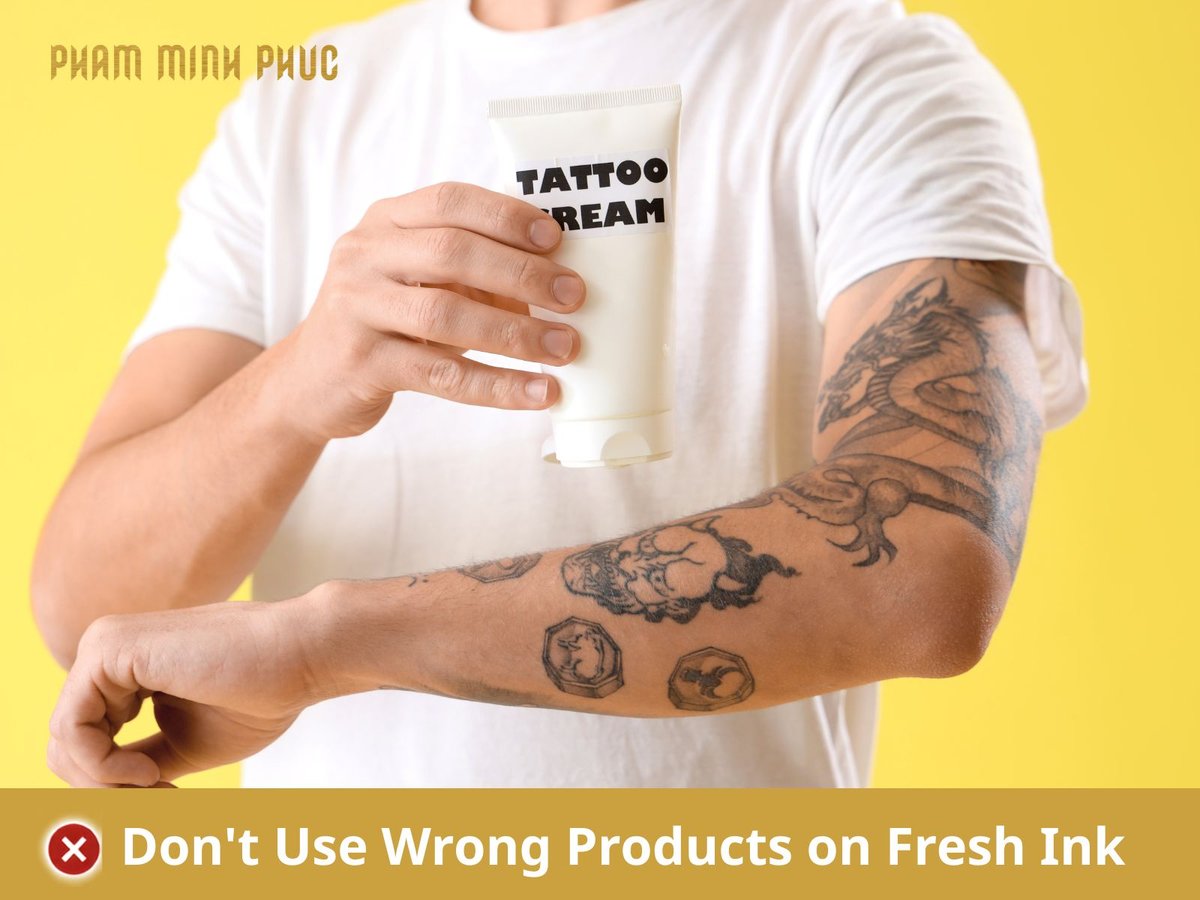
Using the wrong skincare products can slow healing and irritate a fresh tattoo. During the first few weeks, stick with simple aftercare products recommended by your tattoo artist, and avoid anything that isn’t intended for healing skin.
Avoid these products while your tattoo is healing:
- Petroleum jelly and heavy occlusive ointments: Thick layers can trap excess moisture and heat against the skin, making it harder to monitor the healing process. If your artist recommends an ointment, apply only a very thin layer.
- Antibiotic ointments, such as Neosporin: These products aren’t necessary for routine tattoo aftercare and can trigger allergic skin reactions in some people, which may interfere with normal healing.
- Scented soaps and lotions: Fragrances and alcohol can irritate freshly tattooed skin and increase dryness or redness.
- Hair removal creams, such as Nair: The chemicals used to dissolve hair can severely irritate healing skin. Wait until the tattoo has fully healed before using them over or near the tattoo.
- Heavy oils or multipurpose skincare products: Products that aren’t formulated for healing wounds may clog the skin or contain ingredients that increase irritation during the peeling stage.
A fragrance-free, alcohol-free moisturizer is usually all a healing tattoo needs once your artist recommends switching from ointment to lotion. If you’re unsure whether a product is safe, it’s better to wait or ask your tattoo artist before applying it to fresh ink.
Don’t Wear Tight Clothing or Rough Fabric
Tight clothing creates constant friction against a healing tattoo, especially in areas that move throughout the day. That repeated rubbing can loosen scabs before the skin underneath is ready, while rough fabrics may irritate the area and delay healing.
During the first week, choose loose-fitting, breathable clothing that won’t press or rub against the tattoo. Soft fabrics such as cotton are usually more comfortable because they’re less likely to stick to peeling skin or create unnecessary friction.
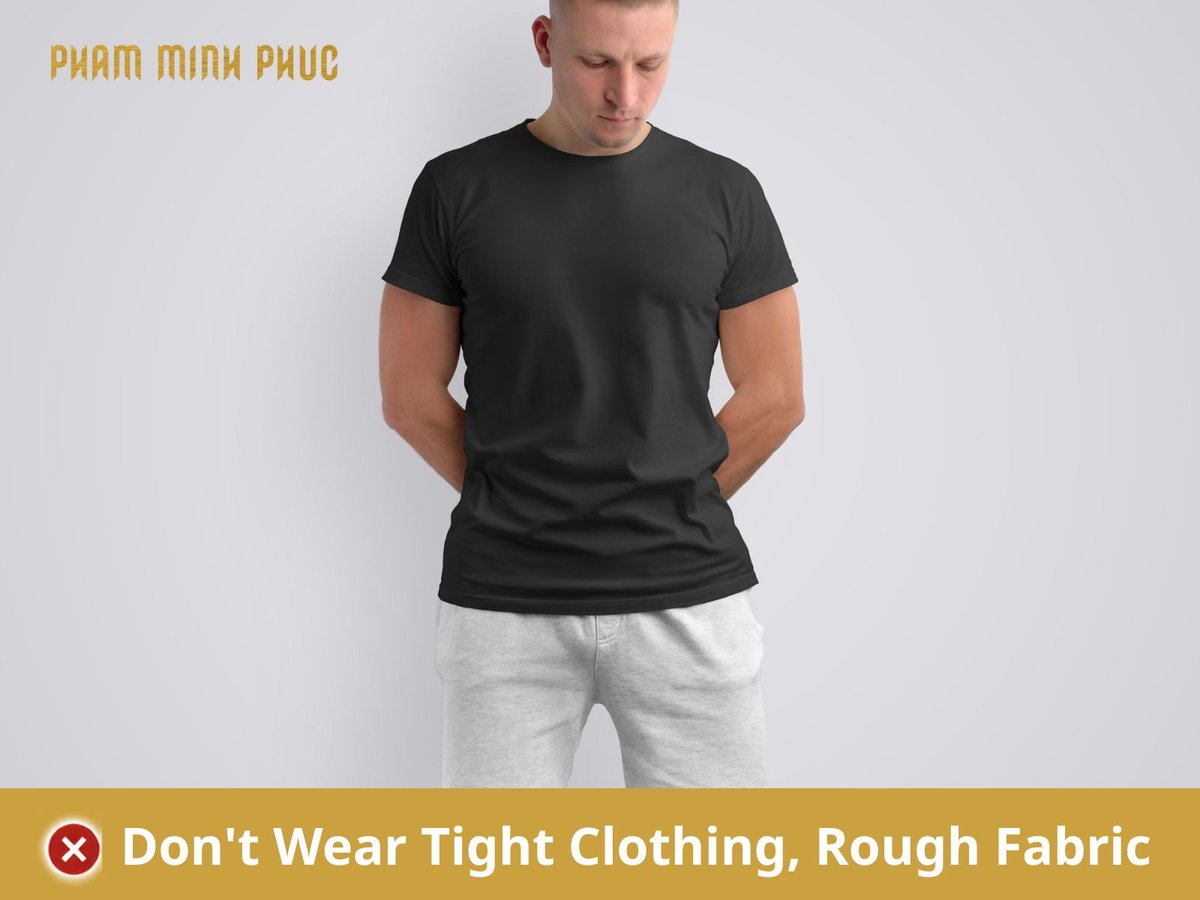
If your tattoo is in an area that clothing naturally rubs against, such as the shoulder, thigh, or forearm, try to minimize pressure and repeated contact until the surface has fully healed.
As a tattoo artist, I’ve seen well-healing tattoos become patchy simply because they were constantly rubbing against tight sleeves, waistbands, or athletic clothing. Giving your tattoo a little extra room during the first week helps protect both the healing skin and the final appearance of the design.
Don’t Rewrap or Remove the Bandage Too Early
Removing your bandage too early or rewrapping your tattoo without your artist’s instructions can interfere with the healing process. Taking the initial bandage off too soon leaves the fresh tattoo exposed to friction and bacteria, while applying a new wrap after you’ve already switched to open healing can trap excess moisture against the skin.
Most tattoo artists recommend leaving the first piece of Second Skin on for 24 to 48 hours. After removing it, a second piece is typically applied and worn for another 3 to 5 days, depending on how your tattoo is healing and your artist’s aftercare instructions.
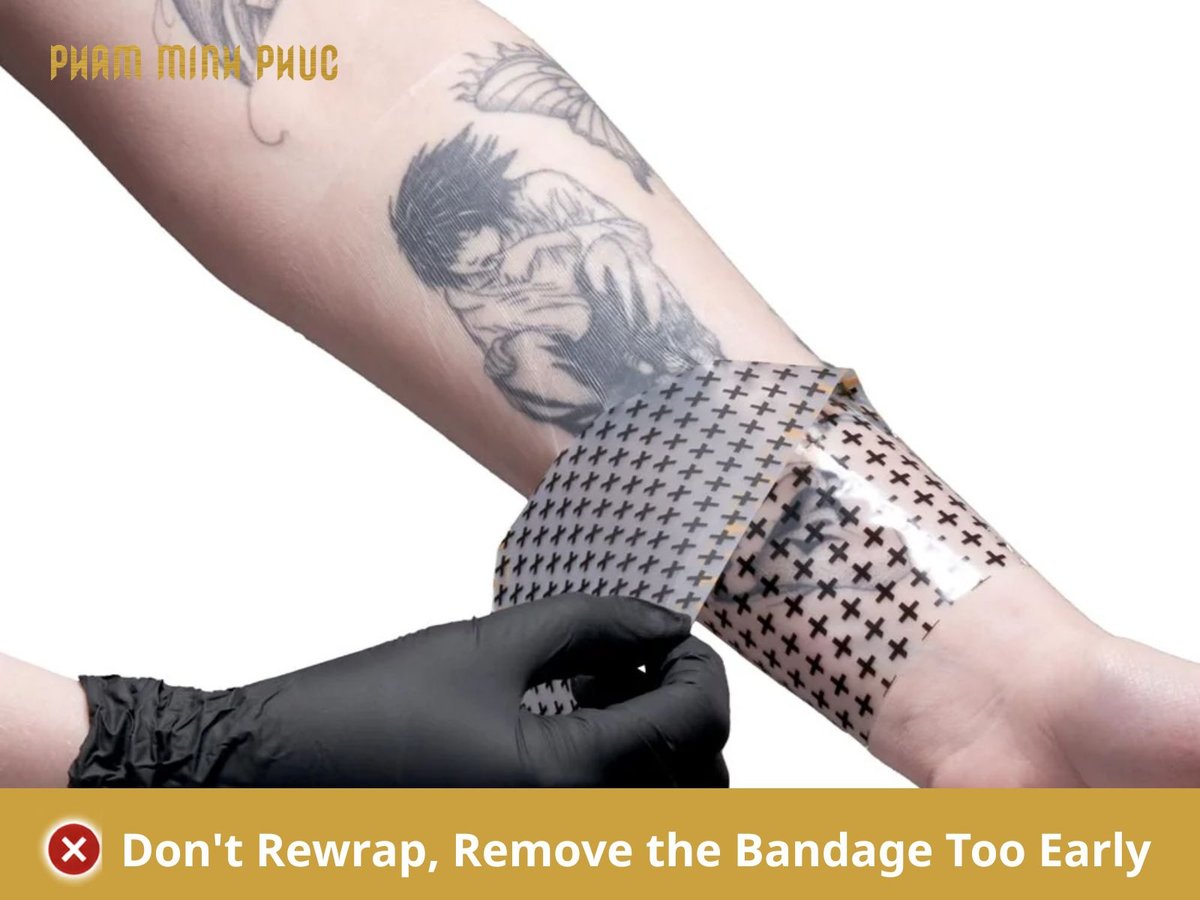
Once it’s time to remove the final piece, move on to your normal washing and moisturizing routine instead of covering the tattoo again unless your artist specifically recommends it.
Don’t Skip Your Aftercare Routine
Skipping your aftercare routine increases the risk of almost every healing problem, including infection, excessive scabbing, ink loss, delayed healing, and uneven color. A fresh tattoo is still an open wound, and even if it looks clean, dried plasma, bacteria, and other debris can build up on the surface when proper aftercare is neglected.
Good aftercare gives your skin the best chance to heal evenly and helps protect the final appearance of your tattoo. In my experience, many healing issues aren’t caused by the tattoo itself, but by inconsistent aftercare during the first couple of weeks.
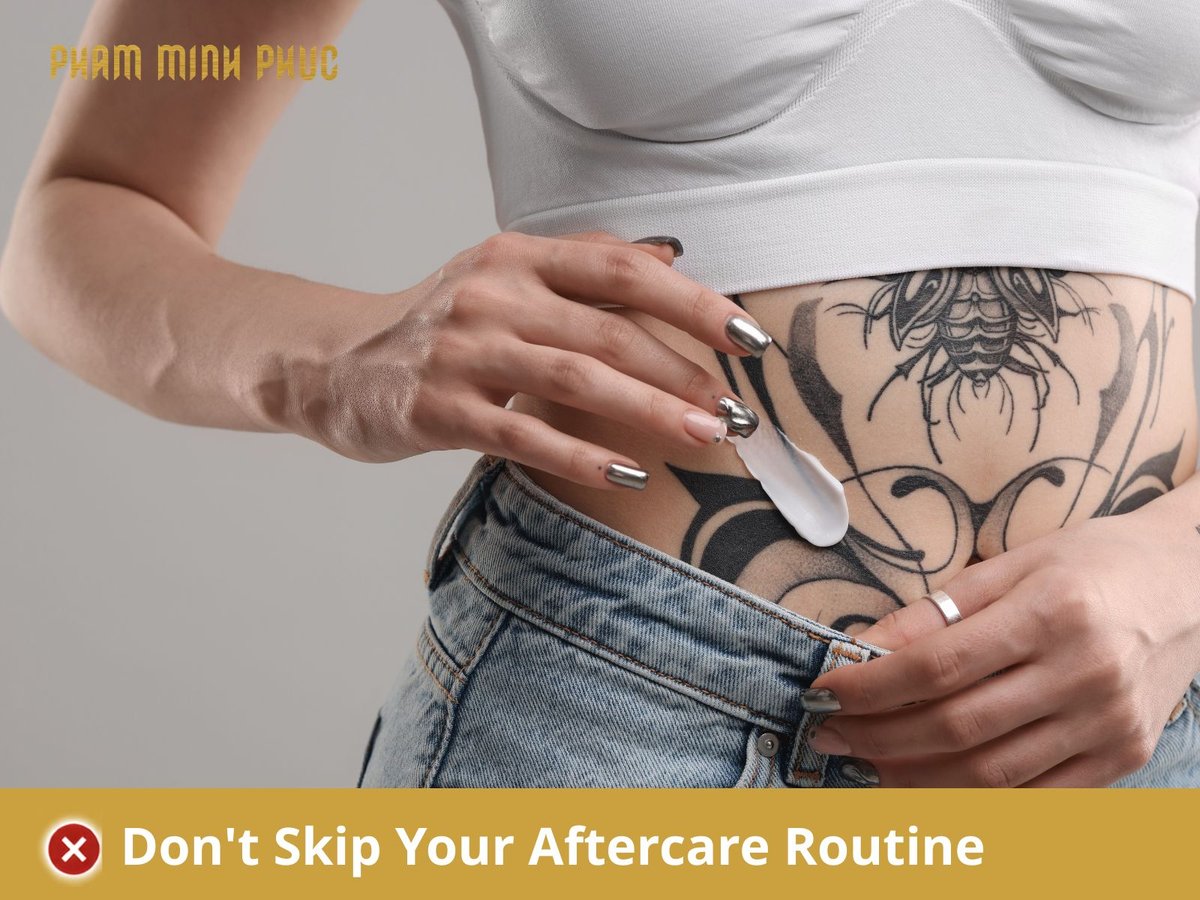
If you’re unsure what to do each day after getting tattooed, including when to wash, moisturize, or switch from ointment to lotion, read our complete tattoo aftercare guide for a step-by-step healing timeline.
Don’t Sweat It Out Too Soon
Excessive sweating keeps a healing tattoo warm and damp for long periods, creating an environment where bacteria can thrive. Heavy sweating also increases friction from clothing and repeated body movement, which can irritate peeling skin and slow the healing process.
For the first couple of weeks, avoid activities that make you sweat heavily, including intense workouts, running, hot yoga, saunas, and steam rooms. Light walking or other low-impact activities are generally fine as long as they don’t cause excessive sweating or repeated rubbing over the tattoo.

You should wait until your tattoo has finished peeling before returning to activities that leave your skin soaked with sweat. A few extra days of rest are far better than extending the healing process or risking irritation.
If you’re planning to get back to the gym soon, read my full guide on can you sweat after getting a tattoo to see exactly how long to wait for your specific activity level.
Don’t Drink, Smoke, or Use Substances Too Soon
Alcohol, nicotine, and recreational drugs can all interfere with the early healing process in different ways. Alcohol thins the blood, which may increase bleeding during and shortly after your tattoo session. Excessive bleeding can make it harder for pigment to settle properly in the skin.
Smoking and vaping reduce blood flow by narrowing blood vessels, limiting the oxygen and nutrients your skin needs to repair itself. While this doesn’t guarantee healing problems, it may slow recovery and increase the risk of complications.
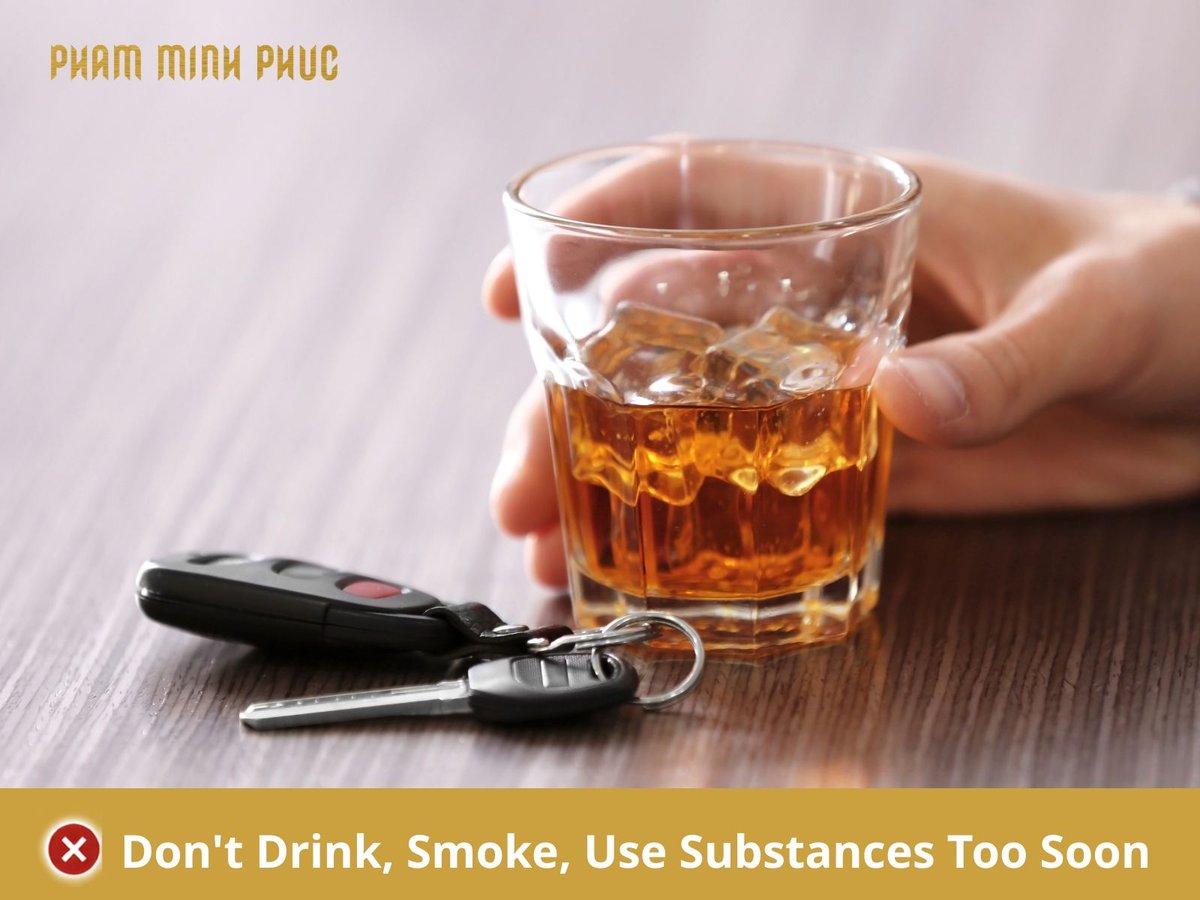
It’s also best to avoid recreational drugs during the first few days after getting tattooed. Staying clear-headed makes it easier to follow your aftercare routine and notice early signs of infection, an allergic reaction, or other healing problems.
For the specifics on timing and why it matters, check my guide about drinking after getting a tattoo before your next night out.
Don’t Shave the Tattooed Area Too Soon
Shaving a healing tattoo can reopen the skin before it’s fully repaired. A razor easily catches peeling skin or scabs, lifting them off prematurely and increasing the risk of ink loss, irritation, delayed healing, and infection.
Wait until the tattoo has fully healed before shaving the area again, which is typically 2 to 4 weeks after your appointment. If you still notice peeling, scabbing, or sensitive skin, give it more time. This mistake is especially common on the legs, arms, face, and other areas that people shave regularly out of habit.
Once the surface is completely smooth and all peeling has finished, you can shave as you normally would. If you’re unsure whether your tattoo is fully healed, waiting a few extra days is always the safer choice.
Don’t Stop Being Careful Too Soon
Stopping every precaution the moment your tattoo looks healed is one of the last mistakes on this list, and it is also one of the easiest to make. A tattoo may look fully healed after 2 to 4 weeks, but the deeper layers of skin continue repairing themselves for 3 to 6 months. Relaxing your aftercare too early can affect both healing and the long-term appearance of your tattoo.
Once the surface has healed, most daily restrictions can gradually end. However, it’s still important to protect the tattoo from excessive sun exposure and repeated friction while the deeper skin continues to recover.
From this point on, broad-spectrum sunscreen with SPF 30 or higher should become part of your long-term tattoo care whenever the tattoo is exposed to daylight. Consistent sun protection helps preserve sharp lines, vibrant color, and overall tattoo quality for years to come.
Many tattoos heal without problems during the first month, but the ones that continue to look their best years later are usually the ones that receive consistent long-term care, especially protection from UV exposure.
FAQ about Things to Avoid After Getting a Tattoo
Can You Have Sex or Fly After Getting a Tattoo?
Yes, but avoid any activity that puts friction, pressure, or excessive stretching directly on the tattoo while it’s healing. During flights, keep the tattoo moisturized and drink plenty of water, since cabin air is drier than normal and may leave healing skin feeling tighter.
Are There Foods You Should Avoid After Getting a Tattoo?
No specific foods have been proven to damage a healing tattoo. The most important dietary consideration is avoiding excessive alcohol during the first 24 to 48 hours because it can increase bleeding. Staying well hydrated and eating a balanced diet rich in protein, vitamins, and minerals helps support normal wound healing.
Do Aftercare Rules Change for Small and Large Tattoos?
The same aftercare principles apply to every tattoo, but larger tattoos usually require a longer healing period because they involve more skin. Tattoos placed over joints or other high-movement areas may also need extra care, as frequent stretching and friction can slow healing compared with smaller tattoos on low-movement areas.
What Should You Do If You Already Broke a Tattoo Aftercare Rule?
One mistake doesn’t automatically ruin your tattoo. Clean the area gently, return to your normal aftercare routine, and watch for signs of infection over the next 24 to 48 hours. If you notice spreading redness, increasing pain, warmth, swelling, pus, or fever, contact your tattoo artist or a healthcare provider promptly.