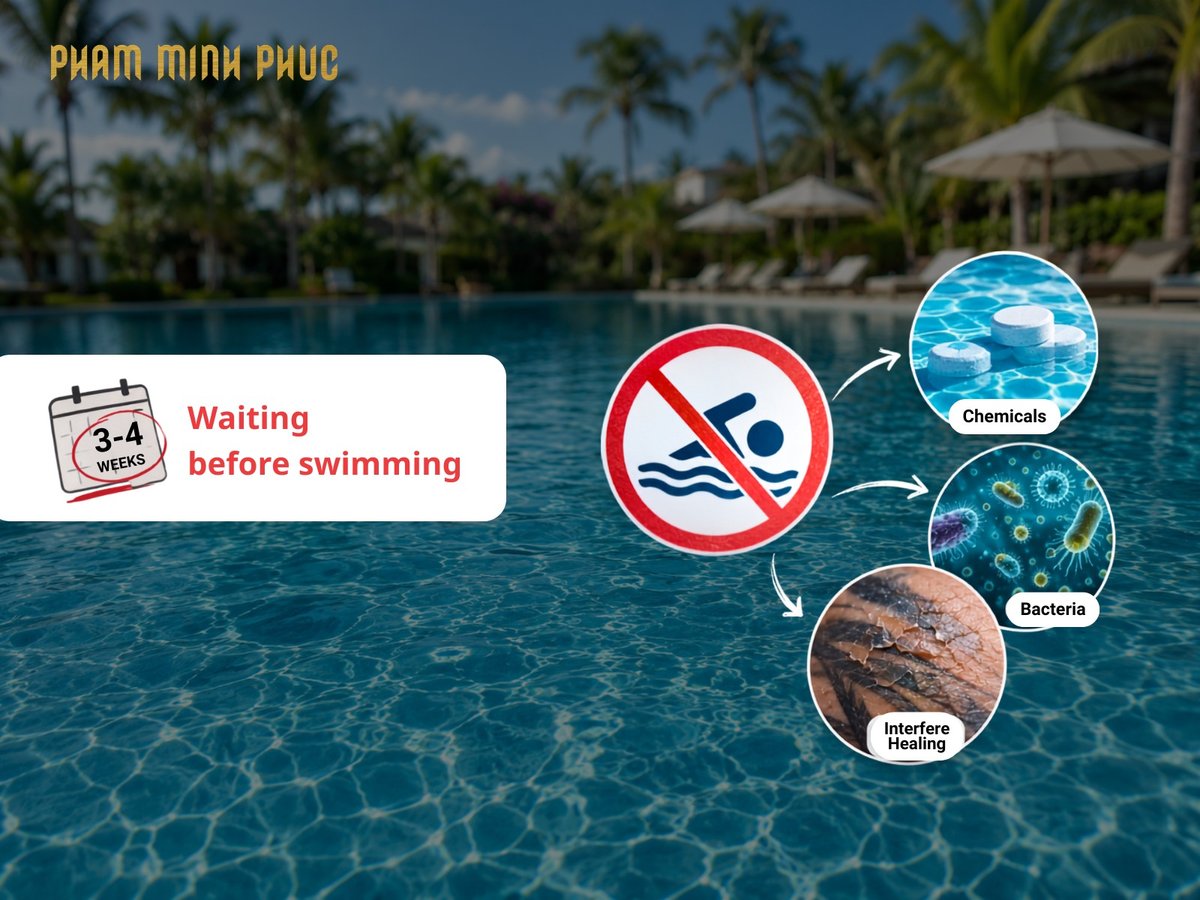
You should wait until your tattoo has fully healed before swimming, which typically takes at least 2 to 4 weeks depending on the type of water and how your skin is healing. As a general guideline, you can usually swim in a chlorinated pool after 2 to 3 weeks, while the ocean, lakes, and rivers often require waiting 3 to 4 weeks.
Hot tubs should be avoided for at least 4 weeks because warm water and bacteria can interfere with the healing process. Swimming too soon exposes a fresh tattoo to prolonged moisture, chemicals, and bacteria, increasing the risk of infection, irritation, faded ink, tattoo bubbling, delayed healing, and scarring.
In this guide, I’m Minh Pham, a custom tattoo artist in San Antonio, and I’ll explain how long you should wait before swimming after getting a tattoo, how different types of water affect the healing process, and how to tell when your tattoo is truly ready to get back in the pool, ocean, or lake. I’ll also share what to do if you accidentally get your tattoo wet, how to protect it when you can’t avoid being around water, and the same aftercare advice I give every client before they leave my studio.
Table of Contents
How Long After a Tattoo Can You Swim?
You should wait a minimum of 2 to 4 weeks after getting a tattoo before swimming in pools, oceans, lakes, or hot tubs.
A healing tattoo is still an open wound, which means your skin hasn’t fully rebuilt its natural protective barrier. Swimming too soon exposes the tattoo to chemicals, bacteria, and prolonged moisture, all of which can interfere with the healing process and increase the risk of irritation or infection.
Another concern is that soaking softens the scabs and healing skin that help lock pigment into place. If these layers come off too early, your tattoo may take longer to heal and could affect the final appearance of the ink.
The amount of risk depends on where you swim, since different types of water expose your tattoo to different conditions.
| Water Type | Recommended Wait | Main Risk |
| Chlorinated pool | 2 to 3 weeks | Chlorine can irritate healing skin and may contribute to fading if the tattoo is still fresh. |
| Ocean (saltwater) | 3 to 4 weeks | Saltwater can sting damaged skin, and ocean water naturally contains bacteria and other microorganisms. |
| Lake or river | 3 to 4 weeks | Freshwater has the highest risk of bacterial contamination, increasing the chance of infection. |
| Hot tub or jacuzzi | 4 weeks | Warm water encourages bacterial growth and prolonged soaking can weaken the healing skin. |
As a general rule, waiting at least 3 weeks is a good starting point before swimming. In my studio, I recommend waiting the full 4 weeks before going into the ocean or a hot tub. Those environments expose a healing tattoo to additional bacteria, salt, or heat, and giving your skin a little more time is well worth protecting the final result.
What Happens If You Swim Too Soon?
Swimming before your tattoo has fully healed can affect both the healing process and the final appearance of your tattoo. Prolonged exposure to water, bacteria, and chemicals can soften healing skin, increase the risk of infection, and interfere with how the ink settles.
If you swim too soon, you may experience:
- Skin irritation. Chlorine, saltwater, and other chemicals can irritate healing skin, causing increased redness, itching, burning, or a rash. Irritated skin is also more vulnerable to infection and slower healing.
- Infection. Watch for increasing redness, swelling, warmth, pus, red streaks, or a fever after swimming. These symptoms require prompt medical evaluation.
- Faded or uneven ink. Premature soaking can disrupt the healing skin, causing some areas of the tattoo to heal lighter or appear patchy once the tattoo has fully healed.
- Tattoo bubbling. Too much moisture can oversaturate healing skin, causing soft, raised, or blister-like areas. Tattoo bubbling can delay healing and may affect how your tattoo looks after recovery.
- Scarring. If the healing skin is damaged or comes off too early, the tattoo may heal with raised or uneven scar tissue.
- Delayed healing. Prolonged soaking can extend inflammation, dry out the surrounding skin after it leaves the water, and lead to more itching, flaking, and discomfort during recovery.
If you’ve already gone swimming with a fresh tattoo, don’t panic, but act quickly. Rinse the tattoo with lukewarm water and a fragrance-free, antibacterial soap, then gently pat it dry with a clean paper towel. Continue your normal aftercare routine and monitor the tattoo closely over the next 24 to 48 hours.
If you notice spreading redness, increasing swelling, pus, severe pain, or a fever, seek medical care as soon as possible. These are potential signs of infection and should be evaluated by a healthcare professional rather than managed with additional ointment alone.
Avoid swimming again until your tattoo has fully healed, even if it looks better after a day or two. Giving your skin enough time to recover is the best way to protect both your health and the final appearance of your tattoo.
How to Protect Your Tattoo If You Must Be Near Water Before It’s Healed?
If you have to be near water because of work, travel, or another unavoidable situation, you can take a few precautions to reduce the risk of damaging your tattoo.
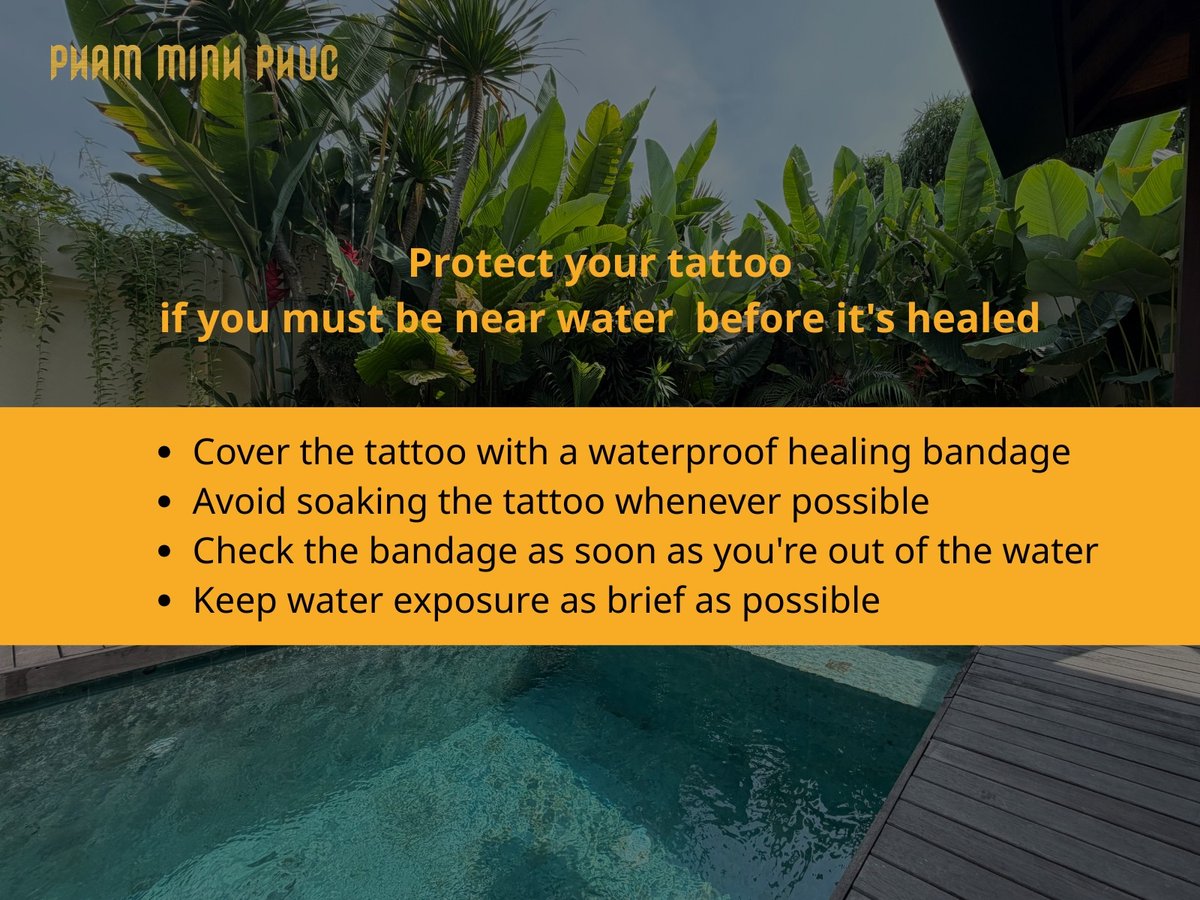
- Cover the tattoo with a waterproof healing bandage, such as Second Skin, Saniderm, or Tegaderm, making sure the entire tattoo is fully sealed before any water exposure.
- Avoid soaking the tattoo whenever possible. Even with a waterproof bandage, prolonged submersion in pools, lakes, oceans, or hot tubs increases the chance of the seal failing.
- Check the bandage as soon as you’re out of the water. If the edges have lifted or water has gotten underneath the film, remove the bandage, wash the tattoo with a fragrance-free antibacterial soap, and continue your aftercare routine. If your tattoo artist recommends continued use of Second Skin, apply a fresh piece to clean, dry skin.
- Keep water exposure as brief as possible and avoid activities that create excessive friction or pressure around the tattoo.
I recommend the same Second Skin bandages that clients use for showering whenever they can’t completely avoid being around water. However, it’s important to remember that a waterproof bandage only provides temporary protection. It can help reduce your risk of contamination, but it doesn’t replace the healing time your skin needs or make your tattoo heal faster.
What Are the Signs Your Tattoo Is Ready to Swim?
Before you go swimming, make sure your tattoo has fully healed, not just stopped hurting. Even if it looks good on the surface, the skin still needs to rebuild its natural protective barrier before it’s safe to soak in a pool, lake, ocean, or hot tub.
Your tattoo is generally ready for swimming when all of these signs are present:
- No scabs, peeling, or flaking skin remain anywhere on the tattoo.
- The skin feels smooth and fully healed, with no raised areas or tenderness when lightly touched.
- The tattoo no longer looks shiny or glossy. Instead, the skin has returned to its normal matte appearance.
- There is no redness, swelling, or itching around the tattoo.
- The new layer of skin looks even and completely closed, with no open areas or signs of irritation.
If you’re still seeing any of these signs, wait a few more days before swimming. Healing time varies from person to person, so it’s better to judge your tattoo by how it looks and feels rather than by the number of days that have passed.
This is the advice I give every client at my studio: if you’re looking at your tattoo and wondering whether it’s healed enough to swim, it probably needs a little more time. Trust your skin, not the calendar.
How to Clean and Care for Your Tattoo After Swimming?
Once your tattoo is fully healed and you’re ready to swim again, caring for it after swimming is simple. Even healed tattoos can collect chlorine, salt, sweat, sunscreen, and other residue from the water, so a quick post-swim routine helps keep your skin healthy and your tattoo looking its best.
After swimming, follow these simple steps:
- Rinse your tattoo with clean water: Wash away chlorine, salt, bacteria, or other residue left on your skin after swimming in a pool, ocean, or lake.
- Clean gently when needed: If you have been swimming in public water or feel buildup on your skin, use a mild, fragrance-free soap and avoid harsh scrubbing or exfoliating products.
- Pat your skin dry: Use a clean towel and gently pat the area instead of rubbing, which can irritate the skin.
- Moisturize if your skin feels dry: Apply a thin layer of fragrance-free moisturizer to keep your skin hydrated, especially after long swimming sessions.
- Protect your tattoo from the sun: Before outdoor swimming, apply a broad-spectrum sunscreen with SPF 30 or higher. UV exposure can gradually fade tattoo pigments over time, even after the tattoo has healed.
A healed tattoo can safely handle swimming in pools, oceans, and lakes, but consistent skin care helps maintain its appearance. Rinse after swimming, moisturize when needed, and protect your tattoo from the sun to keep your ink looking sharp and vibrant for years.
FAQs about Swimming After Getting a Tattoo
Does chlorine in swimming pool fade tattoo ink?
Yes, but mainly if your tattoo is still healing. Chlorine can dry out the skin and irritate a fresh tattoo, which may interfere with the healing process. Repeated exposure before the tattoo has fully healed can also increase the risk of uneven fading. Once your tattoo is completely healed, occasional swimming in a chlorinated pool is unlikely to noticeably affect the ink.
Is saltwater good or bad for a healing tattoo?
Saltwater is not recommended for a healing tattoo. While saltwater is often associated with wound care, ocean water contains bacteria, microorganisms, and other contaminants that can enter a fresh tattoo. Salt can also irritate open skin, causing discomfort and potentially delaying the healing process.
Can a waterproof bandage let you swim sooner?
No. A waterproof bandage, such as Second Skin or Saniderm, provides temporary protection from brief water exposure, but it doesn’t make your tattoo heal faster or make swimming safe. Your skin still needs time to rebuild its natural protective barrier before it can be safely submerged.
Is showering different from swimming with a new tattoo?
Yes. Showering is generally safe because the tattoo is exposed to running water for a short time rather than being submerged. Swimming, bathing, or soaking keeps the tattoo underwater for much longer, which can soften healing skin, weaken scabs, and increase the risk of irritation or infection.