Second skin is a thin, medical-grade adhesive film that seals over a fresh tattoo while it heals. It lets oxygen through but keeps water and bacteria out, so the wound stays protected without drying into a hard scab. Most artists recommend leaving the first piece of Second Skin on for 24 to 48 hours. After replacing it, the second piece is typically worn for another 3 to 5 days.
I’m Minh Pham, one of the top tattoo artists in San Antonio, and I’ll walk you through exactly how this works. In this guide, I will let you know how long to leave the second skin on, why the first patch shouldn’t stay on too long even if it still looks fine, when you need to pull it off early, how to remove it without damaging your ink, and what to do once it’s off. Remember, your tattoo artist knows your tattoo best, so always follow their instructions first. This is the framework most of us actually use.
Table of Contents
How Long Should You Leave Second Skin On?
Most tattoo artists recommend leaving the first piece of second skin on for 24 to 48 hours. Once you remove it, clean and dry the tattoo before applying a new piece of second skin, which can typically stay on for another 3 to 5 days.
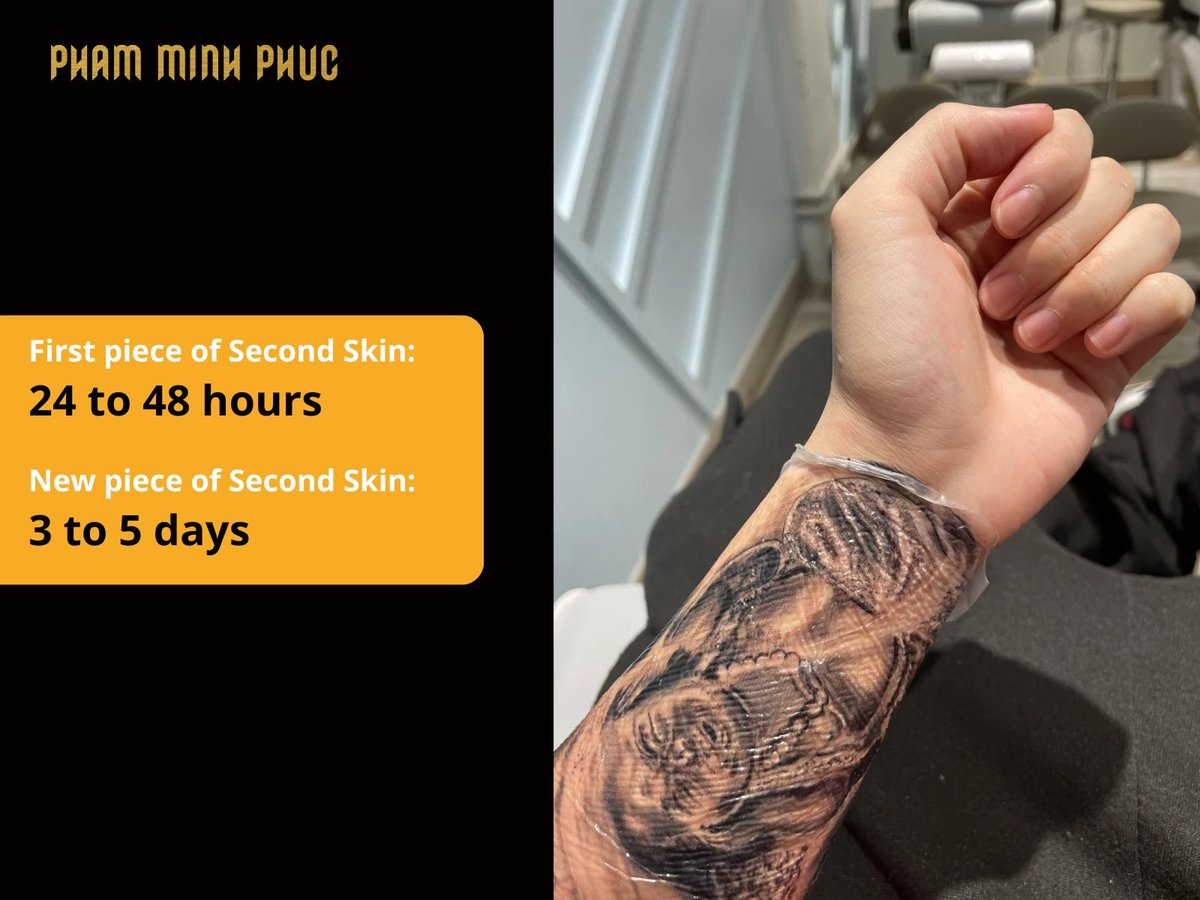
So if you want to ask, “Can you take Second Skin off after 24 or 48 hours?” the answer is yes, as long as the seal is still intact and you’re ready to either apply a fresh piece or move into your regular aftercare routine. Pulling it earlier than 24 hours only makes sense if the seal has already broken or your skin is reacting to the adhesive. That situation gets its own section below.
Why You Shouldn’t Keep the First Patch Too Long?
Your tattoo is basically an open wound for the first 24 to 48 hours, and the first patch creates a sealed environment built for exactly that window, not much longer. That seal works in your favor early on. It traps moisture the skin needs and keeps outside contaminants away from thousands of fresh needle punctures.
Leave that same patch on past its window, and the math flips. Fluid keeps collecting with nowhere to go. Bacteria that would normally rinse away in a wash instead sit trapped against the skin. The adhesive itself starts irritating the surrounding area the longer it stays put. None of this happens because the patch failed. It happens because a short-term tool got treated like a week-long commitment.
Think of the first patch as a stage, not a finish line. You need to switch it out on schedule to keep pace with how your skin is actually healing underneath, even when the patch still looks like it’s holding up fine.
When You Should Remove Second Skin from Tattoo Early?
You don’t always have to wait the full 24-48 hours before removing your first piece of Second Skin. If the bandage is no longer doing its job, it’s better to take it off and begin the next step of your tattoo aftercare.
Remove your Second Skin early if you notice any of these signs:
- Fluid leaking from the edges. Once the seal breaks, bacteria and dirt can get inside. Remove the bandage instead of trying to tape it back down.
- The film is peeling away from the tattoo. If only a corner has lifted and the tattoo is still completely sealed, you can carefully trim the loose edge with clean scissors. If the lifted area exposes any part of the tattoo, remove the entire bandage.
- A red, itchy, or irritated rash around the adhesive. Some people are sensitive to the adhesive used in Second Skin. Remove the bandage and continue with your regular tattoo aftercare routine.
- Pain that becomes worse instead of improving. Increasing pain isn’t caused by the bandage itself. Check your tattoo for other signs of irritation or infection, and contact your tattoo artist if you’re concerned.
Seeing a pocket of fluid under the film is also completely normal. This collection of plasma, excess ink, and a small amount of blood is often called an ink sack. As long as the fluid stays sealed inside the bandage, you do not need to remove it.
If the fluid continues to build up until it reaches the edges or starts leaking, the seal has failed. At that point, remove the Second Skin and continue with standard tattoo aftercare.
A simple rule to remember is this: removing Second Skin a little earlier than planned will not harm your tattoo, but leaving a broken bandage in place can increase the risk of contamination.
How to Remove Second Skin Without Damaging Your Tattoo?
The easiest method is to remove the bandage under warm running water, which softens the adhesive and makes it easier to peel away. Removing Second Skin the right way helps protect your healing tattoo and prevents unnecessary irritation.
Follow these steps:
- Stand under warm running water for a few minutes to loosen the adhesive.
- Start at one corner of the bandage.
- Slowly peel the film back over itself, keeping it close to your skin instead of pulling it straight up.
- Continue peeling in the direction of your hair growth. If the bandage feels stuck, let more warm water run over it instead of pulling harder.
- Once the bandage is removed, gently wash the tattoo with a fragrance-free soap and pat it dry with a clean paper towel.
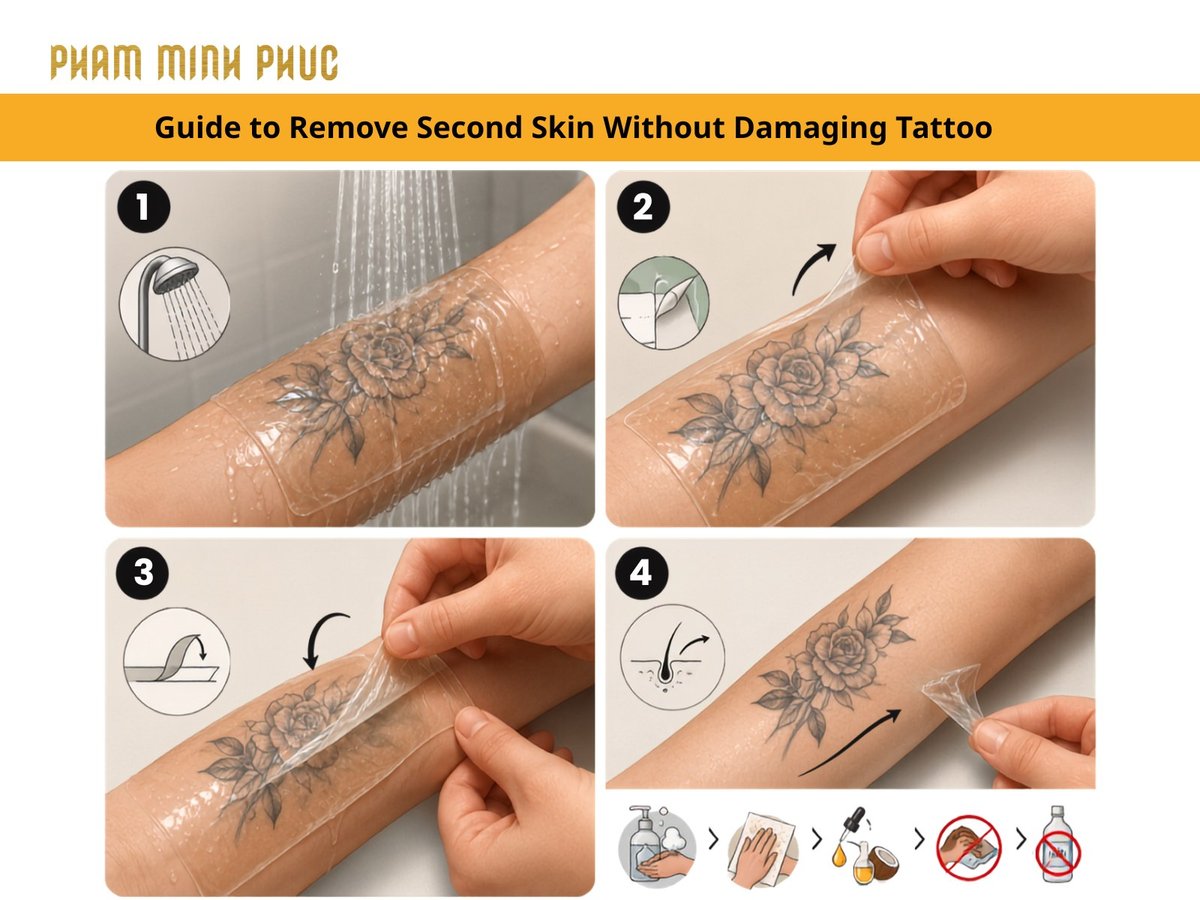
It’s normal for a small amount of adhesive residue to remain on your skin. If needed, apply a little baby oil or coconut oil to loosen the residue, then wipe it away gently. Avoid scrubbing the area or using alcohol, as both can irritate your healing tattoo.
If the bandage appears to be stuck to a scab, don’t force it off. Let warm water continue to soften the adhesive and peel it away slowly. Taking your time is much safer than pulling hard, which could damage the healing skin.
What to Do with Tattoo After Removing Second Skin?
After removing second skin, your tattoo is still in the healing stage and needs proper care to protect the ink and support recovery. Follow these aftercare steps:
- Wash the Tattoo Gently. Wash your hands before touching your tattoo, then clean the area with lukewarm water and a fragrance-free, mild soap. Use your fingertips to gently remove any leftover plasma, dried fluid, or excess ink. Avoid scrubbing with towels, washcloths, or sponges, as they can irritate the healing skin.
- Pat the Tattoo Dry Carefully. After washing, gently pat your tattoo dry with a clean paper towel or a soft towel. Avoid rubbing the area, as friction can irritate fresh tattooed skin and slow down the healing process.
- Apply a Thin Layer of Moisturizer. Once your tattoo is completely dry, apply a thin layer of fragrance-free moisturizer, unscented lotion, or tattoo aftercare balm. The goal is to keep the skin hydrated without applying too much product, which can make the tattoo feel overly wet or prevent proper healing.
- Continue Your Tattoo Aftercare Routine. Removing Second Skin does not mean your tattoo is fully healed. Continue washing your tattoo 1 to 2 times daily, moisturizing when the skin feels dry or tight, and allowing peeling or scabbing to happen naturally. Avoid scratching, picking, or pulling away loose skin during the healing process.
- Protect Your Healing Tattoo. Keep your tattoo away from prolonged water exposure, including baths, swimming pools, and the ocean. Avoid direct sunlight, wear clean and loose-fitting clothing, and reduce friction around the tattooed area to help your skin recover properly.
Proper aftercare after removing second skin plays an important role in how your tattoo heals and helps preserve the quality and appearance of your new ink.
What Should You Do When You Have Second Skin On?
While wearing Second Skin, you can continue with many normal daily activities, but you should understand what the bandage can and cannot handle. Second Skin is water-resistant, not waterproof, meaning it can protect your tattoo from brief water exposure but is not designed for prolonged soaking or heavy physical stress.
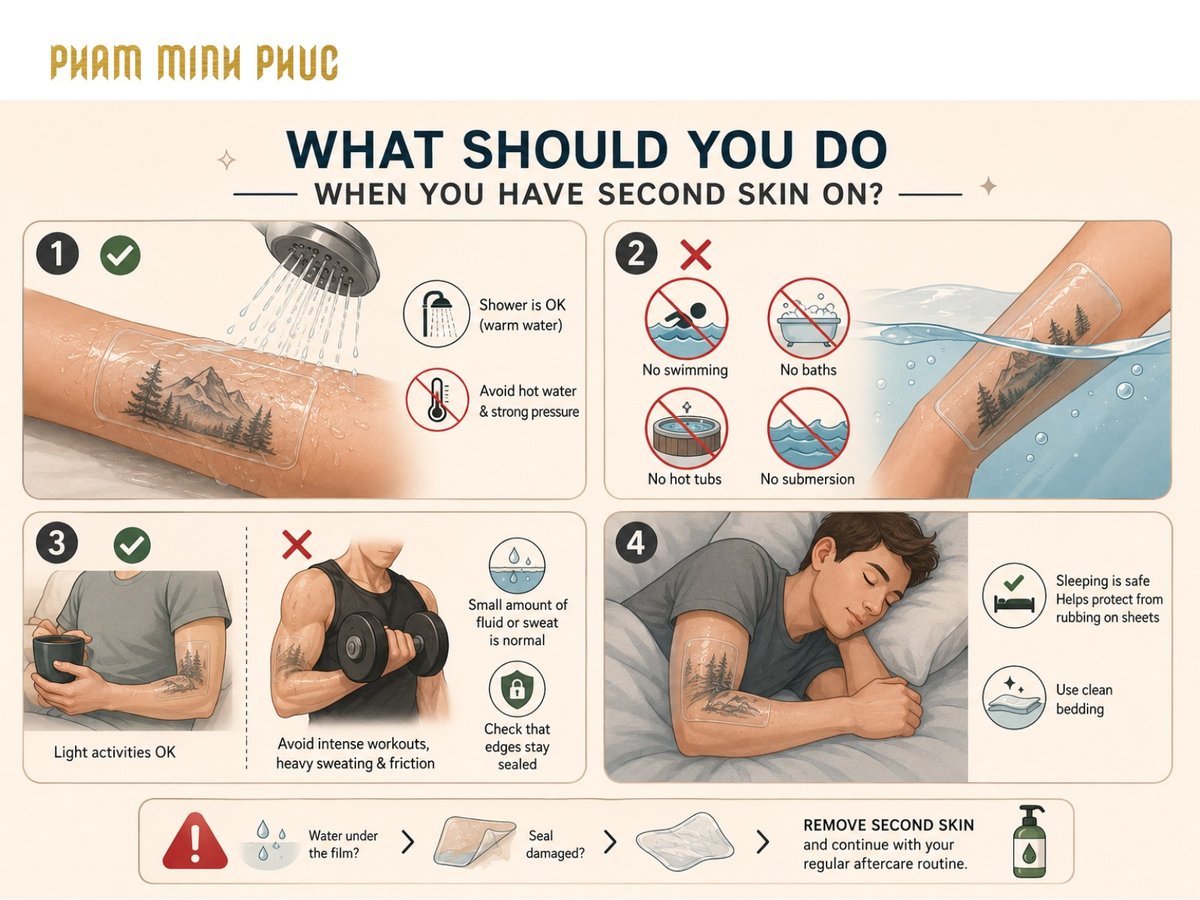
You can shower with Second Skin on as long as the seal remains intact. Let warm water run over the bandage, but avoid hot showers and strong water pressure directly on the tattoo. Excessive heat and steam can soften the adhesive and cause the edges to lift.
Avoid swimming, baths, hot tubs, and other activities that fully submerge your tattoo. Even though the film creates a protective barrier, prolonged water exposure can weaken the seal and allow bacteria or contaminants to get underneath.
Light movement is generally fine while wearing Second Skin, but intense workouts are best avoided during the first few days. Heavy sweating, friction from clothing, and repeated stretching around joints can affect how well the bandage stays attached. A small amount of fluid or sweat under the film is normal, but always check that the edges remain sealed.
Sleeping with Second Skin on is safe and can actually help protect your new tattoo from rubbing against sheets and blankets. Use clean bedding and try to avoid putting unnecessary pressure on the tattooed area while it is still healing.
If water gets underneath the film or the seal becomes damaged, remove the Second Skin and continue with your regular tattoo aftercare routine. Once the protective barrier is broken, the bandage can no longer provide the same level of protection.
When Second Skin Isn’t the Right Choice?
Second skin doesn’t suit every tattoo, and the limits show up in three specific situations rather than as a blanket rule.
- Adhesive allergies come up more often than people expect. If you’ve reacted to medical tape or bandages before, tell your artist before your session. A small test patch applied to unmarked skin at the start of your appointment shows whether you’ll react before the film ever touches your fresh tattoo.
- Soft, stretchy skin, like the inner arm or inner thigh, doesn’t always hold second skin well over several days. The constant flex under the film can leave marks if it’s left on too long or applied too tight. Rounding the corners of the film helps, and pulling it early if the area feels uncomfortable is a reasonable call.
- Large sessions covering a lot of surface area are more about comfort than medical necessity. Wearing film across a big portion of your body for days isn’t for everyone, and that’s a preference you’re free to make with your artist.
If second skin isn’t right for you, traditional aftercare guide still gets excellent results. Wash twice a day, moisturize with a thin layer of unscented lotion, and let your skin do what it’s done for tattoos long before derm film existed.
Frequently Asked Questions
Can you leave second skin on for a full week?
Generally, no. Most tattoo artists recommend removing or replacing the first piece of Second Skin within 24 to 48 hours, then wearing a fresh piece for up to 3 to 5 more days if needed. Leaving the same bandage on for a full week is usually not recommended, as the adhesive is more likely to irritate the surrounding skin and the bandage is no longer providing additional healing benefits.
Do tattoos heal faster with second skin?
Yes. Second Skin can help a tattoo heal more efficiently by creating a clean, moist environment that supports the skin’s natural healing process. It also protects the tattoo from bacteria, friction, and other outside contaminants during the early healing stage, which often results in less scabbing and irritation than traditional healing methods.
Do tattoos still scab with second skin?
Yes. While second skin helps reduce heavy scabbing by maintaining the right level of moisture, some light tattoo scabbing or peeling is still completely normal. After the bandage is removed, your tattoo may go through a flaky, sunburn-like peeling stage as the outer layer of skin continues to heal.
Is it normal for second skin to bubble or form blisters?
It depends on what you’re seeing. Small pockets of plasma, ink, or fluid trapped under Second Skin are completely normal and are often called an “ink sack.” However, if you develop itchy blisters, a rash, or raised bumps around the adhesive, you may be having a reaction to the bandage. In that case, remove the Second Skin and continue with your regular tattoo aftercare. If you’re unsure whether it’s fluid buildup or a skin reaction, contact your tattoo artist for guidance.
Does the size of a tattoo affect how long you should leave Second Skin on?
Not usually. The recommended wear time depends more on how your tattoo is healing and whether the bandage remains fully sealed than on the size of the tattoo. A small tattoo and a large tattoo generally follow the same aftercare timeline, although your tattoo artist may adjust the instructions based on the tattoo’s location, fluid buildup, or your skin’s condition.
Is second skin better than dry healing for tattoo ink retention?
For most people, yes. second skin helps create a clean, moist healing environment that reduces friction, excessive scabbing, and moisture loss during the first few days. This can support more consistent healing than dry healing, which may lead to thicker scabs if the skin becomes too dry. However, the long-term quality of your tattoo still depends on proper aftercare throughout the entire healing process.