An infected tattoo happens when bacteria enter the fresh wound created during the tattooing process. Instead of gradually improving over the first few days, the tattoo becomes increasingly red, swollen, painful, or starts draining yellow or green pus. As the infection becomes more severe, some people may also develop fever, chills, or feel generally unwell.
Most tattoo infections are caused by bacteria such as Staphylococcus aureus, although contaminated ink, nonsterile equipment, or improper aftercare, like picking at the tattoo or soaking it too soon, can also introduce germs into the skin. The good news is that most infections respond well to early treatment. Left untreated, however, they can spread deeper into the skin and lead to more serious complications.
In this guide, you’ll know how to tell the difference between a normal healing tattoo and an infected one, what causes tattoo infections, how they’re treated, when to see a doctor, and the best ways to prevent them in the first place.
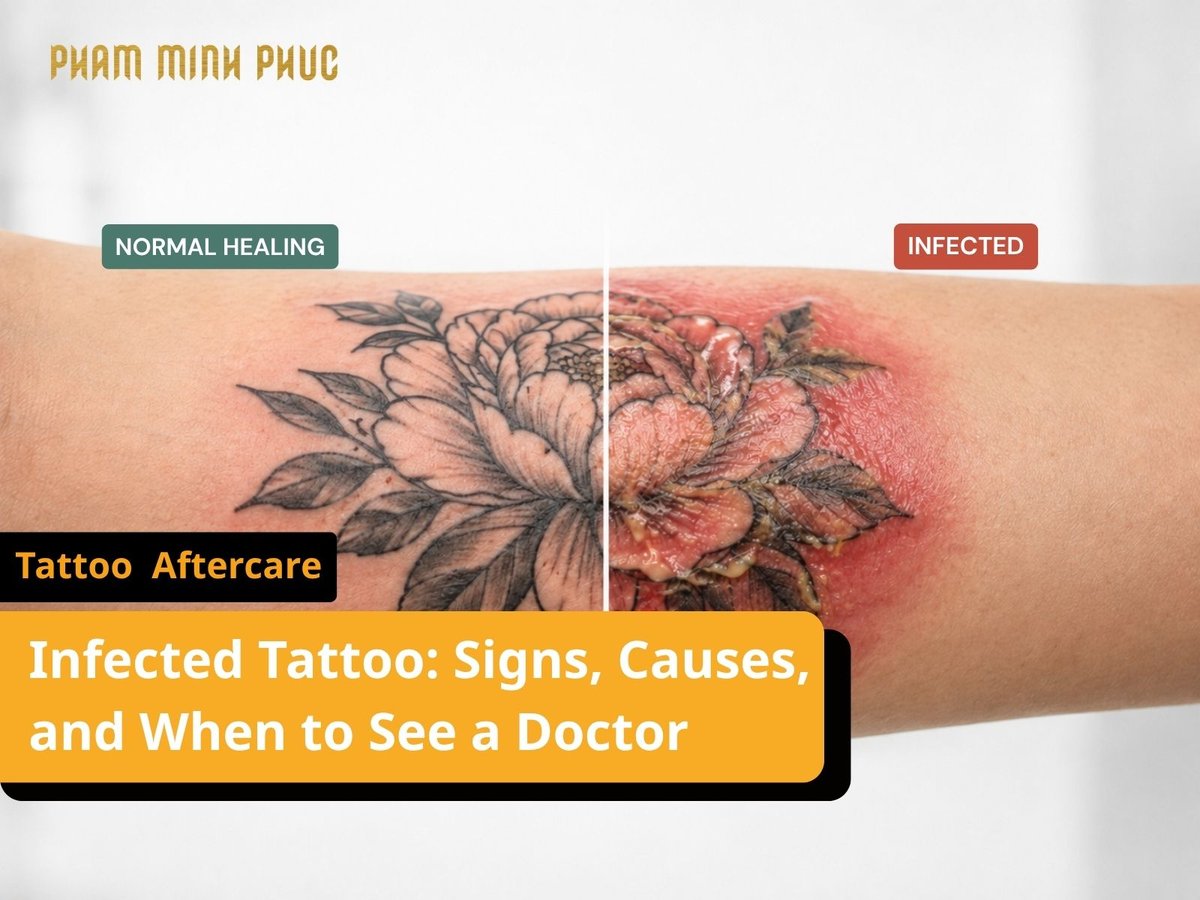
Table of Contents
What Is an Infected Tattoo?
An infected tattoo is a skin infection that develops when bacteria get into the open wound your tattoo needle creates. The infection usually stays inside the tattooed area, though in rare cases it can spread to other parts of your body.
Instead of the normal tightness and light itch you feel during healing, an infected tattoo feels hot, sore, and increasingly painful. You might also notice chills, a low fever, or heavy sweating, along with skin that remains inflamed rather than calming down after a few days.
There are two common forms of tattoo infections;
- Superficial infection affects the outer layer of your skin and resembles impetigo, a common bacterial skin condition.
- Deep infection reaches further into the tissue and can turn into cellulitis, erysipelas, sepsis, or in severe cases, endocarditis or organ failure. The deeper the infection goes, the more urgent your treatment needs to be.
What Does an Infected Tattoo Look Like?
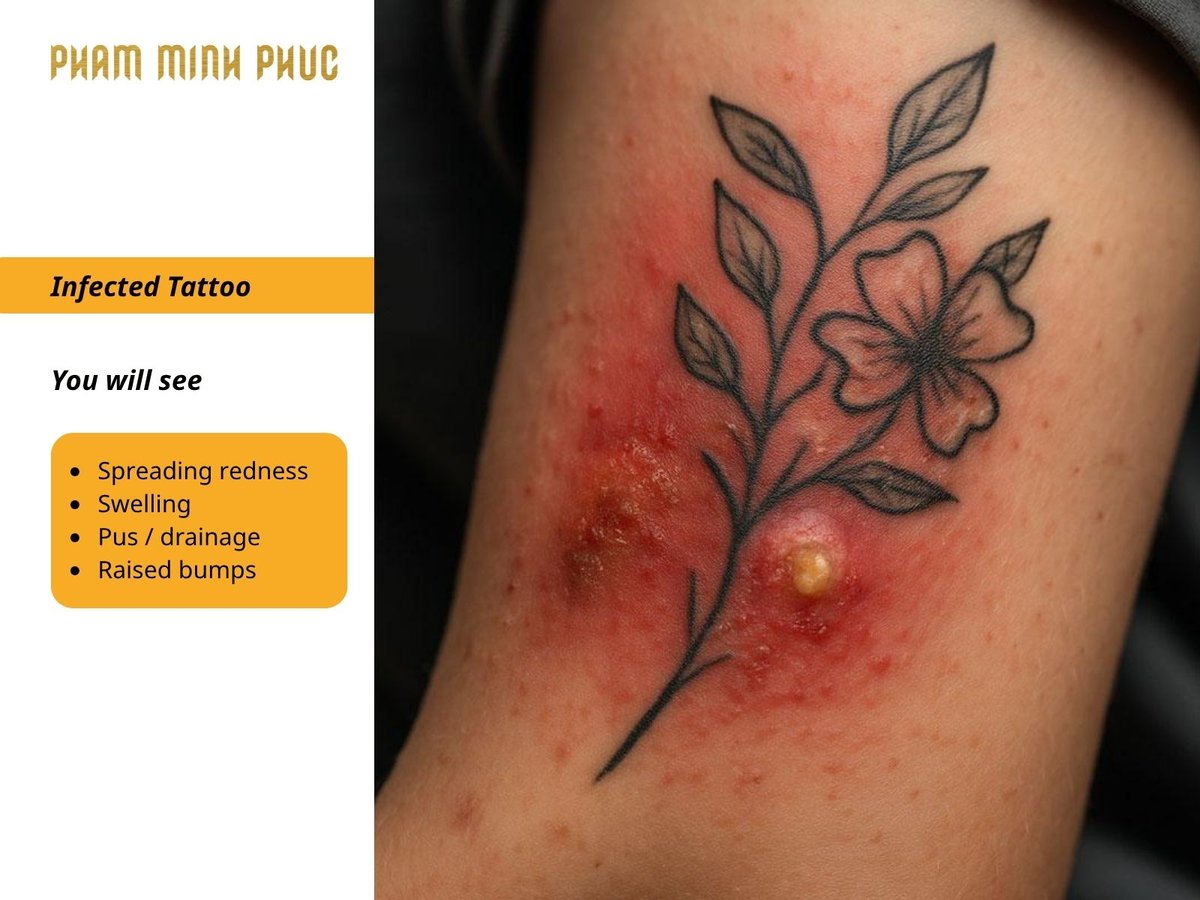
An infected tattoo shows redness that spreads past the edges of your design, along with swelling that keeps growing instead of going down after the third day. You’ll usually notice one or more of the following signs:
- Pus or drainage that looks yellow, green, or cloudy
- Ulcers or a scaly rash on the tattooed skin
- Raised bumps, with or without pus inside them
- Redness or warmth that extends beyond the tattoo outline
- Pain or swelling that keeps getting worse instead of easing up
- Hot, painful skin that drains a gray fluid, which can signal tissue damage
- Fever, chills, sweating, or shaking
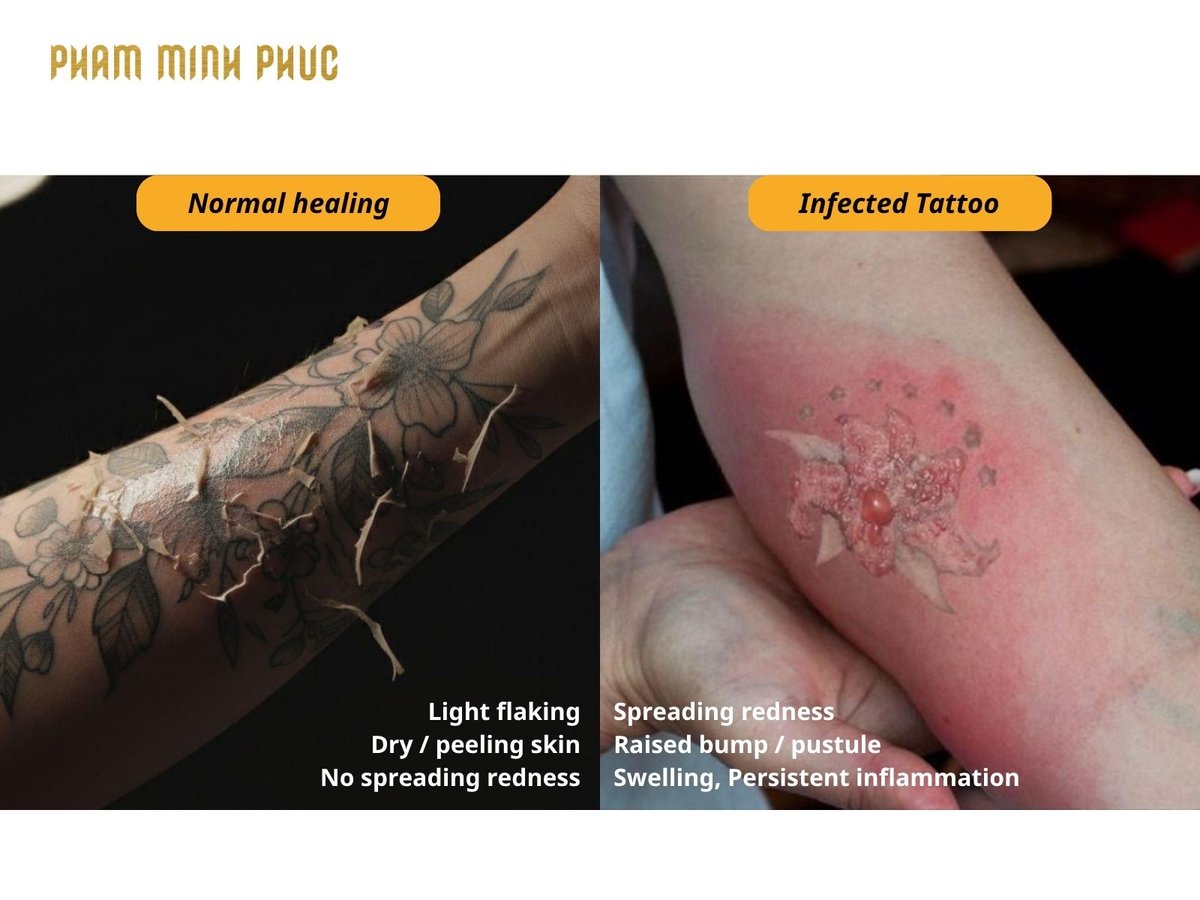
A healthy tattoo heals progressively, while an infected tattoo progressively gets worse. Watching how your symptoms change over time is the easiest way to tell the difference.
| Normal healing | Infection |
| Redness and swelling fade after 72 hours | Redness and pain increase after day 3 |
| Clear plasma oozes from the skin | Thick pus, yellow or green, drains from the area |
| Mild itching between days 3 and 7 | A foul smell comes from the tattoo |
| Light flaking as dead skin sheds | Fever, chills, or swollen lymph nodes appear |
| Tattoo looks dull or milky in week 2 | Skin feels hot and hard to the touch |
What Is the Difference Between an Infected Tattoo and Tattoo Flu?
The biggest difference is the cause. Tattoo flu is your immune system’s normal response to the stress of getting a tattoo, while a tattoo infection is caused by bacteria entering the healing skin. According to Dr. Walter Liszewski, a dermatologist at Northwestern Medicine, tattoo flu is an inflammatory response to the tattooing process itself, not an infection. Symptoms may include fatigue, chills, body aches, or a mild fever that usually develops within the first 24 to 48 hours after your appointment.
Tattoo flu typically improves on its own within one to two days and usually doesn’t require antibiotics. A tattoo infection follows a different pattern. Instead of getting better, the symptoms continue to worsen. If your fever lasts longer than 48 hours, becomes more severe, or is accompanied by spreading redness, increasing pain, warmth, swelling, or pus around the tattoo, seek medical evaluation promptly, as these are signs of a possible infection rather than a normal immune response.
What Are the Stages of a Tattoo Infection?
A tattoo infection usually develops gradually rather than all at once. While these stages aren’t medically defined, they provide a helpful way to understand how a skin infection can progress over time. Recognizing the early signs gives you the best chance of treating the infection before it becomes more serious.
The progression typically looks like this:
- Stage 1: A dull pain or tenderness develops around the tattoo and doesn’t improve as expected.
- Stage 2: The tattoo becomes increasingly red, warm, and swollen instead of calming down.
- Stage 3: Redness continues to spread beyond the tattoo, and the pain, swelling, or warmth worsens over the following hours or days.
- Stage 4: Small bumps (papules), blisters, or pus-filled sores begin to appear. Some may break open and drain fluid or pus.
- Stage 5: Open sores (ulcers) or other skin lesions develop. In severe cases, the infection may begin to damage surrounding tissue.
- Stage 6: Fever, chills, sweating, or shaking develop, suggesting the infection is no longer limited to the skin and requires immediate medical attention.
What Causes a Tattoo Infection?
A tattoo infection happens when bacteria enter the healing skin. This can occur during the tattooing process or while your tattoo is healing. Common causes include contaminated ink or water, nonsterile equipment, poor hygiene, and mistakes made during aftercare.
Several factors can increase your risk of developing an infection:
- Using needles or equipment that haven’t been properly sterilized.
- Diluting tattoo ink with tap water instead of sterile water.
- Poor hygiene or infection-control practices during the tattooing process.
- Touching, scratching, or picking at your tattoo before it has fully healed.
- Swimming, soaking, or exposing the tattoo to contaminated water too soon.
Contaminated tattoo ink can also be a source of infection. Although professional tattoo artists take steps to reduce this risk, contamination can sometimes occur during manufacturing or when ink is diluted with nonsterile water.
While Staphylococcus aureus is one of the most common bacteria responsible for tattoo infections, it isn’t the only one. Nontuberculous mycobacteria (NTM), Pseudomonas aeruginosa, and Streptococcus species have also been linked to tattoo-related infections, and each may require a different treatment approach.
Is Staph Infection the Most Common Cause of Tattoo Infections?
Yes. Staphylococcus aureus (staph) is one of the most common bacteria responsible for tattoo infections. Most cases respond well to treatment when they’re diagnosed early, but some strains, such as MRSA (methicillin-resistant Staphylococcus aureus), are resistant to certain antibiotics and can be more difficult to treat.
A staph infection usually causes increasing redness, warmth, swelling, pain, and pus around the tattoo. As it becomes more severe, you may develop boils, fluid-filled sores, or a honey-colored crust (impetigo). Fever, chills, or body aches are signs that the infection may be spreading and should be evaluated by a healthcare provider as soon as possible.
How Do You Treat an Infected Tattoo?
If you think your tattoo is infected, don’t try to treat it yourself with home remedies or leftover antibiotics. A mild infection can become much more serious if bacteria continue to spread beneath the skin. The safest approach is to protect the tattoo, keep it clean, and seek medical care if symptoms continue to worsen.
While waiting to be evaluated, you can take a few simple steps:
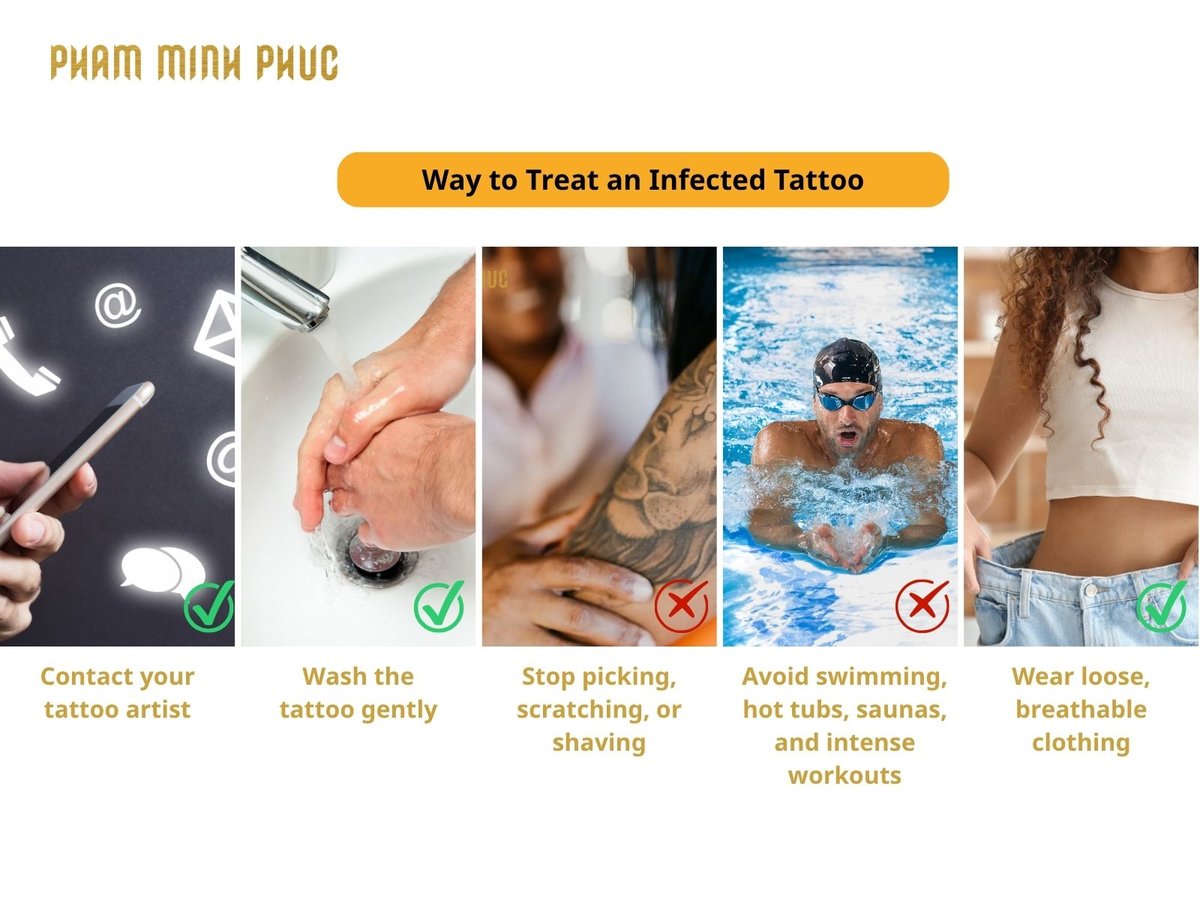
- Contact your tattoo artist if you’re unsure whether you’re seeing normal healing or the early signs of an infection. An experienced artist can often tell the difference, but only a healthcare provider can diagnose and treat an infection.
- Wash the tattoo gently with lukewarm water and a fragrance-free soap, then pat it dry with a clean paper towel. f you’re still in the early healing stage, follow the proper steps for showering with a new tattoo.
- Stop picking, scratching, or shaving the area, even if it feels itchy or uncomfortable.
- Avoid swimming, hot tubs, saunas, and intense workouts until the infection has cleared. Swimming or soaking too early can expose healing skin to bacteria, so it is important to understand when you can swim after a tattoo.
- Wear loose, breathable clothing to reduce friction and keep the area clean.
If your symptoms continue to worsen, see a healthcare provider as soon as possible. Many bacterial tattoo infections require prescription antibiotics, and your doctor may collect a sample of any drainage or pus to identify the bacteria and determine the most appropriate treatment. Take the full course of antibiotics exactly as prescribed, even if your tattoo starts to look better before the medication is finished.
When Should You See a Doctor for an Infected Tattoo?
You should see a doctor as soon as your tattoo shows signs that go beyond normal healing. Watch for any of the following:
- Fever, chills, or sweating
- Redness that spreads or forms streaks away from the tattoo
- Pus or a foul smell coming from the area
- Pain or swelling that gets worse after day three
- Symptoms that last longer than a week
- Hard, raised lumps under the skin
If you notice any of these signs, go to a clinic or your doctor directly instead of messaging your tattoo artist and waiting for a reply. A few days of delay can turn a minor infection into a serious one.
How Can You Prevent a Tattoo Infection?
Preventing a tattoo infection starts before you even sit in the chair. Choose a licensed, reputable tattoo artist who follows proper sterilization practices, and don’t hesitate to ask about their equipment, ink, and hygiene procedures.
Once you’re home, following a consistent tattoo aftercare routine becomes one of the most important ways to protect the healing skin. Wash your hands before touching the tattoo, clean it with a mild, fragrance-free soap, and follow your artist’s instructions for bandages and aftercare products. A consistent aftercare routine helps keep bacteria out while your skin rebuilds its natural barrier.
You should also avoid pools, lakes, hot tubs, and prolonged sun exposure until your tattoo has fully healed. Tight clothing, excessive friction, and heavy sweating can also irritate the area and slow the healing process.
From my experience, clients who follow their aftercare instructions consistently heal faster and rarely develop complications. Getting the tattoo is only the first step. The care you give it over the next few weeks has a big impact on how well it heals.
Where Are Tattoos Most Likely to Get Infected?
A tattoo can become infected anywhere on the body, but some areas are more likely to develop problems because they’re harder to keep clean, experience more friction, or move constantly during the healing process.
The highest-risk areas include:
- Hands and fingers. These areas touch surfaces throughout the day, making it easier for bacteria to reach a fresh tattoo. Frequent hand washing and daily activities can also irritate the healing skin.
- Feet and ankles. Socks and shoes create constant friction and trap sweat, slowing healing and increasing the chance of irritation or infection.
- Armpits and the groin. Warmth, moisture, and constant skin-to-skin contact make these areas more challenging to heal.
- Joints, such as the elbows and knees. Repeated bending stretches the healing skin, which can reopen small cracks and make the tattoo more vulnerable to bacteria.
- Areas covered by tight clothing. Tattoos on the waist, thighs, chest, or shoulders may rub against tight clothing or backpack straps, especially during the first few weeks.
No matter where your tattoo is located, good aftercare has a much greater impact on infection risk than the placement itself. Keeping the area clean, avoiding unnecessary friction, and following your artist’s aftercare instructions are the best ways to help your tattoo heal without complications.
What Happens If an Infected Tattoo Is Left Untreated?
Most tattoo infections can be treated successfully, especially when they’re recognized early. However, delaying treatment allows the infection to spread deeper into the skin and increases the risk of more serious complications.
An untreated tattoo infection may lead to:
- Permanent scarring. Severe inflammation or damage to the skin can leave permanent scars and affect how your tattoo looks after it heals.
- Ink loss or tattoo distortion. Infection may cause uneven healing, blurred lines, or patchy color that often requires a touch-up or cover-up.
- An abscess. Some bacterial infections form pockets of pus beneath the skin that may need to be drained by a healthcare provider.
- The infection spreading. In more severe cases, bacteria can spread into deeper tissues or the bloodstream. This can lead to serious conditions such as cellulitis, sepsis, or, rarely, other life-threatening complications that require urgent medical treatment.
FAQ about Infected Tattoo
Does an Infected Tattoo Need Antibiotics?
Most bacterial tattoo infections require prescription antibiotics. Mild irritation or inflammation without pus, spreading redness, or fever isn’t always an infection and may improve with proper aftercare, but only a healthcare provider can determine whether antibiotics are needed.
When Is It Safe to Use Scented Lotion Again?
Wait until your tattoo has completely finished peeling and the skin has fully healed, which usually takes about 3 to 4 weeks. If you have sensitive skin, fragrance-free products remain the better long-term choice.
What Should You Do if You Accidentally Scratched Your Healing Tattoo?
Wash the area gently with mild, fragrance-free soap, pat it dry, and continue your normal aftercare routine. Avoid scratching it again, and watch for increasing redness, swelling, or drainage. If the scratch causes noticeable ink loss, speak with your tattoo artist about a touch-up after the tattoo has fully healed.
What Should You Do Besides Seeing a Doctor if You Get a Tattoo Infection?
Let your tattoo artist know about the infection, especially if symptoms began soon after your appointment. They can provide details about the ink, equipment, and aftercare instructions that may help your healthcare provider. If you believe the infection may be linked to contaminated tattoo ink, you can also report it through the FDA’s MedWatch program.
Should You Go to the Studio or the Doctor First if You Suspect an Infection?
If you have spreading redness, pus, fever, chills, or worsening pain, see a healthcare provider first. Your tattoo artist can help you tell the difference between normal healing and irritation, but they can’t diagnose or treat an infection. Once you’ve received medical advice, let your artist know so they can document the issue and discuss any touch-up if needed after the tattoo has healed.
Which Myths About Infected Tattoos Should You Ignore?
Many people mistake normal tattoo healing for an infection. Understanding the difference can help you avoid unnecessary worry while still recognizing when something actually needs medical attention.
- Myth: Any scab means your tattoo is infected. Light scabbing is a normal part of the healing process, especially on heavily saturated or large tattoos. Infection becomes more concerning when the skin develops thick yellow or green crusts, pus, increasing redness, warmth, or worsening pain, rather than a thin, dry scab alone.
- Myth: Keeping your tattoo covered all the time prevents infection. Your tattoo only needs to stay covered for the period recommended by your artist. After that, continuously rewrapping it or applying excessive ointment can trap moisture against the skin, creating an environment where bacteria grow more easily and delaying healing.
- Myth: Itching always means your tattoo is infected. Mild to moderate itching is one of the most common signs of a healing tattoo, especially during the peeling stage. An infection is more likely when itching is accompanied by spreading redness, increasing swelling, severe pain, pus, or fever, rather than itching by itself.