You notice color in the fluid coming off your new tattoo, and it’s natural to wonder if something is going wrong. Tattoo leaking ink is the colored fluid your skin produces during the first few days of healing, a mix of plasma and a small amount of excess ink, and it’s part of how your skin handles that early recovery window.
I’m Minh Pham, and clients ask me about this almost every week during their first few days of healing. In this guide, I will help you walk through what’s actually in that fluid and when it shows up, why your tattoo leaks ink in the first place, how the timeline usually plays out day by day, what causes leaking to drag on longer than expected, how leaking ink differs from actually losing ink, and the signs that mean you should stop monitoring at home and see a professional.
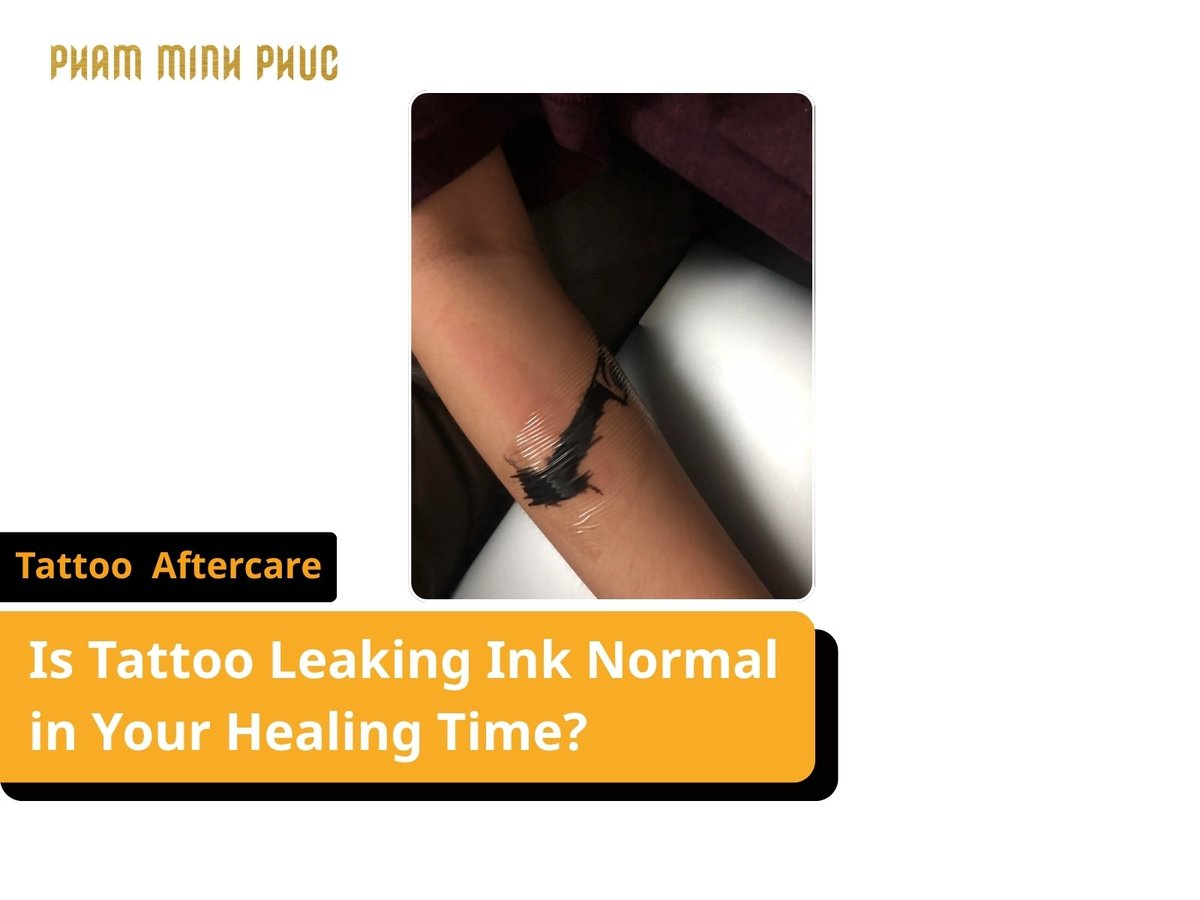
Table of Contents
What Does It Mean When a Tattoo Is Leaking Ink?
Tattoo leaking ink describes the colored fluid your skin produces while it heals from the needle’s punctures, and it’s a natural part of the healing process rather than a sign of trouble. It typically shows up within the first three to four days after your session, while your skin is working hardest to repair itself. Your skin reacts to those punctures the way it would react to any wound: it sends cytokines to the site, which increases blood vessel permeability and pushes plasma up to the surface to support repair.
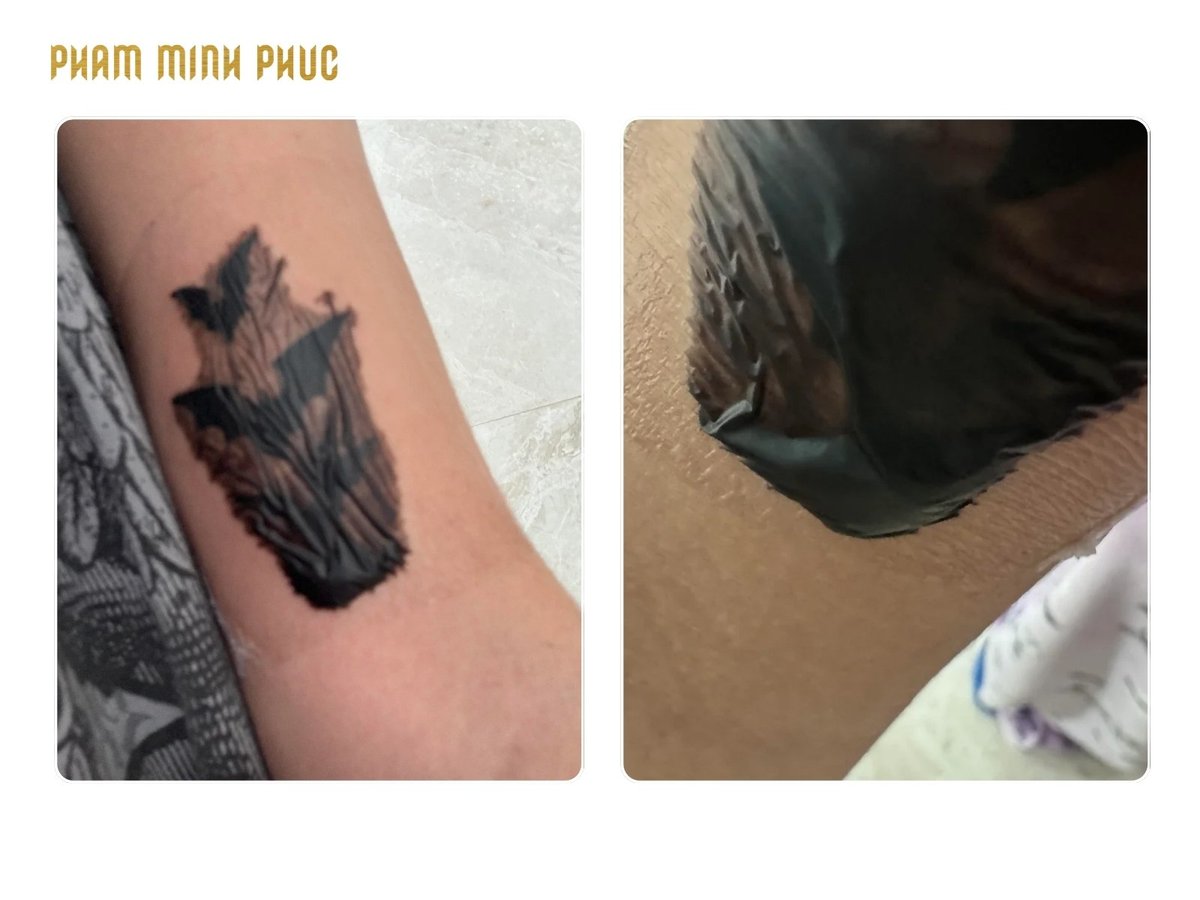
That fluid is rarely just plasma on its own. It usually combines clear or slightly yellow plasma, sometimes a touch of blood if your skin is still sensitive that day, and a small amount of excess ink that hasn’t fully settled into place. That mix is exactly why the fluid carries a tint of color instead of staying clear the way a typical wound would.
Seeing that color doesn’t mean your tattoo is fading or that anything has gone wrong. Your finished design isn’t affected by what comes out in this fluid. The specific reason color shows up the way it does, tied closely to how your artist worked the ink into your skin, is covered next.
Why Does a New Tattoo Leak Ink?
A new tattoo leaks ink mainly because of a deliberate choice your artist made during the session, not because of any error. Skilled artists tend to pack more ink into the skin than it can fully retain at that moment, since doing so helps the color stay dense, even, and free of gaps once everything settles. That extra ink sits in the epidermis, the outermost layer of skin, right where your body is already pushing inflammatory fluid to the surface.
This is the mechanism behind the color you’re seeing. As that fluid rises and exits, it takes the excess epidermal ink along with it. The ink that actually makes up your tattoo sits deeper, in the dermis, and stays completely untouched by this process. Your artist’s technique created a small surplus on purpose, and your body is simply clearing it out as part of normal healing.
How Long Does Tattoo Ink Leaking Last?
Tattoo ink leaking usually lasts about three to four days, and it tends to follow a fairly predictable pattern from one day to the next. Day one typically brings the most fluid and the most visible color, since that’s when inflammation peaks and the excess ink is closest to the surface. Between day two and day three, both the volume of fluid and the amount of color in it should drop noticeably. By day four, most tattoos have dried up completely or are only producing a faint trace.
If leaking continues past that window without slowing down, something else is usually at play, most often related to how you’re caring for the tattoo. You should look at the next section before assuming the worst.
What Causes Tattoo Ink to Keep Leaking?
Tattoo ink that keeps leaking past four or five days is most often caused by applying too much ointment. Excess product traps additional moisture against your skin, and that moisture keeps fluid, along with any remaining ink, seeping out longer than your skin actually needs.
- Check how much you’re using. Feel your skin a few minutes after applying ointment. If it still feels wet to the touch, you’re using more than necessary.
- Apply a thin layer only. A light sheen is all you need; a thick coat doesn’t speed up healing and tends to extend leaking instead.
- Switch products if reducing the amount doesn’t help. Some ointments cause more leakage than others, even at the right thickness.
- Stop using ointment for a few days if needed. Stick to gentle cleaning while your skin catches up, then reintroduce a thin layer once leaking slows down.
Is Leaking Ink the Same as Losing Ink?
Leaking ink in the first few days and losing ink from your finished tattoo are two different things, even though they sound similar. The leaking covered above comes from excess ink sitting in the epidermis, the layer your body naturally sheds fluid through while it heals, and it never touches the ink that’s actually part of your design in the dermis. Real ink loss happens when a colored scab gets picked, scratched, or falls off too early, before the skin underneath has finished closing, pulling actual tattoo ink out with it and leaving a lighter or blank patch behind.
Timing is the clearest way to tell them apart. Normal ink leaking shows up early, follows the day-by-day pattern described above, and tapers off on its own. Real ink loss tends to show up later and traces back to a specific cause, picking, scratching, or letting your skin get too dry, rather than fading gradually the way normal leaking does. If you want a closer look at what ink loss actually looks like and how to prevent it, the full guide on losing ink while healing covers that in detail.
When Tattoo Ink Leaking Signals an Infection?
Tattoo ink leaking that’s accompanied by certain other signs points to infection rather than ordinary healing. Clear or slightly yellow fluid, with or without a faint streak of blood, is expected in the first few days. Pay closer attention if the fluid turns a deeper yellow or develops a noticeable odor, especially alongside any of these:
- Redness that keeps spreading instead of fading
- Pain that gets worse rather than easing up
- Swelling that continues to expand
- Fever or chills
- Visible pus, distinct from the clear or pale fluid that’s normal early on
- New bumps, lumps, or blisters around the tattoo
You should contact a doctor if you notice any of these signs rather than continuing to monitor the area on your own. Catching an infection early makes it far easier to treat than waiting to see if it resolves by itself.
Frequently Asked Questions
Is it normal for tattoo ink to bleed?
Yes, some color in the fluid your tattoo produces during the first few days is expected. It comes from excess ink your artist packed into the upper layer of skin, and it doesn’t affect your finished design.
How much ink leaking is too much?
Steady leaking that hasn’t slowed down by day four or five is worth paying attention to. Fluid that turns yellow, develops an odor, or comes with spreading redness or pain is a stronger signal that something beyond normal healing is happening.
Will your tattoo look faded because of the ink that leaked out?
No. The ink that leaks out in the first few days was sitting in the epidermis and was never going to remain part of your tattoo. The ink that makes up your finished design sits in the dermis and isn’t affected by this process.
What’s the difference between tattoo plasma and tattoo ink leaking?
Plasma is the clear or slightly yellow fluid your body produces while healing any wound. Tattoo ink leaking describes that same fluid when it’s carrying a tint of color from excess ink near the surface. Both are part of the same normal process, just described from slightly different angles.
Should you use less ointment if your tattoo is leaking a lot?
Yes, reducing your ointment is usually the first thing to try if leaking continues longer than expected. A thin layer is all your skin needs, and applying too much tends to extend how long the fluid keeps coming out.