Navigating the professional etiquette of a tattoo studio requires understanding the boundaries between a service industry and a medical procedure. Inquiries regarding discounts or requests for plagiarism not only undermine the artist’s expertise but often flag the client as a liability before the appointment even begins. The quality of the final body art relies heavily on mutual respect, where the client trusts the specialist’s judgment on technical constraints like aging and placement rather than demanding impossible modifications.
I, Minh Pham, have categorized the ten most damaging questions that jeopardize the client-artist relationship. This guide provides specific “Ask This Instead” scripts to navigate sensitive topics like pricing and design adjustments while maintaining professional standards in the article below.
Table of Contents
Can You Give Me a Discount?
Asking for a price reduction undermines the value of the artist’s years of technical training and the high overhead costs required to maintain a sterile studio environment. “Good tattoos aren’t cheap” is a foundational truth in this industry. The pricing structure reflects the cost of single-use safety equipment, high-quality pigments, and the artist’s specialized skill set. A discount request often forces an artist to compromise on materials or time, which directly lowers the quality of your permanent body art.
Instead of haggling, you should be transparent about your financial parameters upfront. A professional artist can often adjust the size, placement, or complexity of the design to align with your budget without compromising the safety or quality of the work.
Ask This Instead: “My budget is strictly [Amount]. Can we adjust the size or simplify the shading to fit this price range while maintaining quality?”

Can You Draw It Before I Pay a Deposit?
Requesting a custom design without a financial commitment ignores the fact that drawing is a significant portion of the artist’s billable labor. The deposit acts as a contract that secures your appointment slot and compensates the artist for the hours spent researching and sketching your unique concept.
Artists reserve their best creative energy for committed clients. “Spec work” (working for free) often results in rushed or generic sketches because the artist cannot justify investing hours into a project that might never happen. Payment ensures that my time is respected and protects my intellectual property from theft.
Ask This Instead: “What is your deposit policy, and does that amount go toward the final cost of the tattoo?”
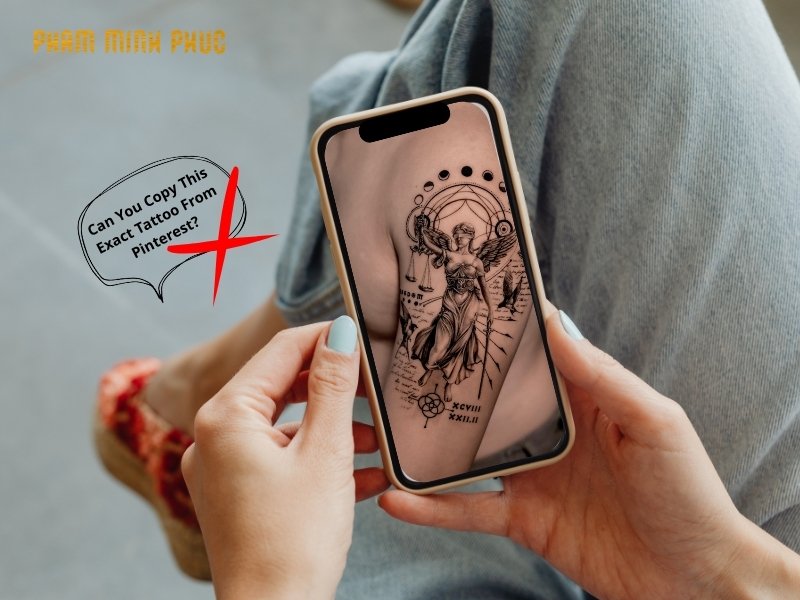
Can You Copy This Exact Tattoo From Pinterest?
Demanding an exact replica of another artist’s work violates the ethical code of the tattoo community. More importantly, a design custom-made for someone else’s body will likely distort or flow poorly on your specific anatomical curvature. A sleeve designed for a muscular forearm will look warped and stretched if blindly copied onto a smaller wrist or shoulder.
I have refused requests to copy “viral” tattoos because the original photo was often heavily edited. When clients force these copies elsewhere, they often return months later asking for a cover-up because the design did not fit their specific muscle structure.
Ask This Instead: “I love the mood and style of this image. Can you use it as inspiration to create an original piece that fits my anatomy?”
Can You Make It Smaller (But Keep All the Detail)?
Shrinking a complex design compromises the long-term clarity of the tattoo because ink naturally spreads slightly in the dermal layer over time. Forcing too much intricate detail into a small surface area inevitably results in a “muddy” blob where lines merge together after a few years of aging.
If an artist tells you a design will not work at a certain size, they are protecting you from a future unreadable mess that will require laser removal. We prioritize readability and flow, which often implies sacrificing minor details or increasing the size to allow the design to breathe.
Ask This Instead: “What is the minimum size required to ensure these details remain crisp and readable for the next 20 years?”
Can I Bring My Kids or My Dog to Your Tattoo Studio?
Bringing children or pets into the studio compromises the sterile environment and creates dangerous distractions near sharp, bio-hazardous equipment. Cross-contamination is a serious risk, and a tattoo artist requires absolute focus to execute precise line work without unpredictable interruptions.
Most studios strictly prohibit non-clients in the procedure area to adhere to health department regulations and liability insurance policies. A tattoo shop contains pathogens and needles; it is not a playground. Respecting this boundary ensures the safety of your artist, your children, and your fresh open wound.
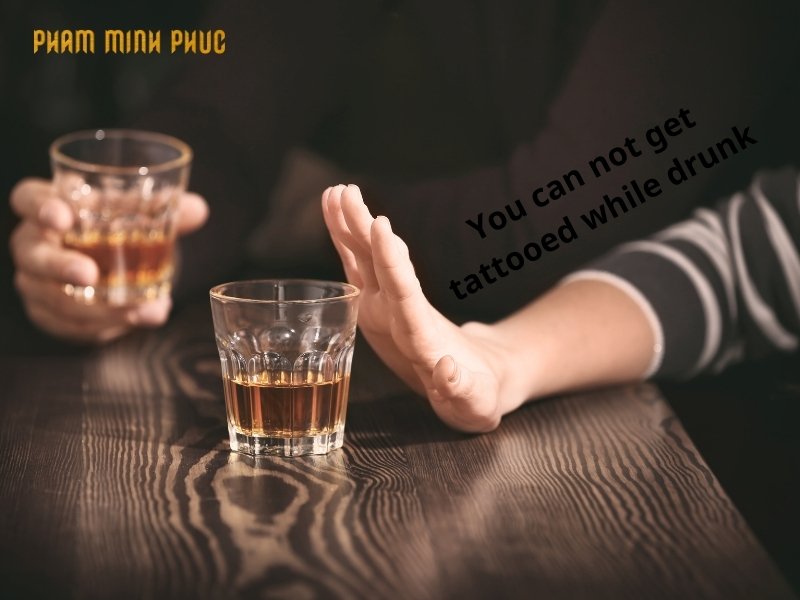
Can I Get Tattooed While Drunk or High?
Arriving under the influence of alcohol or drugs legally invalidates your consent and physically alters how your body reacts to the trauma of tattooing. Alcohol acts as a blood thinner, causing excessive bleeding that pushes ink out of the skin and complicates the saturation process.
Your medical state is paramount to a safe session. Just as you cannot mix alcohol with ink, you must also verify “can you get a tattoo while on antibiotics” before your appointment. Antibiotics and intoxicants both indicate that your immune system is compromised or your blood chemistry is altered, making the procedure unsafe.
Can You Hurry Up?
Pressuring an artist to rush the process invites technical errors such as blowouts, uneven shading, and unnecessary scarring. Quality body art requires a steady hand and patience to ensure the pigment is deposited correctly without overworking the skin.
Rushing the application phase also negatively impacts the healing process. A poorly executed tattoo causes excessive trauma, which complicates the tattoo aftercare regimen and increases the risk of infection. If you are on a strict time schedule, it is better to split the project into multiple sessions rather than sacrificing the permanent quality of the art.
Ask This Instead: “How long do you estimate this session will take so I can plan my schedule accordingly?”
Does It Hurt?
Asking if a needle penetrating the skin hurts is redundant, as pain is an unavoidable part of the process but varies significantly based on individual tolerance and placement. The fear of pain is often worse than the sensation itself.
Managing pain starts with physical preparation rather than verbal reassurance. Knowing what to eat before getting a tattoo significantly stabilizes your blood sugar and increases your stamina. A well-rested and nourished body handles the cortisol spike and physical stress much better than an anxious, empty stomach.
Ask This Instead: “What can I do to prepare my body to handle the sit better?”
What Does This Symbol Mean?
Expecting the artist to be an encyclopedia of global symbology places an unfair burden on them and risks permanent cultural or linguistic inaccuracies. You are responsible for researching the history, translation, and cultural significance behind specific symbols or foreign characters before bringing them to the studio.
I can ensure the aesthetic application is flawless, but the verification of the semantic meaning belongs to the client. Relying on a tattoo artist to translate a language they do not speak is a recipe for permanent embarrassment.
Can We Change the Design Now? (Mid-Session)
Requesting structural changes after the stencil is applied disrupts the sterile workflow and compromises technical execution. You must provide all feedback during the consultation or sketching phase, as the initial line work creates a permanent foundation that is impossible to erase without laser intervention.
Once the needle penetrates the skin, the design plan is finalized to prevent overworking the delicate tissue. Forcing a directional pivot mid-session significantly increases skin trauma and inevitably results in a disjointed composition. You are responsible for verifying every detail during the stencil review; silence at that stage acts as your final approval.
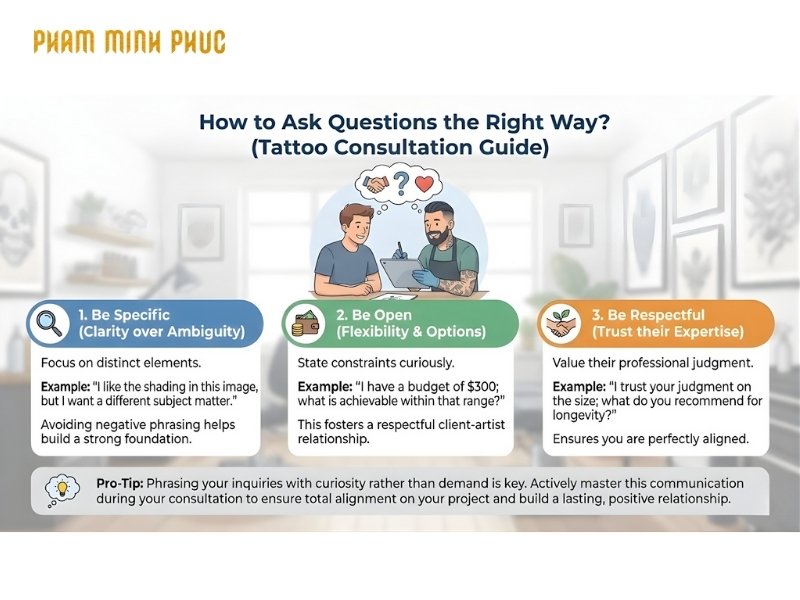
How to Ask Questions the Right Way?
Phrasing your inquiries with curiosity rather than demand fosters a collaborative and respectful client-artist relationship. You should review the specific “Ask This Instead” templates I provided in the sections above to navigate sensitive topics like pricing and design adjustments effectively.
However, avoiding negative questions is only half the equation. To actively build a strong foundation for your project, you must also master during your consultation and tattoo session to ensure you and your artist are perfectly aligned.
Adopt these communication strategies:
- Be Specific: “I like the shading in this image, but I want a different subject matter.”
- Be Open: “I have a budget of $300; what is achievable within that range?”
- Be Respectful: “I trust your judgment on the size; what do you recommend for longevity?”
Reading my guide on what should be asked of your tattoo artist to ensure total alignment on your project.
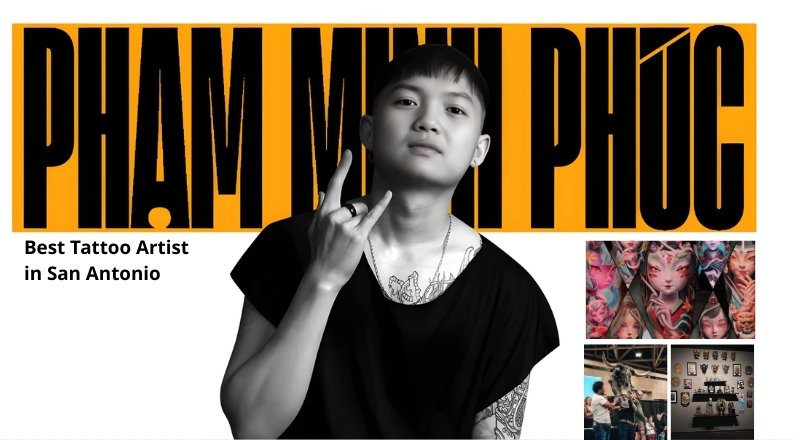
Contact Minh Pham Tattoo Artist If You Want to Get Inked in San Antonio
Trusting your skin to a professional requires confidence in their ethics, hygiene standards, and artistic skill. I prioritize transparent communication and world-class artistry, ensuring you never feel the need to ask the wrong questions.
Clients choose Minh Pham for these uncompromising standards:
- Internationally Recognized Mastery: I bring over 10 years of experience and the technical validation of 40+ international awards to every session.
- Anatomical Engineering: I design tattoos that respect your muscle flow, ensuring the art moves naturally with your body rather than distorting.
- Bespoke Narrative: I guarantee 100% custom designs. I do not copy internet trends; I architect unique concepts that belong solely to you.
- Hospital-Grade Safety: I strictly adhere to medical-grade sterilization protocols to protect your health throughout the process.
Book your consultation with me today to start a respectful and creative journey toward your next masterpiece.
FAQs About What Not To Ask Tattoo Artist
Is It Rude To Wear Headphones?
Wearing headphones is generally accepted and often encouraged as a pain management strategy. It helps you zone out and stay calm. To be polite, you should inform the artist beforehand so they know to tap you if they need you to move or change position.
Can You Bring One Friend On A Tattoo Appointment?
Bringing one support person is usually permissible, but you must check the specific policy first. Large groups are prohibited, but a single quiet friend can provide moral support without causing a distraction or overcrowding the sterile work area.
Do You Have To Tip My Tattoo Artist?
Tipping is not mandatory but is a standard industry gesture of gratitude for exceptional service and custom artwork. If you are happy with the result and the experience, a tip shows appreciation for the artist’s dedication, but you should never feel pressured to do so. If you are unsure about appropriate amounts or tipping etiquette, you can read our detailed guide on how to tip a tattoo artist to make an informed decision.
Discover more: How much to tip tattoo artist
Mastering studio etiquette ensures the focus remains on technical execution rather than negotiation. By understanding the rationale behind these restrictions, ranging from cross-contamination risks to the biological limits of micro-tattoos, the client elevates themselves from a liability to a collaborative partner. As a San Antonio-based custom artist, I prioritize transparency to foster a creative environment where safety and artistry thrive. If the goal is a respectful collaboration that yields world-class results, I am ready to begin the conversation.