Choosing a chest tattoo placement is about more than deciding where the ink should go. The shape of your design, its size, your chest anatomy, visibility, symmetry, and the way the artwork follows the body can all affect the final result.
The chest provides a broad tattoo canvas that can support everything from a small tattoo on one pectoral to a large composition spanning both sides of the chest. Common areas include the full chest, pectorals, sternum, upper chest, collarbone, and underboob.
The best chest placement depends on the design you want and how you want the tattoo to interact with your body. A wide design may need the space of the full chest, while a vertical design can work naturally along the sternum. A portrait may suit a single pectoral, while a mirrored design can take advantage of the body’s natural symmetry.
In this article, I – Minh Pham – will explain the main chest tattoo placements, what designs work well in each area, and how to choose the right location for your tattoo.
Table of Contents
Main Chest Tattoo Placements
The chest is not one uniform tattooing area. It contains several distinct surfaces, each with different contours, movement, visibility, and available space.
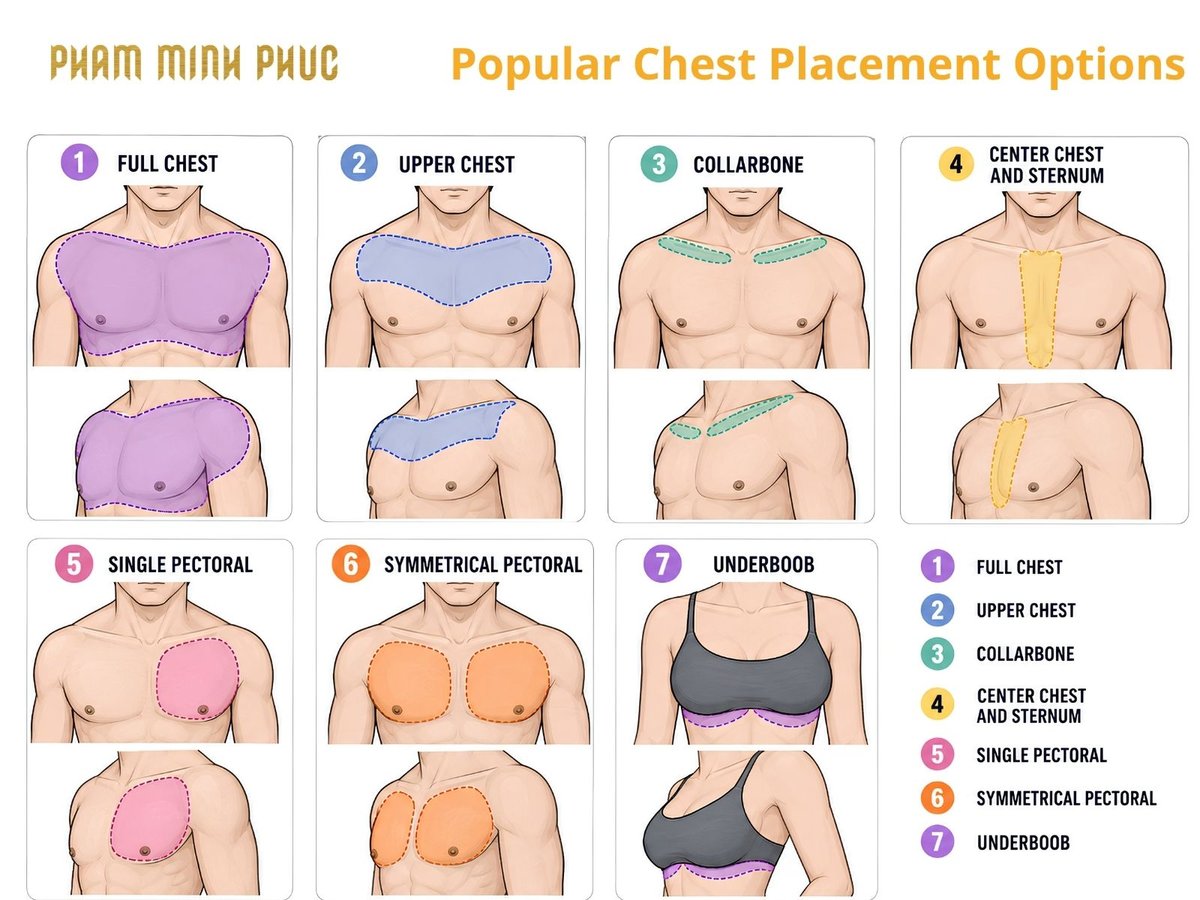
The main chest tattoo placements include:
- Full chest: A large composition covering most or all of the chest.
- Upper chest: The area above the pectoral muscles, often extending toward the collarbone.
- Collarbone: A narrow, curved area following the clavicle.
- Single pectoral: One side of the chest, usually centered over one pec.
- Center chest / sternum: The vertical area along the breastbone.
- Symmetrical pecs: Coordinated tattoos placed across both pectoral muscles.
- Underboob: The curved area beneath the breast and along the lower chest or rib cage.
The exact boundaries can overlap. For example, a full chest tattoo may incorporate the pectorals, sternum, upper chest, and collarbone rather than staying within one anatomical zone.
Full Chest Tattoo Placement
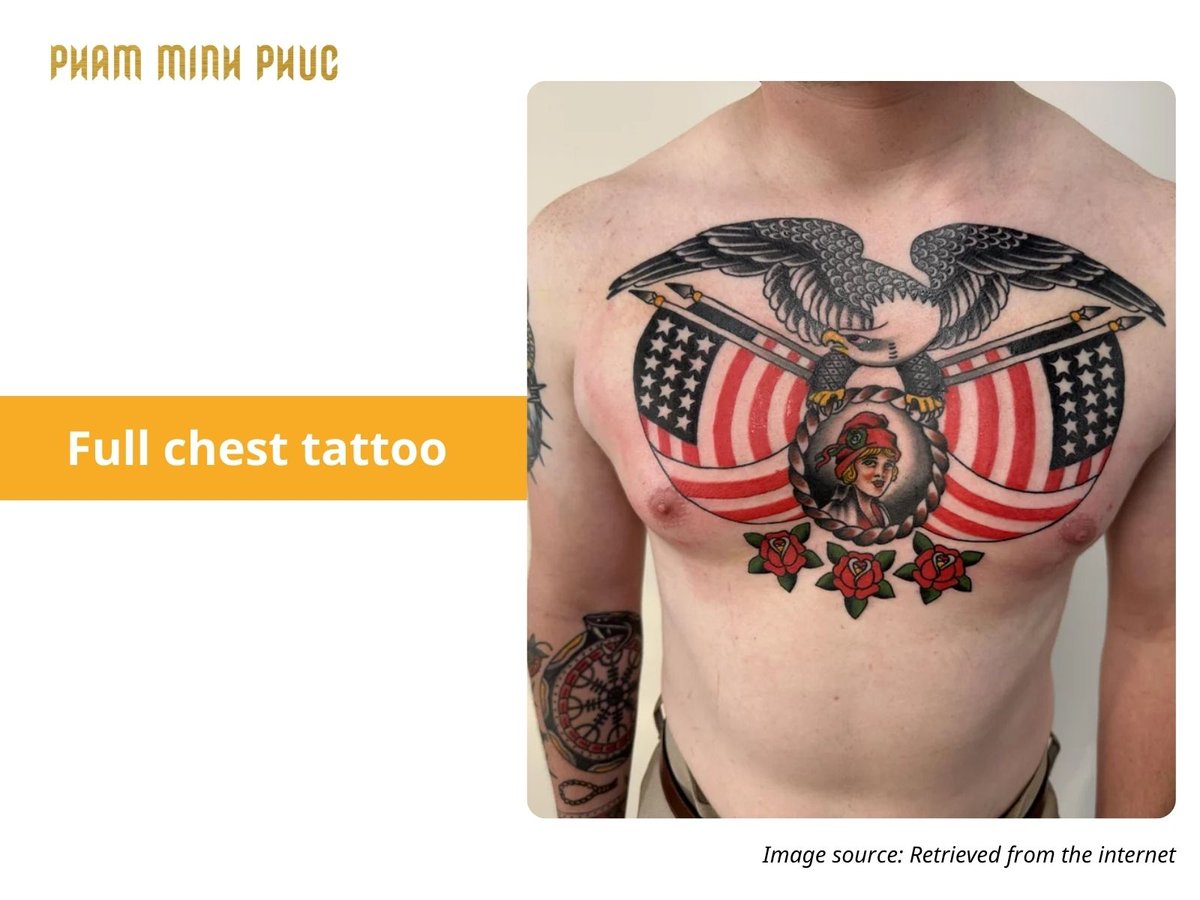
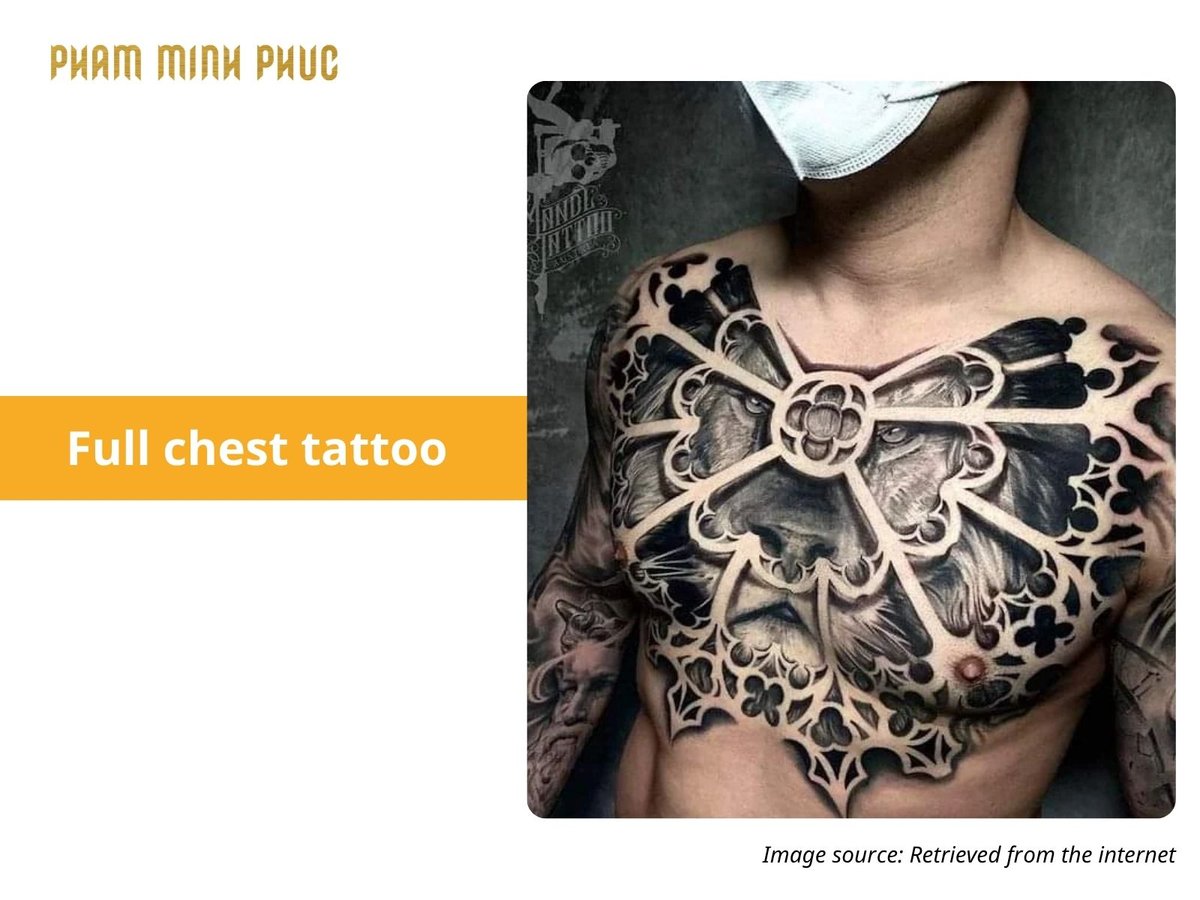
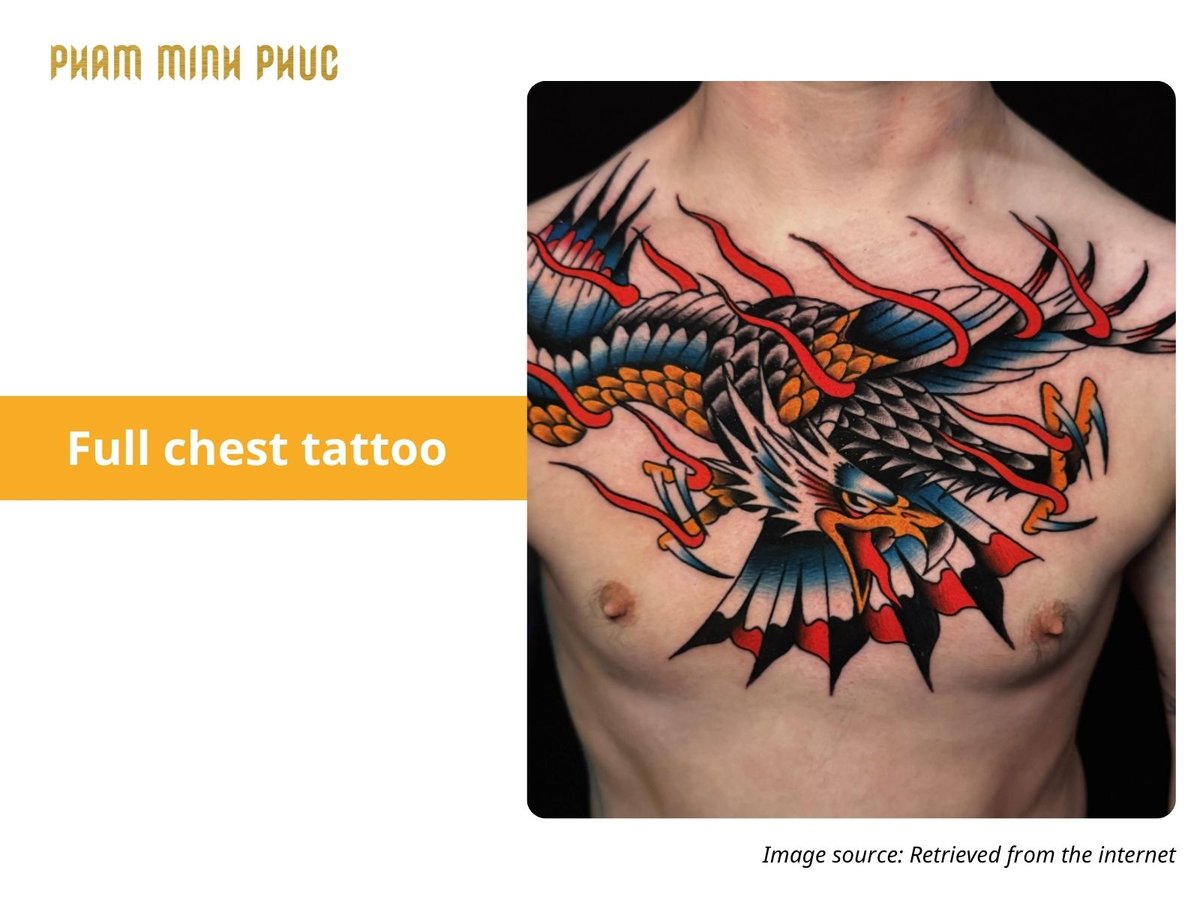
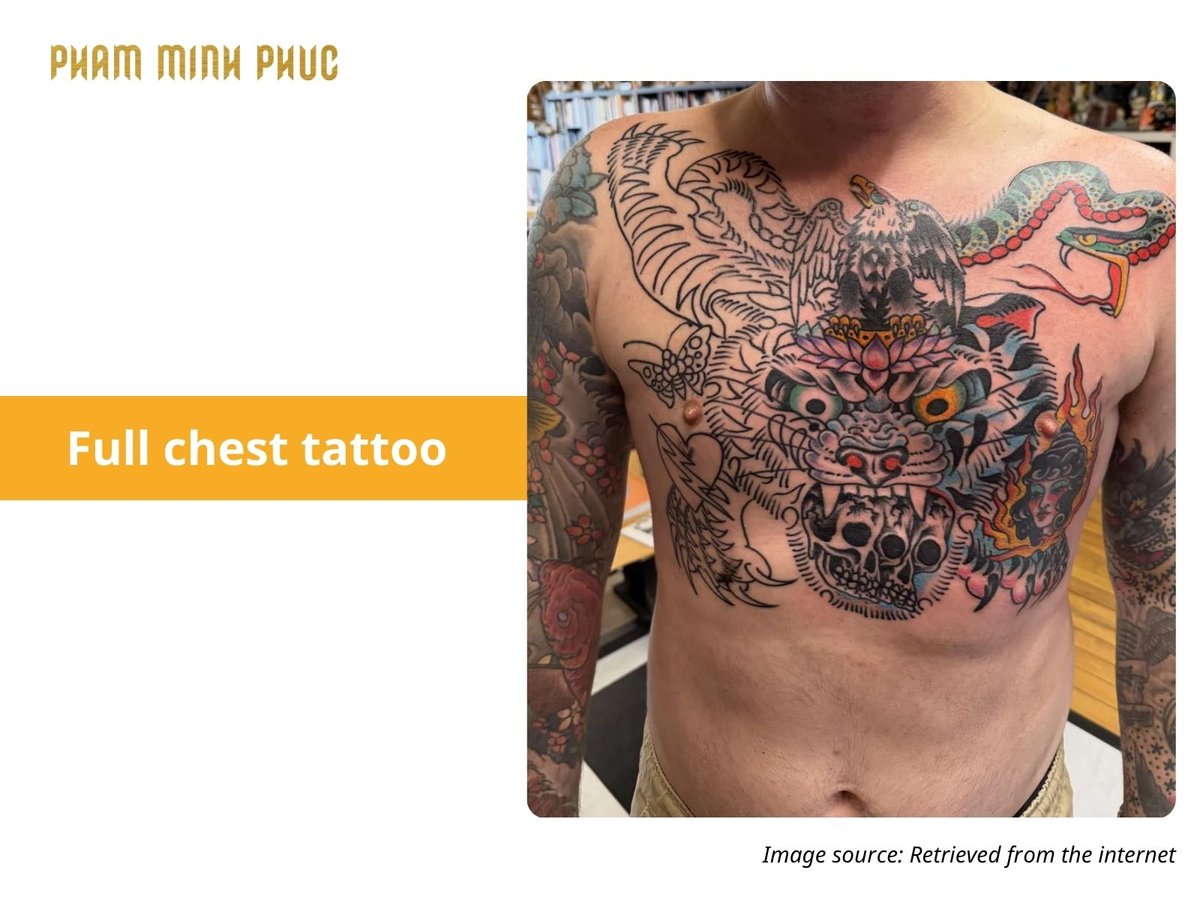
A full chest tattoo placement uses most or all of the chest as the tattoo canvas, usually extending across both pectoral muscles and the center of the chest. Depending on the composition, the tattoo may also extend toward the collarbones, shoulders, or sides of the torso.
The biggest advantage of a full chest piece is the amount of continuous space available. Instead of compressing a detailed design into one small area, the artist can distribute the focal point, secondary elements, shading, background, and negative space across the entire chest.
This makes the placement particularly suitable for large compositions such as:
- Eagles and other birds with extended wings
- Animal and wildlife compositions
- Mythological scenes
- Large realism pieces
- Ornamental compositions
- Black and grey artwork
- Designs intended to connect with the shoulders or upper arms
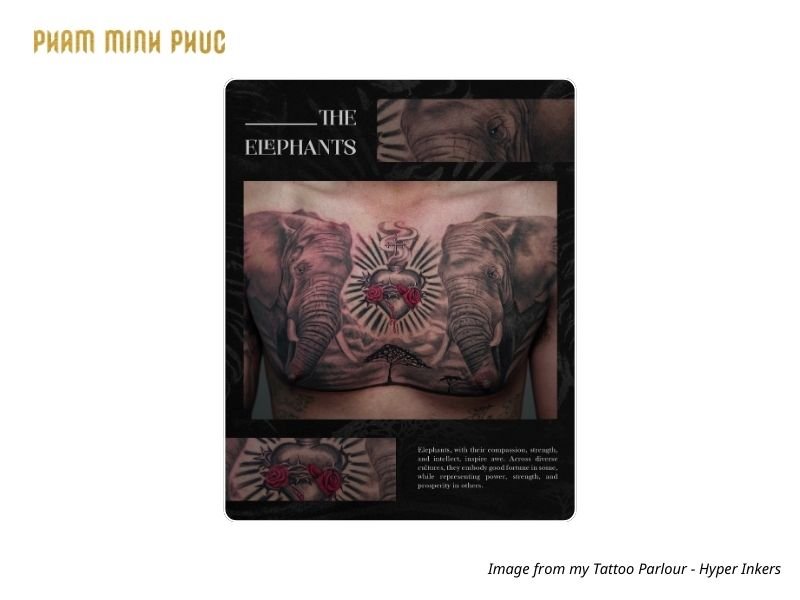
The center of the chest can be used as the primary focal point, while supporting elements extend across the pectoral muscles. This creates a visual hierarchy without forcing every element into the same small area. The stencil should also be evaluated while the body is in a relaxed, natural position. The chest changes shape with breathing and shoulder movement, so the design should follow the body’s contours rather than being positioned only according to a flat reference image.
Pain can vary across a full chest tattoo because the design may cover several anatomical areas. The chest and sternum are rated 7–9/10 on the pain chart, with the sternum generally producing stronger vibration and pressure.
If you plan to extend the tattoo into the shoulders or arms later, the initial composition should leave natural transition points for future work.
Upper Chest Tattoo Placement
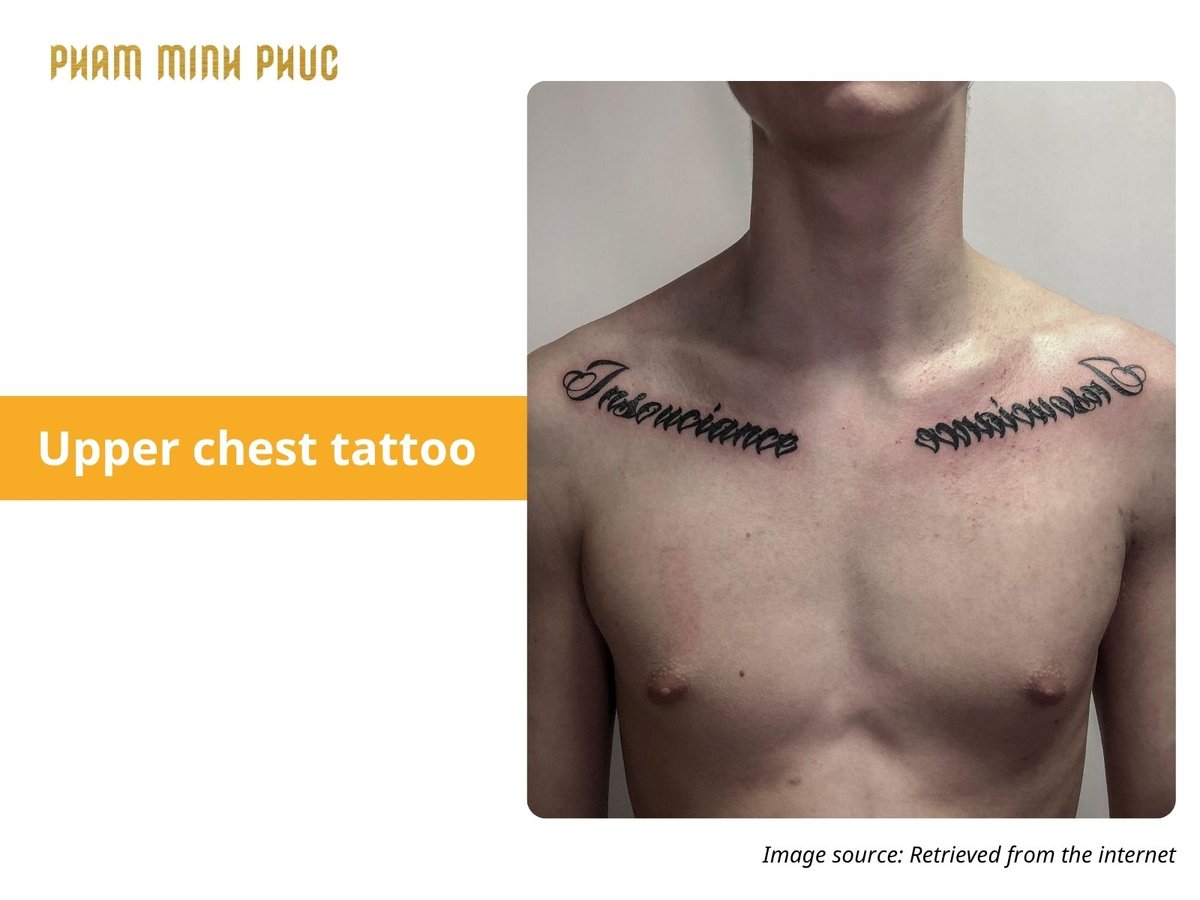
The upper chest sits above the main pectoral area and can extend toward the base of the neck and collarbones. It provides a relatively open surface for designs that need a horizontal or slightly curved orientation.
This placement works well for script, Roman numerals, botanical elements, small birds, fine-line artwork, and minimalist symbols. The design can be positioned to follow the natural direction of the upper chest rather than forcing a straight line across a curved surface.
Upper-chest tattoos can also be more visible than lower chest tattoos, especially with open collars, lower necklines, tank tops, or other clothing that exposes the upper torso.
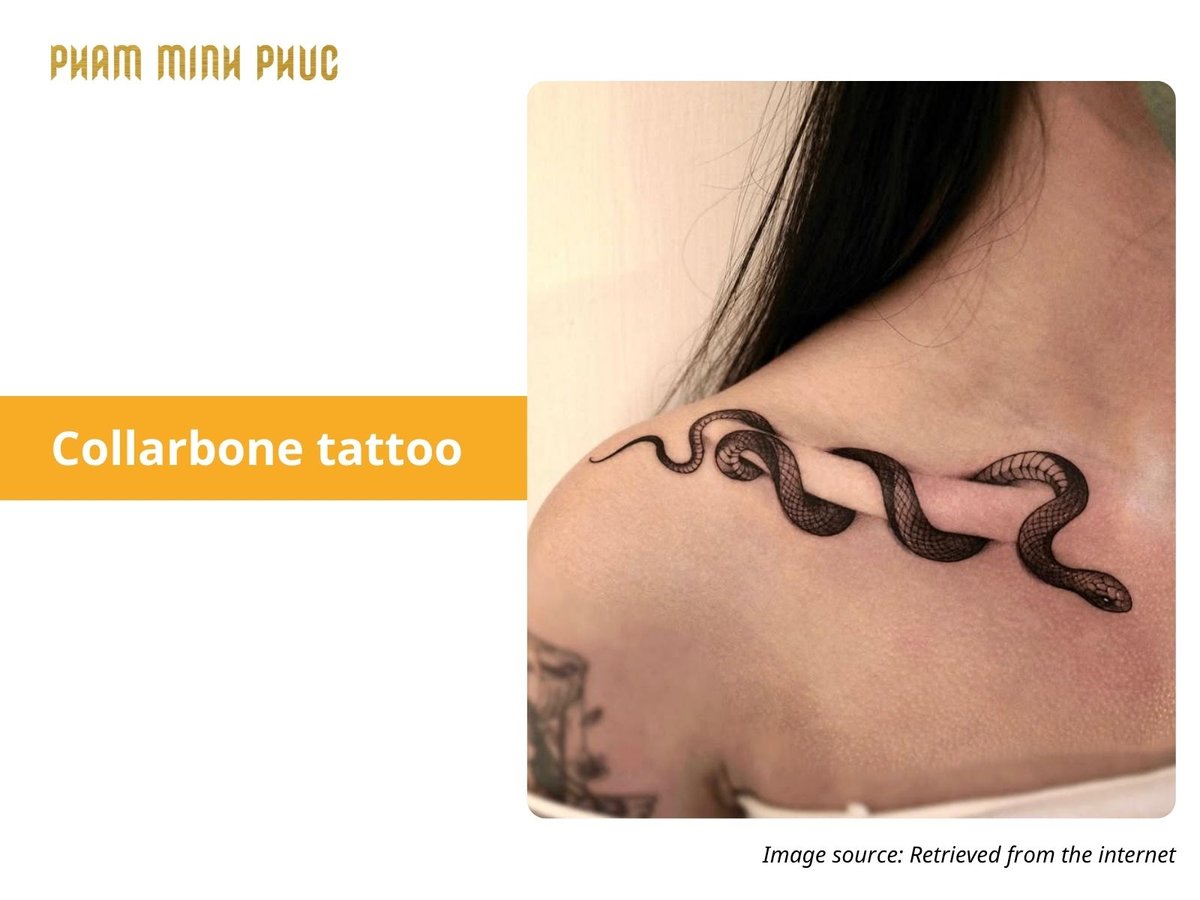
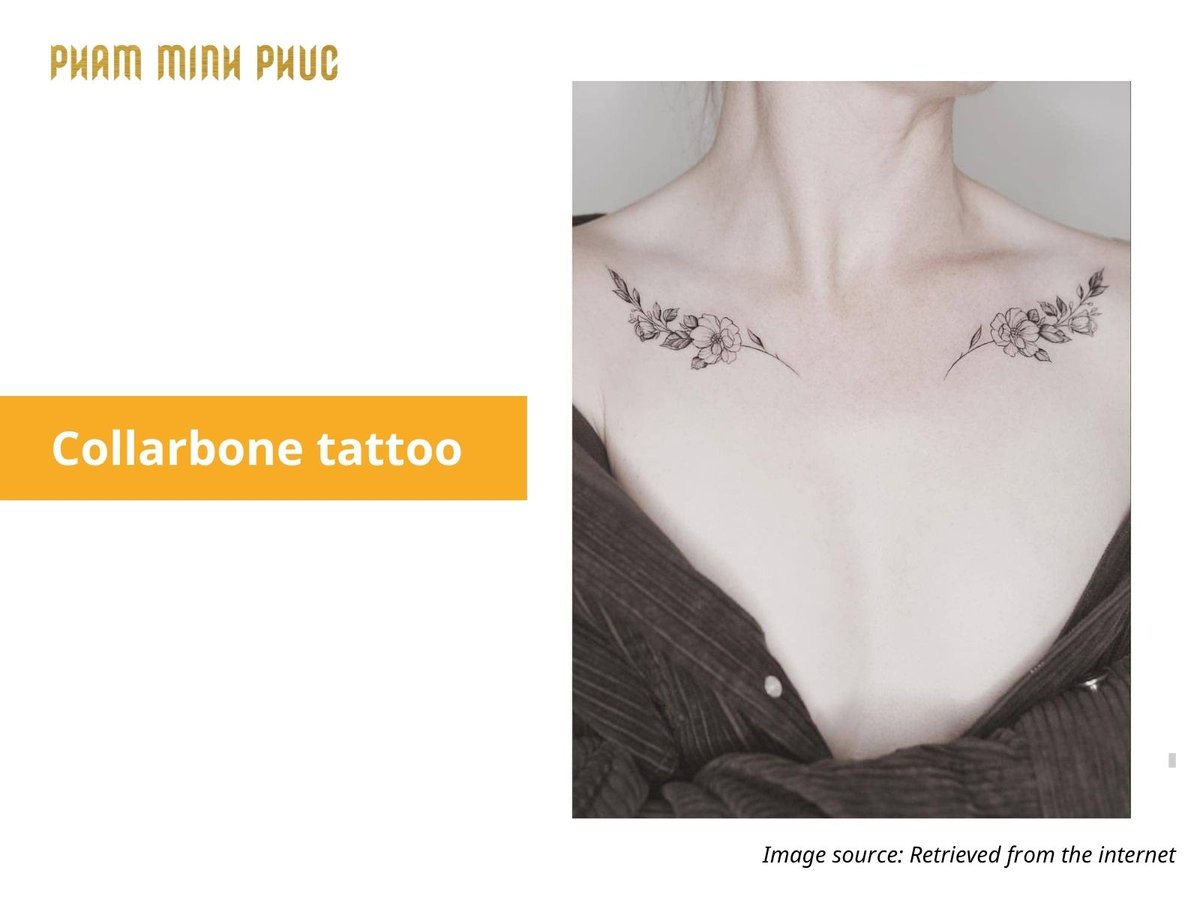
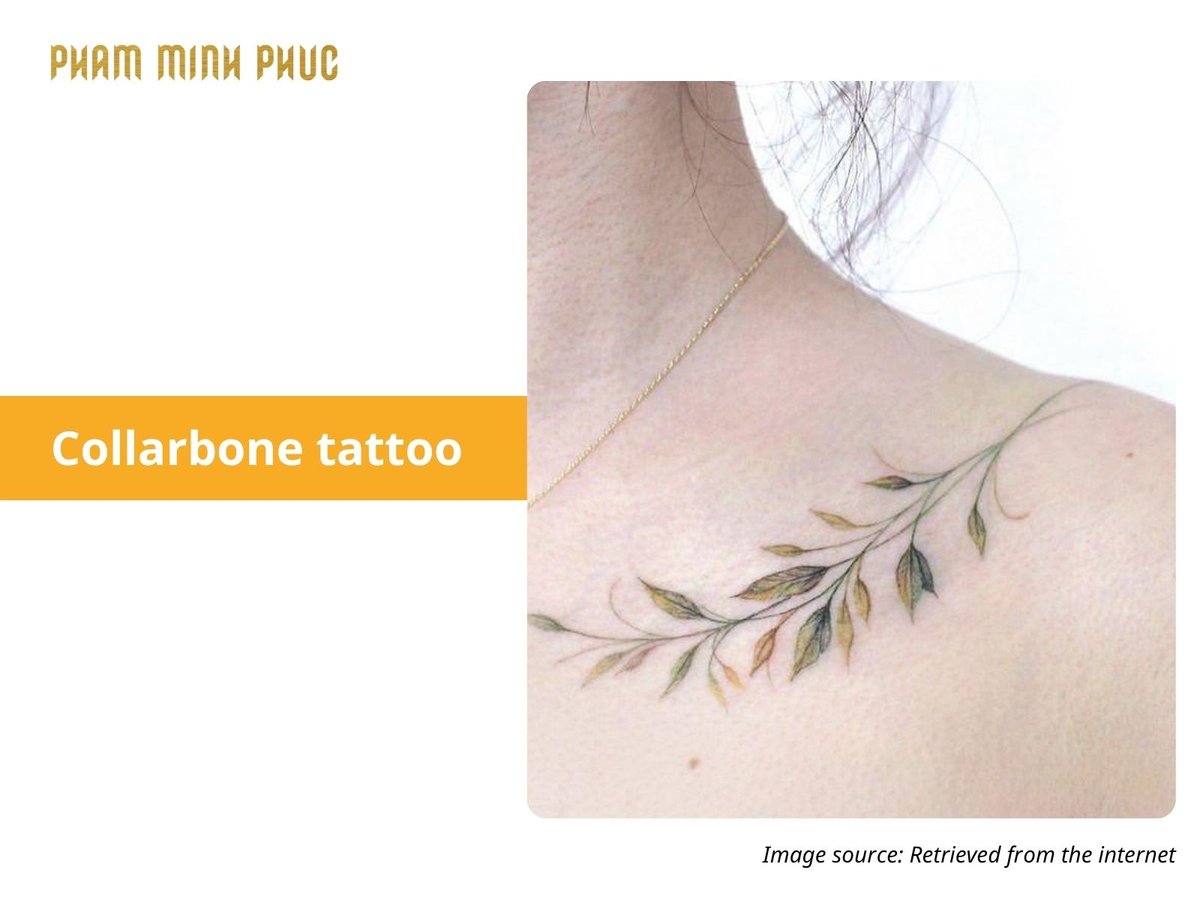
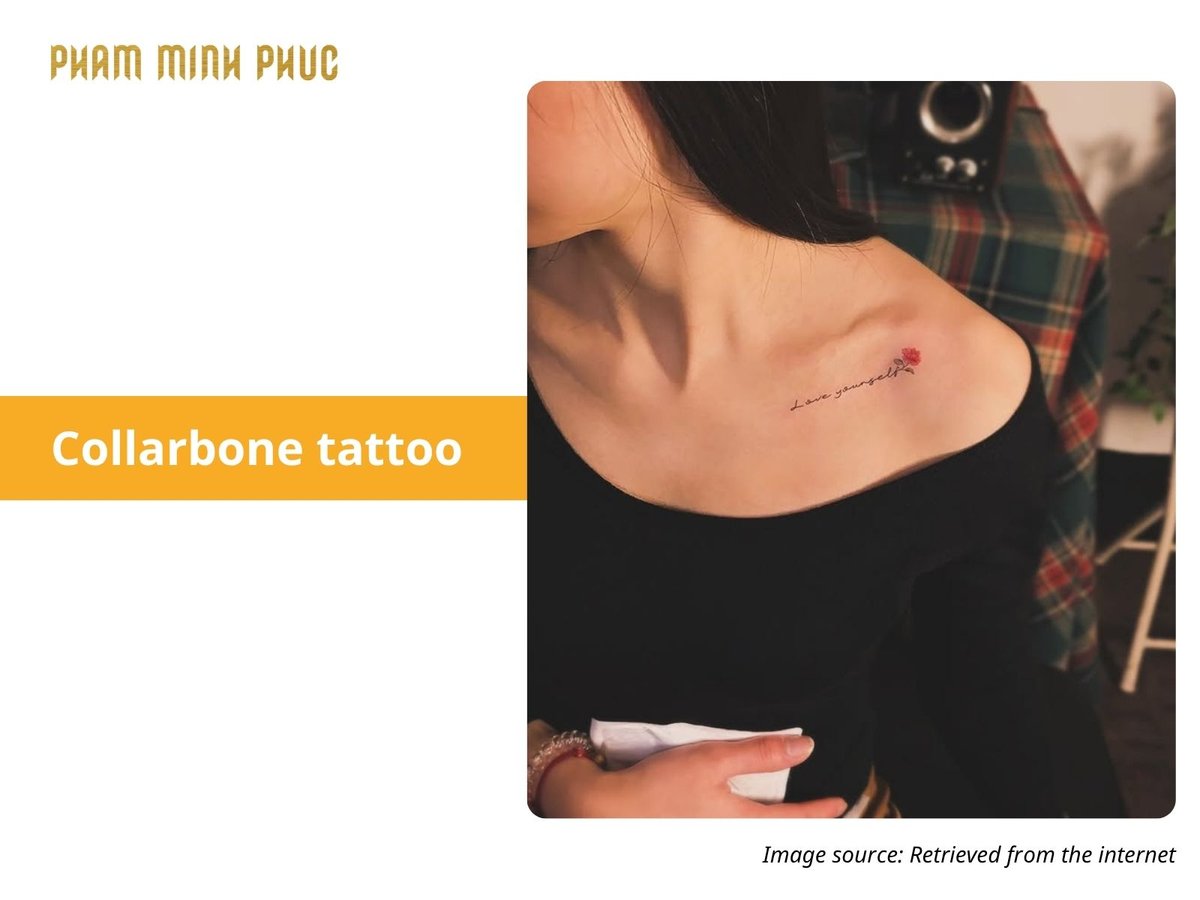
Collarbone Tattoo Placement
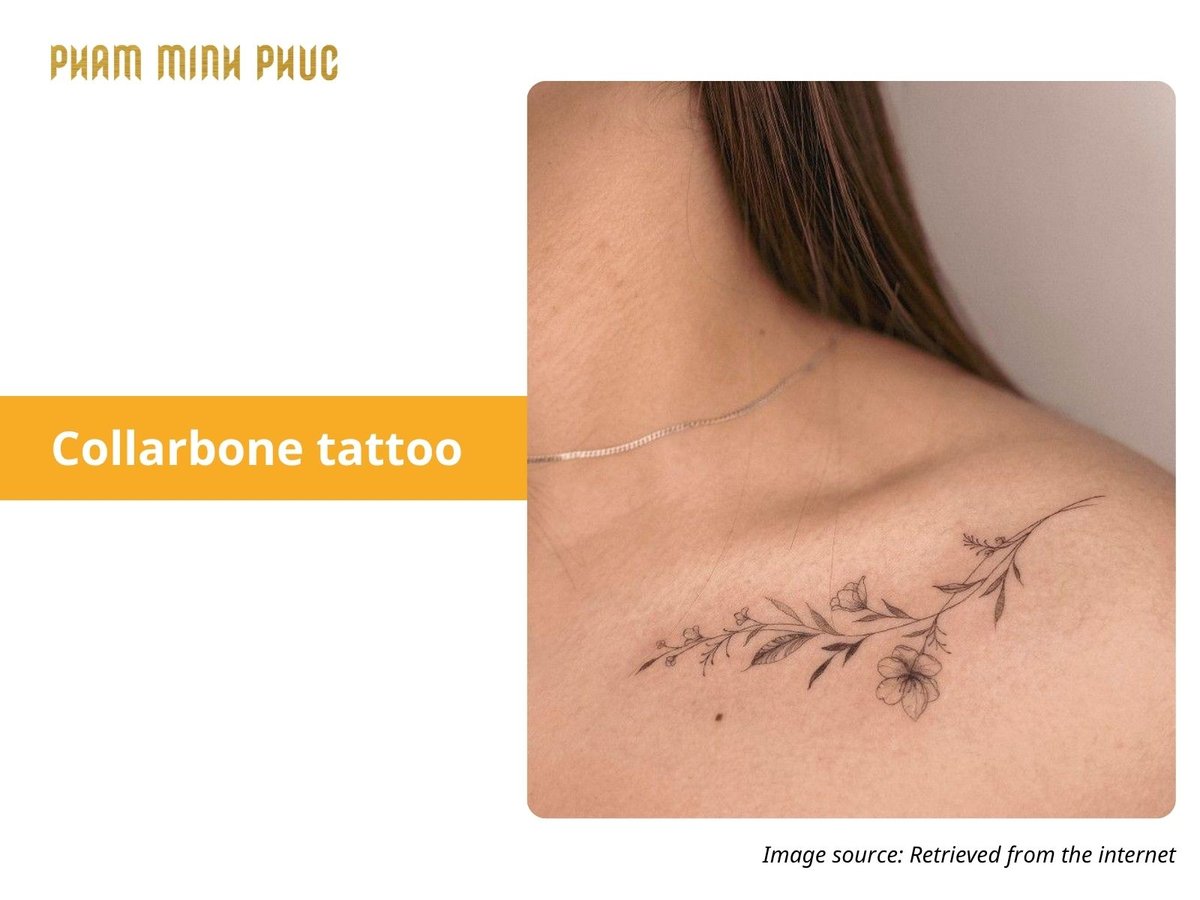
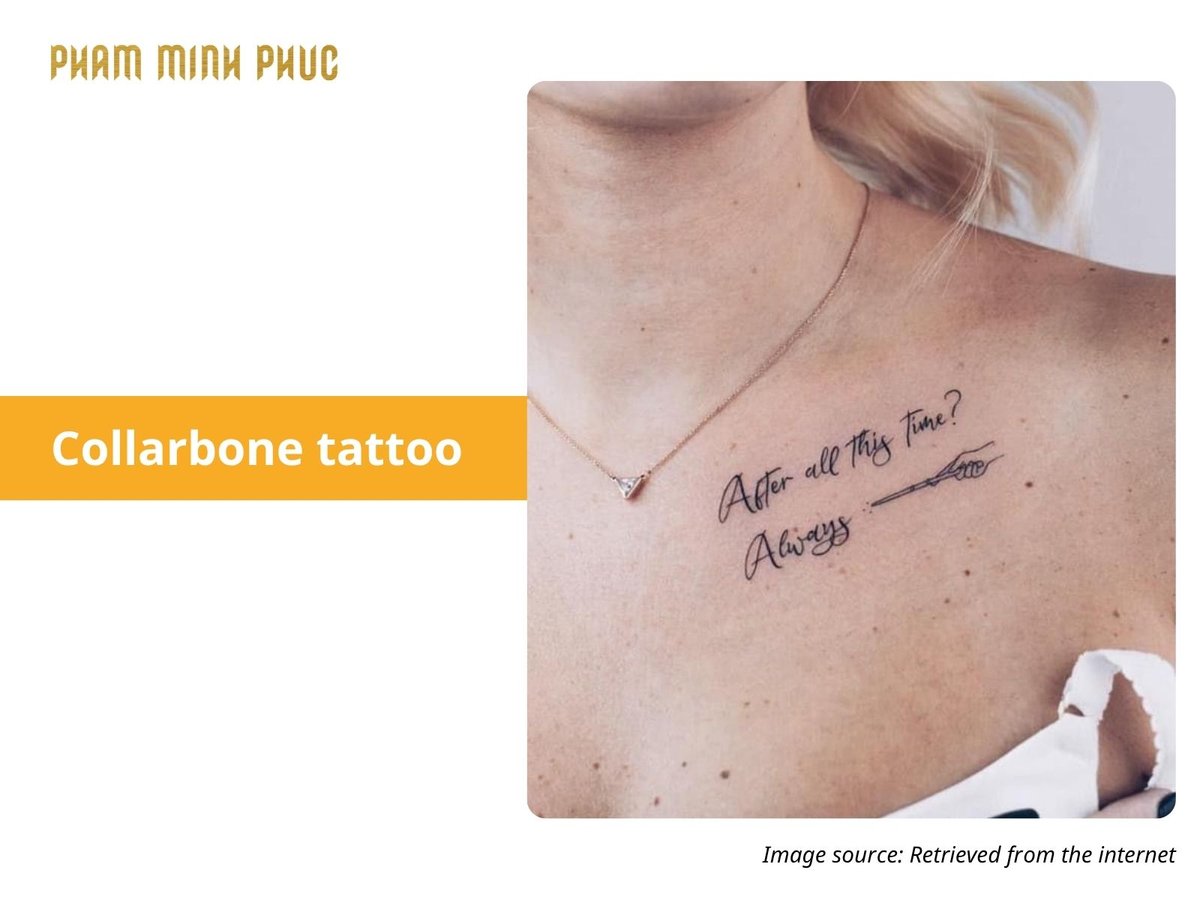
The collarbone placement follows the clavicle, creating a narrow, naturally curved surface across the upper chest.
This area is particularly suitable for elongated designs that can follow the direction of the bone. Script, names, dates, botanical branches, fine-line designs, and minimalist symbols can work well when their shape complements the curve. Because the collarbone area is relatively narrow, tattoo size and line density need to be considered carefully. A design with too many details may feel compressed if it is forced into the available space.
Center Chest and Sternum Tattoo Placement
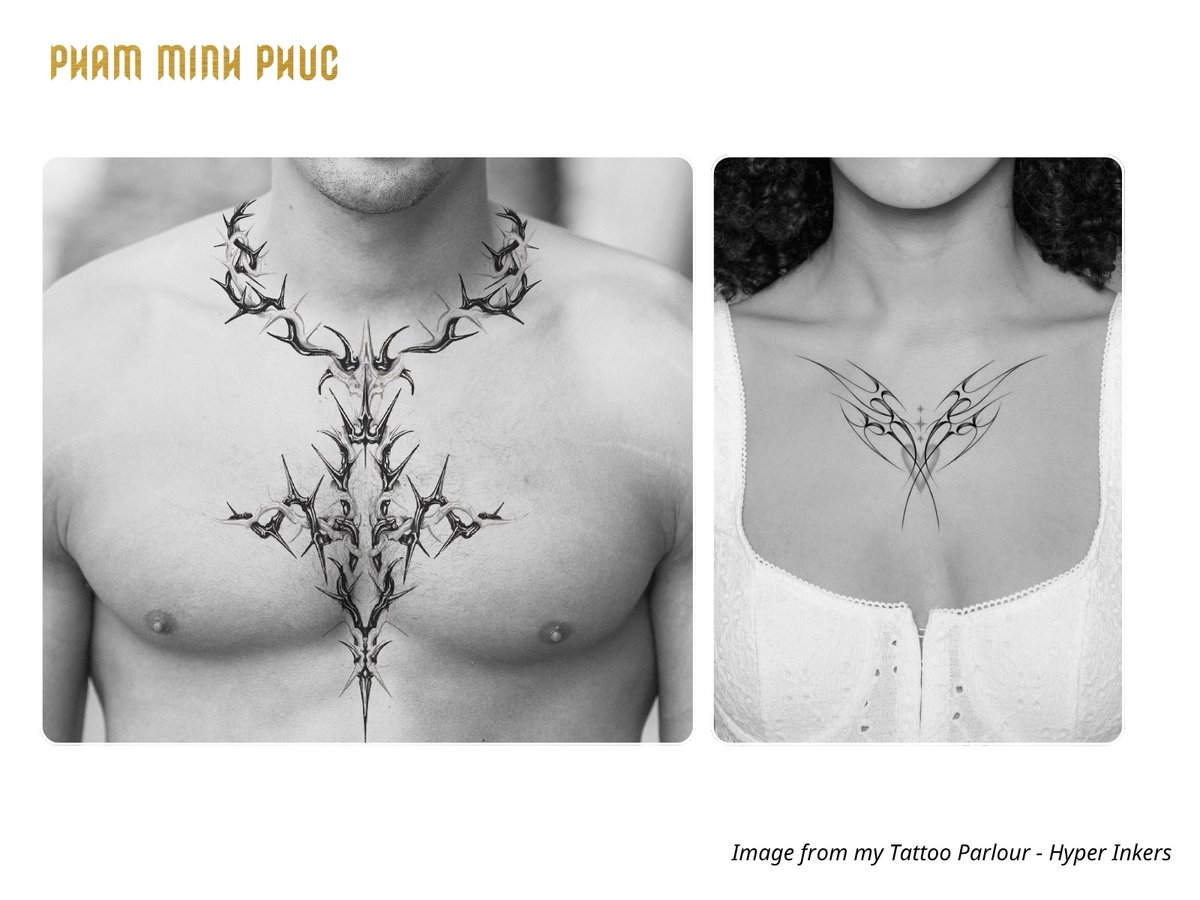
The center chest and sternum follow the vertical line of the breastbone, creating a natural central axis through the torso. This makes the sternum especially suitable for designs that depend on vertical orientation, symmetry, or a strong central focal point.
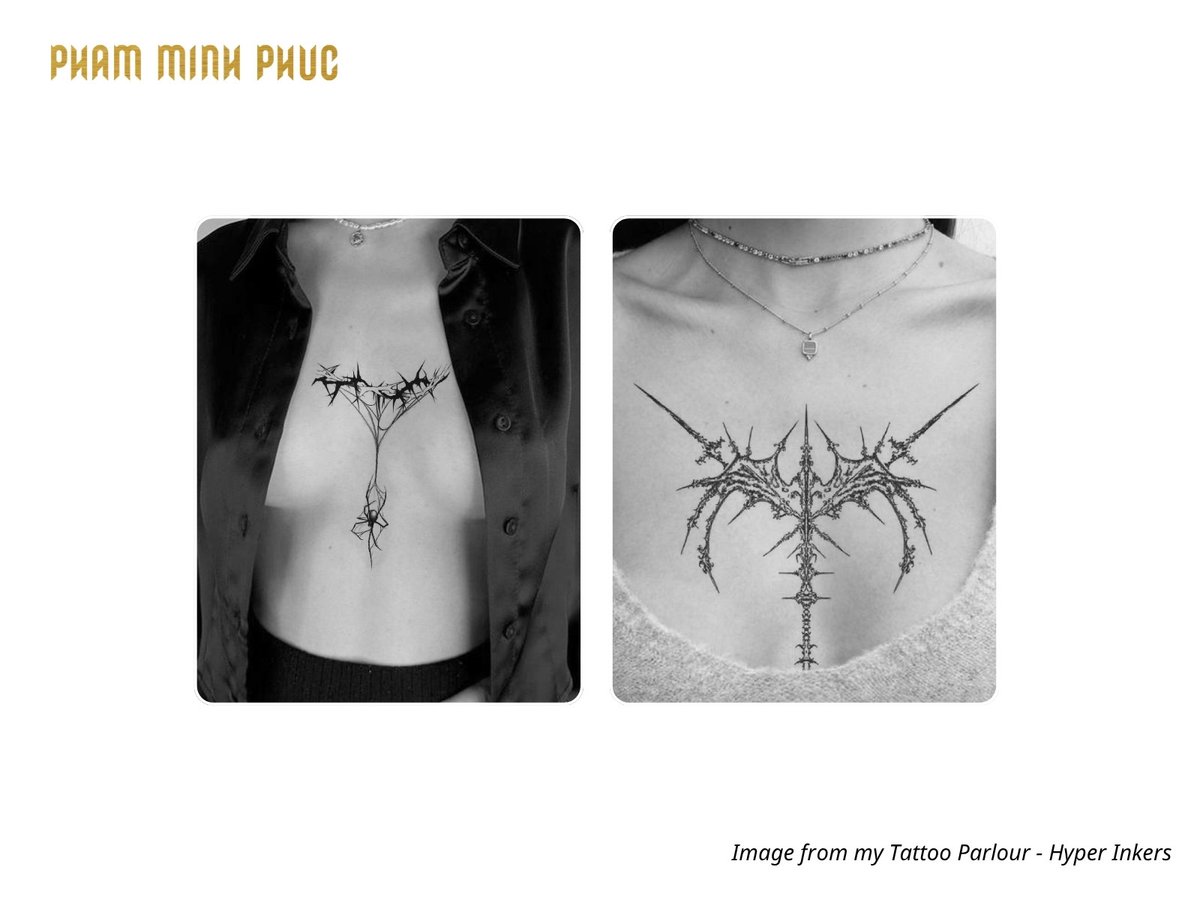
Popular choices include:
- Mandalas
- Ornamental patterns
- Moths
- Geometric designs
- Floral compositions
- Celestial motifs
- Vertical symbols
Pain level: 7–9/10. The sternum tattoo placement is classified as a Zone 3 (Orange) area on the pain chart, with sensations that can include strong bone vibration and heavy pressure. The sternum’s central position can also make it useful for symmetrical compositions. A vertical design can begin along the breastbone and expand outward toward the pectoral muscles while maintaining balance between the left and right sides.
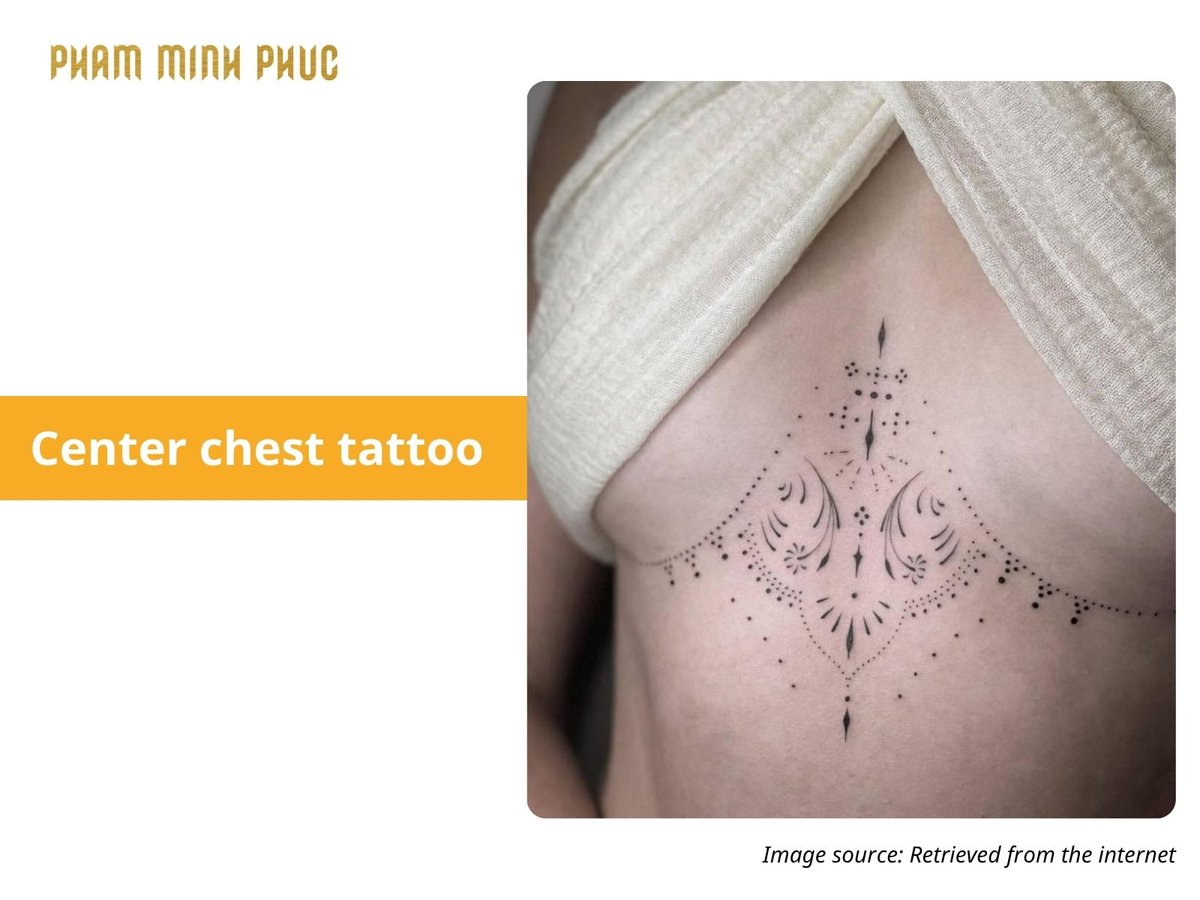
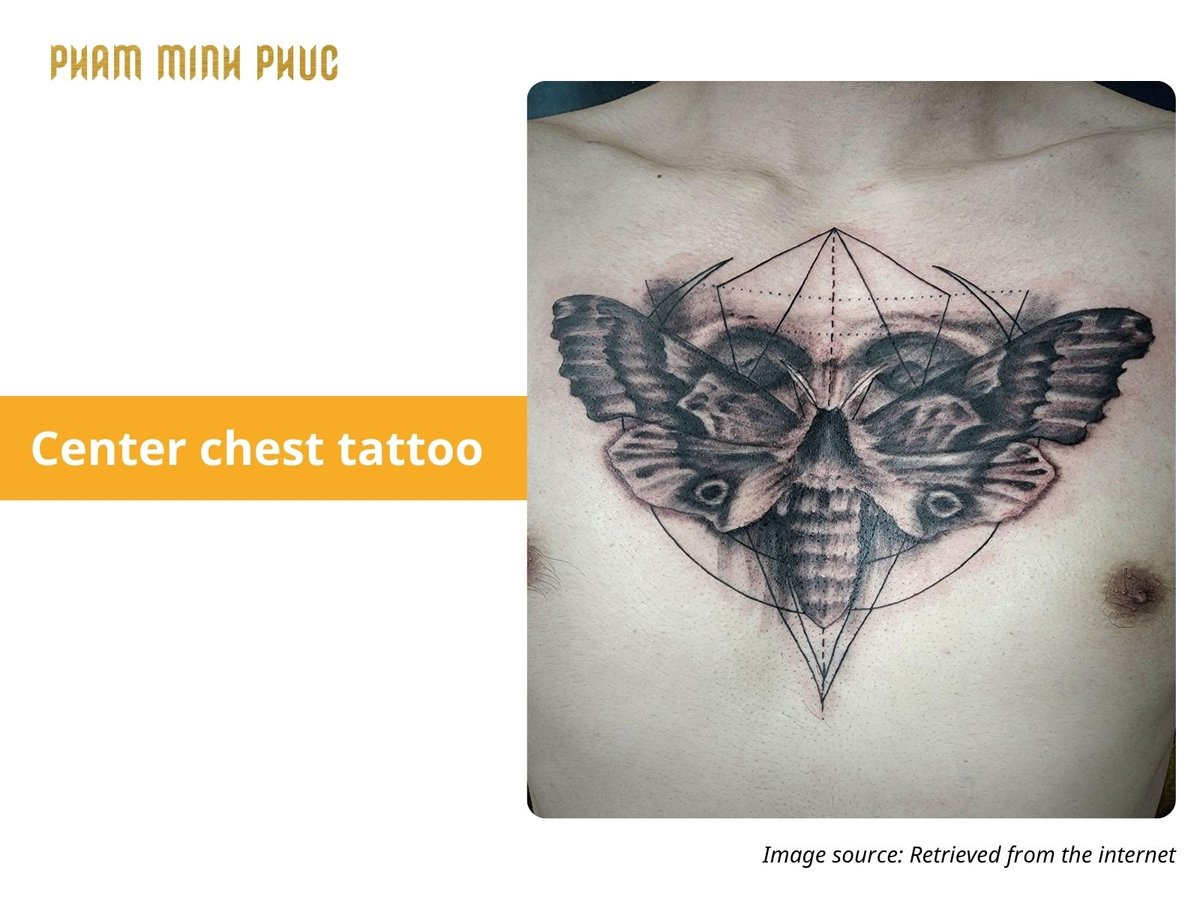
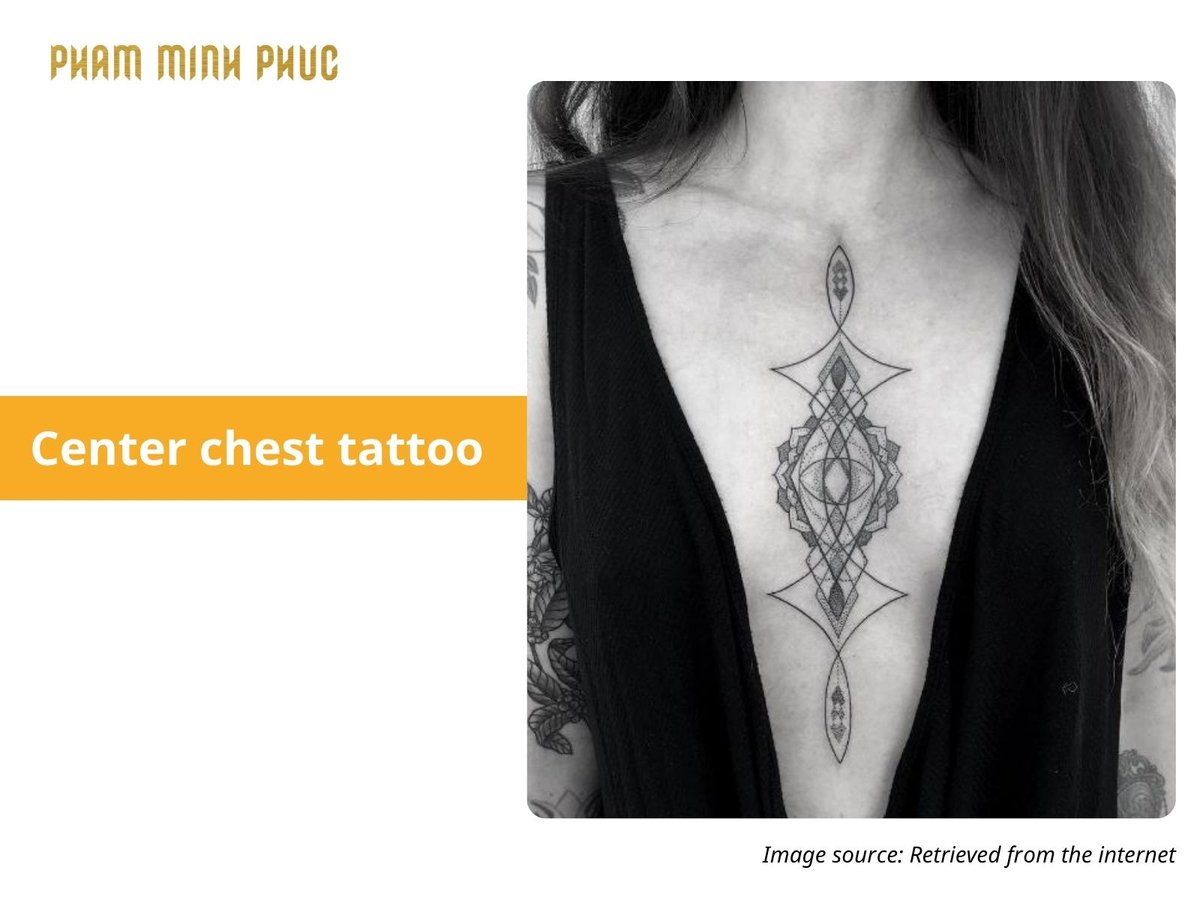
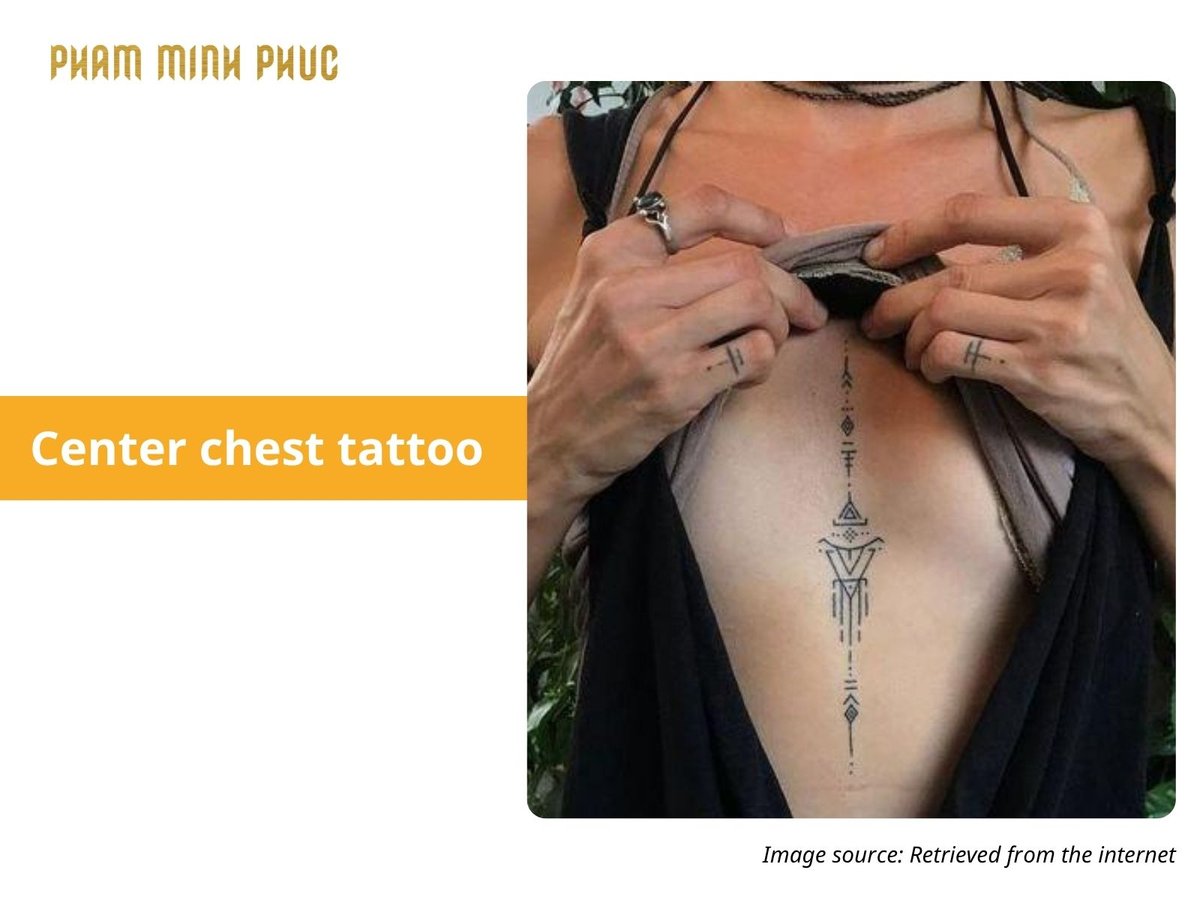
A narrow design can follow the sternum without competing with the surrounding anatomy, while a larger ornamental composition can use the sternum as its center and expand across the chest. Negative space can also be important for detailed sternum tattoos. Leaving intentional areas of uninked skin can help separate fine details and maintain visual clarity as the tattoo ages.
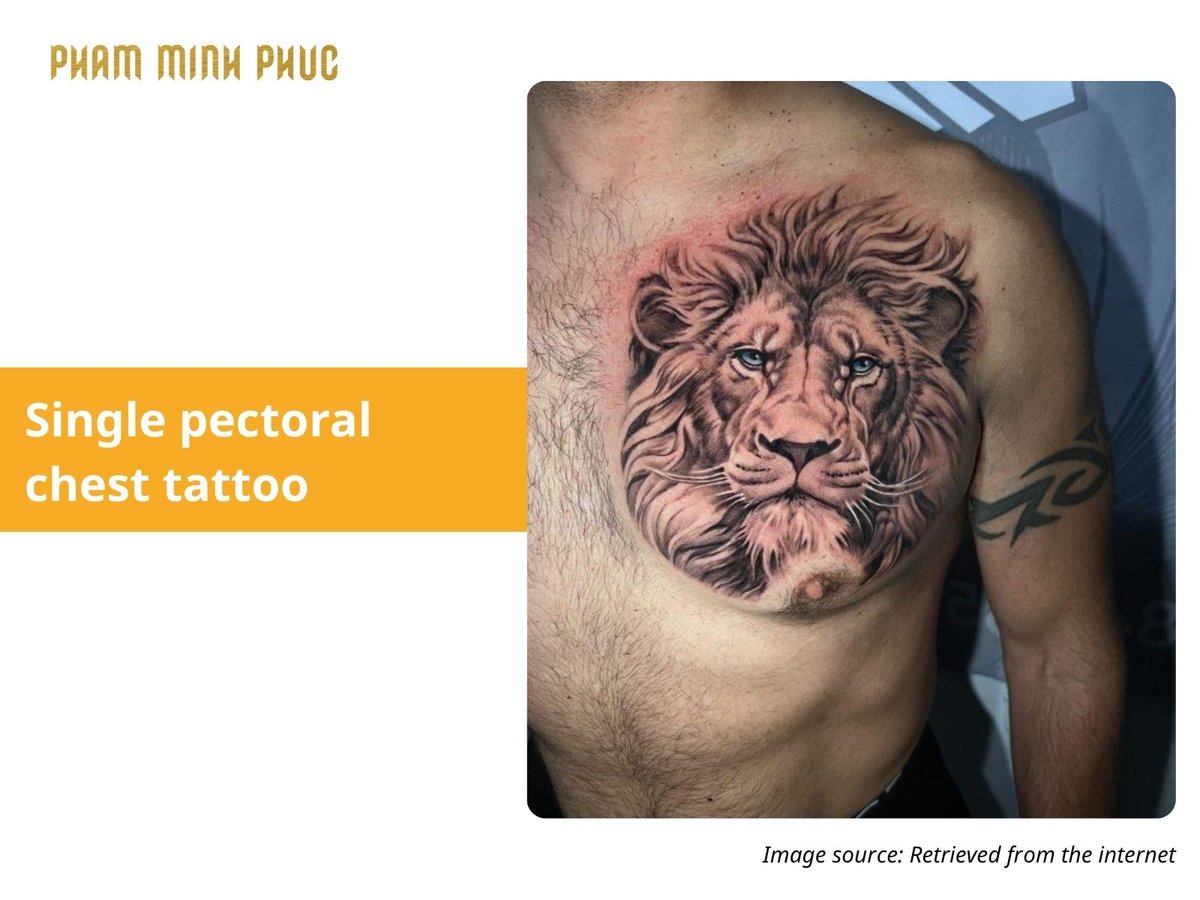
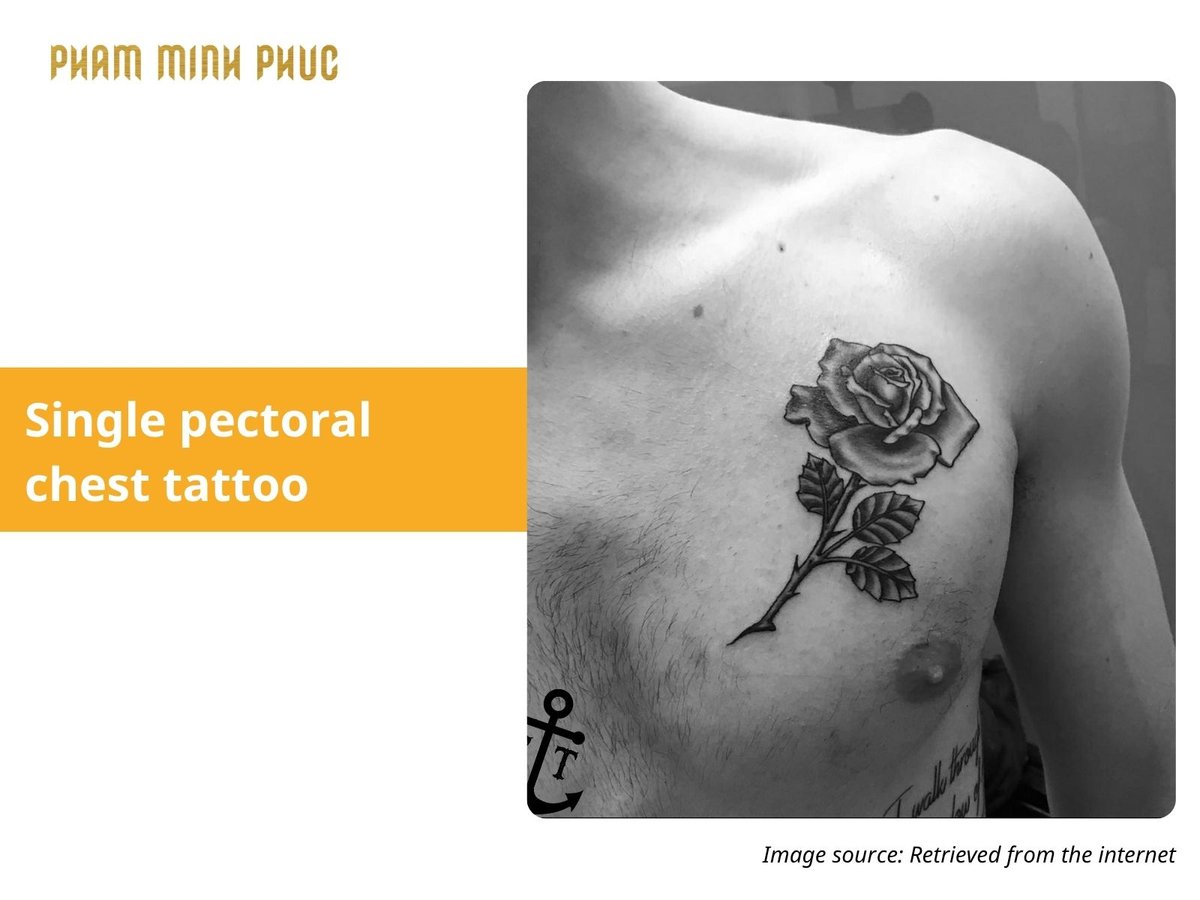
Single Pectoral Tattoo Placement
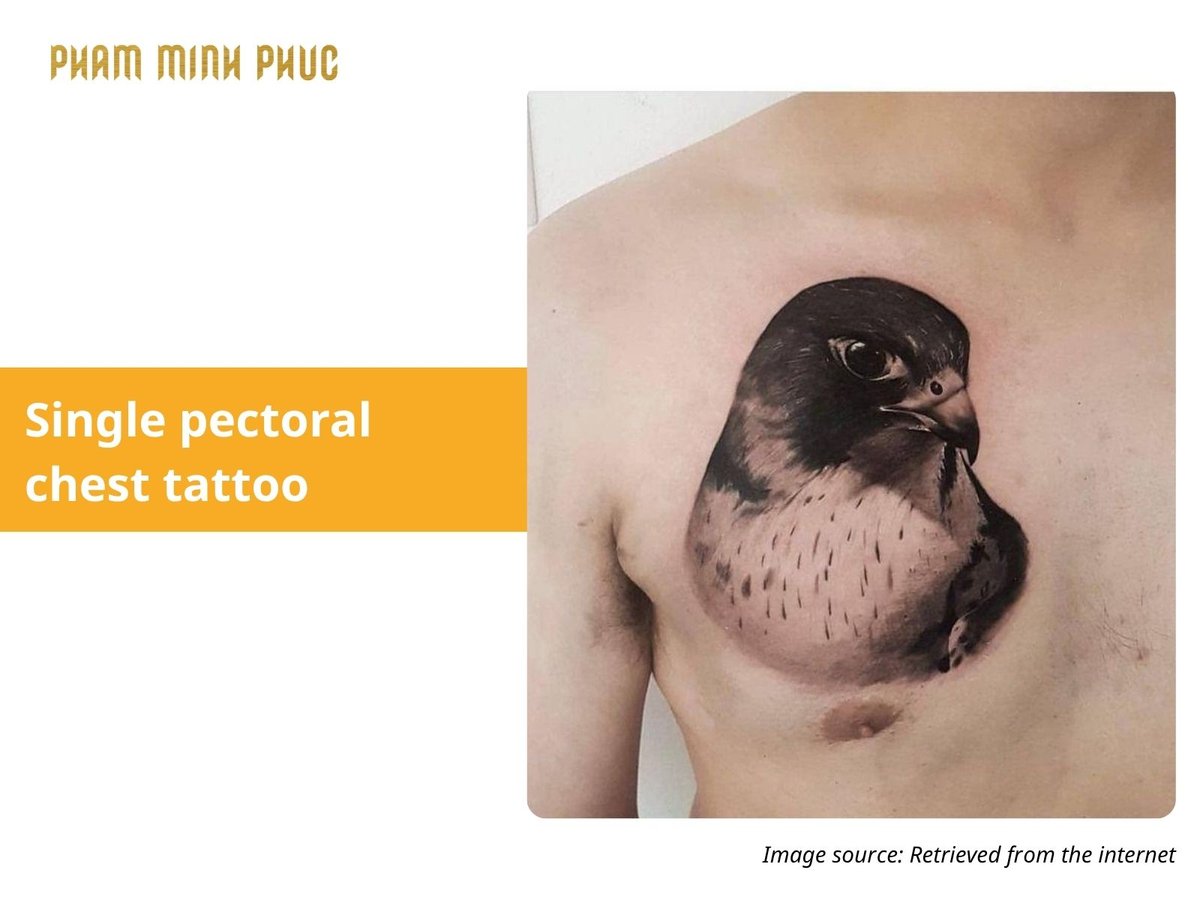
A single pectoral tattoo placement uses one side of the chest, usually centered around or over one pectoral muscle. This is one of the most versatile chest placements because it provides a defined canvas without requiring the entire chest to be tattooed.
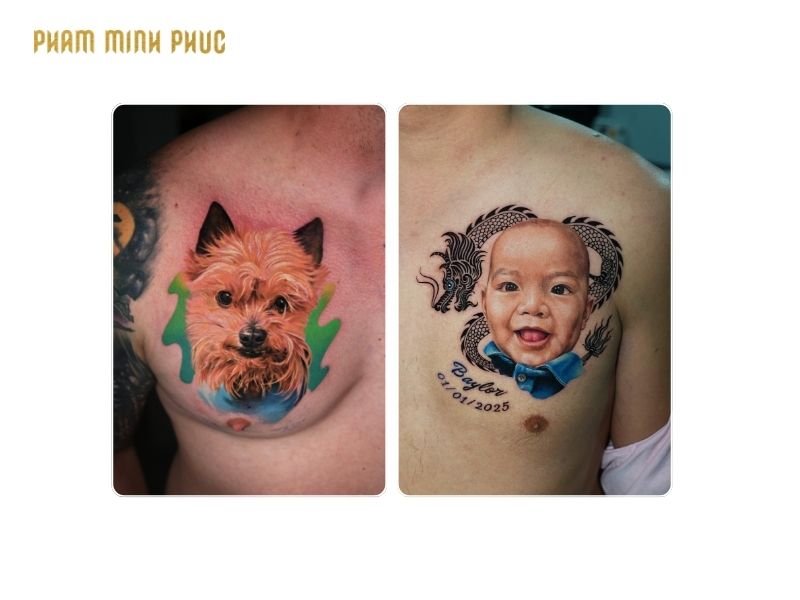
A single pectoral tattoo can be placed on either the left or right side of the chest. Some people choose the left chest for designs they want positioned over the heart, while others choose a side based on the composition, personal preference, or how the tattoo may connect with future chest or shoulder work.
It can work particularly well for:
- Portraits
- Animal heads
- Flowers
- Pocket watches
- Symbols
- Lettering
- Memorial tattoos
- Realism designs
The broad surface of the pectoral muscle gives the artist room to establish the main subject, shading, contrast, and supporting details without compressing the composition. The design should follow the muscle’s natural shape rather than being treated as a flat rectangle. This helps the tattoo maintain its proportions as the chest moves.
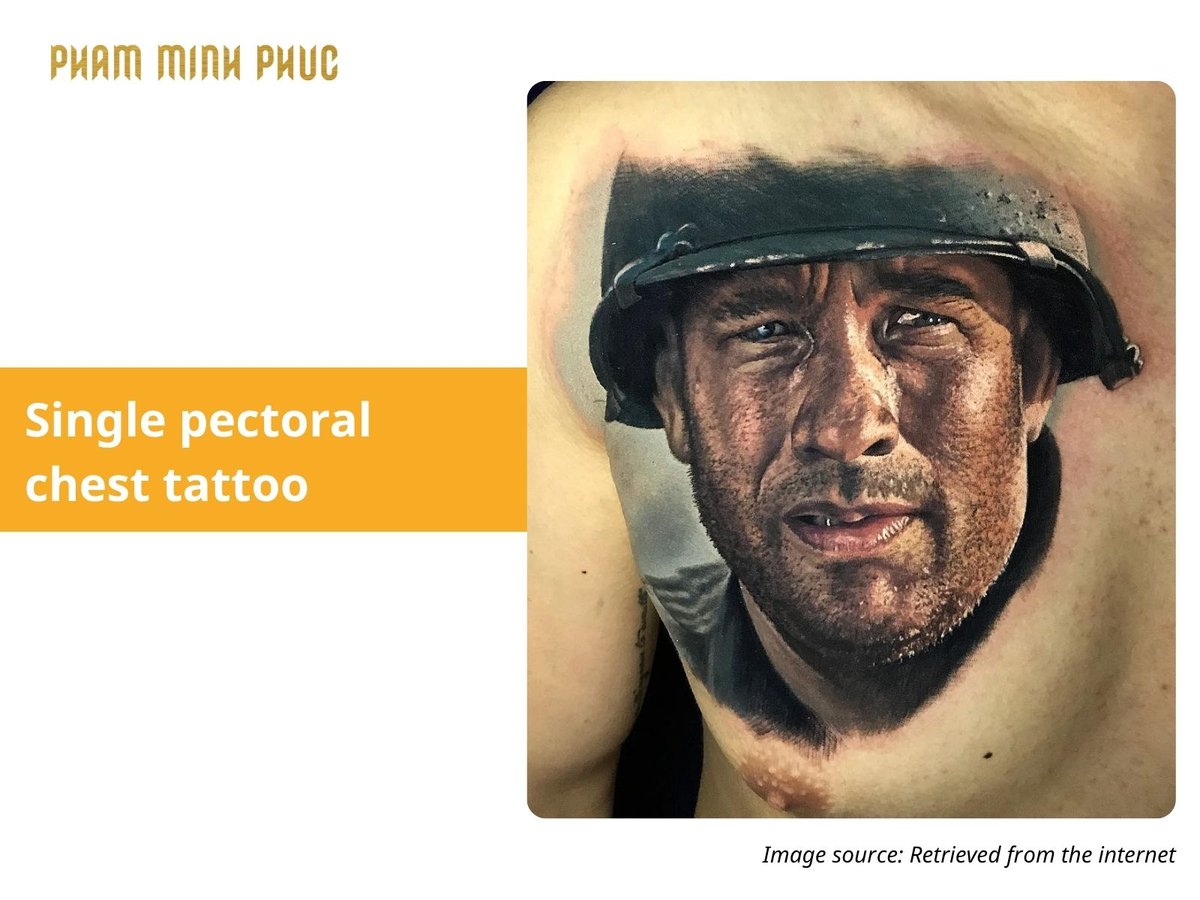
A single pec tattoo can also be the starting point for a larger project. If you may eventually extend the design toward the shoulder, upper arm, or sleeve, the artist can plan the edges and direction of the composition from the beginning.
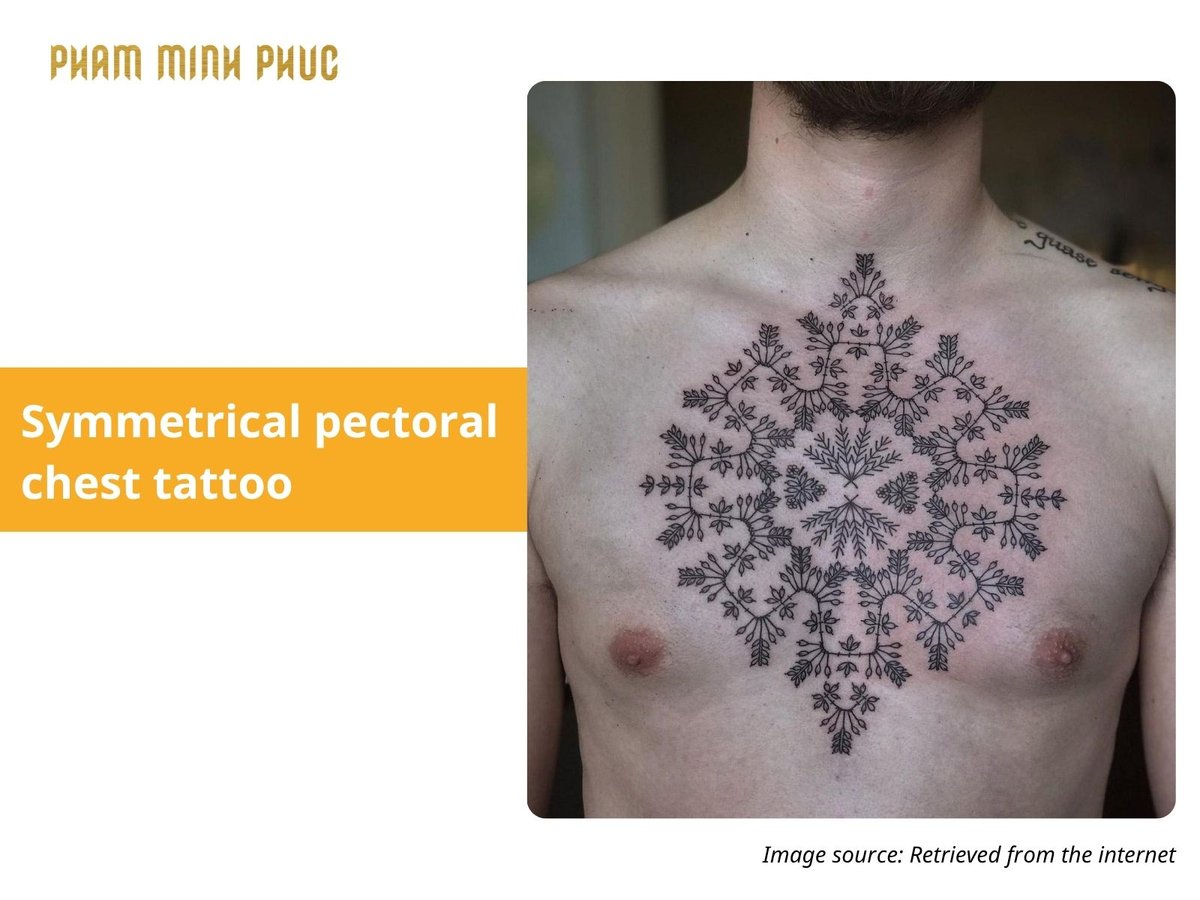
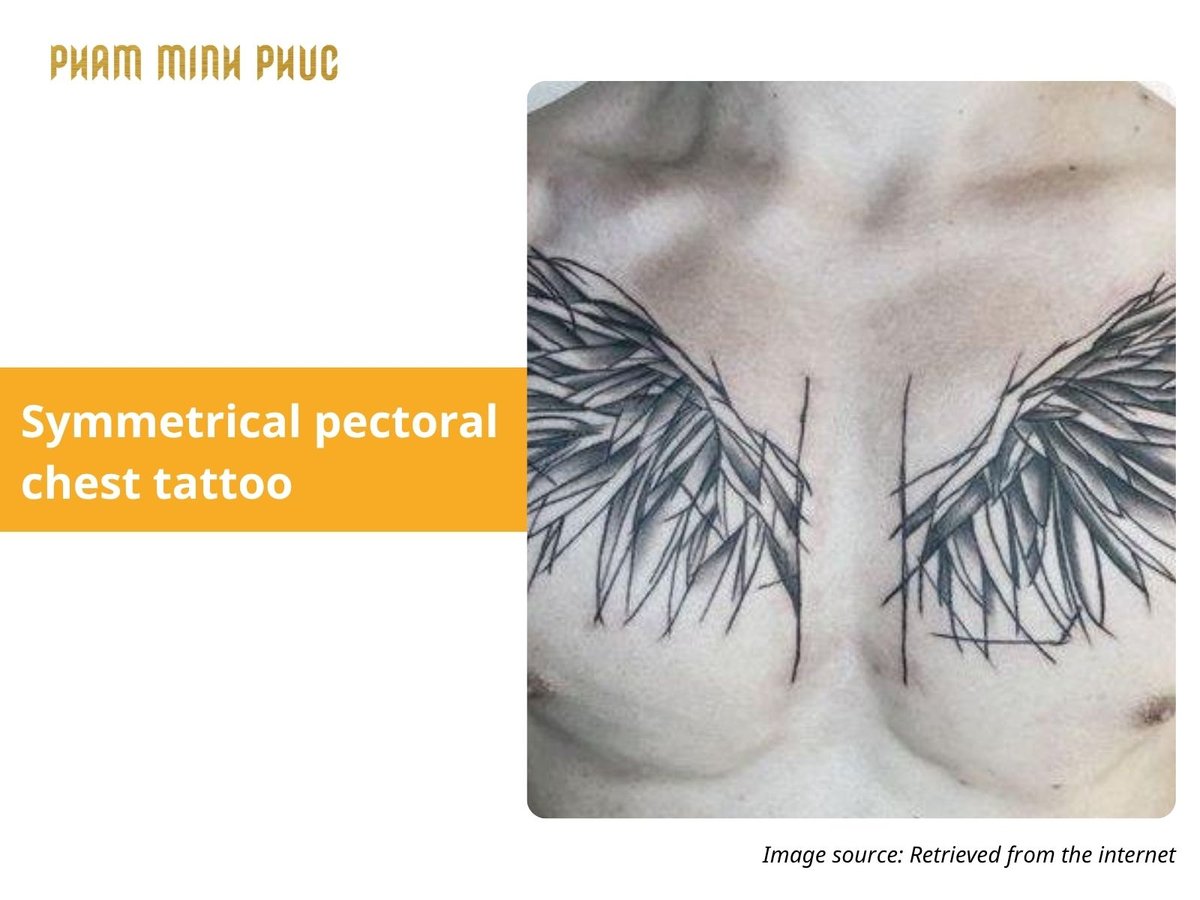
Symmetrical Pectoral Tattoo Placement
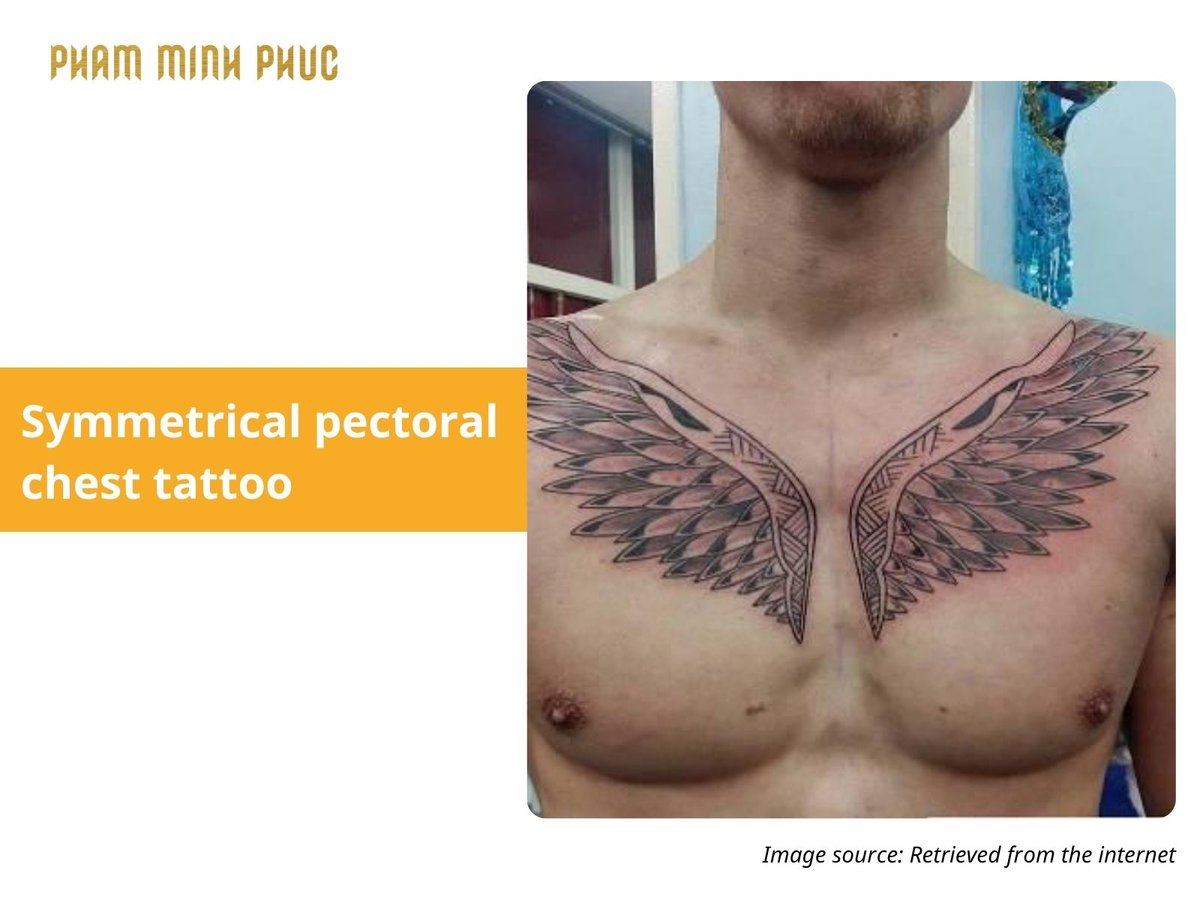
Symmetrical pec tattoos use both sides of the chest as coordinated surfaces. The designs may be identical, mirrored, complementary, or designed as one composition divided across the body’s centerline. This placement works particularly well when symmetry is an important part of the artwork.
Common examples include:
- Mirrored animals
- Paired flowers
- Wings
- Facing animal heads
- Matching ornamental elements
- Geometric designs
- Complementary symbols
The goal is not necessarily to make both sides perfectly identical. Natural differences between the left and right sides of the body mean that the artist needs to position the artwork so the overall composition appears balanced. Careful stencil placement is especially important. The body’s centerline should be established before transferring the artwork so the major visual elements maintain the intended relationship.
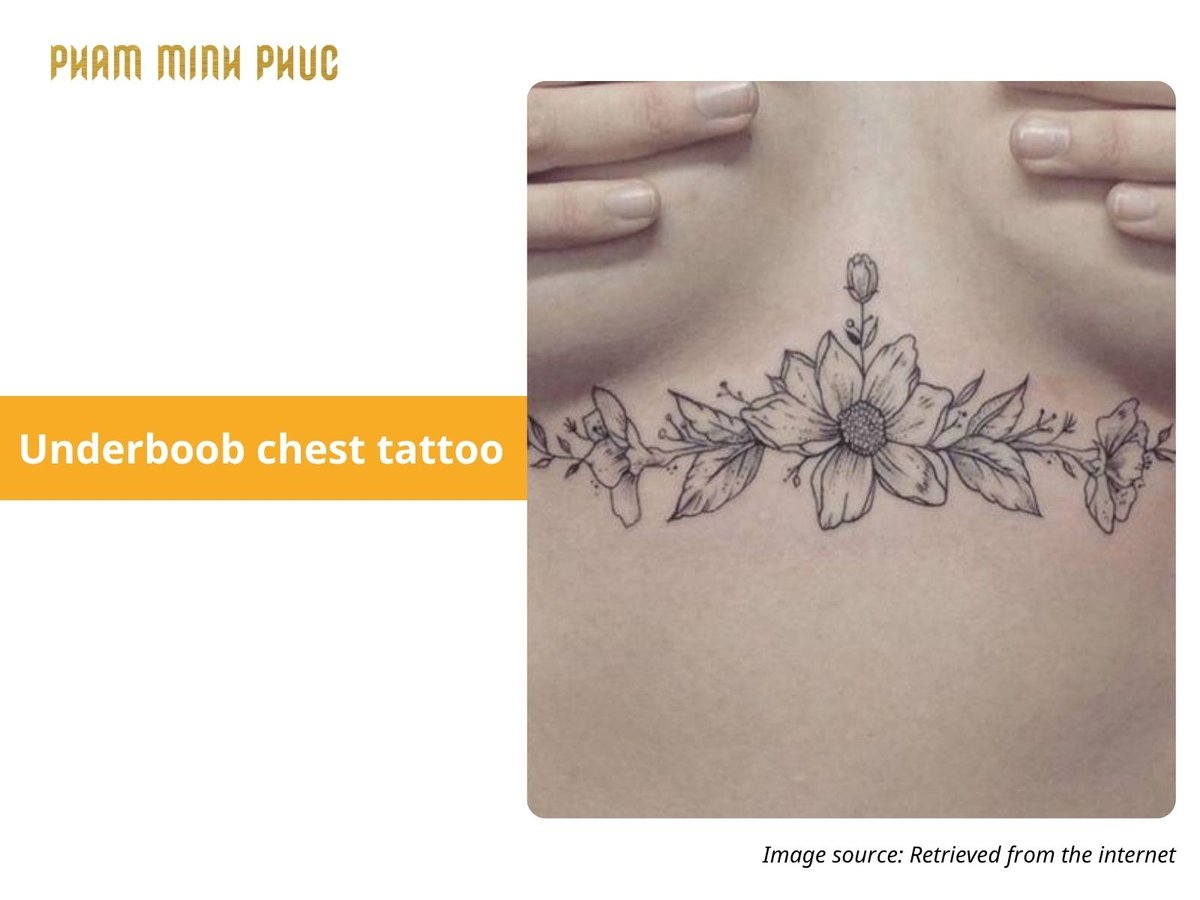
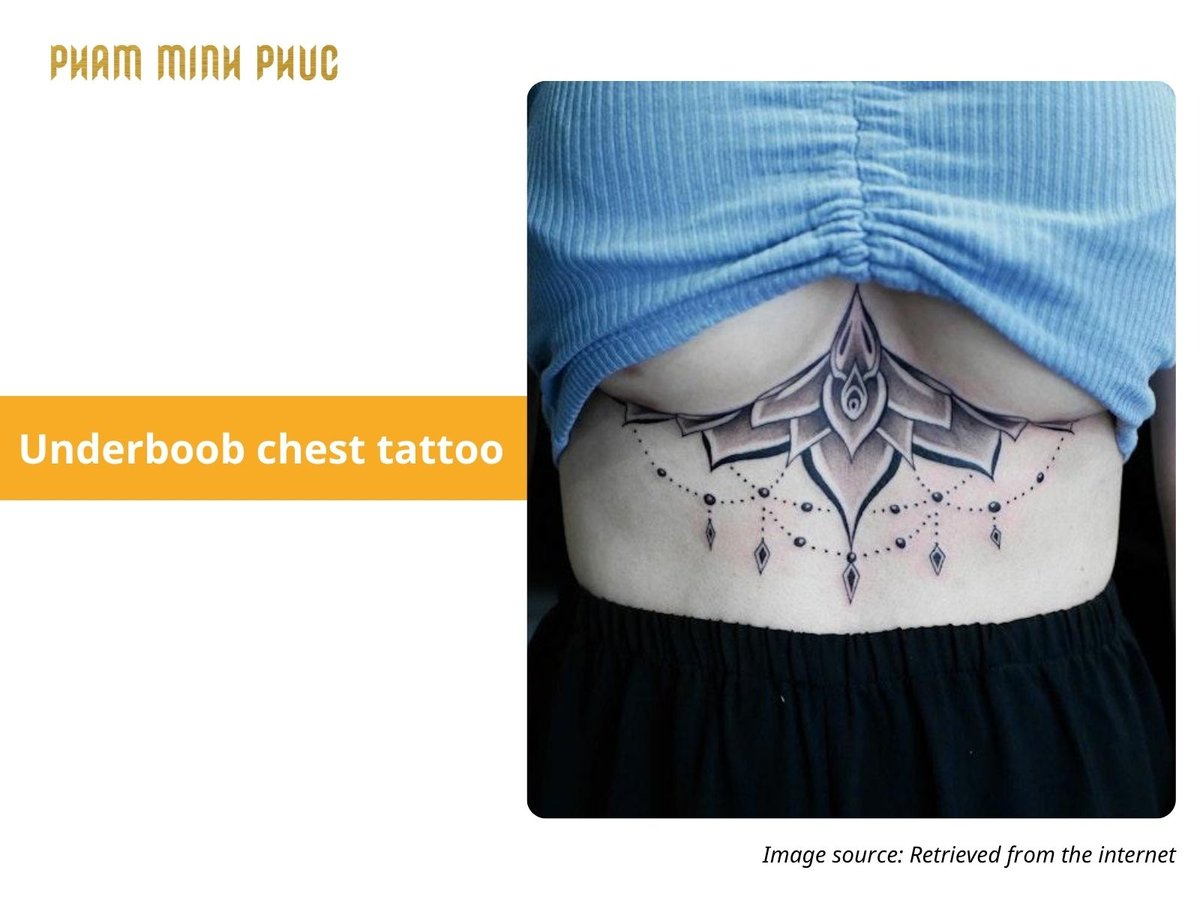
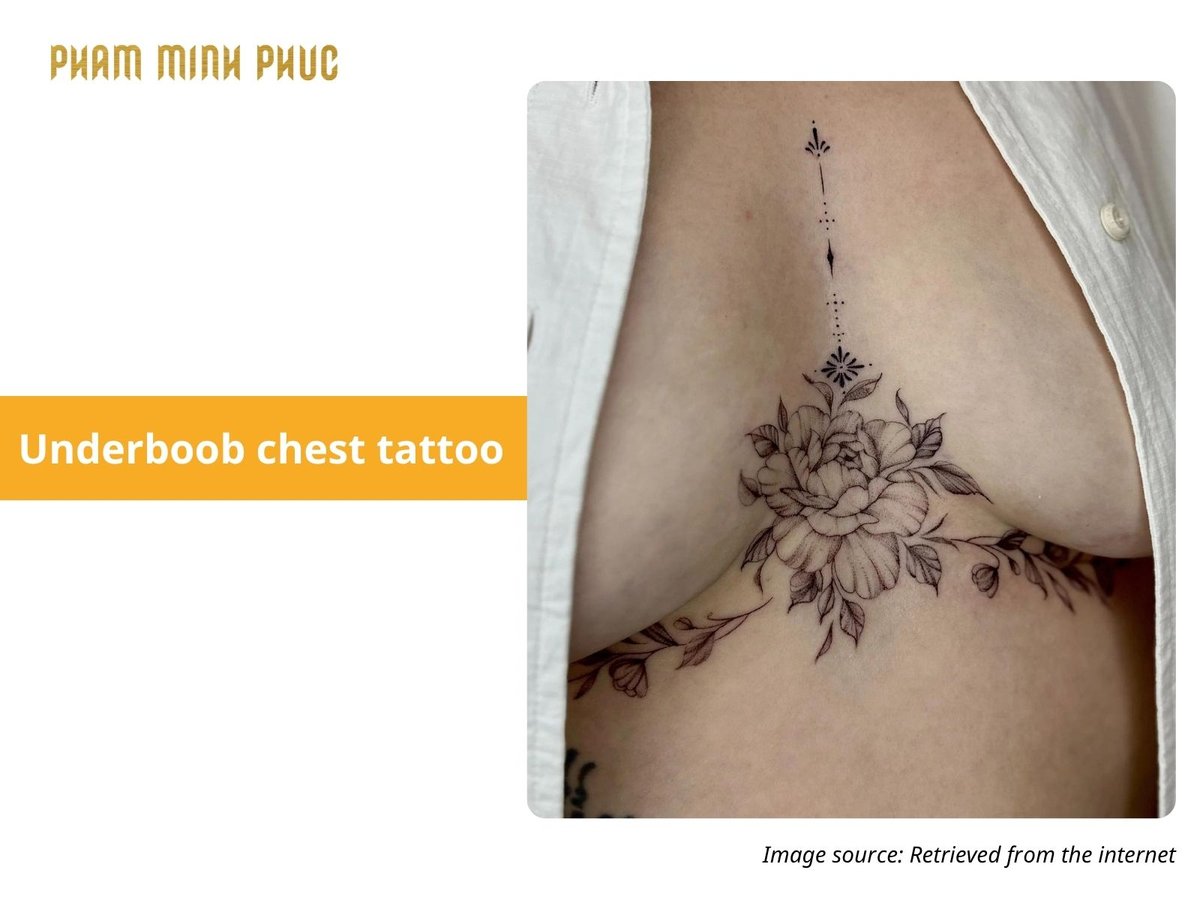
Underboob Tattoo Placement
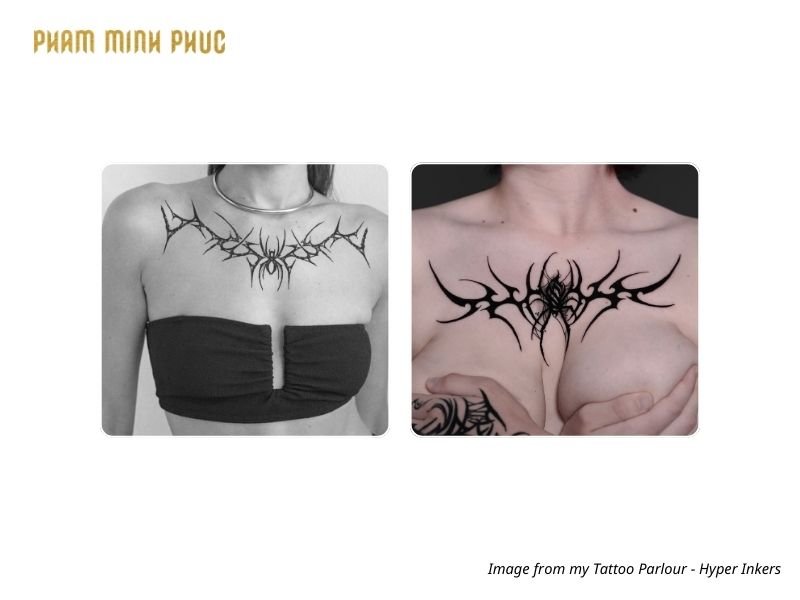
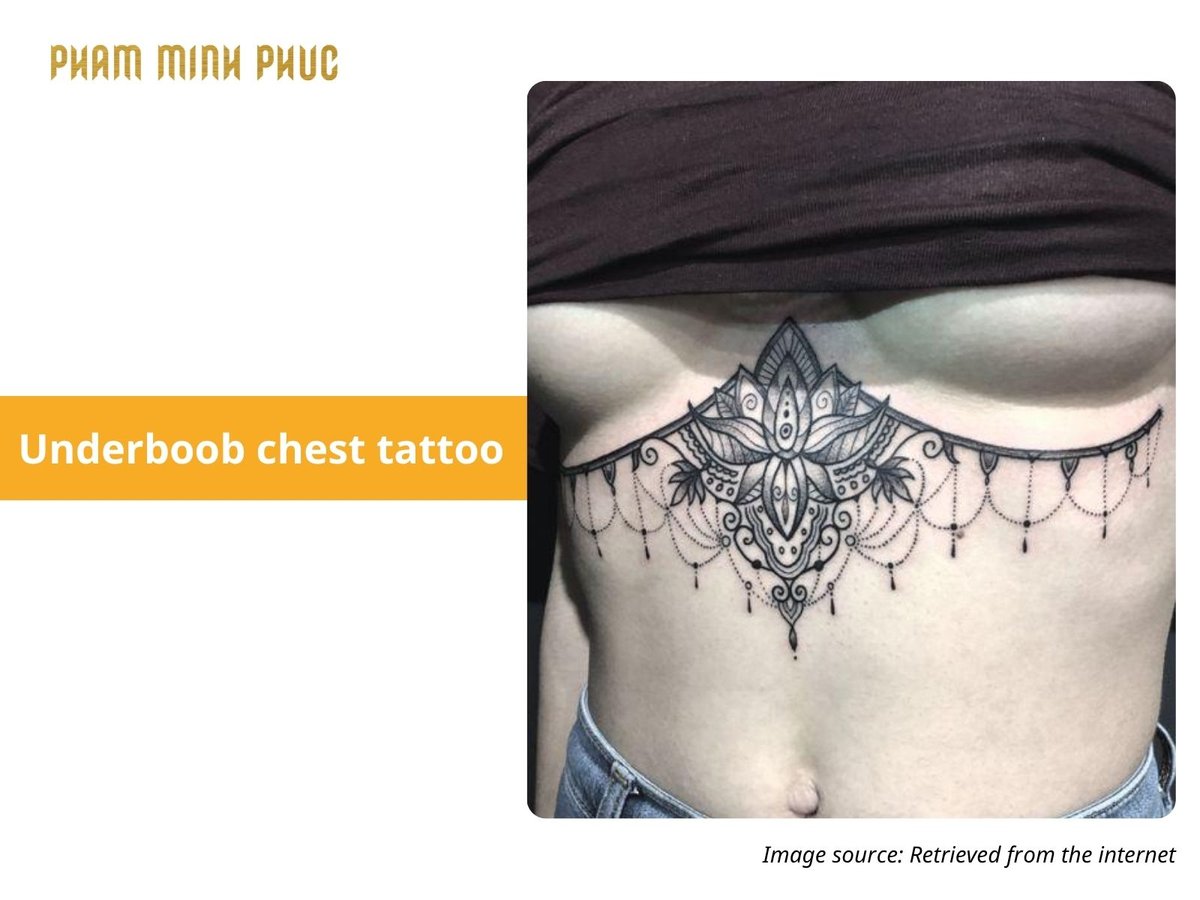
Underboob tattoos follow the curved area beneath the breast and can extend along the lower chest or upper rib cage. Unlike a flatter central area, this placement follows a pronounced body contour. The shape and direction of the artwork therefore matter as much as the subject itself.
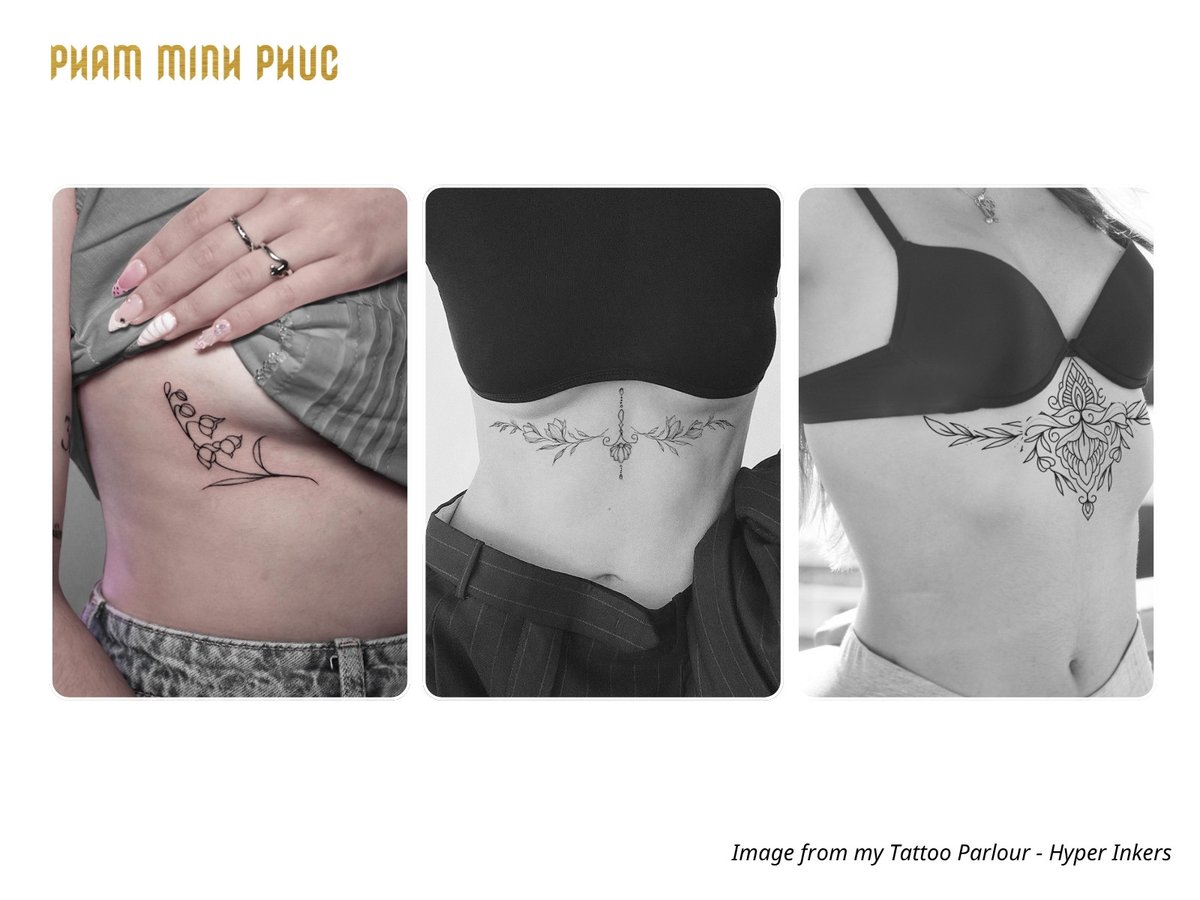
Ornamental patterns, floral designs, lace-inspired artwork, geometric fans, jewelry-inspired motifs, and curved decorative compositions can follow the natural line of the body.
The exact position varies according to individual anatomy, so the design should be evaluated on the actual body rather than placed according to a generic template. Because the area can experience friction from clothing and movement, those factors should also be considered when choosing the final position.
See more: Ribs tattoo placement
Which Tattoo Styles Flow Best on the Chest?
The chest can accommodate many tattoo styles, but each style interacts with the body’s shape differently.
- Realism: Portraits, animals, faces, and other realistic subjects can work particularly well on the pectoral muscles and larger chest areas where the artist has enough space for shading and detail.
- Black and Grey: Black and grey shading can create depth across the chest while allowing the design to follow the contours of the pectoral muscles and surrounding anatomy.
- Ornamental: Mandalas, lace-inspired patterns, and decorative compositions work naturally around the sternum and symmetrical areas because they can use the body’s central axis.
- Fine-line: Fine-line script, symbols, botanical elements, and minimalist designs can suit the upper chest and collarbone where a lighter visual treatment complements the narrower space.
- American Traditional: Bold outlines and simplified forms can work well on individual pectorals or other defined areas of the chest.
- Japanese Style: Larger Japanese compositions can use the chest, shoulder, and upper arm as a connected canvas when the design requires a broader flow.
- Anime Style: Character-based designs can work on a single pec, upper chest, or full chest depending on the character’s pose, orientation, and required level of detail.
How to Choose the Right Chest Tattoo Placement?
Start with the tattoo itself, then choose the area that gives the design enough room to work naturally.
- If your design is large and wide, a full chest or both pectorals may provide the strongest canvas.
- If it is vertical, the center chest or sternum may be a better fit.
- If it is a portrait or single focal subject, a single pectoral can provide a focused composition without requiring the entire chest to be tattooed.
- If the design relies on symmetry, both pecs and the center chest create a natural framework.
- If the design follows a curve, the collarbone, upper chest, or underboob may work better than a flat central area.
- If concealment is important, choose a location that remains covered by the clothing you normally wear.
- If you plan to build a larger tattoo project later, consider how the chest placement could connect with the shoulder, upper arm, sleeve, or side of the torso.
For men, the pectoral muscles provide a broad, structured canvas that works particularly well for single-pec tattoos, symmetrical pec tattoos, large chest pieces, portraits, animals, and designs that extend toward the shoulder or upper arm. A tattoo positioned over one side of the chest can also create a strong focal point without requiring the entire chest to be covered.
For women, the upper chest, collarbone, center chest, and underboob areas are popular options for designs that follow the natural contours of the body. Collarbone tattoos can work especially well for delicate script, botanical elements, and fine-line designs, while underboob tattoos can follow the curved lower chest and rib area with ornamental, floral, or decorative artwork. These placements can also provide different levels of visibility depending on clothing and neckline.
To choose the chest tattoo placement that best suits your design, it can be helpful to discuss your ideas with your tattoo artist. Share the subject or imagery you have in mind, your preferred size, and how you want the tattoo to look on your chest. Your artist can then consider the design, your anatomy, and the overall composition when recommending a placement, orientation, and scale that work well together.
When I work with clients, I encourage them to bring their tattoo ideas and describe what they envision for the finished piece. From there, I can look at the design, the client’s chest anatomy, and their long-term tattoo plans to help determine which placement will allow the artwork to flow most naturally.
Will Muscle Growth or Aging Affect a Chest Tattoo?
Normal changes in muscle mass, weight, and skin elasticity can change the appearance of any tattoo over time, but gradual changes do not automatically ruin a chest tattoo. The chest is a dynamic area because the pectoral muscles can change with training and the skin naturally changes as you age.
For long-term design quality:
- Avoid forcing a highly detailed design into an area that is too small.
- Give detailed artwork enough space for its lines and shading.
- Consider how the design follows the pectoral muscles.
- Keep important focal points in stable, visually appropriate areas.
- Discuss future muscle growth or body changes with your artist if they are relevant to your design.
Good placement and appropriate sizing are more important than trying to predict every future change in your body.
Chest Tattoo Aftercare by Placement
Chest tattoo aftercare is mainly about protecting the fresh tattoo from friction, pressure, sweat, and unnecessary contact while the skin heals. Follow your artist’s specific aftercare instructions, especially because the appropriate routine can depend on the type of dressing and products used.
During the early healing stage:
- Wear clean, loose-fitting clothing that does not continuously rub against the tattoo.
- Avoid unnecessary friction and pressure.
- Keep the tattoo clean according to your artist’s instructions.
- Avoid activities that cause excessive sweating or repeated rubbing against the fresh tattoo.
- Be careful with sleeping positions if your tattoo is large or positioned where it will be compressed.
- Avoid tight clothing or equipment that repeatedly contacts the tattoo.
Some placement can create additional considerations:
- Sternum: Pay attention to friction and moisture around the center of the chest.
- Collarbone: Be aware of backpack straps, seatbelts, and clothing seams that may repeatedly contact the tattoo.
- Underboob: Consider friction and pressure from bras and clothing during the early healing period.
- Full chest: Larger pieces may involve more areas of friction and require more care when choosing clothing and sleeping positions.
- For a complete healing routine, use your dedicated tattoo aftercare guide rather than trying to cover every aftercare question in this placement article.
How Long Does a Full Chest Tattoo Take?
The time required for a full chest tattoo depends on the size, design complexity, level of detail, color saturation, skin response, and the artist’s working process.
A large chest piece may require multiple sessions rather than being completed in one appointment. Realism, heavy blackwork, detailed ornamental designs, and large compositions generally require more time than simple linework.
The artist should assess the actual design before giving you a session estimate. If multiple sessions are necessary, the skin also needs adequate healing time between appointments.
Can Chest Tattoos Be Hidden for Work?
In many cases, yes. A chest tattoo is generally easier to conceal than tattoos on the hands, neck, or lower arms because most of the area can be covered by a standard shirt.
However, upper chest and collarbone placements may become visible depending on the neckline and clothing style.
If workplace discretion matters to you, tell your artist before the stencil is finalized. The placement can then be selected with both the tattoo’s visual impact and your normal clothing in mind.
Can You Tattoo Over Chest Scars?
Tattooing over scar tissue requires an individual assessment. The scar needs to be sufficiently healed and stable before an artist considers tattooing over or around it. Mature scar tissue can behave differently from surrounding skin, so the design and technique may need to be adjusted.
If you want to cover or incorporate chest scars into a tattoo, discuss the history and condition of the scar with an experienced tattoo artist before booking the session.
The goal should be to determine whether the tissue is suitable for tattooing and whether the planned design can work with the scar’s texture and direction.
Chest Tattoo Placement FAQs
What chest placement is best for a portrait tattoo?
A single pectoral is often a strong option because it provides a defined surface for a single focal subject. Larger portraits may also work across a larger chest composition depending on the design.
What is the best placement for a symmetrical chest tattoo?
The two pectoral muscles and center chest provide a natural framework for symmetrical tattoos. Wings, mirrored animals, paired flowers, and ornamental compositions can take advantage of this structure.
What is the best chest placement for a small tattoo?
Upper chest, collarbone, center chest, and single-pec placements can all work for smaller tattoos. The best choice depends on the design’s proportions and level of detail.
Are chest tattoos easy to hide?
Most chest tattoos are relatively easy to conceal under clothing. Upper chest and collarbone tattoos are more likely to become visible around open or low necklines.
Can a chest tattoo connect to a sleeve?
Yes. A pectoral or full chest tattoo can be designed to flow toward the shoulder and upper arm. If you think you may eventually get a sleeve, tell your artist before the first chest tattoo is placed.
See full my guide about tattoo placement to discover more about tattoo spot
I hope this guide helped you understand how different chest tattoo placements work with your design, body shape, size, visibility, and long-term goals. As a tattoo artist, Minh Pham can help you evaluate your tattoo idea and determine whether the full chest, pectoral, sternum, upper chest, collarbone, or underboob placement best suits your anatomy and the artwork you want to create.
The right placement is not simply about choosing an attractive spot; it is about making sure the design, scale, and natural movement of your body work together for a tattoo that looks balanced now and continues to work well over time.