Commissioning a bespoke design requires the client to function as an art director rather than an illustrator, shifting the focus from drawing the image personally to curating a cohesive mood board. This collaborative process relies on providing the artist with distinct visual ingredients, such as reference photos for subject matter and atmospheric elements, which the professional then synthesizes into a composition that respects anatomical flow. Understanding technical constraints like placement, size, and skin texture is critical because a static image that looks perfect on a flat screen often distorts when wrapped around muscle groups.
I, Minh Pham, have outlined a strategic four-step protocol to bridge the gap between a mental concept and the final stencil. This guide examines how to define logistical details like budget and timeline while crafting a professional inquiry that stands out. The content also covers how to navigate the consultation to ensure the artwork translates perfectly to the dermis in the article below.
Table of Contents
Step 1: Gather Inspiration (Don’t Draw It Yourself)
Many clients feel intimidated because they lack artistic skills, believing they must provide a perfect sketch. You do not need to draw the design yourself. In fact, a rough amateur sketch often restricts the artist’s creative flow. Your role is to act as an art director rather than the illustrator. You should focus on the “Scrapbooking” method. This involves collecting distinct visual elements from various sources to form a cohesive mood board.
Instead of searching for one image that captures everything, find 3 to 5 separate reference images that highlight specific details:
- Subject Matter: A photo of the specific flower, animal, or object you want.
- Style and Technique: An image showing the line weight, shading style (e.g., stippling vs. smooth gradients), or color palette you prefer. To communicate effectively, you should familiarize yourself with different tattoo styles, such as Realism or Neo-Traditional, to ensure your reference images match the technique you desire.
- Atmosphere: A picture that conveys the specific mood, such as “dark and ominous” or “light and ethereal.”
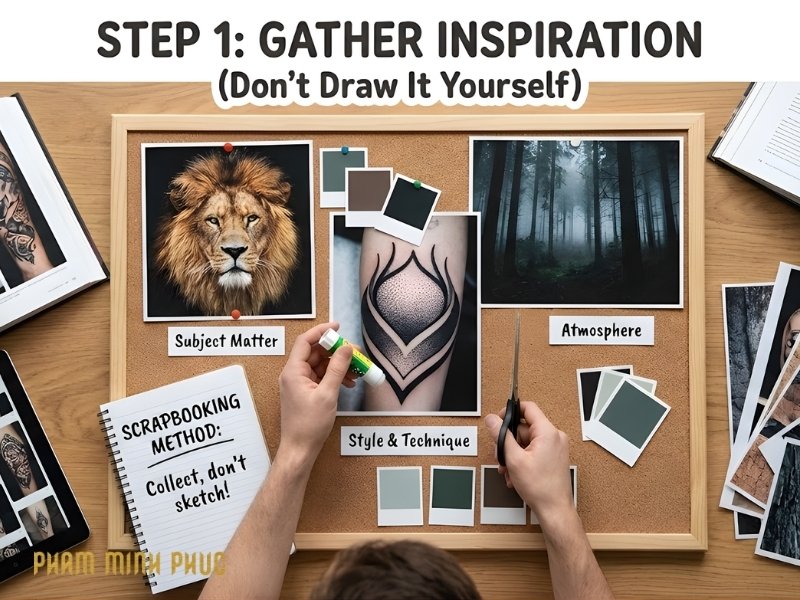
Providing these “raw ingredients” allows the artist to cook up a unique composition. Artistic rendering requires technical knowledge of how ink ages in the skin, which is why the actual drawing is best left to the professional.
Step 2: Define the Core Details
you must clarify the logistical constraints of the project before contacting an artist. Anatomical reality dictates the flow and longevity of the tattoo.
- Placement and Flow: The design must complement the body contours. A static image that looks good on a flat screen may warp awkwardly on a forearm or ribcage. You need to decide if you want the piece to wrap around a muscle or sit flat on a panel like the upper back.
- Size and Complexity: Be specific about dimensions in inches or centimeters. Vague descriptions like “medium-sized” are subjective. If you are planning a large-scale project, the approach changes slightly. For instance, asking your tattoo artist about a sleeve requires discussing how distinct elements will flow together over the curvature of the arm, rather than just placing a single image.
- Budget and Timeline: Custom body art is an investment. Establishing a clear budget ceiling helps the artist design something achievable within your financial means. You should also verify if you have a strict deadline, such as an upcoming vacation or event, as high-demand artists often have waitlists of several months.
Step 3: Send the Inquiry
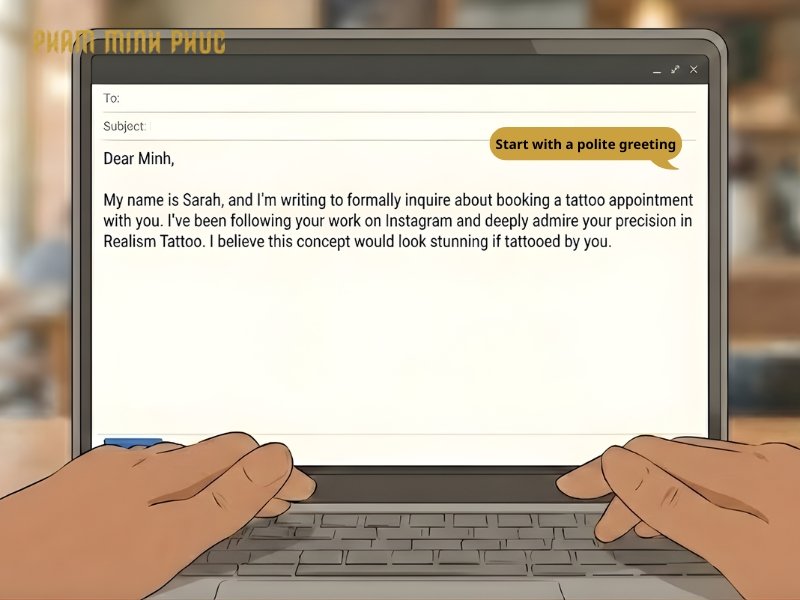
The initial email is your first opportunity to demonstrate that you are a serious, researched client. Avoid informal Direct Messages (DMs) on Instagram for complex custom requests, as these often get lost. Following the correct protocol is crucial for a quick response. Understanding the professional way to message a tattoo artist ensures your inquiry stands out in their crowded inbox.
Your inquiry should function as a tattoo consultation checklist. Include the following specific data points to expedite the booking process:
- Concept Description: A concise summary of the story or meaning behind the piece.
- Placement & Size: The exact body part and approximate dimensions.
- Reference Attachments: Your compiled “scrapbook” of images.
- Availability: Your preferred days or times for an appointment.
Step 4: Finalize the Design During the Consultation
The consultation is the bridge between your concept and the final stencil. Understanding exactly “what is a tattoo consultation” helps you realize this is not just a chat, but a reciprocal interview where the collaboration truly begins. You will discuss the distinction between Style and Design.
- Design refers to the subject matter (e.g., a wolf, a rose).
- Style refers to the execution (e.g., Realism, Neo-Traditional, Fine-Line).
During this session, the artist will analyze your skin texture and potential scar tissue. They may suggest modifications to your initial idea. For example, they might recommend simplifying an intricate background to ensure the focal point remains readable. Trusting this professional guidance is essential, as their advice is based on years of observing how pigment settles and expands in the dermis. To maximize the value of this meeting, you should prepare a list of important questions to ask your tattoo artist regarding safety, longevity, and their specific design process.
See more: Asking your tattoo artist about a sleeve
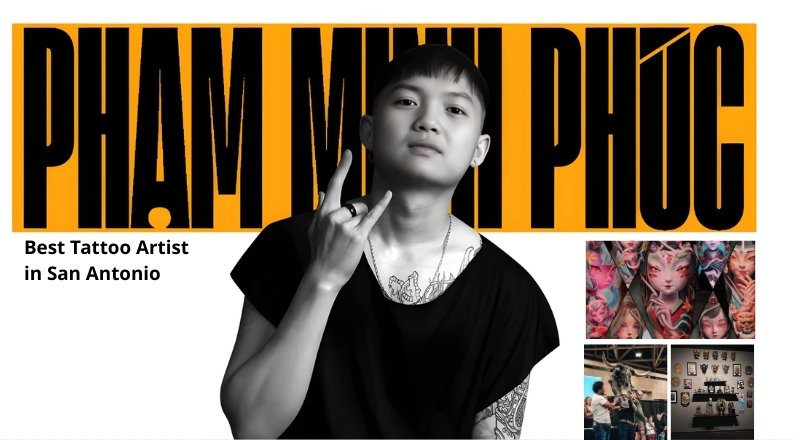
Why Choose Minh Pham for Custom Tattoo in San Antonio?
As an internationally recognized tattoo artist with over 10 years of experience, I combine elite technical skills with a client-centered design philosophy. My portfolio is distinguished by 40 international awards, proving that I deliver world-class results for every client.
- Award-Winning Craftsmanship: My technical mastery is validated by over 40 trophies from global conventions. You are not just getting a tattoo; you are investing in proven, award-winning artistry.
- Bespoke Custom Design: I reject generic templates. Every design is architected from scratch to fit your specific anatomy and story.
- Patient Collaboration: I understand that custom work can be intimidating. I take the time to explain the “why” behind every design choice, ensuring you feel confident and heard.
- Hospital-Grade Safety: All custom work is performed using single-use, sterilized equipment in a private setting.
Choose a partner who respects your vision as much as the craft. Book your consultation with me – Minh Pham today to start building your custom masterpiece.
FAQs about Asking a Tattoo Artist to Design Your Tattoo
Can Your Bring Your Own Drawing?
You can bring your own drawing, but it will serve as a reference rather than a stencil. A design that works on paper often fails on skin due to the lack of breathability (negative space) needed for the tattoo to age well.
Professional artists must redraw or adapt client sketches to ensure technical viability. They will adjust line weights to prevent blowouts and modify composition to flow with the muscle structure. Expecting an artist to trace another person’s drawing exactly is also considered a breach of etiquette and intellectual property. The goal is to refine your vision through their technical lens, not to copy-paste a static image.
Can You See The Design Weeks in Advance?
Most professional studios do not send designs days or weeks prior to the appointment. This policy protects the artist’s Intellectual Property (IP) and workflow. Sending artwork early increases the risk of the design being stolen and taken to a cheaper artist.
Typically, you will view the final design on the day of the appointment or the evening before. This standard practice ensures the artist keeps the design fresh in their mind. If minor adjustments are needed, they can be made digitally or on the stencil immediately at the shop. This workflow prevents “design fatigue,” where a client over-analyzes the drawing and requests excessive, non-essential changes that dilute the original artistic vision.
What If You Do Not Like The Design?
Honest feedback is a critical part of the process. You should never feel pressured to tattoo something you do not love. If the design does not match your vision, articulate specifically what needs to change.
- Minor Tweaks: Adjusting a leaf shape or shading depth is a quick fix done on the spot.
- Major Overhauls: If the concept is entirely wrong, it usually stems from a miscommunication in Step 2. This may require rescheduling the appointment to allow for a complete redraw.
A professional artist will not be offended by polite, constructive criticism. They prefer to correct the design on paper rather than have a client unhappy with the permanent result.
Do You Pay Extra for The Design?
The cost of the design work is typically absorbed into the hourly rate or the final flat price of the tattoo. Artists do not usually bill separately for “drawing time.”
The deposit you pay when booking is secured this time. This non-refundable fee compensates the artist for the hours spent researching and sketching if you decide to cancel last minute. If you request a completely new design after the original was agreed upon, the artist reserves the right to charge an additional drawing fee or require a new deposit to cover the extra labor.
Delegating the artistic rendering to a professional ensures that the vision is technically engineered to withstand the biological realities of aging and skin regeneration. By preparing a clear conceptual brief and respecting the distinction between subject matter and artistic style, the client empowers the artist to create a piece that flows harmoniously with their unique physiology. As a San Antonio-based custom artist, I specialize in translating these abstract ideas into award-winning reality using a patient collaborative approach. If you are ready to turn your inspiration into a permanent masterpiece, I am here to design it with you.